
Tourism Development in
Developed and
Developing Countries
Comparing Strategies and Impacts"
What is Tourism Development
• "Creating places and experiences that attract visitors, while also
benefiting the local community and environment."
• Building a tourism industry that:
• Welcomes tourists
• Creates jobs and income for locals
• Protects and showcases the area's culture, nature, and history
• Ensures a positive experience for visitors and locals alike"
Example
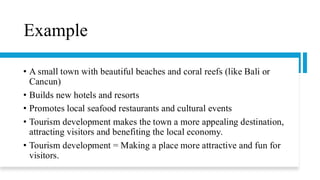
• A small town with beautiful beaches and coral reefs (like Bali or
Cancun)
• Builds new hotels and resorts
• Promotes local seafood restaurants and cultural events
• Tourism development makes the town a more appealing destination,
attracting visitors and benefiting the local economy.
• Tourism development = Making a place more attractive and fun for
visitors.
Goals of Tourism Development
• Make money for the country
• Create jobs for people
• Help local businesses grow
• Share our culture with others
• Protect our environment
• Build better facilities for tourists
• Make tourists feel safe and welcome
Tourism in Developed
Countries
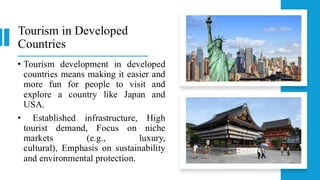
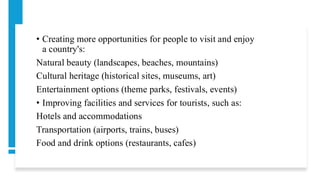
• Tourism development in developed
countries means making it easier and
more fun for people to visit and
explore a country like Japan and
USA.
• Established infrastructure, High
tourist demand, Focus on niche
markets (e.g., luxury,
cultural), Emphasis on sustainability
and environmental protection.
• Creating more opportunities for people to visit and enjoy
a country's:
Natural beauty (landscapes, beaches, mountains)
Cultural heritage (historical sites, museums, art)
Entertainment options (theme parks, festivals, events)
• Improving facilities and services for tourists, such as:
Hotels and accommodations
Transportation (airports, trains, buses)
Food and drink options (restaurants, cafes)
Making it easier for tourists to:
• Get visas and travel documents
• Find information and book trips
• Get around and enjoy their stay
Example
Japan
• Natural beauty: Hot springs, cherry blossoms, Mount Fuji
• Cultural heritage: Temples, shrines, traditional tea ceremonies
• Entertainment options: Tokyo Disneyland, anime and manga stores
USA
• Natural beauty: Grand Canyon, Yellowstone National Park, beaches in
Hawaii
• Cultural heritage: Statue of Liberty, Smithsonian museums, music festivals
• Entertainment options: Disneyland, Las Vegas shows, sports events
Tourism in Developing Countries
• Helping poor countries grow their tourism industry
• Limited infrastructure/Improving basic infrastructure like roads,
water, and electricity
• Showcasing unique cultural heritage and natural beauty
• Growing tourist demand
• Need for economic development and job creation
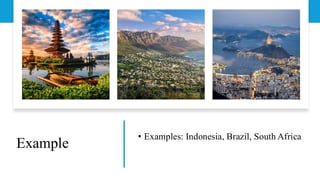
Example
• Examples: Indonesia, Brazil, South Africa
Tourism development in developing countries = Helping poor
countries become popular tourist destinations, like Tanzania!
• Example:
• Tanzania (Africa):
Builds new roads to reach amazing national parks (Serengeti,
Ngorongoro)
Tourism development helps Tanzania earn money, create jobs, and
preserve its incredible natural and cultural resources.
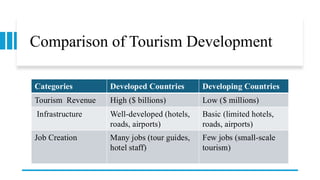
Comparison of Tourism Development
Categories Developed Countries Developing Countries
Tourism Revenue High ($ billions) Low ($ millions)
Infrastructure Well-developed (hotels,
roads, airports)
Basic (limited hotels,
roads, airports)
Job Creation Many jobs (tour guides,
hotel staff)
Few jobs (small-scale
tourism)
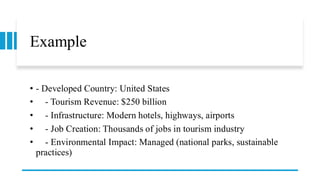
Example
• - Developed Country: United States
• - Tourism Revenue: $250 billion
• - Infrastructure: Modern hotels, highways, airports
• - Job Creation: Thousands of jobs in tourism industry
• - Environmental Impact: Managed (national parks, sustainable
practices)
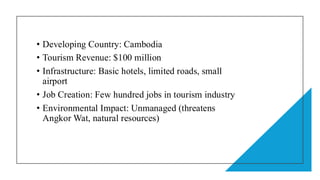
• Developing Country: Cambodia
• Tourism Revenue: $100 million
• Infrastructure: Basic hotels, limited roads, small
airport
• Job Creation: Few hundred jobs in tourism industry
• Environmental Impact: Unmanaged (threatens
Angkor Wat, natural resources)
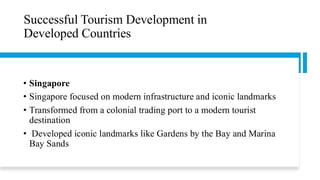
Successful Tourism Development in
Developed Countries
• Singapore
• Singapore focused on modern infrastructure and iconic landmarks
• Transformed from a colonial trading port to a modern tourist
destination
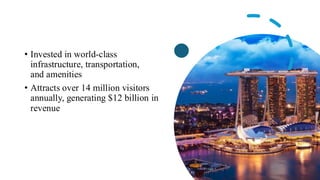
• Developed iconic landmarks like Gardens by the Bay and Marina
Bay Sands
• Invested in world-class
infrastructure, transportation,
and amenities
• Attracts over 14 million visitors
annually, generating $12 billion in
revenue
Successful Tourism Development
in Developing Countries
• Costa Rica
• Costa Rica emphasized sustainable tourism and community development
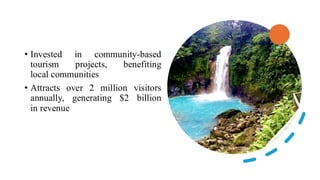
• Focused on sustainable tourism, showcasing its natural beauty and
biodiversity
• Developed eco-lodges, wildlife reserves, and national parks
• Invested in community-based
tourism projects, benefiting
local communities
• Attracts over 2 million visitors
annually, generating $2 billion
in revenue
THANK YOU!

Tourism Development in Developed vs Developing Countries: Strategies, Impacts & Examples

  • 1.
    Tourism Development in Developedand Developing Countries Comparing Strategies and Impacts"
  • 2.
    What is TourismDevelopment • "Creating places and experiences that attract visitors, while also benefiting the local community and environment." • Building a tourism industry that: • Welcomes tourists • Creates jobs and income for locals • Protects and showcases the area's culture, nature, and history • Ensures a positive experience for visitors and locals alike"
  • 3.
    Example • A smalltown with beautiful beaches and coral reefs (like Bali or Cancun) • Builds new hotels and resorts • Promotes local seafood restaurants and cultural events • Tourism development makes the town a more appealing destination, attracting visitors and benefiting the local economy. • Tourism development = Making a place more attractive and fun for visitors.
  • 4.
    Goals of TourismDevelopment • Make money for the country • Create jobs for people • Help local businesses grow • Share our culture with others • Protect our environment • Build better facilities for tourists • Make tourists feel safe and welcome
  • 5.
    Tourism in Developed Countries •Tourism development in developed countries means making it easier and more fun for people to visit and explore a country like Japan and USA. • Established infrastructure, High tourist demand, Focus on niche markets (e.g., luxury, cultural), Emphasis on sustainability and environmental protection.
  • 6.
    • Creating moreopportunities for people to visit and enjoy a country's: Natural beauty (landscapes, beaches, mountains) Cultural heritage (historical sites, museums, art) Entertainment options (theme parks, festivals, events) • Improving facilities and services for tourists, such as: Hotels and accommodations Transportation (airports, trains, buses) Food and drink options (restaurants, cafes)
  • 7.
    Making it easierfor tourists to: • Get visas and travel documents • Find information and book trips • Get around and enjoy their stay
  • 8.
    Example Japan • Natural beauty:Hot springs, cherry blossoms, Mount Fuji • Cultural heritage: Temples, shrines, traditional tea ceremonies • Entertainment options: Tokyo Disneyland, anime and manga stores USA • Natural beauty: Grand Canyon, Yellowstone National Park, beaches in Hawaii • Cultural heritage: Statue of Liberty, Smithsonian museums, music festivals • Entertainment options: Disneyland, Las Vegas shows, sports events
  • 9.
    Tourism in DevelopingCountries • Helping poor countries grow their tourism industry • Limited infrastructure/Improving basic infrastructure like roads, water, and electricity • Showcasing unique cultural heritage and natural beauty • Growing tourist demand • Need for economic development and job creation
  • 10.
  • 11.
    Tourism development indeveloping countries = Helping poor countries become popular tourist destinations, like Tanzania! • Example: • Tanzania (Africa): Builds new roads to reach amazing national parks (Serengeti, Ngorongoro) Tourism development helps Tanzania earn money, create jobs, and preserve its incredible natural and cultural resources.
  • 12.
    Comparison of TourismDevelopment Categories Developed Countries Developing Countries Tourism Revenue High ($ billions) Low ($ millions) Infrastructure Well-developed (hotels, roads, airports) Basic (limited hotels, roads, airports) Job Creation Many jobs (tour guides, hotel staff) Few jobs (small-scale tourism)
  • 13.
    Example • - DevelopedCountry: United States • - Tourism Revenue: $250 billion • - Infrastructure: Modern hotels, highways, airports • - Job Creation: Thousands of jobs in tourism industry • - Environmental Impact: Managed (national parks, sustainable practices)
  • 14.
    • Developing Country:Cambodia • Tourism Revenue: $100 million • Infrastructure: Basic hotels, limited roads, small airport • Job Creation: Few hundred jobs in tourism industry • Environmental Impact: Unmanaged (threatens Angkor Wat, natural resources)
  • 15.
    Successful Tourism Developmentin Developed Countries • Singapore • Singapore focused on modern infrastructure and iconic landmarks • Transformed from a colonial trading port to a modern tourist destination • Developed iconic landmarks like Gardens by the Bay and Marina Bay Sands
  • 16.
    • Invested inworld-class infrastructure, transportation, and amenities • Attracts over 14 million visitors annually, generating $12 billion in revenue
  • 17.
    Successful Tourism Development inDeveloping Countries • Costa Rica • Costa Rica emphasized sustainable tourism and community development • Focused on sustainable tourism, showcasing its natural beauty and biodiversity • Developed eco-lodges, wildlife reserves, and national parks
  • 18.
    • Invested incommunity-based tourism projects, benefiting local communities • Attracts over 2 million visitors annually, generating $2 billion in revenue
  • 19.