UNIT 2 - TOUR PLANNING AND PRE TOUR
OPERATIONS
TOUR PLANNING: NEW DESTINATION
 Tour planning is a planning process in which transport orders are grouped
into tours and put into a certain order.
 The tour is usually performed by one person or one vehicle. The tour
planning is important in the areas where there are many tours and orders.
 A travel plan is a package of actions designed by a workplace, school or
other organisation To encourage safe, healthy and sustainable travel
options.
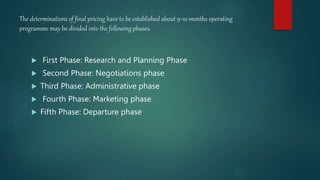
The determinations of final pricing have to be established about 9-10 months operating
programme may be divided into the following phases.
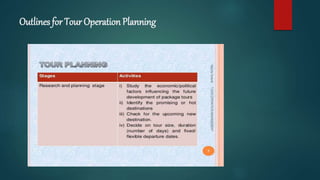
 First Phase: Research and Planning Phase
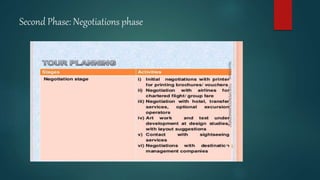
 Second Phase: Negotiations phase
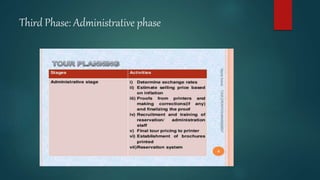
 Third Phase: Administrative phase
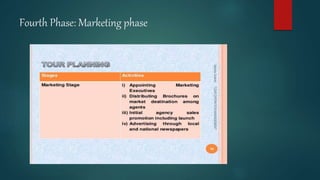
 Fourth Phase: Marketing phase
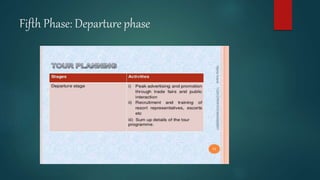
 Fifth Phase: Departure phase
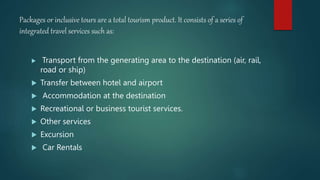
Packages or inclusive tours are a total tourism product. It consists of a series of
integrated travel services such as:
 Transport from the generating area to the destination (air, rail,
road or ship)
 Transfer between hotel and airport
 Accommodation at the destination
 Recreational or business tourist services.
 Other services
 Excursion
 Car Rentals
Outlines for Tour Operation Planning
Second Phase: Negotiations phase
Third Phase: Administrative phase
Fourth Phase: Marketing phase
Fifth Phase: Departure phase
Negotiations
 It is important phase of marketing of a destination. Once the
destination and the number of passengers to be carried and
the departure of tour have been decided, and then starts the
negotiations are made with the principals to formal contacts:
 Negotiations with airlines
 Negotiations with hotels
 Negotiations with others
Negotiations with airlines
 A contract is signed with the airline wherein the conditions are spelled out
regarding conditions for release of aircraft seat and cancellation of
chartered aircraft flight with any penalties that the tour operator will incur.
 The price of contract will depend upon tour reputation and the expenses
with that airline or similar airline in the past. The negotiation will also
include:
a. The setting up of the tour operator flight plan
b. The date and frequency of operation
c. The airports to be used
d. The times of arrivals and departures
Negotiations with Hotels
 While negotiating with hotels, the tour operator should spell out the exact
requirements and issues, as given below:
1. Number of rooms required
2. Type of rooms required
3. Catering Provision required
4. Reservations and registration procedures
5. Free accommodation requests for any representatives or courier
6. Handling procedures and fees charges for porterage.
7. Special facilities available or needed such as catering for handicapped
customers, or special catering arrangements
8. Language spoken by hotel staff.
9. System for payment by the guest for alcoholic drinks, wines, etc.
10. Reassurances on suitable fire and safety precautions
11. If required, suitable space for a representative customer‘s desk and notice
board.
 The tour operator should also check the alternative accommodation of a
comparable standard in the local neighbourhood, in the event of
overbooking.
 He should be fully satisfied about the arrangement made by the hotel.
Negotiations with Ancillary Services
Ancillary travel services include:
a. Locally based incoming operators / Handling Agents
b. Coach companies
c. Car hire companies
Employment of Overseas Representative
 A representative needs to be employed to carry a large number of
packages to a particular destination.
 Employment of local persons as the representative has certain advantages.
 These people are better acquainted with local customs and geography,
fluent in the language of the country and have good local contacts
especially with the police, shopkeepers, customs or language of their
client.
 During the busy tourist season, they have to work seven day a week for 24
hours a day to cope with the emergencies.
His main duties include:
1. Handling of guest inquiries
2. Advising on currency exchange
3. Advising on shopping
4. Organizing and supervising social activities at the hotel.
5. Publishing and booking optional excursions
6. Handling special requirements of customers
7. Handling of complaints
8. Acting as an intermediary of clients
9. Interceding with the hotel‘s proprietor, police or other local authorities.
 10. Handling other miscellaneous problems such as
a. Lost luggage
b. Ill health
c. Occasional deaths
d. Relocation of customers whose accommodation is inadequate or where
over booking occurs, and
e. Re –booking of flights for their customers whose plans changes because of
emergencies.
PACKAGE PRICING STRATEGIES
What is Pricing Strategy?
 A business can use a variety of pricing strategies when selling
a product or service.
 The Price can be set to maximize profitability for each unit
sold or from the market overall.
Pricing Strategy Objectives
 Long Run Profits
• Short Run Profits
• Increase Sales Volume
• Company Growth
• Match Competitors Price
• Create Interest & Excitement about the Product
• Discourage Competitors From cutting Price
• Social, Ethical & Ideological Objectives
• Discourage New Entrants
• Survival
Elements of Pricing
The factors taken for cost oriented tour operation pricing are as
under:
1. Transport cost
2. Hotel cost
3. Resort agent‘s handling fee
4. Transfer cost
5. Gratuities, porterage, etc.
6. Mark up for agency services
7. Marketing cost, (brochures, ticket, valets)
8. Head office administrative costs, and
9. Profit
TYPES OF COST
 Marginal Cost
 Average Cost
 Variable Cost
 Direct Cost
PRE-TOUR PREPARATIONS
 A tour manager must set objectives in advance and then make
sure, they are effectively realized.
 A tour manager‘s work begins long before he /she starts to
meet the people whom he will be escorting.
 The better the preparation, the more smoothly the tour will
run.
 A tour manager must be knowledgeable, organized and
prepared for any eventuality.
The main pre –tour preparations are:
 a. Confirming reservations
 b. Writing reports
 c. Evaluating service
Understanding the Type of Tours
Deluxe
First Class
Economy, and
Special
Understanding the tourists
Their ages
Ethnic affiliations
Other particulars
Copy of Client’s Itinerary
 Some company has manual for escorts.
 Read these matters carefully.
 Do not hesitate to ask any questions that may come to your
mind.
 Make certain that you understand everything.
 Point out any discrepancy to the company‘s representative.
 Notify the clients any changes.
Tourist Office/Embassies
 You may begin your research with the help of working
itinerary.
 The best and most reliable source of up to date information is
the state tourism development office located in the capital
city.
 These offices supply mailing maps and other material on
request.
 Airlines and tourist bureaus connected with the embassies are
invaluable sources of information about other countries.
 If you have special interest group such as lawyers or architects,
these offices will provide you the required information.
Guide Books/Brochures
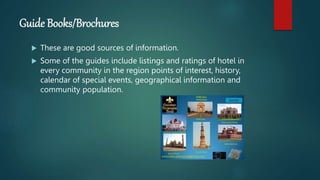
 These are good sources of information.
 Some of the guides include listings and ratings of hotel in
every community in the region points of interest, history,
calendar of special events, geographical information and
community population.
Information Required
 About hotels and tourist accommodation you intend to stay
 About the city/villages
 Information Log
 Selection of Wardrobe
 Packing
 Reconfirmation Calls
 Hotel Reconfirmation
 Meals Reconfirmation
 Reconfirming Tickets
 Single and Twin Room
 Border Crossing
 Immigration Procedures
 Custom Procedures Abroad
 Custom Procedures while Returning Home
 Tourist Members Clearance
 Currency Exchange/Foreign Exchange
 Luggage
TOUR OPERATIONAL TECHNIQUES
1. First day of the tour.
2. Departure.
3. Hotel procedures.
4. Transportation
5. Emergency procedures.
6. Finance and accounting.
7. Mails and messages.
8. Food and beverages.
TOUR PLANNING & PRE TOUR-OPERATIONS PPT.

TOUR PLANNING & PRE TOUR-OPERATIONS PPT.

  • 1.
    UNIT 2 -TOUR PLANNING AND PRE TOUR OPERATIONS
  • 2.
    TOUR PLANNING: NEWDESTINATION  Tour planning is a planning process in which transport orders are grouped into tours and put into a certain order.  The tour is usually performed by one person or one vehicle. The tour planning is important in the areas where there are many tours and orders.  A travel plan is a package of actions designed by a workplace, school or other organisation To encourage safe, healthy and sustainable travel options.
  • 3.
    The determinations offinal pricing have to be established about 9-10 months operating programme may be divided into the following phases.  First Phase: Research and Planning Phase  Second Phase: Negotiations phase  Third Phase: Administrative phase  Fourth Phase: Marketing phase  Fifth Phase: Departure phase
  • 4.
    Packages or inclusivetours are a total tourism product. It consists of a series of integrated travel services such as:  Transport from the generating area to the destination (air, rail, road or ship)  Transfer between hotel and airport  Accommodation at the destination  Recreational or business tourist services.  Other services  Excursion  Car Rentals
  • 5.
    Outlines for TourOperation Planning
  • 6.
  • 7.
  • 8.
  • 9.
  • 10.
    Negotiations  It isimportant phase of marketing of a destination. Once the destination and the number of passengers to be carried and the departure of tour have been decided, and then starts the negotiations are made with the principals to formal contacts:  Negotiations with airlines  Negotiations with hotels  Negotiations with others
  • 11.
    Negotiations with airlines A contract is signed with the airline wherein the conditions are spelled out regarding conditions for release of aircraft seat and cancellation of chartered aircraft flight with any penalties that the tour operator will incur.  The price of contract will depend upon tour reputation and the expenses with that airline or similar airline in the past. The negotiation will also include: a. The setting up of the tour operator flight plan b. The date and frequency of operation c. The airports to be used d. The times of arrivals and departures
  • 12.
    Negotiations with Hotels While negotiating with hotels, the tour operator should spell out the exact requirements and issues, as given below: 1. Number of rooms required 2. Type of rooms required 3. Catering Provision required 4. Reservations and registration procedures 5. Free accommodation requests for any representatives or courier 6. Handling procedures and fees charges for porterage. 7. Special facilities available or needed such as catering for handicapped customers, or special catering arrangements 8. Language spoken by hotel staff.
  • 13.
    9. System forpayment by the guest for alcoholic drinks, wines, etc. 10. Reassurances on suitable fire and safety precautions 11. If required, suitable space for a representative customer‘s desk and notice board.  The tour operator should also check the alternative accommodation of a comparable standard in the local neighbourhood, in the event of overbooking.  He should be fully satisfied about the arrangement made by the hotel.
  • 14.
    Negotiations with AncillaryServices Ancillary travel services include: a. Locally based incoming operators / Handling Agents b. Coach companies c. Car hire companies
  • 15.
    Employment of OverseasRepresentative  A representative needs to be employed to carry a large number of packages to a particular destination.  Employment of local persons as the representative has certain advantages.  These people are better acquainted with local customs and geography, fluent in the language of the country and have good local contacts especially with the police, shopkeepers, customs or language of their client.  During the busy tourist season, they have to work seven day a week for 24 hours a day to cope with the emergencies.
  • 16.
    His main dutiesinclude: 1. Handling of guest inquiries 2. Advising on currency exchange 3. Advising on shopping 4. Organizing and supervising social activities at the hotel. 5. Publishing and booking optional excursions 6. Handling special requirements of customers 7. Handling of complaints 8. Acting as an intermediary of clients 9. Interceding with the hotel‘s proprietor, police or other local authorities.
  • 17.
     10. Handlingother miscellaneous problems such as a. Lost luggage b. Ill health c. Occasional deaths d. Relocation of customers whose accommodation is inadequate or where over booking occurs, and e. Re –booking of flights for their customers whose plans changes because of emergencies.
  • 18.
    PACKAGE PRICING STRATEGIES Whatis Pricing Strategy?  A business can use a variety of pricing strategies when selling a product or service.  The Price can be set to maximize profitability for each unit sold or from the market overall.
  • 19.
    Pricing Strategy Objectives Long Run Profits • Short Run Profits • Increase Sales Volume • Company Growth • Match Competitors Price • Create Interest & Excitement about the Product • Discourage Competitors From cutting Price • Social, Ethical & Ideological Objectives • Discourage New Entrants • Survival
  • 20.
    Elements of Pricing Thefactors taken for cost oriented tour operation pricing are as under: 1. Transport cost 2. Hotel cost 3. Resort agent‘s handling fee 4. Transfer cost 5. Gratuities, porterage, etc. 6. Mark up for agency services 7. Marketing cost, (brochures, ticket, valets) 8. Head office administrative costs, and 9. Profit
  • 22.
    TYPES OF COST Marginal Cost  Average Cost  Variable Cost  Direct Cost
  • 23.
    PRE-TOUR PREPARATIONS  Atour manager must set objectives in advance and then make sure, they are effectively realized.  A tour manager‘s work begins long before he /she starts to meet the people whom he will be escorting.  The better the preparation, the more smoothly the tour will run.  A tour manager must be knowledgeable, organized and prepared for any eventuality.
  • 24.
    The main pre–tour preparations are:  a. Confirming reservations  b. Writing reports  c. Evaluating service
  • 25.
    Understanding the Typeof Tours Deluxe First Class Economy, and Special
  • 26.
    Understanding the tourists Theirages Ethnic affiliations Other particulars
  • 27.
    Copy of Client’sItinerary  Some company has manual for escorts.  Read these matters carefully.  Do not hesitate to ask any questions that may come to your mind.  Make certain that you understand everything.  Point out any discrepancy to the company‘s representative.  Notify the clients any changes.
  • 28.
    Tourist Office/Embassies  Youmay begin your research with the help of working itinerary.  The best and most reliable source of up to date information is the state tourism development office located in the capital city.  These offices supply mailing maps and other material on request.  Airlines and tourist bureaus connected with the embassies are invaluable sources of information about other countries.  If you have special interest group such as lawyers or architects, these offices will provide you the required information.
  • 29.
    Guide Books/Brochures  Theseare good sources of information.  Some of the guides include listings and ratings of hotel in every community in the region points of interest, history, calendar of special events, geographical information and community population.
  • 30.
    Information Required  Abouthotels and tourist accommodation you intend to stay  About the city/villages  Information Log  Selection of Wardrobe  Packing  Reconfirmation Calls  Hotel Reconfirmation  Meals Reconfirmation  Reconfirming Tickets  Single and Twin Room
  • 31.
     Border Crossing Immigration Procedures  Custom Procedures Abroad  Custom Procedures while Returning Home  Tourist Members Clearance  Currency Exchange/Foreign Exchange  Luggage
  • 32.
    TOUR OPERATIONAL TECHNIQUES 1.First day of the tour. 2. Departure. 3. Hotel procedures. 4. Transportation 5. Emergency procedures. 6. Finance and accounting. 7. Mails and messages. 8. Food and beverages.