Download as DOC, PPTX
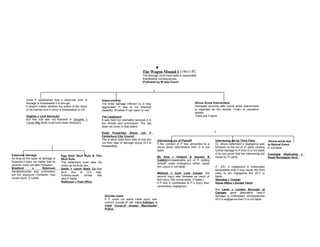
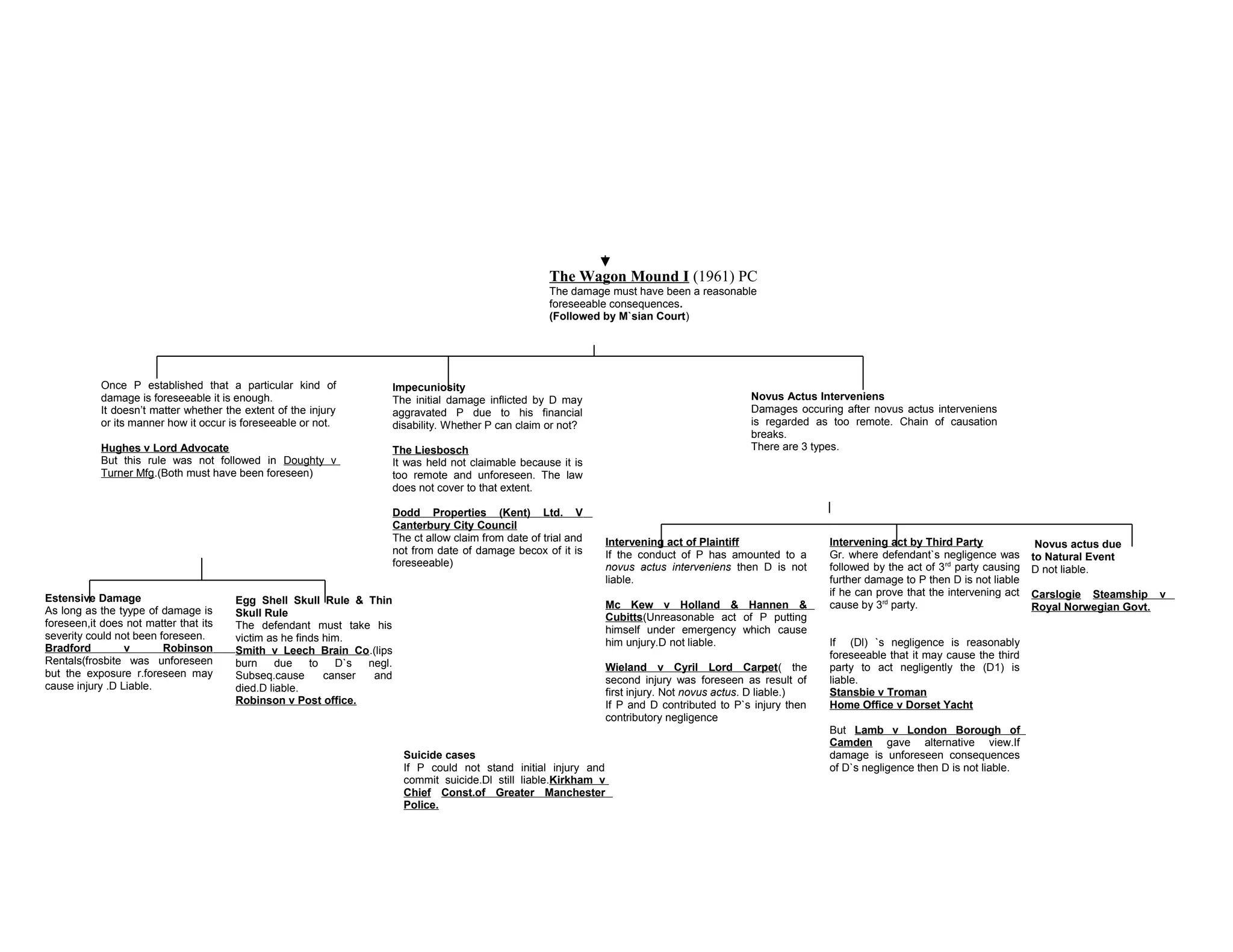

The document discusses the legal principles of foreseeability and novus actus interveniens in tort law. It provides examples of cases where: 1) The defendant was found liable because the type of damage was reasonably foreseeable, even if the extent was not (e.g. Wagon Mound I). 2) Intervening acts by the plaintiff or third parties may absolve the defendant of liability, unless their acts were foreseeable consequences of the defendant's negligence (e.g. McKew v Holland). 3) Natural or non-negligent intervening events will break the chain of causation and liability (e.g. Carslogie Steamship).


![Remoteness tort in law of damage[1].pptx](https://cdn.slidesharecdn.com/ss_thumbnails/remotenessofdamage1-260102163619-5f3e5511-thumbnail.jpg?width=640&height=640&fit=bounds)


![NEGLIGENCE17[2].ppt](https://cdn.slidesharecdn.com/ss_thumbnails/negligence172-230805153451-8f20aec3-thumbnail.jpg?width=640&height=640&fit=bounds)


