Download as DOC, PPTX
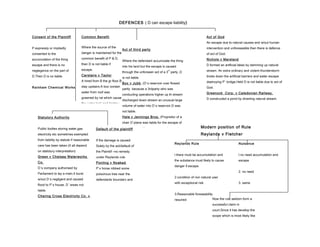

1) Defendants can escape liability for the escape of things they accumulate on their land under certain defences, including consent of the plaintiff, common benefit, act of a third party, act of God, statutory authority, and default of the plaintiff. 2) The modern position of the Rylands v Fletcher rule is that it has developed in scope to more closely resemble a negligence claim, requiring reasonable foreseeability of the escape. Claims under the rule now seldom succeed on their own in court. Nuisance claims do not require accumulation and escape or non-natural use of the land. 3) Defences that can allow defendants to escape liability include when the plaintiff consented to the accumulation, where the source of danger was for


![TORT II [strict liability notes]](https://cdn.slidesharecdn.com/ss_thumbnails/uuuk2203-tortiistrictliabilitynotes-200608061733-thumbnail.jpg?width=640&height=640&fit=bounds)


