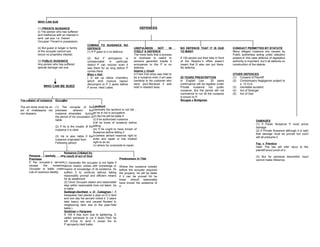
WHO CAN SUE
(1) PRIVATE NUISANCE
(i) The person who has suffered
and intefrence with an interest in
land can sue. I.e. Owner/
Occupier /Tenant in possession.
(ii) But guest or lodger or family
of the occupier cannot sue
becox no proprietry interest.
(2) PUBLIC NUISANCE
Any person who has suffered
special damage can sue.
WHO CAN BE SUED
The creator of nuisance
The act done must be an
act of misfeasane not
non feasane.
Occupier
(1) The occupier of the
premises wherein the
nuisance emanates during
the period of his occupation is
liable.
(2) If he is the creator of the
nuisance it is clear.
(3) He is also liable if the
nuisance originated from
Following person
Predecessor In Title
Where the nuisance existed
before the occupier acquired
the property, he will be liable
if it can be proved tht he
knew, should reasonable
have known the existence of
it.
Persons lawfully on
Premises
If the occupier`s servant
causes the nuisance
Occupier is liable under
rule of vicarious liability.
Nuisance Created by trespasser or as
a result of act of God
(1) Generally the occupier is not liable if
above reason unless with knowledge or
means of knowledge of its existence, he
suffers it to continue without taking
reasonablly prompt and efficient means
for its abatement.
(2) Once Occupier aware and reasonable
step within reasonable time not taken ,he
is liable.
Sedleigh-Denfield v O` Callaghan.( A
tresspassr had placed a pipe on D`s land
and one day his servant notice it. 3 years
later haevy rain and caused flooded to
neigbouring land due to the pipe.Held
liable.)
Goldman v Hargrave
A 100 ft tree burn due to lightening. D
called someone to cut it down.Then he
left it.Due to wind it cause fire to
P`sproperty.Held liable.
Landlord
Generally the landlord is not liable
as he is not in occupation.
(2) But he will be liable if
(I) if he authorized nuisance
(ii)if he knew of nuisance before
letting
(iii) If he ought to have known of
Nuisance before letting it
(iv)where lanlord reserves right to
enter and repair or has implied
right to do so.
(v) where he covenants to repair
DEFENCES
COMING TO NUISANCE NO
DEFENCE
(1) If P goes to it no defence
(2) But if annoyance is
unreasonable in particular
district P can recover even it
was there for so long before P
comes there.
Bliss v Hall
( D set up tallow chandlery
which emit noxious vapour
discomport to P 3 years before
P arrive. Held Liable.
USEFULNESS NOT IN
ITSELF A DEFENCE
The mere facts that a process
or business is useful to
persons generally inspite it
annoyance to the P is no
defence.
Adams v Ursell
A Fried Fish shop was held to
be a nuisance even it wil case
hardship to his customer who
were poor.Because it was
held in resident area.
NO DEFENCE THAT IT IS DUE
TO MANY
If 100 person put their bike in front
of the Reactor`s office doesn’t
meant that D also can put there.
No defence.
20 YEARS PRESCRIPTION
In English Law 20 years
continuance will be legalise under
Private nuisance not public
nuisance. But the period will not
commence to run till the nuisance
is known to P.
Struges v Bridgman
CONDUCT PERMITTED BY STATUTE
Many alleged nuisance are caused by
Public authorities acting under statutory
powers.In this case defence of legislative
authority is important but it all defends on
construction of the statute.
OTHER DEFENCES
(1) Consent of Plaintiff
(2) Contiorbutory Negligence subject to
s. 12 CLA
(3) Inevitable accident
(4) Act of Stranger
(5) Act of God
DAMAGES
(1) If Public Nuisance P must prove
damage
(2) If Private Nuisance although it is said
that damage must be proved but court
will all presume it.
Fay v Prentice
Held: The law will infer injury to the
plaintiff w/out proof of it.
(3) But for personal discomfort court
cannot make inference.

Torts _nuisance_ii

  • 1.
    WHO CAN SUE (1)PRIVATE NUISANCE (i) The person who has suffered and intefrence with an interest in land can sue. I.e. Owner/ Occupier /Tenant in possession. (ii) But guest or lodger or family of the occupier cannot sue becox no proprietry interest. (2) PUBLIC NUISANCE Any person who has suffered special damage can sue. WHO CAN BE SUED The creator of nuisance The act done must be an act of misfeasane not non feasane. Occupier (1) The occupier of the premises wherein the nuisance emanates during the period of his occupation is liable. (2) If he is the creator of the nuisance it is clear. (3) He is also liable if the nuisance originated from Following person Predecessor In Title Where the nuisance existed before the occupier acquired the property, he will be liable if it can be proved tht he knew, should reasonable have known the existence of it. Persons lawfully on Premises If the occupier`s servant causes the nuisance Occupier is liable under rule of vicarious liability. Nuisance Created by trespasser or as a result of act of God (1) Generally the occupier is not liable if above reason unless with knowledge or means of knowledge of its existence, he suffers it to continue without taking reasonablly prompt and efficient means for its abatement. (2) Once Occupier aware and reasonable step within reasonable time not taken ,he is liable. Sedleigh-Denfield v O` Callaghan.( A tresspassr had placed a pipe on D`s land and one day his servant notice it. 3 years later haevy rain and caused flooded to neigbouring land due to the pipe.Held liable.) Goldman v Hargrave A 100 ft tree burn due to lightening. D called someone to cut it down.Then he left it.Due to wind it cause fire to P`sproperty.Held liable. Landlord Generally the landlord is not liable as he is not in occupation. (2) But he will be liable if (I) if he authorized nuisance (ii)if he knew of nuisance before letting (iii) If he ought to have known of Nuisance before letting it (iv)where lanlord reserves right to enter and repair or has implied right to do so. (v) where he covenants to repair DEFENCES COMING TO NUISANCE NO DEFENCE (1) If P goes to it no defence (2) But if annoyance is unreasonable in particular district P can recover even it was there for so long before P comes there. Bliss v Hall ( D set up tallow chandlery which emit noxious vapour discomport to P 3 years before P arrive. Held Liable. USEFULNESS NOT IN ITSELF A DEFENCE The mere facts that a process or business is useful to persons generally inspite it annoyance to the P is no defence. Adams v Ursell A Fried Fish shop was held to be a nuisance even it wil case hardship to his customer who were poor.Because it was held in resident area. NO DEFENCE THAT IT IS DUE TO MANY If 100 person put their bike in front of the Reactor`s office doesn’t meant that D also can put there. No defence. 20 YEARS PRESCRIPTION In English Law 20 years continuance will be legalise under Private nuisance not public nuisance. But the period will not commence to run till the nuisance is known to P. Struges v Bridgman CONDUCT PERMITTED BY STATUTE Many alleged nuisance are caused by Public authorities acting under statutory powers.In this case defence of legislative authority is important but it all defends on construction of the statute. OTHER DEFENCES (1) Consent of Plaintiff (2) Contiorbutory Negligence subject to s. 12 CLA (3) Inevitable accident (4) Act of Stranger (5) Act of God DAMAGES (1) If Public Nuisance P must prove damage (2) If Private Nuisance although it is said that damage must be proved but court will all presume it. Fay v Prentice Held: The law will infer injury to the plaintiff w/out proof of it. (3) But for personal discomfort court cannot make inference.