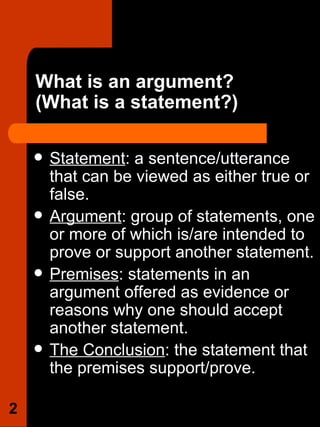
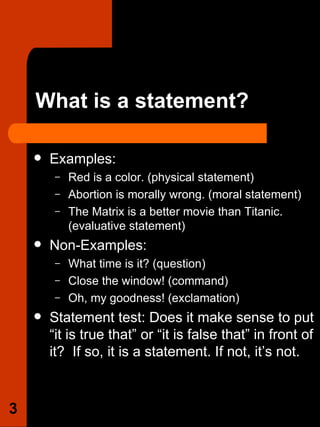
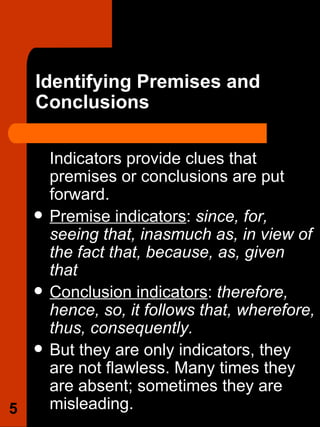
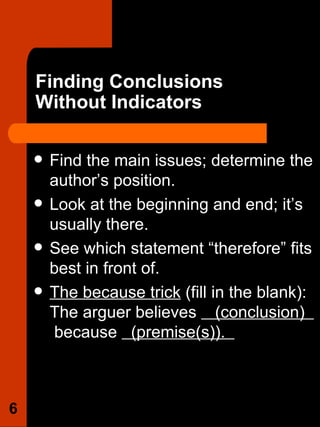
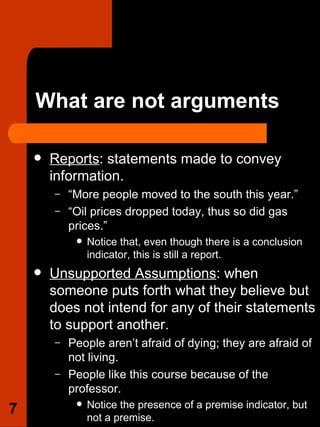
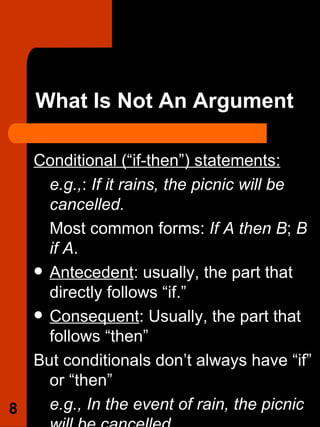
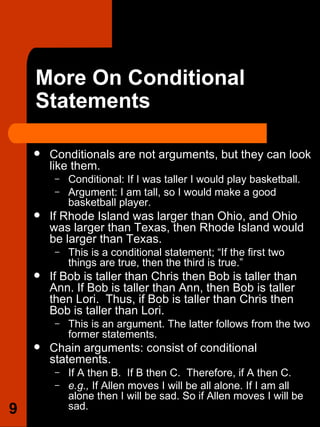
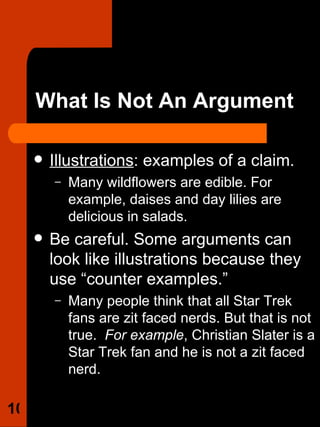
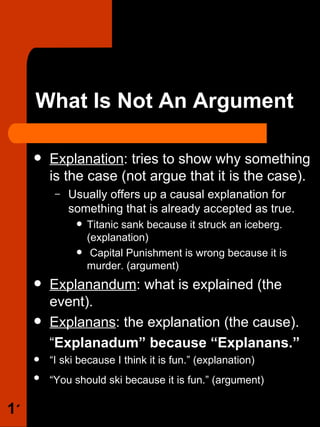
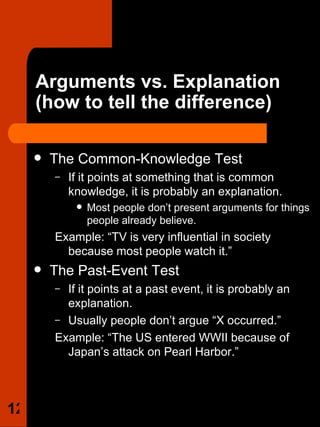
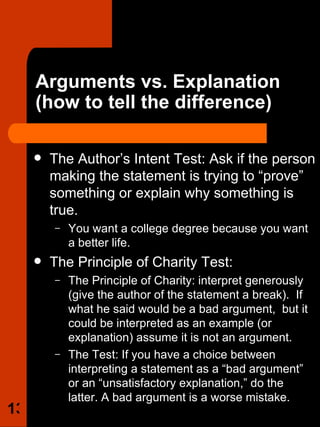
An argument consists of one or more premises intended to support a conclusion. Premises provide evidence or reasons to accept the conclusion. Arguments contain indicators like "therefore" or "so" but these are not always present. Conditionals, reports, unsupported assumptions, illustrations, and explanations are not considered arguments. Arguments differ from explanations in that arguments aim to prove something is the case while explanations provide a causal account for something already accepted as true.