Slide 1
Stress Reduction
Theresa Byrd RN BSN
Clinical Coordinator
Norton Women’s Heart and Vascular
Center
___________________________________
___________________________________
___________________________________
___________________________________
___________________________________
___________________________________
___________________________________
Slide 2
Objectives
• Review data regarding stress in the workplace and
its effect on the healthcare professional and patient.
• Define stress, causes, and symptoms of stress.
• Recognize stress reduction techniques and coping
skills.
• Identify resources for stress available in the
community.
___________________________________
___________________________________
___________________________________
___________________________________
___________________________________
___________________________________
___________________________________
Slide 3
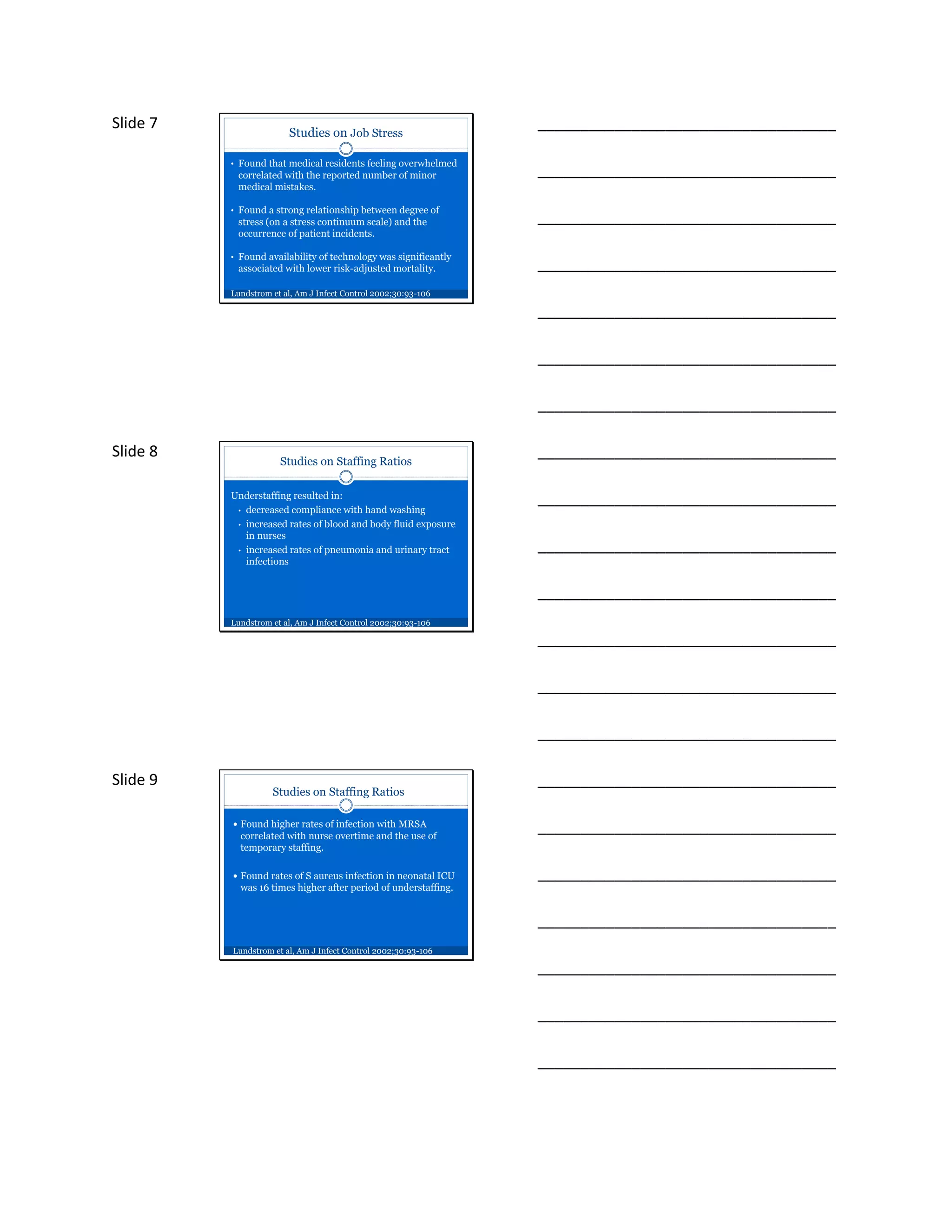
Stress in the Workplace
 OSHA declares stress a
hazard of the workplace.
 Costs American industry
over $300 billion annually.
 43% of all adults suffer
adverse health effects of
stress.
 75-90% of all doctor visits
are for stress-related
ailments and complaints.
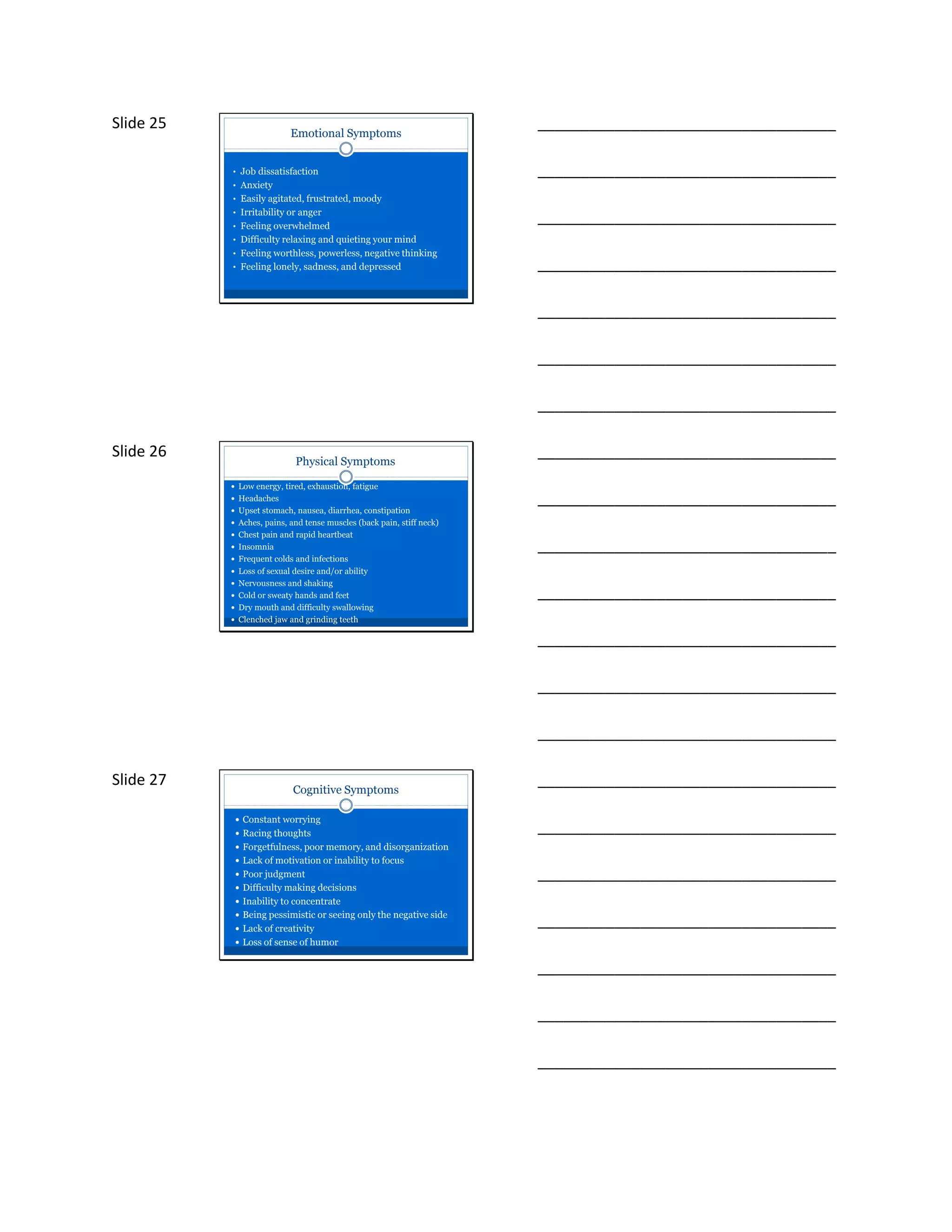
www.webmd.com/mental-health/effects-of-stress-on-your-body
___________________________________
___________________________________
___________________________________
___________________________________
___________________________________
___________________________________
___________________________________
Slide 4
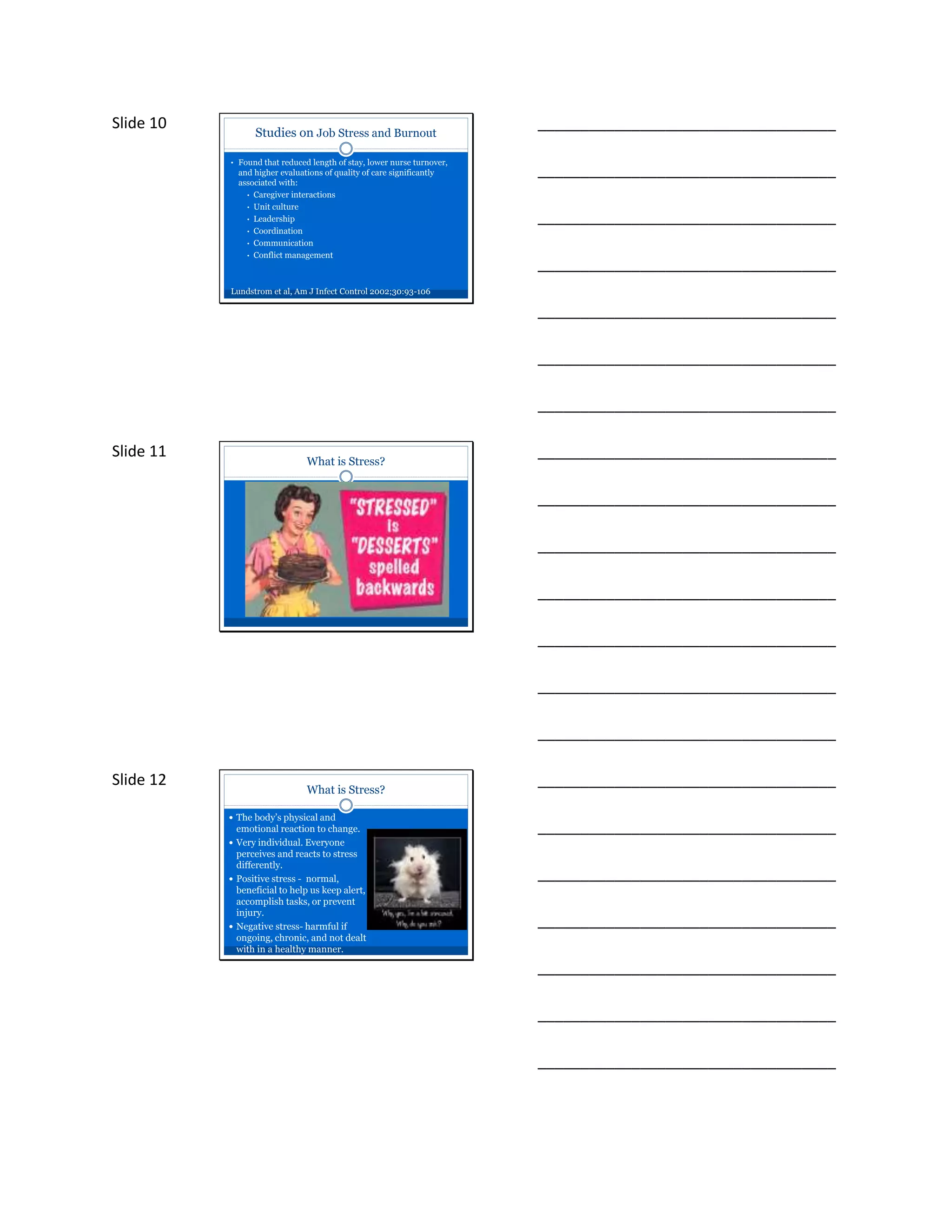
Surveys on Stress in Workplace
40% of workers report their
job is “very or extremely stressful.”
Northwestern National Life
29% of workers report they feel
“quite a bit or extremely stressed
at work.”
Yale University
26% of workers report they are
“often or very often burned out or
stressed by their work.”
Families and Work Institute
___________________________________
___________________________________
___________________________________
___________________________________
___________________________________
___________________________________
___________________________________
Slide 5
Women’s Health Study – Harvard Research
 Involved over 17,000 female health professionals.
 Women whose work is highly stressful are:
 70% more likely to have a heart attack.
Have a 40% increased risk of heart disease (heart
attacks and need for coronary artery surgery).
 Women who worry about losing their jobs are more
likely to have high blood pressure, unhealthy
cholesterol levels, and to be obese.
___________________________________
___________________________________
___________________________________
___________________________________
___________________________________
___________________________________
___________________________________
Slide 6
Work Stress
Has been shown to result in:
• Job dissatisfaction
• Burnout (physical, emotional, and mental
exhaustion)
• Staff turnover
• Occupational illness and injuries
• Reduced mental health
• Depression
• Suicide
Lundstrom et al, Am J Infect Control 2002;30:93-106
___________________________________
___________________________________
___________________________________
___________________________________
___________________________________
___________________________________
___________________________________
Slide 7 Studies on Job Stress
• Found that medical residents feeling overwhelmed
correlated with the reported number of minor
medical mistakes.
• Found a strong relationship between degree of
stress (on a stress continuum scale) and the
occurrence of patient incidents.
• Found availability of technology was significantly
associated with lower risk-adjusted mortality.
Lundstrom et al, Am J Infect Control 2002;30:93-106
___________________________________
___________________________________
___________________________________
___________________________________
___________________________________
___________________________________
___________________________________
Slide 8
Studies on Staffing Ratios
Understaffing resulted in:
• decreased compliance with hand washing
• increased rates of blood and body fluid exposure
in nurses
• increased rates of pneumonia and urinary tract
infections
Lundstrom et al, Am J Infect Control 2002;30:93-106
___________________________________
___________________________________
___________________________________
___________________________________
___________________________________
___________________________________
___________________________________
Slide 9
Studies on Staffing Ratios
 Found higher rates of infection with MRSA
correlated with nurse overtime and the use of
temporary staffing.
 Found rates of S aureus infection in neonatal ICU
was 16 times higher after period of understaffing.
Lundstrom et al, Am J Infect Control 2002;30:93-106
___________________________________
___________________________________
___________________________________
___________________________________
___________________________________
___________________________________
___________________________________
Slide 10 Studies on Job Stress and Burnout
• Found that reduced length of stay, lower nurse turnover,
and higher evaluations of quality of care significantly
associated with:
• Caregiver interactions
• Unit culture
• Leadership
• Coordination
• Communication
• Conflict management
Lundstrom et al, Am J Infect Control 2002;30:93-106
___________________________________
___________________________________
___________________________________
___________________________________
___________________________________
___________________________________
___________________________________
Slide 11
What is Stress?
___________________________________
___________________________________
___________________________________
___________________________________
___________________________________
___________________________________
___________________________________
Slide 12
What is Stress?
 The body’s physical and
emotional reaction to change.
 Very individual. Everyone
perceives and reacts to stress
differently.
 Positive stress - normal,
beneficial to help us keep alert,
accomplish tasks, or prevent
injury.
 Negative stress- harmful if
ongoing, chronic, and not dealt
with in a healthy manner.
___________________________________
___________________________________
___________________________________
___________________________________
___________________________________
___________________________________
___________________________________
Slide 13
Stress
___________________________________
___________________________________
___________________________________
___________________________________
___________________________________
___________________________________
___________________________________
Slide 14
Fight or Flight Response
 Body reacts to life threatening events.
 Elevates levels of stress hormones, adrenaline and
cortisol.
 Heart rate increases, Breathe faster.
 Blood pressure increases –damages artery linings.
 Blood sugar increases – may lead to diabetes.
___________________________________
___________________________________
___________________________________
___________________________________
___________________________________
___________________________________
___________________________________
Slide 15
Stress
Father of Stress - research 1930’s
___________________________________
___________________________________
___________________________________
___________________________________
___________________________________
___________________________________
___________________________________
Slide 16
Stressors
 Illness – personal, family member, or friend
 Becoming a caretaker
 Death of a friend or loved one
 Problems in relationships with family or friends
 Marital conflicts, separation, and/or divorce
 Family time management
 Childrearing
 Financial concerns
 Legal problems
___________________________________
___________________________________
___________________________________
___________________________________
___________________________________
___________________________________
___________________________________
Slide 17
Stressors
 Planning a wedding
 Pregnancy
 Retirement
 Perfectionism
 Crowds, traffic
 Unemployment
 Relocation
 Starting a new job, job promotion
 Work overload, deadlines
___________________________________
___________________________________
___________________________________
___________________________________
___________________________________
___________________________________
___________________________________
Slide 18
Occupational Stress
• The National Institute for Occupational Safety and
Health (NIOSH) defines Occupational Stress as:
“the harmful physical and
emotional responses that occur
when the requirements of the job
do not match the capabilities,
resources, or needs of the worker.”
(NIOSH)
___________________________________
___________________________________
___________________________________
___________________________________
___________________________________
___________________________________
___________________________________
Slide 19
Causes of Occupational Stress
• Work overload- infrequent rest breaks, long work
hours, and shift work
• Lack of task control - hectic and routine tasks
that have little inherent meaning, do not utilize
workers' skills, and provide little sense of control
• Role ambiguity - Conflicting or uncertain job
expectations, too much responsibility, too many
"hats to wear”
(NIOSH)
___________________________________
___________________________________
___________________________________
___________________________________
___________________________________
___________________________________
___________________________________
Slide 20
Causes Occupational Stress
Organizational factors:
• Poor interpersonal relations
• Lack of support or help from coworkers and
supervisors
• Lack of management commitment to core
values
• Poor or lack of communication
• Lack of participation by workers in decision
making
• Lack of family-friendly policies
(NIOSH)
___________________________________
___________________________________
___________________________________
___________________________________
___________________________________
___________________________________
___________________________________
Slide 21
Causes Occupational Stress
 Training and career development issues:
• lack of opportunity for growth, advancement, or
promotion
• job insecurity
• rapid changes for which workers are unprepared
 Conflict between work and family roles and
responsibilities
 Financial and economic factors
(NIOSH)
___________________________________
___________________________________
___________________________________
___________________________________
___________________________________
___________________________________
___________________________________
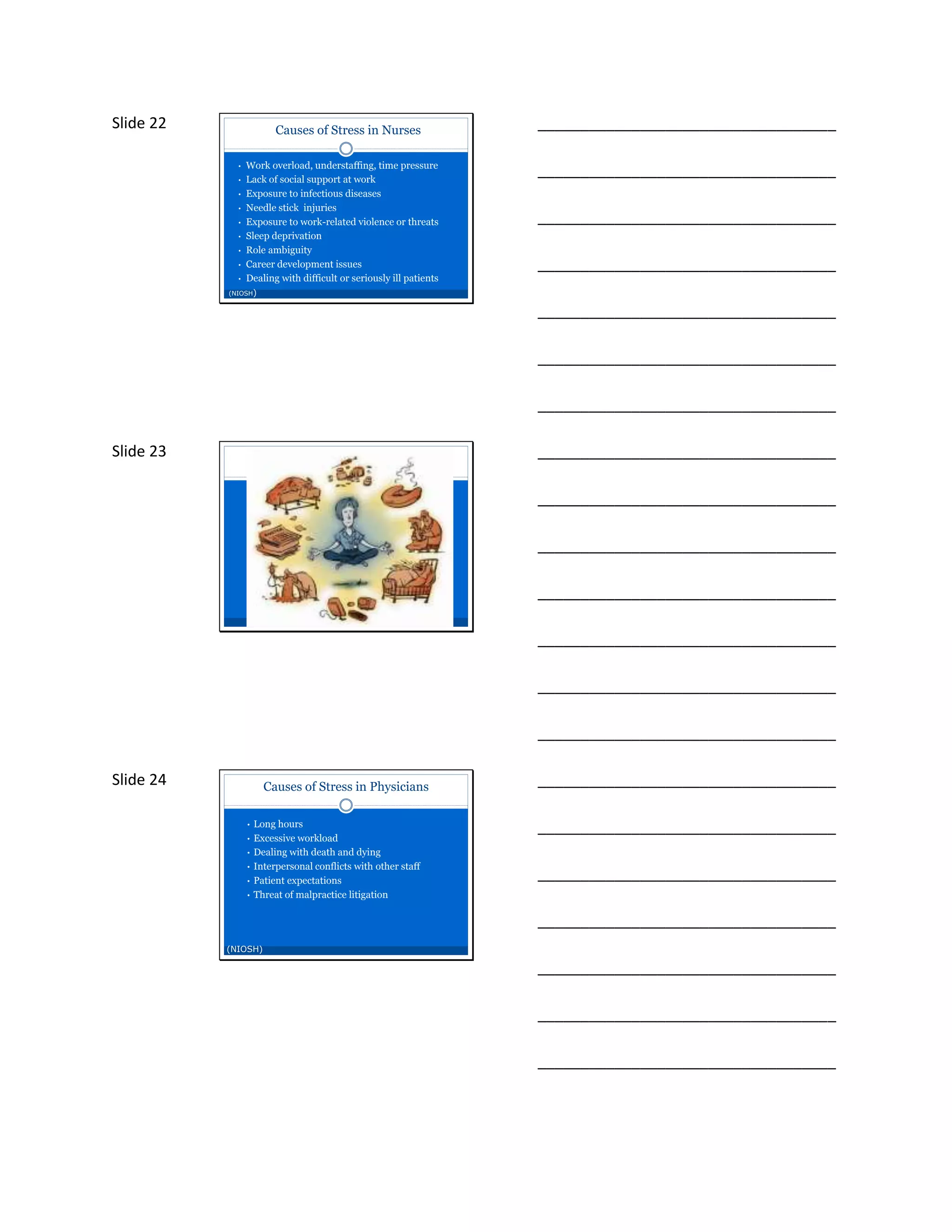
Slide 22 Causes of Stress in Nurses
• Work overload, understaffing, time pressure
• Lack of social support at work
• Exposure to infectious diseases
• Needle stick injuries
• Exposure to work-related violence or threats
• Sleep deprivation
• Role ambiguity
• Career development issues
• Dealing with difficult or seriously ill patients
(NIOSH)
___________________________________
___________________________________
___________________________________
___________________________________
___________________________________
___________________________________
___________________________________
Slide 23 ___________________________________
___________________________________
___________________________________
___________________________________
___________________________________
___________________________________
___________________________________
Slide 24 Causes of Stress in Physicians
• Long hours
• Excessive workload
• Dealing with death and dying
• Interpersonal conflicts with other staff
• Patient expectations
• Threat of malpractice litigation
(NIOSH)
___________________________________
___________________________________
___________________________________
___________________________________
___________________________________
___________________________________
___________________________________
Slide 25
Emotional Symptoms
• Job dissatisfaction
• Anxiety
• Easily agitated, frustrated, moody
• Irritability or anger
• Feeling overwhelmed
• Difficulty relaxing and quieting your mind
• Feeling worthless, powerless, negative thinking
• Feeling lonely, sadness, and depressed
___________________________________
___________________________________
___________________________________
___________________________________
___________________________________
___________________________________
___________________________________
Slide 26
Physical Symptoms
 Low energy, tired, exhaustion, fatigue
 Headaches
 Upset stomach, nausea, diarrhea, constipation
 Aches, pains, and tense muscles (back pain, stiff neck)
 Chest pain and rapid heartbeat
 Insomnia
 Frequent colds and infections
 Loss of sexual desire and/or ability
 Nervousness and shaking
 Cold or sweaty hands and feet
 Dry mouth and difficulty swallowing
 Clenched jaw and grinding teeth
___________________________________
___________________________________
___________________________________
___________________________________
___________________________________
___________________________________
___________________________________
Slide 27
Cognitive Symptoms
 Constant worrying
 Racing thoughts
 Forgetfulness, poor memory, and disorganization
 Lack of motivation or inability to focus
 Poor judgment
 Difficulty making decisions
 Inability to concentrate
 Being pessimistic or seeing only the negative side
 Lack of creativity
 Loss of sense of humor
___________________________________
___________________________________
___________________________________
___________________________________
___________________________________
___________________________________
___________________________________
Slide 28
Behavioral Symptoms
 Absenteeism
 Sleep disturbances
 Changes in appetite – either not eating or eating too
much
 Procrastinating and avoiding responsibilities
 Increased use of alcohol, drugs, or cigarettes
 Exhibiting more nervous behaviors, such as nail
biting, fidgeting, and pacing
 Angry outbursts
 Social withdrawal
 Exercise less
___________________________________
___________________________________
___________________________________
___________________________________
___________________________________
___________________________________
___________________________________
Slide 29
Consequences of Long Term Stress
Stress is “Dis…ease”
___________________________________
___________________________________
___________________________________
___________________________________
___________________________________
___________________________________
___________________________________
Slide 30
Consequences of Long Term Stress
 Cardiovascular disease- heart disease, high blood
pressure, abnormal heart rhythm, blood clots, heart
attack, heart failure, and stroke
 Diabetes
 Obesity and other eating disorders
 Mental health problems- depression, anxiety, and
personality disorders
 Gastrointestinal (stomach) Disorders – GERD,
gastritis, ulcerative colitis, irritable colon
___________________________________
___________________________________
___________________________________
___________________________________
___________________________________
___________________________________
___________________________________
Slide 31
Consequences of Long Term Stress
 Immune – sick more often, harder to fight off
disease
 Asthma and other Respiratory Conditions
 Skin and hair problems – acne, psoriasis, eczema,
hair loss
 Menstrual problems – painful menstruation, low
fertility
 Sexual dysfunction – impotence, loss of desire
___________________________________
___________________________________
___________________________________
___________________________________
___________________________________
___________________________________
___________________________________
Slide 32
Reducing Stress in Workplace
Organizational Change:
• Ensure workload is in line with workers’
capabilities and resources
• Provide adequate staffing and reasonable shift
schedules
• Clearly define workers’ roles and
responsibilities
• Provide organized, efficient, safe work
environment and safe equipment
(NIOSH)
___________________________________
___________________________________
___________________________________
___________________________________
___________________________________
___________________________________
___________________________________
Slide 33
Reducing Stress in Workplace
• Give workers opportunity to participate in
decisions and actions affecting their jobs
• Improve communication – regular staff
meetings
• Reduce uncertainty about career development
and future employment prospects
• Provide opportunity for social interaction
among workers
(NIOSH)
___________________________________
___________________________________
___________________________________
___________________________________
___________________________________
___________________________________
___________________________________
Slide 34
Reducing Stress in Workplace
Stress Management Intervention
• Training in coping strategies
• Progressive relaxation
• Biofeedback
• Cognitive-behavioral techniques
• Time management
• Interpersonal skills
• Provide counseling and/or group therapy with
mental health provider, Employee Assistance
Programs
(NIOSH)
___________________________________
___________________________________
___________________________________
___________________________________
___________________________________
___________________________________
___________________________________
Slide 35 ___________________________________
___________________________________
___________________________________
___________________________________
___________________________________
___________________________________
___________________________________
Slide 36
Okinawans
• Highest concentration of people 100 years or older
• Okinawa - 34 centenarians/100,000
• United States – 10 centenarians/100,000
• Heart disease, stroke, cancer, obesity, and
dementia rates are low.
___________________________________
___________________________________
___________________________________
___________________________________
___________________________________
___________________________________
___________________________________
Slide 37
•Purposeful lives – give clear roles and feelings of being
needed well into their 100s.
•Secure social networks - family, friends, neighbors help each
other and give financial and emotional support.
• Strong spiritual commitment and a positive outlook on life.
Okinawans
___________________________________
___________________________________
___________________________________
___________________________________
___________________________________
___________________________________
___________________________________
Slide 38
Okinawan Secret of Longevity
• Low calorie, plant based diet - 7
servings fruits and
vegetables/day, 7 servings of
grain/day, fish several times per
week, and 2 servings of soy/day.
• Minimal dairy products and meat.
• Regular exercise that connect the
mind and body.
• Gardening, walking, dancing,
karate.
___________________________________
___________________________________
___________________________________
___________________________________
___________________________________
___________________________________
___________________________________
Slide 39
Coping with Stress
 Identify your stress triggers.
 Keep a diary and record situations, events, and people
who cause you to have a negative physical, mental, or
emotional response.
 Describe:
Where were you?
Who was involved?
What was your reaction?
How did you feel?
 Tackle your stress triggers.
Find a way to change the circumstances causing it.
___________________________________
___________________________________
___________________________________
___________________________________
___________________________________
___________________________________
___________________________________
Slide 40
Coping with Stress
• Set realistic goals – Review goals on regular basis and adjust
as needed
• Sharpen time management skills.
• Make a priority list – do most important things first.
• Protect your time – block out time on your calendar to work
on an important project.
• Delegate Tasks!
___________________________________
___________________________________
___________________________________
___________________________________
___________________________________
___________________________________
___________________________________
Slide 41
Coping with Stress
• Get other points of view and
suggestions. Talking can
simply relieve stress.
• Be with friends and family –
have a cup of tea with during
break with friend at work.
• Phone call with sister.
___________________________________
___________________________________
___________________________________
___________________________________
___________________________________
___________________________________
___________________________________
Slide 42
Coping with Stress
S.T.O.P. - Live mindfully and consciously.
• S – Stop what you are doing.
• T – take a few deep breaths.
• O – Observe your body and smile.
• P - Proceed with kindness and
compassion.
___________________________________
___________________________________
___________________________________
___________________________________
___________________________________
___________________________________
___________________________________
Slide 43
The Dalai Lama suggests:
Spend energy focusing on the solution rather than
worrying about the problem.
___________________________________
___________________________________
___________________________________
___________________________________
___________________________________
___________________________________
___________________________________
Slide 44
Coping with Stress
 Seek professional help.
• Talk to your physician,
• Mental health provider
(Psychologist, psychiatrist).
• Employee assistance program.
• Take a stress management
class (colleges, mental health
providers, employer wellness
programs).
___________________________________
___________________________________
___________________________________
___________________________________
___________________________________
___________________________________
___________________________________
Slide 45
Coping with Stress
• Think positive – Optimism may affect your quality of life and
enable you to cope better.
• Focus on one thing at a time – Our conscious cannot
multitask.
• Take 20 minutes for yourself
• Stretch or walk
• Sit quietly without an agenda
• Explore your spirituality.
___________________________________
___________________________________
___________________________________
___________________________________
___________________________________
___________________________________
___________________________________
Slide 46
Coping with Stress
• Make time for activities you enjoy:
• Reading , Movie
• Socializing
• Volunteer
• Concert
• Art exhibit
• Comedy show
• Sporting event
• Hobby - musical instrument,
sewing, gardening, painting,
singing, drawing
___________________________________
___________________________________
___________________________________
___________________________________
___________________________________
___________________________________
___________________________________
Slide 47
Coping with Stress
 Treat yourself with love as much
as you love others.
 Get a massage or try self massage.
 Eat healthy – fresh fruits and
vegetables, lean protein, whole
grains.
 Limit alcohol and caffeine.
 Coffee raises stress hormone-
switch to green tea or chamomile
tea
 Take a vacation or long weekend
when you can.
___________________________________
___________________________________
___________________________________
___________________________________
___________________________________
___________________________________
___________________________________
Slide 48 Coping with Stress
 Deep breathing.
 Meditation, qigong.
 Imagery - Go to your “Happy
Place”.
 Progressive muscle relaxation.
 Listen to music.
• Journaling – let your thoughts
flow.
• Keep a “Gratitude Journal”.
___________________________________
___________________________________
___________________________________
___________________________________
___________________________________
___________________________________
___________________________________
Slide 49
Tai Chi
 Improves stress management.
 Reduces anxiety and depression.
 Lowers blood pressure.
 Improves balance, flexibility, and
muscle strength.
 Increase mental focus and
concentration.
 YMCA, churches.
 Norton Health and Wellness
Center – September, 2014
___________________________________
___________________________________
___________________________________
___________________________________
___________________________________
___________________________________
___________________________________
Slide 50
Yoga
 Improves strength, balance,
flexibility and coordination.
 Reduces stress and anxiety.
 Helps blood pressure.
 Improves muscle mass and bone
density.
 Increases mental focus and
concentration.
 Helps relieve asthma symptoms.
 Reduces arthritis pain.
 Yoga Nidra Classes - Marshall
Women’s Health and Education
Center – July 2014
___________________________________
___________________________________
___________________________________
___________________________________
___________________________________
___________________________________
___________________________________
Slide 51
Coping with Stress
 Unplug yourself from the Office!
 Each night, block 30 minutes for
email.
 Turn It Off !
 Put Out of Sight!
 Don’t play catch up before
bedtime – hard from brain to
relax and sleep if in work mode.
___________________________________
___________________________________
___________________________________
___________________________________
___________________________________
___________________________________
___________________________________
Slide 52
Coping with Stress
 Take it Outside – Be with
Mother Nature.
 Natural light increases levels
of mood lifting chemical
serotonin.
 Notice the colors, the smells,
fresh air.
 Feel breeze on your face.
 Notice shapes in clouds.
___________________________________
___________________________________
___________________________________
___________________________________
___________________________________
___________________________________
___________________________________
Slide 53 Exercise
•Boosts serotonin and immune
system.
•150 minutes of moderate
physical activity per week or 75
minutes of vigorous activity per
week.
___________________________________
___________________________________
___________________________________
___________________________________
___________________________________
___________________________________
___________________________________
Slide 54
Stress Balls
___________________________________
___________________________________
___________________________________
___________________________________
___________________________________
___________________________________
___________________________________
Slide 55
Don’t Smoke, Avoid Secondhand Smoke
 Nicotine is a stimulant!
 Smoking Cessation Classes:
Cooper-Clayton method,
behavioral modification program
involving nicotine replacement and
nicotine reduction therapy, as well
as group support.
 All classes meet once a week for 13
weeks.
 Norton Healthcare - 629-1234.
 Louisville Metro Public Health and
Wellness - 574-STOP (7867).
___________________________________
___________________________________
___________________________________
___________________________________
___________________________________
___________________________________
___________________________________
Slide 56 Get Your Beauty Sleep!
• Women with poor sleep had higher levels of psychological
distress, and greater feelings of hostility, depression, and
anger.
• Women also had higher levels
of C-reactive protein
and interleukin-6
inflammation biomarkers.
Duke University Study: March 2008
___________________________________
___________________________________
___________________________________
___________________________________
___________________________________
___________________________________
___________________________________
Slide 57 Fatty Fishes
• Salmon, sardines, or tuna fish.
• High in Omega 3 fatty acids
and Vitamin B12.
• Helps protect heart.
• Help prevents surges in stress
hormones.
• Helps with mood disorders,
depression and PMS.
___________________________________
___________________________________
___________________________________
___________________________________
___________________________________
___________________________________
___________________________________
Slide 58
Warm Cup of Oatmeal or Green Tea
• Oatmeal
• Increases serotonin.
• High in Vitamin B and
Magnesium.
• Green Tea
• High in antioxidants,
flavanoids and catechins that
have a calming effect.
• Helps you recover from
stressful events more quickly.
___________________________________
___________________________________
___________________________________
___________________________________
___________________________________
___________________________________
___________________________________
Slide 59
Fruits and Veggies
 Oranges
• High in Vitamin C to help
boost immune system.
• Lowers levels of stress
hormone – cortisol.
 Spinach
• High in Magnesium.
• Helps with fatigue and
headaches.
• Relaxes muscles and calms.
___________________________________
___________________________________
___________________________________
___________________________________
___________________________________
___________________________________
___________________________________
Slide 60
Coping with Stress
 Show some love.
 Cuddle your pet.
 Give an unexpected hug.
 Snuggle with your
spouse.
___________________________________
___________________________________
___________________________________
___________________________________
___________________________________
___________________________________
___________________________________
Slide 61
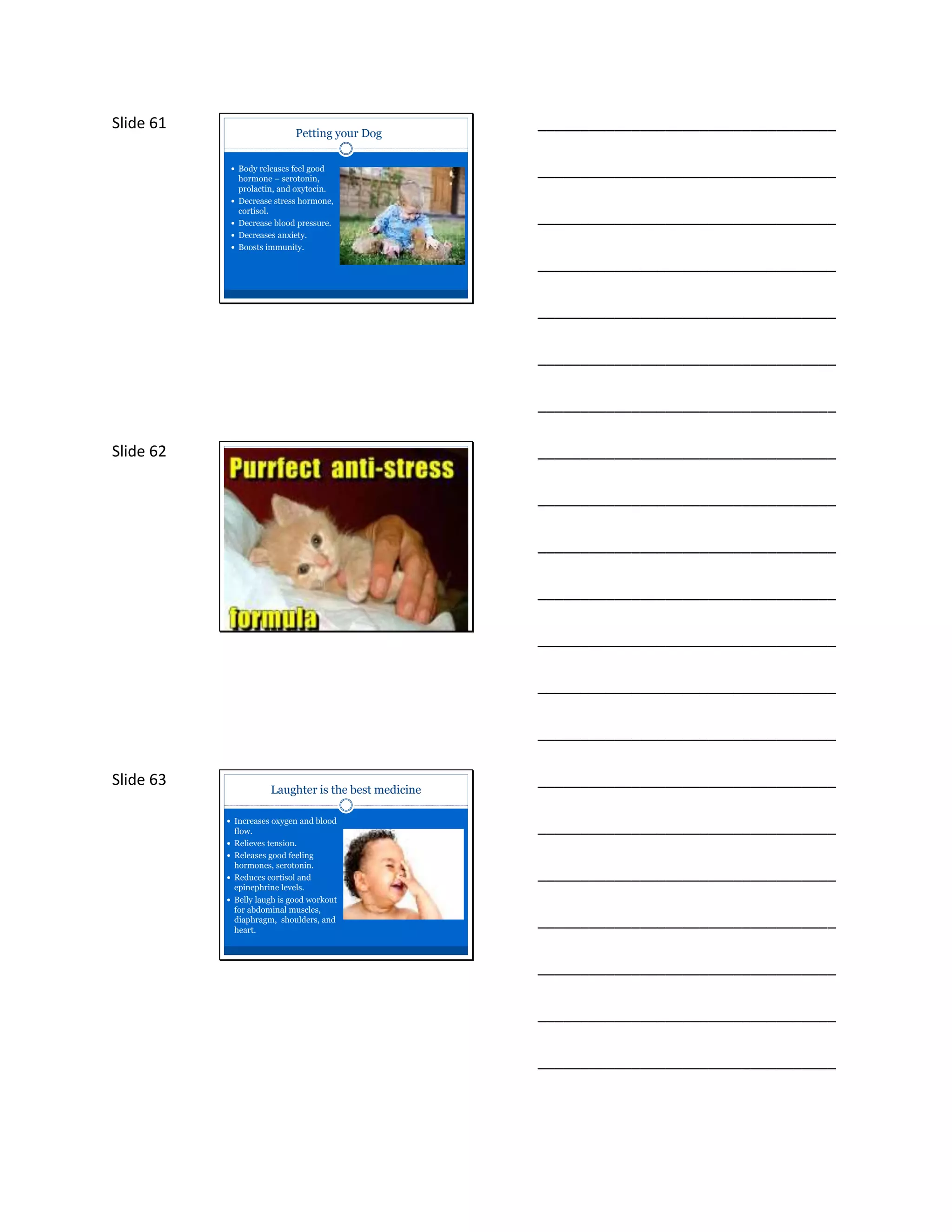
Petting your Dog
 Body releases feel good
hormone – serotonin,
prolactin, and oxytocin.
 Decrease stress hormone,
cortisol.
 Decrease blood pressure.
 Decreases anxiety.
 Boosts immunity.
___________________________________
___________________________________
___________________________________
___________________________________
___________________________________
___________________________________
___________________________________
Slide 62 ___________________________________
___________________________________
___________________________________
___________________________________
___________________________________
___________________________________
___________________________________
Slide 63
Laughter is the best medicine
 Increases oxygen and blood
flow.
 Relieves tension.
 Releases good feeling
hormones, serotonin.
 Reduces cortisol and
epinephrine levels.
 Belly laugh is good workout
for abdominal muscles,
diaphragm, shoulders, and
heart.
___________________________________
___________________________________
___________________________________
___________________________________
___________________________________
___________________________________
___________________________________
Slide 64
Resources
 The Center for Women and Families
24 hour Crisis Line – 877-803-7577
 Seven Counties
Emergency & Crisis Numbers 24/7
• 502-589-4313 or 1-800-221-0446
For an appointment – 502-589-1100; 1-800-264-8799.
 National Suicide Prevention Lifeline
1-800-273-TALK (8255)
www.suicidepreventionlifeline.org
 Kentucky Suicide Prevention Group
(502) 931-3999
___________________________________
___________________________________
___________________________________
___________________________________
___________________________________
___________________________________
___________________________________
Slide 65
Resources
 Location of a Psychologist in Your area – American
Psychologist Association – 1-800-964-2000 or
www.apahelpcenter.org/
 Hosparus/Hospice and Palliative Care – 456-5451
 Postpartum Support International
Postpartum Support Kentuckiana: 502-541-1818
 Postpartum Depression Support Group
Norton Suburban: 899-6220
 Norton Women’s Counseling Services –
Sheila Ward, APRN – 899-6220
___________________________________
___________________________________
___________________________________
___________________________________
___________________________________
___________________________________
___________________________________
Slide 66
Resources
WomenHeart Support Network Coordinators
Bev Hurt – 419-0583, Vanessa Rogers – 644-2288,
WH-Louisville@womenheart.org
___________________________________
___________________________________
___________________________________
___________________________________
___________________________________
___________________________________
___________________________________
Slide 67
Resources
 Norton Stroke Support Group – 636-7349
 Norton Wellness for Life Series – 629-1234
 Norton Healthcare Grief Care – 629-5926
 Norton Consoling Parents and Consoling Grandparents –
629-2103
 Norton Healthcare Church and Health Ministries - 629-2700
 Tai Chi or Yoga classes – 629-1234
 Norton Music Therapy – 636-7054
___________________________________
___________________________________
___________________________________
___________________________________
___________________________________
___________________________________
___________________________________
Slide 68
Resources
 National Institute for Occupational Safety and
Health (NIOSH)
 NIOSH Job Stress
www.cdc.gov/niosh/topics/stress
 Your Portable Guide to Stress Relief
www.health.harvard.edu/topic/stress
 National Institute of Mental Health
“Fact Sheet on Stress”
___________________________________
___________________________________
___________________________________
___________________________________
___________________________________
___________________________________
___________________________________
Slide 69
Resources
 www.nlm.nih.gov/medlineplus/stress.html
 www.webmd.com/balance/stress-
management/default.htm
 www.mayoclinic.com/health/depression/DS00175
 www.mayoclinic.com/health/postpartum-
depression/DS00546
 www.webmd.com/depression/postpartum-
depression/postpartum-depression-topic-overview
___________________________________
___________________________________
___________________________________
___________________________________
___________________________________
___________________________________
___________________________________
Slide 70 ___________________________________
___________________________________
___________________________________
___________________________________
___________________________________
___________________________________
___________________________________
Slide 71 ___________________________________
___________________________________
___________________________________
___________________________________
___________________________________
___________________________________
___________________________________

Topic 6 handout stress reduction

  • 1.
    Slide 1 Stress Reduction TheresaByrd RN BSN Clinical Coordinator Norton Women’s Heart and Vascular Center ___________________________________ ___________________________________ ___________________________________ ___________________________________ ___________________________________ ___________________________________ ___________________________________ Slide 2 Objectives • Review data regarding stress in the workplace and its effect on the healthcare professional and patient. • Define stress, causes, and symptoms of stress. • Recognize stress reduction techniques and coping skills. • Identify resources for stress available in the community. ___________________________________ ___________________________________ ___________________________________ ___________________________________ ___________________________________ ___________________________________ ___________________________________ Slide 3 Stress in the Workplace  OSHA declares stress a hazard of the workplace.  Costs American industry over $300 billion annually.  43% of all adults suffer adverse health effects of stress.  75-90% of all doctor visits are for stress-related ailments and complaints. www.webmd.com/mental-health/effects-of-stress-on-your-body ___________________________________ ___________________________________ ___________________________________ ___________________________________ ___________________________________ ___________________________________ ___________________________________
  • 2.
    Slide 4 Surveys onStress in Workplace 40% of workers report their job is “very or extremely stressful.” Northwestern National Life 29% of workers report they feel “quite a bit or extremely stressed at work.” Yale University 26% of workers report they are “often or very often burned out or stressed by their work.” Families and Work Institute ___________________________________ ___________________________________ ___________________________________ ___________________________________ ___________________________________ ___________________________________ ___________________________________ Slide 5 Women’s Health Study – Harvard Research  Involved over 17,000 female health professionals.  Women whose work is highly stressful are:  70% more likely to have a heart attack. Have a 40% increased risk of heart disease (heart attacks and need for coronary artery surgery).  Women who worry about losing their jobs are more likely to have high blood pressure, unhealthy cholesterol levels, and to be obese. ___________________________________ ___________________________________ ___________________________________ ___________________________________ ___________________________________ ___________________________________ ___________________________________ Slide 6 Work Stress Has been shown to result in: • Job dissatisfaction • Burnout (physical, emotional, and mental exhaustion) • Staff turnover • Occupational illness and injuries • Reduced mental health • Depression • Suicide Lundstrom et al, Am J Infect Control 2002;30:93-106 ___________________________________ ___________________________________ ___________________________________ ___________________________________ ___________________________________ ___________________________________ ___________________________________
  • 3.
    Slide 7 Studieson Job Stress • Found that medical residents feeling overwhelmed correlated with the reported number of minor medical mistakes. • Found a strong relationship between degree of stress (on a stress continuum scale) and the occurrence of patient incidents. • Found availability of technology was significantly associated with lower risk-adjusted mortality. Lundstrom et al, Am J Infect Control 2002;30:93-106 ___________________________________ ___________________________________ ___________________________________ ___________________________________ ___________________________________ ___________________________________ ___________________________________ Slide 8 Studies on Staffing Ratios Understaffing resulted in: • decreased compliance with hand washing • increased rates of blood and body fluid exposure in nurses • increased rates of pneumonia and urinary tract infections Lundstrom et al, Am J Infect Control 2002;30:93-106 ___________________________________ ___________________________________ ___________________________________ ___________________________________ ___________________________________ ___________________________________ ___________________________________ Slide 9 Studies on Staffing Ratios  Found higher rates of infection with MRSA correlated with nurse overtime and the use of temporary staffing.  Found rates of S aureus infection in neonatal ICU was 16 times higher after period of understaffing. Lundstrom et al, Am J Infect Control 2002;30:93-106 ___________________________________ ___________________________________ ___________________________________ ___________________________________ ___________________________________ ___________________________________ ___________________________________
  • 4.
    Slide 10 Studieson Job Stress and Burnout • Found that reduced length of stay, lower nurse turnover, and higher evaluations of quality of care significantly associated with: • Caregiver interactions • Unit culture • Leadership • Coordination • Communication • Conflict management Lundstrom et al, Am J Infect Control 2002;30:93-106 ___________________________________ ___________________________________ ___________________________________ ___________________________________ ___________________________________ ___________________________________ ___________________________________ Slide 11 What is Stress? ___________________________________ ___________________________________ ___________________________________ ___________________________________ ___________________________________ ___________________________________ ___________________________________ Slide 12 What is Stress?  The body’s physical and emotional reaction to change.  Very individual. Everyone perceives and reacts to stress differently.  Positive stress - normal, beneficial to help us keep alert, accomplish tasks, or prevent injury.  Negative stress- harmful if ongoing, chronic, and not dealt with in a healthy manner. ___________________________________ ___________________________________ ___________________________________ ___________________________________ ___________________________________ ___________________________________ ___________________________________
  • 5.
    Slide 13 Stress ___________________________________ ___________________________________ ___________________________________ ___________________________________ ___________________________________ ___________________________________ ___________________________________ Slide 14 Fightor Flight Response  Body reacts to life threatening events.  Elevates levels of stress hormones, adrenaline and cortisol.  Heart rate increases, Breathe faster.  Blood pressure increases –damages artery linings.  Blood sugar increases – may lead to diabetes. ___________________________________ ___________________________________ ___________________________________ ___________________________________ ___________________________________ ___________________________________ ___________________________________ Slide 15 Stress Father of Stress - research 1930’s ___________________________________ ___________________________________ ___________________________________ ___________________________________ ___________________________________ ___________________________________ ___________________________________
  • 6.
    Slide 16 Stressors  Illness– personal, family member, or friend  Becoming a caretaker  Death of a friend or loved one  Problems in relationships with family or friends  Marital conflicts, separation, and/or divorce  Family time management  Childrearing  Financial concerns  Legal problems ___________________________________ ___________________________________ ___________________________________ ___________________________________ ___________________________________ ___________________________________ ___________________________________ Slide 17 Stressors  Planning a wedding  Pregnancy  Retirement  Perfectionism  Crowds, traffic  Unemployment  Relocation  Starting a new job, job promotion  Work overload, deadlines ___________________________________ ___________________________________ ___________________________________ ___________________________________ ___________________________________ ___________________________________ ___________________________________ Slide 18 Occupational Stress • The National Institute for Occupational Safety and Health (NIOSH) defines Occupational Stress as: “the harmful physical and emotional responses that occur when the requirements of the job do not match the capabilities, resources, or needs of the worker.” (NIOSH) ___________________________________ ___________________________________ ___________________________________ ___________________________________ ___________________________________ ___________________________________ ___________________________________
  • 7.
    Slide 19 Causes ofOccupational Stress • Work overload- infrequent rest breaks, long work hours, and shift work • Lack of task control - hectic and routine tasks that have little inherent meaning, do not utilize workers' skills, and provide little sense of control • Role ambiguity - Conflicting or uncertain job expectations, too much responsibility, too many "hats to wear” (NIOSH) ___________________________________ ___________________________________ ___________________________________ ___________________________________ ___________________________________ ___________________________________ ___________________________________ Slide 20 Causes Occupational Stress Organizational factors: • Poor interpersonal relations • Lack of support or help from coworkers and supervisors • Lack of management commitment to core values • Poor or lack of communication • Lack of participation by workers in decision making • Lack of family-friendly policies (NIOSH) ___________________________________ ___________________________________ ___________________________________ ___________________________________ ___________________________________ ___________________________________ ___________________________________ Slide 21 Causes Occupational Stress  Training and career development issues: • lack of opportunity for growth, advancement, or promotion • job insecurity • rapid changes for which workers are unprepared  Conflict between work and family roles and responsibilities  Financial and economic factors (NIOSH) ___________________________________ ___________________________________ ___________________________________ ___________________________________ ___________________________________ ___________________________________ ___________________________________
  • 8.
    Slide 22 Causesof Stress in Nurses • Work overload, understaffing, time pressure • Lack of social support at work • Exposure to infectious diseases • Needle stick injuries • Exposure to work-related violence or threats • Sleep deprivation • Role ambiguity • Career development issues • Dealing with difficult or seriously ill patients (NIOSH) ___________________________________ ___________________________________ ___________________________________ ___________________________________ ___________________________________ ___________________________________ ___________________________________ Slide 23 ___________________________________ ___________________________________ ___________________________________ ___________________________________ ___________________________________ ___________________________________ ___________________________________ Slide 24 Causes of Stress in Physicians • Long hours • Excessive workload • Dealing with death and dying • Interpersonal conflicts with other staff • Patient expectations • Threat of malpractice litigation (NIOSH) ___________________________________ ___________________________________ ___________________________________ ___________________________________ ___________________________________ ___________________________________ ___________________________________
  • 9.
    Slide 25 Emotional Symptoms •Job dissatisfaction • Anxiety • Easily agitated, frustrated, moody • Irritability or anger • Feeling overwhelmed • Difficulty relaxing and quieting your mind • Feeling worthless, powerless, negative thinking • Feeling lonely, sadness, and depressed ___________________________________ ___________________________________ ___________________________________ ___________________________________ ___________________________________ ___________________________________ ___________________________________ Slide 26 Physical Symptoms  Low energy, tired, exhaustion, fatigue  Headaches  Upset stomach, nausea, diarrhea, constipation  Aches, pains, and tense muscles (back pain, stiff neck)  Chest pain and rapid heartbeat  Insomnia  Frequent colds and infections  Loss of sexual desire and/or ability  Nervousness and shaking  Cold or sweaty hands and feet  Dry mouth and difficulty swallowing  Clenched jaw and grinding teeth ___________________________________ ___________________________________ ___________________________________ ___________________________________ ___________________________________ ___________________________________ ___________________________________ Slide 27 Cognitive Symptoms  Constant worrying  Racing thoughts  Forgetfulness, poor memory, and disorganization  Lack of motivation or inability to focus  Poor judgment  Difficulty making decisions  Inability to concentrate  Being pessimistic or seeing only the negative side  Lack of creativity  Loss of sense of humor ___________________________________ ___________________________________ ___________________________________ ___________________________________ ___________________________________ ___________________________________ ___________________________________
  • 10.
    Slide 28 Behavioral Symptoms Absenteeism  Sleep disturbances  Changes in appetite – either not eating or eating too much  Procrastinating and avoiding responsibilities  Increased use of alcohol, drugs, or cigarettes  Exhibiting more nervous behaviors, such as nail biting, fidgeting, and pacing  Angry outbursts  Social withdrawal  Exercise less ___________________________________ ___________________________________ ___________________________________ ___________________________________ ___________________________________ ___________________________________ ___________________________________ Slide 29 Consequences of Long Term Stress Stress is “Dis…ease” ___________________________________ ___________________________________ ___________________________________ ___________________________________ ___________________________________ ___________________________________ ___________________________________ Slide 30 Consequences of Long Term Stress  Cardiovascular disease- heart disease, high blood pressure, abnormal heart rhythm, blood clots, heart attack, heart failure, and stroke  Diabetes  Obesity and other eating disorders  Mental health problems- depression, anxiety, and personality disorders  Gastrointestinal (stomach) Disorders – GERD, gastritis, ulcerative colitis, irritable colon ___________________________________ ___________________________________ ___________________________________ ___________________________________ ___________________________________ ___________________________________ ___________________________________
  • 11.
    Slide 31 Consequences ofLong Term Stress  Immune – sick more often, harder to fight off disease  Asthma and other Respiratory Conditions  Skin and hair problems – acne, psoriasis, eczema, hair loss  Menstrual problems – painful menstruation, low fertility  Sexual dysfunction – impotence, loss of desire ___________________________________ ___________________________________ ___________________________________ ___________________________________ ___________________________________ ___________________________________ ___________________________________ Slide 32 Reducing Stress in Workplace Organizational Change: • Ensure workload is in line with workers’ capabilities and resources • Provide adequate staffing and reasonable shift schedules • Clearly define workers’ roles and responsibilities • Provide organized, efficient, safe work environment and safe equipment (NIOSH) ___________________________________ ___________________________________ ___________________________________ ___________________________________ ___________________________________ ___________________________________ ___________________________________ Slide 33 Reducing Stress in Workplace • Give workers opportunity to participate in decisions and actions affecting their jobs • Improve communication – regular staff meetings • Reduce uncertainty about career development and future employment prospects • Provide opportunity for social interaction among workers (NIOSH) ___________________________________ ___________________________________ ___________________________________ ___________________________________ ___________________________________ ___________________________________ ___________________________________
  • 12.
    Slide 34 Reducing Stressin Workplace Stress Management Intervention • Training in coping strategies • Progressive relaxation • Biofeedback • Cognitive-behavioral techniques • Time management • Interpersonal skills • Provide counseling and/or group therapy with mental health provider, Employee Assistance Programs (NIOSH) ___________________________________ ___________________________________ ___________________________________ ___________________________________ ___________________________________ ___________________________________ ___________________________________ Slide 35 ___________________________________ ___________________________________ ___________________________________ ___________________________________ ___________________________________ ___________________________________ ___________________________________ Slide 36 Okinawans • Highest concentration of people 100 years or older • Okinawa - 34 centenarians/100,000 • United States – 10 centenarians/100,000 • Heart disease, stroke, cancer, obesity, and dementia rates are low. ___________________________________ ___________________________________ ___________________________________ ___________________________________ ___________________________________ ___________________________________ ___________________________________
  • 13.
    Slide 37 •Purposeful lives– give clear roles and feelings of being needed well into their 100s. •Secure social networks - family, friends, neighbors help each other and give financial and emotional support. • Strong spiritual commitment and a positive outlook on life. Okinawans ___________________________________ ___________________________________ ___________________________________ ___________________________________ ___________________________________ ___________________________________ ___________________________________ Slide 38 Okinawan Secret of Longevity • Low calorie, plant based diet - 7 servings fruits and vegetables/day, 7 servings of grain/day, fish several times per week, and 2 servings of soy/day. • Minimal dairy products and meat. • Regular exercise that connect the mind and body. • Gardening, walking, dancing, karate. ___________________________________ ___________________________________ ___________________________________ ___________________________________ ___________________________________ ___________________________________ ___________________________________ Slide 39 Coping with Stress  Identify your stress triggers.  Keep a diary and record situations, events, and people who cause you to have a negative physical, mental, or emotional response.  Describe: Where were you? Who was involved? What was your reaction? How did you feel?  Tackle your stress triggers. Find a way to change the circumstances causing it. ___________________________________ ___________________________________ ___________________________________ ___________________________________ ___________________________________ ___________________________________ ___________________________________
  • 14.
    Slide 40 Coping withStress • Set realistic goals – Review goals on regular basis and adjust as needed • Sharpen time management skills. • Make a priority list – do most important things first. • Protect your time – block out time on your calendar to work on an important project. • Delegate Tasks! ___________________________________ ___________________________________ ___________________________________ ___________________________________ ___________________________________ ___________________________________ ___________________________________ Slide 41 Coping with Stress • Get other points of view and suggestions. Talking can simply relieve stress. • Be with friends and family – have a cup of tea with during break with friend at work. • Phone call with sister. ___________________________________ ___________________________________ ___________________________________ ___________________________________ ___________________________________ ___________________________________ ___________________________________ Slide 42 Coping with Stress S.T.O.P. - Live mindfully and consciously. • S – Stop what you are doing. • T – take a few deep breaths. • O – Observe your body and smile. • P - Proceed with kindness and compassion. ___________________________________ ___________________________________ ___________________________________ ___________________________________ ___________________________________ ___________________________________ ___________________________________
  • 15.
    Slide 43 The DalaiLama suggests: Spend energy focusing on the solution rather than worrying about the problem. ___________________________________ ___________________________________ ___________________________________ ___________________________________ ___________________________________ ___________________________________ ___________________________________ Slide 44 Coping with Stress  Seek professional help. • Talk to your physician, • Mental health provider (Psychologist, psychiatrist). • Employee assistance program. • Take a stress management class (colleges, mental health providers, employer wellness programs). ___________________________________ ___________________________________ ___________________________________ ___________________________________ ___________________________________ ___________________________________ ___________________________________ Slide 45 Coping with Stress • Think positive – Optimism may affect your quality of life and enable you to cope better. • Focus on one thing at a time – Our conscious cannot multitask. • Take 20 minutes for yourself • Stretch or walk • Sit quietly without an agenda • Explore your spirituality. ___________________________________ ___________________________________ ___________________________________ ___________________________________ ___________________________________ ___________________________________ ___________________________________
  • 16.
    Slide 46 Coping withStress • Make time for activities you enjoy: • Reading , Movie • Socializing • Volunteer • Concert • Art exhibit • Comedy show • Sporting event • Hobby - musical instrument, sewing, gardening, painting, singing, drawing ___________________________________ ___________________________________ ___________________________________ ___________________________________ ___________________________________ ___________________________________ ___________________________________ Slide 47 Coping with Stress  Treat yourself with love as much as you love others.  Get a massage or try self massage.  Eat healthy – fresh fruits and vegetables, lean protein, whole grains.  Limit alcohol and caffeine.  Coffee raises stress hormone- switch to green tea or chamomile tea  Take a vacation or long weekend when you can. ___________________________________ ___________________________________ ___________________________________ ___________________________________ ___________________________________ ___________________________________ ___________________________________ Slide 48 Coping with Stress  Deep breathing.  Meditation, qigong.  Imagery - Go to your “Happy Place”.  Progressive muscle relaxation.  Listen to music. • Journaling – let your thoughts flow. • Keep a “Gratitude Journal”. ___________________________________ ___________________________________ ___________________________________ ___________________________________ ___________________________________ ___________________________________ ___________________________________
  • 17.
    Slide 49 Tai Chi Improves stress management.  Reduces anxiety and depression.  Lowers blood pressure.  Improves balance, flexibility, and muscle strength.  Increase mental focus and concentration.  YMCA, churches.  Norton Health and Wellness Center – September, 2014 ___________________________________ ___________________________________ ___________________________________ ___________________________________ ___________________________________ ___________________________________ ___________________________________ Slide 50 Yoga  Improves strength, balance, flexibility and coordination.  Reduces stress and anxiety.  Helps blood pressure.  Improves muscle mass and bone density.  Increases mental focus and concentration.  Helps relieve asthma symptoms.  Reduces arthritis pain.  Yoga Nidra Classes - Marshall Women’s Health and Education Center – July 2014 ___________________________________ ___________________________________ ___________________________________ ___________________________________ ___________________________________ ___________________________________ ___________________________________ Slide 51 Coping with Stress  Unplug yourself from the Office!  Each night, block 30 minutes for email.  Turn It Off !  Put Out of Sight!  Don’t play catch up before bedtime – hard from brain to relax and sleep if in work mode. ___________________________________ ___________________________________ ___________________________________ ___________________________________ ___________________________________ ___________________________________ ___________________________________
  • 18.
    Slide 52 Coping withStress  Take it Outside – Be with Mother Nature.  Natural light increases levels of mood lifting chemical serotonin.  Notice the colors, the smells, fresh air.  Feel breeze on your face.  Notice shapes in clouds. ___________________________________ ___________________________________ ___________________________________ ___________________________________ ___________________________________ ___________________________________ ___________________________________ Slide 53 Exercise •Boosts serotonin and immune system. •150 minutes of moderate physical activity per week or 75 minutes of vigorous activity per week. ___________________________________ ___________________________________ ___________________________________ ___________________________________ ___________________________________ ___________________________________ ___________________________________ Slide 54 Stress Balls ___________________________________ ___________________________________ ___________________________________ ___________________________________ ___________________________________ ___________________________________ ___________________________________
  • 19.
    Slide 55 Don’t Smoke,Avoid Secondhand Smoke  Nicotine is a stimulant!  Smoking Cessation Classes: Cooper-Clayton method, behavioral modification program involving nicotine replacement and nicotine reduction therapy, as well as group support.  All classes meet once a week for 13 weeks.  Norton Healthcare - 629-1234.  Louisville Metro Public Health and Wellness - 574-STOP (7867). ___________________________________ ___________________________________ ___________________________________ ___________________________________ ___________________________________ ___________________________________ ___________________________________ Slide 56 Get Your Beauty Sleep! • Women with poor sleep had higher levels of psychological distress, and greater feelings of hostility, depression, and anger. • Women also had higher levels of C-reactive protein and interleukin-6 inflammation biomarkers. Duke University Study: March 2008 ___________________________________ ___________________________________ ___________________________________ ___________________________________ ___________________________________ ___________________________________ ___________________________________ Slide 57 Fatty Fishes • Salmon, sardines, or tuna fish. • High in Omega 3 fatty acids and Vitamin B12. • Helps protect heart. • Help prevents surges in stress hormones. • Helps with mood disorders, depression and PMS. ___________________________________ ___________________________________ ___________________________________ ___________________________________ ___________________________________ ___________________________________ ___________________________________
  • 20.
    Slide 58 Warm Cupof Oatmeal or Green Tea • Oatmeal • Increases serotonin. • High in Vitamin B and Magnesium. • Green Tea • High in antioxidants, flavanoids and catechins that have a calming effect. • Helps you recover from stressful events more quickly. ___________________________________ ___________________________________ ___________________________________ ___________________________________ ___________________________________ ___________________________________ ___________________________________ Slide 59 Fruits and Veggies  Oranges • High in Vitamin C to help boost immune system. • Lowers levels of stress hormone – cortisol.  Spinach • High in Magnesium. • Helps with fatigue and headaches. • Relaxes muscles and calms. ___________________________________ ___________________________________ ___________________________________ ___________________________________ ___________________________________ ___________________________________ ___________________________________ Slide 60 Coping with Stress  Show some love.  Cuddle your pet.  Give an unexpected hug.  Snuggle with your spouse. ___________________________________ ___________________________________ ___________________________________ ___________________________________ ___________________________________ ___________________________________ ___________________________________
  • 21.
    Slide 61 Petting yourDog  Body releases feel good hormone – serotonin, prolactin, and oxytocin.  Decrease stress hormone, cortisol.  Decrease blood pressure.  Decreases anxiety.  Boosts immunity. ___________________________________ ___________________________________ ___________________________________ ___________________________________ ___________________________________ ___________________________________ ___________________________________ Slide 62 ___________________________________ ___________________________________ ___________________________________ ___________________________________ ___________________________________ ___________________________________ ___________________________________ Slide 63 Laughter is the best medicine  Increases oxygen and blood flow.  Relieves tension.  Releases good feeling hormones, serotonin.  Reduces cortisol and epinephrine levels.  Belly laugh is good workout for abdominal muscles, diaphragm, shoulders, and heart. ___________________________________ ___________________________________ ___________________________________ ___________________________________ ___________________________________ ___________________________________ ___________________________________
  • 22.
    Slide 64 Resources  TheCenter for Women and Families 24 hour Crisis Line – 877-803-7577  Seven Counties Emergency & Crisis Numbers 24/7 • 502-589-4313 or 1-800-221-0446 For an appointment – 502-589-1100; 1-800-264-8799.  National Suicide Prevention Lifeline 1-800-273-TALK (8255) www.suicidepreventionlifeline.org  Kentucky Suicide Prevention Group (502) 931-3999 ___________________________________ ___________________________________ ___________________________________ ___________________________________ ___________________________________ ___________________________________ ___________________________________ Slide 65 Resources  Location of a Psychologist in Your area – American Psychologist Association – 1-800-964-2000 or www.apahelpcenter.org/  Hosparus/Hospice and Palliative Care – 456-5451  Postpartum Support International Postpartum Support Kentuckiana: 502-541-1818  Postpartum Depression Support Group Norton Suburban: 899-6220  Norton Women’s Counseling Services – Sheila Ward, APRN – 899-6220 ___________________________________ ___________________________________ ___________________________________ ___________________________________ ___________________________________ ___________________________________ ___________________________________ Slide 66 Resources WomenHeart Support Network Coordinators Bev Hurt – 419-0583, Vanessa Rogers – 644-2288, WH-Louisville@womenheart.org ___________________________________ ___________________________________ ___________________________________ ___________________________________ ___________________________________ ___________________________________ ___________________________________
  • 23.
    Slide 67 Resources  NortonStroke Support Group – 636-7349  Norton Wellness for Life Series – 629-1234  Norton Healthcare Grief Care – 629-5926  Norton Consoling Parents and Consoling Grandparents – 629-2103  Norton Healthcare Church and Health Ministries - 629-2700  Tai Chi or Yoga classes – 629-1234  Norton Music Therapy – 636-7054 ___________________________________ ___________________________________ ___________________________________ ___________________________________ ___________________________________ ___________________________________ ___________________________________ Slide 68 Resources  National Institute for Occupational Safety and Health (NIOSH)  NIOSH Job Stress www.cdc.gov/niosh/topics/stress  Your Portable Guide to Stress Relief www.health.harvard.edu/topic/stress  National Institute of Mental Health “Fact Sheet on Stress” ___________________________________ ___________________________________ ___________________________________ ___________________________________ ___________________________________ ___________________________________ ___________________________________ Slide 69 Resources  www.nlm.nih.gov/medlineplus/stress.html  www.webmd.com/balance/stress- management/default.htm  www.mayoclinic.com/health/depression/DS00175  www.mayoclinic.com/health/postpartum- depression/DS00546  www.webmd.com/depression/postpartum- depression/postpartum-depression-topic-overview ___________________________________ ___________________________________ ___________________________________ ___________________________________ ___________________________________ ___________________________________ ___________________________________
  • 24.
    Slide 70 ___________________________________ ___________________________________ ___________________________________ ___________________________________ ___________________________________ ___________________________________ ___________________________________ Slide71 ___________________________________ ___________________________________ ___________________________________ ___________________________________ ___________________________________ ___________________________________ ___________________________________