DIARY ENTRY
IB English HL
What is it?
 A diary or journal entry is a type of text that
consists on recounting one´s day.
 It has an informal register (with exceptions).
 It´s supposed to be personal, thus written in
first person.
When is it used?
 Diary entries are used to
recount the events of a day and
it´s frequently used informally
by individuals all around the
world for personal uses.
 It may also hold some
importance like a Captain´s
binnacle or a psychiatrist´s
notepad. This type of entries
have a formal register.
Structure
 Since this type of text is informal, the actual
structure of the text is not very important. What
matters is that it recounts the events of the day.
Although some minor details may help you distinct
a journal entry.
 Heading: diary entries state the date of the day it
was written and the place where the events took
place.
 Salutation: a brief clause that states to whom is
the journal addressed like “dear diary”.
 Farewell: another clause that marks the end of the
entry like “hoping for a better- Lucy”. (don´t forget
to put your name in this part)
How to write a diary entry?
 Begin by including the formalities of the text.
 Recount the events of the day in chronological
order.
 End the body of the text with a reflection of
yours.
 Conclude the entry with a farewell.
Characteristics of a Diary Entry
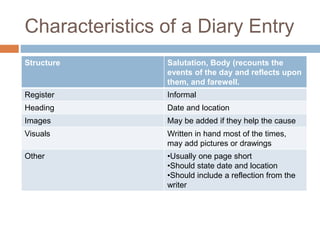
Structure Salutation, Body (recounts the
events of the day and reflects upon
them, and farewell.
Register Informal
Heading Date and location
Images May be added if they help the cause
Visuals Written in hand most of the times,
may add pictures or drawings
Other •Usually one page short
•Should state date and location
•Should include a reflection from the
writer

Topic 4 Diary Entry

  • 1.
  • 2.
    What is it? A diary or journal entry is a type of text that consists on recounting one´s day.  It has an informal register (with exceptions).  It´s supposed to be personal, thus written in first person.
  • 3.
    When is itused?  Diary entries are used to recount the events of a day and it´s frequently used informally by individuals all around the world for personal uses.  It may also hold some importance like a Captain´s binnacle or a psychiatrist´s notepad. This type of entries have a formal register.
  • 4.
    Structure  Since thistype of text is informal, the actual structure of the text is not very important. What matters is that it recounts the events of the day. Although some minor details may help you distinct a journal entry.  Heading: diary entries state the date of the day it was written and the place where the events took place.  Salutation: a brief clause that states to whom is the journal addressed like “dear diary”.  Farewell: another clause that marks the end of the entry like “hoping for a better- Lucy”. (don´t forget to put your name in this part)
  • 5.
    How to writea diary entry?  Begin by including the formalities of the text.  Recount the events of the day in chronological order.  End the body of the text with a reflection of yours.  Conclude the entry with a farewell.
  • 6.
    Characteristics of aDiary Entry Structure Salutation, Body (recounts the events of the day and reflects upon them, and farewell. Register Informal Heading Date and location Images May be added if they help the cause Visuals Written in hand most of the times, may add pictures or drawings Other •Usually one page short •Should state date and location •Should include a reflection from the writer