CREATIVE WRITING:
Writing a Journal Entry
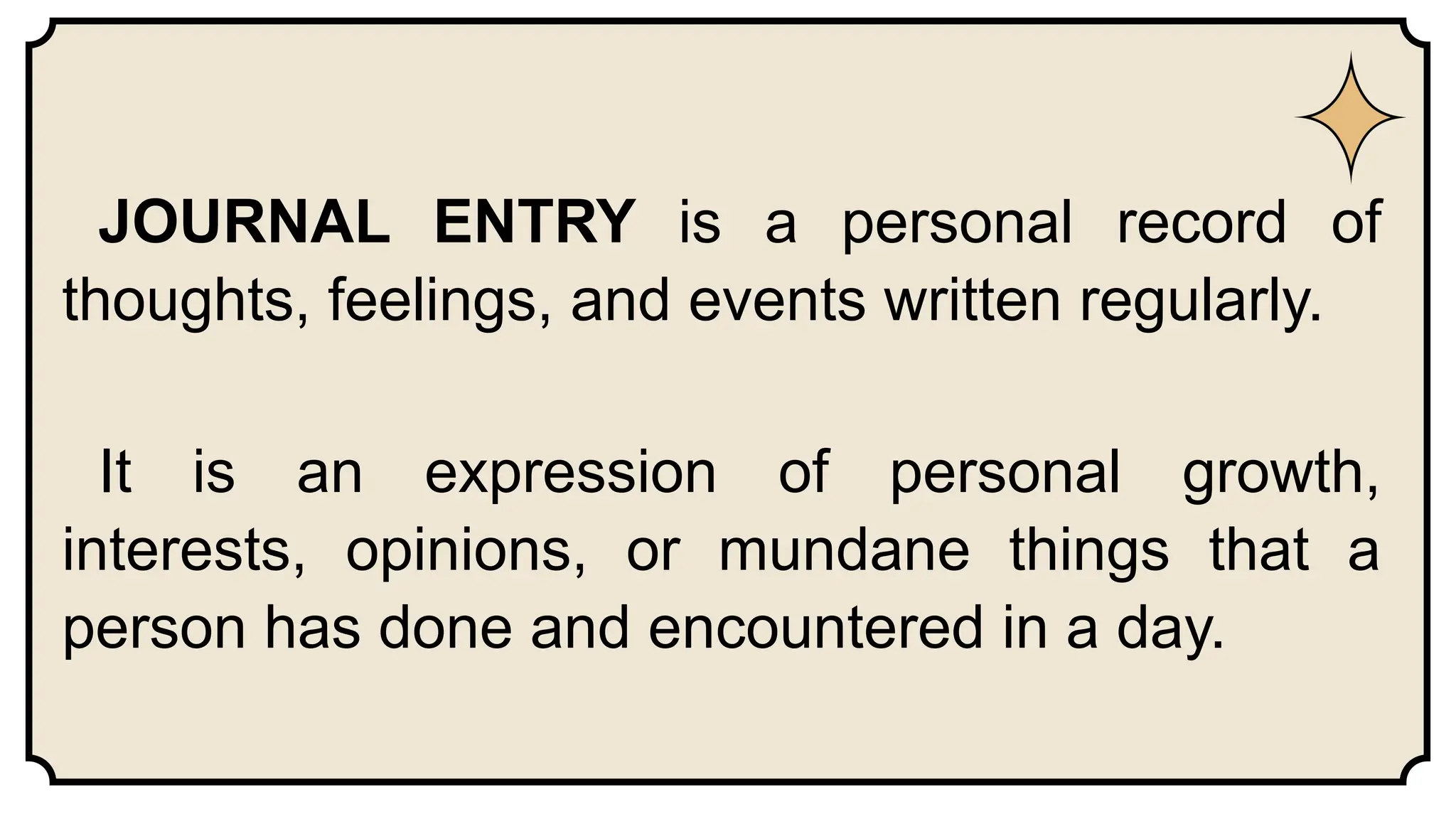
JOURNAL ENTRY is a personal record of
thoughts, feelings, and events written regularly.
It is an expression of personal growth,
interests, opinions, or mundane things that a
person has done and encountered in a day.
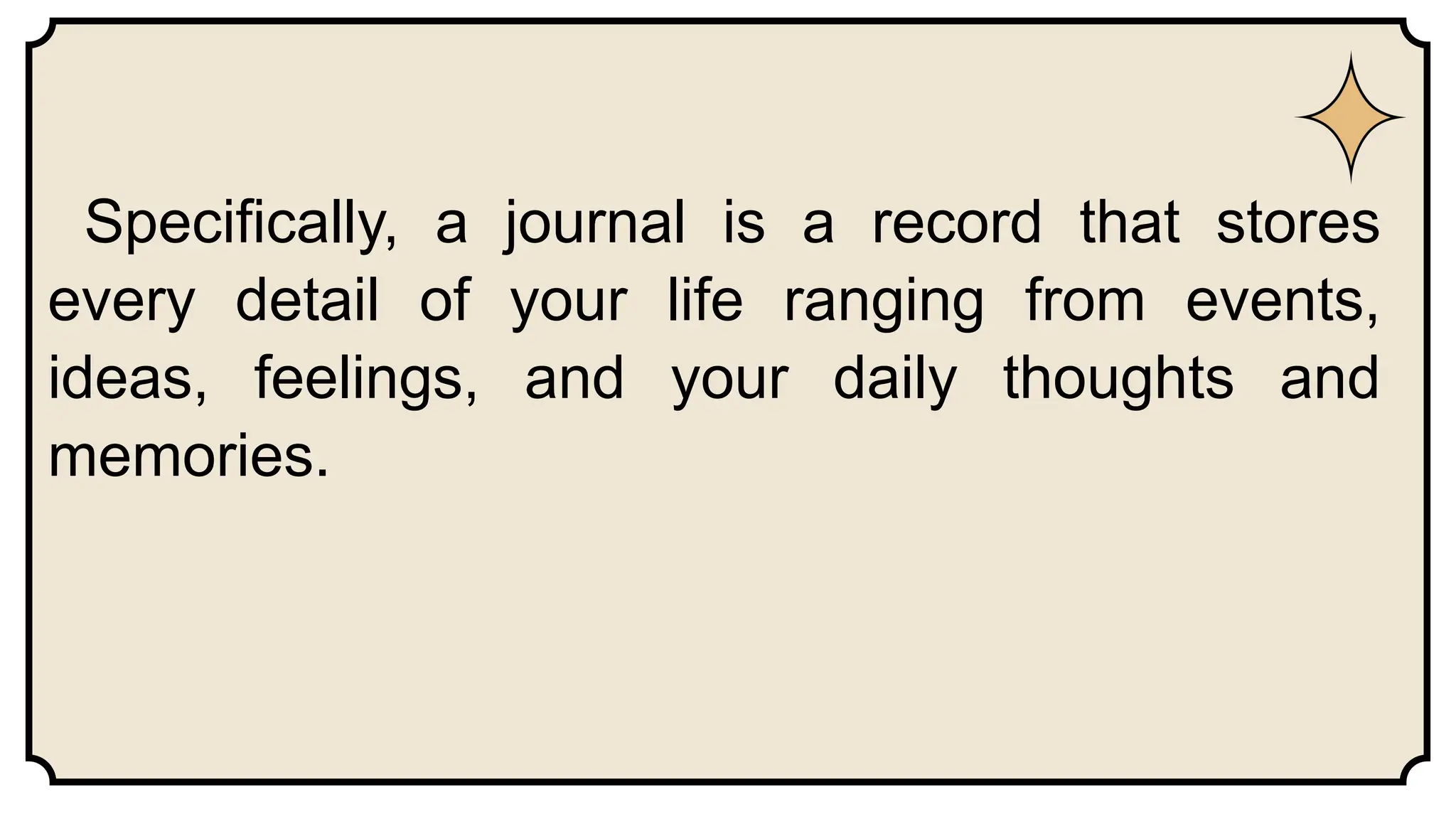
Specifically, a journal is a record that stores
every detail of your life ranging from events,
ideas, feelings, and your daily thoughts and
memories.
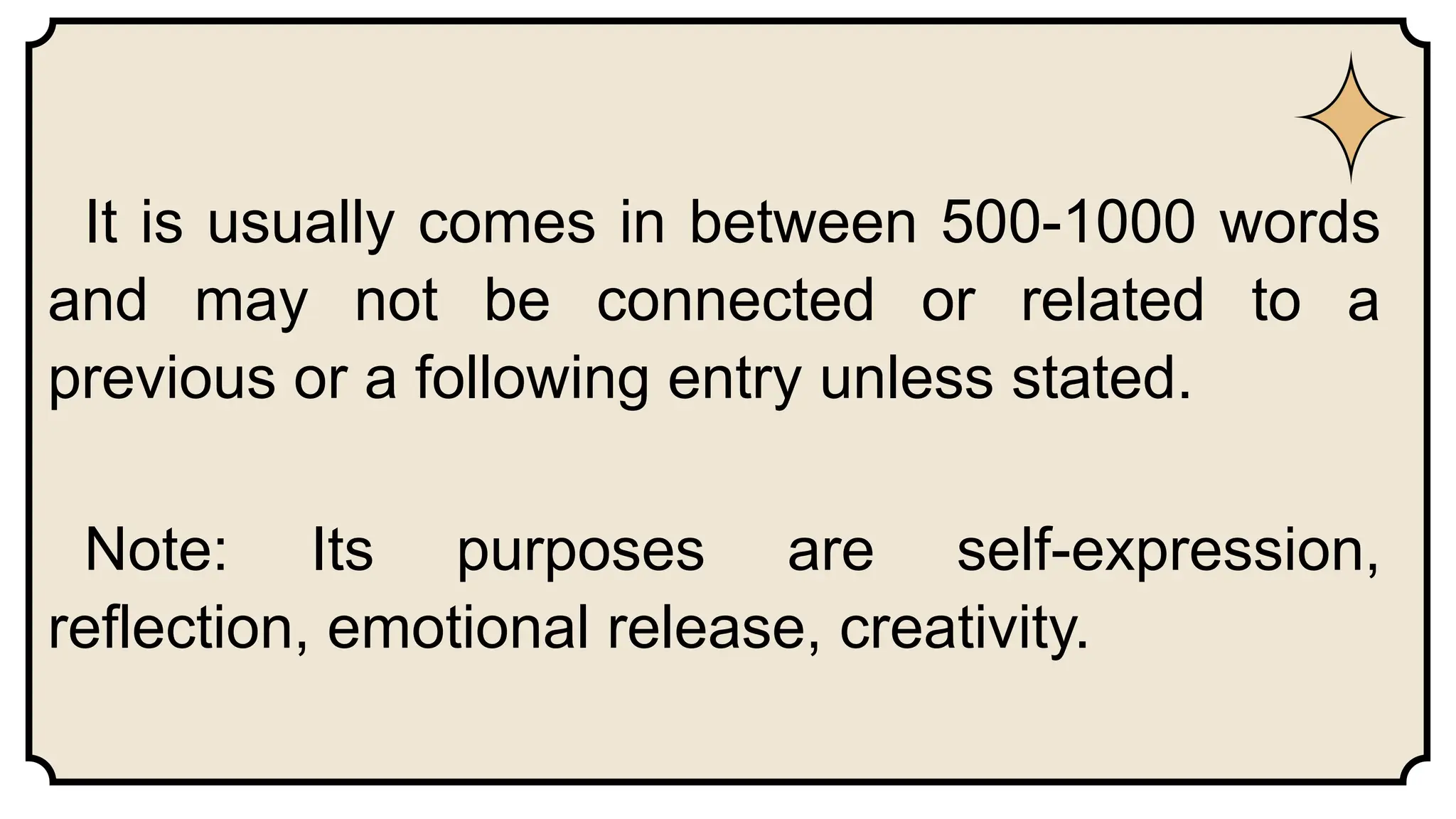
It is usually comes in between 500-1000 words
and may not be connected or related to a
previous or a following entry unless stated.
Note: Its purposes are self-expression,
reflection, emotional release, creativity.
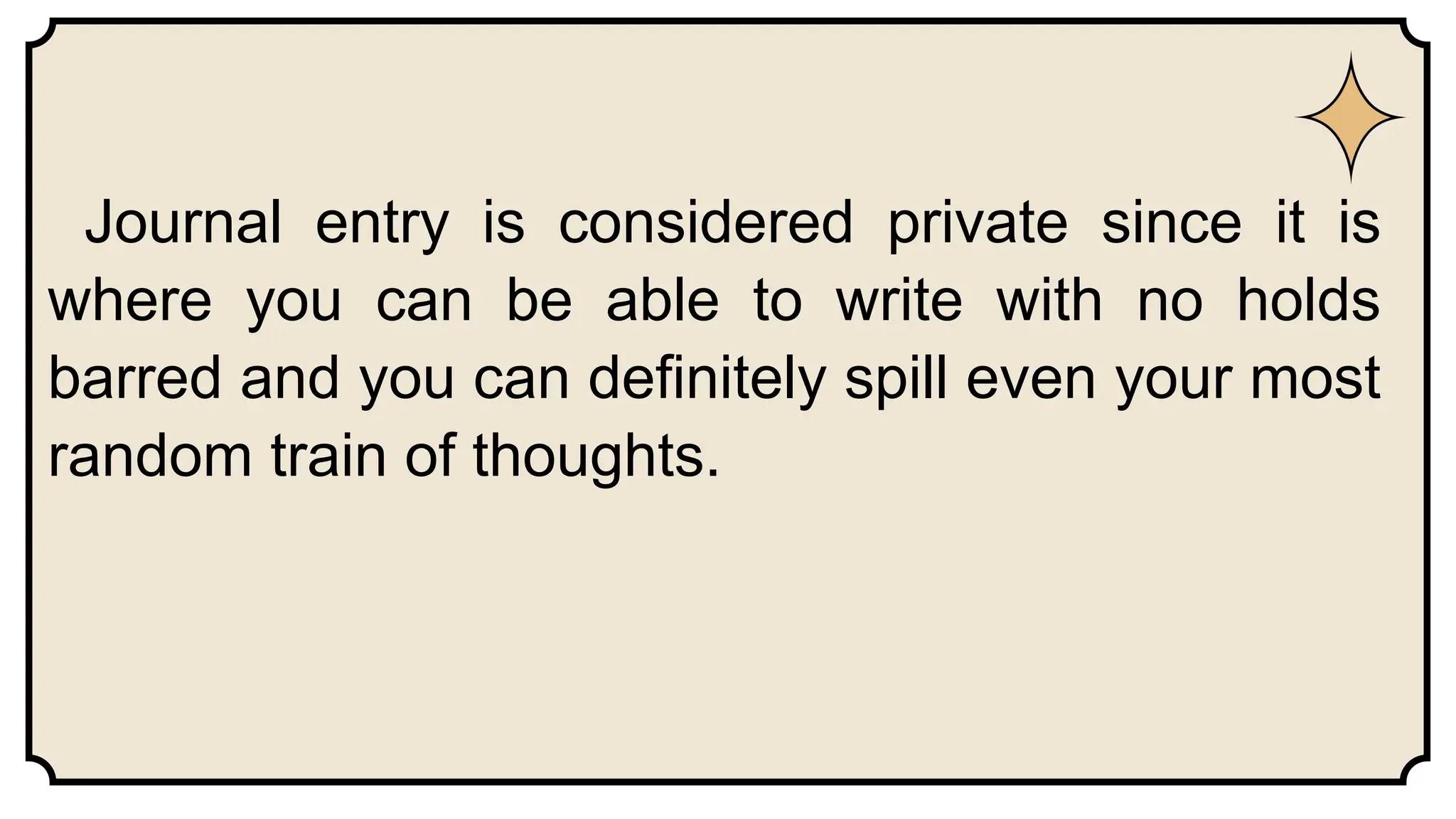
Journal entry is considered private since it is
where you can be able to write with no holds
barred and you can definitely spill even your most
random train of thoughts.
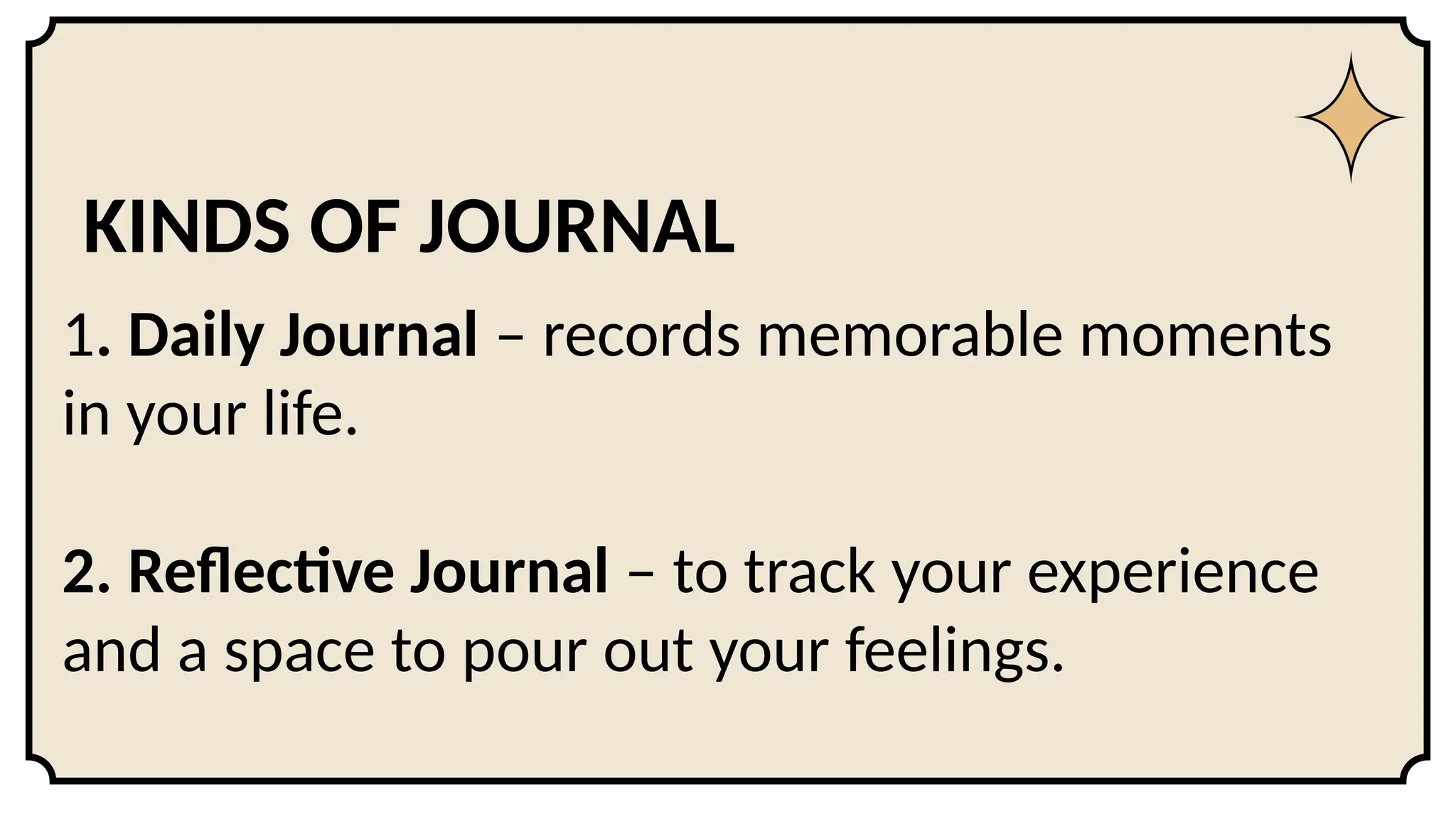
KINDS OF JOURNAL
1. Daily Journal – records memorable moments
in your life.
2. Reflective Journal – to track your experience
and a space to pour out your feelings.
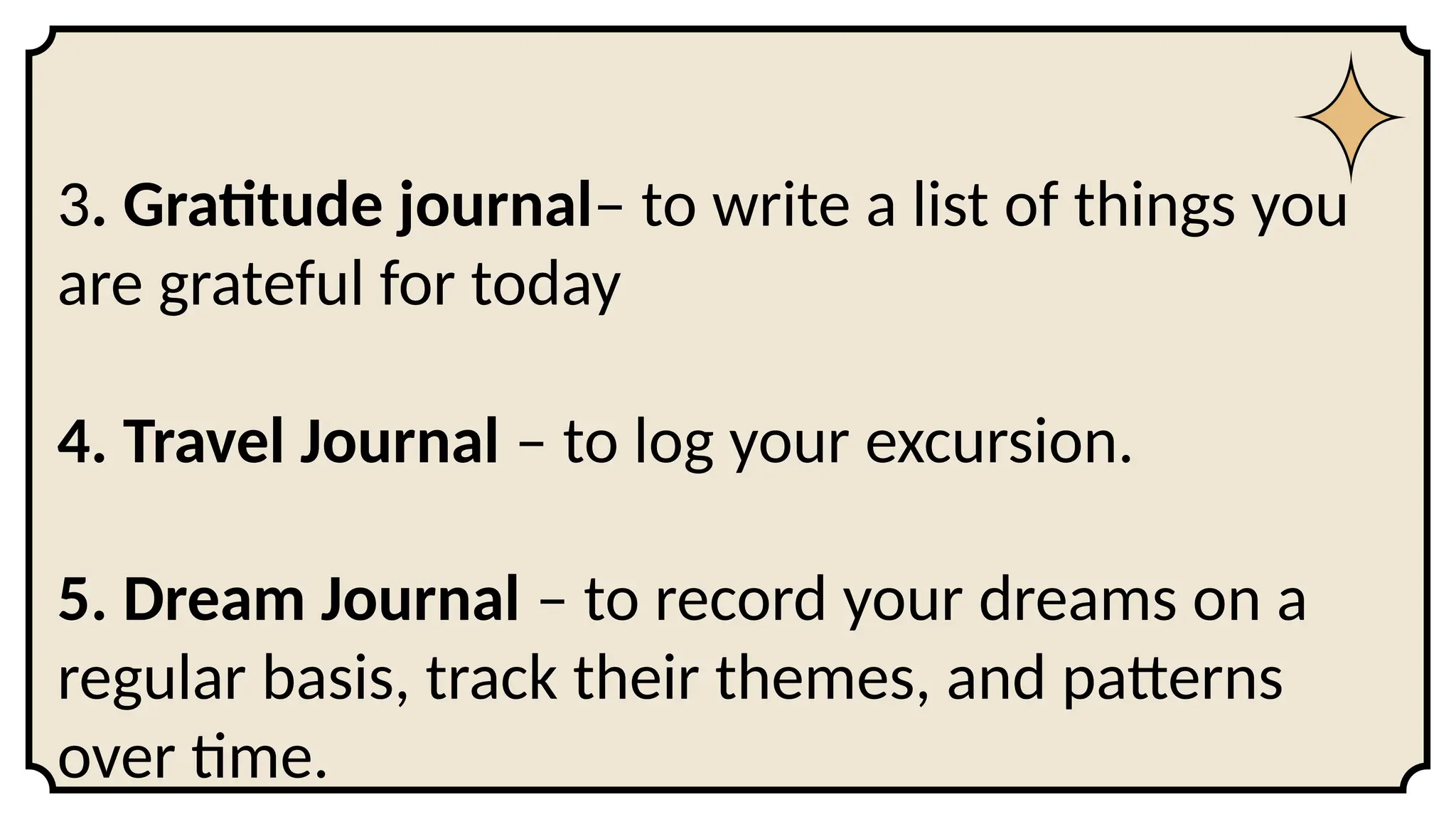
3. Gratitude journal– to write a list of things you
are grateful for today
4. Travel Journal – to log your excursion.
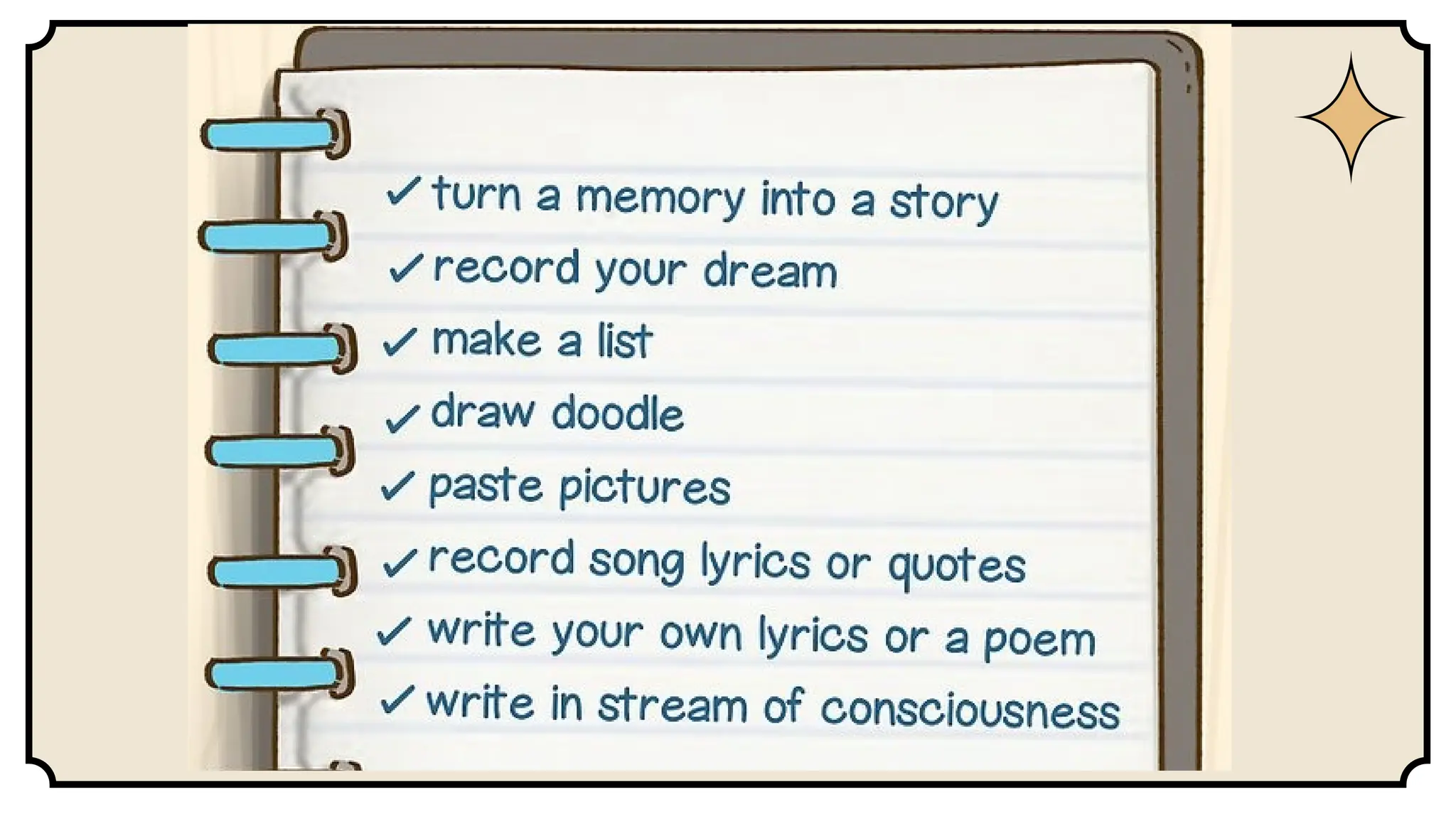
5. Dream Journal – to record your dreams on a
regular basis, track their themes, and patterns
over time.
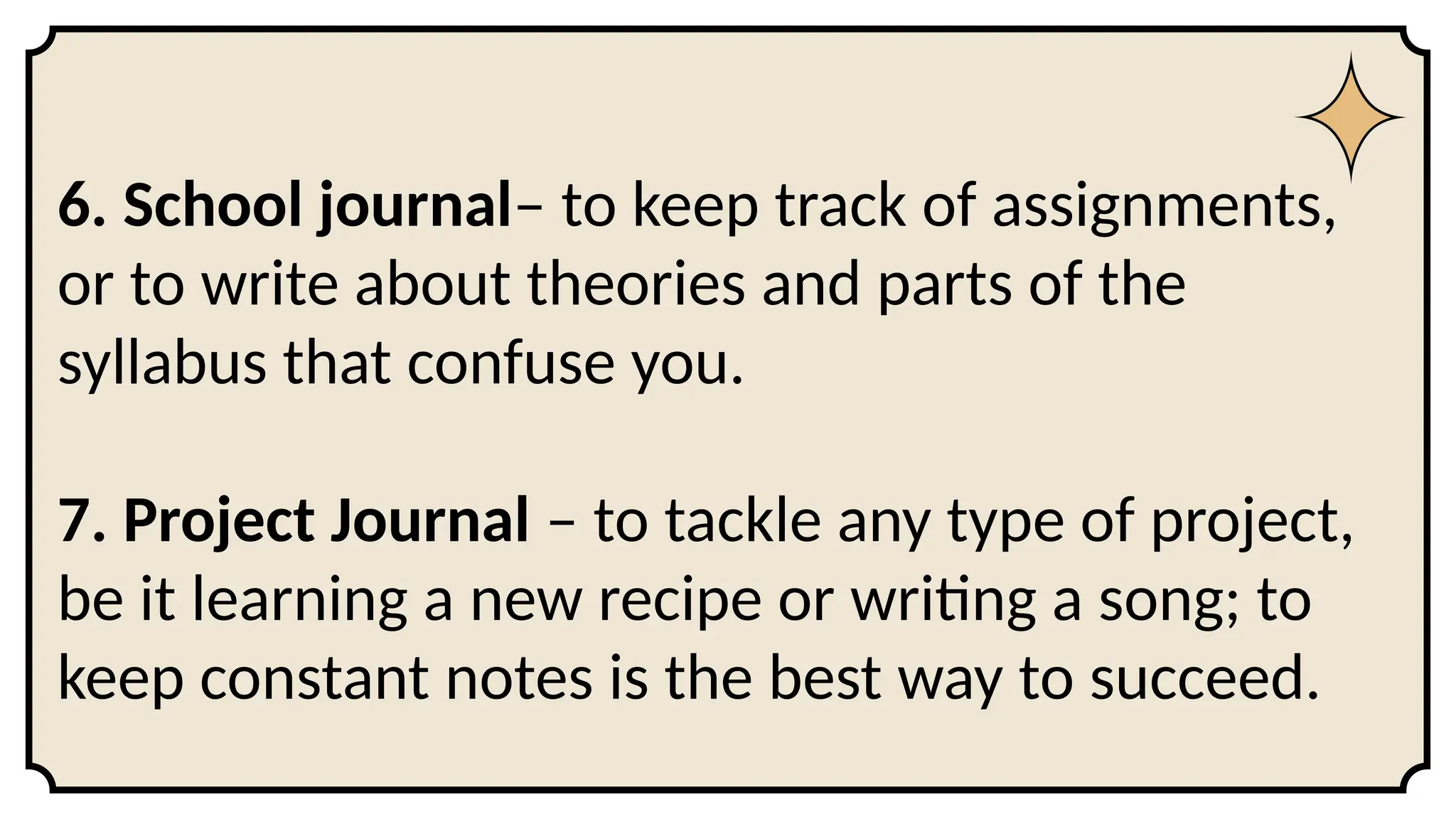
6. School journal– to keep track of assignments,
or to write about theories and parts of the
syllabus that confuse you.
7. Project Journal – to tackle any type of project,
be it learning a new recipe or writing a song; to
keep constant notes is the best way to succeed.
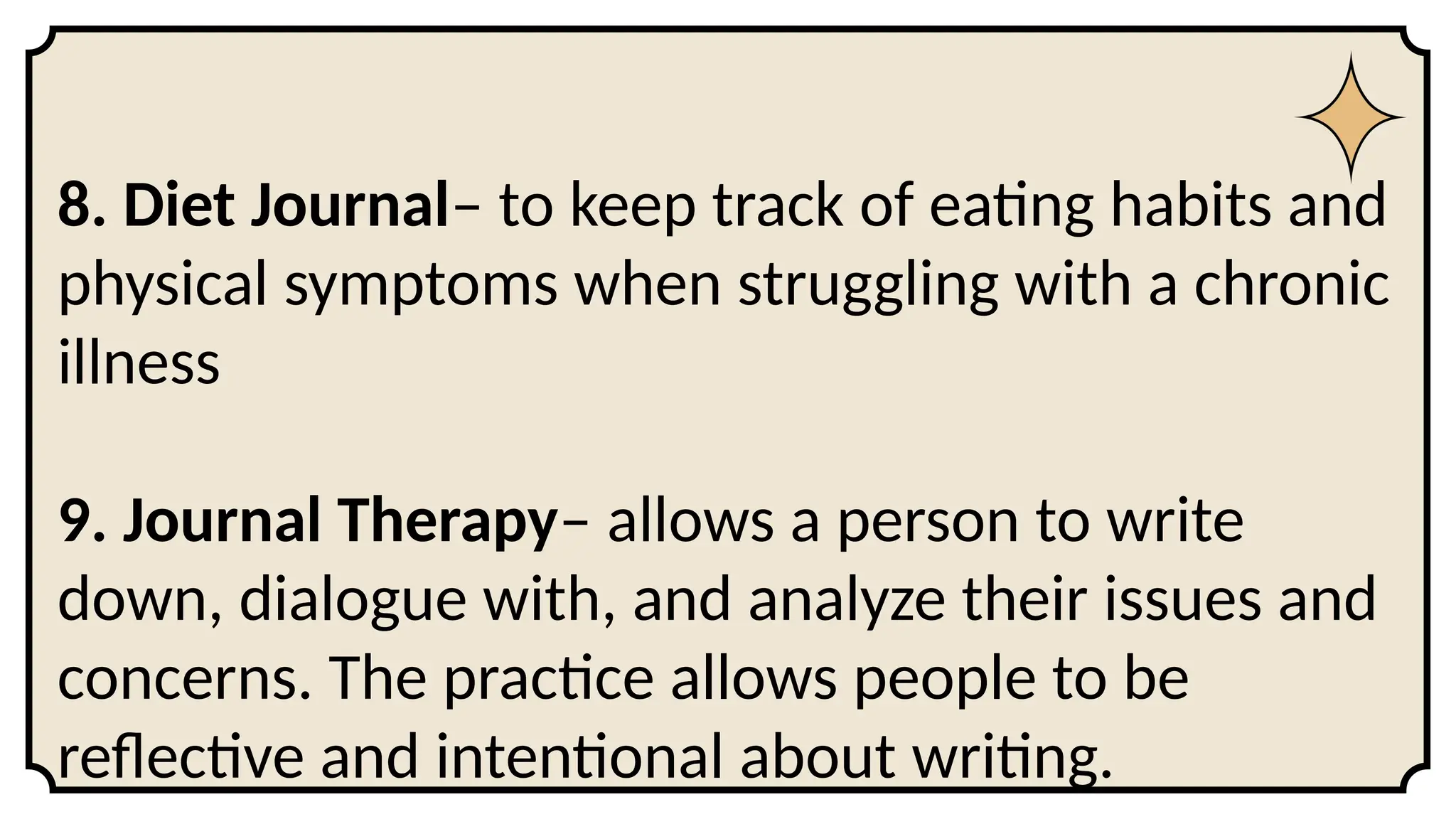
8. Diet Journal– to keep track of eating habits and
physical symptoms when struggling with a chronic
illness
9. Journal Therapy– allows a person to write
down, dialogue with, and analyze their issues and
concerns. The practice allows people to be
reflective and intentional about writing.
10. Family Journal – a simple way of keeping
memories and fun of family events that you can
enjoy again and again.
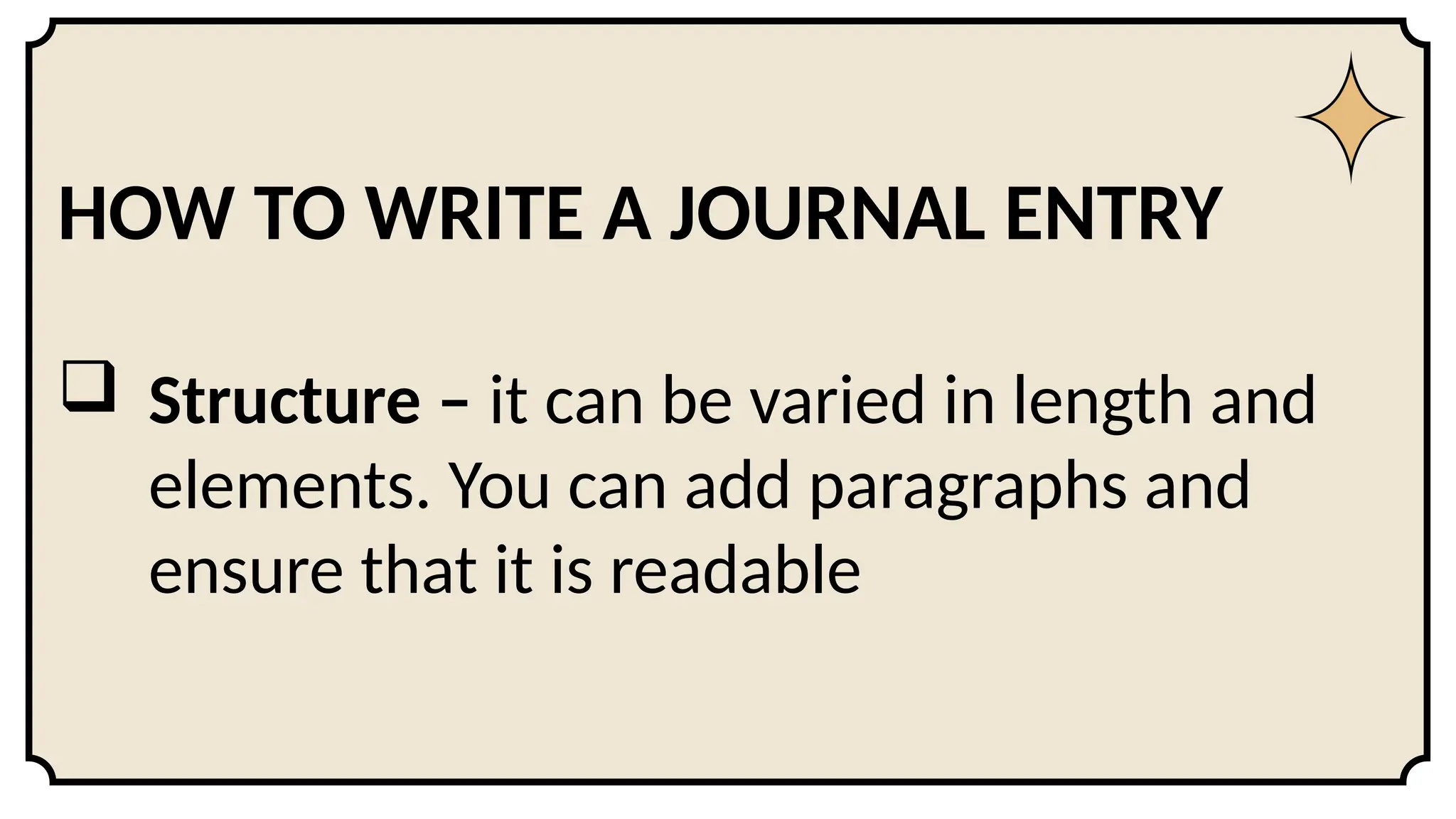
HOW TO WRITE A JOURNAL ENTRY
 Structure – it can be varied in length and
elements. You can add paragraphs and
ensure that it is readable
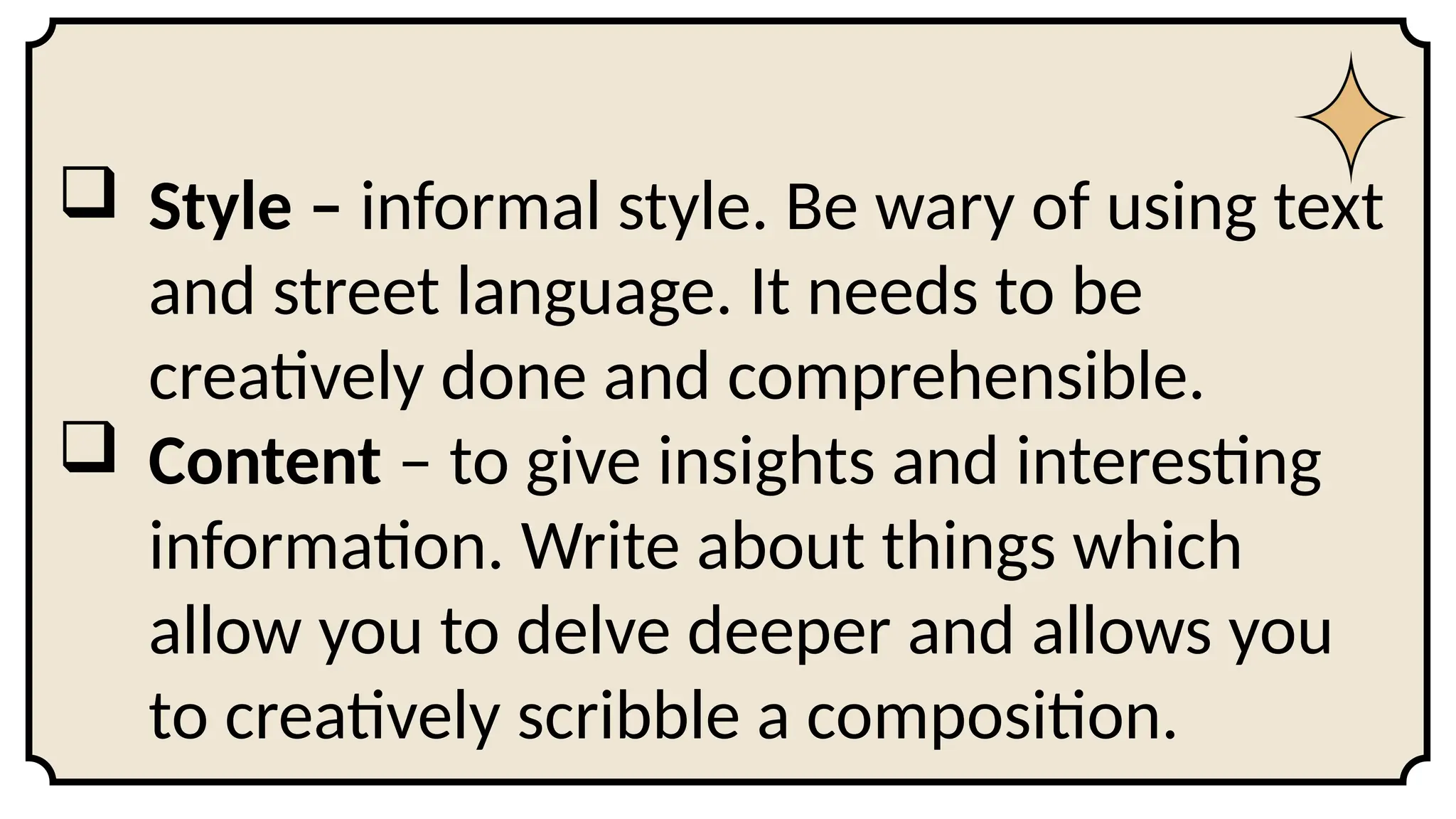
 Style – informal style. Be wary of using text
and street language. It needs to be
creatively done and comprehensible.
 Content – to give insights and interesting
information. Write about things which
allow you to delve deeper and allows you
to creatively scribble a composition.
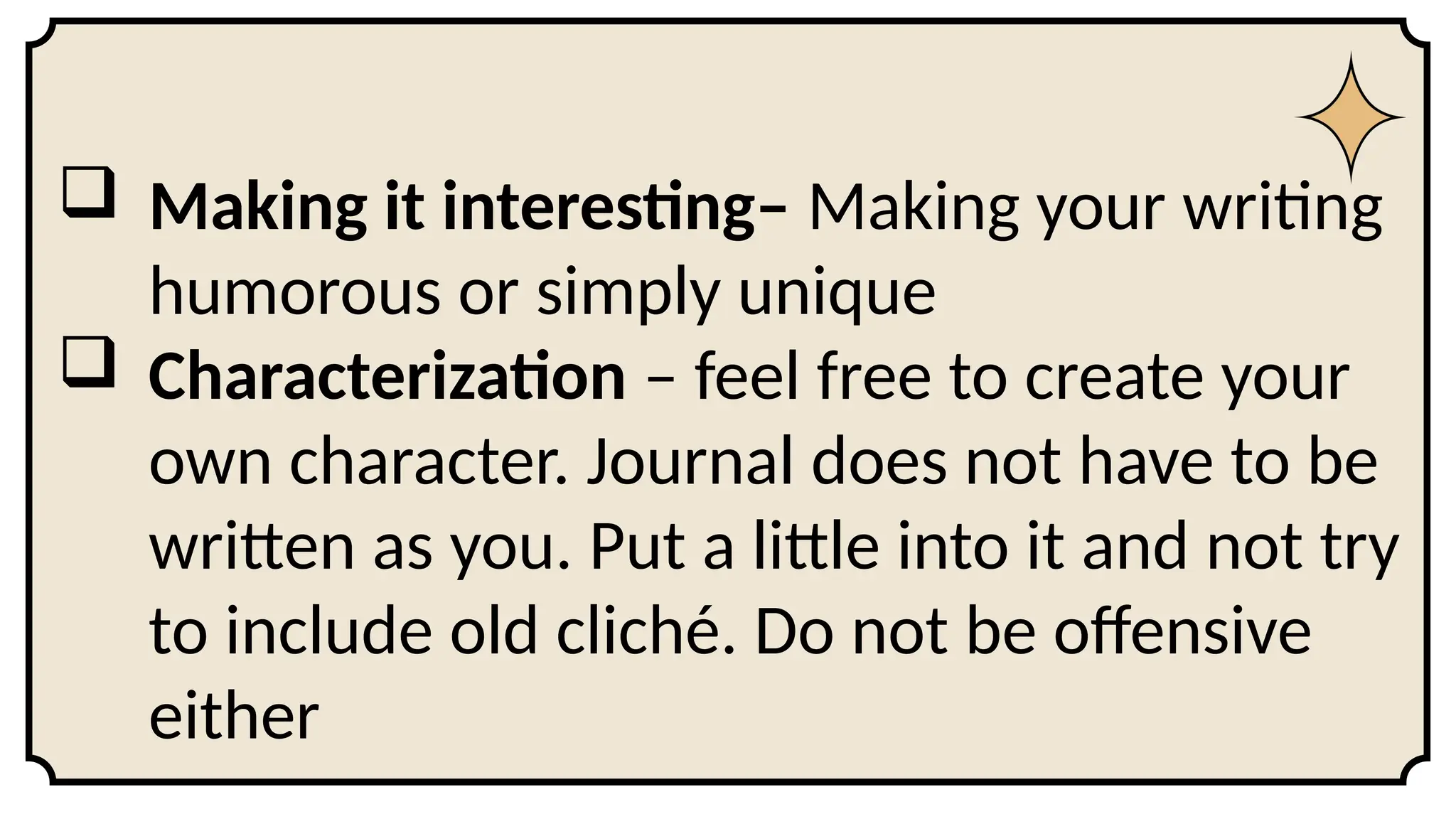
 Making it interesting– Making your writing
humorous or simply unique
 Characterization – feel free to create your
own character. Journal does not have to be
written as you. Put a little into it and not try
to include old cliché. Do not be offensive
either
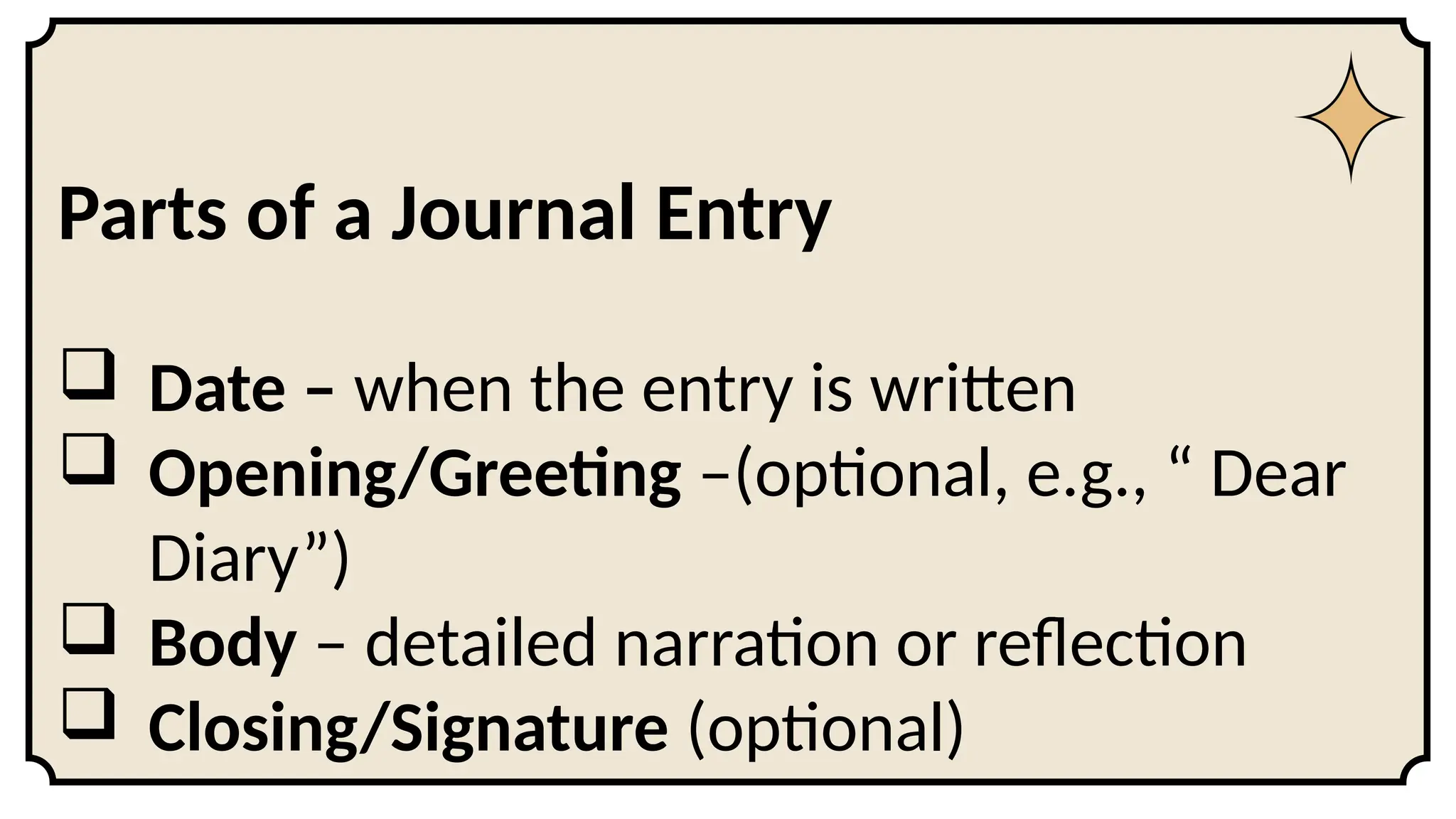
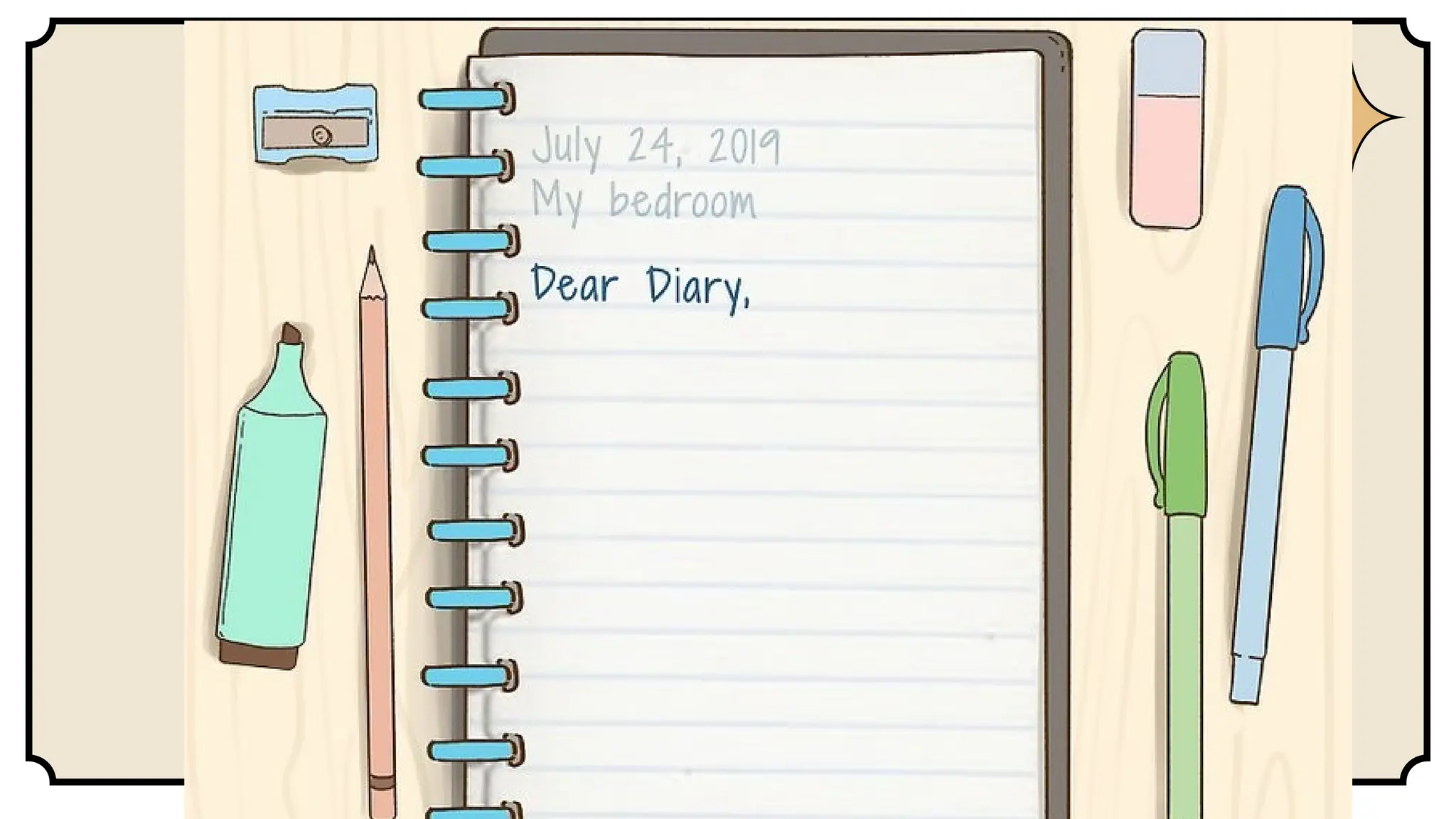
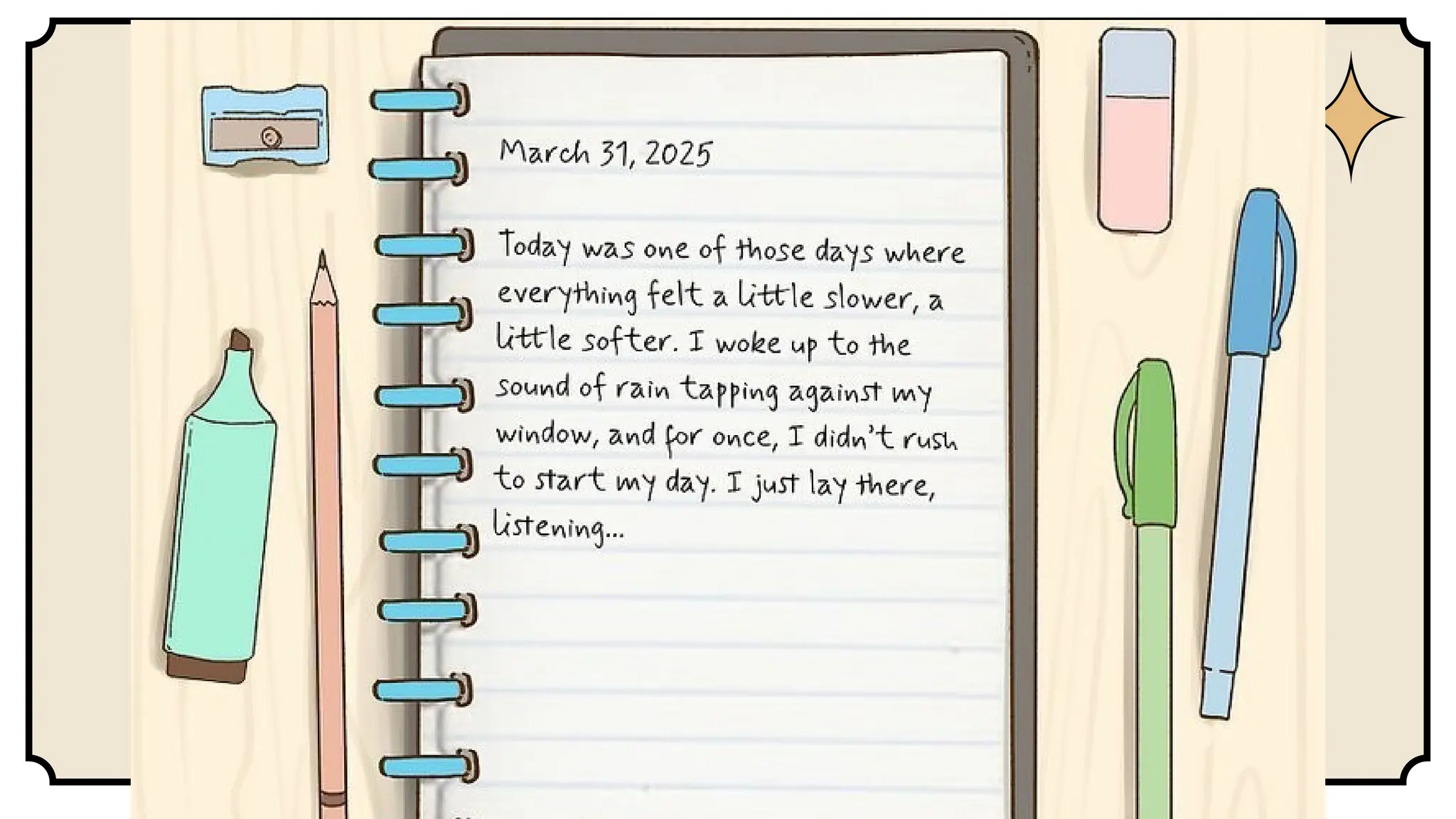
Parts of a Journal Entry
 Date – when the entry is written
 Opening/Greeting –(optional, e.g., “ Dear
Diary”)
 Body – detailed narration or reflection
 Closing/Signature (optional)
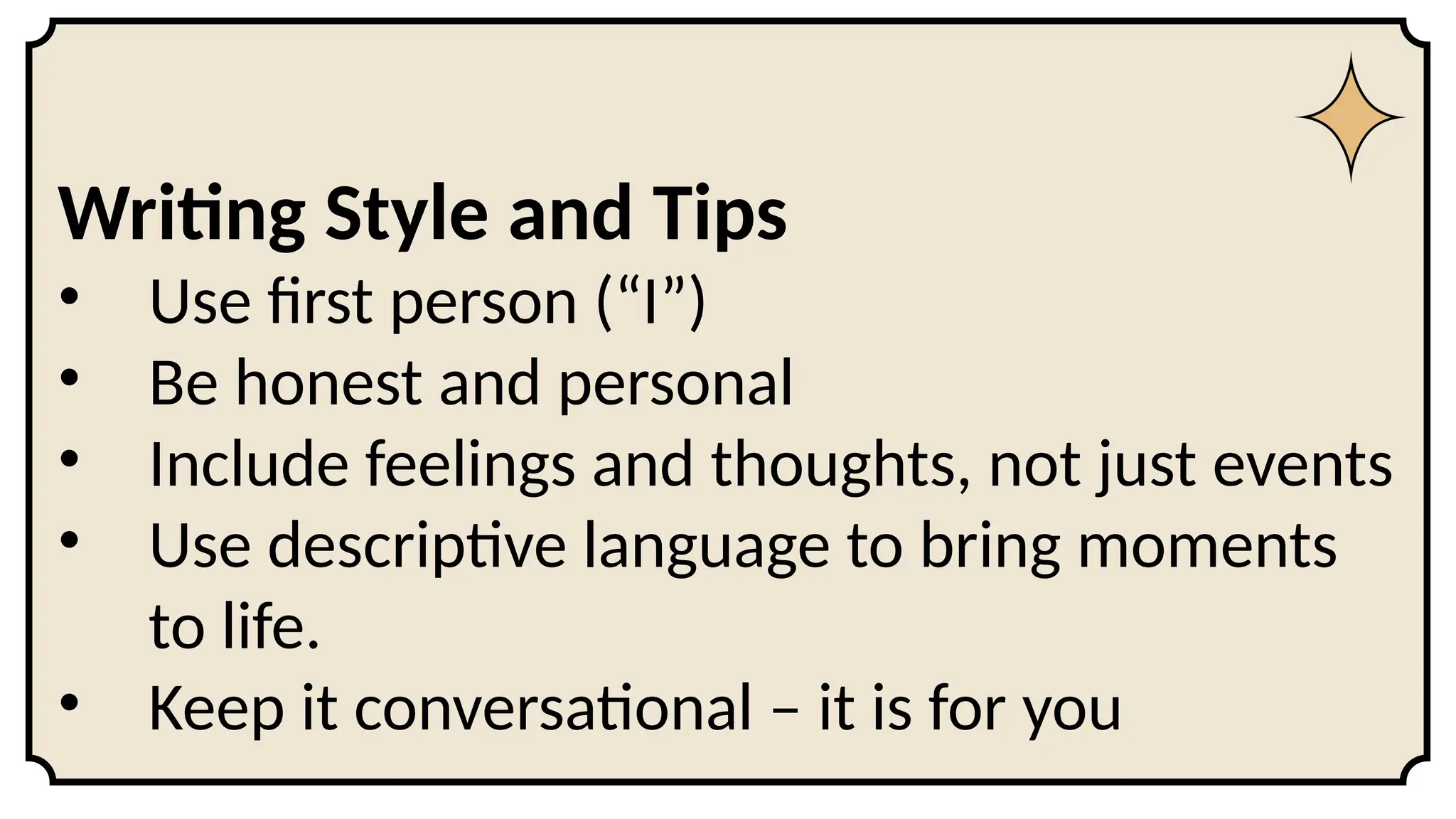
Writing Style and Tips
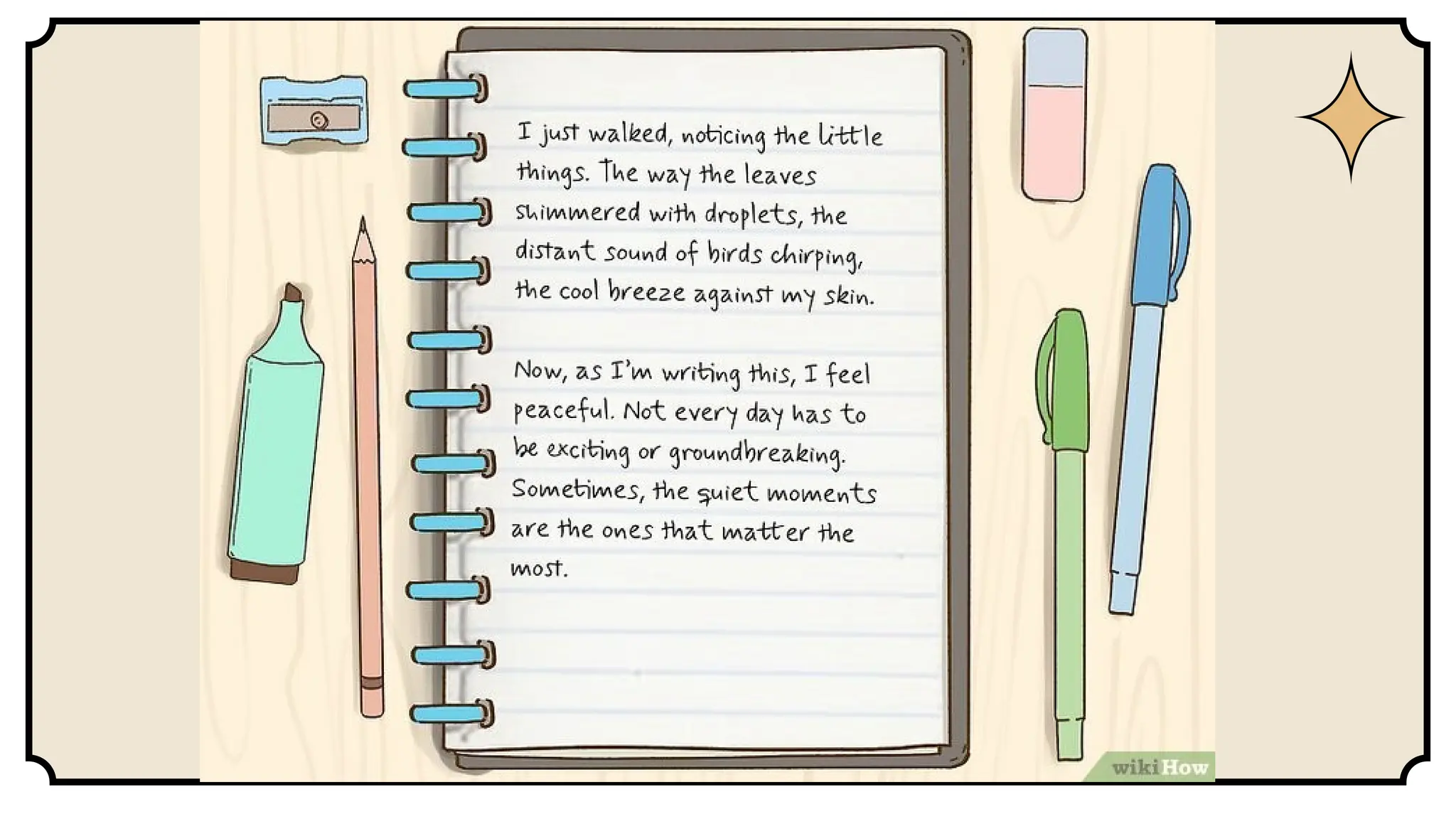
• Use first person (“I”)
• Be honest and personal
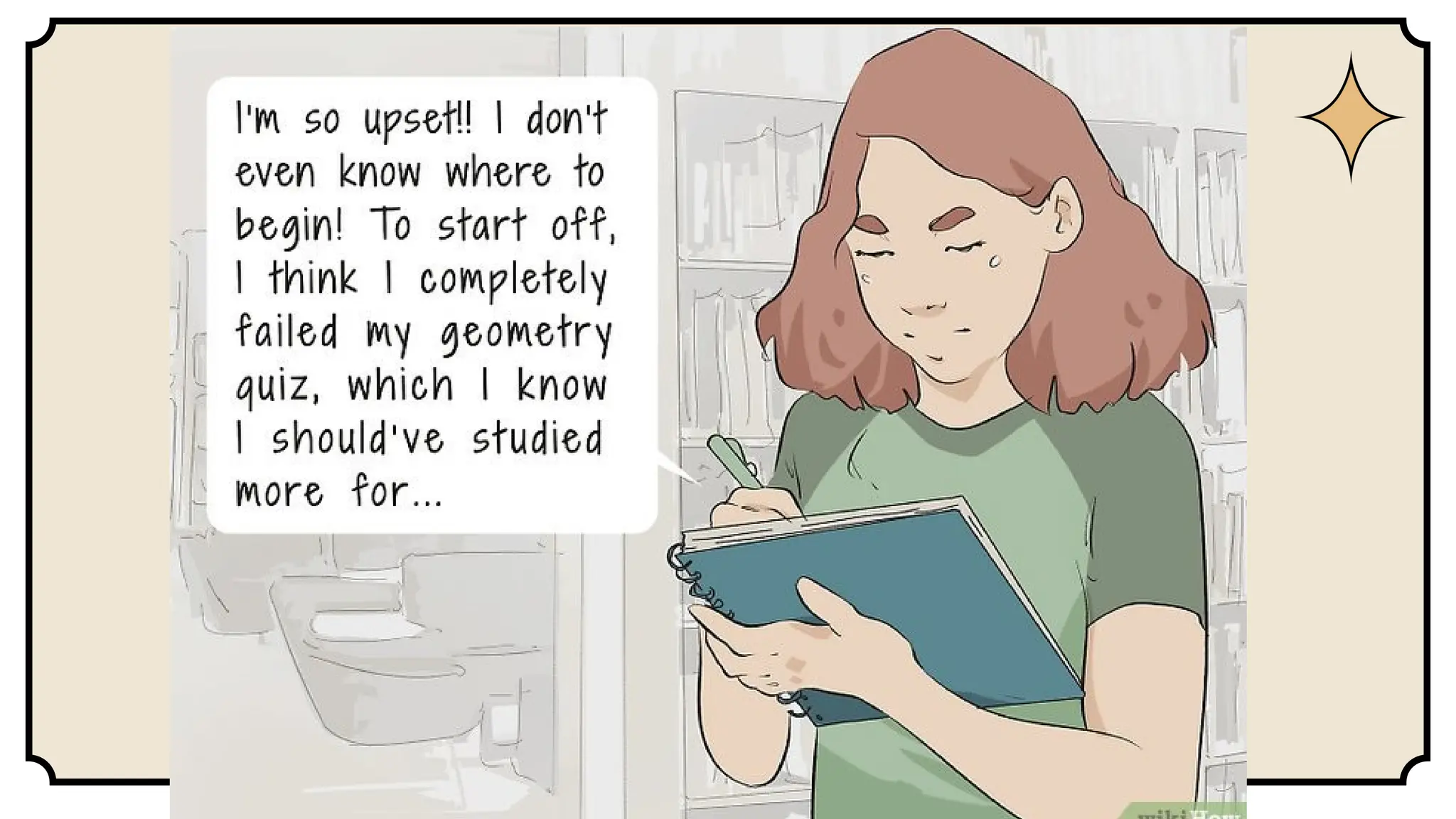
• Include feelings and thoughts, not just events
• Use descriptive language to bring moments
to life.
• Keep it conversational – it is for you
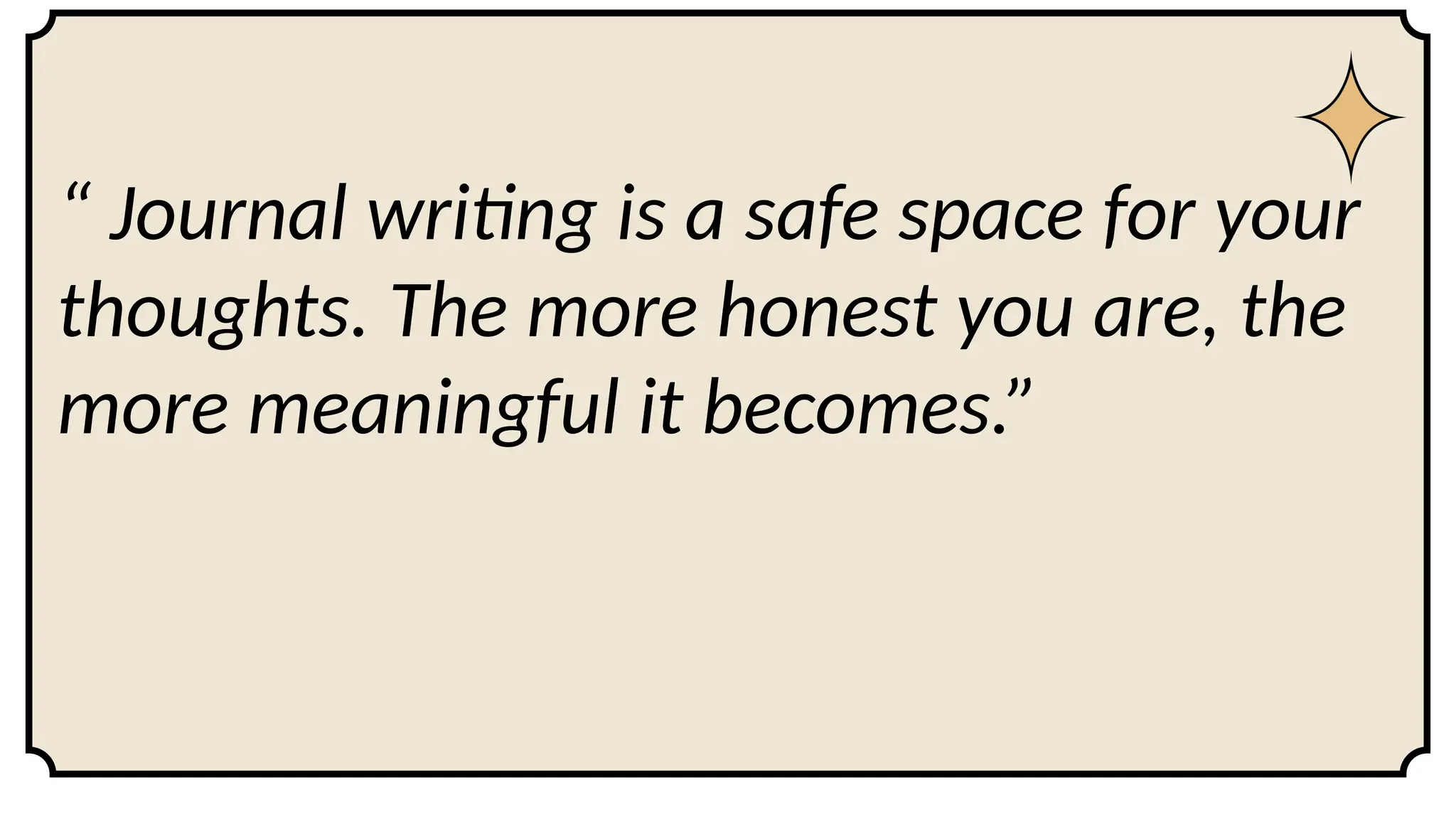
“ Journal writing is a safe space for your
thoughts. The more honest you are, the
more meaningful it becomes.”
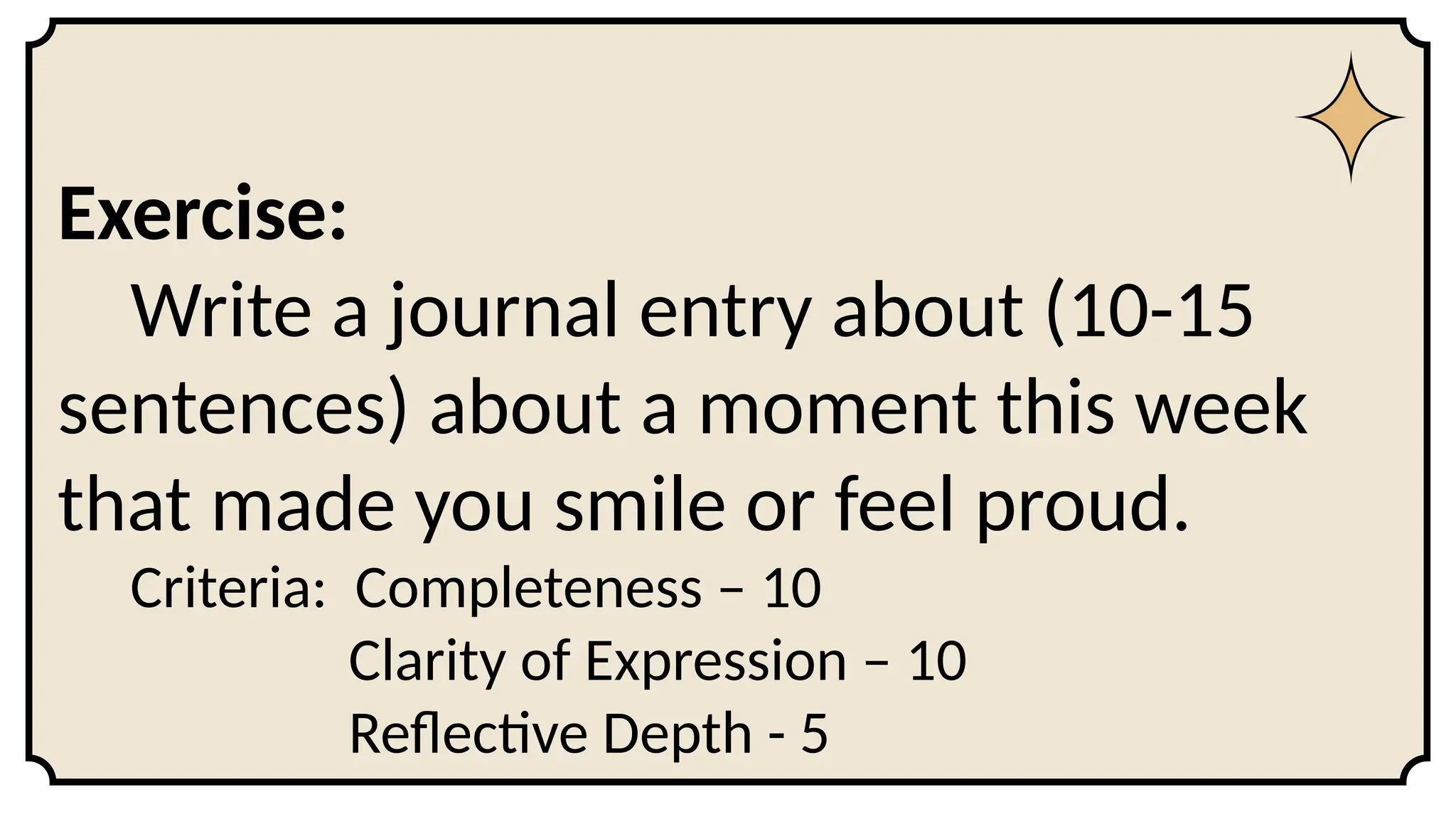
Exercise:
Write a journal entry about (10-15
sentences) about a moment this week
that made you smile or feel proud.
Criteria: Completeness – 10
Clarity of Expression – 10
Reflective Depth - 5

Exploring the Reflective Power and Personal Benefits of Journal Writing

  • 2.
  • 3.
    JOURNAL ENTRY isa personal record of thoughts, feelings, and events written regularly. It is an expression of personal growth, interests, opinions, or mundane things that a person has done and encountered in a day.
  • 4.
    Specifically, a journalis a record that stores every detail of your life ranging from events, ideas, feelings, and your daily thoughts and memories.
  • 5.
    It is usuallycomes in between 500-1000 words and may not be connected or related to a previous or a following entry unless stated. Note: Its purposes are self-expression, reflection, emotional release, creativity.
  • 6.
    Journal entry isconsidered private since it is where you can be able to write with no holds barred and you can definitely spill even your most random train of thoughts.
  • 7.
    KINDS OF JOURNAL 1.Daily Journal – records memorable moments in your life. 2. Reflective Journal – to track your experience and a space to pour out your feelings.
  • 8.
    3. Gratitude journal–to write a list of things you are grateful for today 4. Travel Journal – to log your excursion. 5. Dream Journal – to record your dreams on a regular basis, track their themes, and patterns over time.
  • 9.
    6. School journal–to keep track of assignments, or to write about theories and parts of the syllabus that confuse you. 7. Project Journal – to tackle any type of project, be it learning a new recipe or writing a song; to keep constant notes is the best way to succeed.
  • 10.
    8. Diet Journal–to keep track of eating habits and physical symptoms when struggling with a chronic illness 9. Journal Therapy– allows a person to write down, dialogue with, and analyze their issues and concerns. The practice allows people to be reflective and intentional about writing.
  • 11.
    10. Family Journal– a simple way of keeping memories and fun of family events that you can enjoy again and again.
  • 12.
    HOW TO WRITEA JOURNAL ENTRY  Structure – it can be varied in length and elements. You can add paragraphs and ensure that it is readable
  • 13.
     Style –informal style. Be wary of using text and street language. It needs to be creatively done and comprehensible.  Content – to give insights and interesting information. Write about things which allow you to delve deeper and allows you to creatively scribble a composition.
  • 14.
     Making itinteresting– Making your writing humorous or simply unique  Characterization – feel free to create your own character. Journal does not have to be written as you. Put a little into it and not try to include old cliché. Do not be offensive either
  • 15.
    Parts of aJournal Entry  Date – when the entry is written  Opening/Greeting –(optional, e.g., “ Dear Diary”)  Body – detailed narration or reflection  Closing/Signature (optional)
  • 16.
    Writing Style andTips • Use first person (“I”) • Be honest and personal • Include feelings and thoughts, not just events • Use descriptive language to bring moments to life. • Keep it conversational – it is for you
  • 24.
    “ Journal writingis a safe space for your thoughts. The more honest you are, the more meaningful it becomes.”
  • 25.
    Exercise: Write a journalentry about (10-15 sentences) about a moment this week that made you smile or feel proud. Criteria: Completeness – 10 Clarity of Expression – 10 Reflective Depth - 5