The Elements of Regional
Geography
*
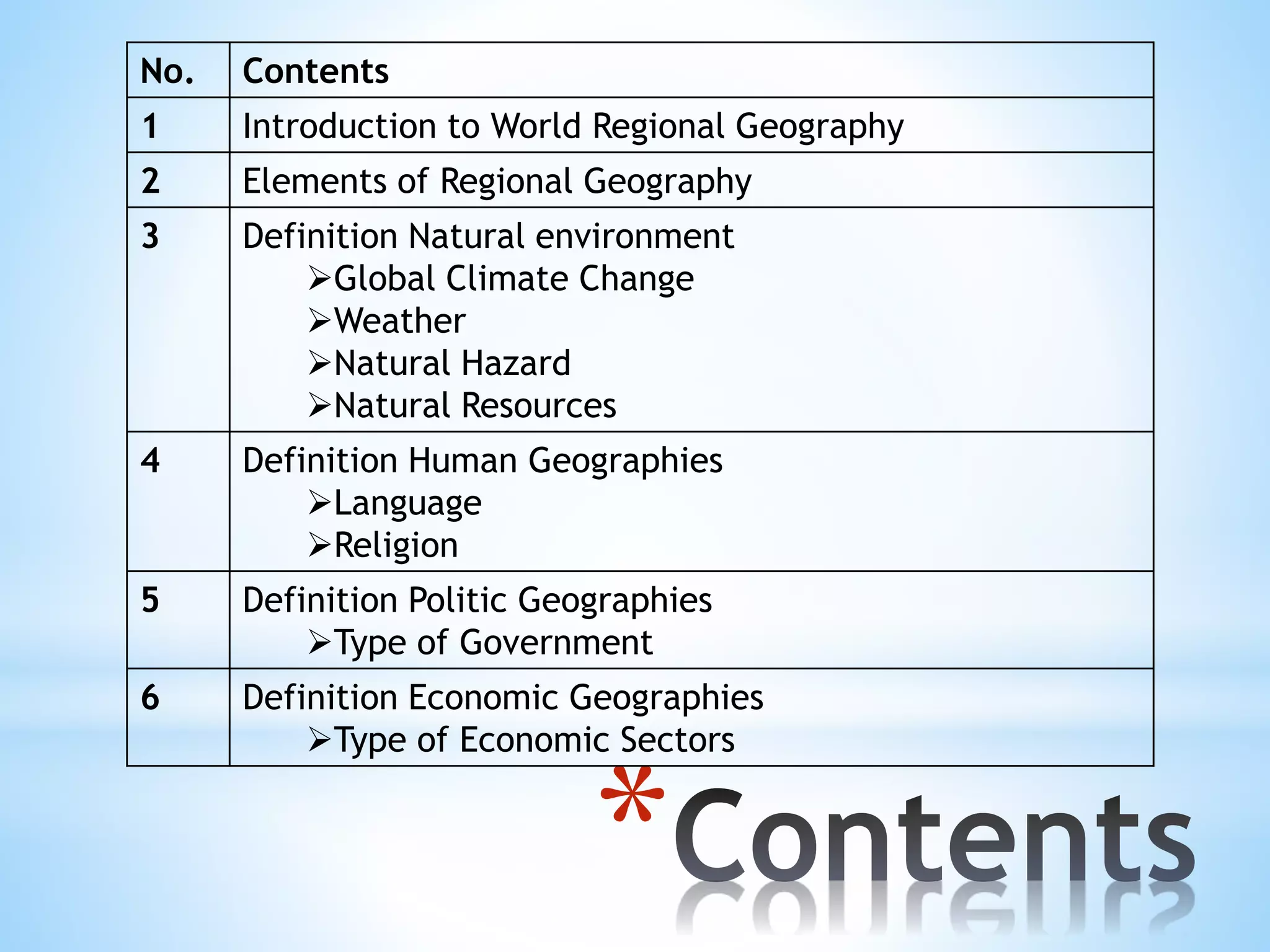
No. Contents
1 Introduction to World Regional Geography
2 Elements of Regional Geography
3 Definition Natural environment
Global Climate Change
Weather
Natural Hazard
Natural Resources
4 Definition Human Geographies
Language
Religion
5 Definition Politic Geographies
Type of Government
6 Definition Economic Geographies
Type of Economic Sectors
*
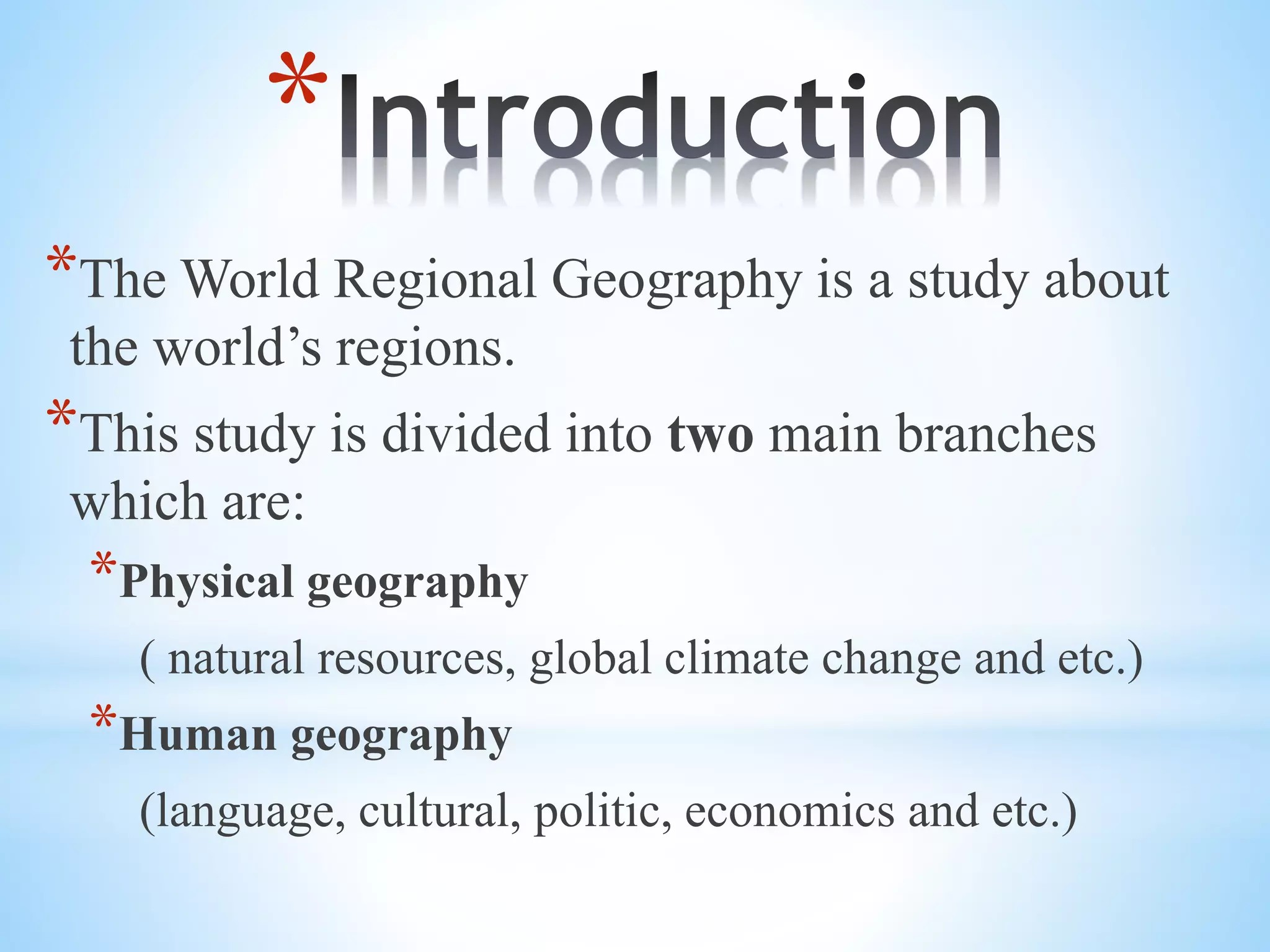
*The World Regional Geography is a study about
the world’s regions.
*This study is divided into two main branches
which are:
*Physical geography
( natural resources, global climate change and etc.)
*Human geography
(language, cultural, politic, economics and etc.)
Elements
of
Regional
Geography
Natural
Environment
Human
Geographies
Political
Geographies
Economic
Geographies
Natural Environment
*
Definition
*The set of living and non-living things
on Earth occurring naturally, without
the influenced by humans.
Examples:
Global climate change
Weather
Natural hazard
Natural resources
*
*Climate change refers to the rise
in average surface temperatures
on Earth.
*Also know as Global warming.
*Caused by human activities such
as:
•Burning of fossil fuels
•Deforestation
*
*Weather is the condition of the
atmosphere at a particular place over a
short period of time.
Examples:
Sunny
Rain
Cloudy
 A naturally occur
disaster that will
have a negative
effect on humans.
*Examples:
Earthquakes,
Volcanic Eruptions,
Tsunami, Landslides
and many more.
*
*
*Natural resources are resources that
exist naturally without actions of
humankind.
*All natural resources fall under two
main categories:
*Renewable
(water, animals and plants)
* Non-renewable Resources.
(oil and minerals)
Human Geographies
*
*A branch of geography dealing with
how human activity affects or is
influenced by the earth's surface.
*This study includes:
Languages
Religions
Language is a human
system of
communication that
uses arbitrary signals
such as voice sounds,
gestures and written
symbols.
Five most spoken
languages in the world:-
•Mandarin Chinese
•English
•Spanish
•Hindi
•Arabic
Religion is a particular
system of faith, worship
and practices that define
the relations between
human being and sacred
or divinity (personal God
or Gods).
Top three(3) religions:
Christianity
Islam
Hinduism
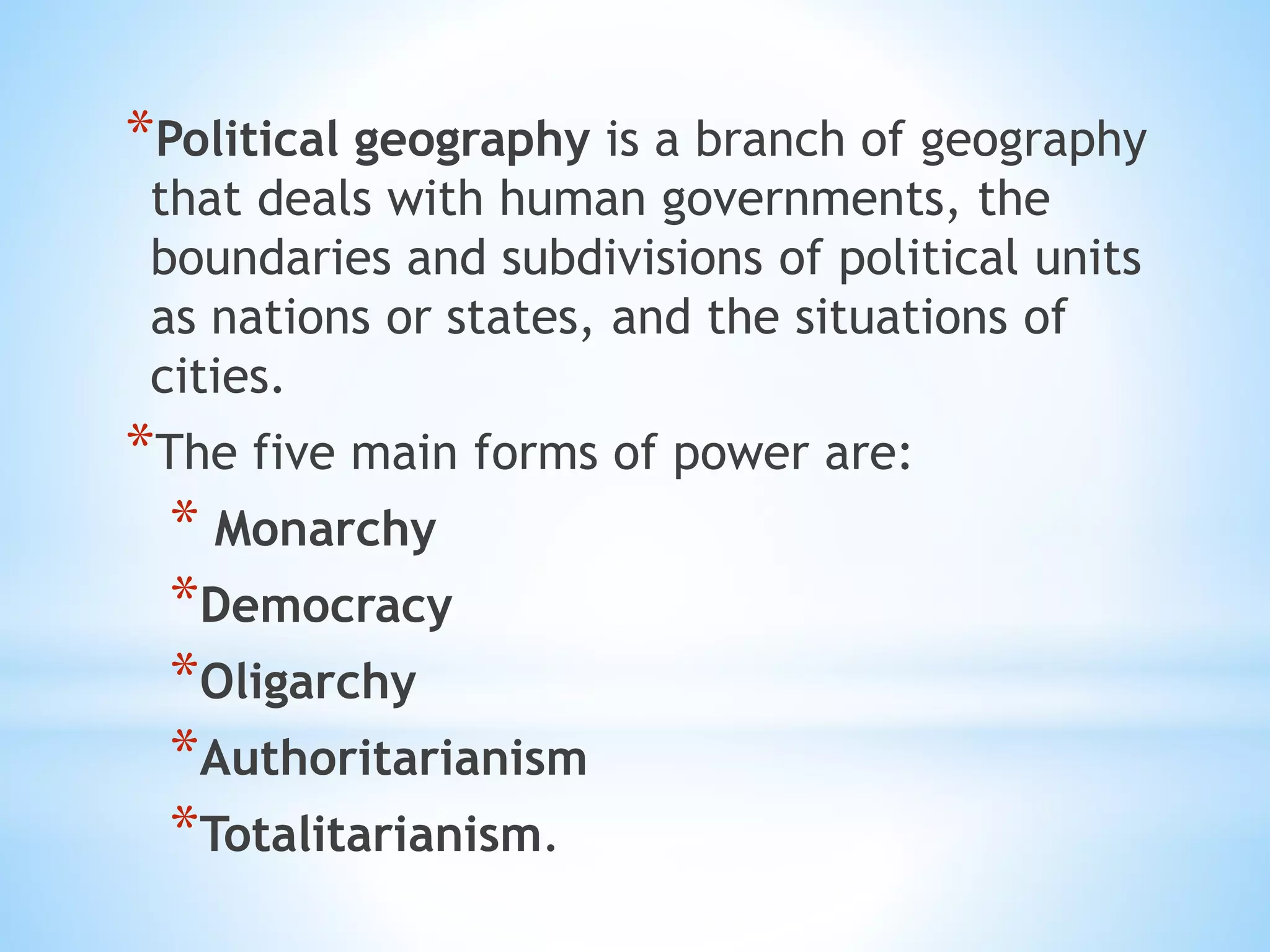
*Political geography is a branch of geography
that deals with human governments, the
boundaries and subdivisions of political units
as nations or states, and the situations of
cities.
*The five main forms of power are:
* Monarchy
*Democracy
*Oligarchy
*Authoritarianism
*Totalitarianism.
Monarchy is a form of government
in which a single family rules from
generation to generation. Ex: UK
Democracy is defined as a form of
government in which power belongs
to the people. Ex: US
Oligarchy is a form of government in which
all power resides with a few people or in a
dominant group within the society.
Ex: Soviet Union
Authoritarianism is a form of
government in which people have
no participation. Ex: Cuba
Totalitarianism is a form of government in
which one person or political party
exercises absolute control.
Ex: North Korea
*
*Economic geography is the study of
the location, distribution and spatial
organization of economic activities
across the world.
*Types of world’s economic sector:
*Primarily sector
*Secondary sector
*Tertiary sector
*Quaternary sector
Primarily
• The extraction of raw materials from the earth.
• Ex: farmers, coal miners and hunters
Secondary
• The transformation of raw materials into goods.
• Ex: seamstress, factory worker or craftsman
Tertiary
• The supplying of services to consumers and
businesses.
• Ex: restaurant bartenders, accountants and pilots
Quaternary
• Intellectual activities, such as scientific
research, education and information technology.
• Ex: scholars, researchers and librarians
Name: Nordiana Sharafina Bt Abu Bakar
Matrix Number:11DPI16F1001
Lecturer’s Name: Mohd Norulhisyam Bin
Hassan

Topic 2: The Elements of Regional Geography

  • 1.
    The Elements ofRegional Geography
  • 2.
    * No. Contents 1 Introductionto World Regional Geography 2 Elements of Regional Geography 3 Definition Natural environment Global Climate Change Weather Natural Hazard Natural Resources 4 Definition Human Geographies Language Religion 5 Definition Politic Geographies Type of Government 6 Definition Economic Geographies Type of Economic Sectors
  • 3.
    * *The World RegionalGeography is a study about the world’s regions. *This study is divided into two main branches which are: *Physical geography ( natural resources, global climate change and etc.) *Human geography (language, cultural, politic, economics and etc.)
  • 4.
  • 5.
  • 6.
    * Definition *The set ofliving and non-living things on Earth occurring naturally, without the influenced by humans. Examples: Global climate change Weather Natural hazard Natural resources
  • 7.
    * *Climate change refersto the rise in average surface temperatures on Earth. *Also know as Global warming. *Caused by human activities such as: •Burning of fossil fuels •Deforestation
  • 9.
    * *Weather is thecondition of the atmosphere at a particular place over a short period of time. Examples: Sunny Rain Cloudy
  • 10.
     A naturallyoccur disaster that will have a negative effect on humans. *Examples: Earthquakes, Volcanic Eruptions, Tsunami, Landslides and many more. *
  • 11.
    * *Natural resources areresources that exist naturally without actions of humankind. *All natural resources fall under two main categories: *Renewable (water, animals and plants) * Non-renewable Resources. (oil and minerals)
  • 13.
  • 14.
    * *A branch ofgeography dealing with how human activity affects or is influenced by the earth's surface. *This study includes: Languages Religions
  • 15.
    Language is ahuman system of communication that uses arbitrary signals such as voice sounds, gestures and written symbols. Five most spoken languages in the world:- •Mandarin Chinese •English •Spanish •Hindi •Arabic
  • 16.
    Religion is aparticular system of faith, worship and practices that define the relations between human being and sacred or divinity (personal God or Gods). Top three(3) religions: Christianity Islam Hinduism
  • 18.
    *Political geography isa branch of geography that deals with human governments, the boundaries and subdivisions of political units as nations or states, and the situations of cities. *The five main forms of power are: * Monarchy *Democracy *Oligarchy *Authoritarianism *Totalitarianism.
  • 19.
    Monarchy is aform of government in which a single family rules from generation to generation. Ex: UK Democracy is defined as a form of government in which power belongs to the people. Ex: US Oligarchy is a form of government in which all power resides with a few people or in a dominant group within the society. Ex: Soviet Union Authoritarianism is a form of government in which people have no participation. Ex: Cuba Totalitarianism is a form of government in which one person or political party exercises absolute control. Ex: North Korea
  • 21.
    * *Economic geography isthe study of the location, distribution and spatial organization of economic activities across the world. *Types of world’s economic sector: *Primarily sector *Secondary sector *Tertiary sector *Quaternary sector
  • 22.
    Primarily • The extractionof raw materials from the earth. • Ex: farmers, coal miners and hunters Secondary • The transformation of raw materials into goods. • Ex: seamstress, factory worker or craftsman Tertiary • The supplying of services to consumers and businesses. • Ex: restaurant bartenders, accountants and pilots Quaternary • Intellectual activities, such as scientific research, education and information technology. • Ex: scholars, researchers and librarians
  • 24.
    Name: Nordiana SharafinaBt Abu Bakar Matrix Number:11DPI16F1001 Lecturer’s Name: Mohd Norulhisyam Bin Hassan