Topic 1
Chemical vs. Physical
Changes
It is important to understand the difference
between chemical and physical changes. The two
types are based on studying chemical reactions
and states of matter. We admit that some
changes are obvious, but there are some basic
ideas you can use. Physical changes are about
energy and states of matter. Chemical changes
happen on a molecular level.

When you step on a can and crush it, you have
                                forced a
                                physical change. The shape of the object has
                                changed. It wasn't a change in the state of matter,
                                but something changed. When you melt an ice
                                cube you have also forced a physical change
                                (adding energy). That example caused a change
                                in the state of matter. You can cause physical
                                changes with forces like motion, temperature, and
                                pressure.

                                    Chemical changes happen on a much smaller
                                    scale. While some experiments show obvious
                                    chemical changes such as a color change, most
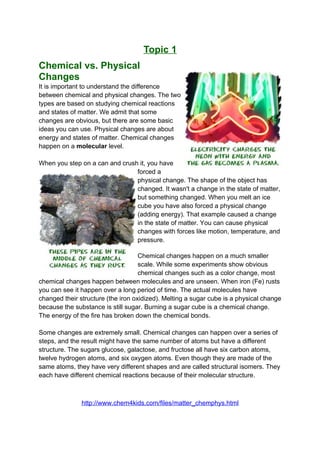
chemical changes happen between molecules and are unseen. When iron (Fe) rusts
you can see it happen over a long period of time. The actual molecules have
changed their structure (the iron oxidized). Melting a sugar cube is a physical change
because the substance is still sugar. Burning a sugar cube is a chemical change.
The energy of the fire has broken down the chemical bonds.

Some changes are extremely small. Chemical changes can happen over a series of
steps, and the result might have the same number of atoms but have a different
structure. The sugars glucose, galactose, and fructose all have six carbon atoms,
twelve hydrogen atoms, and six oxygen atoms. Even though they are made of the
same atoms, they have very different shapes and are called structural isomers. They
each have different chemical reactions because of their molecular structure.


               http://www.chem4kids.com/files/matter_chemphys.html
Topic 1

Topic 1

  • 1.
    Topic 1 Chemical vs.Physical Changes It is important to understand the difference between chemical and physical changes. The two types are based on studying chemical reactions and states of matter. We admit that some changes are obvious, but there are some basic ideas you can use. Physical changes are about energy and states of matter. Chemical changes happen on a molecular level. When you step on a can and crush it, you have forced a physical change. The shape of the object has changed. It wasn't a change in the state of matter, but something changed. When you melt an ice cube you have also forced a physical change (adding energy). That example caused a change in the state of matter. You can cause physical changes with forces like motion, temperature, and pressure. Chemical changes happen on a much smaller scale. While some experiments show obvious chemical changes such as a color change, most chemical changes happen between molecules and are unseen. When iron (Fe) rusts you can see it happen over a long period of time. The actual molecules have changed their structure (the iron oxidized). Melting a sugar cube is a physical change because the substance is still sugar. Burning a sugar cube is a chemical change. The energy of the fire has broken down the chemical bonds. Some changes are extremely small. Chemical changes can happen over a series of steps, and the result might have the same number of atoms but have a different structure. The sugars glucose, galactose, and fructose all have six carbon atoms, twelve hydrogen atoms, and six oxygen atoms. Even though they are made of the same atoms, they have very different shapes and are called structural isomers. They each have different chemical reactions because of their molecular structure. http://www.chem4kids.com/files/matter_chemphys.html