Top 10 Tips for 
Reducing Your 
Expenses
1. Reduce Overtime 
Overtime is expensive, but a little preplanning 
of your work schedules will go a long way 
here. The feast or famine cycle that many 
businesses go through can drive costs up 
without a corresponding increase in sales. 
The trick is to keep a steady pace with your 
work. Otherwise, you find yourself needing to 
pay overtime simply to keep from missing your 
deadlines.
2. Create a budget 
If you don’t have one, make one. It may seem 
like a time-consuming project but if your 
money is important to you, then the results will 
be more than worth the effort. Simply put, a 
budget is your most effective tool for setting 
and reaching your financial targets.
3. Nurture a cost saving culture 
Everyone can and should take fiscal 
responsibility for their work. One way to do 
this is to involve everyone in the budget. A 
budget isn’t just a tool for Management. Make 
all your employees accountable for the line 
items that affect them. For example, an office 
administrator may be accountable for keeping 
your office supplies on target with your 
budget.
4. Play the “savings game” 
Get together a small team of employees and 
go through your income statement line by line. 
Your goal is to come up with 3 ideas for saving 
money for each line item. It will be difficult for 
some items, but think outside of the box on 
this. They don’t all have to be keepers. Make it 
an open brainstorming session and tell your 
people that no idea is a bad idea. You can 
prioritize and implement the top 10 ideas once 
you are done.
5. Negotiate and renegotiate 
everything 
You may be surprised at the results. Nearly 
everything is negotiable. Even your banking fees are 
negotiable if you’re doing enough business with them. 
The trick is to see the transaction from your supplier’s 
perspective. For example, even if you don’t buy in 
large batches, you may be able to negotiate a volume 
discount on materials that you purchase over the 
course of one year. Basically, you’re guaranteeing 
your business in return for a discount.
6. Decrease your waste 
Every company has waste… wasted 
materials, wasted time, wasted efforts, 
wasted money, wasted employees and so 
forth. Make waste the enemy! 
Everyone in your business must learn to 
identify it and take steps to eliminate it. You’ll 
never have a perfectly efficient business, but 
as long as you are in business, that should 
be your goal.
7. Decrease your inventory 
Doing this may require the streamlining of 
some of your business systems, but if you 
carry excess inventory simply because you 
may need it as some point, your savings will 
be more than worth the effort.
8. Go green 
You can reduce your utility expenses by 
becoming a “power smart” business. Turn off 
the lights when they’re not needed; automatic 
switches will help with this. Use energy 
efficient lighting. Turn the heat and a/c off on 
weekends and/or evenings. Don’t use 
equipment unless you have to. Give your 
local power company a call for more ideas.
9. Save money through 
partnering 
There are many ways to partner with another company 
for mutual benefit. One way is to share marketing 
costs by creating a joint campaign with a 
complementary business. For example, a real-estate 
firm might put on a joint seminar with a mortgage 
broker, or a group of retail stores in the same area 
might organize and promote a sidewalk sale. 
If you use your imagination, the possibilities are 
endless.
10. Reduce your receivables 
Your first step is to standardize your approach. It’s 
easy to develop an effective collections system. 
What’s hard is sticking to it. That’s because we don’t 
want to risk offending our customers. But you can 
ask for money without being rude, and besides, 
if you’ve fulfilled your part of the bargain it’s only fair 
that your customers fulfill their part. So be polite, but 
be direct. After all, it’s your money, and you 
shouldn’t be forced to lend it out against your will for 
an indefinite period of time (especially if you don’t 
charge interest or late fees).
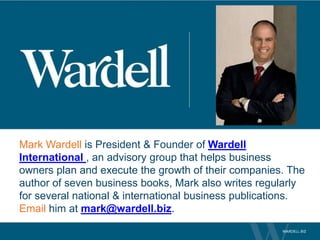
Mark Wardell is President & Founder of Wardell 
International , an advisory group that helps business 
owners plan and execute the growth of their companies. The 
author of seven business books, Mark also writes regularly 
for several national & international business publications. 
Email him at mark@wardell.biz.

Top 10 Tips for Reducing Your Expenses

  • 1.
    Top 10 Tipsfor Reducing Your Expenses
  • 2.
    1. Reduce Overtime Overtime is expensive, but a little preplanning of your work schedules will go a long way here. The feast or famine cycle that many businesses go through can drive costs up without a corresponding increase in sales. The trick is to keep a steady pace with your work. Otherwise, you find yourself needing to pay overtime simply to keep from missing your deadlines.
  • 3.
    2. Create abudget If you don’t have one, make one. It may seem like a time-consuming project but if your money is important to you, then the results will be more than worth the effort. Simply put, a budget is your most effective tool for setting and reaching your financial targets.
  • 4.
    3. Nurture acost saving culture Everyone can and should take fiscal responsibility for their work. One way to do this is to involve everyone in the budget. A budget isn’t just a tool for Management. Make all your employees accountable for the line items that affect them. For example, an office administrator may be accountable for keeping your office supplies on target with your budget.
  • 5.
    4. Play the“savings game” Get together a small team of employees and go through your income statement line by line. Your goal is to come up with 3 ideas for saving money for each line item. It will be difficult for some items, but think outside of the box on this. They don’t all have to be keepers. Make it an open brainstorming session and tell your people that no idea is a bad idea. You can prioritize and implement the top 10 ideas once you are done.
  • 6.
    5. Negotiate andrenegotiate everything You may be surprised at the results. Nearly everything is negotiable. Even your banking fees are negotiable if you’re doing enough business with them. The trick is to see the transaction from your supplier’s perspective. For example, even if you don’t buy in large batches, you may be able to negotiate a volume discount on materials that you purchase over the course of one year. Basically, you’re guaranteeing your business in return for a discount.
  • 7.
    6. Decrease yourwaste Every company has waste… wasted materials, wasted time, wasted efforts, wasted money, wasted employees and so forth. Make waste the enemy! Everyone in your business must learn to identify it and take steps to eliminate it. You’ll never have a perfectly efficient business, but as long as you are in business, that should be your goal.
  • 8.
    7. Decrease yourinventory Doing this may require the streamlining of some of your business systems, but if you carry excess inventory simply because you may need it as some point, your savings will be more than worth the effort.
  • 9.
    8. Go green You can reduce your utility expenses by becoming a “power smart” business. Turn off the lights when they’re not needed; automatic switches will help with this. Use energy efficient lighting. Turn the heat and a/c off on weekends and/or evenings. Don’t use equipment unless you have to. Give your local power company a call for more ideas.
  • 10.
    9. Save moneythrough partnering There are many ways to partner with another company for mutual benefit. One way is to share marketing costs by creating a joint campaign with a complementary business. For example, a real-estate firm might put on a joint seminar with a mortgage broker, or a group of retail stores in the same area might organize and promote a sidewalk sale. If you use your imagination, the possibilities are endless.
  • 11.
    10. Reduce yourreceivables Your first step is to standardize your approach. It’s easy to develop an effective collections system. What’s hard is sticking to it. That’s because we don’t want to risk offending our customers. But you can ask for money without being rude, and besides, if you’ve fulfilled your part of the bargain it’s only fair that your customers fulfill their part. So be polite, but be direct. After all, it’s your money, and you shouldn’t be forced to lend it out against your will for an indefinite period of time (especially if you don’t charge interest or late fees).
  • 12.
    Mark Wardell isPresident & Founder of Wardell International , an advisory group that helps business owners plan and execute the growth of their companies. The author of seven business books, Mark also writes regularly for several national & international business publications. Email him at mark@wardell.biz.