How to
make
acquisition
strategic.
7 questions you need to ask.
Mergers and acquisitions
are back on the agenda.
A recent survey found that 50% of mid-
sized businesses are planning a deal in the
next 12 months.*
*source: EY Capital Confidence Barometer, 2016
It is increasingly important
to acquirers that their
company purchases deliver
strategic value.
But...
Because identifying strategic value can help you:
■■ optimise the success of an acquisition
■■ justify the purchase to funders
■■ increase the price of the business when you sell
Why?
Whereas...
Buying a non-related business
for the sake of getting bigger is
a recipe for disaster.
Good strategic reasons for
acquisition include...
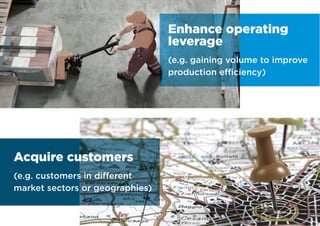
Enhance operating
leverage
(e.g. gaining volume to improve
production efficiency)
Acquire customers
(e.g. customers in different
market sectors or geographies)
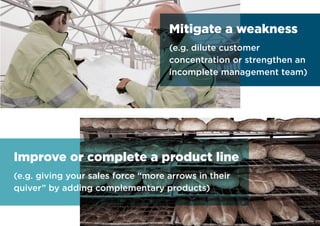
Mitigate a weakness
(e.g. dilute customer
concentration or strengthen an
incomplete management team)
Improve or complete a product line
(e.g. giving your sales force “more arrows in their
quiver” by adding complementary products)
Acquire IP
(e.g. it may be cheaper and
faster to acquire technology
than develop it in house)
Break into regulated or
government work
So, how do I
identify strategic
value?
Ask yourself
these seven
questions...
Will it help you expand your
customer base, complement
your existing product line, or
defend against competitors?
Be wary of acquiring a
‘bolt-on’ business with little
synergistic value. Ideally, an
acquisition should result in
something greater than the
sum of its parts.
What aims
must be
achieved to
justify the
purchase?
For example, how will the
acquisition affect your
business’ profitability, cash
flow and/or market share?
What are
the financial
benefits, and
when will I see
them?
In other words, do the
benefits of the purchase
represent an attractive
return on its costs? And
how long will it take for
you to see this return?
Does it make
financial
sense?
What are the chances that
your strategic aims will not
be achieved? Think about
whether you can live with
the consequences if that
happens.
What are the
risks?
You need to think carefully
about who will implement the
deal and how. Undertaking
an acquisition will demand
a lot of your time and effort;
and that’s on top of the work
you need to do to keep your
business running as usual in
the meantime. Think about
what kind of support you
want from an adviser, as well
as the types of adviser you
might need.
How will the
purchase be
implemented?
A good plan for the
integration of the target is key
to achieving your strategic
aims. What do you need
to do to exploit synergies?
Think about the staff you are
acquiring as well; it is vital
to get them on board, and
they will probably have useful
knowledge of the target.
Is there a
deliverable
plan for
integration of
the purchase?
When will the benefits
start to be delivered, and
is it soon enough?
How quickly
can the
acquisition be
integrated?
We like to talk.
We help businesses looking to grow through acquisition. We work closely
with our clients from start to finish, developing a deep understanding of your
business and acquisition criteria. In addition we are experienced at identifying
suitable acquisition targets using our extensive in-house research facilities.
Get in touch for an informal discussion about your business plans
or requirements.
+44(0) 1223 728 222
info@pemcf.com

How to make acquisition strategic

  • 1.
  • 2.
    Mergers and acquisitions areback on the agenda. A recent survey found that 50% of mid- sized businesses are planning a deal in the next 12 months.* *source: EY Capital Confidence Barometer, 2016
  • 3.
    It is increasinglyimportant to acquirers that their company purchases deliver strategic value. But...
  • 4.
    Because identifying strategicvalue can help you: ■■ optimise the success of an acquisition ■■ justify the purchase to funders ■■ increase the price of the business when you sell Why?
  • 5.
    Whereas... Buying a non-relatedbusiness for the sake of getting bigger is a recipe for disaster. Good strategic reasons for acquisition include...
  • 6.
    Enhance operating leverage (e.g. gainingvolume to improve production efficiency) Acquire customers (e.g. customers in different market sectors or geographies)
  • 7.
    Mitigate a weakness (e.g.dilute customer concentration or strengthen an incomplete management team) Improve or complete a product line (e.g. giving your sales force “more arrows in their quiver” by adding complementary products)
  • 8.
    Acquire IP (e.g. itmay be cheaper and faster to acquire technology than develop it in house) Break into regulated or government work
  • 9.
    So, how doI identify strategic value?
  • 10.
  • 11.
    Will it helpyou expand your customer base, complement your existing product line, or defend against competitors? Be wary of acquiring a ‘bolt-on’ business with little synergistic value. Ideally, an acquisition should result in something greater than the sum of its parts. What aims must be achieved to justify the purchase?
  • 12.
    For example, howwill the acquisition affect your business’ profitability, cash flow and/or market share? What are the financial benefits, and when will I see them?
  • 13.
    In other words,do the benefits of the purchase represent an attractive return on its costs? And how long will it take for you to see this return? Does it make financial sense?
  • 14.
    What are thechances that your strategic aims will not be achieved? Think about whether you can live with the consequences if that happens. What are the risks?
  • 15.
    You need tothink carefully about who will implement the deal and how. Undertaking an acquisition will demand a lot of your time and effort; and that’s on top of the work you need to do to keep your business running as usual in the meantime. Think about what kind of support you want from an adviser, as well as the types of adviser you might need. How will the purchase be implemented?
  • 16.
    A good planfor the integration of the target is key to achieving your strategic aims. What do you need to do to exploit synergies? Think about the staff you are acquiring as well; it is vital to get them on board, and they will probably have useful knowledge of the target. Is there a deliverable plan for integration of the purchase?
  • 17.
    When will thebenefits start to be delivered, and is it soon enough? How quickly can the acquisition be integrated?
  • 18.
    We like totalk. We help businesses looking to grow through acquisition. We work closely with our clients from start to finish, developing a deep understanding of your business and acquisition criteria. In addition we are experienced at identifying suitable acquisition targets using our extensive in-house research facilities. Get in touch for an informal discussion about your business plans or requirements. +44(0) 1223 728 222 info@pemcf.com