Oral Care for Long Term Care ResidentsSteady increase of LTC residents that are retaining their own teeth
Approximately 95% of LTC residents need assistance with daily oral care
Approximately 35% have dysphagia (problems swallowing)
Approximately 80% have some form of dementiaWhy the Concern for Oral Care?Client comfort
Client free from pain and infection with no additional behaviour issues due to oral problems
Dignity
Quality of LifeCommon Oral Problems in Alzheimer Care Dry Mouth
 Soreness
 Thrush (yeast infection)
 Swallowing Problems
 Lip Soreness
 Tastes/ Odours
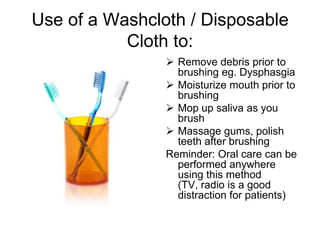
 Denture Fit/ Swallowing RiskOral Care Supplies Gel (Perivex®)/ Mouthwash (Oradent® for dry mouth)/ Water
 Two toothbrushes with wide handles
 Washcloth (disposable cloths)
 Hand towelUse of a Washcloth / Disposable Cloth to:Remove debris prior to brushing eg. Dysphasgia
Moisturize mouth prior to brushing
Mop up saliva as you brush
Massage gums, polish teeth after brushingReminder: Oral care can be performed anywhere using this method (TV, radio is a good distraction for patients)
Why You Should NOT Use ToothpasteFoaming action increases saliva flow and the number of times a patient will want to spit
Foaming action of toothpaste decreases visibility for the caregiver
Swallowing defects – a person can choke on the paste
Majority of toothpastes have a strong taste that does not appeal to older adults eg. Alzheimer’s patients
NOTE: Toothpaste should only be used when a patient can spit and swallow properlyReducing Aerosol Splatter When Brushing TeethSequence:Mop and go for debris removalTeeth together, if possibleBrush upper outside surfaces first, using whatever technique worksBrush upper inside teeth using back and forth or circlesBrush upper inside back teeth back and forth or circles
Reducing Aerosol Splatter When Brushing Teeth6. Brush inside lower front teeth back and forth or circles7. Lower back teeth inside last brushing area Reminders: Sequencing reduces the risk of a gag reflex
 Mop saliva and debris frequently throughout brushing time to eliminate need to spit
Do not flick toothbrush out while brushingFlossing Not realistic for many caregivers or clients, high risk of being bitten – better luck with inter-dental brushes, proxy brushes and stimudentsFinal Tooth and Gum Wipe Down Use water, gel, non-alcoholic mouthwash, or prescription chlorhexidine product
 Use on washcloth, polish teeth
 High dementia, biting patients – do not do thisUsing Two Toothbrushes Easy clean-up, more sanitary than just one
 Can use one as a prop to hold the mouth open and the other as the toothbrushDealing With Caregiver’s Fear of Being Bitten Remember: No Means No! If the patient is refusing to cooperate, try again laterFinger Placement RemindersPlace finger in a C-curve in the cheek so the finger can get away fastPull lower lip out; no pain generated

Tips for ps ws oral care slides o2

  • 1.
    Oral Care forLong Term Care ResidentsSteady increase of LTC residents that are retaining their own teeth
  • 2.
    Approximately 95% ofLTC residents need assistance with daily oral care
  • 3.
    Approximately 35% havedysphagia (problems swallowing)
  • 4.
    Approximately 80% havesome form of dementiaWhy the Concern for Oral Care?Client comfort
  • 5.
    Client free frompain and infection with no additional behaviour issues due to oral problems
  • 6.
  • 7.
    Quality of LifeCommonOral Problems in Alzheimer Care Dry Mouth
  • 8.
  • 9.
    Thrush (yeastinfection)
  • 10.
  • 11.
  • 12.
  • 13.
    Denture Fit/Swallowing RiskOral Care Supplies Gel (Perivex®)/ Mouthwash (Oradent® for dry mouth)/ Water
  • 14.
    Two toothbrusheswith wide handles
  • 15.
  • 16.
    Hand towelUseof a Washcloth / Disposable Cloth to:Remove debris prior to brushing eg. Dysphasgia
  • 17.
  • 18.
    Mop up salivaas you brush
  • 19.
    Massage gums, polishteeth after brushingReminder: Oral care can be performed anywhere using this method (TV, radio is a good distraction for patients)
  • 20.
    Why You ShouldNOT Use ToothpasteFoaming action increases saliva flow and the number of times a patient will want to spit
  • 21.
    Foaming action oftoothpaste decreases visibility for the caregiver
  • 22.
    Swallowing defects –a person can choke on the paste
  • 23.
    Majority of toothpasteshave a strong taste that does not appeal to older adults eg. Alzheimer’s patients
  • 24.
    NOTE: Toothpaste shouldonly be used when a patient can spit and swallow properlyReducing Aerosol Splatter When Brushing TeethSequence:Mop and go for debris removalTeeth together, if possibleBrush upper outside surfaces first, using whatever technique worksBrush upper inside teeth using back and forth or circlesBrush upper inside back teeth back and forth or circles
  • 25.
    Reducing Aerosol SplatterWhen Brushing Teeth6. Brush inside lower front teeth back and forth or circles7. Lower back teeth inside last brushing area Reminders: Sequencing reduces the risk of a gag reflex
  • 26.
    Mop salivaand debris frequently throughout brushing time to eliminate need to spit
  • 27.
    Do not flicktoothbrush out while brushingFlossing Not realistic for many caregivers or clients, high risk of being bitten – better luck with inter-dental brushes, proxy brushes and stimudentsFinal Tooth and Gum Wipe Down Use water, gel, non-alcoholic mouthwash, or prescription chlorhexidine product
  • 28.
    Use onwashcloth, polish teeth
  • 29.
    High dementia,biting patients – do not do thisUsing Two Toothbrushes Easy clean-up, more sanitary than just one
  • 30.
    Can useone as a prop to hold the mouth open and the other as the toothbrushDealing With Caregiver’s Fear of Being Bitten Remember: No Means No! If the patient is refusing to cooperate, try again laterFinger Placement RemindersPlace finger in a C-curve in the cheek so the finger can get away fastPull lower lip out; no pain generated