In the name of Allah,The Most Beneficient & The Most Merciful
ORAL HYGIENE
Presented BY:
Syeda Rida Zehra Abidi
BDS (DIKIOHS)
MEANING OF ORAL
      HYGIENE
Oral hygiene means the cleanliness of the mouth.
Oral hygiene include the measures to prevent the
spread of disease from the mouth and increase the
comfort of the patient.
OBJECTIVES

 To keep the mouth and teeth in good condition

 To prevent the mucous membrane from becoming
  dry and cracked

 To prevent sores which resulting in ulceration

 To prevent bacteria in the mouth from causing local
  and general infection
How is good oral hygiene
       practiced?
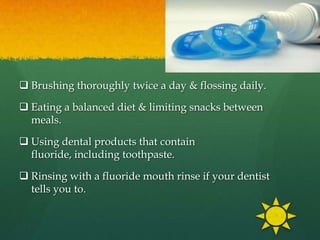
 Brushing thoroughly twice a day & flossing daily.

 Eating a balanced diet & limiting snacks between
  meals.

 Using dental products that contain
  fluoride, including toothpaste.

 Rinsing with a fluoride mouth rinse if your dentist
  tells you to.
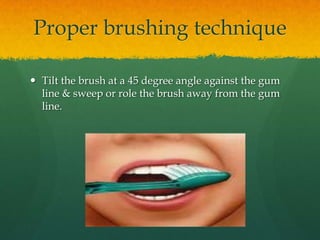
Proper brushing technique

 Tilt the brush at a 45 degree angle against the gum
  line & sweep or role the brush away from the gum
  line.
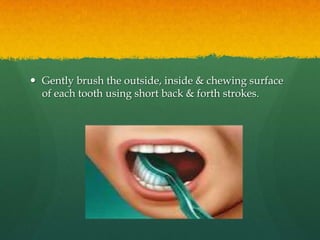
 Gently brush the outside, inside & chewing surface
  of each tooth using short back & forth strokes.
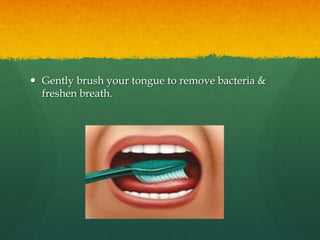
 Gently brush your tongue to remove bacteria &
  freshen breath.
How often should I replace
    my tooth brush?
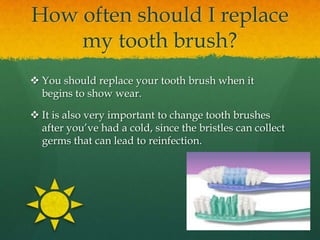
 You should replace your tooth brush when it
  begins to show wear.

 It is also very important to change tooth brushes
  after you’ve had a cold, since the bristles can collect
  germs that can lead to reinfection.
Floss

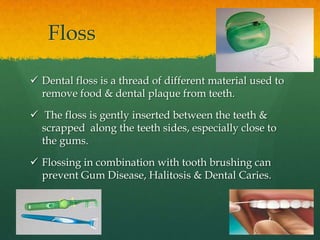
 Dental floss is a thread of different material used to
  remove food & dental plaque from teeth.

 The floss is gently inserted between the teeth &
  scrapped along the teeth sides, especially close to
  the gums.

 Flossing in combination with tooth brushing can
  prevent Gum Disease, Halitosis & Dental Caries.
Flossing Technique:

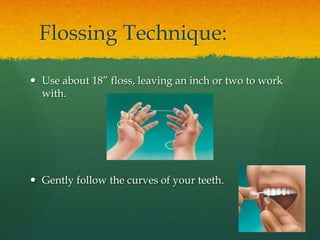
 Use about 18” floss, leaving an inch or two to work
  with.


 Gently follow the curves of your teeth.
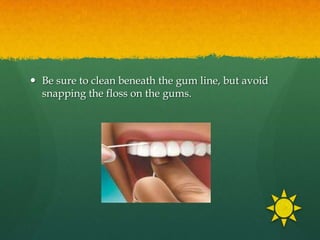
 Be sure to clean beneath the gum line, but avoid
  snapping the floss on the gums.
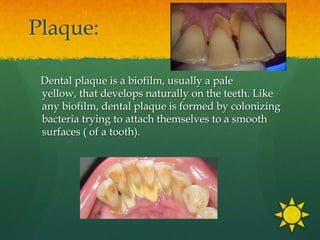
Plaque:

 Dental plaque is a biofilm, usually a pale
 yellow, that develops naturally on the teeth. Like
 any biofilm, dental plaque is formed by colonizing
 bacteria trying to attach themselves to a smooth
 surfaces ( of a tooth).
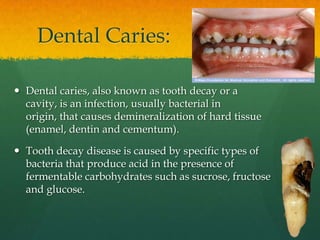
Dental Caries:

 Dental caries, also known as tooth decay or a
  cavity, is an infection, usually bacterial in
  origin, that causes demineralization of hard tissue
  (enamel, dentin and cementum).

 Tooth decay disease is caused by specific types of
  bacteria that produce acid in the presence of
  fermentable carbohydrates such as sucrose, fructose
  and glucose.
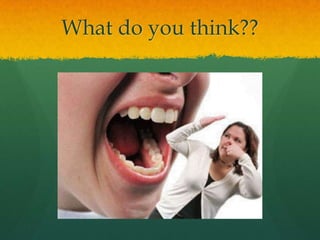
What do you think??
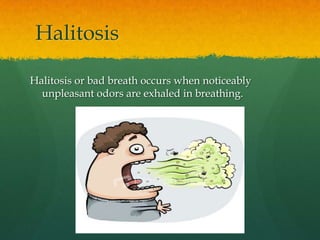
Halitosis

Halitosis or bad breath occurs when noticeably
  unpleasant odors are exhaled in breathing.
SOLUTION USED FOR
          MOUTHCARE
 Potassium permanganate: 1:5000(KMNO4)

  (1 crystal to glass of water)


    Sodium chloride- 1 teaspoon to a pint of water(normal saline)


    Potassium chloride – 4-6%


    Hydrogen peroxide (H2O2) 1:8
DENTRIFICES USED
 Glycerin with lime juice equal part


 Sodium bicarbonate paste


 Reliable toothpaste or powder


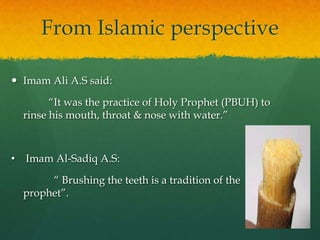
 Neem stick

NOTE: Hydrogen peroxide removes decaying food particles
  b/w teeth by its bubbling action and reduce bacterial activity
  from the cavities of tooth
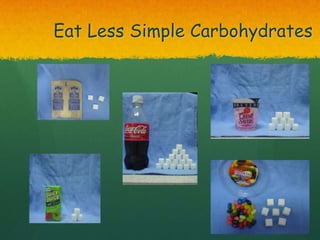
Eat Less Simple Carbohydrates
Eat More Complex Carbohydrates
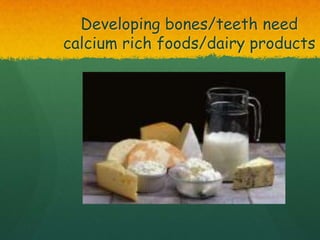
Developing bones/teeth need
calcium rich foods/dairy products
From Islamic perspective

 Imam Ali A.S said:

          “It was the practice of Holy Prophet (PBUH) to
    rinse his mouth, throat & nose with water.”


•   Imam Al-Sadiq A.S:

         “ Brushing the teeth is a tradition of the
    prophet”.
Make the Connection

 A healthy mouth means a healthy body


 Eating a balanced diet with a variety of foods
  will improve oral health and general health


 Reducing the frequency of sugary foods and
  beverages will reduce tooth decay and help
  maintain a healthy weight
Conclusion:

 Strengthen the tooth enamel with appropriate
  fluorides


 Protect the chewing surfaces of teeth with
  dental sealants


 Brush & floss daily to remove bacteria


 Limit servings of sticky CHO foods and sweet
  beverages / increase complex CHO
References:
   Free merriam-webster dictionary.

   Leeds University , Introduction to dental plaque.

   Managing the complexity of a dynamic biofilm (journal of the American Dental Association).

   What does floss do? (journal of the American Dental Association).

   http://www.personaldentaloffice.com/dental-health/oral-hygiene.html

   http://www.colgate.co.uk/app/Colgate/UK/OralCare/OralHealthCenter/OralHygieneBasics/GoodOralHygiene.cvsp?Art
    icle=WhatisGoodOralHygiene%3f

   http://www.al-islam.org/philosophyofislam/15.htm

   http://en.wikipedia.org/wiki/Dental_caries
ANY QUERY??
Some tortures are physical
And some are mental,
But the one that is both
Is dental.
.

Oral Hygiene

  • 1.
    In the nameof Allah,The Most Beneficient & The Most Merciful
  • 2.
    ORAL HYGIENE Presented BY: SyedaRida Zehra Abidi BDS (DIKIOHS)
  • 3.
    MEANING OF ORAL HYGIENE Oral hygiene means the cleanliness of the mouth. Oral hygiene include the measures to prevent the spread of disease from the mouth and increase the comfort of the patient.
  • 4.
    OBJECTIVES  To keepthe mouth and teeth in good condition  To prevent the mucous membrane from becoming dry and cracked  To prevent sores which resulting in ulceration  To prevent bacteria in the mouth from causing local and general infection
  • 5.
    How is goodoral hygiene practiced?
  • 6.
     Brushing thoroughlytwice a day & flossing daily.  Eating a balanced diet & limiting snacks between meals.  Using dental products that contain fluoride, including toothpaste.  Rinsing with a fluoride mouth rinse if your dentist tells you to.
  • 7.
    Proper brushing technique Tilt the brush at a 45 degree angle against the gum line & sweep or role the brush away from the gum line.
  • 8.
     Gently brushthe outside, inside & chewing surface of each tooth using short back & forth strokes.
  • 9.
     Gently brushyour tongue to remove bacteria & freshen breath.
  • 10.
    How often shouldI replace my tooth brush?  You should replace your tooth brush when it begins to show wear.  It is also very important to change tooth brushes after you’ve had a cold, since the bristles can collect germs that can lead to reinfection.
  • 11.
    Floss  Dental flossis a thread of different material used to remove food & dental plaque from teeth.  The floss is gently inserted between the teeth & scrapped along the teeth sides, especially close to the gums.  Flossing in combination with tooth brushing can prevent Gum Disease, Halitosis & Dental Caries.
  • 12.
    Flossing Technique:  Useabout 18” floss, leaving an inch or two to work with.  Gently follow the curves of your teeth.
  • 13.
     Be sureto clean beneath the gum line, but avoid snapping the floss on the gums.
  • 14.
    Plaque: Dental plaqueis a biofilm, usually a pale yellow, that develops naturally on the teeth. Like any biofilm, dental plaque is formed by colonizing bacteria trying to attach themselves to a smooth surfaces ( of a tooth).
  • 15.
    Dental Caries:  Dentalcaries, also known as tooth decay or a cavity, is an infection, usually bacterial in origin, that causes demineralization of hard tissue (enamel, dentin and cementum).  Tooth decay disease is caused by specific types of bacteria that produce acid in the presence of fermentable carbohydrates such as sucrose, fructose and glucose.
  • 16.
    What do youthink??
  • 17.
    Halitosis Halitosis or badbreath occurs when noticeably unpleasant odors are exhaled in breathing.
  • 18.
    SOLUTION USED FOR MOUTHCARE  Potassium permanganate: 1:5000(KMNO4) (1 crystal to glass of water)  Sodium chloride- 1 teaspoon to a pint of water(normal saline)  Potassium chloride – 4-6%  Hydrogen peroxide (H2O2) 1:8
  • 19.
    DENTRIFICES USED  Glycerinwith lime juice equal part  Sodium bicarbonate paste  Reliable toothpaste or powder  Neem stick NOTE: Hydrogen peroxide removes decaying food particles b/w teeth by its bubbling action and reduce bacterial activity from the cavities of tooth
  • 20.
    Eat Less SimpleCarbohydrates
  • 21.
    Eat More ComplexCarbohydrates
  • 22.
    Developing bones/teeth need calciumrich foods/dairy products
  • 23.
    From Islamic perspective Imam Ali A.S said: “It was the practice of Holy Prophet (PBUH) to rinse his mouth, throat & nose with water.” • Imam Al-Sadiq A.S: “ Brushing the teeth is a tradition of the prophet”.
  • 24.
    Make the Connection A healthy mouth means a healthy body  Eating a balanced diet with a variety of foods will improve oral health and general health  Reducing the frequency of sugary foods and beverages will reduce tooth decay and help maintain a healthy weight
  • 25.
    Conclusion:  Strengthen thetooth enamel with appropriate fluorides  Protect the chewing surfaces of teeth with dental sealants  Brush & floss daily to remove bacteria  Limit servings of sticky CHO foods and sweet beverages / increase complex CHO
  • 26.
    References:  Free merriam-webster dictionary.  Leeds University , Introduction to dental plaque.  Managing the complexity of a dynamic biofilm (journal of the American Dental Association).  What does floss do? (journal of the American Dental Association).  http://www.personaldentaloffice.com/dental-health/oral-hygiene.html  http://www.colgate.co.uk/app/Colgate/UK/OralCare/OralHealthCenter/OralHygieneBasics/GoodOralHygiene.cvsp?Art icle=WhatisGoodOralHygiene%3f  http://www.al-islam.org/philosophyofislam/15.htm  http://en.wikipedia.org/wiki/Dental_caries
  • 28.
  • 29.
    Some tortures arephysical And some are mental, But the one that is both Is dental.
  • 30.