Written By: Malcolm Gladwell
The moment of critical mass The dramatic moment in an epidemic when everything changes at once Things tip because of the dramatic efforts of a select few In order to create one contagious movement you might have to create several small ones
Law of the Few In a given process or system some people matter more than others.  Stickiness Factor There are specific ways of making a contagious message memorable; there are relatively simple changes in the presentation and structuring of the information that can make a big difference in how much of an impact it makes.  Power of Context Human Beings are a lot more sensitive to their environment than they may seem.
Connectors People with a special gift for bringing the world together.  Know lots of people  Instinctive and natural gift for making social connections “ Weak ties” are always more important than strong ties  The closer an idea or product comes to a connector, the more power and opportunity it has as well  Word of mouth epidemics are the work of connectors
Mavens One who accumulates knowledge   Are not passive collectors of information  Data banks They want to share their information with as many people as possible  Not persuaders  Information specialists They tell you about all their great deals Have an emotional need to solve problems Be a teacher or a student
Salesmen One with the skills to persuade us when we are unconvinced of what we are hearing. Little things make as much of a difference as big things. Non-verbal cues are as important or more important than verbal cues. Persuasion often works in ways that we do not appreciate. You draw others into your rhythms by your interactions
Stickiness-the specific quality that a message needs to be successful. There is simple way to package information, under the right circumstances can make it irresistible sticky and compluse a person into action . In order to capable of sparking epidemics ideas have to be memorable and move you into action.
The content of the message  matters; We needed significant change in presentation to make most message stick. The elements that make an idea sticky turn out to be small and trivial. Pay careful attention to the structure and format of your material.
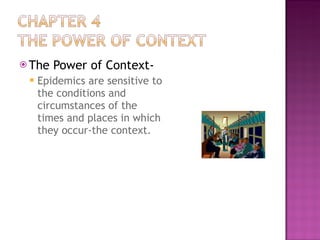
The Power of Context- Epidemics are sensitive to the conditions and circumstances of the times and places in which they occur-the context.
The Good Samaratin The convictions of your heart and the actual contents of your thoughts are less important, in the end, in guiding your actions than the immediate context of your behavior.
Tipping points may be as simple and trivial as everyday signs of disorder. All human behavior is, in the end, is sensitive to environmental cues. Channel Capacity Amount of space in our brain for certain kinds of information.
Starting epidemics requires concentrating resources in a few key areas.  Concentrate resources on connectors, mavens, and salesmen (Law of the Few). We are influenced by our surroundings, our immediate context, and the personalities of those around us. With the slightest push in just the right place, the world can be tipped.
There are exceptional people who are capable of starting an epidemic People with a special message bring the world together Stay connected-know lots of people Master the weak tie-a friendly or social contact Manage to occupy many different worlds and subcultures. Acquaintances are social power Social glue helps spread the message
Presented By: Sushil Kumar Singh Sapana Nate Reeta Pal Pramod Zate Archana Kshirsagar

Tipping Point

  • 1.
  • 2.
    The moment ofcritical mass The dramatic moment in an epidemic when everything changes at once Things tip because of the dramatic efforts of a select few In order to create one contagious movement you might have to create several small ones
  • 3.
    Law of theFew In a given process or system some people matter more than others. Stickiness Factor There are specific ways of making a contagious message memorable; there are relatively simple changes in the presentation and structuring of the information that can make a big difference in how much of an impact it makes. Power of Context Human Beings are a lot more sensitive to their environment than they may seem.
  • 4.
    Connectors People witha special gift for bringing the world together. Know lots of people Instinctive and natural gift for making social connections “ Weak ties” are always more important than strong ties The closer an idea or product comes to a connector, the more power and opportunity it has as well Word of mouth epidemics are the work of connectors
  • 5.
    Mavens One whoaccumulates knowledge Are not passive collectors of information Data banks They want to share their information with as many people as possible Not persuaders Information specialists They tell you about all their great deals Have an emotional need to solve problems Be a teacher or a student
  • 6.
    Salesmen One withthe skills to persuade us when we are unconvinced of what we are hearing. Little things make as much of a difference as big things. Non-verbal cues are as important or more important than verbal cues. Persuasion often works in ways that we do not appreciate. You draw others into your rhythms by your interactions
  • 7.
    Stickiness-the specific qualitythat a message needs to be successful. There is simple way to package information, under the right circumstances can make it irresistible sticky and compluse a person into action . In order to capable of sparking epidemics ideas have to be memorable and move you into action.
  • 8.
    The content ofthe message matters; We needed significant change in presentation to make most message stick. The elements that make an idea sticky turn out to be small and trivial. Pay careful attention to the structure and format of your material.
  • 9.
    The Power ofContext- Epidemics are sensitive to the conditions and circumstances of the times and places in which they occur-the context.
  • 10.
    The Good SamaratinThe convictions of your heart and the actual contents of your thoughts are less important, in the end, in guiding your actions than the immediate context of your behavior.
  • 11.
    Tipping points maybe as simple and trivial as everyday signs of disorder. All human behavior is, in the end, is sensitive to environmental cues. Channel Capacity Amount of space in our brain for certain kinds of information.
  • 12.
    Starting epidemics requiresconcentrating resources in a few key areas. Concentrate resources on connectors, mavens, and salesmen (Law of the Few). We are influenced by our surroundings, our immediate context, and the personalities of those around us. With the slightest push in just the right place, the world can be tipped.
  • 13.
    There are exceptionalpeople who are capable of starting an epidemic People with a special message bring the world together Stay connected-know lots of people Master the weak tie-a friendly or social contact Manage to occupy many different worlds and subcultures. Acquaintances are social power Social glue helps spread the message
  • 14.
    Presented By: SushilKumar Singh Sapana Nate Reeta Pal Pramod Zate Archana Kshirsagar