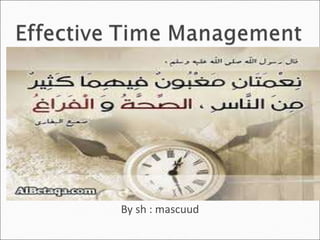
By sh : mascuud
 What is an effective time management (ETM)
 Why ETM is important?
 How to plan your time effectively?
 How to implement ETM in your organization?
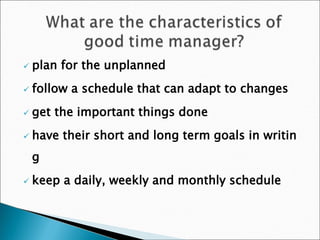
 What are the characteristics of good time manager?
 Is it possible to manage the time?
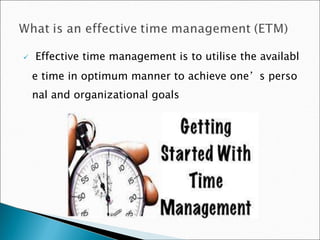
 Effective time management is to utilise the availabl
e time in optimum manner to achieve one’s perso
nal and organizational goals
24 hours per day
X
60 minutes per hour
X
60 seconds per minute
=
86,400 Seconds
 Time is most valuable resource
 Time moves quickly
 Time is limited and valuable
 Time is a Non Renewable Resource
 To use time more effectively for better life s
uccess.
 For better prioritization
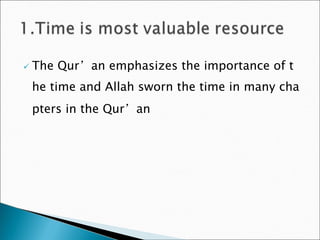
 The Qur’an emphasizes the importance of t
he time and Allah sworn the time in many cha
pters in the Qur’an
‫لاق‬ ‫يلاعت‬: ( ‫ليللاو‬ ‫اذا‬ ‫يشغي‬ ‫راهنلاو‬ ‫اذا‬ ‫)يلجت‬، (‫رصعلاو‬ ‫نإ‬ ‫ناسنإلا‬
‫يفل‬ ‫)رسخ‬. ‫كانهو‬ ‫تايآ‬ ‫يرخأ‬ ‫مسقأ‬ ‫هللا‬ ‫نمزلا‬.
‫لاقو‬ ‫يلاعت‬ ‫يف‬ ‫هباتك‬ ‫زيزعلا‬:(‫وهو‬ ‫يذلا‬ ‫لعج‬ ‫ليللا‬ ‫راهنلاو‬ ‫ةفلخ‬ ‫نمل‬ ‫را‬
‫دا‬
‫نأ‬ ‫ركذي‬ ‫وا‬ ‫دارا‬ ‫)اروكش‬ ‫ناقرفلا‬ 62
The Qur’an states how human being will regre
t, if they don't utilize the time properly
‫لوقي‬ ‫هللا‬ ‫زع‬ ‫لجو‬ ‫يف‬ ‫ةروس‬ ‫رطافلا‬: (‫مهو‬ ‫نوخرطصي‬ ‫اهيف‬ ‫انبر‬ ‫رخأ‬
‫انج‬ ‫لمعن‬ ‫احلاص‬ ‫ريغ‬ ‫يذلا‬ ‫انك‬ ‫لمعن‬، ‫ملوأ‬ ‫مكرمعن‬ ‫ام‬ ‫ركذتي‬ ‫هيف‬ ‫م‬
‫ن‬ ‫ركذت‬ ‫مكءاجو‬ ‫ريذنلا‬، ‫وقوذف‬ ‫امف‬ ‫نيملاظلل‬ ‫نم‬ ‫)ريصن‬
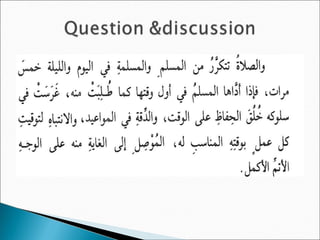
What is the relationship between prayer and ef
fective time management?
Time is running as wind and moves very
quickly as the Qur’an says:
(‫مهنأك‬ ‫موي‬ ‫اهنوري‬ ‫مل‬ ‫وثبلي‬ ‫ةيشعالا‬ ‫وأ‬ ‫)اهاحض‬.
 In the past, there was a story between prophe
t Nuh S.A.W and Malakul mawt. The Malakul
mawt came to the Nuh and asked him how do
you see the Dunya? He answered it was like a
house, entered on door and exited an other d
oor.
Once it is gone, it is gone and you will never see this
moment again as Hasan al-bisr said:
(‫ام‬ ‫نم‬ ‫موي‬ ‫قشني‬ ‫هرجف‬, ‫الا‬ ‫يدانيو‬: ‫اي‬ ‫نيا‬ ‫مدآ‬ , ‫انأ‬ ‫قلخ‬ ‫ديدج‬, ‫يلعو‬ ‫كلمع‬ ‫ديهش‬,
‫دوزتف‬ ‫ينم‬ , ‫ينإف‬ ‫تيضماذإ‬ ‫ال‬ ‫دوعأ‬ ‫يلا‬ ‫موي‬ ‫)ةمايقلا‬
 More productive
 Have more energy for things they need to acc
omplish
 Feel happiness and less stress
 Relate more positively to others and get more
things done
The value of minutes!
Do we know that the correct time manage
ment can increase our personal achieveme
nt?
E.g. an allocating 30 minutes per day can
give you 1 month per year.
Planning
time effectively
Do u know
Thus, to make TM as a habit you need
That time planning is a personal issue?
circumstance
personality
Enough time Effort
 Research shows that less than 5% of mana
gement time goes on planning.
 If you fail to plan, you plan to fail
 If you don’t know what to do, you will nev
er achieve your goals.
 There are a lot of time wasters
Be careful?
a second
a year
100 90 80 70 60 50 40 30 20 10 0
Do you control your time?
Assess your self
 Hadii ay jawaabtaada Haa ay noqoto 0 waxaad tahay qof aad
u fiican oo kontoroola waqtigiisa ee saas ku soco.
 Hadii jawaabtaada Haa ay noqoto 1-3 yara waad wanaagsanta
hay laakiin ku laabo ee qorshey waqtigaaga markale.
 Hadii jawaabtaada Haa ay tahay 4-6 waa liidataa ee iska gaar
 Hadii jawaabtaada Haa ay noqoto 7-10 waxaad mareysaa mee
sha u hooseysa ee ku dadaal in aad xaadirto tababaro ku saa
bsan sida loo maamulo waqtiga
Know How You
Spend Your Time
How to implement ?
• Identify the main task of every week.
• Spend a time to plan (1hour, 1 day, 1
week)
• Make it written
• Divide tasks into: weekly, monthly,
& yearly. Daily Record of Activities.doc
Analyze where most of your ti
me is devoted, then write it?
 Job,
Family,
Personal,
Society, and
Other issues,
Personal Victory.doc
Use SWOT
Analysis
We identify
of time analysis
weak
areas
strong
areas
Keeping Minutes of the m
eeting
◦ Notes of what was discussed during the
meeting.
◦ Important to know what was accomplis
hed.
 plan for the unplanned
 follow a schedule that can adapt to changes
 get the important things done
 have their short and long term goals in writin
g
 keep a daily, weekly and monthly schedule
time management part 2.pptx

time management part 2.pptx

  • 1.
    By sh :mascuud
  • 2.
     What isan effective time management (ETM)  Why ETM is important?  How to plan your time effectively?  How to implement ETM in your organization?  What are the characteristics of good time manager?
  • 3.
     Is itpossible to manage the time?
  • 4.
     Effective timemanagement is to utilise the availabl e time in optimum manner to achieve one’s perso nal and organizational goals
  • 5.
    24 hours perday X 60 minutes per hour X 60 seconds per minute = 86,400 Seconds
  • 6.
     Time ismost valuable resource  Time moves quickly  Time is limited and valuable  Time is a Non Renewable Resource  To use time more effectively for better life s uccess.  For better prioritization
  • 7.
     The Qur’anemphasizes the importance of t he time and Allah sworn the time in many cha pters in the Qur’an
  • 8.
    ‫لاق‬ ‫يلاعت‬: (‫ليللاو‬ ‫اذا‬ ‫يشغي‬ ‫راهنلاو‬ ‫اذا‬ ‫)يلجت‬، (‫رصعلاو‬ ‫نإ‬ ‫ناسنإلا‬ ‫يفل‬ ‫)رسخ‬. ‫كانهو‬ ‫تايآ‬ ‫يرخأ‬ ‫مسقأ‬ ‫هللا‬ ‫نمزلا‬. ‫لاقو‬ ‫يلاعت‬ ‫يف‬ ‫هباتك‬ ‫زيزعلا‬:(‫وهو‬ ‫يذلا‬ ‫لعج‬ ‫ليللا‬ ‫راهنلاو‬ ‫ةفلخ‬ ‫نمل‬ ‫را‬ ‫دا‬ ‫نأ‬ ‫ركذي‬ ‫وا‬ ‫دارا‬ ‫)اروكش‬ ‫ناقرفلا‬ 62
  • 9.
    The Qur’an stateshow human being will regre t, if they don't utilize the time properly ‫لوقي‬ ‫هللا‬ ‫زع‬ ‫لجو‬ ‫يف‬ ‫ةروس‬ ‫رطافلا‬: (‫مهو‬ ‫نوخرطصي‬ ‫اهيف‬ ‫انبر‬ ‫رخأ‬ ‫انج‬ ‫لمعن‬ ‫احلاص‬ ‫ريغ‬ ‫يذلا‬ ‫انك‬ ‫لمعن‬، ‫ملوأ‬ ‫مكرمعن‬ ‫ام‬ ‫ركذتي‬ ‫هيف‬ ‫م‬ ‫ن‬ ‫ركذت‬ ‫مكءاجو‬ ‫ريذنلا‬، ‫وقوذف‬ ‫امف‬ ‫نيملاظلل‬ ‫نم‬ ‫)ريصن‬
  • 10.
    What is therelationship between prayer and ef fective time management?
  • 12.
    Time is runningas wind and moves very quickly as the Qur’an says: (‫مهنأك‬ ‫موي‬ ‫اهنوري‬ ‫مل‬ ‫وثبلي‬ ‫ةيشعالا‬ ‫وأ‬ ‫)اهاحض‬.
  • 13.
     In thepast, there was a story between prophe t Nuh S.A.W and Malakul mawt. The Malakul mawt came to the Nuh and asked him how do you see the Dunya? He answered it was like a house, entered on door and exited an other d oor.
  • 15.
    Once it isgone, it is gone and you will never see this moment again as Hasan al-bisr said: (‫ام‬ ‫نم‬ ‫موي‬ ‫قشني‬ ‫هرجف‬, ‫الا‬ ‫يدانيو‬: ‫اي‬ ‫نيا‬ ‫مدآ‬ , ‫انأ‬ ‫قلخ‬ ‫ديدج‬, ‫يلعو‬ ‫كلمع‬ ‫ديهش‬, ‫دوزتف‬ ‫ينم‬ , ‫ينإف‬ ‫تيضماذإ‬ ‫ال‬ ‫دوعأ‬ ‫يلا‬ ‫موي‬ ‫)ةمايقلا‬
  • 16.
     More productive Have more energy for things they need to acc omplish  Feel happiness and less stress  Relate more positively to others and get more things done
  • 17.
    The value ofminutes! Do we know that the correct time manage ment can increase our personal achieveme nt? E.g. an allocating 30 minutes per day can give you 1 month per year.
  • 18.
  • 19.
    Do u know Thus,to make TM as a habit you need That time planning is a personal issue? circumstance personality Enough time Effort
  • 20.
     Research showsthat less than 5% of mana gement time goes on planning.  If you fail to plan, you plan to fail  If you don’t know what to do, you will nev er achieve your goals.  There are a lot of time wasters
  • 21.
  • 22.
  • 23.
    100 90 8070 60 50 40 30 20 10 0 Do you control your time? Assess your self
  • 25.
     Hadii ayjawaabtaada Haa ay noqoto 0 waxaad tahay qof aad u fiican oo kontoroola waqtigiisa ee saas ku soco.  Hadii jawaabtaada Haa ay noqoto 1-3 yara waad wanaagsanta hay laakiin ku laabo ee qorshey waqtigaaga markale.  Hadii jawaabtaada Haa ay tahay 4-6 waa liidataa ee iska gaar  Hadii jawaabtaada Haa ay noqoto 7-10 waxaad mareysaa mee sha u hooseysa ee ku dadaal in aad xaadirto tababaro ku saa bsan sida loo maamulo waqtiga
  • 26.
  • 27.
    How to implement? • Identify the main task of every week. • Spend a time to plan (1hour, 1 day, 1 week) • Make it written • Divide tasks into: weekly, monthly, & yearly. Daily Record of Activities.doc
  • 28.
    Analyze where mostof your ti me is devoted, then write it?  Job, Family, Personal, Society, and Other issues, Personal Victory.doc Use SWOT Analysis
  • 29.
    We identify of timeanalysis weak areas strong areas
  • 30.
    Keeping Minutes ofthe m eeting ◦ Notes of what was discussed during the meeting. ◦ Important to know what was accomplis hed.
  • 31.
     plan forthe unplanned  follow a schedule that can adapt to changes  get the important things done  have their short and long term goals in writin g  keep a daily, weekly and monthly schedule

Editor's Notes