


This event is live as of XYZ
Thriving as an Independent
Practice
Emily Novotny
Manager, athenahealth
2
Care is moving out of the hospital while
outpatient visits continue to rise
3
Source: MedPac Medicare Payment Advisory Commission,
A Data Book: Health Care Spending and the Medicare Program,
June 2014 http://www.medpac.gov/-documents-/data-book
2006 2007 2008 2009 2010 2011 2012
35
30
25
20
15
10
5
0
-5
-10
-15
Fiscal Year
CumulativePercentChange
28.5
-12.6
Outpatient services per FFS Part B beneficiary
Inpatient discharges per FFS Part A beneficiary
There has been an enormous trend
of hospitals buying hospitals…
5
As of
August
2013
50 50 60 60
50
76
93
105
46
2005 2006 2007 2008 2009 2010 2011 2012 2013
Hospital Mergers and Acquisitions
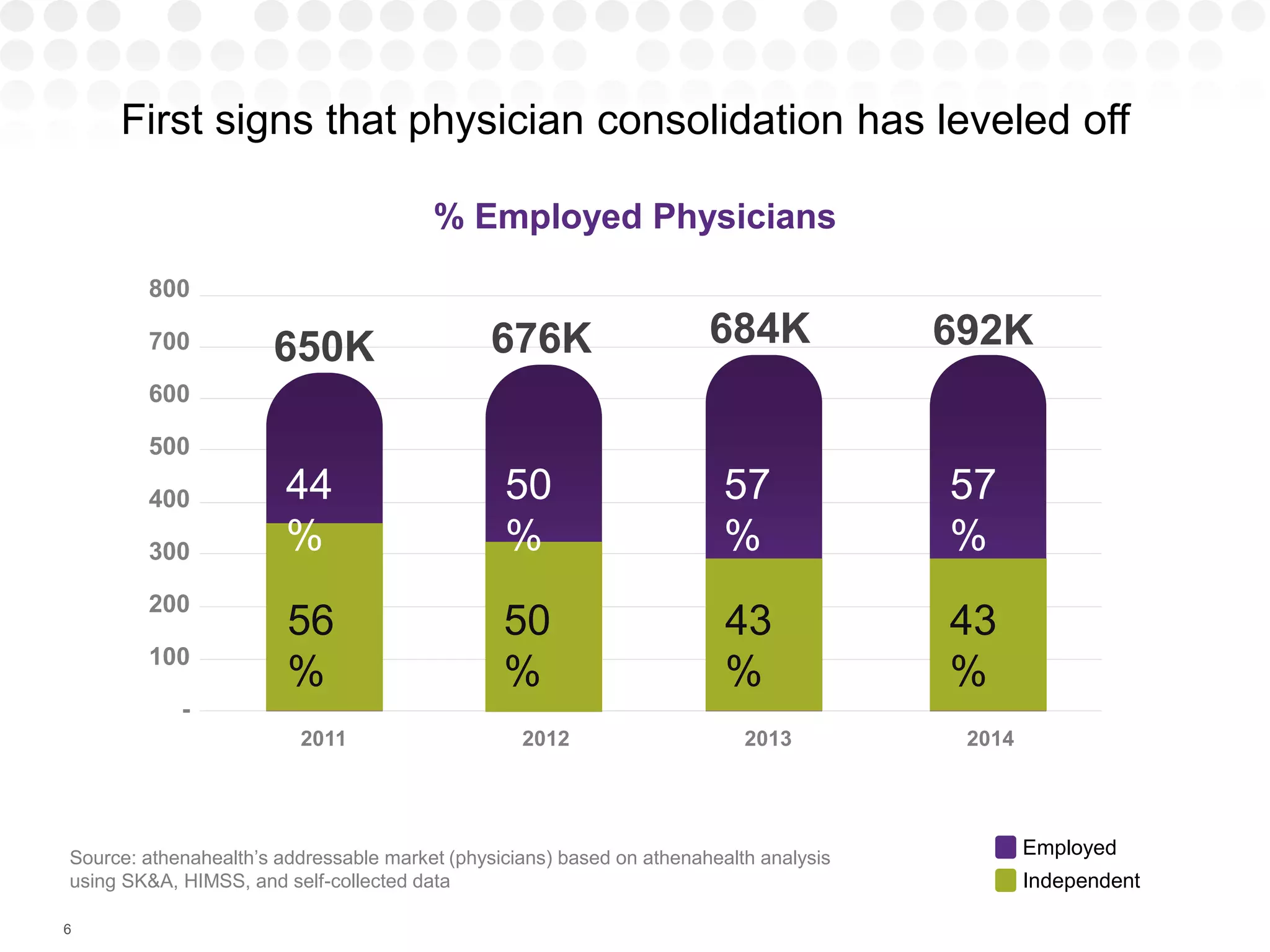
First signs that physician consolidation has leveled off
6
Source: athenahealth’s addressable market (physicians) based on athenahealth analysis
using SK&A, HIMSS, and self-collected data
% Employed Physicians
800
700
600
500
400
300
200
100
-
2011 2012 2013 2014
650K 676K 684K 692K
44
%
50
%
57
%
57
%
56
%
50
%
43
%
43
%
Employed
Independent
Given the opportunity,
doctors want to stay independent
7
Survey of the Epocrates user base. February 2015. Answered: 2,144 Skipped: 642
I would prefer to
practice
independently
I would prefer to be
employed by a larger
group
I am not sure
58.14%
20.10%
11.75%
8
Independent providers see
16% more
patients
than employed providers
Independent
practices see
5.9% fewer
no-shows
than owned
practices
5.9%
9
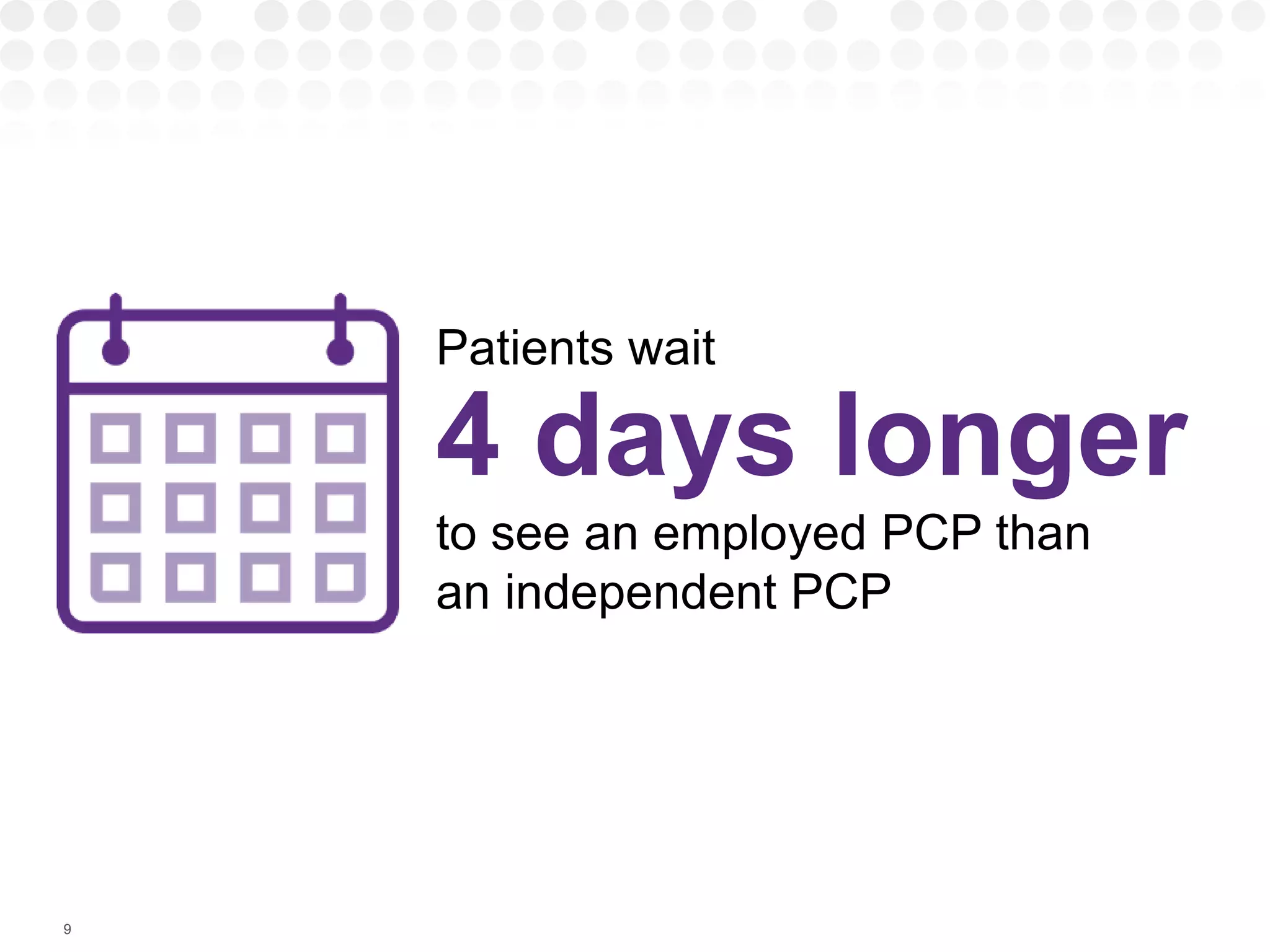
Patients wait
4 days longer
to see an employed PCP than
an independent PCP
Nevertheless, practices are turning to employment
because they are struggling to survive
Clinical Transformation: New Business Models for a New Era in Healthcare. Accenture, 2012.
http://www.accenture.com/SiteCollectionDocuments/PDF/Accenture-Clinical-Transformation-New-Business-Models-for-a-New-Era-in-Healthcare.pdf#zoom=50
Top Concerns That Influence Decision to Seek Employment
Business Costs & Expenses
Prevalence of Managed Care
EMR Requirements
Maintaining/Managing Staff
Number of Patients Required to
Break Even
87%
61%
53%
39%
53%
10
12
13
Case Study:
Financial control and
visibility
15
Dr. Jeff Drasnin
2
nurse
practitioners
Nearly
30,000
patient visits
annually
2
offices
5
physicians
16
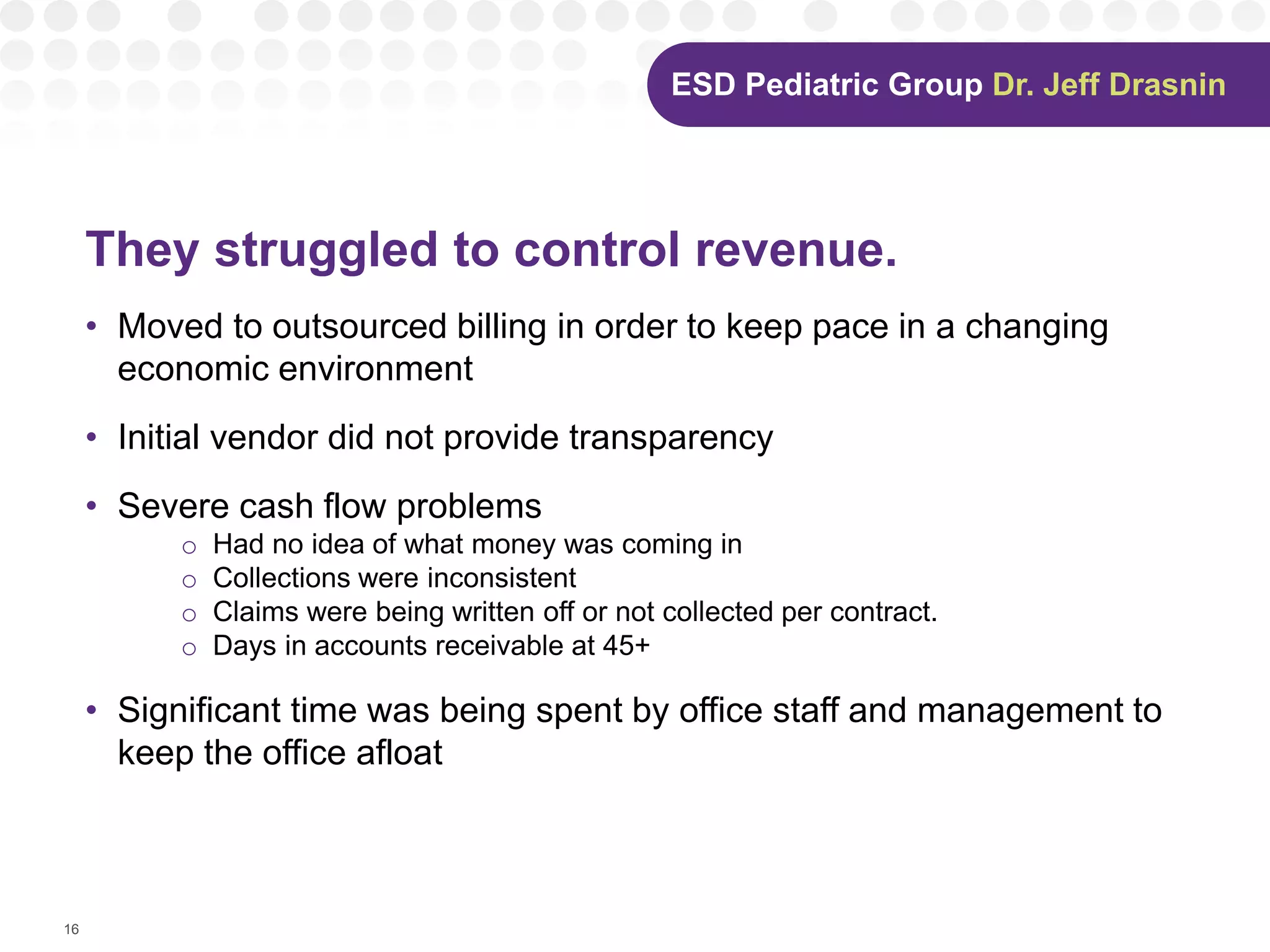
They struggled to control revenue.
• Moved to outsourced billing in order to keep pace in a changing
economic environment
• Initial vendor did not provide transparency
• Severe cash flow problems
o Had no idea of what money was coming in
o Collections were inconsistent
o Claims were being written off or not collected per contract.
o Days in accounts receivable at 45+
• Significant time was being spent by office staff and management to
keep the office afloat
Dr. Jeff Drasnin
17
They changed strategy.
• Selected a cloud-based service for EHR, practice management
and patient communications
• Co-sourcing (rather than outsourcing) allowed for full transparency
• Efficient delegation of patient scheduling, billing, invoicing, claims processing,
etc.
• No need to upgrade. When network upgrades, they’re upgraded.
Dr. Jeff Drasnin
Back office
work can be done off
site.
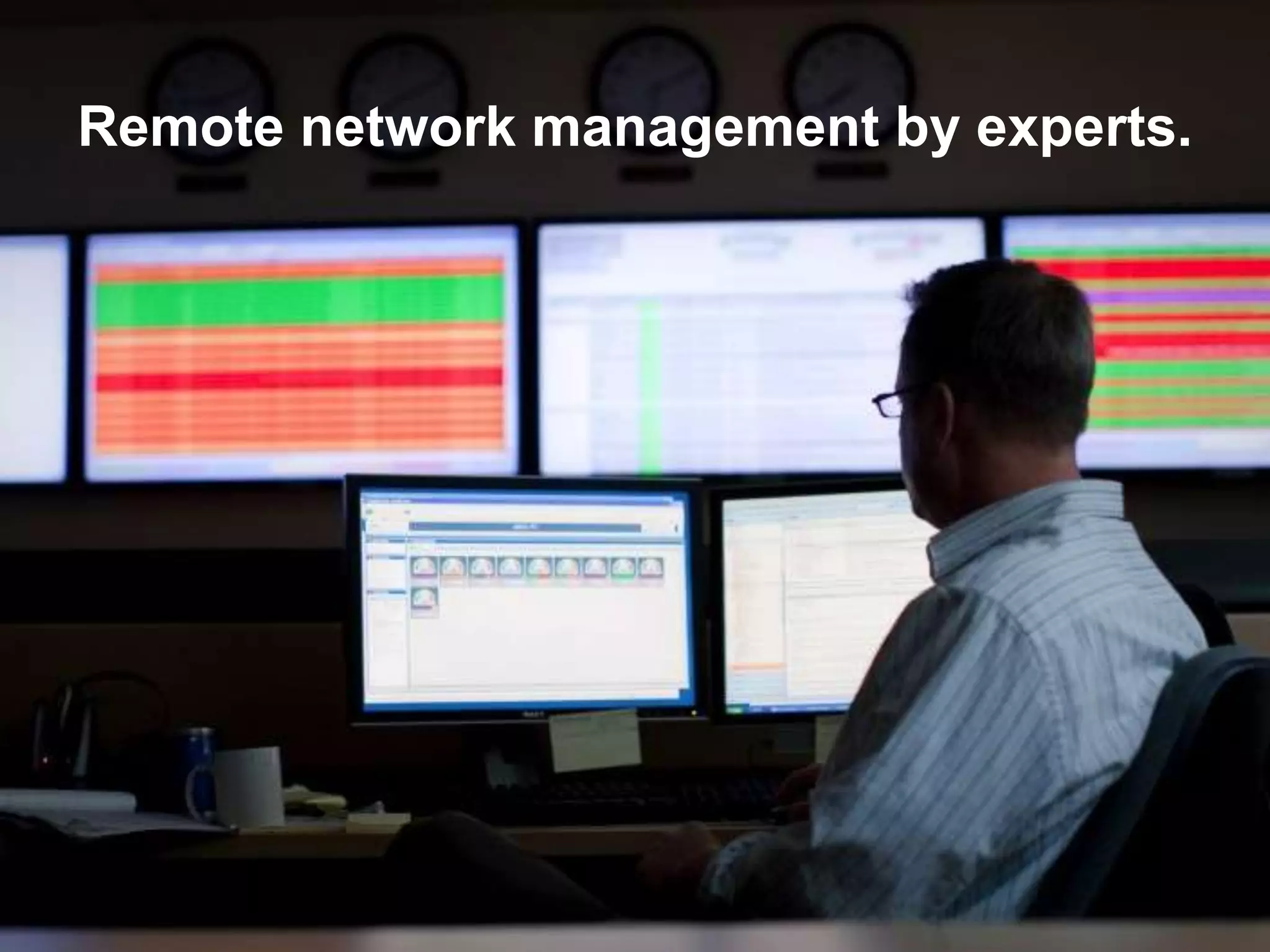
Remote network management by experts.
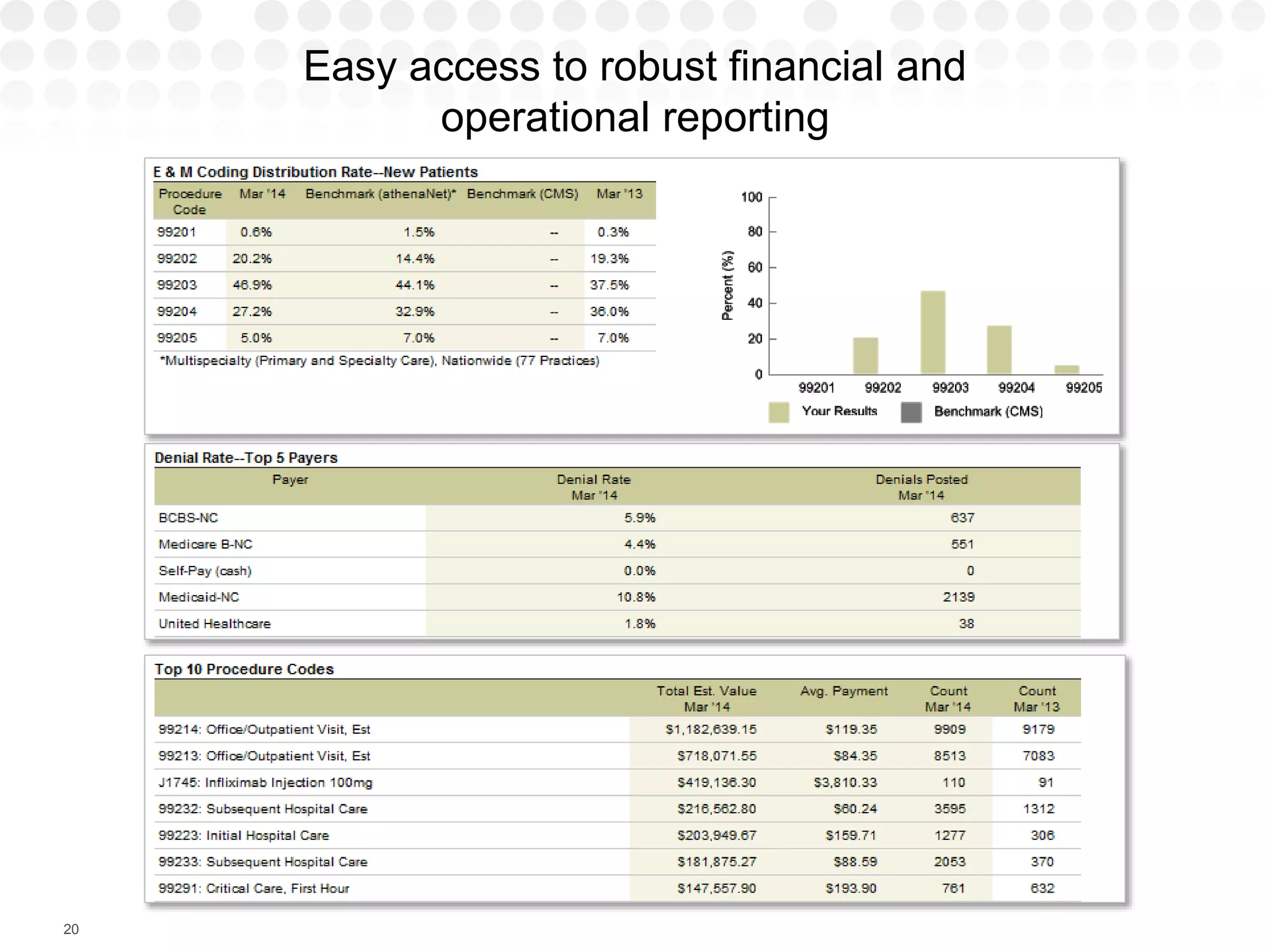
Easy access to robust financial and
operational reporting
20
21
Dr. Jeff Drasnin
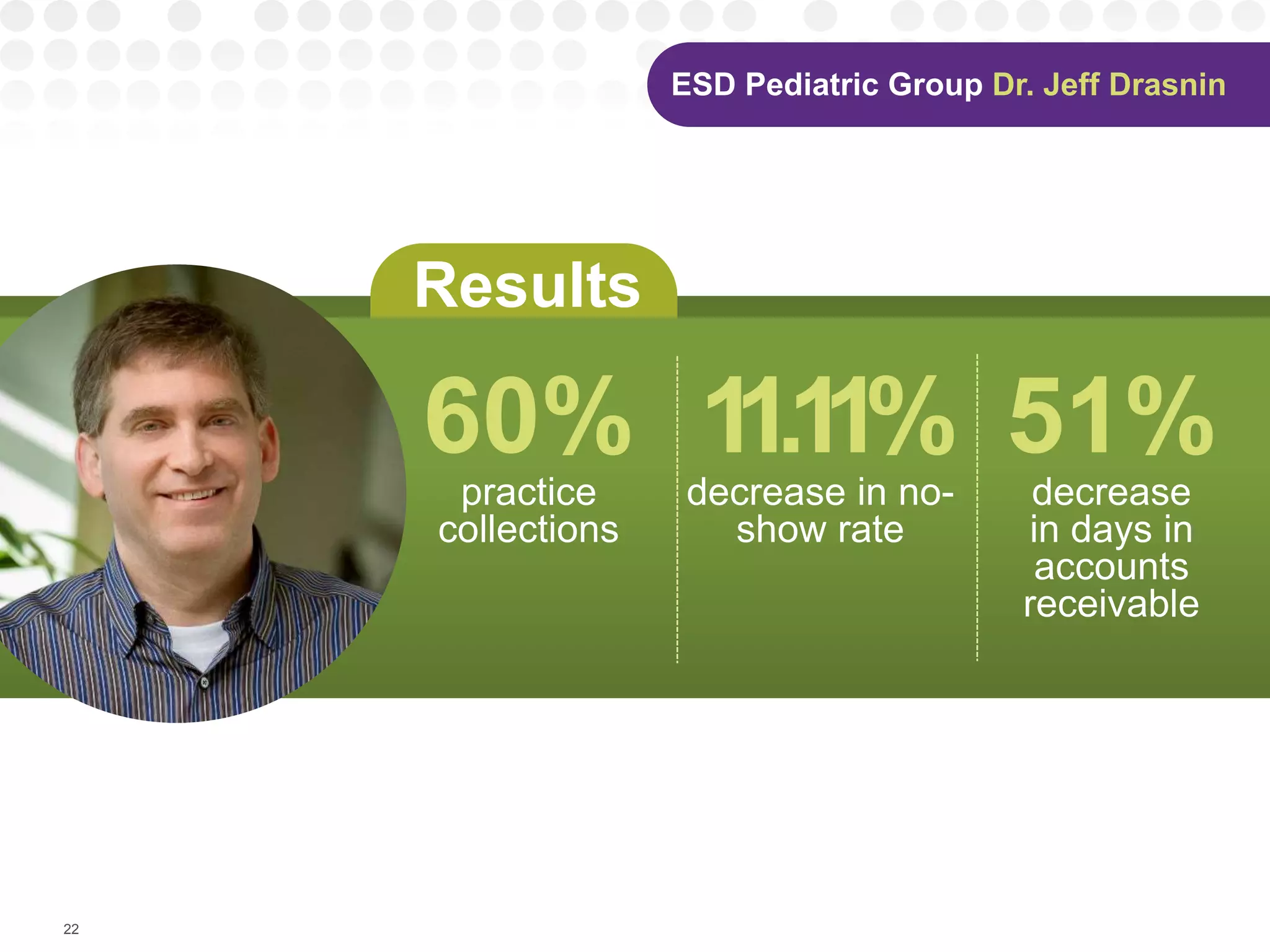
Results
22
Dr. Jeff Drasnin
60%practice
collections
11.11%decrease in no-
show rate
51%decrease
in days in
accounts
receivable
Case Study:
Competing with the local
hospital
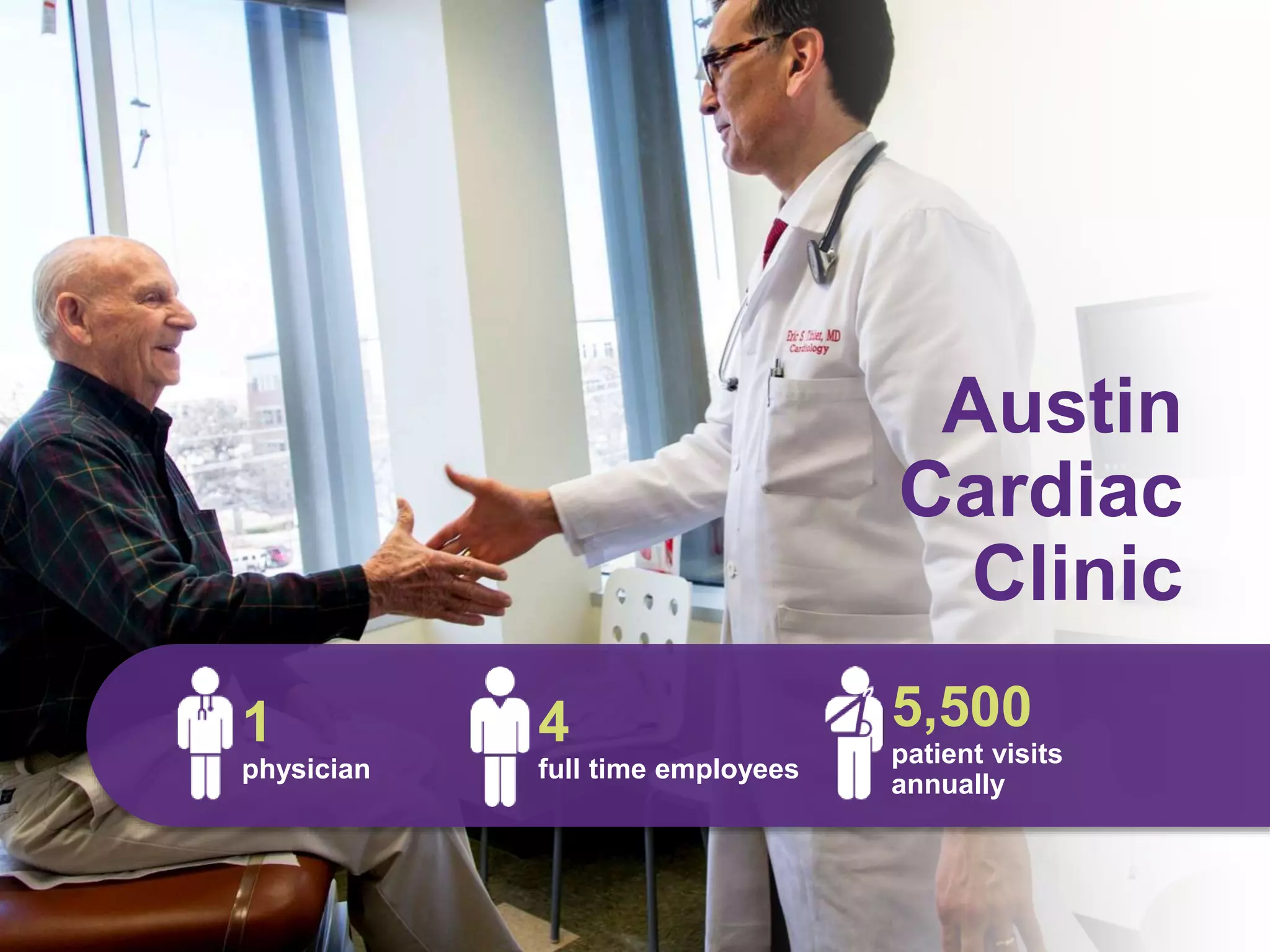
Austin
Cardiac
Clinic
4
full time employees
5,500
patient visits
annually
1
physician
25
A quest to stay independent.
• Declining Medicare reimbursements for cardiology
• State regulations add complexity to filing claims and
collecting revenue
• Competition with local hospital across the street
Austin Cardiac Clinic
26
Dr. Tiblier on the cloud…
• Practice runs lean and efficient to allow financial
flexibility and independence
• Able to charge less than local hospitals
• Flexible online tools create higher patient satisfaction and
more patient loyalty
Austin Cardiac Clinic
27
Austin Cardiac Clinic
28
Pharmacies
Payers
Public
Health
Labs
Patients
Practices and
Hospitals
Case Study:
Achieving lofty clinical and
strategic goals
Midlands
Orthopaedics, P.A.
3
locations
20,000
unique patient
visits annually
14
physicians
31
An independent practice with lofty goals,
held back by poor technology.
• 14 progressive, innovative physicians aiming to deliver unparalleled
orthopaedic care
• Unusable software lead to reliance on paper-based records
• Not enough time and resources to perfect and perform innovative
outpatient procedures
• Low visibility into practice data made it near impossible to convince
payers to reimburse for certain procedures
Midlands Orthopaedics, P.A.
32
The cloud provided the support needed
to innovate and excel.
• Used athena’s data and reports to convince payers to reimburse the
procedures
• 170 hip resurfacing and total hip replacement surgeries
• 24 partial knee replacements
• 24 total knee replacements
Midlands Orthopaedics, P.A.
athenahealth’s award-winning services
can help you thrive through change
33 “2014 Best in KLAS Awards: Software & Services,” January, 2015. © 2015 KLAS Enterprises, LLC. All rights reserved. www.KLASresearch.com
#1
Practice
Management
System
(1-10, 11-75 physicians)
#2
Practice
Management
System
(over 75 physicians)
#2
EHR
(over 75 physicians)
#2
Patient Portal
#2
Overall Physician
Practice
Vendor
2014 Best in KLAS
• 64,000+ providers on athenaNet®
• Clients ranging from 1 to 5,000+ providers
• 50 states and 112 medical specialties
• $14 billion in client collections per year
• Acquired Epocrates March, 2013
Despite consolidation, athena’s
independent base continues to expand
34
Annual Growth Rate- Nationally v. athenahealth
SOURCE: athenahealth’s addressable market (physicians) based on athenahealth analysis using SK&A, HIMSS, and self-collected data
19.5%
-5.2%
Increase among
athenahealth clients
Decrease in independents
nationally
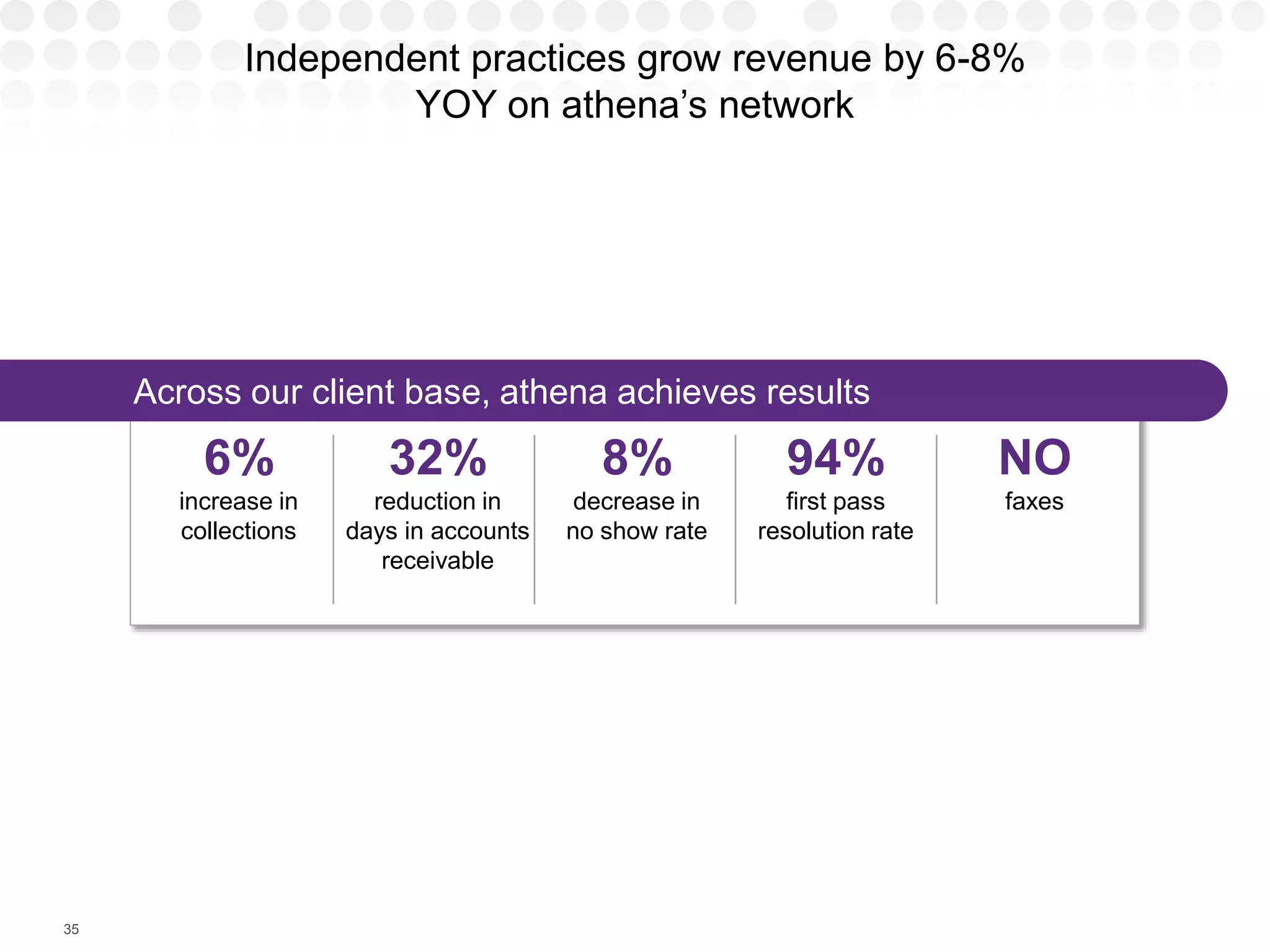
Independent practices grow revenue by 6-8%
YOY on athena’s network
35
6%
increase in
collections
32%
reduction in
days in accounts
receivable
8%
decrease in
no show rate
94%
first pass
resolution rate
NO
faxes
Across our client base, athena achieves results
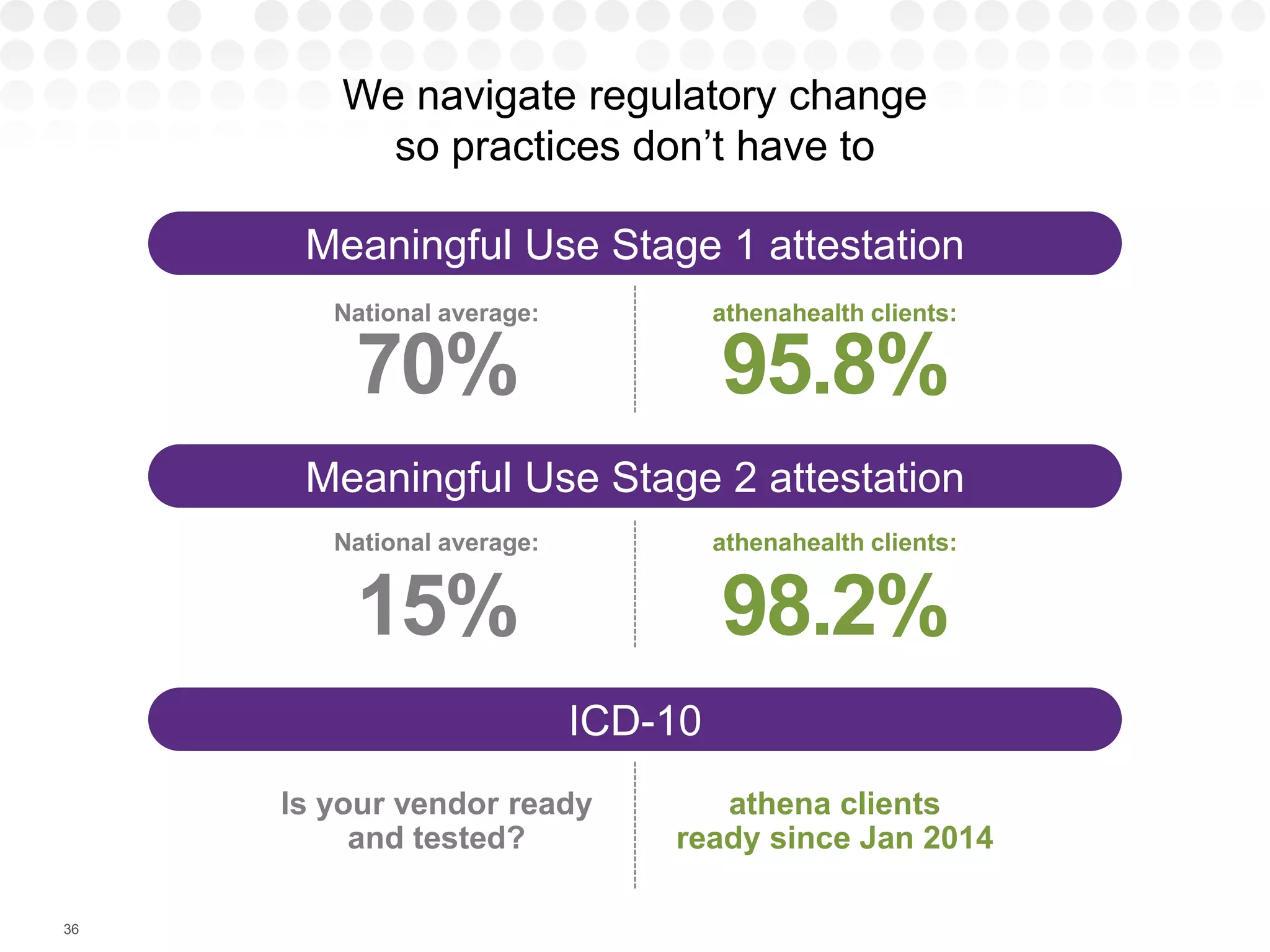
We navigate regulatory change
so practices don’t have to
36
National average:
70% 95.8%
athenahealth clients:
Meaningful Use Stage 1 attestation
Meaningful Use Stage 2 attestation
ICD-10
National average:
15% 98.2%
athenahealth clients:
Is your vendor ready
and tested?
athena clients
ready since Jan 2014
The Meaningful Use
Guarantee
The ICD-10 Guarantee
The PQRS Guarantee
And by joining our network they are clinically
integrated with the care continuum
• 165,000+ Interfaces
• 65,000+ Trading Partners
• 7,000+ new interfaces created
per month
• Less than 0.01% message
processing error rate
• 64,000+ Providers
• 60 million patients
• 350+ Imaging Centers
• 39,000+ Pharmacies
• 1000+ Labs
• 320+ hospitals, IPAs, HIEs
• 47 Registries
38
Thriving as an Independent Practice

Thriving as an Independent Practice

  • 1.
    This event islive as of XYZ Thriving as an Independent Practice Emily Novotny Manager, athenahealth
  • 2.
  • 3.
    Care is movingout of the hospital while outpatient visits continue to rise 3 Source: MedPac Medicare Payment Advisory Commission, A Data Book: Health Care Spending and the Medicare Program, June 2014 http://www.medpac.gov/-documents-/data-book 2006 2007 2008 2009 2010 2011 2012 35 30 25 20 15 10 5 0 -5 -10 -15 Fiscal Year CumulativePercentChange 28.5 -12.6 Outpatient services per FFS Part B beneficiary Inpatient discharges per FFS Part A beneficiary
  • 5.
    There has beenan enormous trend of hospitals buying hospitals… 5 As of August 2013 50 50 60 60 50 76 93 105 46 2005 2006 2007 2008 2009 2010 2011 2012 2013 Hospital Mergers and Acquisitions
  • 6.
    First signs thatphysician consolidation has leveled off 6 Source: athenahealth’s addressable market (physicians) based on athenahealth analysis using SK&A, HIMSS, and self-collected data % Employed Physicians 800 700 600 500 400 300 200 100 - 2011 2012 2013 2014 650K 676K 684K 692K 44 % 50 % 57 % 57 % 56 % 50 % 43 % 43 % Employed Independent
  • 7.
    Given the opportunity, doctorswant to stay independent 7 Survey of the Epocrates user base. February 2015. Answered: 2,144 Skipped: 642 I would prefer to practice independently I would prefer to be employed by a larger group I am not sure 58.14% 20.10% 11.75%
  • 8.
    8 Independent providers see 16%more patients than employed providers Independent practices see 5.9% fewer no-shows than owned practices 5.9%
  • 9.
    9 Patients wait 4 dayslonger to see an employed PCP than an independent PCP
  • 10.
    Nevertheless, practices areturning to employment because they are struggling to survive Clinical Transformation: New Business Models for a New Era in Healthcare. Accenture, 2012. http://www.accenture.com/SiteCollectionDocuments/PDF/Accenture-Clinical-Transformation-New-Business-Models-for-a-New-Era-in-Healthcare.pdf#zoom=50 Top Concerns That Influence Decision to Seek Employment Business Costs & Expenses Prevalence of Managed Care EMR Requirements Maintaining/Managing Staff Number of Patients Required to Break Even 87% 61% 53% 39% 53% 10
  • 12.
  • 13.
  • 14.
  • 15.
  • 16.
    16 They struggled tocontrol revenue. • Moved to outsourced billing in order to keep pace in a changing economic environment • Initial vendor did not provide transparency • Severe cash flow problems o Had no idea of what money was coming in o Collections were inconsistent o Claims were being written off or not collected per contract. o Days in accounts receivable at 45+ • Significant time was being spent by office staff and management to keep the office afloat Dr. Jeff Drasnin
  • 17.
    17 They changed strategy. •Selected a cloud-based service for EHR, practice management and patient communications • Co-sourcing (rather than outsourcing) allowed for full transparency • Efficient delegation of patient scheduling, billing, invoicing, claims processing, etc. • No need to upgrade. When network upgrades, they’re upgraded. Dr. Jeff Drasnin
  • 18.
    Back office work canbe done off site.
  • 19.
  • 20.
    Easy access torobust financial and operational reporting 20
  • 21.
  • 22.
    Results 22 Dr. Jeff Drasnin 60%practice collections 11.11%decreasein no- show rate 51%decrease in days in accounts receivable
  • 23.
    Case Study: Competing withthe local hospital
  • 24.
  • 25.
    25 A quest tostay independent. • Declining Medicare reimbursements for cardiology • State regulations add complexity to filing claims and collecting revenue • Competition with local hospital across the street Austin Cardiac Clinic
  • 26.
    26 Dr. Tiblier onthe cloud… • Practice runs lean and efficient to allow financial flexibility and independence • Able to charge less than local hospitals • Flexible online tools create higher patient satisfaction and more patient loyalty Austin Cardiac Clinic
  • 27.
  • 28.
  • 29.
    Case Study: Achieving loftyclinical and strategic goals
  • 30.
  • 31.
    31 An independent practicewith lofty goals, held back by poor technology. • 14 progressive, innovative physicians aiming to deliver unparalleled orthopaedic care • Unusable software lead to reliance on paper-based records • Not enough time and resources to perfect and perform innovative outpatient procedures • Low visibility into practice data made it near impossible to convince payers to reimburse for certain procedures Midlands Orthopaedics, P.A.
  • 32.
    32 The cloud providedthe support needed to innovate and excel. • Used athena’s data and reports to convince payers to reimburse the procedures • 170 hip resurfacing and total hip replacement surgeries • 24 partial knee replacements • 24 total knee replacements Midlands Orthopaedics, P.A.
  • 33.
    athenahealth’s award-winning services canhelp you thrive through change 33 “2014 Best in KLAS Awards: Software & Services,” January, 2015. © 2015 KLAS Enterprises, LLC. All rights reserved. www.KLASresearch.com #1 Practice Management System (1-10, 11-75 physicians) #2 Practice Management System (over 75 physicians) #2 EHR (over 75 physicians) #2 Patient Portal #2 Overall Physician Practice Vendor 2014 Best in KLAS • 64,000+ providers on athenaNet® • Clients ranging from 1 to 5,000+ providers • 50 states and 112 medical specialties • $14 billion in client collections per year • Acquired Epocrates March, 2013
  • 34.
    Despite consolidation, athena’s independentbase continues to expand 34 Annual Growth Rate- Nationally v. athenahealth SOURCE: athenahealth’s addressable market (physicians) based on athenahealth analysis using SK&A, HIMSS, and self-collected data 19.5% -5.2% Increase among athenahealth clients Decrease in independents nationally
  • 35.
    Independent practices growrevenue by 6-8% YOY on athena’s network 35 6% increase in collections 32% reduction in days in accounts receivable 8% decrease in no show rate 94% first pass resolution rate NO faxes Across our client base, athena achieves results
  • 36.
    We navigate regulatorychange so practices don’t have to 36 National average: 70% 95.8% athenahealth clients: Meaningful Use Stage 1 attestation Meaningful Use Stage 2 attestation ICD-10 National average: 15% 98.2% athenahealth clients: Is your vendor ready and tested? athena clients ready since Jan 2014
  • 37.
    The Meaningful Use Guarantee TheICD-10 Guarantee The PQRS Guarantee
  • 38.
    And by joiningour network they are clinically integrated with the care continuum • 165,000+ Interfaces • 65,000+ Trading Partners • 7,000+ new interfaces created per month • Less than 0.01% message processing error rate • 64,000+ Providers • 60 million patients • 350+ Imaging Centers • 39,000+ Pharmacies • 1000+ Labs • 320+ hospitals, IPAs, HIEs • 47 Registries 38

Editor's Notes

  • #2 Good morning everyone! My name is Emily Novotny and I am thrilled to be joining you all this morning. To provide you with a brief personal background-- I have been a member athenahealth’s small group business development team for about 5 years. I currently manage a team of Sales Executives working with independent physician practices, between 1 to 6 MDs in size. The focus of our webinar this morning, is maintaining independence through turbulent times. As we all know, this has been quite a hot topic over the last few years, and I want to explore why this phenomenon is occurring within the industry, as well as how athenahealth is helping practice’s maintain their profitability, while staying independent. In small group sales, we have the privilege of working with independent practices day in and day out. We often hear that the reason for their desire to remain independent points back to the control and decision making capabilities they have over how they run their business and practice medicine. After all, this is why many providers went into private practice in the first place!
  • #3 Unfortunately, what we see in the industry is that more and more providers are having to give up their private practice. This is an article from the NY times regarding this trend. Younger physicians are coming out of medical school overwhelmed by debt, and older physicians are facing rising costs as reimbursement becomes more challenging. The shift from traditional fee for service, to quality driven reimbursements, coupled with regulatory changes, has caused more and more physicians to abandon their independent practices, or even the idea of even opening an independent clinic at all. The result is that physicians are accepting salaries at hospitals and/or larger health systems at higher and higher frequencies.
  • #4 While we’re observing physicians actually losing their independence, we’re also seeing another macro trend. While independence is diminishing, care is actually moving outside of the hospital. Now, everyone knows that healthcare is a $3 trillion dollar industry sucking up roughly 18% of our GDP. However, one of the more striking trends of the past several years has been the complete collapse of inpatient volumes. Since 2006, there has been a decline in the number of inpatient discharges by 12.6 percent, while the number of ambulatory services has continued to rise rapidly. There are many theories for why this is the case. Some point to technology– for example, coronary angioplasties used to be inpatient procedures, but now 30% of them are done in an outpatient setting- a few years ago, this number was just 5%. Others point to changes in regulation– for example, the rules around admitting patients from emergency departments have gotten dramatically more restrictive, leading to a drop in these admission rates from 27% to 22% across the board. Others point to the decline in elective surgeries as the recession hit and as high deductible plans became more popular– patients in other words became better shoppers. Regardless of the cause, the fact that care is moving out of the inpatient setting, is certainly another significant trend.
  • #5 So we like to call this, the mad scramble- the only way for hospitals to keep the care inside of their walls is to acquire physicians and practices– and even hospitals. They need to cast their net wider, to maintain their bottom line and their profitability. Furthermore, they are often making very compelling offers--- so the trend that care is moving outside of the inpatient setting, certainly affects the rate at which providers, are losing their overall independence.
  • #6 There has been an enormous trend of hospitals buying each other
  • #7 This graph demonstrates that trend firsthand. Over the past four years you can see that the percentage of employed providers has steadily increased as noted in purple, where the percentage of independent practitioners has equally declined, as you can see in green. However, the rate at which this trend is unfolding is slowing down– over the past two years, you can see the levels normalized a bit, and remained the same. It is refreshing for independent practices to know there absolutely is hope out there, and a way to remain independent, amidst these industry pressures, which is great to see!
  • #8 And the one constant in all of this is that physicians WANT to remain independent. A much smaller percent want to be employed. Athenahealth aquired Epocrates in March of 2013, and this graph depicts the results of a recent poll we sent out to their users– the overwhelming majority replied, that given the choice they would prefer to practice medicine independently. My team speaks with providers every single day that are in the midst of considering joining a hospital. When we ask the question “what do you want to do?”, the answer is always “I prefer to practice independently.”
  • #9 And partially one of the reasons why, is that independent providers see more patients! They are incented to see more patients, as that directly affects their bottom line– on the flip side, the aligned incentive is not necessarily there for an employed provider. Independent physicians also many times have better patient retention, and lower numbers of no shows. The whole theory behind acquisitions is boosting patient volume. However, ithis theory is just not actualized through the results. There is a great benefit for remaining independent, and we certainly leverage the power of our network and analytics to help providers understand just that.  
  • #10 This is also an interesting statistic. If you are a patient seeing an employed primary care physician, you often have to wait 4 days longer for an appointment, than if you were attempting to book with an independent practitioner.
  • #11 However we certainly understand there are a lot of factors to consider, when weighing whether to stay independent or join a larger hospital or healthcare system as an employee. Outlined here are the top concerns that influence the decision to seek employment-- Physicians are simply struggling to survive. The largest and most obvious reason is overall business cost and expenses. It is certainly hard to stay afloat, especially with falling reimbursement rates. Additionally, the shift to managed care, coupled with stringent and difficult EMR requirements, as well as regulatory changes such as Meaningful Use and ICD10 can certainly be tough to manage all on your own. Also even just maintaining staff can be a challenge in this climate- you need more staff with stronger skills, and the number of patients required to just break even is becoming to difficult to manage.
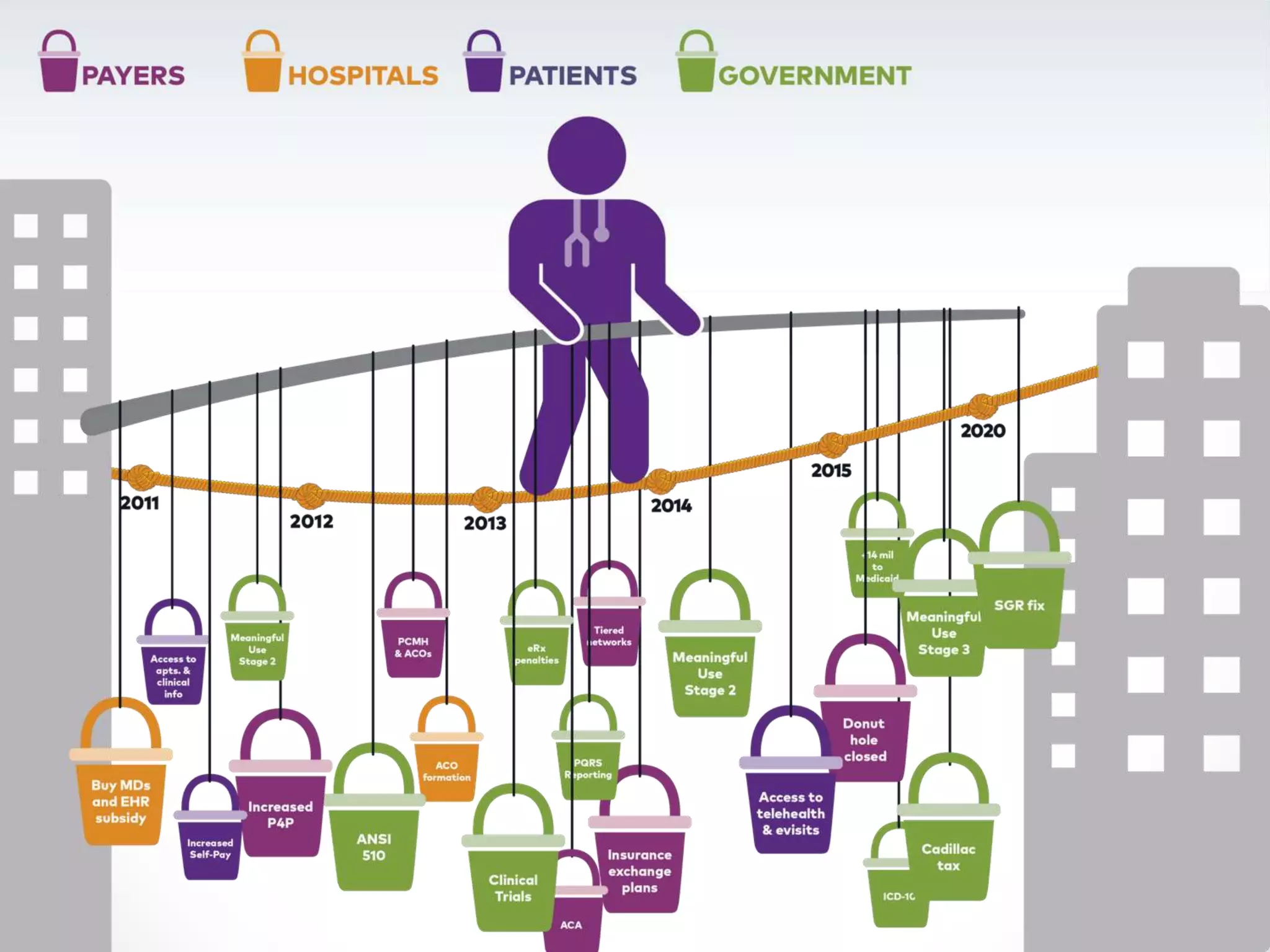
  • #12 So unfortunately, this is the resounding message we hear from providers day in and day out, who are trying to maintain their independence. They liken the feeling to walking a tightrope, pulled in a thousand directions, and weighed down by countless mandates, requirements and hurdles that hinder their capability to just practice medicine, provide quality outcomes, and financially SURVIVE. At the end of the day, physicians tell us that they just can’t do it alone and that they need solid partners to help take on some of these burdens and complexities, and that’s really where athena can start to step in and help.
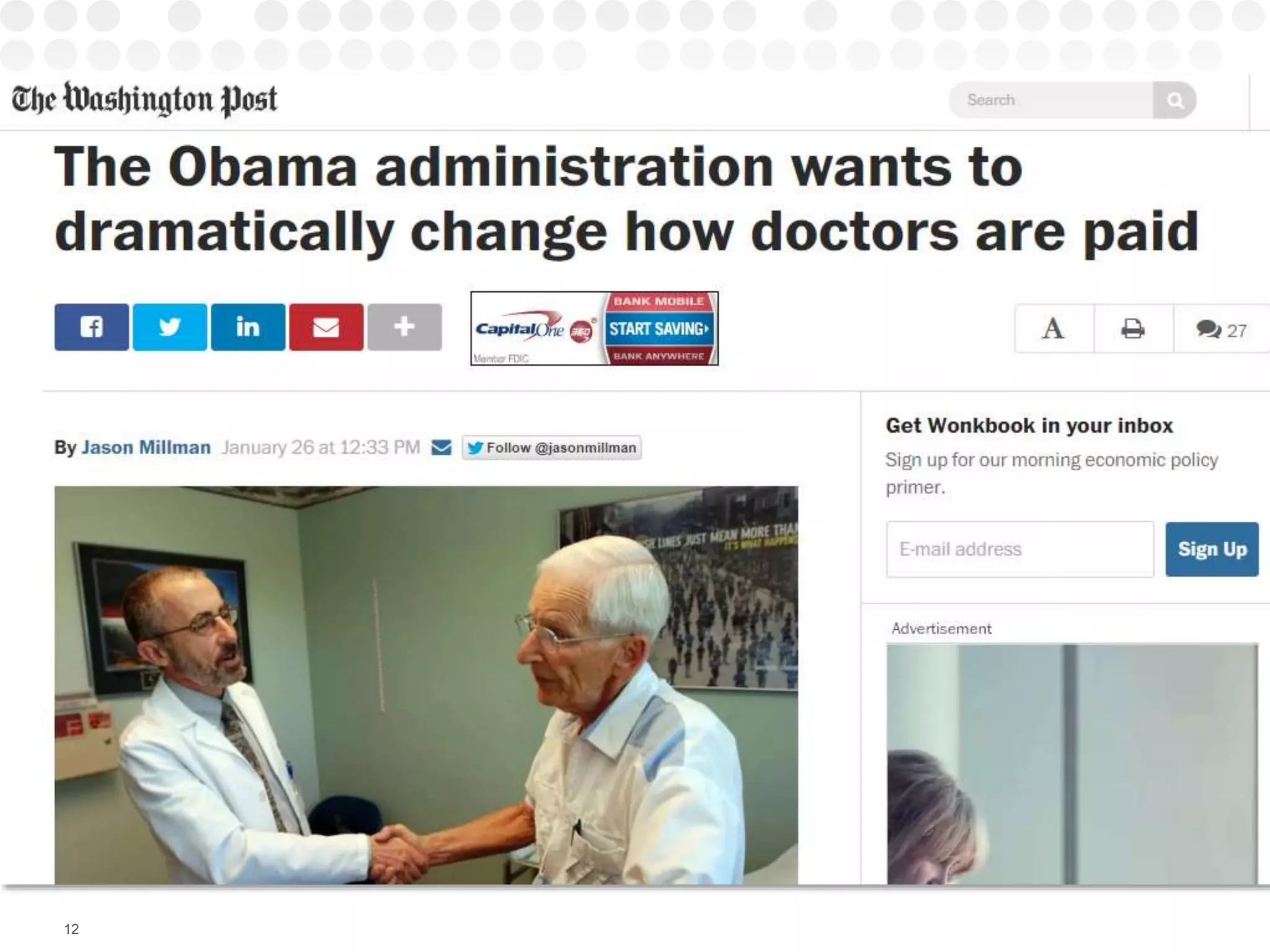
  • #13 To focus in a little more closely just on one of those complexities, CMS recently announced that they want to get more aggressive about tying payments to quality. By 2018, the Obama administration wants half of all Medicare payments to flow through value-based entities like ACOs, up from 30% today. And it wants 90% of all Medicare payments to be tied in some way to quality. So, fundamentally, the way in which physicians are getting paid and doing business are shifting under their feet.
  • #14 With all this being said, we know at the end of the day, you are all here to practice medicine and provide care to patients. These types of transitions can, as mentioned before, can make you feel like you are walking a tightrope juggling 1000 different demands. At the forefront of our goal and our vision at athena, we want to preserve the sanctity of this relationship you see here. We want to, as a partner, take those demands off your shoulders, ease the burdens of industry transitions, manage what we call the scut work in a clinic, and allow you, once again, to focus on your patients and provide them the utmost attention and care.
  • #15 I want to transition now, to a few case studies, or in depth looks, into athenahealth clients, who have managed to stay independent, profiitable and in control of their practices as well as how we have helped, in this overall process.
  • #16  Let’s start with Dr. Jeff Drasnin, one of our pediatricians out of Milford, Ohio. Dr. Drasnin runs a 5 physician, 2 nurse practitioner practice with a few different locations. The name of his clinic is ESD pediatrics. And they see about 30,000 patient visits annually.
  • #17 The main issue or challenge Dr. Drasnin faced was getting his financial house in order. They were really struggling to control revenue and costs, and therefore moved to an outsourced biller for assistance. However this initial company did not provide ANY transparency or control into their financial performance, and they were left with severe cash flow problems. They had no insight or visibility into what was coming in, their collections were entirely inconsistent over time, they couldn’t even tell if their claims were being paid, written off, or collected anywhere close to their negotiated rates, and they had climbing DAR metrics– on average it was taking longer than 45 days to get any reimbursement back in their doors. Dr. Drasnin’s office manager spent 70% of her time dealing with office billing matters, and then not focusing on her actual job or role! Patients even became frustrated because the customer service aspect of the practice was lost due to the chaos.
  • #18 So– they decided to change their strategy. Dr. Drasnin invested in athena, and adopted our unique co sourcing model, where the delegation of work especially on the financial side of their business, allowed them to have full insight into their results. Their staff time was freed up because they weren’t spending countless hours wondering if they got paid, or chasing down claims. They could use analytics to see exactly what was coming in, when, and have so much more control over their financial performance. They didn’t have to take on the full billing workflow, which was important to Dr. Drasnin, as athena still performed many of the billing functions, through their co sourcing model. He just was now able to hold his partner accountable, and have so much more transparency and insight into his financial orders.
  • #19 Also– Dr. Drasnin saw a huge benefit in partnering with athena due to their assistance with a lot of his clinic’s back office work. Athena was able to manage many of the manual and tedious tasks his staff members were struggling to complete, such as posting payments and making appointment reminder calls. This enabled each member of his staff to work at the highest value of their license, versus filing paper or scanning documents.
  • #20 And they loved the idea that our cloud based system is always monitored by experts. By being part of a larger network of independent practices, Dr. Drasnin was able to benefit from the knowledge that we’ve aggregated over the last 15 years. Also through our network operations center, we are constantly moniitoring the performance of the system and solution in real time, making sure that the up-time is where it needs to be, analyzing population health trends, providing insight to our practices on areas they can improve, scale and grow.
  • #21 We also were able to provide Dr. Drasnin with unparalleled financial and operational reports. He could understand his business and identify areas of improvement, within seconds. Our account management team would run through these reports with Dr. Drasnin and his staff, truly partnering with his practice and taking a much more consultative approach.
  • #22 His practice also took full advantage of our patient portal as soon as we introduced the solution in 2011. They use this interface to interact with patients online both clinically and administratively. As a service based organization, we were able to get 80% of their patients active on the patient portal. With the messaging technology it offers via calling campaigns and a live operator service, Dr Drasnin’s schedule density is 99% on a daily basis. His clinic uses athena to “compete” with large systems that have the deep pocket ability to offer this convenience. For those of you familiar with EPIC, this is like myChart, but better!
  • #23 As a result, Dr. Drasnin’s DAR went from 45+ days to 16-18 days. His collections increased by 60%. No-shows decreased by 11%. Physician compensation increased significantly. And his patients, and staff are so much happier!. He has really had great results on athena, and we have helped him turn his practice around, and remain independent versus joining a larger organization.
  • #24 Let’s take a look at a second case study. What else do you need to do to keep your independence? You need to be able to compete with your local hospital.
  • #25 I’d like to introduce the Austin Cardiac Clinic and Dr. Eric Tiblier out of Austin, Texas. Dr. Tiblier is a solo Cardiologist with 4 full time employees.
  • #26 Dr. Tiblier has always wanted to stay independent. He watched many of his cardiology colleagues sell their practices to local hospitals, but he was on a quest to not follow suit, despite the external pressures he was facing. And to delve into some of those pressures specifically-- Medicare has slashed reimbursement rates for various cardiology procedures, such as pacemaker insertions, echocardiograms, nuclear stress testing, and others. The reimbursement cuts would be a pain point for any provider, but when the majority of your patient population is older and relies on Medicare, it makes running a practice difficult. Despite those declining reimbursements, Austin Cardiac Clinic still has to deliver the same level of service as hospitals or larger cardiology practices. And to make matters more difficult, the hospital he was competing with, was right across the street!
  • #27 To help, Dr. Tiblier joined athena, and was able to run a very lean and efficient practice. Because the tests he provided in office were not subject to facility fees like they typically are at hospitals, they were able to provide the same high quality services at a lower cost to patients and insurance companies alike. In fact, the practice has even received referrals straight from insurance companies, some of whom recognize the cost savings and efficiency. This allowed Dr. Tiblier to charge less than the hospital would for the same procedure or test, and in turn stay in business independently. Athena helped in this process, by getting the practice paid quickly and accurately to keep his cash flow steady, and reliable. Our patented rules engine ensured that 94% of claims submitted were resolved the first time. Thereby reducing the practice’s days in accounts receivable by nearly 55%. Athena also helped Dr. Tiblier manage the complex documentation required to support payment in the state of Texas. For example, Texas requires a pre-authorization form attached to the majority of claims. Athena ensures this goes out each and every time, with the first submission, to reduce work, as well as billing complications, and to keep his billing stream healthy, so he can continue to receive his reimbursements quickly and efficiently, for the patients he sees.
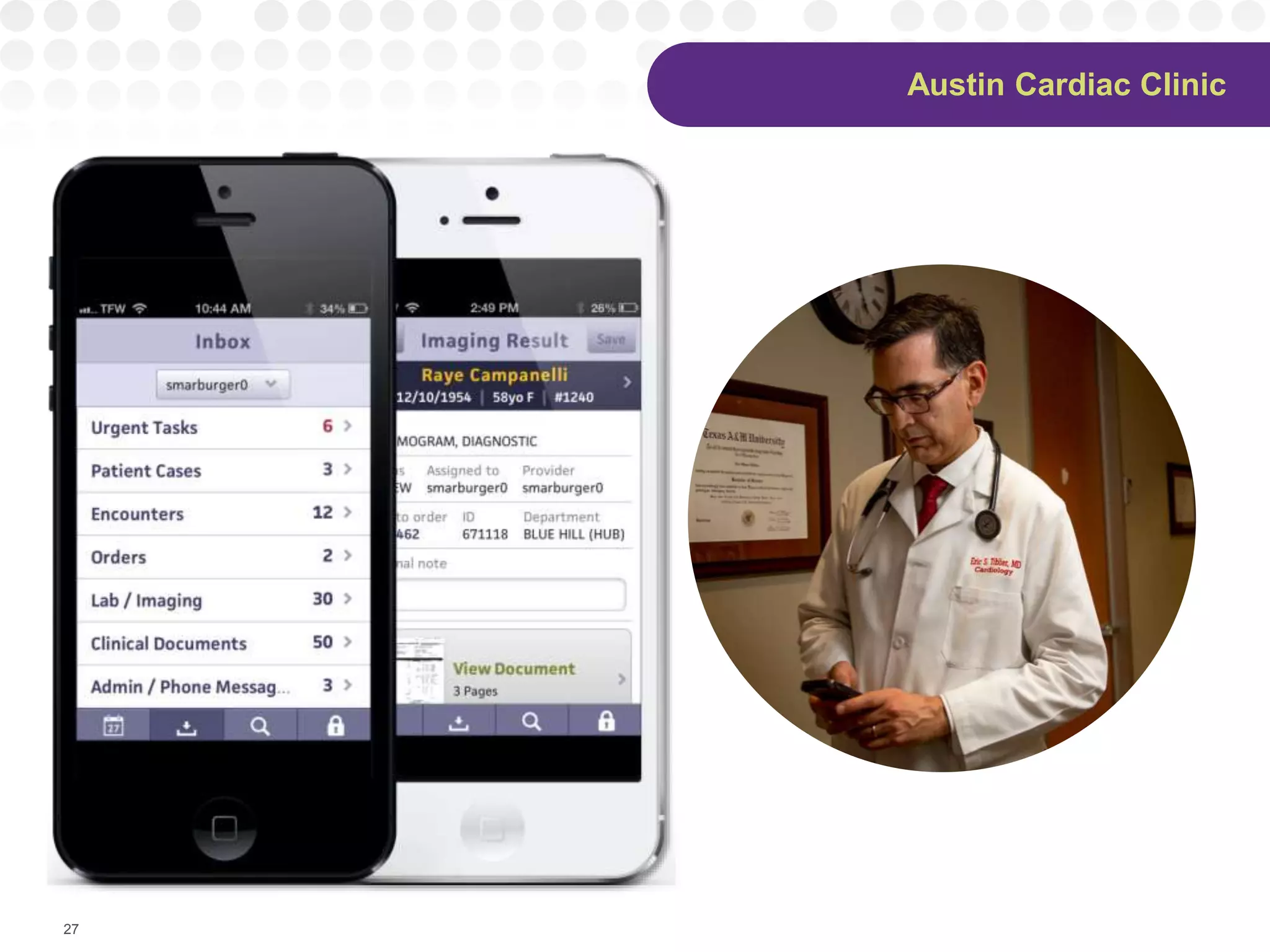
  • #28 Athena also allowed Dr. Tiblier the flexibility to practice medicine wherever and whenever from just an Internet browser or his mobile device. When practicing at the clinic’s second location, which is equipped with computers, Dr. Tiblier prefers to use the athenahealth app on his mobile phone in the exam room. During a family vacation, using only an iPad, Dr. Tiblier was able to wake up every morning before his family fun started and log in to his EHR , athenaClinicals, to check in on patients, send prescription refills, examine test results, and answer lingering questions from the night before so his staff had answers ready for them first thing in the morning.
  • #29 Also, with athena, Dr. Tiblier has the ability to connect to the community as much as the hospital can. Athena has built one of the strongest health internet backbones within the industry, enabling providers to build bridges to all the entities they need to communicate with, labs, pharmacies, payers, hospitals, health exchanges and more. This is atypical for independent practitioners, that do not have a partner, touting these capabilities.
  • #30 The third key to maintaining independence is achieving lofty clinical and strategic goals.
  • #31 Let’s focus in on Midlands Orthopaedics out of Columbia, South Carolina. Midlands Ortho provides comprehensive care from 14 fellowship trained physicians at 3 locations, including an outpatient surgery center. Now in its 30th year of operation, the practice has a patient-friendly, non-hospital environment that’s become a real differentiator in the region.
  • #32 This was a practice that was simply held back by poor technology. The Orthopedists aimed to deliver innovative, unparalleled care, but their software was unusable and forced them to rely on paper. They had low visibility into their data, which made it nearly impossible to convince payers to reimburse for certain procedures.
  • #33  Finding a payer to reimburse for these surgeries was only possible because of Midlands’ partnership with athenahealth. “We have to take data to a payer for them to even let us in the door. We have to know what our experience with that payer has been, how many patients we’ve seen from that payer, how many patients may benefit from the surgery, and what the savings achieved for them would have been previously if we had this opportunity. In our particular situation, it was really a cost equation we were taking to the payer. All of that information lives inside athenaCollector and athenaClinicals,” she says. Moving orthopedic surgical procedures to an outpatient setting has proved to be a more cost-effective and quality solution for patients and payers. The partnership with athenahealth has given Midlands Ortho more time to invest back into the practice.
  • #34 In closing, I would like to spend a few minutes, really digging into who athenahealth is, so you can all understand our unique model a bit better. We didn’t start out as a bunch of software developers looking to make money. Athenahealth started out just like you- as a medical practice back in the late 90s. We were an OB clinic back in 1997, and we had about 13 clinics out in San Diego, CA. We did a fantastic job of delivering healthy, happy babies and taking care of moms, but we did a poor job of getting paid. At the time, we were using software- so we looked into the industry for alternative solutions- we figured we could outsource our billing, but that would take away the control and visibility we had into our financials, which was scary for us. We looked into buying new software, but that would just be putting a band aid on the problem. So, our founders, Jonathan Bush and Todd Park, decided to shift their focus from providing patient care, to developing a foolproof solution designed to get providers paid. We’ll talk more in just a few minutes about exactly what I mean by foolproof, but what they created was not another piece of software- instead, it is a network of providers where each individual practice gets to benefit from the knowledge and content that we already possess. Fast forward to today, we have just about 62,000 providers on our network, we serve practices ranging from 1 physician to 5,000, we’re in 50 states and serve over 100 medical specialties, and we process about 11.7 billion in collections on behalf of our clients each year. As I’ve mentioned, we have acquired Epocrates, and we were named fourth in Forbes Fast Tech 25. We’ve also been named Best in KLAS, coming in at #1 for practice management, and #2 for overall physician practice vendor. If you’re not familiar with KLAS, it is similar to JD Power and Associates for healthcare IT. 98% retention rate
  • #35 And I’ve spoken quite a bit today about how well we are positioned to be your most trusted business partner, but aside from the examples I’ve highlighted I think its fair to ask the question-- are we truly making an impact? The answer is a resounding YES. While nationally, the growth rate of independent practices is in the negative, independent practices on athenahealth are growing at 19.5% annually! Think about this. Our competition, especially software, cannot say the same for their client base.
  • #36 The results add up. The average practice that joins athena experiences a 6-8% increase in their collections, a 32% reduction in their days in accounts receivable, an 8% decrease in their no show rate, a 94% first pass resolution rate (which by the way is NOT the rate at which the payer acknowledges receipt of your claim- but rather the rate at which your claim is properly adjudicated and properly paid the very first time around with no human intervention on your side), and best of all, our clients are not bothered with paper faxes due to our beloved document management service.
  • #37 We navigate through the regulatory changes as well, so that our practices do not have to. Let’s look at the specifics. Successful Meaningful Use Stage 1 attestation- the national average was 70%, while athenahealth clients were 95.8%. Successful Meaningful Use Stage 2 attestation- the national average was FIFTEEN%, while athenahealth clients were 98.2%. We learned from stage 1 and became even more prepared in stage 2. ICD 10 readiness- is your current vendor ready? Currently, over 25% of vendors shamefully admit that they will not be ready for ICD 10. Every single one of our clients were ready in January of 2014.
  • #38 We are so committed to helping practices navigate through industry change. So much in fact that we are offering a Meaningful Use guarantee as well as an ICD-10 guarantee. With Meaningful Use, if you don’t receive the Federal Stimulus reimbursement dollars you are owed, we will credit you up to 100% of your EHR service fees for up to six months until you are paid. We also take on the attestation process for you. The ICD 10 Guarantee states that we will be ready for the compliance date, or you don’t pay us until we are.
  • #39 Our vision at athenahealth is to be a health information backbone that helps make healthcare work as it should. Through you joining our network, we are able to make that vision a reality. We are able to get you plugged in with the care continuum. Why should you have to reinvent the wheel?
  • #40 This concludes my presentation. I hope you found some value in what we’ve shared today, and we hope to connect with you after the event to learn more about each of your practices. Thank you!