What Healthcare Can Learn
From Silicon Valley
Ed Park, athenahealth
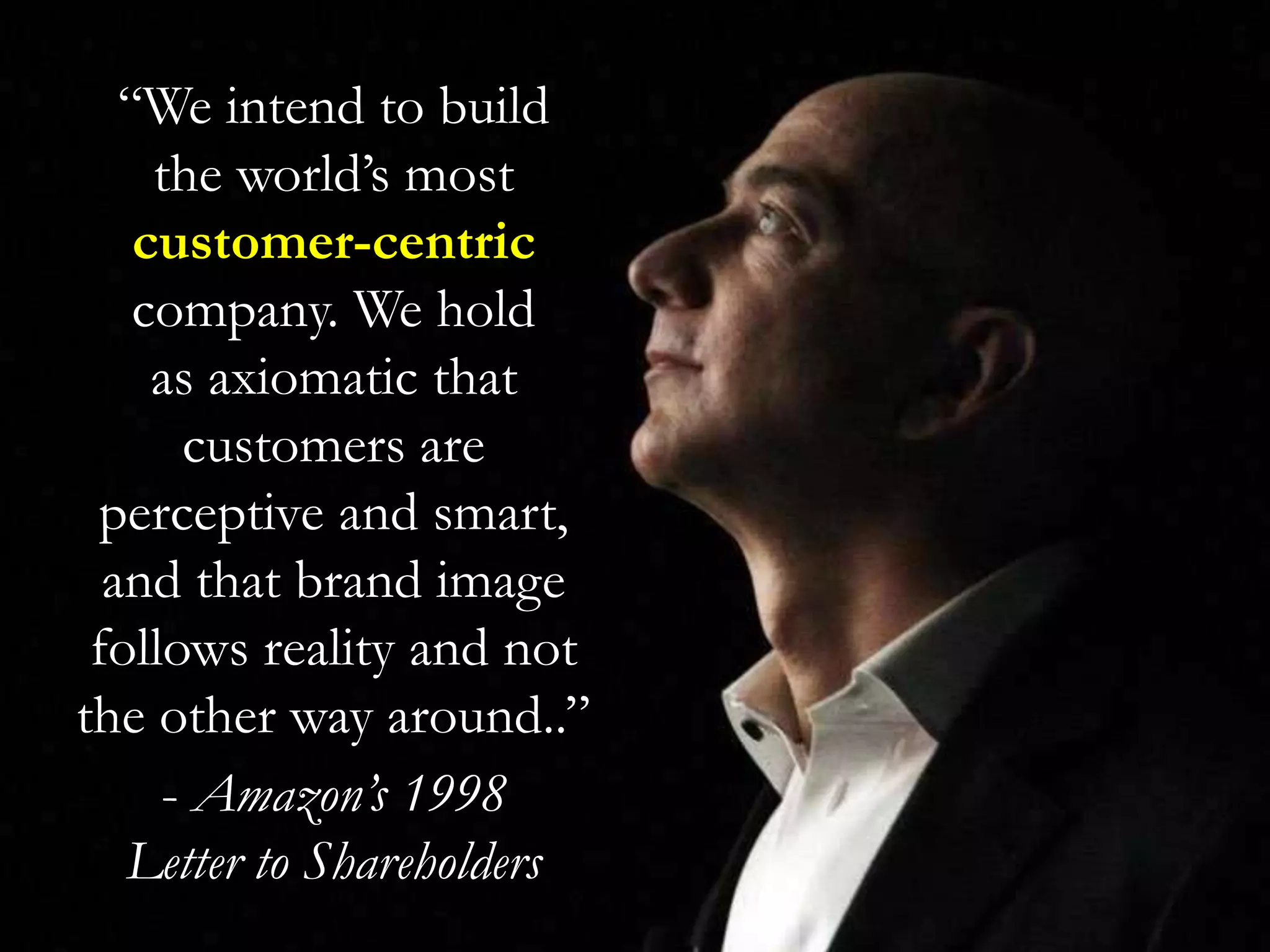
“We intend to build
the world’s most
customer-centric
company. We hold
as axiomatic that
customers are
perceptive and smart,
and that brand image
follows reality and not
the other way around..”
- Amazon’s 1998
Letter to Shareholders
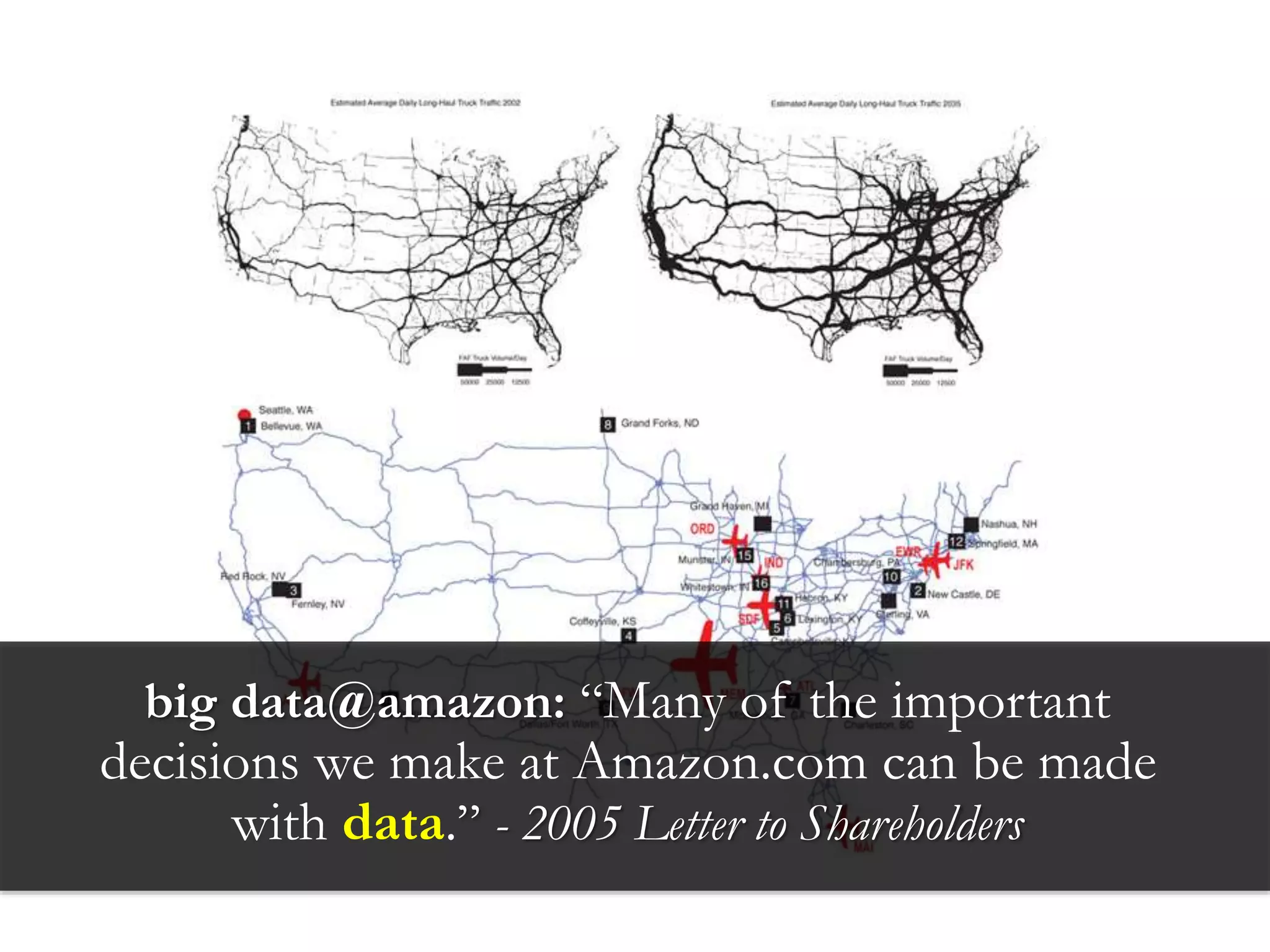
big data@amazon: “Many of the important
decisions we make at Amazon.com can be made
with data.” - 2005 Letter to Shareholders
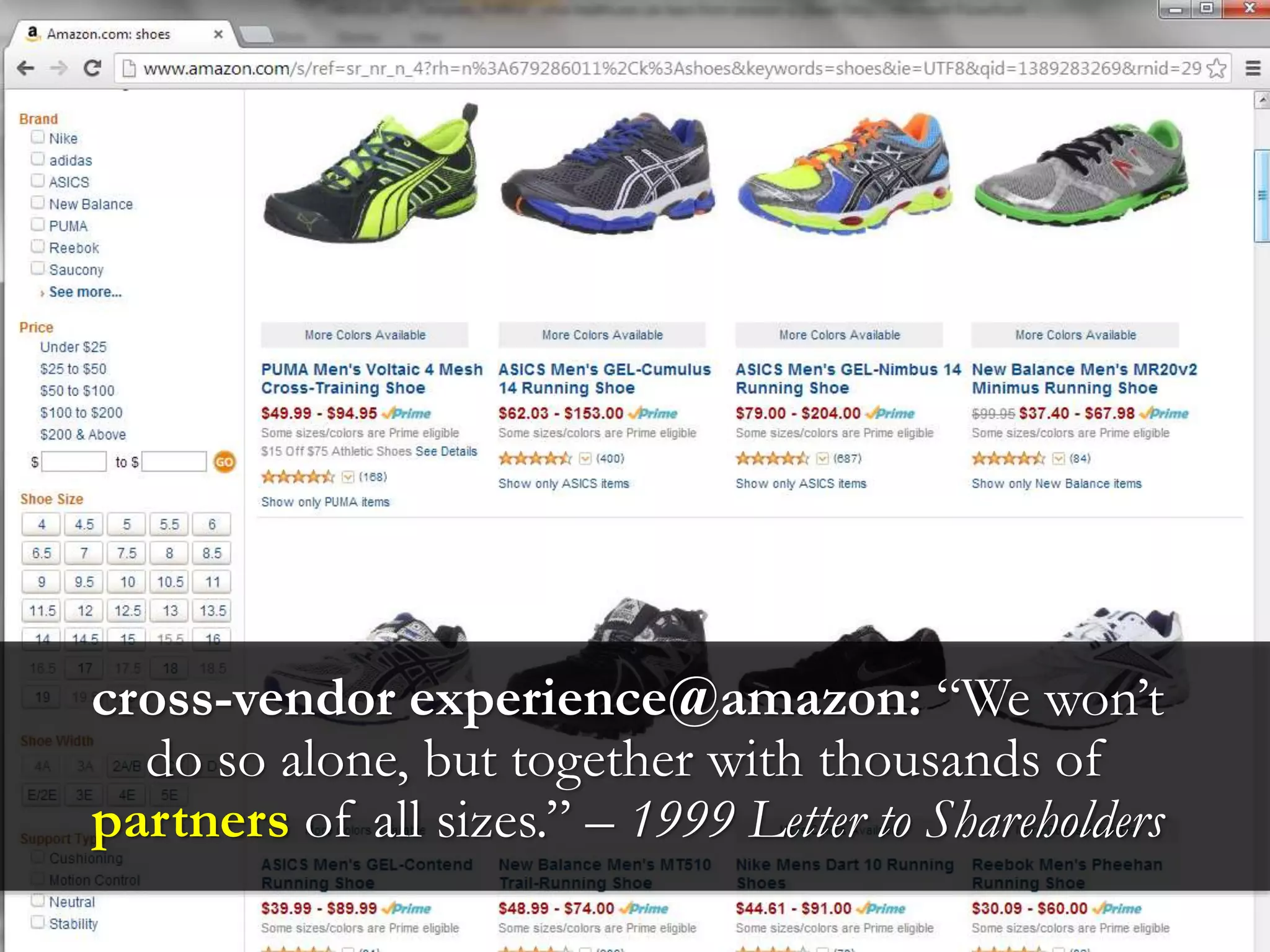
cross-vendor experience@amazon: “We won’t
do so alone, but together with thousands of
partners of all sizes.” – 1999 Letter to Shareholders
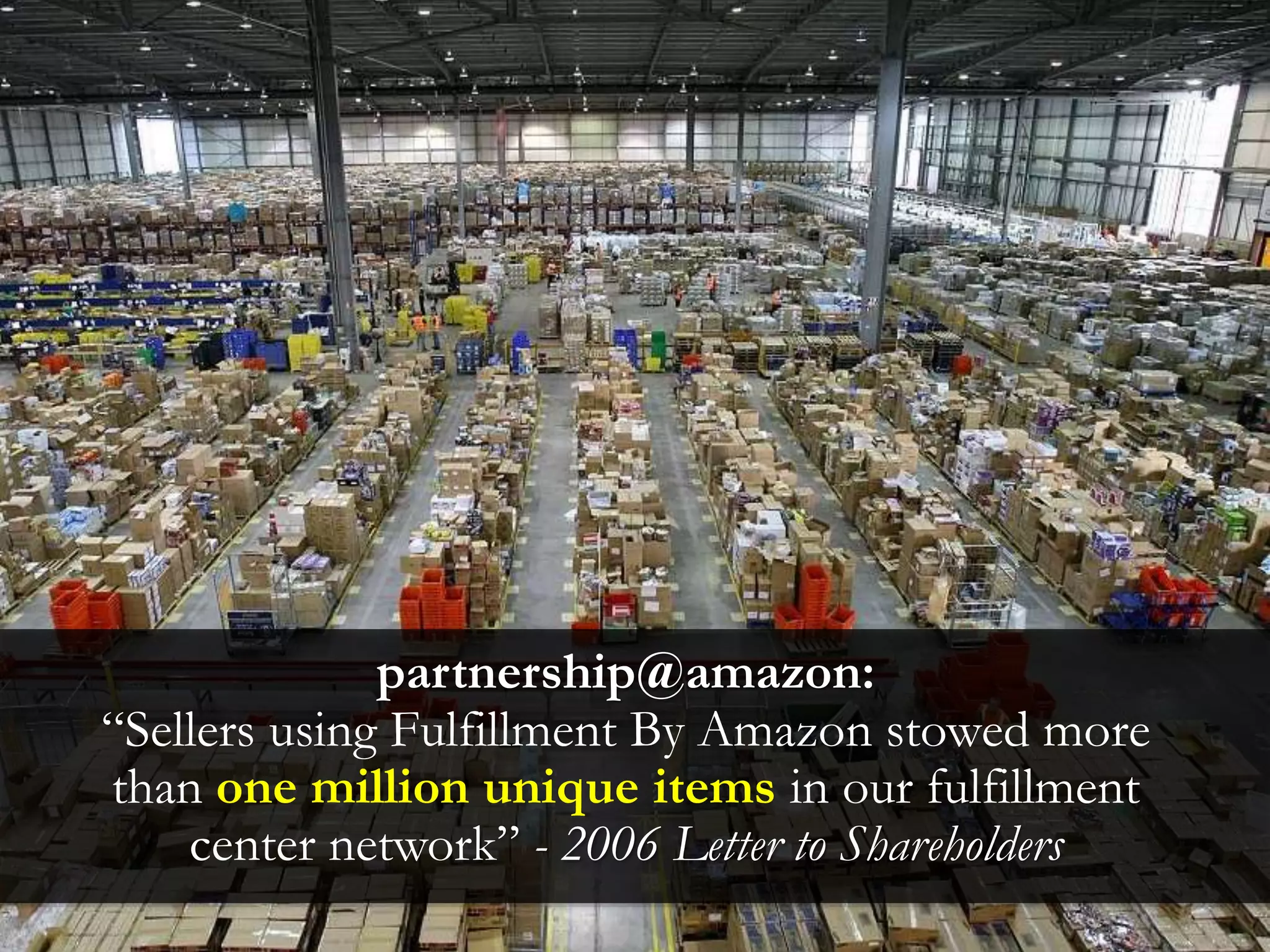
partnership@amazon:
“Sellers using Fulfillment By Amazon stowed more
than one million unique items in our fulfillment
center network” - 2006 Letter to Shareholders
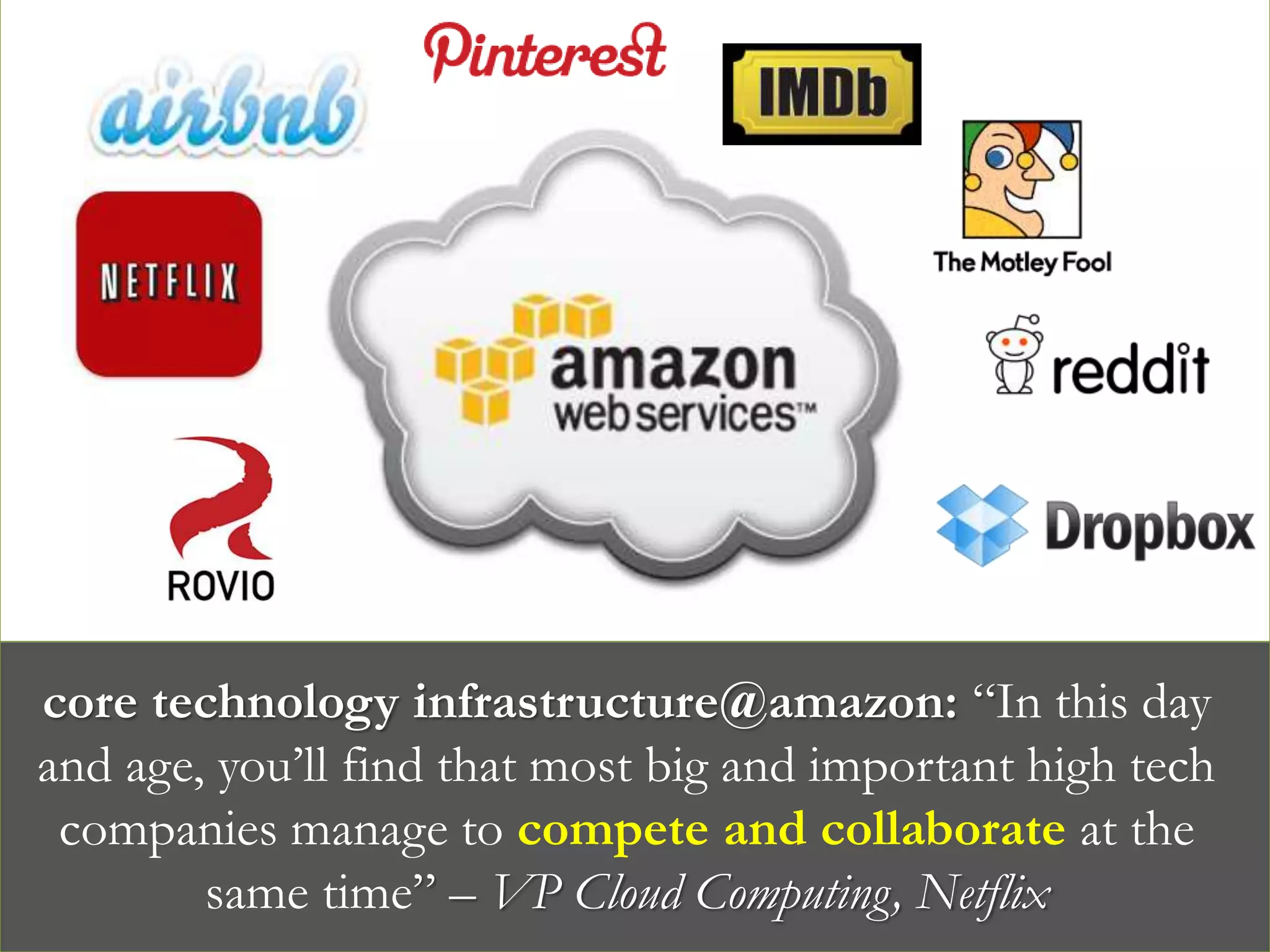
core technology infrastructure@amazon: “In this day
and age, you’ll find that most big and important high tech
companies manage to compete and collaborate at the
same time” – VP Cloud Computing, Netflix
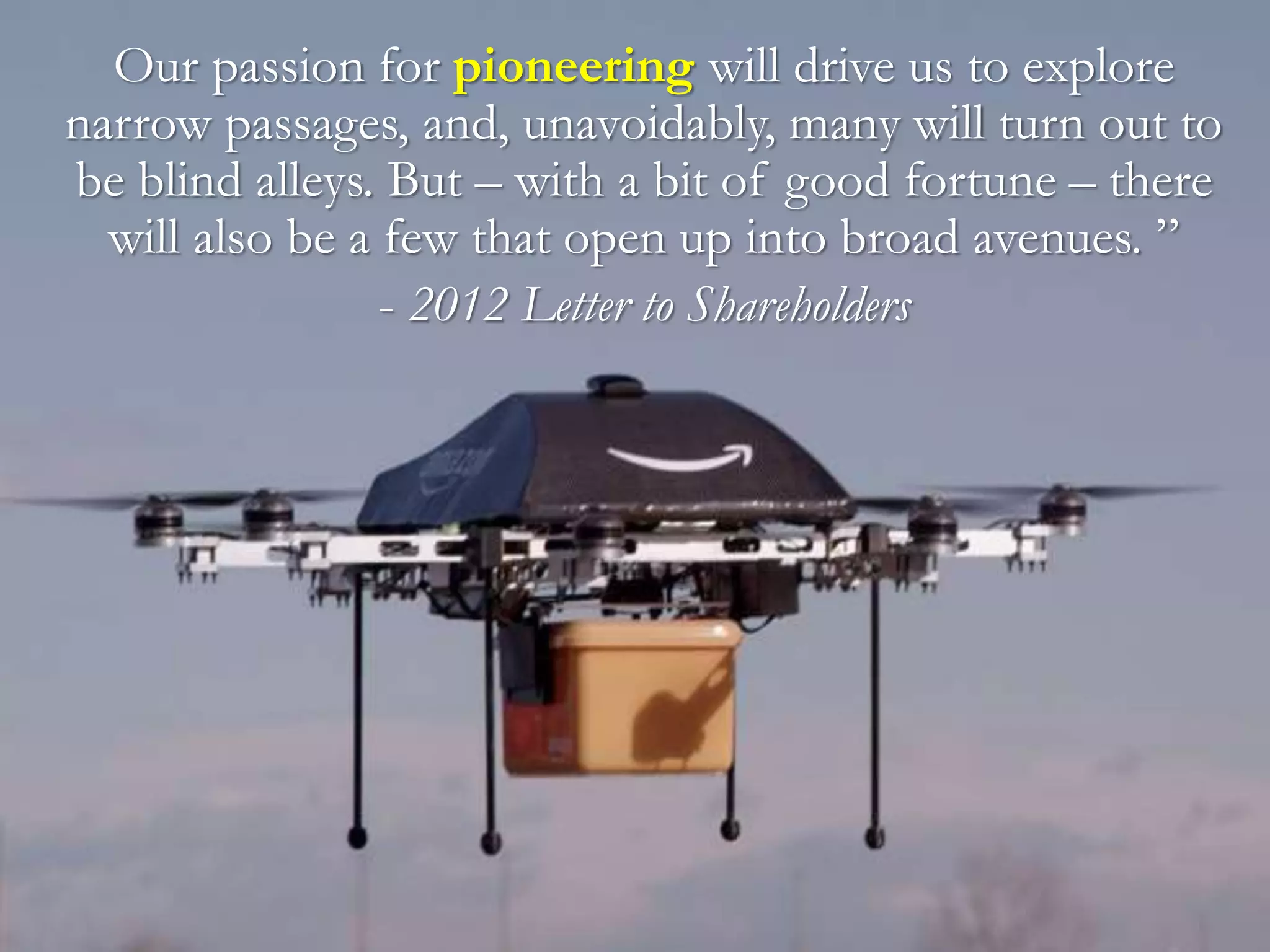
Our passion for pioneering will drive us to explore
narrow passages, and, unavoidably, many will turn out to
be blind alleys. But – with a bit of good fortune – there
will also be a few that open up into broad avenues. ”
- 2012 Letter to Shareholders
13
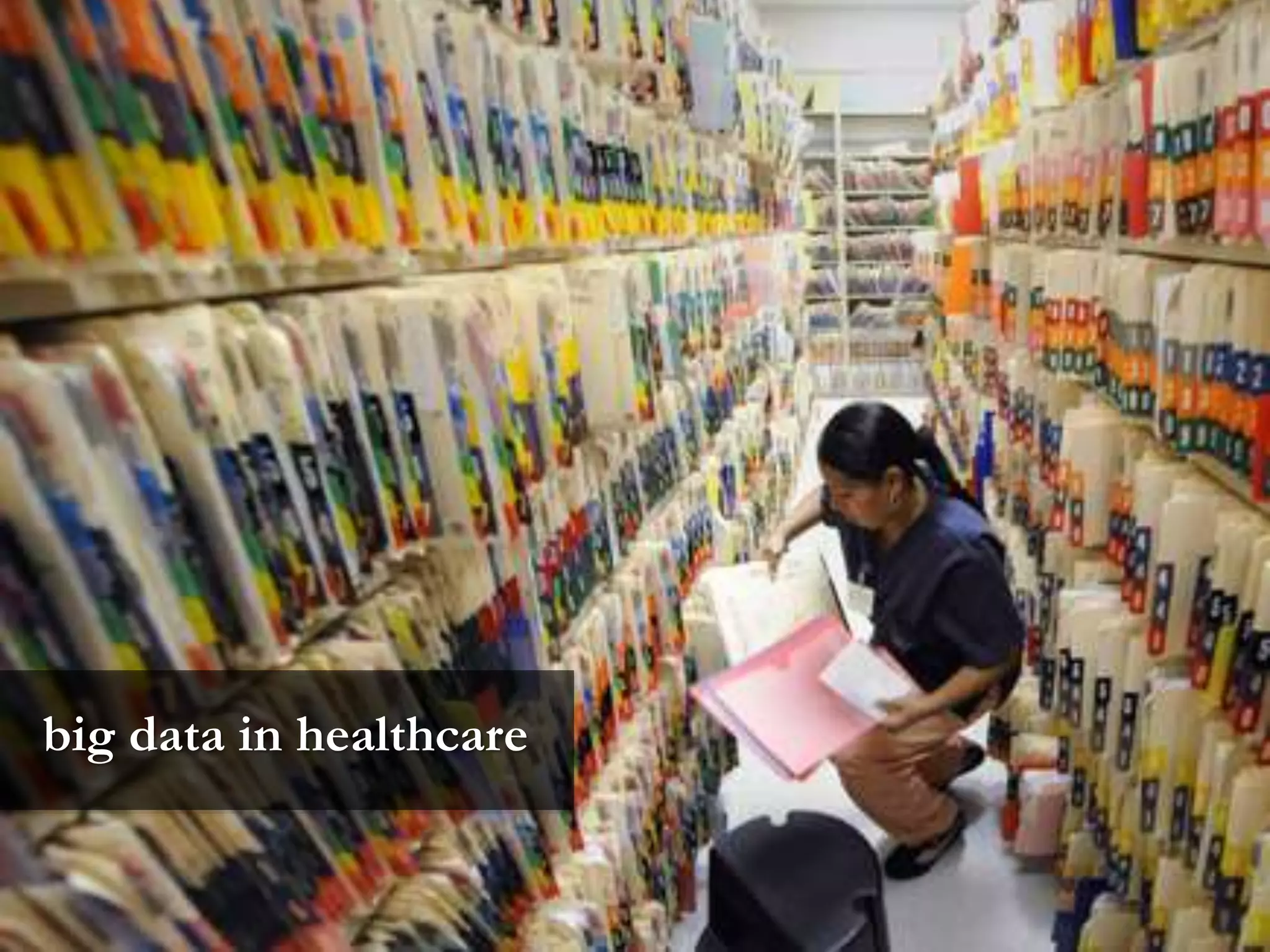
big data in healthcare
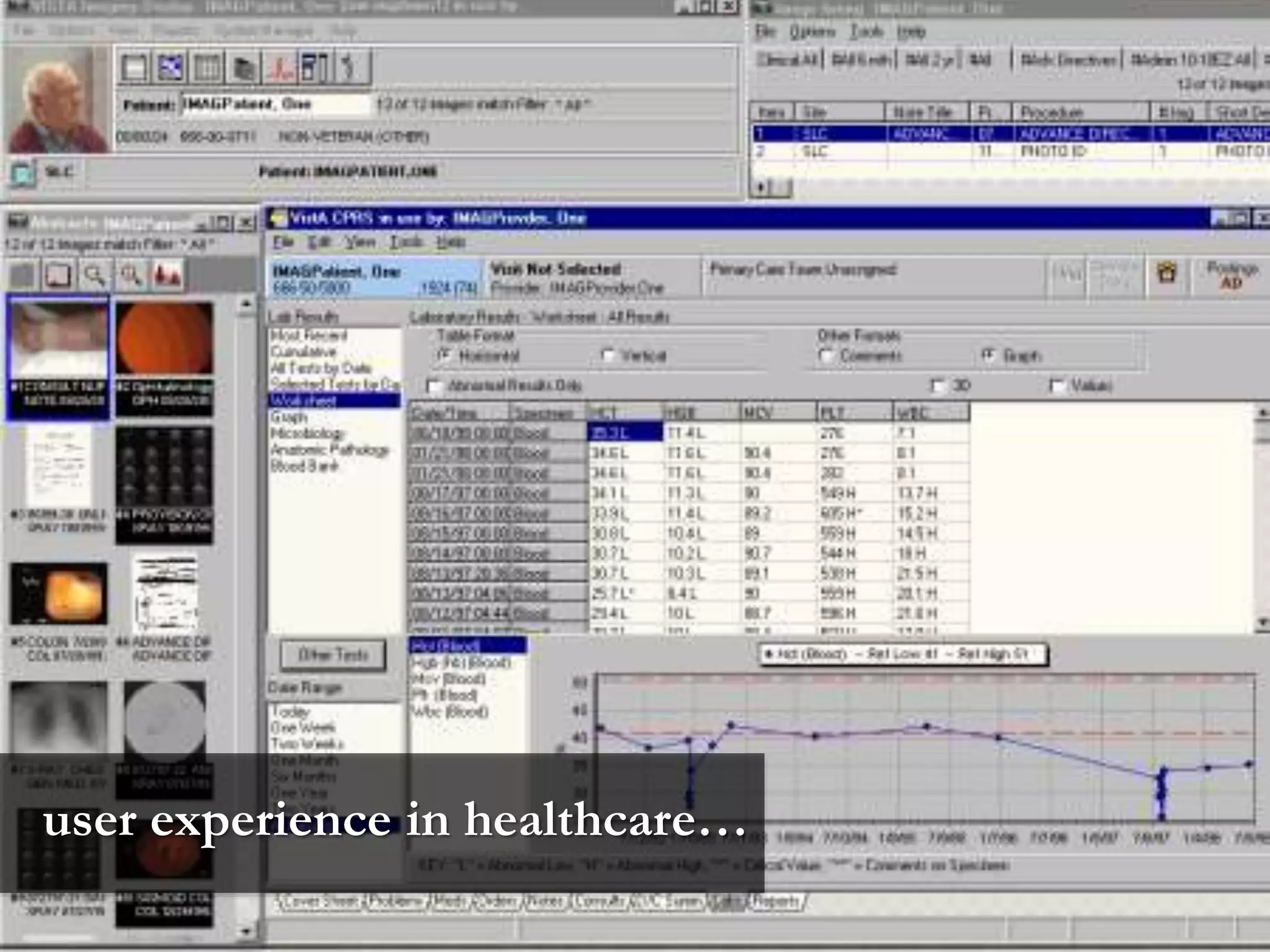
user experience in healthcare…
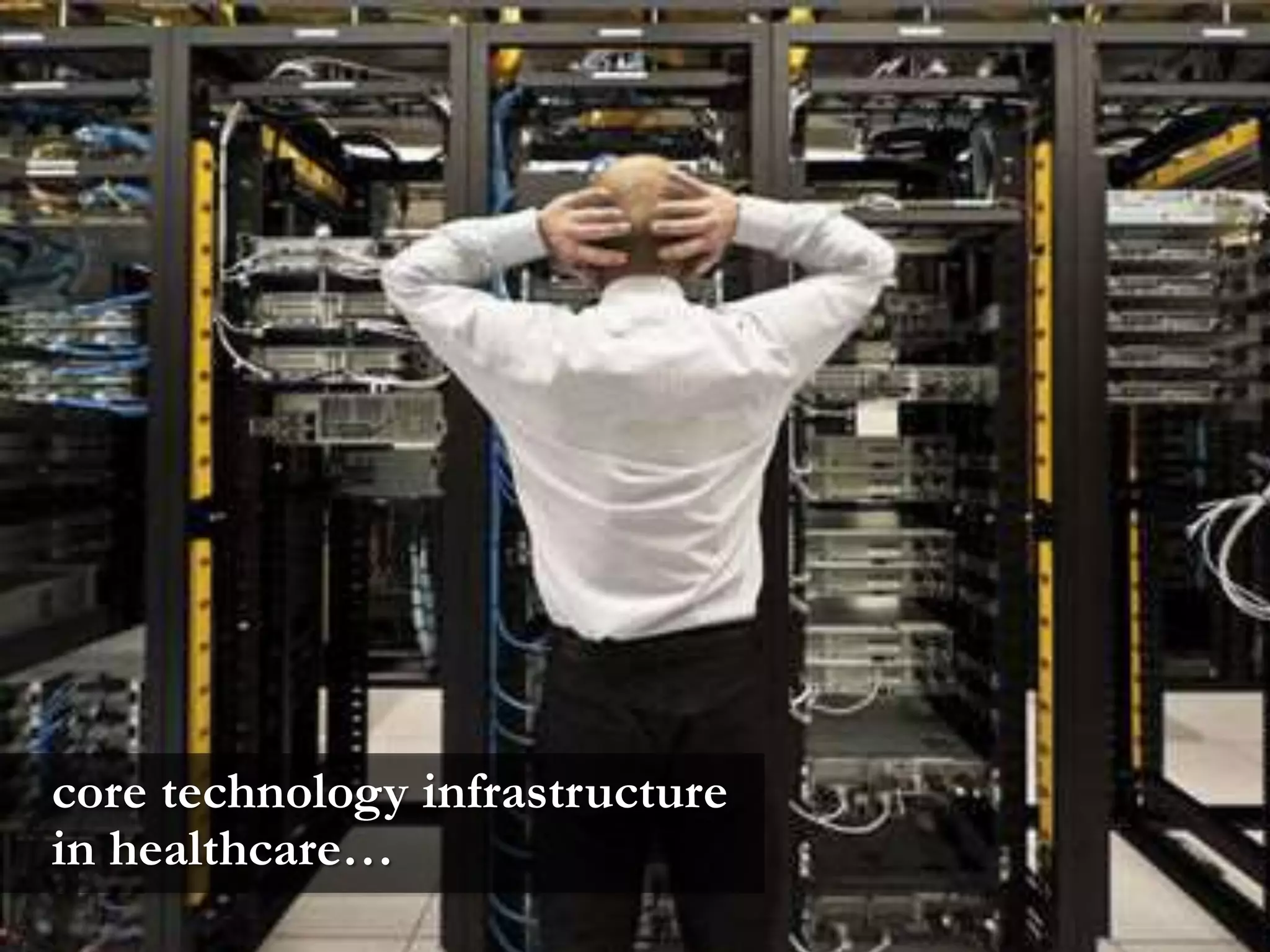
core technology infrastructure
in healthcare…
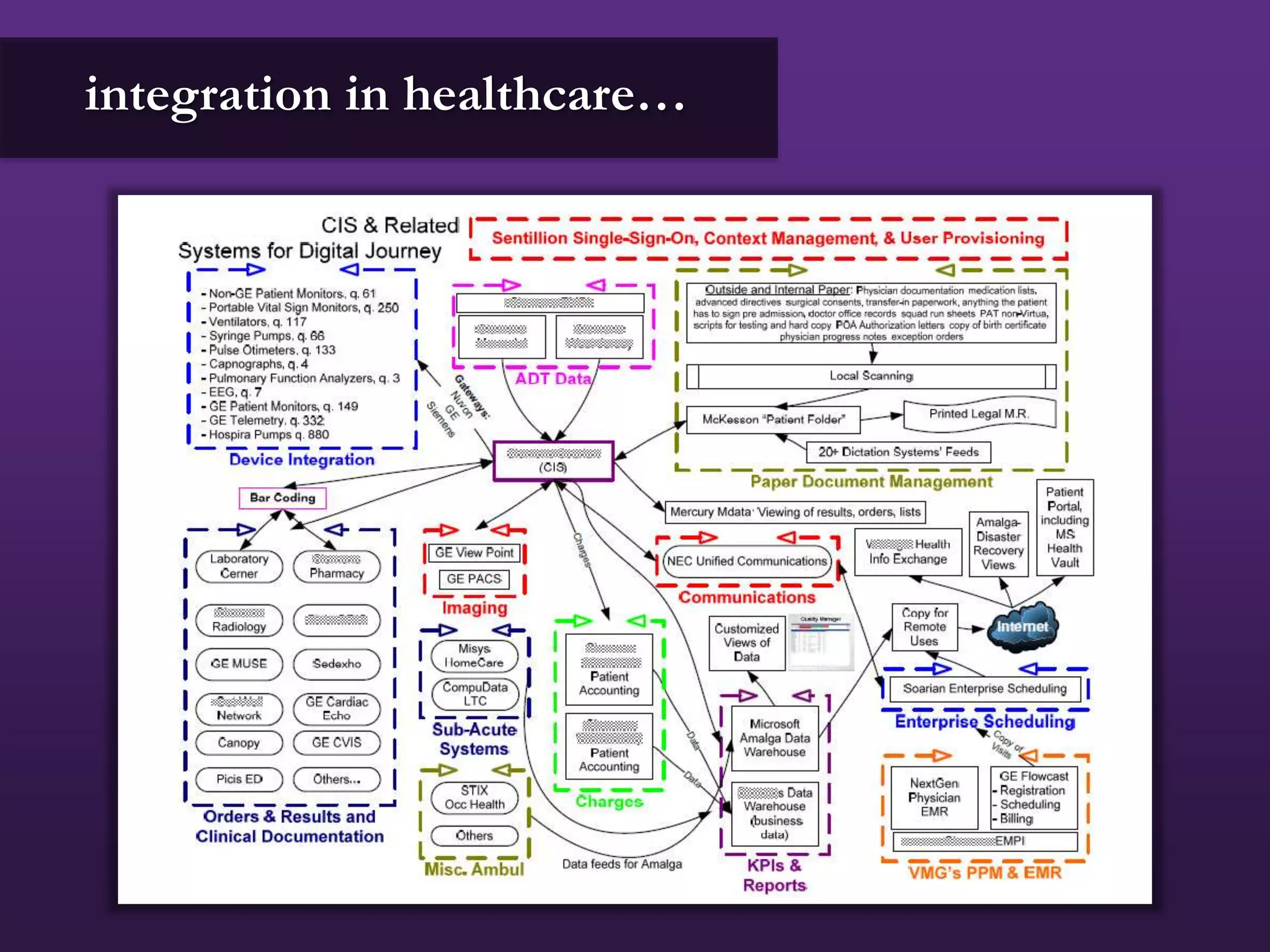
integration in healthcare…
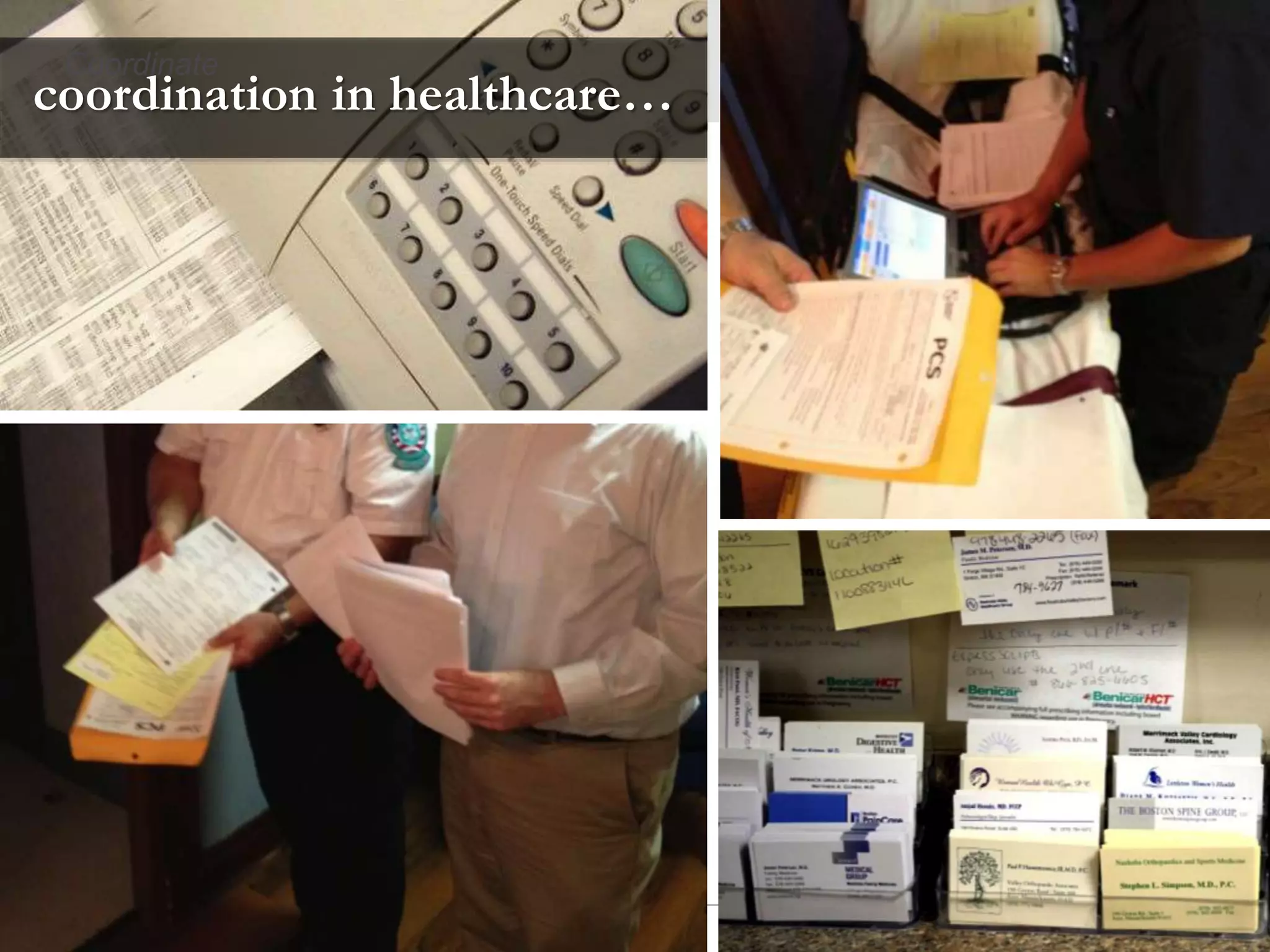
coordination in healthcare…
20
it is time for change
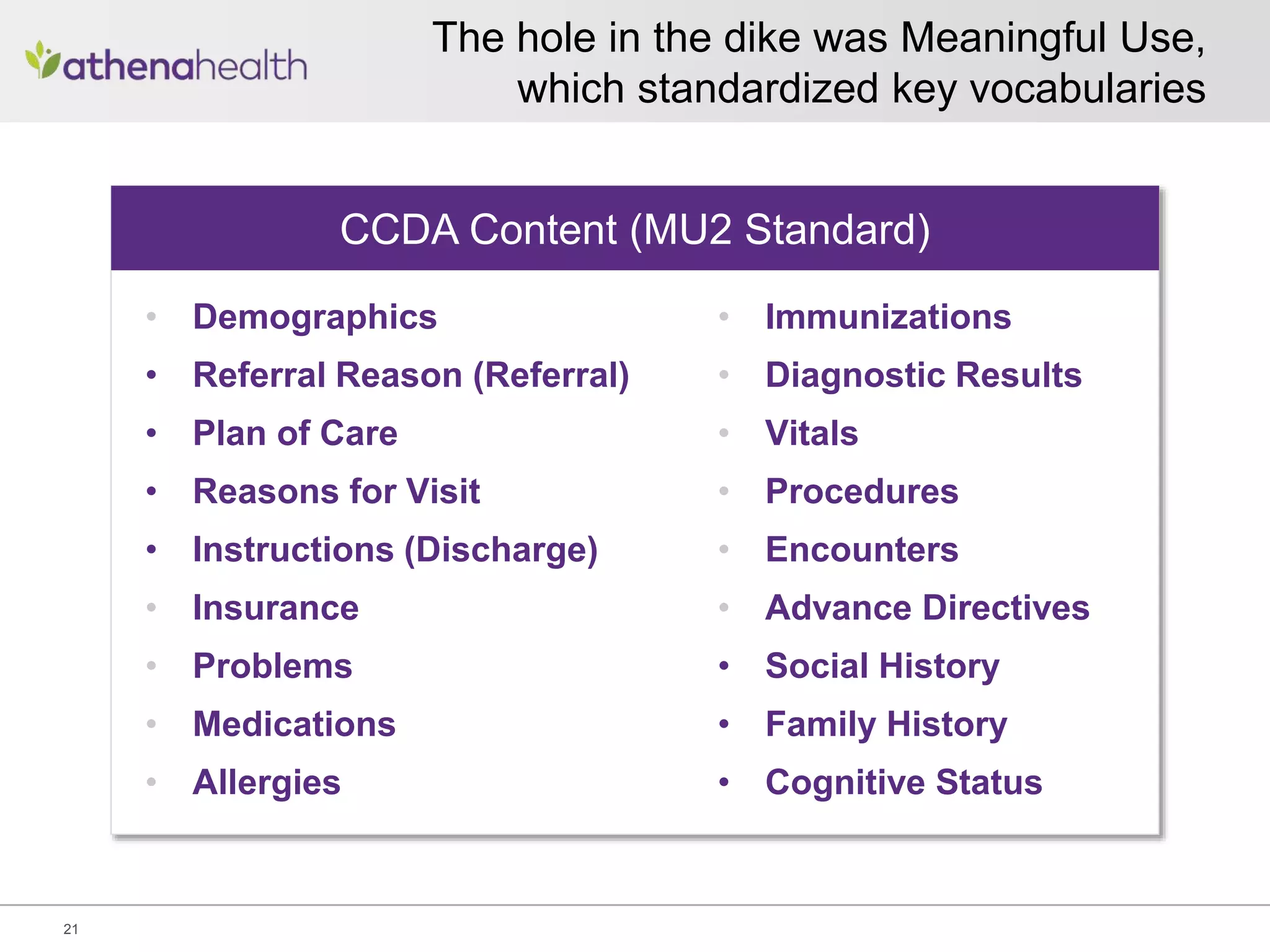
The hole in the dike was Meaningful Use,
which standardized key vocabularies
21
• Demographics
• Referral Reason (Referral)
• Plan of Care
• Reasons for Visit
• Instructions (Discharge)
• Insurance
• Problems
• Medications
• Allergies
CCDA Content (MU2 Standard)
• Immunizations
• Diagnostic Results
• Vitals
• Procedures
• Encounters
• Advance Directives
• Social History
• Family History
• Cognitive Status
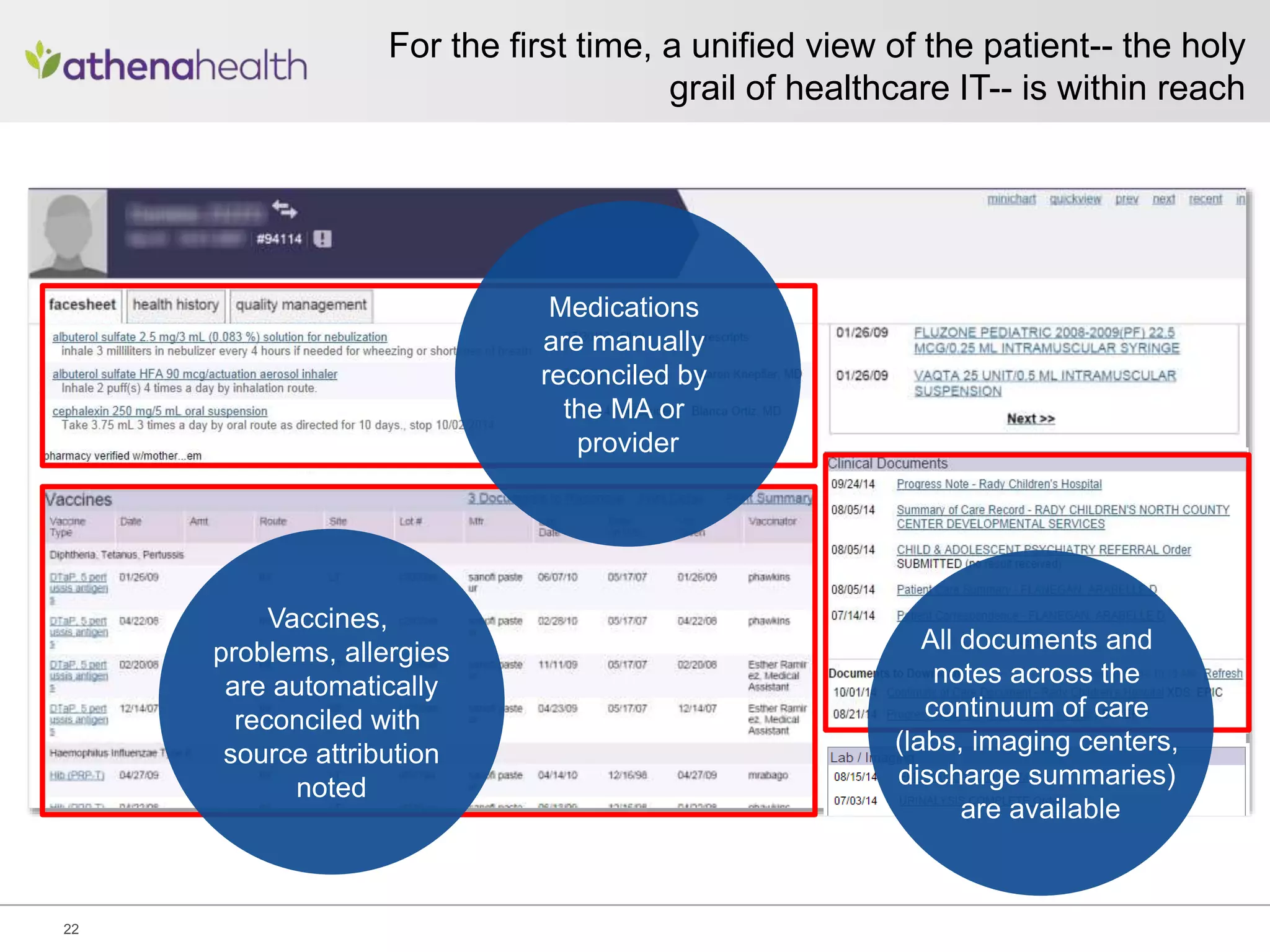
For the first time, a unified view of the patient-- the holy
grail of healthcare IT-- is within reach
22
Medications
are manually
reconciled by
the MA or
provider
Vaccines,
problems, allergies
are automatically
reconciled with
source attribution
noted
All documents and
notes across the
continuum of care
(labs, imaging centers,
discharge summaries)
are available
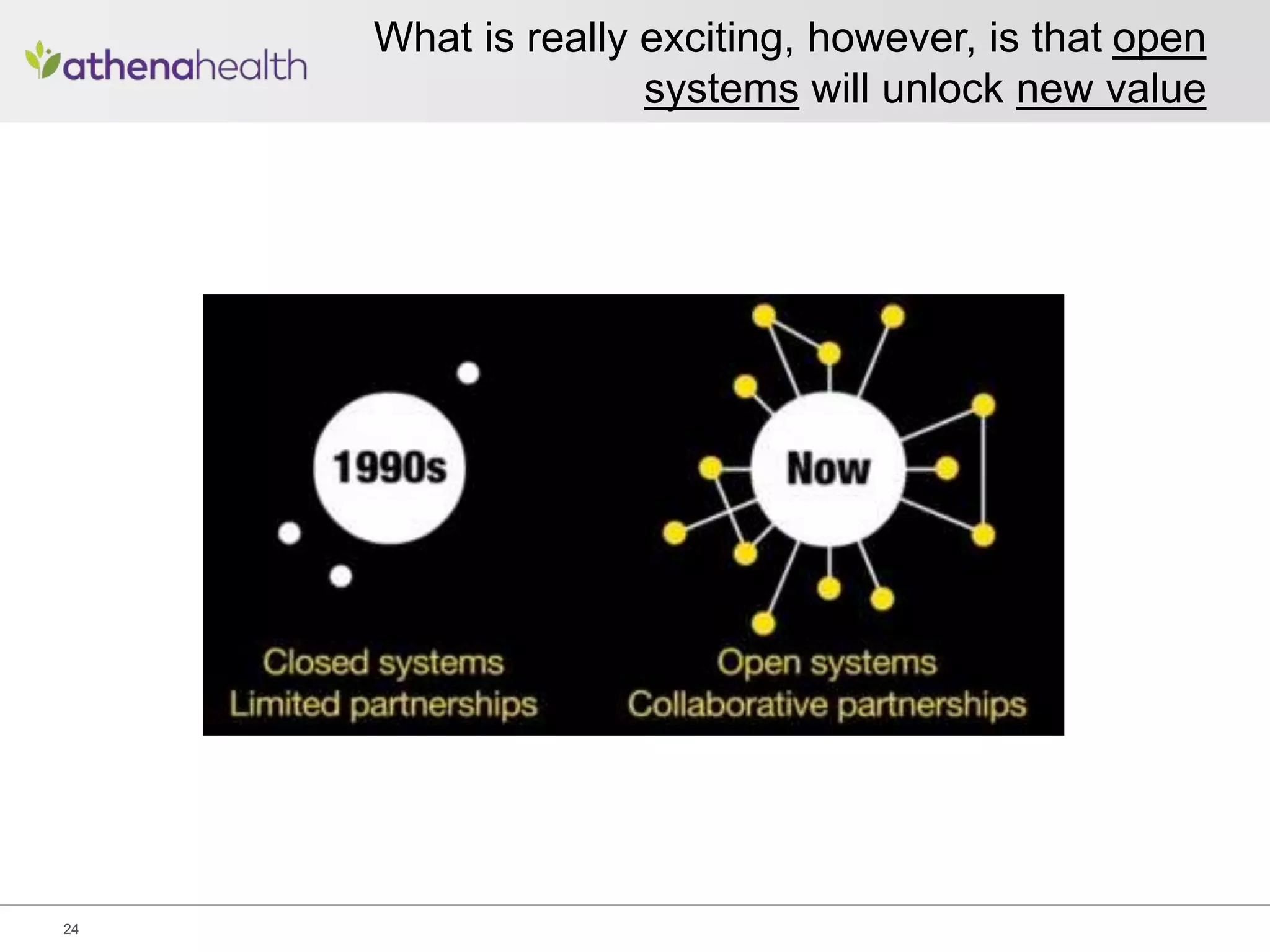
What is really exciting, however, is that open
systems will unlock new value
24
We have entered a new age -- the Age of the Platform. Amazon, Apple, Facebook, and Google have done nothing less than pioneer a
fundamentally new way of doing business. By engaging users, consumers, and partners in entirely new ways, they influence billions of humans
on the planet, every minute of every day.
25
Amazon, Apple, Facebook, and Google have
done nothing less than pioneer a fundamentally
new way of doing business. By engaging
users, consumers, and partners in entirely
new ways, they influence billions of humans
on the planet, every minute of every day.
- Phil Simon, The Age of the Platform
26
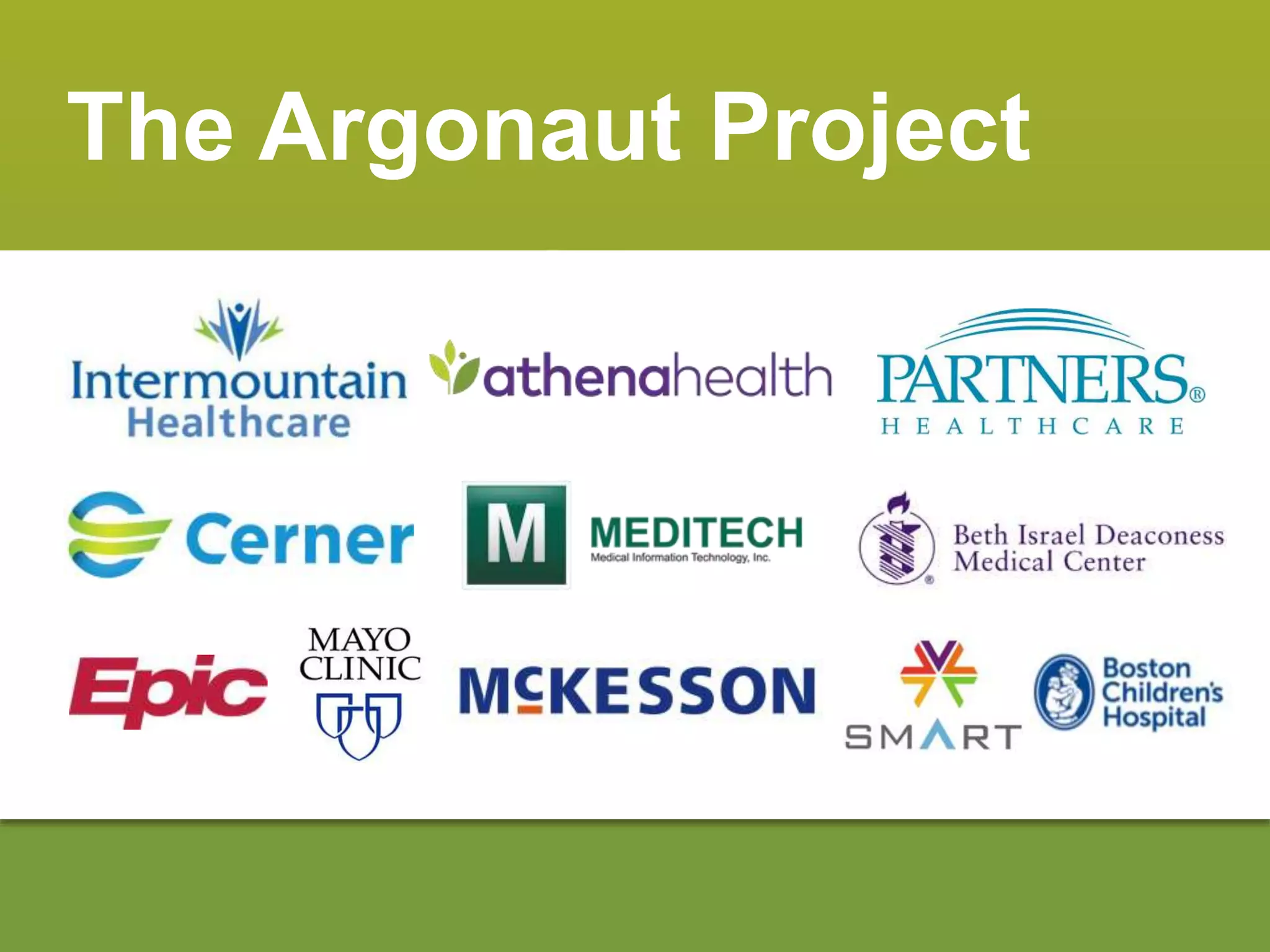
The Argonaut Project
28
29
The future is already here– it’s just not very
evenly distributed.
- William Gibson
What if we adopted the same principles of working
together to serve patients?
Thank You

What Healthcare Can Learn From Silicon Valley

  • 1.
    What Healthcare CanLearn From Silicon Valley Ed Park, athenahealth
  • 5.
    “We intend tobuild the world’s most customer-centric company. We hold as axiomatic that customers are perceptive and smart, and that brand image follows reality and not the other way around..” - Amazon’s 1998 Letter to Shareholders
  • 6.
    big data@amazon: “Manyof the important decisions we make at Amazon.com can be made with data.” - 2005 Letter to Shareholders
  • 7.
    cross-vendor experience@amazon: “Wewon’t do so alone, but together with thousands of partners of all sizes.” – 1999 Letter to Shareholders
  • 8.
    partnership@amazon: “Sellers using FulfillmentBy Amazon stowed more than one million unique items in our fulfillment center network” - 2006 Letter to Shareholders
  • 11.
    core technology infrastructure@amazon:“In this day and age, you’ll find that most big and important high tech companies manage to compete and collaborate at the same time” – VP Cloud Computing, Netflix
  • 12.
    Our passion forpioneering will drive us to explore narrow passages, and, unavoidably, many will turn out to be blind alleys. But – with a bit of good fortune – there will also be a few that open up into broad avenues. ” - 2012 Letter to Shareholders
  • 13.
  • 15.
    big data inhealthcare
  • 16.
    user experience inhealthcare…
  • 17.
  • 18.
  • 19.
  • 20.
    20 it is timefor change
  • 21.
    The hole inthe dike was Meaningful Use, which standardized key vocabularies 21 • Demographics • Referral Reason (Referral) • Plan of Care • Reasons for Visit • Instructions (Discharge) • Insurance • Problems • Medications • Allergies CCDA Content (MU2 Standard) • Immunizations • Diagnostic Results • Vitals • Procedures • Encounters • Advance Directives • Social History • Family History • Cognitive Status
  • 22.
    For the firsttime, a unified view of the patient-- the holy grail of healthcare IT-- is within reach 22 Medications are manually reconciled by the MA or provider Vaccines, problems, allergies are automatically reconciled with source attribution noted All documents and notes across the continuum of care (labs, imaging centers, discharge summaries) are available
  • 24.
    What is reallyexciting, however, is that open systems will unlock new value 24
  • 25.
    We have entereda new age -- the Age of the Platform. Amazon, Apple, Facebook, and Google have done nothing less than pioneer a fundamentally new way of doing business. By engaging users, consumers, and partners in entirely new ways, they influence billions of humans on the planet, every minute of every day. 25 Amazon, Apple, Facebook, and Google have done nothing less than pioneer a fundamentally new way of doing business. By engaging users, consumers, and partners in entirely new ways, they influence billions of humans on the planet, every minute of every day. - Phil Simon, The Age of the Platform
  • 26.
  • 27.
  • 28.
  • 29.
    29 The future isalready here– it’s just not very evenly distributed. - William Gibson
  • 30.
    What if weadopted the same principles of working together to serve patients?
  • 31.

Editor's Notes

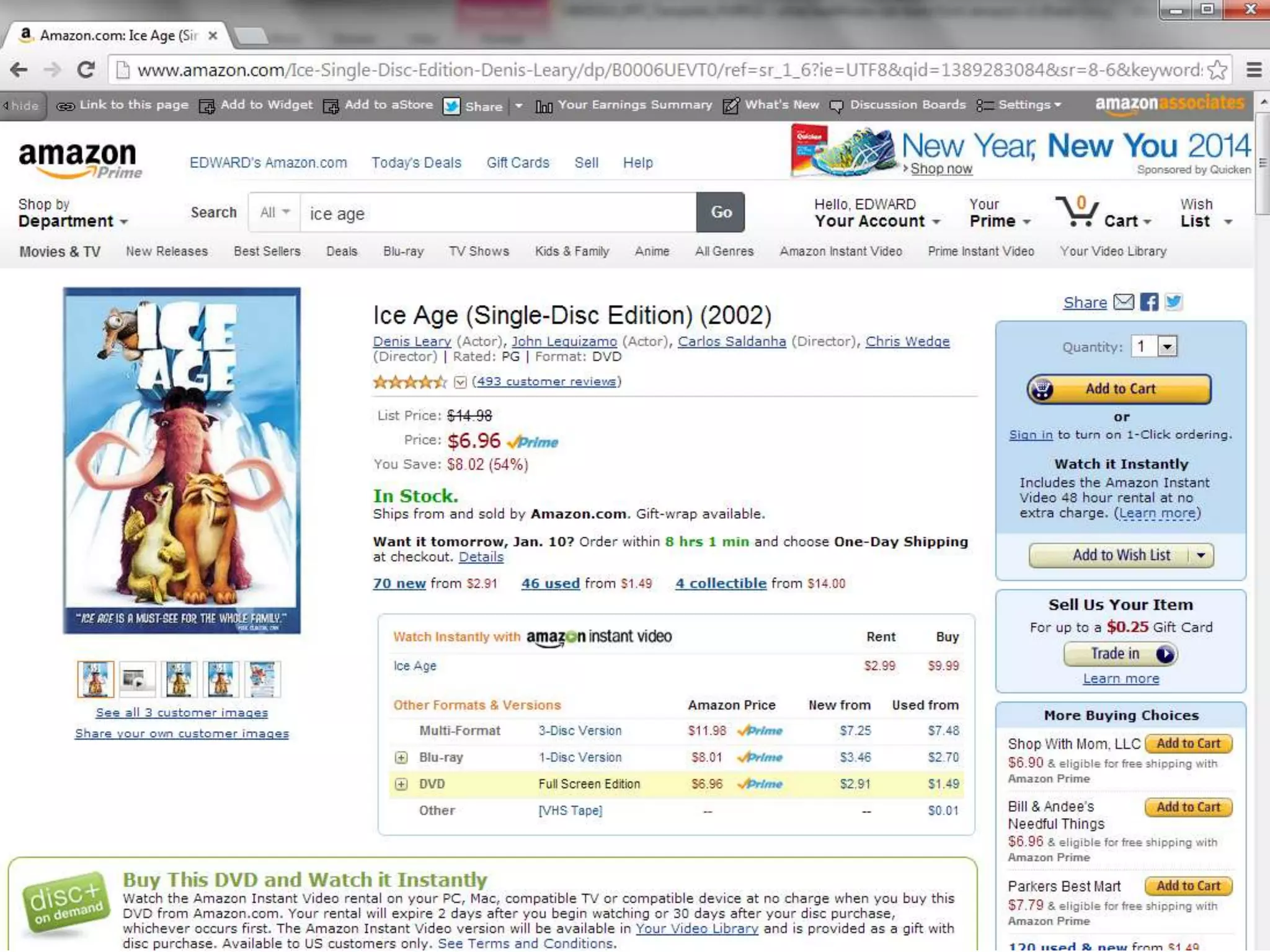
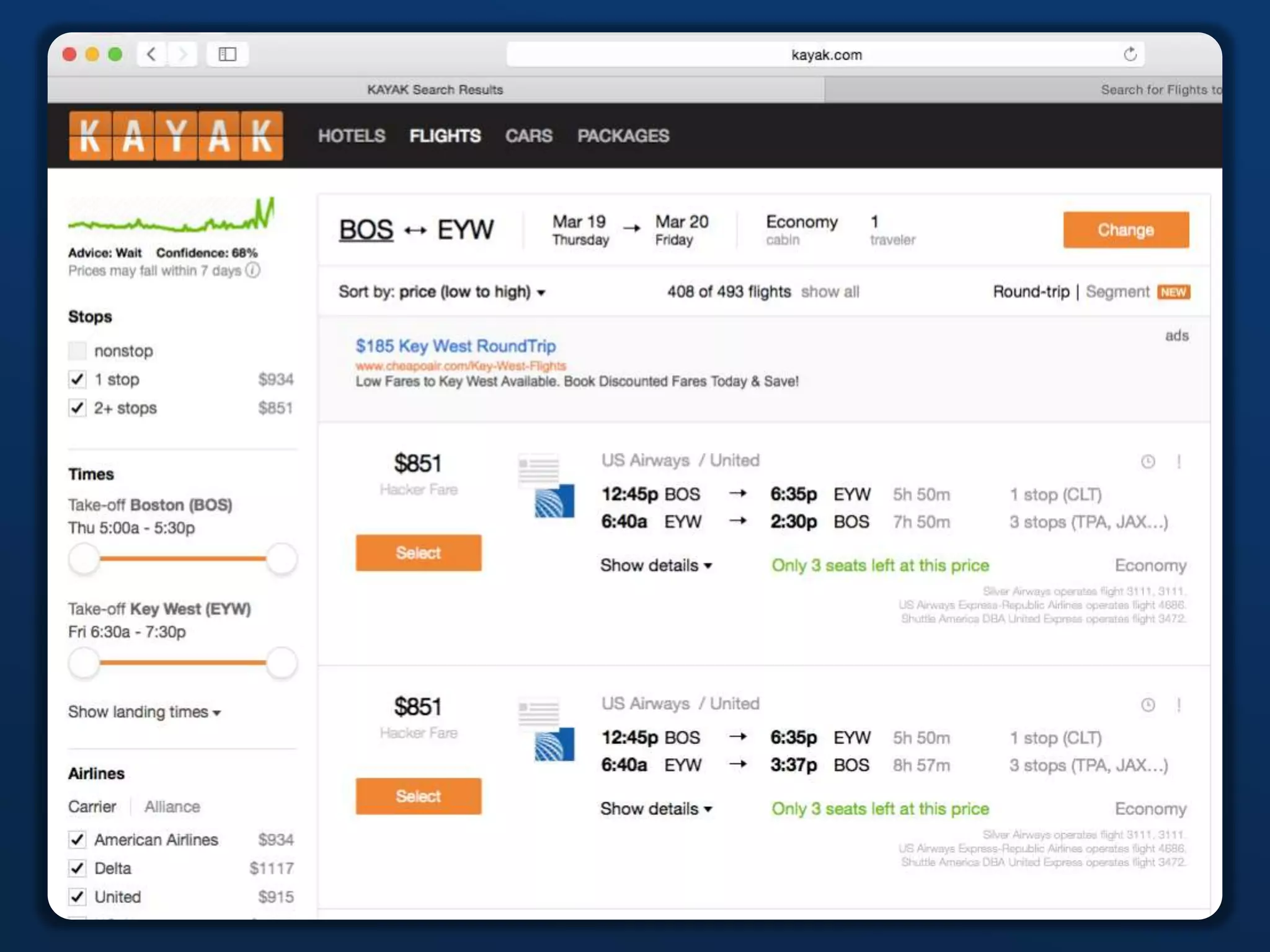
  • #4 I have two daughters, ages 4 and 6. Like most kids, they go through phases-- My Little Pony, Transformers, and most recently Ice Age. So for Christmas, I bought them all 4 Ice Age movies. To do it, like lots of red-blooded Americans, I went to Amazon.com-- arguably the most cutting edge company in retail. This page is a marvel of consumer engineering– from a consumer standpoint, nearly a perfect 10. I can see what others think about Ice Age. I can buy this from Amazon. I can buy it from other places, like Shop with Mom LLC and Bill and Andee’s needful things. I can see what others thought about it. I could even buy the DVD and watch in instantly over Amazon streaming media.
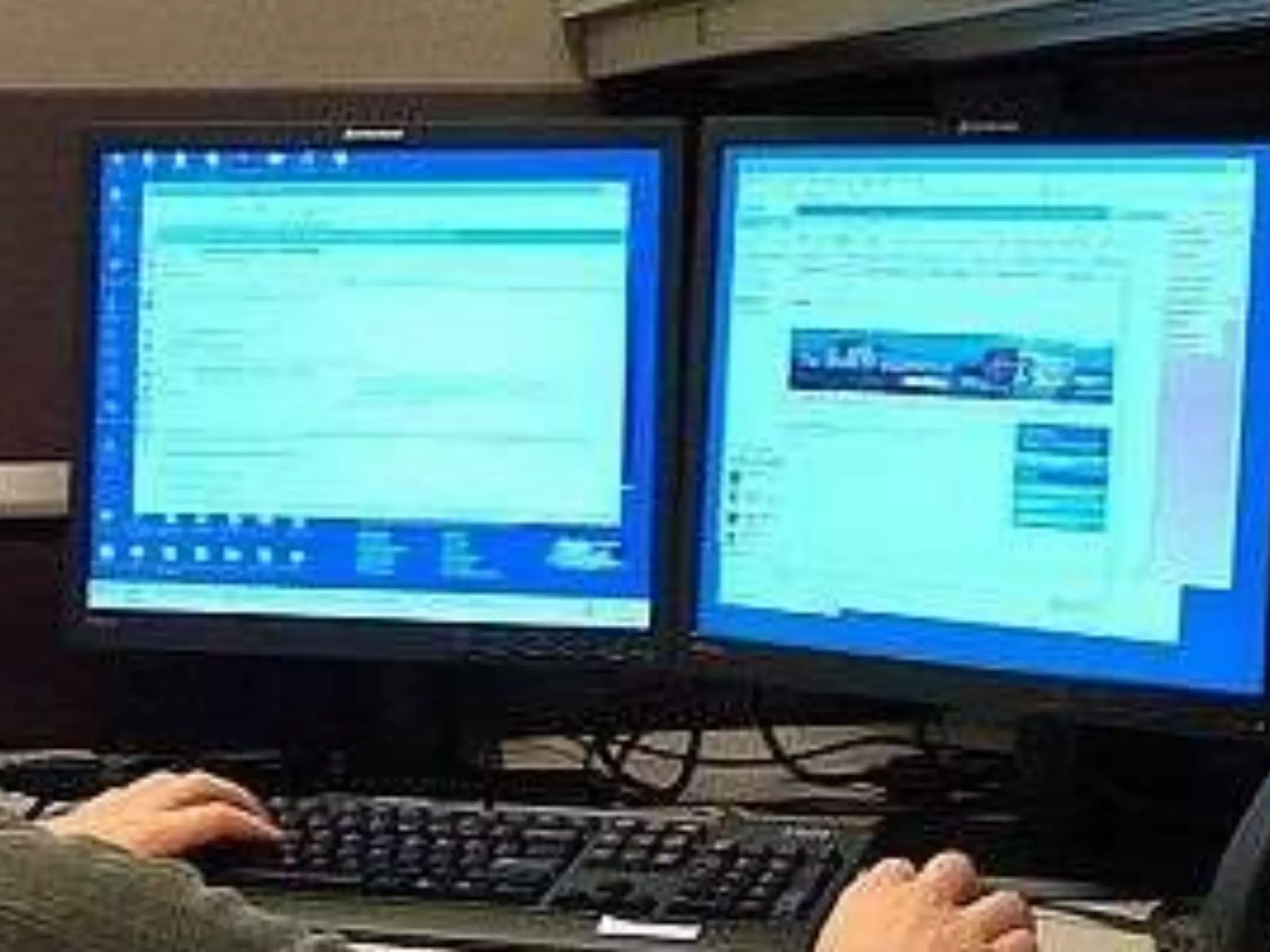
  • #5 Heathcare IT, on the other hand, is not a marvel of consumer engineering. Multiple applications on the desktop and dual screens remain the rule of the day. There are some standards like CCOW that allow for cobrowsing, keeping all of these windows in sync, but I don’t think anyone would claim that the experience is seamless. Applications still operate in their individual silos, wired together by the visual wetware of the operator.
  • #6 To find the answer, I decided to dig deep. In particular, I read dozens of articles and read through all of Amazon’s annual reports since 1997. What I found surprised me. While there is certainly a fair amount of technical wizardry involved, technology was not the key hurdle. What I found were a series of core philosophies that I believe were key to unlocking the Amazon experience, and for the remainder of the time, I'd like to explore these philosophies with you and what they might mean if we adopted them in healthcare. Let’s start with Amazon’s mission statement, embedded in Jeff Bezos’ inaugural 1998 Letter to Shareholders. What is most striking about this is what it is not. It does not say that "we will build the world's lowest-cost online presence." It does not say "we will build the world's most profitable presence." It does not dumb down the consumer, or treat them as “muppets”-- in fact, it holds them in the very highest regard. In a nutshell, Jeff is declaring to the world that come what may, Amazon is declaring that come what may, it will always be on the side of the consumer. As we shall see, this has had powerful and long-ranging effects.
  • #7 How did Amazon do it? First, let’s start with the data. In healthcare, everyone talks about Big Data. But petabytes of data is only as good as your ability to operate on it, and Amazon.com is terrific at using Big Data. This is a map of Amazon’s U.S. fulfillment network, which was constructed completely from big data. Amazon has a network of over 100 fulfillment centers around the globe, and the positioning of these was made completely by analyzing and optimizing with big data. Every day, they monitor this network and decide where to open new fulfillment centers. “Many of the important decisions we make at Amazon.com can be made with data. Opening a new fulfillment center is an example. We use history from our existing fulfillment network to estimate seasonal peaks and to model alternatives for new capacity. The above decisions require us to make some assumptions and judgments, but in such decisions, judgment and opinion come into play only as junior partners. The heavy lifting is done by the math. ” - Jeff Bezos, 2005 Letter to Shareholders http://danilnagy.dreamstudionyc.com/index.php?/research/get-big-fast/ - map To cope with the demand from increasing numbers of people choosing to do their Christmas shopping online, Amazon’s Swansea facility will extend operating hours during November and December. During this time, the fulfilment centre will be running for 24 hours a day, creating more shifts for part-time workers. He was expected to collect a customer order every 33 seconds and told BBC1’s Panorama he was subjected to ‘unbelievable’ pressure to meet efficiency targets. Read more: http://www.dailymail.co.uk/news/article-2512959/Walk-11-miles-shift-pick-order-33-seconds--Amazon-works-staff-bone.html#ixzz2qGBXRDFe  Follow us: @MailOnline on Twitter | DailyMail on Facebook
  • #8 This big data powers the consumer experience we all know and love. But what’s even more striking about this page is that you have no idea which of these items are sold by Amazon and which aren’t. Amazon knows that you don’t really care whether an item is sold by Amazon or not, so it doesn’t bother telling you while you’re browsing. The PUMA Men’s Voltaic 4-mesh Cross-Training shoe may or may or may not really be sold by Amazon, and you don’t care. This decision was made very early on by Amazon- in 1999-- and derives directly from their philosophy to do what was in the best interest of consumers.
  • #9 But Amazon didn’t stop there. In amazon’s quest to be customer-centric,– the next thing Amazon did was not only share screen real estate, but in order to offer a greater variety of products to its customers, it began to rent out the vaunted big-data distribution network that we saw just a couple of slides ago. In fact, by 2009, sales of products by third party sellers represented 30% of unit sales. This is how Fulfillment by Amazon works. Again, in this warehouse, you have no idea what is sold by Amazon and what’s sold by third-party sellers. One interesting side note– remember Big Data? Amazon uses big data not only to place the physical location of its data centers, but also to inform optimal placement. For example, Amazon’s algorithms figured out that makes sense to stock popular items at multiple different areas of the store. This makes it more likely that a staff member doesn’t have to zip from one end of the store to the other to fulfill a single order. Small note– workers at amazon average 11 miles per day of walking during Christmas, so that’s something you really have to optimize. Because even that was waste, Amazon– yes, that online bookstore-- bought a robotics company, Kiva, which replaces the need for a human to walk the estimated 11 miles per day. This is all important because in their quest to become consumer-centric, Amazon did not stop with website. They aligned their interests perfectly with the consumer and then relentlessly followed that goal irrespective of where it ended up. “Sales of products by third party sellers on our websites represented 30% of unit sales in 2009. Globally, sellers using Fulfillment By Amazon stowed more than one million unique items in our fulfillment center network, thereby making these items available for Free Super Saver Shipping and Amazon Prime.” - Jeff Bezos, 2009 Letter to Shareholders Inside the store, the items look as if they are placed randomly on shelves, with no discernable organisation or pattern. But this is determined by algorithms and software, by placing the same piece of stock on a variety of different shelves and aisles across the warehouse, it increases the likelihood that two vastly different items will be near each other. This is actually a useful method for members of staff, who must physically make their way around the warehouse to pick up ordered items. Many people who order a book about astrophysics might then purchase something completely unrelated, and by placing unrelated items next to each other it increases the chances that the floor staff at Amazon will have to cover a shorter distance on foot. The staff are also assisted by gadgets which identify where the items on a particular order are located in the facility, and will plot the shortest route, leading the staff member there like a Sat Nav.
  • #10 In fact, beyond partnerships and warehouses, they pursued new ways of delivering value to customers. Nowhere was this on greater display than the introduction of the Kindle. Amazon decided that it would disrupt itself and invent a new way to squirt you a book, selling it at a loss, but taking the time required to deliver content from 2 days to 60 seconds and transforming the publishing industry. Again, Amazon thinks of itself as a service, putting the customer at the center. Only the result matters, and they will follow that philosophy wherever it may lead. Amazon loses $2 on every kindle it sells, but makes it back $136 in profit. “November 19, 2007, was a special day. After three years of work, we introduced Amazon Kindle to our customers. Briefly, Kindle is a purpose-built reading device with wireless access to more than 110,000 books, blogs, magazines, and newspapers. You can buy a book directly from the device, and the whole book will be downloaded wirelessly, ready for reading, in less than 60 seconds.” - Jeff Bezos, 2007 Letter to Shareholders Each Kindle today sells at a loss of $2, but a profit of $136.
  • #11 Amazon doesn’t even have to “own” the customer. If the right thing to do for the customer is to build a completely different experience, then amazon is happy to take a back seat. This is a site that I built in 2006– it’s called earthalbum.com. I’d always wanted to travel the world, but with an infant daughter on the way, that was not in the cards. I therefore spent some time building a website. It ended up doing pretty well– it was named by Time Magazine as one of the top 10 websites of 2006– so I experimented with monetizing the traffic by adding a seamless, context-sensitive travel bookstore that ended up paying for lunch every day. By the way, this also showcases the fact that Amazon is not the only customer-centric company that operates in the cloud. This site was a mash-up of Google Maps and Flickr photos, powered by Amazon, to create a completely seamless experience. I was able to create a completely new user interface simply by using publicly available APIs. The key point here is that once you start decomposing the technology into component pieces, you can unleash innovation in ways that had not been remotely contemplated by the originators of the service. “In the physical world, retailers will continue to use technology to reduce costs, but not to transform the customer experience. We too will use technology to reduce costs, but the bigger effect will be using technology to drive adoption and reenue. ” - Jeff Bezos, 2000 Letter to Shareholders
  • #12 The two most interesting on here are netflix/dropbox Most of what we’ve talked about so far probably makes some sense, at least intuitively. This next one, though, is a stunner. In late 2006, Amazon– which had already shared its web presence and distribution infrastructure with partners-- cranked the dial to 11 and decided to share its core technology infrastructure, creating what is now known as Amazon Web Services. That is, Amazon started renting out the core technology infrastructure that runs the primary amazon.com website. The results have been astounding. As you probably know, Silicon Valley is on fire these days. What’s less known, outside of technology circles, is that almost every single startup runs on Amazon web services. All of the sites you see here, and dozens more, run on AWS. Rovio makes Angry Birds. Dropbox is a $9B market-cap company that does filesharing in the cloud. Strikingly, Amazon even rents it services to Netflix, its $24B market-cap archrival in the on-demand video market. Most of Netflix’s core technologies, and the Netflix website, runs on Amazon. Again, the point here– if it’s in the best interest of the customer, Amazon will share what it has and has learned to compete and collaborate at the same time. “In this day and age, you’ll find that most big and important high tech companies manage to compete and collaborate at the same time, “With Amazon Web Services (AWS), we’re building a new business focused on a new customer set --software developers…” - Jeff Bezos, 2006 Letter to Shareholders But while Amazon is Netflix’s vendor, the two companies also compete fiercely in the on-demand video market. This makes it all the more astonishing that Netflix is working to support Amazon. But while courting open source developers to build tools for AWS will bolster Amazon’s cloud business in the short term, the strategy could lead to a broader ecosystem in cloud services that could ultimately help Amazon’s competitors as well, giving Netflix other options as the cloud services market matures. Netflix says it is one of Amazon Web Services’ largest customers. Almost all of Netflix’s information technology services run on AWS, from the software that runs its internal operations to everything customers see on the TV screen when they scroll through and select videos. (The only part that doesn’t run on Amazon is the physical online delivery of the videos through Internet service providers.) Netflix in March unveiled the Netflix Cloud Prize in order to spur development of open source software that runs on top of AWS. The contest, with $100,000 in prizes, runs from March through September. Netflix will give each of ten grand prize winners $10,000 in cash, $5,000 in credits toward future use of certain eligible AWS services and a trip to Las Vegas for two to attend the annual AWS re:Invent conference in November. Netflix plans to hand out trophies to winners at the conference. The company says it is comfortable with the paradoxical nature of its relationship with Amazon. “In this day and age, you’ll find that most big and important high tech companies manage to compete and collaborate at the same time,” Yury Izrailevsky, vice president of cloud computing and platform engineering at Netflix, told CIO Journal during a phone interview.
  • #13 And Amazon continues to innovate. For example, most recently, for those of you who have been following, Amazon has recently been having it out with the FAA with its Amazon Prime Air delivery service– literally taking humans out of the equation and having automated drones deliver packages at doorsteps. Amazon reimagined the entire retail experience and shot for the stars to become the world’s most customer-centric company. To do it they used partnerships, warehouses, invented kindles, worked on drones. They surprised me Sunday dude who came to my house hand-delivering things I ordered Saturday at midnight, a guy in a beat up car came up and delivered In any case, though, I’ll end the discussion of Amazon’s history with Jeff’s quote from his most recent 2012 letter to shareholders. “As proud as I am of our progress and our inventions, I know that we will make mistakes along the way – some will be self-inflicted, some will be served up by smart and hard-working competitors. Our passion for pioneering will drive us to explore narrow passages, and, unavoidably, many will turn out to be blind alleys. But – with a bit of good fortune – there will also be a few that open up into broad avenues. ” - Jeff Bezos, 2012 Letter to Shareholders
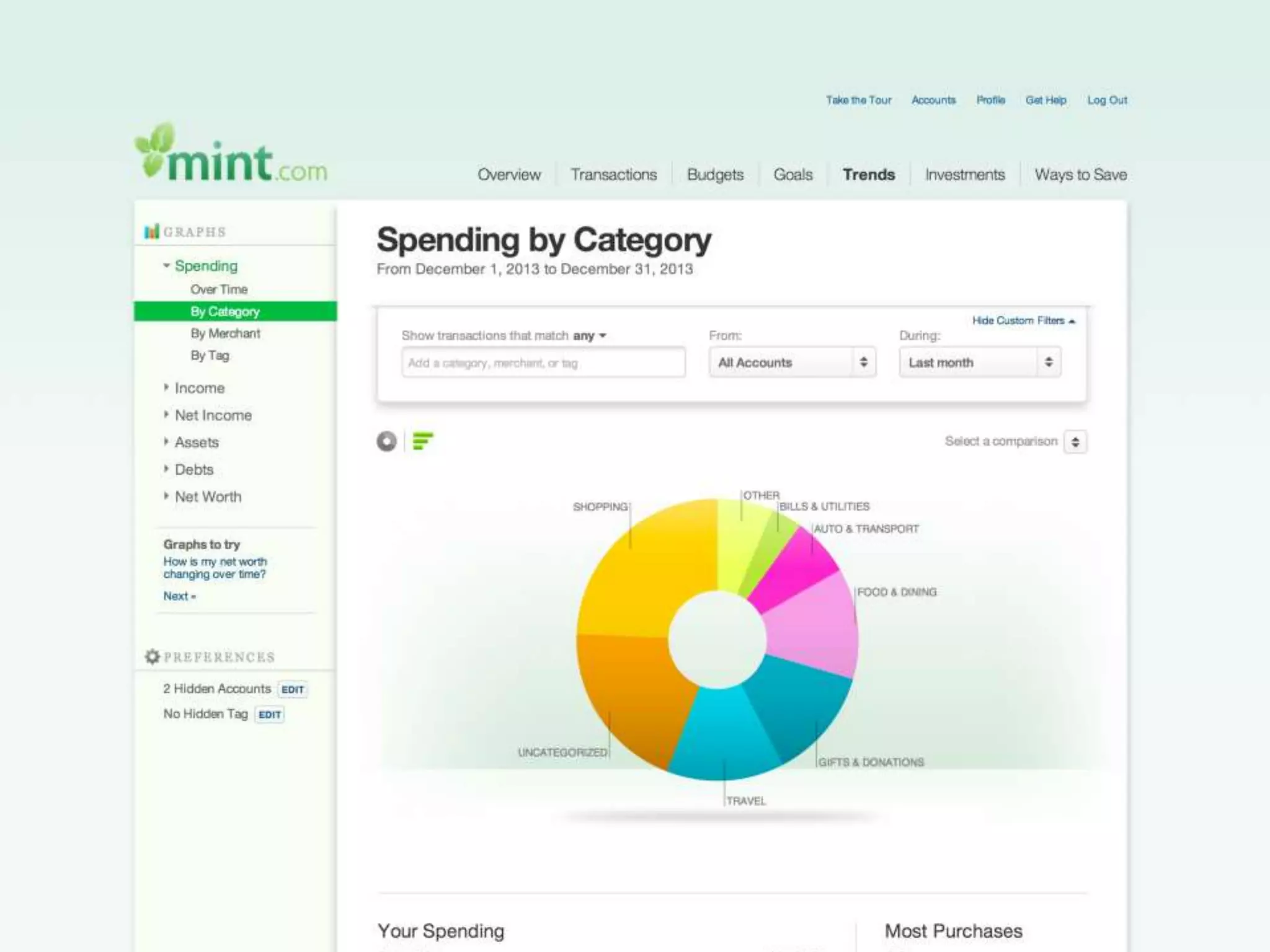
  • #15 And although I’ve been talking mostly about amazon, this isn’t limited to amazon. While bright, they do not have lock on technical genius. Other industries have also figured out how to create a single compelling user experience across organizational and technical boundaries. In personal finance, mint.com has led the way. The brilliance of MINT.COM is that it lets you have relationships with many different types of financial institutions: for savings, checking, credit card, mortgage, securities, 401K, etc. You control which accounts, control passwords and security. It just works. Would be great if one bank could do it all—but they can’t/don’t. Imagine if you could integrate all those streams of data into a single view. Provides an integrated view.
  • #16 But we’ve been in the cloud for a while– let’s go back to ground level and remember where we are in healthcare today. This is our warehouse. Despite a lot of progress, half of the conutry today still runs on paper charts. First, big data. Big Data in healthcare is, at best, lowercase b, lowercase d, and most clinical or operating decisions in healthcare institutions are still made with a healthy dose of wetware. Many of you are familiar with the 1999 Institute of Medicine report, “to err is human,” which stated that as many 98,000 ppl die every year from preventable medical errors. With the recent explosion of EHR adoption, you might believe that putting the data online is resulting in meaningfully better patient care. But there is no conclusive evidence of this– at least not yet. In a 2011 follow-up report, the IOM found no conclusive evidence that EHRs improve patient care. There were certainly some isolated successes– e.g., implementing robust CPOE in a hospital environment improved medication safety– but it was very difficult to generalize across systems. The IOM ended up recommending that health systems take a “systems approach,” not treating technology in isolation but in concert with organizations and processes. The key problem, as many have noted, is that technology is never an end– it is a means. Amazon has always been crystal clear about the results in was pursuing, and used whatever it needed-- webservers, warehouses, robots, drones-- to pursue those results. Amazon is not first and foremost a technology company– it is a customer-centric company that does what it believes is in the best interest of consumers. ------------------------------- its report, Health IT and Patient Safety: Building Safer Systems for Better Care, the committee examines the safety of health IT products and their effects on patient safety. Overall, the committee finds the literature about health IT and patient safety to be inconclusive. Some health IT applications are definitively successful at improving medication safety. For example, the number of patients who receive the correct medication in hospitals increases when these hospitals implement well-planned, robust computerized prescribing mechanisms and use barcoding systems. But even in these instances, the ability to generalize the results across the health care system may be limited. For other products— including electronic health records, which are being employed with greater frequency— some studies find improvements in patient safety, while other studies find no effect. In looking for ways to make health IT–assisted care safer, it is important to recognize that the products are not used in isolation. Rather, they are part of a larger sociotechnical system that also includes people—such as clinicians or patients— organizations, processes, and the external environment. Safety emerges from the interactions of these factors. Comprehensive safety analyses, therefore, should not look for a single “root cause” of problems but should consider the system as a whole in looking for ways to reduce the likelihood that any given patient will experience an adverse health event. Creating safer systems begins with usercentered design principles and includes adequate testing and quality assurance assessments conducted in actual or simulated clinical environments, or both. Designers and users of health IT should work together to develop, implement, optimize, and maintain health IT products. For most end users, an effective health IT product will provide easy retrieval of accurate, timely, and reliable data; incorporate simple and intuitive data displays; and yield evidence at the point of care to inform decisions. Among other improvements, the product will A 2006 rand report published in the NEJM shows that that’s not happening, at least not yet. The theory is that by bringing all of this information online, we could begin to harness the electronic version of these chartrooms. There is promise of big data in healthcare, but it hasn’t happened– yet. Certainly we are not yet reliably using the data to make good decisions. Among the problems that commonly occur during the course of providing health care are adverse drug events and improper transfusions, surgical injuries and wrong-site surgery, suicides, restraint-related injuries or death, falls, burns, pressure ulcers, and mistaken patient identities. High error rates with serious consequences are most likely to occur in intensive care units, operating rooms, and emergency departments http://www.nejm.org/doi/full/10.1056/NEJMsa044464 Overall, participants received 54.9 percent of recommended care. Even after adjustment, there was only moderate variation in quality-of-care scores among sociodemographic subgroups. Women had higher overall scores than men (56.6 percent vs. 52.3 percent, P<0.001), and participants below the age of 31 years had higher scores than those over the age of 64 years (57.5 percent vs. 52.1 percent, P<0.001). Blacks (57.6 percent) and Hispanics (57.5 percent) had slightly higher scores than whites (54.1 percent, P<0.001 for both comparisons). Those with annual household incomes over $50,000 had higher scores than those with incomes of less than $15,000 (56.6 percent vs. 53.1 percent, P<0.001). Health IT and Patient Safety: Building Safer Systems for Better Care In their continuous efforts to improve health care, both the public and private sectors have invested—and continue to invest—heavily in health information technologies, collectively referred to as health IT. When designed and used appropriately, health IT is expected to help improve the performance of health professionals, reduce operational and administrative costs, and enhance patient safety. However, some products have begun being associated with increased safety risks for patients. The Office of the National Coordinator for Health Information Technology (ONC), the unit within the Department of Health and Human Services (HHS) that is responsible for coordinating the development of a national health IT infrastructure and promoting the use of health IT, asked the Institute of Medicine (IOM) to evaluate safety concerns and to identify actions that both government and the private sector can take to alleviate those actions. The IOM appointed a study committee, which interpreted its charge as recommending ways to make patient care safer using health IT so that the nation will be in a better position to realize its potential benefits. Critical Knowledge Gaps and Barriers More worrisome, some case reports suggest that poorly designed health IT can create new hazards in the already complex delivery of care. Although the magnitude of the risk associated with health IT is not known, some examples illustrate the concerns. Dosing errors, failure to detect life-threatening illnesses, and delaying treatment due to poor human–computer interactions or loss of data have led to serious injury and death. Fostering a Systems Approach enhance workflow, perhaps by automating mundane tasks or streamlining work, without increasing physical or cognitive workloads; allow easy transfer of information to and from other organizations and providers; and cause no unanticipated downtime.
  • #17 And the government’s definition of success is still largely turning these paper charts into electronic charts. However, outside of narrow realms such as inpatient CPOE, it hasn’t been proven to improve either patient safety or the patient epxerience. http://delian.io/why-us-healthcare-sucks-and-how-im-trying-to-change-it This server infrastructure supports dozens or hundreds of individual applications, each locked into its own silo. Each has its own database. Each has its own user interface. The data is generally hardwired to the user experience. So there are hundreds of applications that look like this, and can talk to each other only at the most primitive of levels.
  • #18 Still runs o nthis. Our lack of innovation has certainly not been helped by the fact that in the health system’s CIO’s Maslov Hierarchy of Needs, a huge chunk of energy is used on keeping the data centers up and running. Pretty much every CIO in healthcare runs his or her own data center, filled with servers, networking equipment, firewalls, backup tapes, and lots and lots of blinking lights. All things that are solved problems. This is our cloud, and we aren’t buying it from amazon and it takes a lot of upkeep. Every vendor who wants to innovate has to wire into every one of your data centers individually. I’m involved in a lot of healthcare startups and the #1 reason they go out of business is because of the cost of wiring into all of your systems. This idea– that every organization runs its own servers– is unthinkable in silicon valley. Beyond the fact that this is a waste of resources, the real crime is the resultant loss of innovation. To be 100% clear– the cost here is not only the cost of running these servers. The cost is the opportunity cost of having companies like netflix, pinterest, and airbnb ever born. If your underlying infrastructure looks like this, it is almost impossible to gain enough scale for you to really focus on your business or for small, nimble companies to generate groundbreaking innovations.
  • #19 In fact, if you wire it all together, this is what it begins to look like. The CIO then takes the applications that run on these collection of servers and rigs it together with HL7– the technical equivalent of bubble gum and duct tape. The fact that it works at all is a miracle. The Tower of Babel is alive and well in healthcare today. Some believe that buying from a single vendor can solve this problem, but…
  • #20 Office supplies – doctors still get an average of 1018 faxes per month. We use post-it notes and little business cards and printouts in manila envelopes. And while HL7 is bubble gum and duct tape, it is rocket science compared to what happens between these different institutional players. Very few pipes are set up, so everyone reverts on the lowest common denominator, paper and fax. Despite all of our efforts, the average provider still gets 1018 faxes per month. Patients are still referred from provider to provider using stacks of business cards at the front desk. This is the state of our art. ----- Because these applications barely talk within the four walls of the health system, much less the external world, there remains a *lot* of paper gluing the system together. This is the “fluster cluster” of co-ordinating care “inside” a clinical setting. Transitions are far from seamless. This is the state of the art of care coordination in most health systems.
  • #28  ----- Meeting Notes (4/17/15 16:22) ----- Show logos of all the organizations that are part of the project.
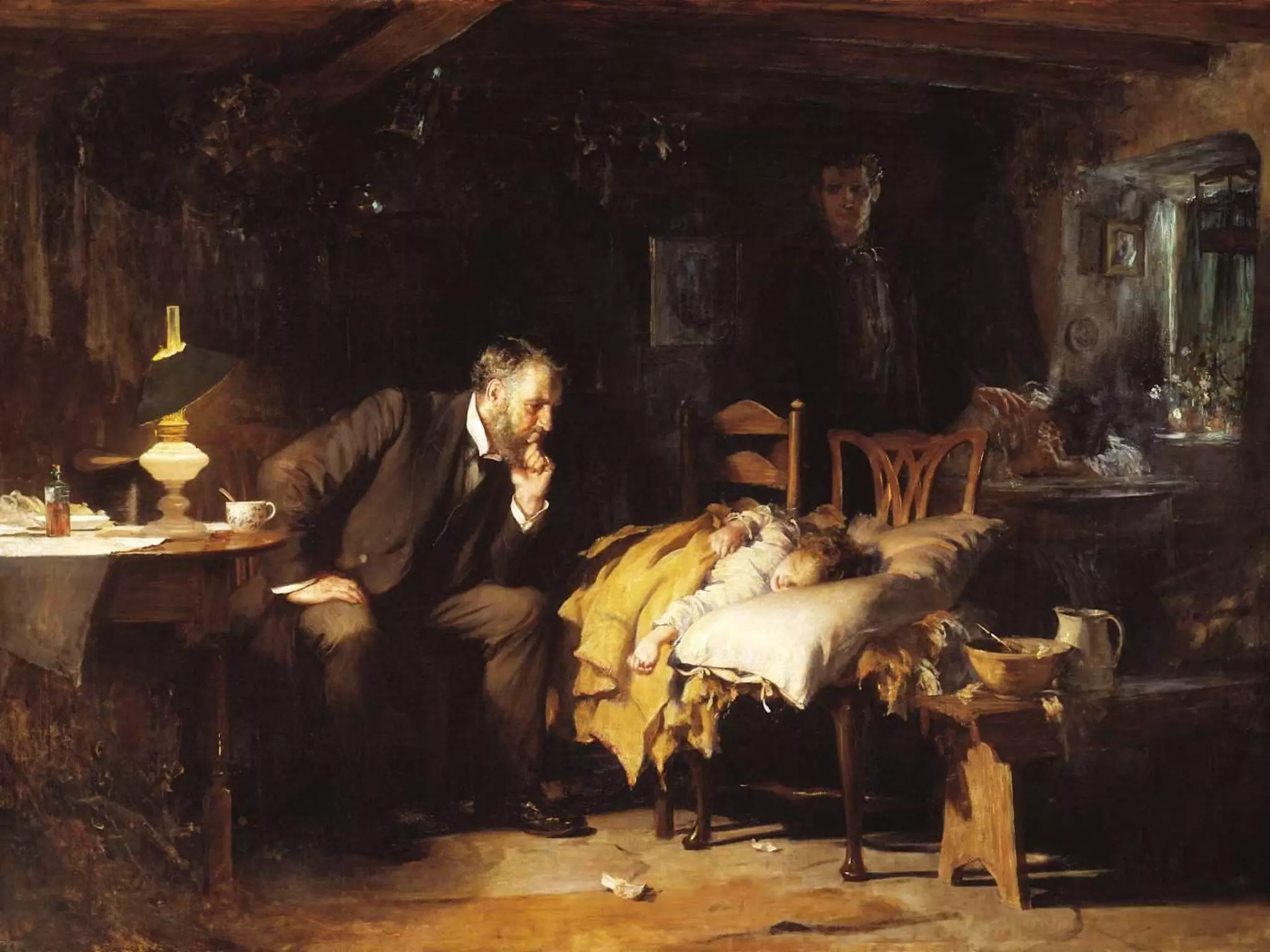
  • #31 Remember that Amazon put the customer at the center and pursued that goal vigorously, irrespective of consequence. Moment of complete presence CEO said that of course that makes sense, vendors would never work together But I know he’s wrong. We know he’s wrong. We can collaborate and compete. So what if we all adopted a similar value in healthcare? If we were all to truly put the patient at the center of our work, what might happen? Many of you may know this painting-- a copy of it hangs in the lobby of the AMA. It was painted by Luke Fildes in 1887. It’s called “the doctor.” A small child lies in the light on two mismatched chairs in a Victorian house. The doctor sits patiently, observing carefully, fully present in the moment of care. The parents sit in the corner– hoping, praying, waiting. All eyes are fixed on the patient, deep in the moment of care. At least in part, I would argue that this is why this business- to breathe life and humanity into the process of care delivery, to take better care of patients at a lower cost. This is a call for action. The decisions that you make matter. How you architect your systems, what you ask for, how spend your money will determine whether we will see innovation unleashed in the same way we did in Silicon Valley or whether we are doomed to another ten years of stifled progress. Let’s start following the patient at the center of care and see where the path leads. Who knows? We might just like what we get.