FIRST LESSON: Relative
Clauses
SECOND LESSON:
Auxiliary Verbs
THIRD LESSON:
Fatima Ali Ahmad BakryGroup
First
Lesson
RELATIVE
CLAUSES
use Relative Clauses?
With the help of Relative Clauses,
become more fluent, and helps avo
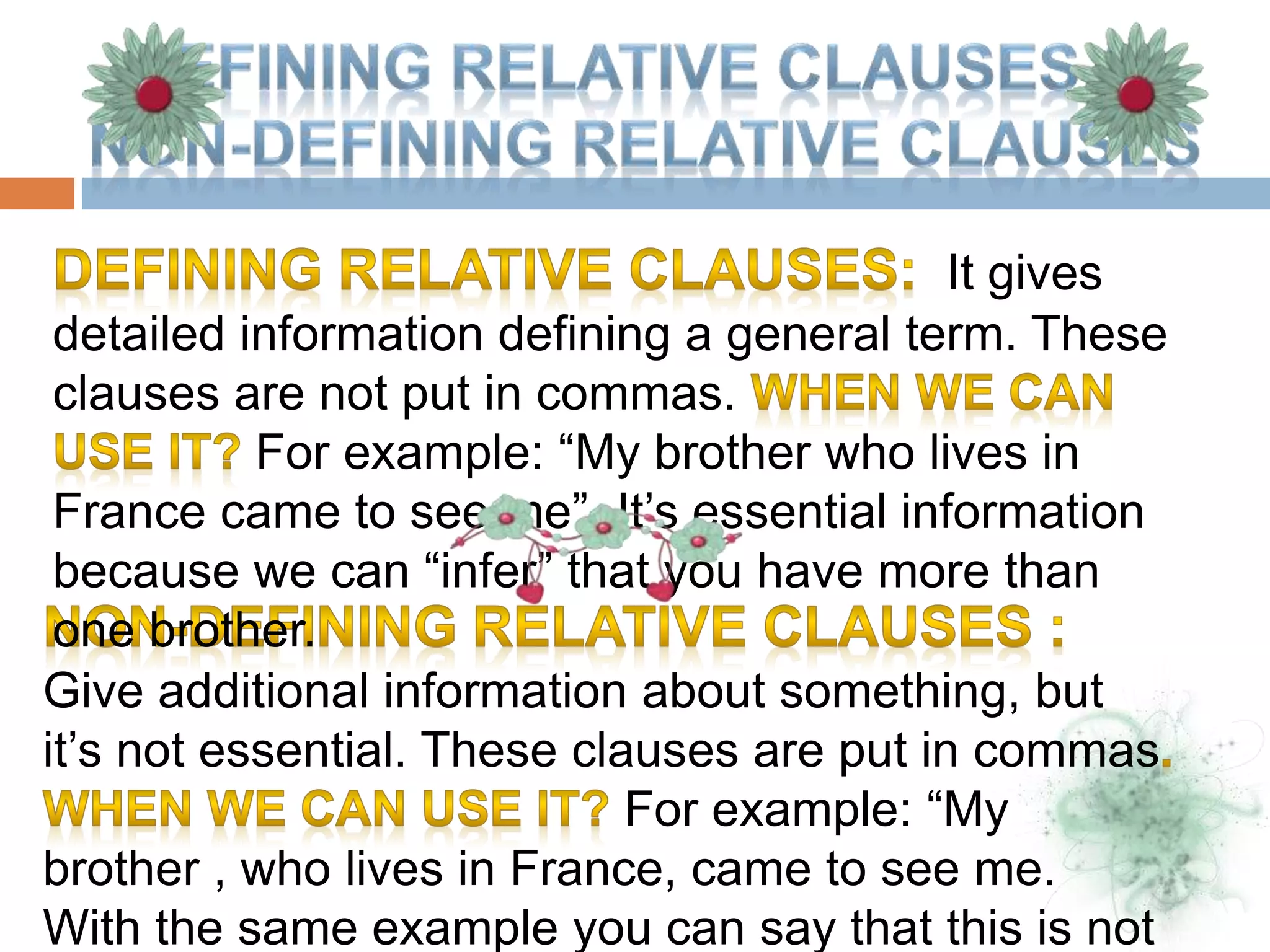
Give additional information about something, but
it’s not essential. These clauses are put in commas
For example: “My
brother , who lives in France, came to see me.
With the same example you can say that this is not
It gives
detailed information defining a general term. These
clauses are not put in commas.
For example: “My brother who lives in
France came to see me”. It’s essential information
because we can “infer” that you have more than
one brother.
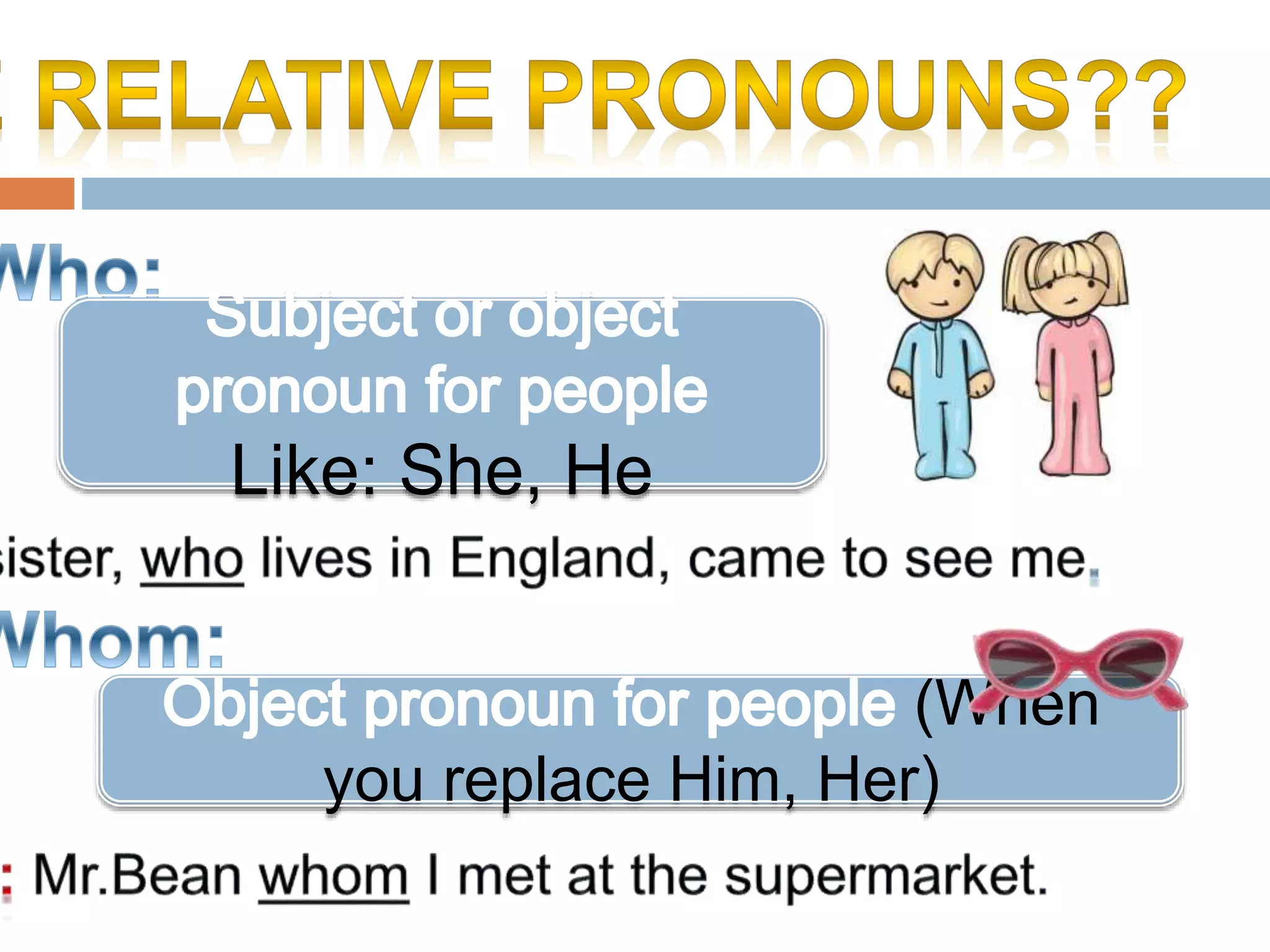
Like: She, He
(When
you replace Him, Her)
Second
Lesson
Auxiliary
Verbs
Can, could, must,
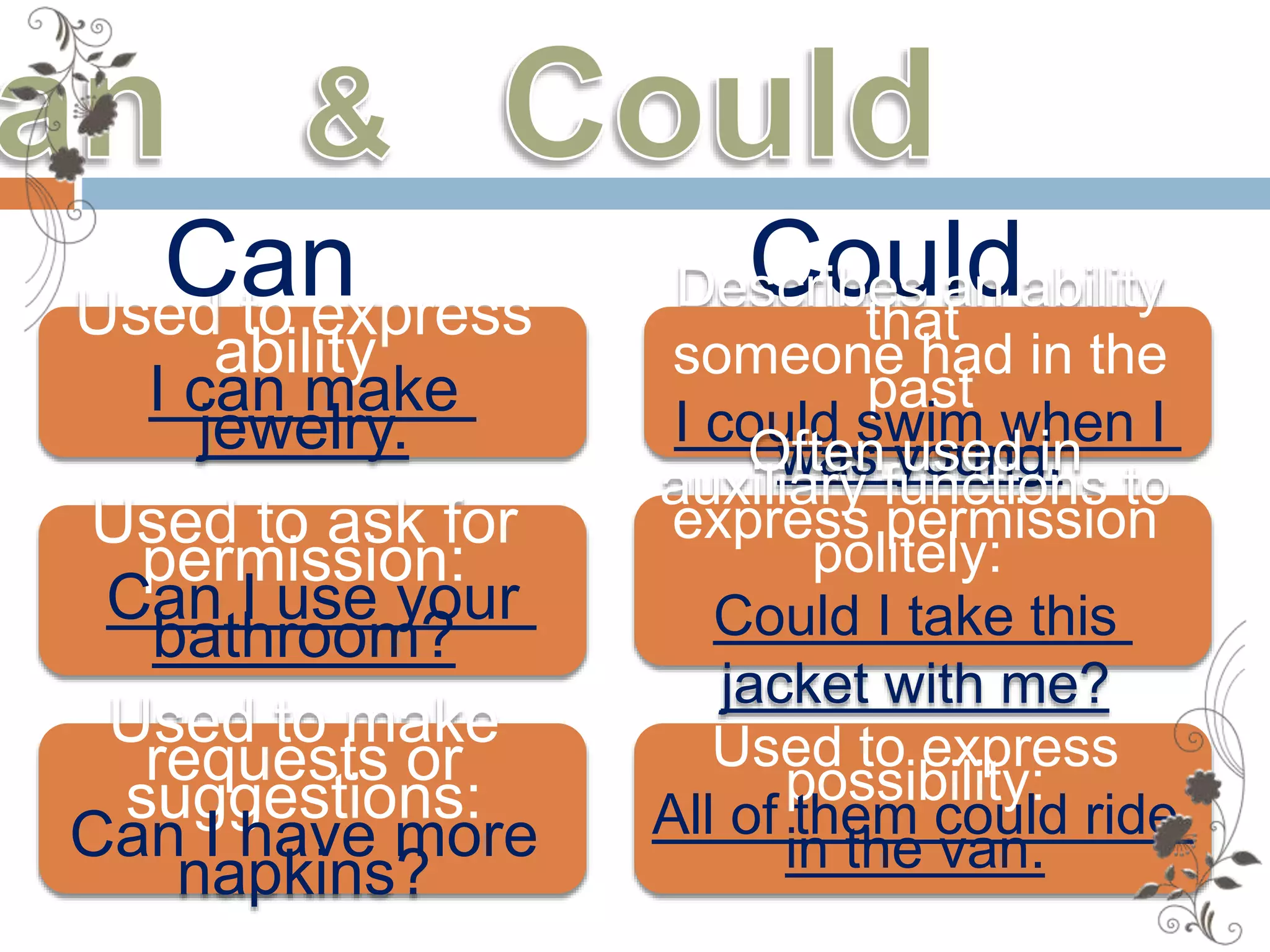
Used to express
ability
I can make
jewelry.
Can Could
Used to ask for
permission:
Can I use your
bathroom?
Used to make
requests or
suggestions:
Can I have more
napkins?
Describes an ability
that
someone had in the
past
I could swim when I
was young.Often used in
auxiliary functions to
express permission
politely:
Could I take this
jacket with me?
Used to express
possibility:
All of them could ride
in the van.
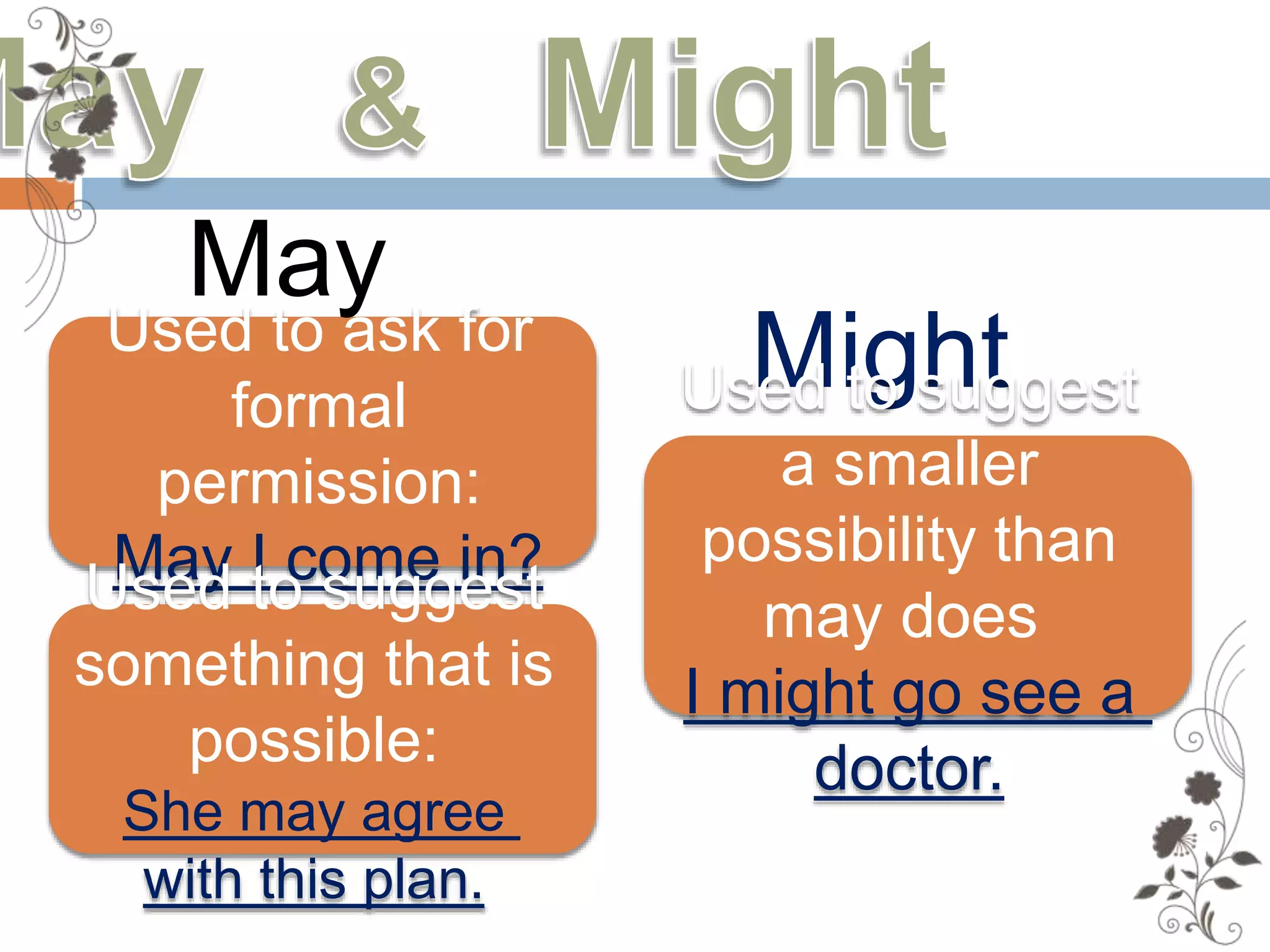
Used to ask for
formal
permission:
May I come in?
May
Might
Used to suggest
something that is
possible:
She may agree
with this plan.
Used to suggest
a smaller
possibility than
may does
I might go see a
doctor.
Must
Used to express something
formally required or
necessary:
I must complete the project
by this week..
Used to show that something
is very likely:
He must be a genius.
Third
Lesson
Going to
Future Forms
There is no one 'future tense' in
English.
There are 4 future forms.
The one which is used most often
in spoken English is 'going to',
not 'will'.
We use 'going to' when we
want to talk about a
plan for the future.
I'm going to see him later today.
They're going to launch it next
month.
We're going to have lunch first.
She's going to see what she can
do.
I'm not going to talk for very long.
Notice that this plan does not
have to be for the near future.
When I retire I'm going to go
back to Barbados to live.
In ten years time, I'm going
to be boss of my own successful
company.
I’m going to
We use 'going to' when we want to
make
a prediction based on evidence we
can see now.
Look out! That cup is going to fall off.
Look at those black clouds. It's going
to rain soon.
These figures are really bad. We're
going to make a loss.
We can replace 'going to go' by
'going'.
I'm going out later.
She's going to the exhibition
tomorrow.

Three english lessons

  • 1.
    FIRST LESSON: Relative Clauses SECONDLESSON: Auxiliary Verbs THIRD LESSON: Fatima Ali Ahmad BakryGroup
  • 2.
  • 3.
    use Relative Clauses? Withthe help of Relative Clauses, become more fluent, and helps avo
  • 4.
    Give additional informationabout something, but it’s not essential. These clauses are put in commas For example: “My brother , who lives in France, came to see me. With the same example you can say that this is not It gives detailed information defining a general term. These clauses are not put in commas. For example: “My brother who lives in France came to see me”. It’s essential information because we can “infer” that you have more than one brother.
  • 5.
    Like: She, He (When youreplace Him, Her)
  • 7.
  • 8.
    Used to express ability Ican make jewelry. Can Could Used to ask for permission: Can I use your bathroom? Used to make requests or suggestions: Can I have more napkins? Describes an ability that someone had in the past I could swim when I was young.Often used in auxiliary functions to express permission politely: Could I take this jacket with me? Used to express possibility: All of them could ride in the van.
  • 9.
    Used to askfor formal permission: May I come in? May Might Used to suggest something that is possible: She may agree with this plan. Used to suggest a smaller possibility than may does I might go see a doctor.
  • 10.
    Must Used to expresssomething formally required or necessary: I must complete the project by this week.. Used to show that something is very likely: He must be a genius.
  • 11.
  • 12.
    Future Forms There isno one 'future tense' in English. There are 4 future forms. The one which is used most often in spoken English is 'going to', not 'will'.
  • 13.
    We use 'goingto' when we want to talk about a plan for the future. I'm going to see him later today. They're going to launch it next month. We're going to have lunch first. She's going to see what she can do. I'm not going to talk for very long.
  • 14.
    Notice that thisplan does not have to be for the near future. When I retire I'm going to go back to Barbados to live. In ten years time, I'm going to be boss of my own successful company. I’m going to
  • 15.
    We use 'goingto' when we want to make a prediction based on evidence we can see now. Look out! That cup is going to fall off. Look at those black clouds. It's going to rain soon. These figures are really bad. We're going to make a loss.
  • 16.
    We can replace'going to go' by 'going'. I'm going out later. She's going to the exhibition tomorrow.