Structure of the Will
and Going To
Learn the differences between the structures of using "will" and "going to" in
English, as well as their various uses in positive, negative, and interrogative
sentences. Understand the relationship of these structures to the present
continuous and improve your grammar skills.
by Miguel Angel Fernandez
The Structure of "Going To"
When using "going to" to talk about the future, the structure is subject + "be" + "going to" + base verb. Example:
"I am going to eat pizza for dinner." See how this structure is used in a variety of examples, including talking
about planned events, predictions based on evidence, and intentions to do something in the near future.
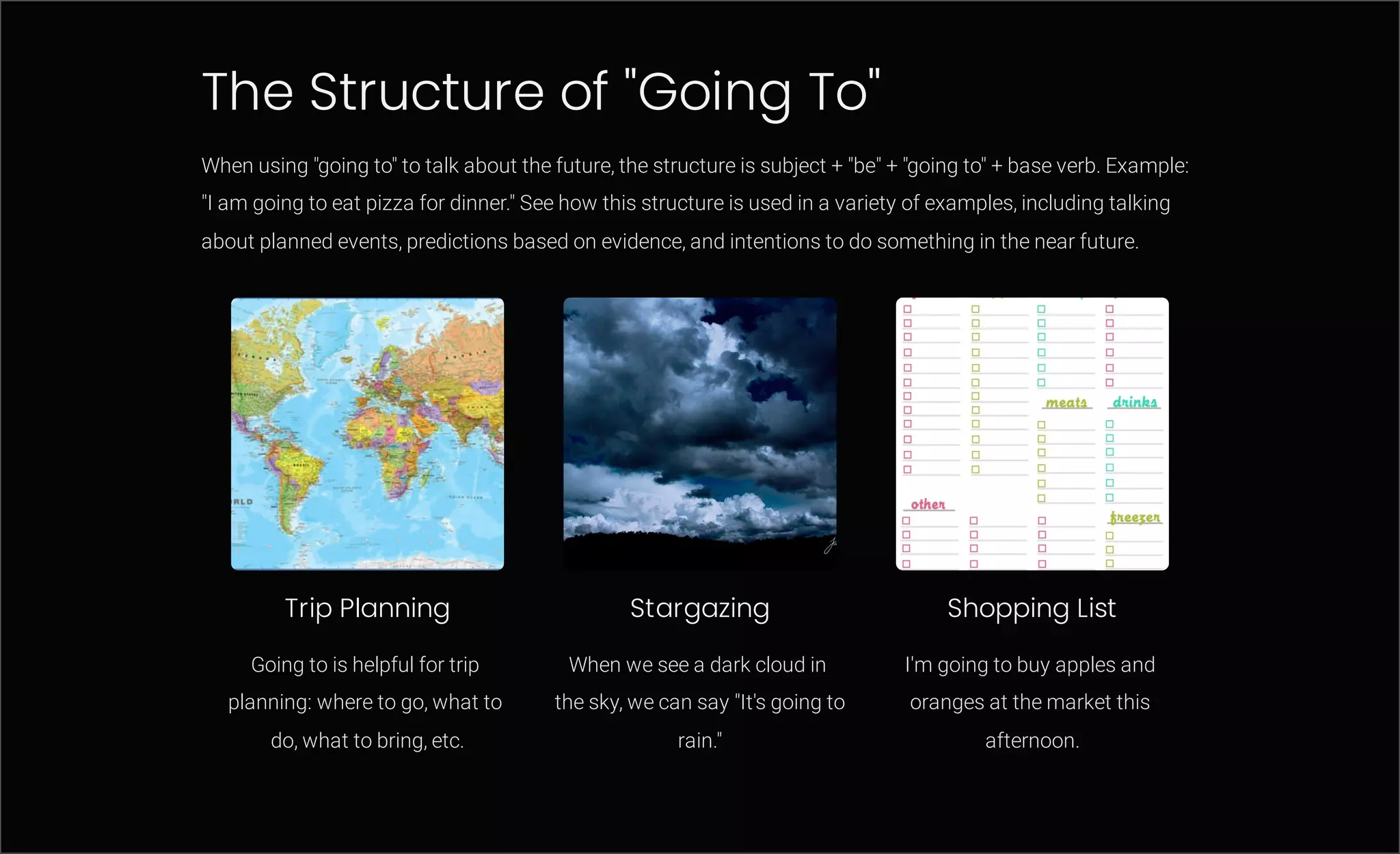
Trip Planning
Going to is helpful for trip
planning: where to go, what to
do, what to bring, etc.
Stargazing
When we see a dark cloud in
the sky, we can say "It's going to
rain."
Shopping List
I'm going to buy apples and
oranges at the market this
afternoon.
The Structure of the "Will"
When using "will" to talk about future events, the structure is subject + "will" + base verb. Example: "I will go to
the gym tomorrow." Learn about the different uses of "will," including making predictions, making offers and
promises, making immediate decisions, and more.
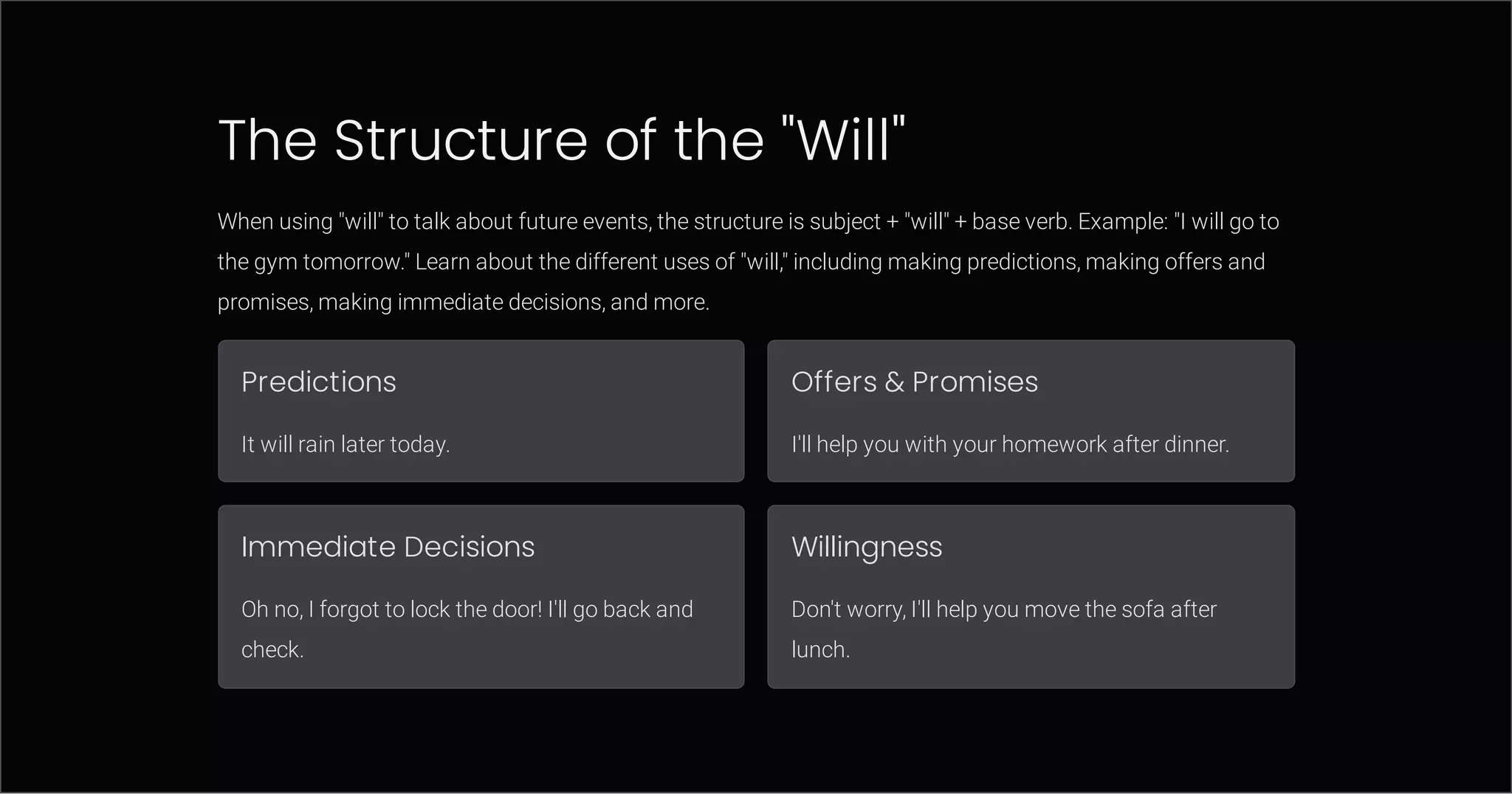
Predictions
It will rain later today.
Offers & Promises
I'll help you with your homework after dinner.
Immediate Decisions
Oh no, I forgot to lock the door! I'll go back and
check.
Willingness
Don't worry, I'll help you move the sofa after
lunch.
Relationship to the Present
Continuous
The present continuous is often used to describe an action or event taking place right now. However, it can
also be used to describe something happening in the near future. Learn how to use the present continuous
with the structures of "will" and "going to" for more complex future meanings.
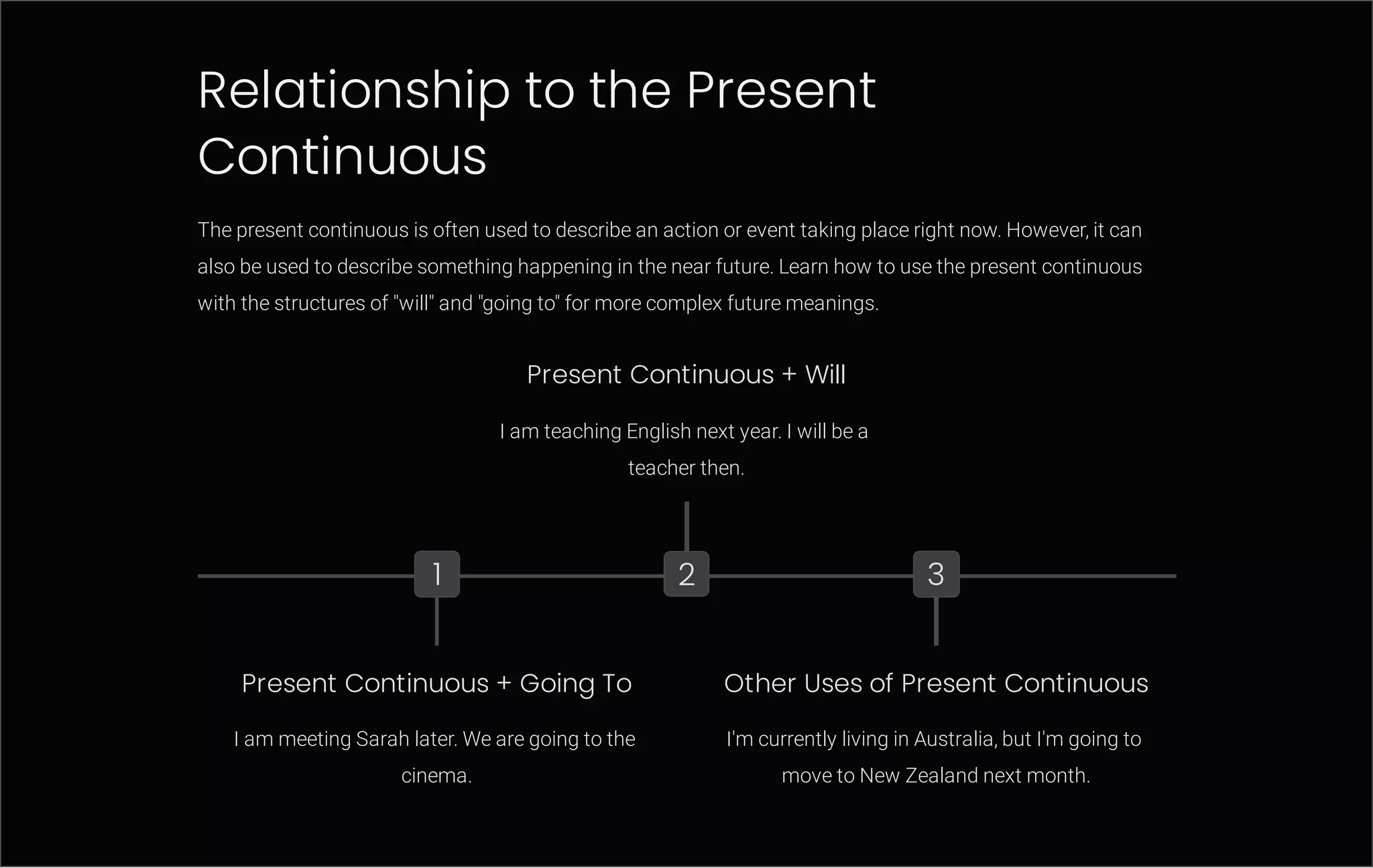
1
Present Continuous + Going To
I am meeting Sarah later. We are going to the
cinema.
2
Present Continuous + Will
I am teaching English next year. I will be a
teacher then.
3
Other Uses of Present Continuous
I'm currently living in Australia, but I'm going to
move to New Zealand next month.
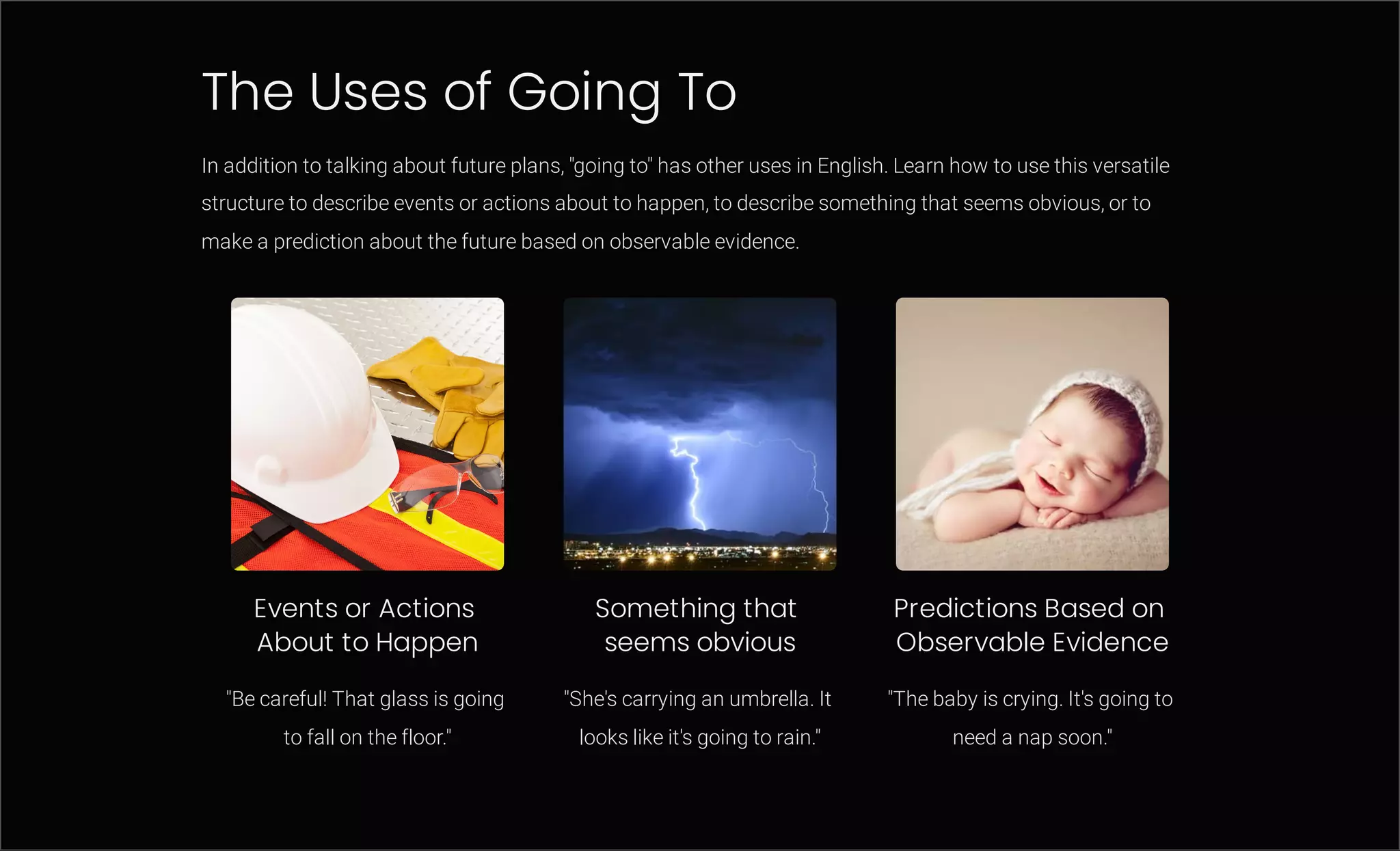
The Uses of Going To
In addition to talking about future plans, "going to" has other uses in English. Learn how to use this versatile
structure to describe events or actions about to happen, to describe something that seems obvious, or to
make a prediction about the future based on observable evidence.
Events or Actions
About to Happen
"Be careful! That glass is going
to fall on the floor."
Something that
seems obvious
"She's carrying an umbrella. It
looks like it's going to rain."
Predictions Based on
Observable Evidence
"The baby is crying. It's going to
need a nap soon."
The Uses of Will
In addition to making predictions about the future, "will" has other uses in English. Learn how to use this
auxiliary verb to ask for information, to make promises, and to express willingness or desire.
1 Asking for Information
"Will you tell me your name?"
2
Making Promises
"I promise I will never lie to you again."
3 Expressing Willingness or
Desire
"I'll meet you at the restaurant at 7 PM."
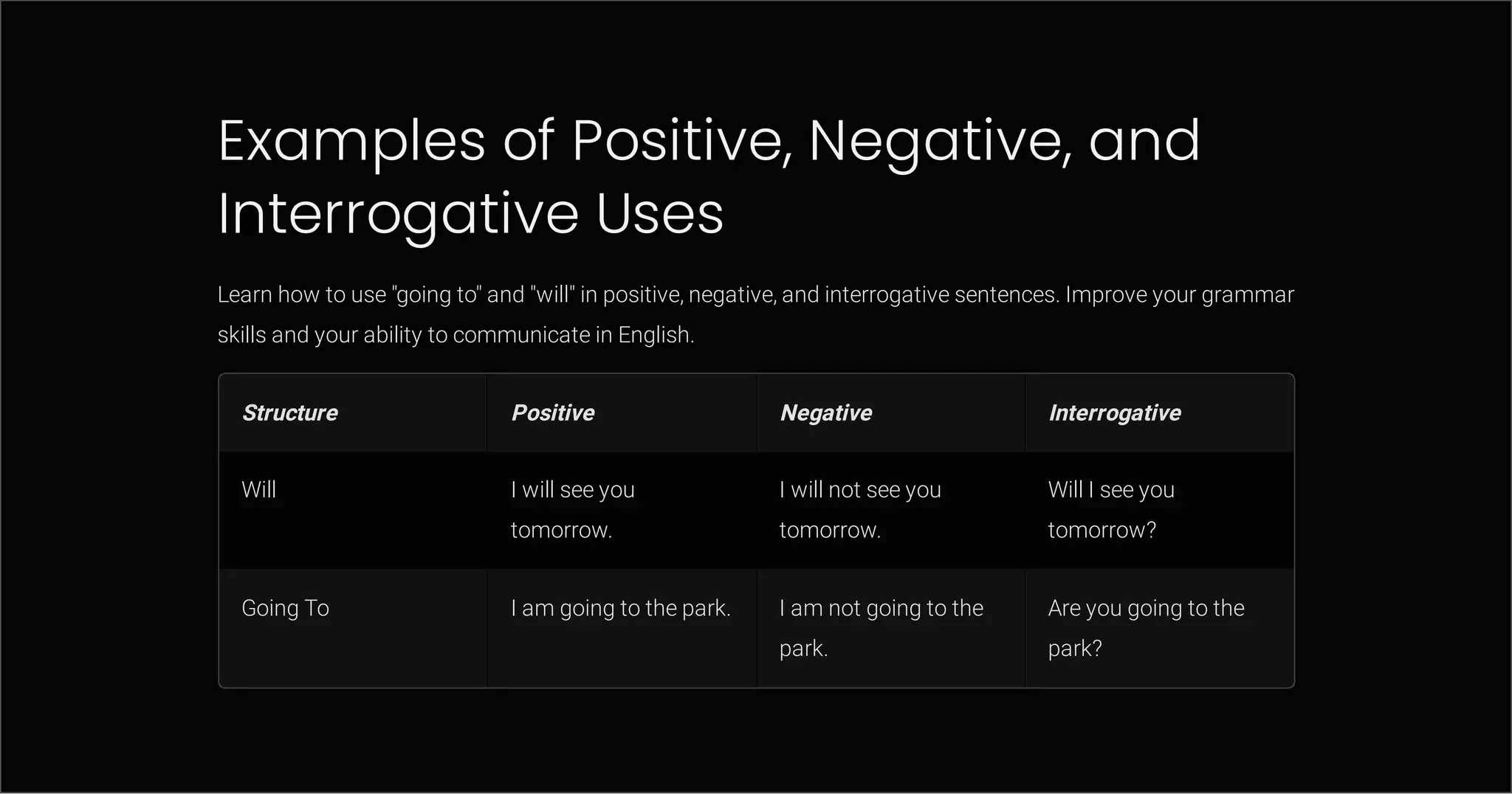
Examples of Positive, Negative, and
Interrogative Uses
Learn how to use "going to" and "will" in positive, negative, and interrogative sentences. Improve your grammar
skills and your ability to communicate in English.
Structure Positive Negative Interrogative
Will I will see you
tomorrow.
I will not see you
tomorrow.
Will I see you
tomorrow?
Going To I am going to the park. I am not going to the
park.
Are you going to the
park?
The Relationship Between Will and
Going To
Learn to recognize the subtle differences between using "will" and "going to." Understand how their uses may
overlap or differ depending on the context of the sentence. Get better at expressing yourself in English by
improving your understanding of these two auxiliary verbs.

Structure-of-the-Will-and-Going-To.pdf

  • 1.
    Structure of theWill and Going To Learn the differences between the structures of using "will" and "going to" in English, as well as their various uses in positive, negative, and interrogative sentences. Understand the relationship of these structures to the present continuous and improve your grammar skills. by Miguel Angel Fernandez
  • 2.
    The Structure of"Going To" When using "going to" to talk about the future, the structure is subject + "be" + "going to" + base verb. Example: "I am going to eat pizza for dinner." See how this structure is used in a variety of examples, including talking about planned events, predictions based on evidence, and intentions to do something in the near future. Trip Planning Going to is helpful for trip planning: where to go, what to do, what to bring, etc. Stargazing When we see a dark cloud in the sky, we can say "It's going to rain." Shopping List I'm going to buy apples and oranges at the market this afternoon.
  • 3.
    The Structure ofthe "Will" When using "will" to talk about future events, the structure is subject + "will" + base verb. Example: "I will go to the gym tomorrow." Learn about the different uses of "will," including making predictions, making offers and promises, making immediate decisions, and more. Predictions It will rain later today. Offers & Promises I'll help you with your homework after dinner. Immediate Decisions Oh no, I forgot to lock the door! I'll go back and check. Willingness Don't worry, I'll help you move the sofa after lunch.
  • 4.
    Relationship to thePresent Continuous The present continuous is often used to describe an action or event taking place right now. However, it can also be used to describe something happening in the near future. Learn how to use the present continuous with the structures of "will" and "going to" for more complex future meanings. 1 Present Continuous + Going To I am meeting Sarah later. We are going to the cinema. 2 Present Continuous + Will I am teaching English next year. I will be a teacher then. 3 Other Uses of Present Continuous I'm currently living in Australia, but I'm going to move to New Zealand next month.
  • 5.
    The Uses ofGoing To In addition to talking about future plans, "going to" has other uses in English. Learn how to use this versatile structure to describe events or actions about to happen, to describe something that seems obvious, or to make a prediction about the future based on observable evidence. Events or Actions About to Happen "Be careful! That glass is going to fall on the floor." Something that seems obvious "She's carrying an umbrella. It looks like it's going to rain." Predictions Based on Observable Evidence "The baby is crying. It's going to need a nap soon."
  • 6.
    The Uses ofWill In addition to making predictions about the future, "will" has other uses in English. Learn how to use this auxiliary verb to ask for information, to make promises, and to express willingness or desire. 1 Asking for Information "Will you tell me your name?" 2 Making Promises "I promise I will never lie to you again." 3 Expressing Willingness or Desire "I'll meet you at the restaurant at 7 PM."
  • 7.
    Examples of Positive,Negative, and Interrogative Uses Learn how to use "going to" and "will" in positive, negative, and interrogative sentences. Improve your grammar skills and your ability to communicate in English. Structure Positive Negative Interrogative Will I will see you tomorrow. I will not see you tomorrow. Will I see you tomorrow? Going To I am going to the park. I am not going to the park. Are you going to the park?
  • 8.
    The Relationship BetweenWill and Going To Learn to recognize the subtle differences between using "will" and "going to." Understand how their uses may overlap or differ depending on the context of the sentence. Get better at expressing yourself in English by improving your understanding of these two auxiliary verbs.