Unit 4: Thought Disorders and Medications Schizophrenia in Focus
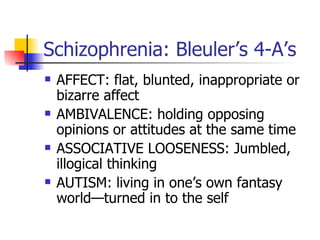
Schizophrenia: Bleuler’s 4-A’s AFFECT: flat, blunted, inappropriate or bizarre affect AMBIVALENCE: holding opposing opinions or attitudes at the same time ASSOCIATIVE LOOSENESS: Jumbled, illogical thinking AUTISM: living in one’s own fantasy world—turned in to the self
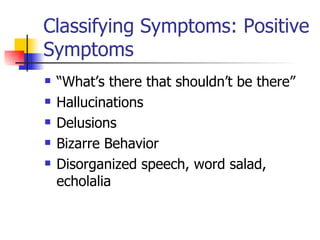
Classifying Symptoms: Positive Symptoms “What’s there that shouldn’t be there” Hallucinations Delusions Bizarre Behavior Disorganized speech, word salad, echolalia
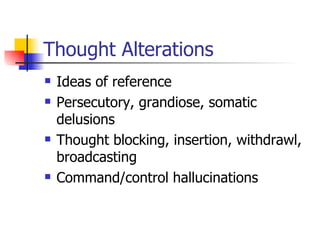
Thought Alterations Ideas of reference Persecutory, grandiose, somatic delusions Thought blocking, insertion, withdrawl, broadcasting Command/control hallucinations
Classifying Symptoms: Negative Symptoms “ What’s not there that should be there” Lack of Feeling and affect including positive emotion (anhedonia) Poverty of thought (alogia) Loss of motivation (avolition)
Classifying Symptoms:Cognitive Symptoms Thinking and Decision-making Impaired memory Poor problem solving and poor judgment Illogical thinking Inattention, distractability
Phases of Schizophrenia Prodromal: isolation, behavior change, often in adolescence or y. adult Acute/Active Phase: Evident psychosis. Periods of fluctuation, but symptoms are evident Chronic/Residual: Long term outcome is that the intensity of the psychosis may diminish, leaving more of the negative symptoms
Theories of Causation Many of the psychological theories are now doubted as evidence of a brain disease is more clear. Genetic transmission is evident Dopamine theory—excess dopamine (does not explain all) Glucomate theory—regulation of glucomate (NMDA) receptor in brain r/t PCP psychosis
Neuroanatomical Changes Enlarged lateral cerebral ventricles Cortical and cerebellum atrophy Third ventricle dilation and asymmetry Changes in blood flow and glucose metabolism patterns
Mechanism of Action of Antipsychotics Phenothiazines: block post-synaptic dopamine receptors giving a decreased dopamine response. Works on + symptoms only Atypical antipsychotics: Antagonizes both serotonin and dopamine receptors giving a decreased dopamine and serotonin response. Works on + and – symptoms both See supplemental info on Oncourse
Side effects of antipsychotics Extrapyramidal (see H/O in syllabus) Tardive dyskinesia: can be permanent, See AIMS test, don’t raise dose of med Anticholinergic side effects (go over) Blood dyscrasias Photosensitivity, excess prolactin
Neuroleptic Malignant Syndrome Life threatening: increased temp, decreased consciousness, severely increased muscle tonicity, HTN, tachycardia, drooling sweating Stop the antipsychotic, treat symptoms in a monitored setting (ICU), fluids, cooling blanket, dantrolene, parlodel (a dopamine agonist)
Nursing Diagnosis: Non compliance Not taking meds or attending therapy is a big factor leading to rehospitalization Why? Denial, hate being in sick role, lack of judgment, side effects of meds
Nursing Diagnosis: Potential for violence Usually related to paranoia/perceived threat
Nursing Diagnosis: Impaired social interaction Related to negative symptoms, hard to change!
Nursing Diagnosis: self care deficit No motivation to bathe, lack of recognition of problem, paranoia
Nursing Diagnosis: altered nutrition/FVE Paranoia about eating and drinking Excess fluid intake
Nursing diagnosis: risk for suicide About 10% schizophrenics commit suicide
Paranoid Schizophrenia Intense, strongly defended irrational suspicions Ideas of reference Behaving with anger, sarcasm, hostility Projection of feelings Often paranoid ideas are intricate and complex
Nursing Tactics with Paranoia Calm, matter of fact approach—don’t smother or hover Respect personal territory  Verbal indication of nursing measures before intervention Be honest, trustworthy, consistent Don’t feed delusions or challenge directly—cast reasonable doubt and focus on reality Look at underlying themes in delusions
More nursing interventions in Paranoia Help client manage anger and fear through consistent limits, appropriate diversion, and not taking bx personally “ When in doubt, check it out” strategy Talk about dealing with food and med. paranoia
Disorganized Schizophrenia Regression, increased social impairment, bizarre affect/behavior, incoherent speech Nursing measures: help with grooming, eating. Routine, consistent and structured. Understanding milieu. Plus all the general nsg measures.
Catatonia: abnormal motor behavior Withdrawn: posturing, waxy flexibility, stupor, mute, unaware of environment Nsg care in Withdrawn state: complete hygiene, nutrition, mobility, bathroom assist Excited: Gross hyperactivity-running striking out Nsg with Excited: preserve milieu, keep client safe
Other categories of Schizophrenia Undifferentiated – means doesn’t fit a specific othre group Residual—means most of the active symptoms are gone (mostly negative symptoms remaining)

Thought Disorders

  • 1.
    Unit 4: ThoughtDisorders and Medications Schizophrenia in Focus
  • 2.
    Schizophrenia: Bleuler’s 4-A’sAFFECT: flat, blunted, inappropriate or bizarre affect AMBIVALENCE: holding opposing opinions or attitudes at the same time ASSOCIATIVE LOOSENESS: Jumbled, illogical thinking AUTISM: living in one’s own fantasy world—turned in to the self
  • 3.
    Classifying Symptoms: PositiveSymptoms “What’s there that shouldn’t be there” Hallucinations Delusions Bizarre Behavior Disorganized speech, word salad, echolalia
  • 4.
    Thought Alterations Ideasof reference Persecutory, grandiose, somatic delusions Thought blocking, insertion, withdrawl, broadcasting Command/control hallucinations
  • 5.
    Classifying Symptoms: NegativeSymptoms “ What’s not there that should be there” Lack of Feeling and affect including positive emotion (anhedonia) Poverty of thought (alogia) Loss of motivation (avolition)
  • 6.
    Classifying Symptoms:Cognitive SymptomsThinking and Decision-making Impaired memory Poor problem solving and poor judgment Illogical thinking Inattention, distractability
  • 7.
    Phases of SchizophreniaProdromal: isolation, behavior change, often in adolescence or y. adult Acute/Active Phase: Evident psychosis. Periods of fluctuation, but symptoms are evident Chronic/Residual: Long term outcome is that the intensity of the psychosis may diminish, leaving more of the negative symptoms
  • 8.
    Theories of CausationMany of the psychological theories are now doubted as evidence of a brain disease is more clear. Genetic transmission is evident Dopamine theory—excess dopamine (does not explain all) Glucomate theory—regulation of glucomate (NMDA) receptor in brain r/t PCP psychosis
  • 9.
    Neuroanatomical Changes Enlargedlateral cerebral ventricles Cortical and cerebellum atrophy Third ventricle dilation and asymmetry Changes in blood flow and glucose metabolism patterns
  • 10.
    Mechanism of Actionof Antipsychotics Phenothiazines: block post-synaptic dopamine receptors giving a decreased dopamine response. Works on + symptoms only Atypical antipsychotics: Antagonizes both serotonin and dopamine receptors giving a decreased dopamine and serotonin response. Works on + and – symptoms both See supplemental info on Oncourse
  • 11.
    Side effects ofantipsychotics Extrapyramidal (see H/O in syllabus) Tardive dyskinesia: can be permanent, See AIMS test, don’t raise dose of med Anticholinergic side effects (go over) Blood dyscrasias Photosensitivity, excess prolactin
  • 12.
    Neuroleptic Malignant SyndromeLife threatening: increased temp, decreased consciousness, severely increased muscle tonicity, HTN, tachycardia, drooling sweating Stop the antipsychotic, treat symptoms in a monitored setting (ICU), fluids, cooling blanket, dantrolene, parlodel (a dopamine agonist)
  • 13.
    Nursing Diagnosis: Noncompliance Not taking meds or attending therapy is a big factor leading to rehospitalization Why? Denial, hate being in sick role, lack of judgment, side effects of meds
  • 14.
    Nursing Diagnosis: Potentialfor violence Usually related to paranoia/perceived threat
  • 15.
    Nursing Diagnosis: Impairedsocial interaction Related to negative symptoms, hard to change!
  • 16.
    Nursing Diagnosis: selfcare deficit No motivation to bathe, lack of recognition of problem, paranoia
  • 17.
    Nursing Diagnosis: alterednutrition/FVE Paranoia about eating and drinking Excess fluid intake
  • 18.
    Nursing diagnosis: riskfor suicide About 10% schizophrenics commit suicide
  • 19.
    Paranoid Schizophrenia Intense,strongly defended irrational suspicions Ideas of reference Behaving with anger, sarcasm, hostility Projection of feelings Often paranoid ideas are intricate and complex
  • 20.
    Nursing Tactics withParanoia Calm, matter of fact approach—don’t smother or hover Respect personal territory Verbal indication of nursing measures before intervention Be honest, trustworthy, consistent Don’t feed delusions or challenge directly—cast reasonable doubt and focus on reality Look at underlying themes in delusions
  • 21.
    More nursing interventionsin Paranoia Help client manage anger and fear through consistent limits, appropriate diversion, and not taking bx personally “ When in doubt, check it out” strategy Talk about dealing with food and med. paranoia
  • 22.
    Disorganized Schizophrenia Regression,increased social impairment, bizarre affect/behavior, incoherent speech Nursing measures: help with grooming, eating. Routine, consistent and structured. Understanding milieu. Plus all the general nsg measures.
  • 23.
    Catatonia: abnormal motorbehavior Withdrawn: posturing, waxy flexibility, stupor, mute, unaware of environment Nsg care in Withdrawn state: complete hygiene, nutrition, mobility, bathroom assist Excited: Gross hyperactivity-running striking out Nsg with Excited: preserve milieu, keep client safe
  • 24.
    Other categories ofSchizophrenia Undifferentiated – means doesn’t fit a specific othre group Residual—means most of the active symptoms are gone (mostly negative symptoms remaining)