Crustaceans, Spiders and Insects
 Arthropods are the most
successful phylum on the
planet!
 750,000 species
 Arthropods have
 Segmented body
 Tough exoskeleton
 Jointed appendages
 Feeding – complex mouthparts to eat a wide range of food
 Respiration
 Land – air enters through spiracles – holes in the side of the body.
 Water – gills or book gills
 Circulation – open circulatory system – open sinuses
 Excretion – Malpighian tubules – saclike organ that
combines urine and waste together
 Response – have a brain! Sophisticated eyes and taste
receptors
 Movement – have muscles…can flex and extend
 Reproduction – internal or external reproduction
depending on the species
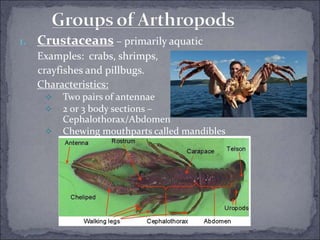
1. Crustaceans – primarily aquatic
Examples: crabs, shrimps,
crayfishes and pillbugs.
Characteristics:
 Two pairs of antennae
 2 or 3 body sections –
Cephalothorax/Abdomen
 Chewing mouthparts called mandibles
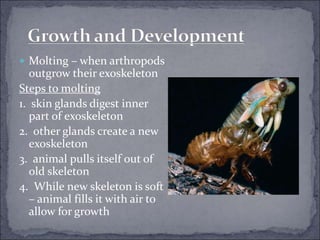
 Molting – when arthropods
outgrow their exoskeleton
Steps to molting
1. skin glands digest inner
part of exoskeleton
2. other glands create a new
exoskeleton
3. animal pulls itself out of
old skeleton
4. While new skeleton is soft
– animal fills it with air to
allow for growth
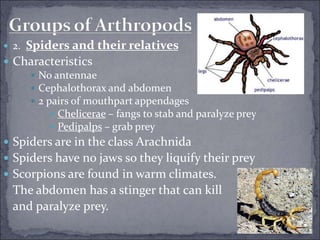
 2. Spiders and their relatives
 Characteristics
 No antennae
 Cephalothorax and abdomen
 2 pairs of mouthpart appendages
 Chelicerae – fangs to stab and paralyze prey
 Pedipalps – grab prey
 Spiders are in the class Arachnida
 Spiders have no jaws so they liquify their prey
 Scorpions are found in warm climates.
The abdomen has a stinger that can kill
and paralyze prey.
 3. Insects –
 There are 3 classes of Insects
 1. Chilopoda – centipedes
 2. Diplopoda – millipedes
 3. Insecta – the insects
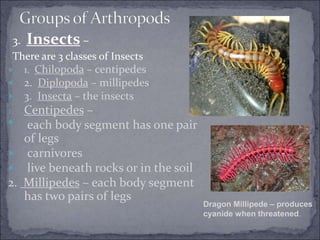
1. Centipedes –
• each body segment has one pair
of legs
 carnivores
 live beneath rocks or in the soil
2. Millipedes – each body segment
has two pairs of legs
Dragon Millipede – produces
cyanide when threatened.
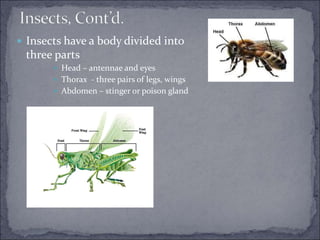
 Insects have a body divided into
three parts
 Head – antennae and eyes
 Thorax - three pairs of legs, wings
 Abdomen – stinger or poison gland
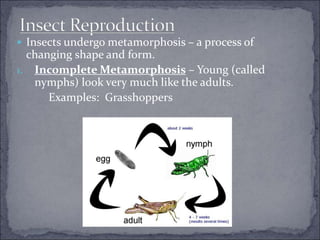
 Insects undergo metamorphosis – a process of
changing shape and form.
1. Incomplete Metamorphosis – Young (called
nymphs) look very much like the adults.
Examples: Grasshoppers
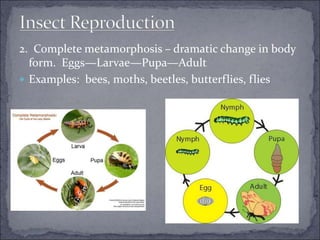
2. Complete metamorphosis – dramatic change in body
form. Eggs—Larvae—Pupa—Adult
 Examples: bees, moths, beetles, butterflies, flies

This IS A Presentation On The Kingdom Classification

  • 1.
  • 2.
     Arthropods arethe most successful phylum on the planet!  750,000 species  Arthropods have  Segmented body  Tough exoskeleton  Jointed appendages
  • 3.
     Feeding –complex mouthparts to eat a wide range of food  Respiration  Land – air enters through spiracles – holes in the side of the body.  Water – gills or book gills  Circulation – open circulatory system – open sinuses  Excretion – Malpighian tubules – saclike organ that combines urine and waste together  Response – have a brain! Sophisticated eyes and taste receptors  Movement – have muscles…can flex and extend  Reproduction – internal or external reproduction depending on the species
  • 4.
    1. Crustaceans –primarily aquatic Examples: crabs, shrimps, crayfishes and pillbugs. Characteristics:  Two pairs of antennae  2 or 3 body sections – Cephalothorax/Abdomen  Chewing mouthparts called mandibles
  • 5.
     Molting –when arthropods outgrow their exoskeleton Steps to molting 1. skin glands digest inner part of exoskeleton 2. other glands create a new exoskeleton 3. animal pulls itself out of old skeleton 4. While new skeleton is soft – animal fills it with air to allow for growth
  • 6.
     2. Spidersand their relatives  Characteristics  No antennae  Cephalothorax and abdomen  2 pairs of mouthpart appendages  Chelicerae – fangs to stab and paralyze prey  Pedipalps – grab prey  Spiders are in the class Arachnida  Spiders have no jaws so they liquify their prey  Scorpions are found in warm climates. The abdomen has a stinger that can kill and paralyze prey.
  • 7.
     3. Insects–  There are 3 classes of Insects  1. Chilopoda – centipedes  2. Diplopoda – millipedes  3. Insecta – the insects 1. Centipedes – • each body segment has one pair of legs  carnivores  live beneath rocks or in the soil 2. Millipedes – each body segment has two pairs of legs Dragon Millipede – produces cyanide when threatened.
  • 8.
     Insects havea body divided into three parts  Head – antennae and eyes  Thorax - three pairs of legs, wings  Abdomen – stinger or poison gland
  • 9.
     Insects undergometamorphosis – a process of changing shape and form. 1. Incomplete Metamorphosis – Young (called nymphs) look very much like the adults. Examples: Grasshoppers
  • 10.
    2. Complete metamorphosis– dramatic change in body form. Eggs—Larvae—Pupa—Adult  Examples: bees, moths, beetles, butterflies, flies