The Think Global Initiative and the Asia-Pacific Region
       of the International Federation of Medical Students’ Associations (IFMSA)
            and the Asian Medical Students’ Association-Philippines present


Think Global Asia-Pacific Workshop
on Global Health in Medical Education

          Towards a Transformative
            Medical Education for a
         Healthy Asia-Pacific Future
                            December 19-21, 2011
              Alvior Hall, University of the Philippines Manila
Questions
• What is the state of global health today? What is the state of health
  in Asia-Pacific? What challenges are we currently facing, and are
  expecting to face in the future?
• How can global health be integrated in medical education? What
  existing methods need to be strengthened, and what novel ways
  can be developed?
• How can medical education be transformed in order to produce
  physicians who can respond to current and future health challenges
  of the region?
• How can medical education be transformed in order to solve the
  health workforce crisis and the gross inequities in health in the
  region and around the world?
• How can we medical students push for reforms in medical
  education? How should we convey our message to leaders in
  medical education?
Foundations of Global Health
• Health – complete state, a right, a resource
• Determinants approach to health
• Disease-focused -> health systems -> social
  determinants approach
• Global health – transcends boundaries, shared
  risks, collective action
• Global health is local – think global, act local
The Global Health Situation
• Focus on Asia-Pacific (Southeast Asia)
• Diversity in health systems, environmental and
  social conditions -> differences in health
  outcomes
• Where will the Philippines be five years from
  now?
The Health Workforce Crisis
• Movement – rural to urban, developing to
  developed
• Reforms are needed – from production to
  utilization; in education, health system, and
  larger society
World Health Organization
• Technical agency – guidance, recommend,
  provides direction, no police power
• Structure, programs, WHO in the UN system
• WHO reform – changing landscape of global
  health, multiple stakeholders
The Lancet Commission
• Health workers save lives!
• Mismatch between health workers and
  current global health needs
• Health workers in places they are not
  needed, taught what they will not need
• 10 Reforms – instructional and institutional
• Multisectoral approach – not just the health
  sector
Gawad Kalinga
•   Projects versus programs
•   Women at the center of social change
•   Effective, respectful communication is vital
•   Community diagnosis is key
•   Empowerment is giving opportunity to
    unleash innate power!
Social Determinants of Health
• Conditions in which we are
  born, live, grow, work, and age – 70% of
  health improvements
• Virchow: prosperity, education, liberty
• 1% versus 99% - inequities in wealth
  distribution (USA, Philippines)
• What good it is to treat diseases only to bring
  our patients back to the conditions that made
  them sick?
Social Accountability in Medical
                Schools
• How do we measure success of medical
  schools?
• Global Consensus for Social Accountability
• Social responsibility -> responsiveness ->
  accountability
• 10 Areas for Action
Universal Health Care
• The six building blocks
• Aquino Health Agenda versus Universal Health
  Care Study Group proposal
• Reforms in health system in tandem with
  reforms in the production of the health
  workforce
• Thailand is a model!
Advocacy and Policy Engagement
• Nine questions
• Lessons from tobacco control advocacy
• Let’s quit tobacco! 
Community as a Partner
• Not a guinea pig, not a classroom, not a
  charity case – but a PARTNER!
• Strengthen health systems, address social
  determinants
• Politics is inevitable
• Prolonged, longitudinal community
  engagement in medical education
• Think Global 2: Field trip to San Juan and
  Leyte
Objectives
• Gain a deeper understanding of global health issues
  and trends, with special attention to the health of Asia-
  Pacific populations
• Reflect on the state of medical education in the region
  and its relevance to the current global health situation
• Explore ways on how to reform medical education so
  that it is responsive to current and future global health
  needs and challenges especially in the region
• Initiate a dialogue regarding advocacy for
  transformative medical education
Where do we go from here?
Outputs
• Manila Declaration on Transformative Medical Education
  for a Healthy Asia-Pacific Future, to be
  adopted, promoted, and used as basis for action by
  national member organizations (NMOs) of the IFMSA Asia-
  Pacific Region
• An article presenting students’ perspectives on
  transformative medical education in Asia-Pacific to be
  published in a reputable journal
• A Philippine Strategy for Transformative Medical
  Education to be used by the Asian Medical Students’
  Association-Philippines for its advocacy work
• Workshop Report to serve as documentation of lectures
  and discussions and to be submitted to the IFMSA Think
  Global Initiative and UNESCO
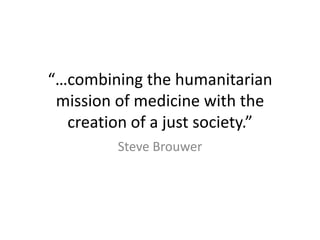
“…combining the humanitarian
 mission of medicine with the
  creation of a just society.”
         Steve Brouwer
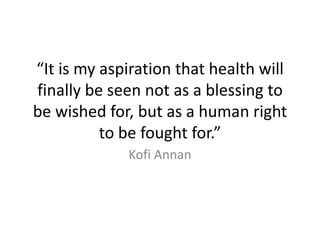
“It is my aspiration that health will
finally be seen not as a blessing to
be wished for, but as a human right
          to be fought for.”
             Kofi Annan
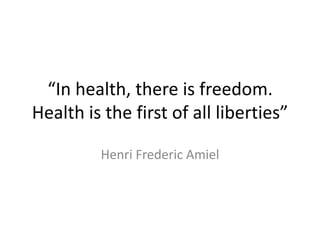
“In health, there is freedom.
Health is the first of all liberties”

         Henri Frederic Amiel
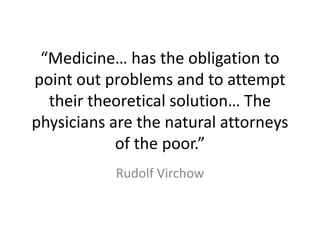
“Medicine… has the obligation to
point out problems and to attempt
  their theoretical solution… The
physicians are the natural attorneys
            of the poor.”
           Rudolf Virchow

Think Global Workshop Summary

  • 1.
    The Think GlobalInitiative and the Asia-Pacific Region of the International Federation of Medical Students’ Associations (IFMSA) and the Asian Medical Students’ Association-Philippines present Think Global Asia-Pacific Workshop on Global Health in Medical Education Towards a Transformative Medical Education for a Healthy Asia-Pacific Future December 19-21, 2011 Alvior Hall, University of the Philippines Manila
  • 2.
    Questions • What isthe state of global health today? What is the state of health in Asia-Pacific? What challenges are we currently facing, and are expecting to face in the future? • How can global health be integrated in medical education? What existing methods need to be strengthened, and what novel ways can be developed? • How can medical education be transformed in order to produce physicians who can respond to current and future health challenges of the region? • How can medical education be transformed in order to solve the health workforce crisis and the gross inequities in health in the region and around the world? • How can we medical students push for reforms in medical education? How should we convey our message to leaders in medical education?
  • 3.
    Foundations of GlobalHealth • Health – complete state, a right, a resource • Determinants approach to health • Disease-focused -> health systems -> social determinants approach • Global health – transcends boundaries, shared risks, collective action • Global health is local – think global, act local
  • 4.
    The Global HealthSituation • Focus on Asia-Pacific (Southeast Asia) • Diversity in health systems, environmental and social conditions -> differences in health outcomes • Where will the Philippines be five years from now?
  • 5.
    The Health WorkforceCrisis • Movement – rural to urban, developing to developed • Reforms are needed – from production to utilization; in education, health system, and larger society
  • 6.
    World Health Organization •Technical agency – guidance, recommend, provides direction, no police power • Structure, programs, WHO in the UN system • WHO reform – changing landscape of global health, multiple stakeholders
  • 7.
    The Lancet Commission •Health workers save lives! • Mismatch between health workers and current global health needs • Health workers in places they are not needed, taught what they will not need • 10 Reforms – instructional and institutional • Multisectoral approach – not just the health sector
  • 8.
    Gawad Kalinga • Projects versus programs • Women at the center of social change • Effective, respectful communication is vital • Community diagnosis is key • Empowerment is giving opportunity to unleash innate power!
  • 9.
    Social Determinants ofHealth • Conditions in which we are born, live, grow, work, and age – 70% of health improvements • Virchow: prosperity, education, liberty • 1% versus 99% - inequities in wealth distribution (USA, Philippines) • What good it is to treat diseases only to bring our patients back to the conditions that made them sick?
  • 10.
    Social Accountability inMedical Schools • How do we measure success of medical schools? • Global Consensus for Social Accountability • Social responsibility -> responsiveness -> accountability • 10 Areas for Action
  • 11.
    Universal Health Care •The six building blocks • Aquino Health Agenda versus Universal Health Care Study Group proposal • Reforms in health system in tandem with reforms in the production of the health workforce • Thailand is a model!
  • 12.
    Advocacy and PolicyEngagement • Nine questions • Lessons from tobacco control advocacy • Let’s quit tobacco! 
  • 13.
    Community as aPartner • Not a guinea pig, not a classroom, not a charity case – but a PARTNER! • Strengthen health systems, address social determinants • Politics is inevitable • Prolonged, longitudinal community engagement in medical education • Think Global 2: Field trip to San Juan and Leyte
  • 14.
    Objectives • Gain adeeper understanding of global health issues and trends, with special attention to the health of Asia- Pacific populations • Reflect on the state of medical education in the region and its relevance to the current global health situation • Explore ways on how to reform medical education so that it is responsive to current and future global health needs and challenges especially in the region • Initiate a dialogue regarding advocacy for transformative medical education
  • 15.
    Where do wego from here?
  • 16.
    Outputs • Manila Declarationon Transformative Medical Education for a Healthy Asia-Pacific Future, to be adopted, promoted, and used as basis for action by national member organizations (NMOs) of the IFMSA Asia- Pacific Region • An article presenting students’ perspectives on transformative medical education in Asia-Pacific to be published in a reputable journal • A Philippine Strategy for Transformative Medical Education to be used by the Asian Medical Students’ Association-Philippines for its advocacy work • Workshop Report to serve as documentation of lectures and discussions and to be submitted to the IFMSA Think Global Initiative and UNESCO
  • 17.
    “…combining the humanitarian mission of medicine with the creation of a just society.” Steve Brouwer
  • 18.
    “It is myaspiration that health will finally be seen not as a blessing to be wished for, but as a human right to be fought for.” Kofi Annan
  • 19.
    “In health, thereis freedom. Health is the first of all liberties” Henri Frederic Amiel
  • 20.
    “Medicine… has theobligation to point out problems and to attempt their theoretical solution… The physicians are the natural attorneys of the poor.” Rudolf Virchow