THERMAL
GRADIENT
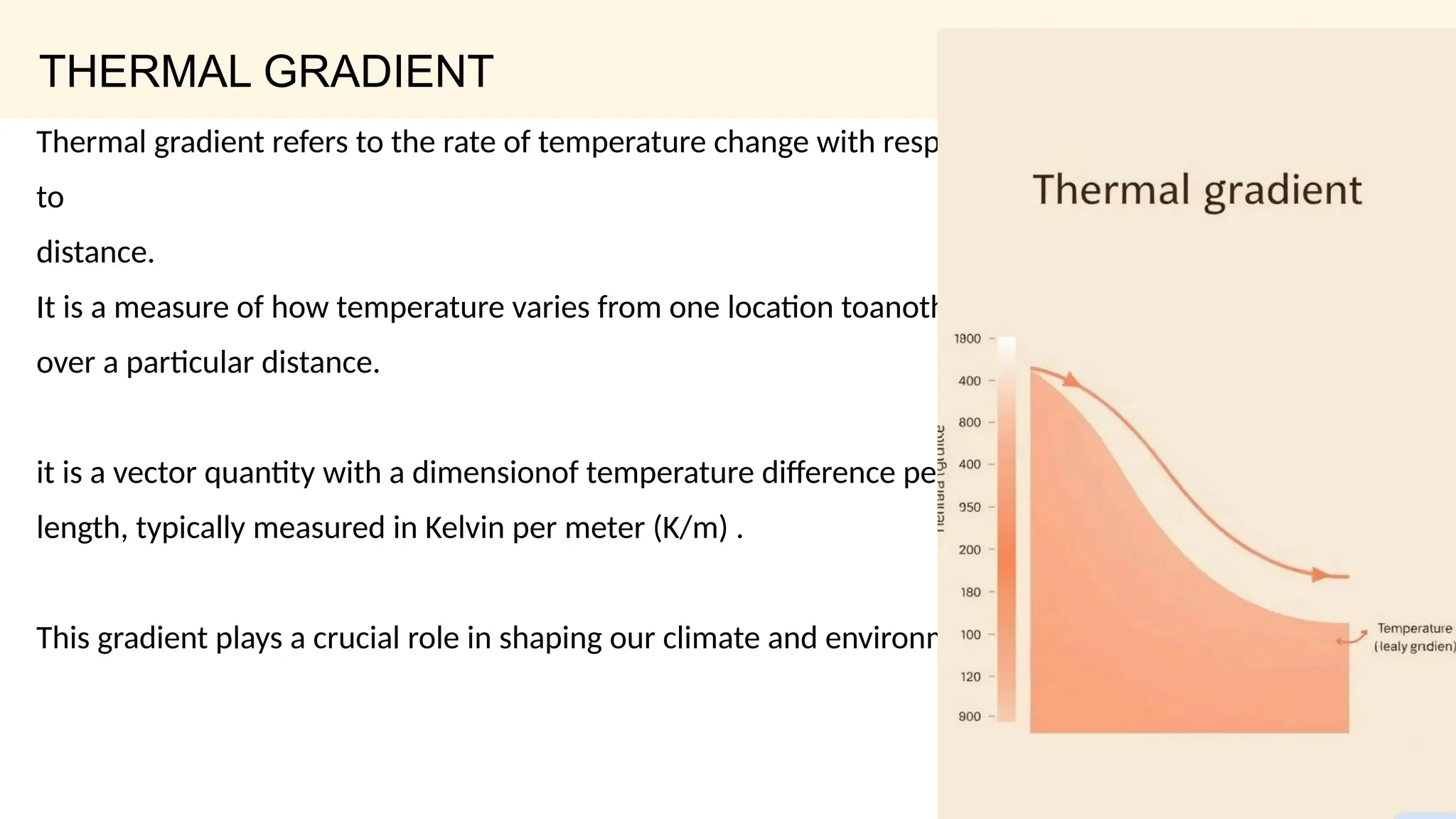
Thermal gradient refers to the rate of temperature change with respect
to
distance.
It is a measure of how temperature varies from one location toanother
over a particular distance.
it is a vector quantity with a dimensionof temperature difference per unit
length, typically measured in Kelvin per meter (K/m) .
This gradient plays a crucial role in shaping our climate and environment.
THERMAL GRADIENT
TYPES OF THERMAL GRADIENTS
• Horizontal thermal gradient
• Vertical thermal gradient
• Diurnal thermal gradient
• Seasonal thermal gradient
A horizontal thermal gradient refers to the change in temperature over a horizontal
distance, typically near the Earth's surface. It occurs when there is a difference in
temperature between two or more areas at the same elevation, such as:
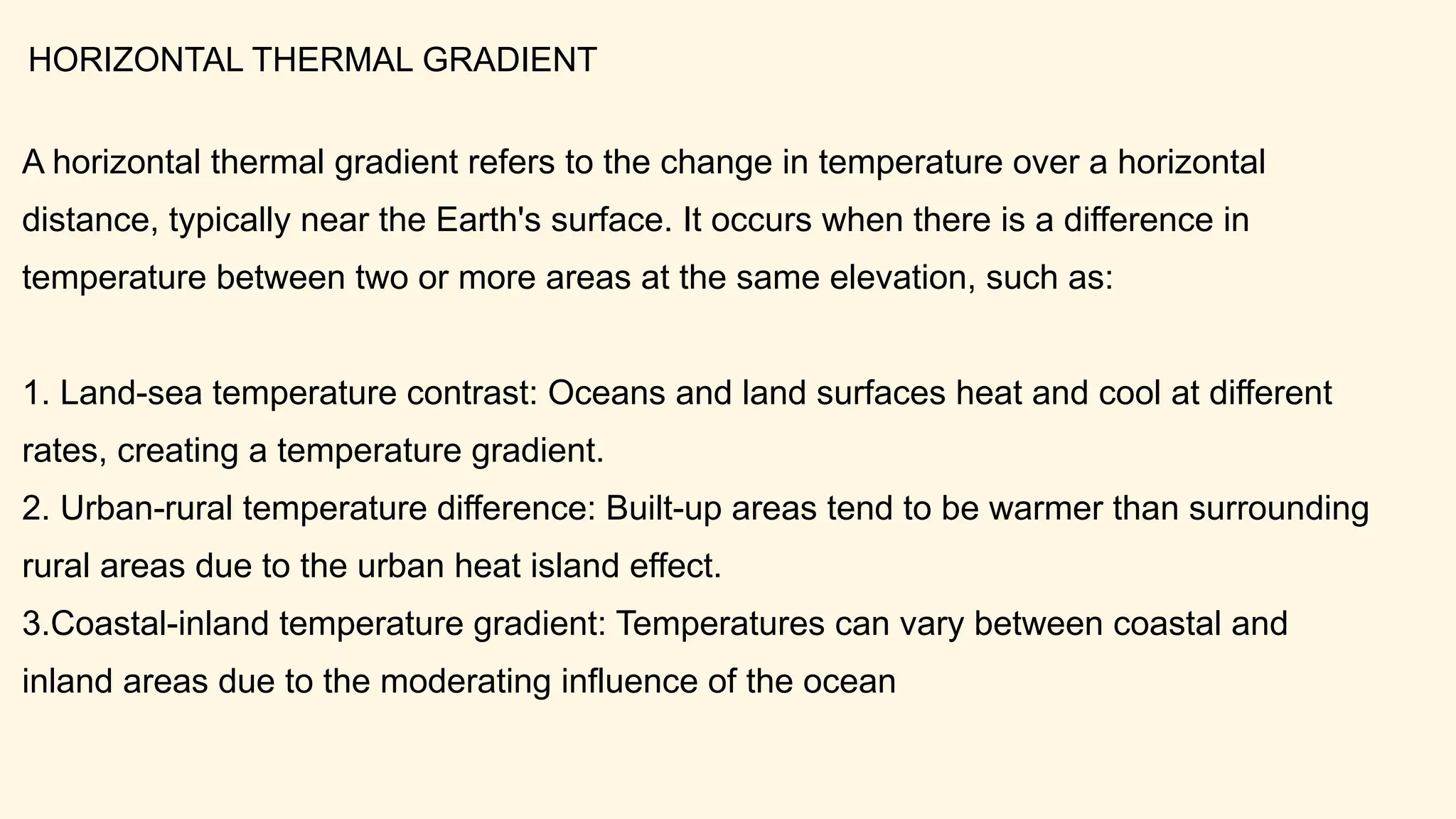
1. Land-sea temperature contrast: Oceans and land surfaces heat and cool at different
rates, creating a temperature gradient.
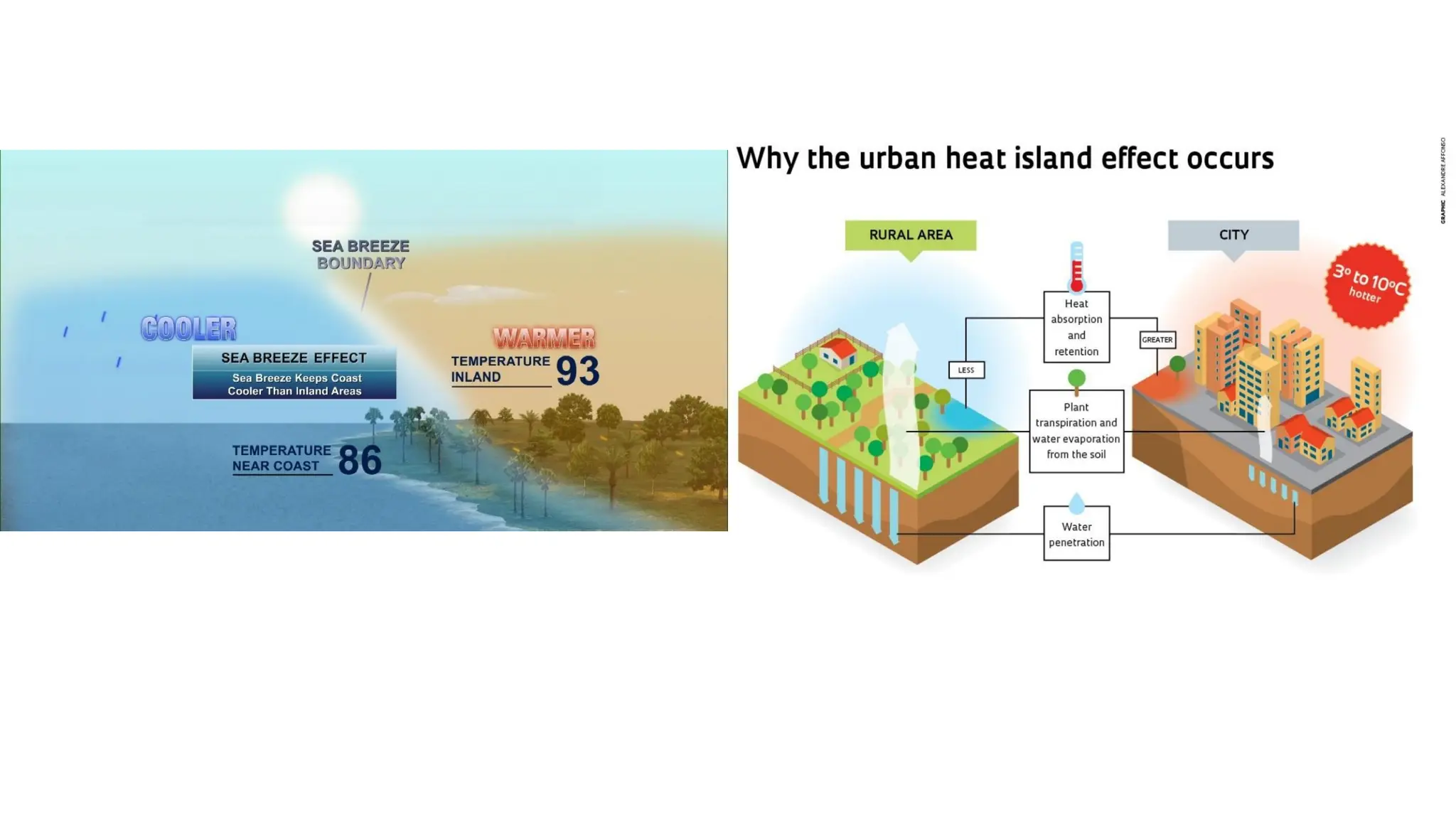
2. Urban-rural temperature difference: Built-up areas tend to be warmer than surrounding
rural areas due to the urban heat island effect.
3.Coastal-inland temperature gradient: Temperatures can vary between coastal and
inland areas due to the moderating influence of the ocean
HORIZONTAL THERMAL GRADIENT
A vertical thermal gradient refers to the rate of change of temperature with respect to altitude
or depth in the atmosphere or ocean. It describes how temperature changes as you move
upward or downward through a layer of air or water.
VERTICAL THERMAL GRADIENT
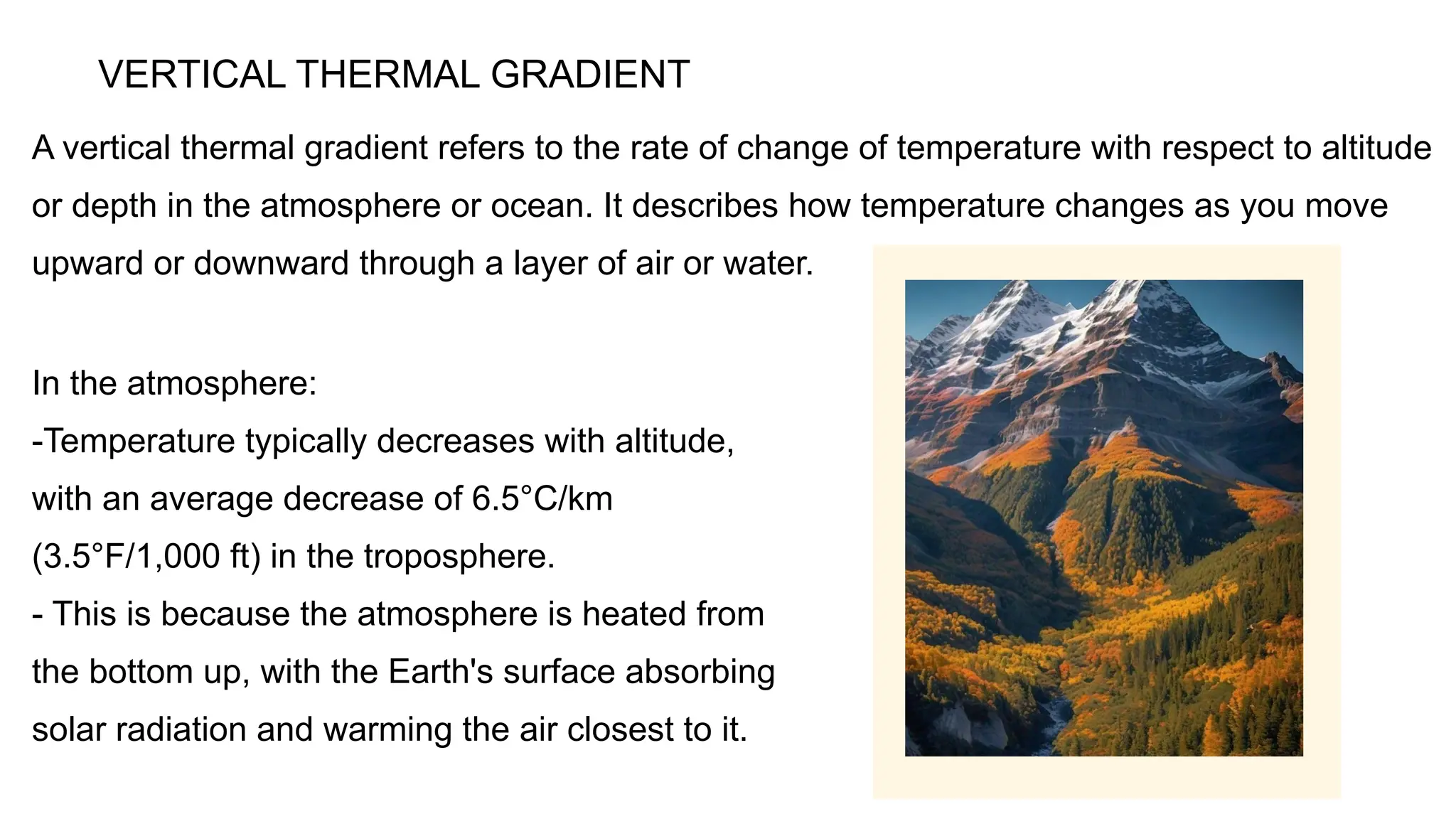
In the atmosphere:
-Temperature typically decreases with altitude,
with an average decrease of 6.5°C/km
(3.5°F/1,000 ft) in the troposphere.
- This is because the atmosphere is heated from
the bottom up, with the Earth's surface absorbing
solar radiation and warming the air closest to it.
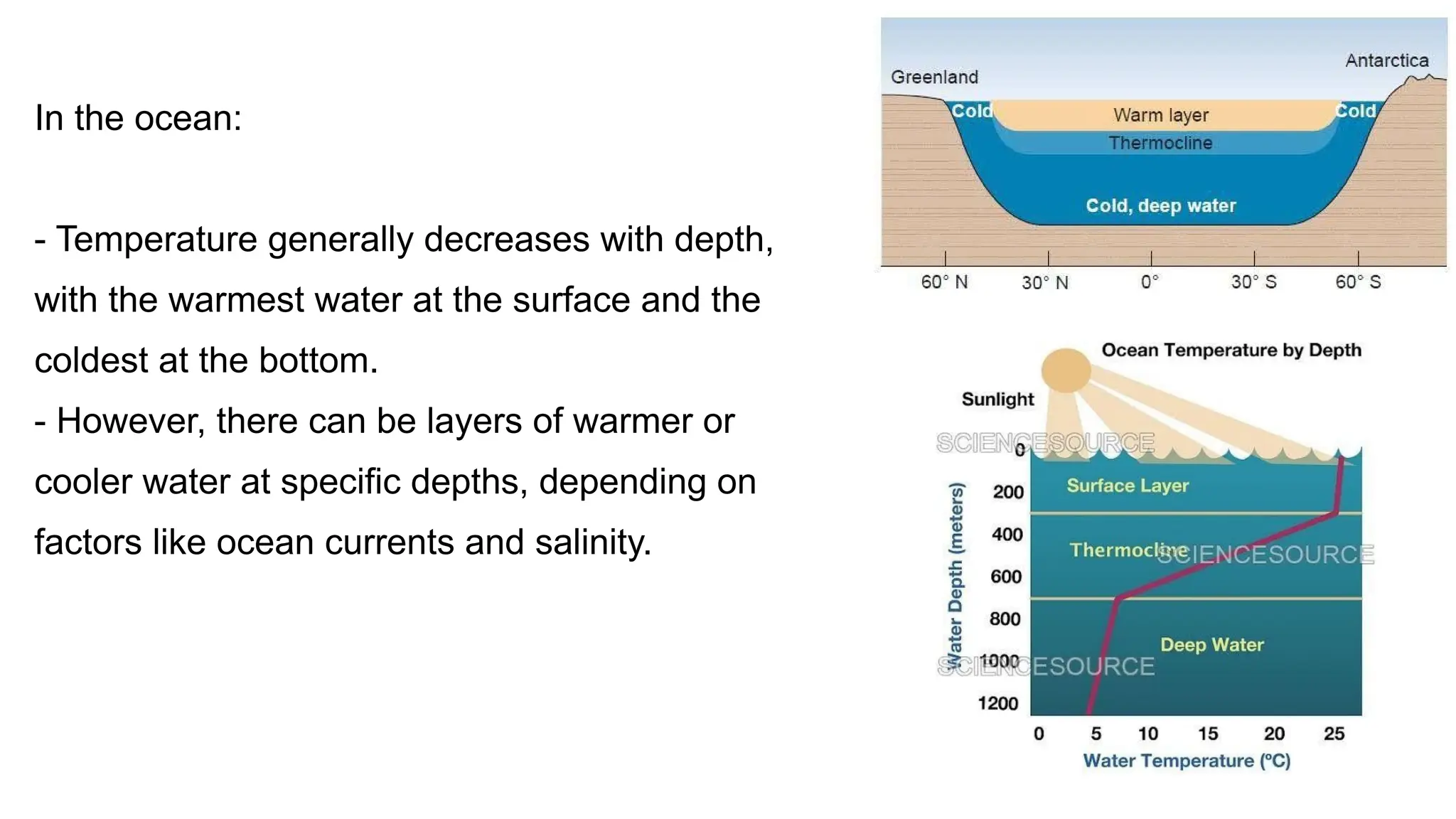
In the ocean:
- Temperature generally decreases with depth,
with the warmest water at the surface and the
coldest at the bottom.
- However, there can be layers of warmer or
cooler water at specific depths, depending on
factors like ocean currents and salinity.
DIURNAL THERMAL
GRADIENT
A diurnal thermal gradient refers to the daily cycle of temperature changes in the atmosphere
or ocean, caused by the heating and cooling effects of the sun's radiation.
In the atmosphere:
- Daytime: The sun's radiation heats the surface
and the air closest to it, creating a temperature
gradient with warmer air near the surface and
cooler air above.
- Night time: The surface rapidly cools by radiating
heat back into space, reversing the temperature
SEASONAL THERMAL GRADIENT
A seasonal thermal gradient refers to the change in temperature gradients over the
course of a year, caused by the Earth's tilt and orbit around the sun. This results in
variations in solar radiation, leading to changes in temperature gradients in the
atmosphere and ocean.
Characteristics:
1. Winter: Colder temperatures, stronger temperature gradients, and more pronounced
atmospheric circulation patterns.
2. Summer: Warmer temperatures, weaker temperature gradients, and less pronounced
atmospheric circulation patterns.
3. Spring and Autumn: Transitional periods with moderate temperatures and gradients.
Factors Affecting Thermal Gradient
Latitude
The distance
from the
equator, which
affects the
amount of
solar radiation
received.
Land-Sea Interactions
Coastal regions
experience different
thermal gradients
compared to inland
areas due to the
moderating effect of
large water bodies.
Altitude
Higher altitudes have
lower
temperatures due to
the decrease in
atmospheric
pressure.
Importance of Thermal Gradient in Climate
Atmospheric Circulation
Thermal gradients drive the
formation of high- and low-
pressure
systems, which in turn
influence
wind patterns and
precipitation.
Climate Zones
Thermal gradients
contribute to the
development of
different climate
zones, such as tropical,
temperate,
and polar regions.
Climate Change
Changes in global
thermal gradients
can lead to shifts in
climate patterns
and the frequency
of extreme
weather events.
Thank you
Ayisha zanha
Hamdan

Thermal gradient in climatology , terms and idea

  • 1.
  • 2.
    Thermal gradient refersto the rate of temperature change with respect to distance. It is a measure of how temperature varies from one location toanother over a particular distance. it is a vector quantity with a dimensionof temperature difference per unit length, typically measured in Kelvin per meter (K/m) . This gradient plays a crucial role in shaping our climate and environment. THERMAL GRADIENT
  • 4.
    TYPES OF THERMALGRADIENTS • Horizontal thermal gradient • Vertical thermal gradient • Diurnal thermal gradient • Seasonal thermal gradient
  • 5.
    A horizontal thermalgradient refers to the change in temperature over a horizontal distance, typically near the Earth's surface. It occurs when there is a difference in temperature between two or more areas at the same elevation, such as: 1. Land-sea temperature contrast: Oceans and land surfaces heat and cool at different rates, creating a temperature gradient. 2. Urban-rural temperature difference: Built-up areas tend to be warmer than surrounding rural areas due to the urban heat island effect. 3.Coastal-inland temperature gradient: Temperatures can vary between coastal and inland areas due to the moderating influence of the ocean HORIZONTAL THERMAL GRADIENT
  • 7.
    A vertical thermalgradient refers to the rate of change of temperature with respect to altitude or depth in the atmosphere or ocean. It describes how temperature changes as you move upward or downward through a layer of air or water. VERTICAL THERMAL GRADIENT In the atmosphere: -Temperature typically decreases with altitude, with an average decrease of 6.5°C/km (3.5°F/1,000 ft) in the troposphere. - This is because the atmosphere is heated from the bottom up, with the Earth's surface absorbing solar radiation and warming the air closest to it.
  • 8.
    In the ocean: -Temperature generally decreases with depth, with the warmest water at the surface and the coldest at the bottom. - However, there can be layers of warmer or cooler water at specific depths, depending on factors like ocean currents and salinity.
  • 9.
    DIURNAL THERMAL GRADIENT A diurnalthermal gradient refers to the daily cycle of temperature changes in the atmosphere or ocean, caused by the heating and cooling effects of the sun's radiation. In the atmosphere: - Daytime: The sun's radiation heats the surface and the air closest to it, creating a temperature gradient with warmer air near the surface and cooler air above. - Night time: The surface rapidly cools by radiating heat back into space, reversing the temperature
  • 10.
    SEASONAL THERMAL GRADIENT Aseasonal thermal gradient refers to the change in temperature gradients over the course of a year, caused by the Earth's tilt and orbit around the sun. This results in variations in solar radiation, leading to changes in temperature gradients in the atmosphere and ocean. Characteristics: 1. Winter: Colder temperatures, stronger temperature gradients, and more pronounced atmospheric circulation patterns. 2. Summer: Warmer temperatures, weaker temperature gradients, and less pronounced atmospheric circulation patterns. 3. Spring and Autumn: Transitional periods with moderate temperatures and gradients.
  • 11.
    Factors Affecting ThermalGradient Latitude The distance from the equator, which affects the amount of solar radiation received. Land-Sea Interactions Coastal regions experience different thermal gradients compared to inland areas due to the moderating effect of large water bodies. Altitude Higher altitudes have lower temperatures due to the decrease in atmospheric pressure.
  • 12.
    Importance of ThermalGradient in Climate Atmospheric Circulation Thermal gradients drive the formation of high- and low- pressure systems, which in turn influence wind patterns and precipitation. Climate Zones Thermal gradients contribute to the development of different climate zones, such as tropical, temperate, and polar regions. Climate Change Changes in global thermal gradients can lead to shifts in climate patterns and the frequency of extreme weather events.
  • 13.