Theory X – Theory Y
Management Theory
Origin
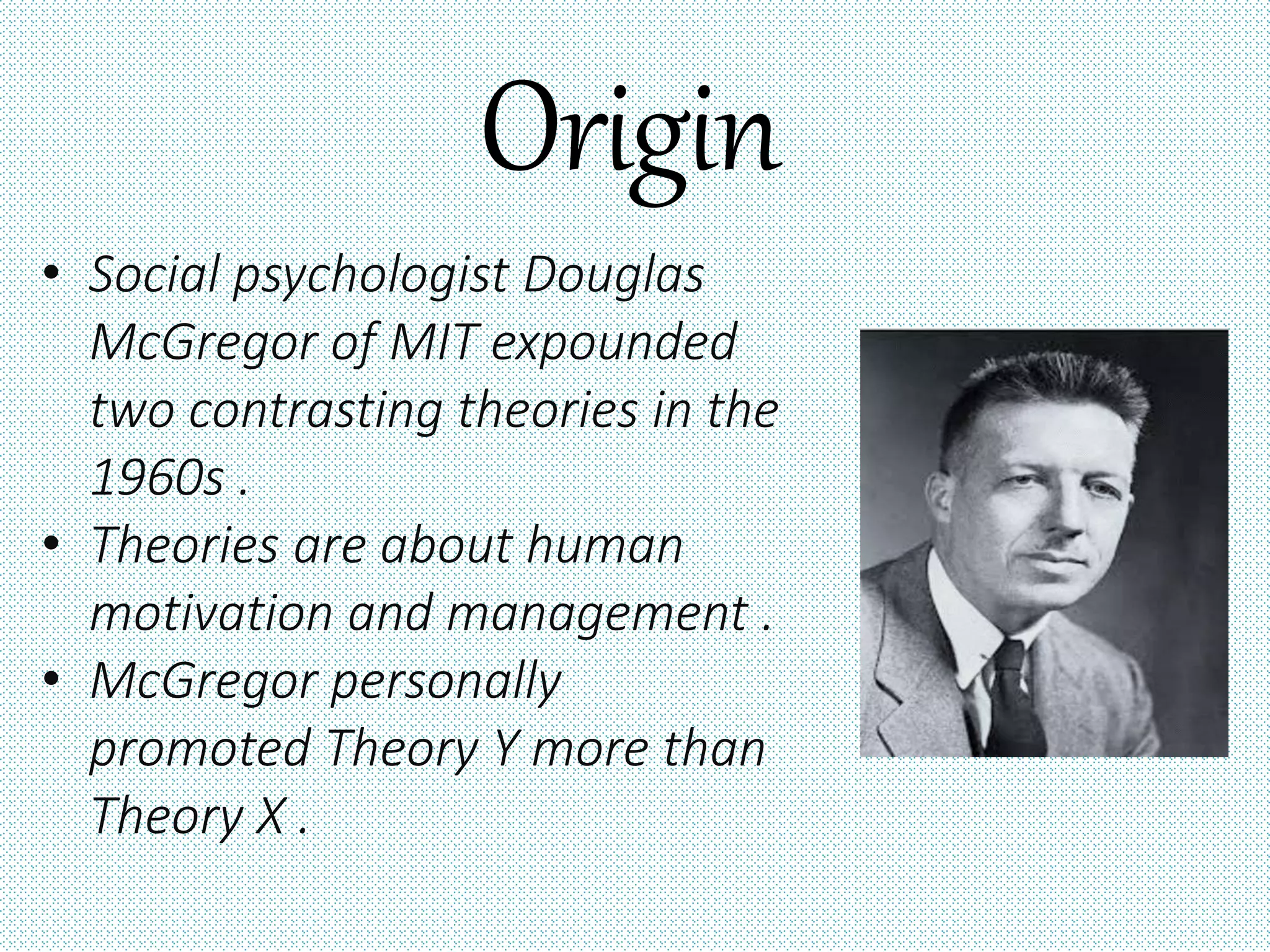
• Social psychologist Douglas
McGregor of MIT expounded
two contrasting theories in the
1960s .
• Theories are about human
motivation and management .
• McGregor personally
promoted Theory Y more than
Theory X .
Theory X
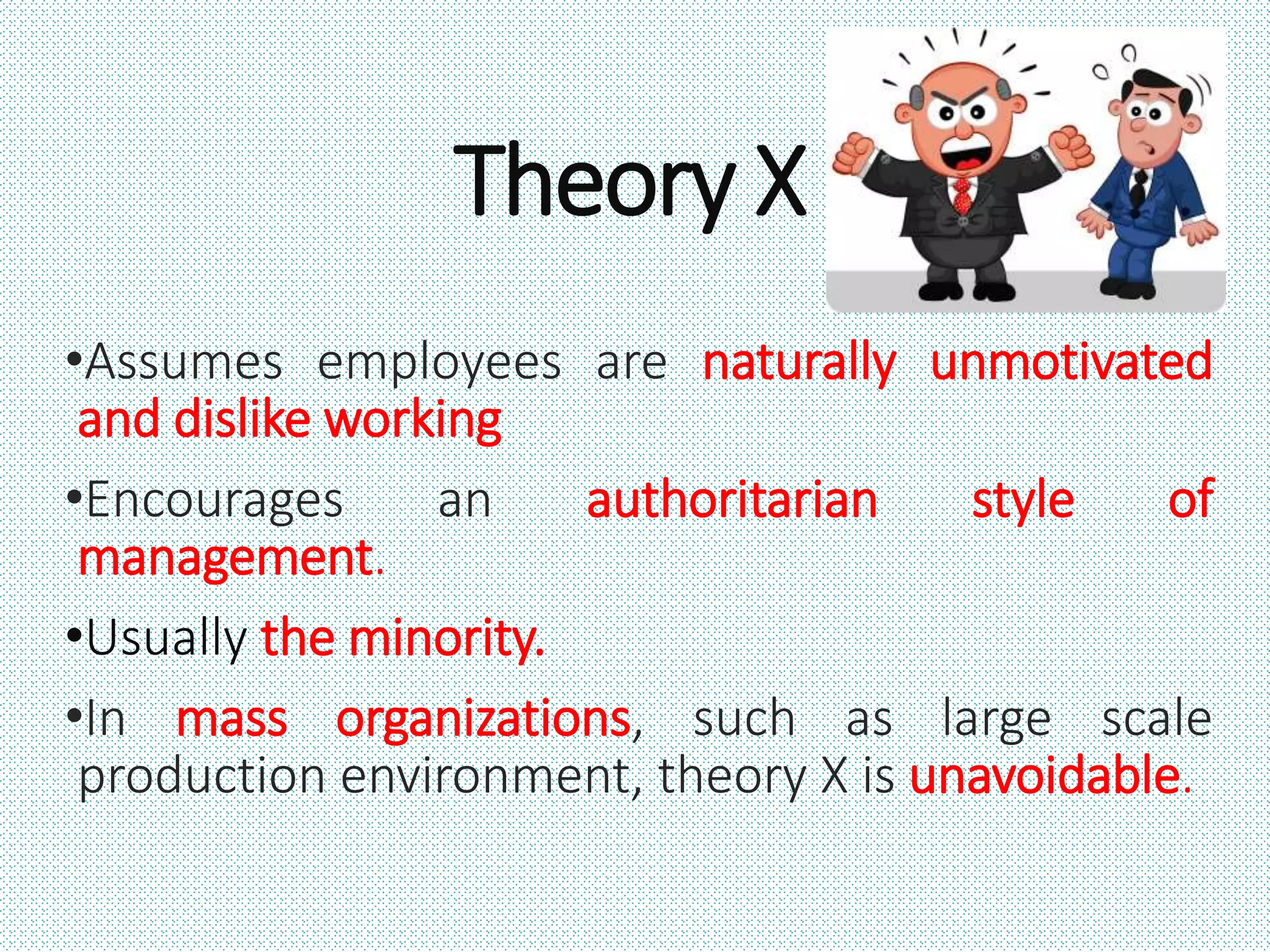
•Assumes employees are naturally unmotivated
and dislike working
•Encourages an authoritarian style of
management.
•Usually the minority.
•In mass organizations, such as large scale
production environment, theory X is unavoidable.
Theory Y
•Assumes employees are happy to work, self-
motivated, etc.
•A participative style of management that is
de-centralized
•More widely applicable
•People at lower levels of the organization are
involved in decision making and have more
responsibility
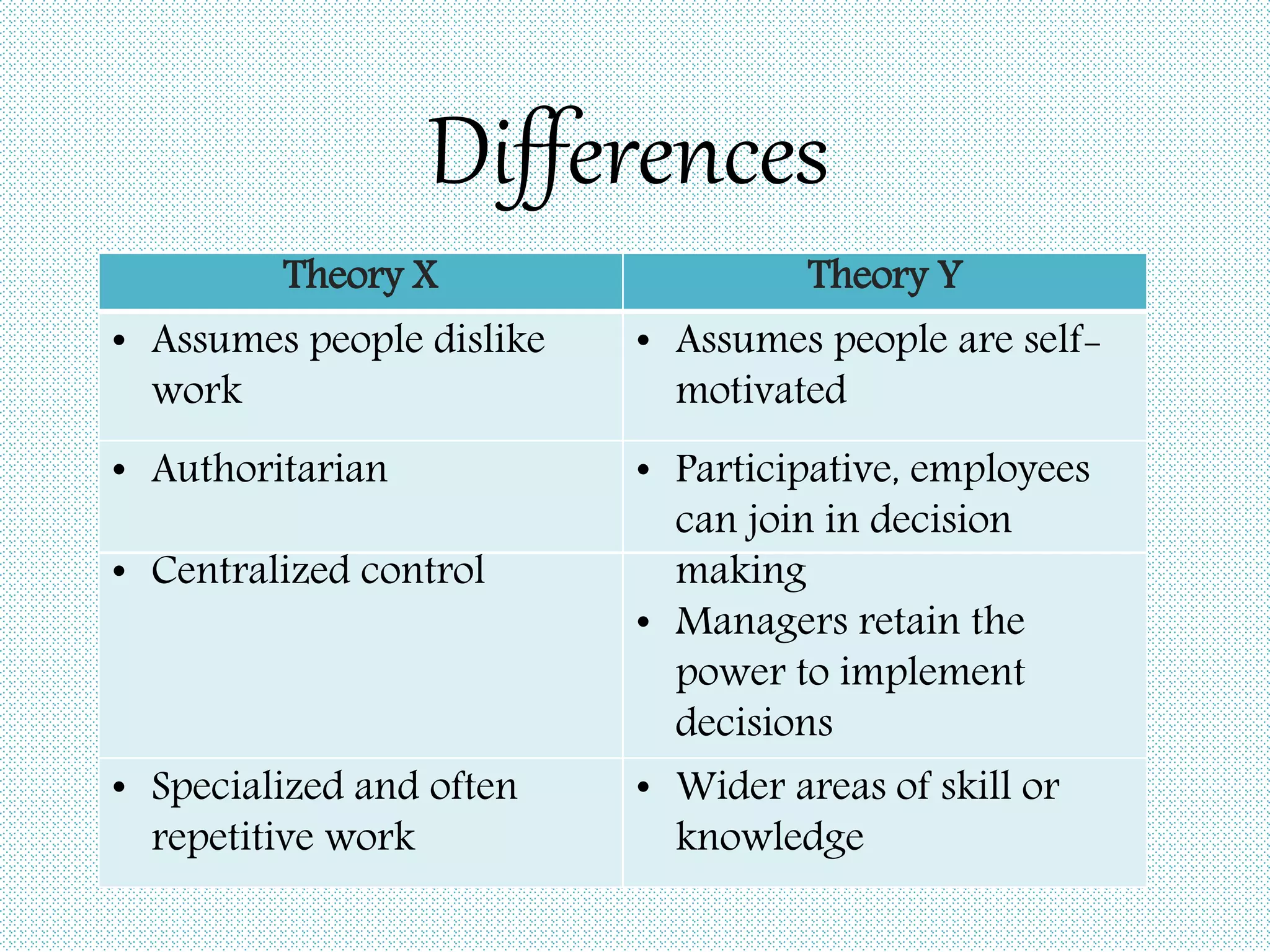
Theories
Theory X Theory Y
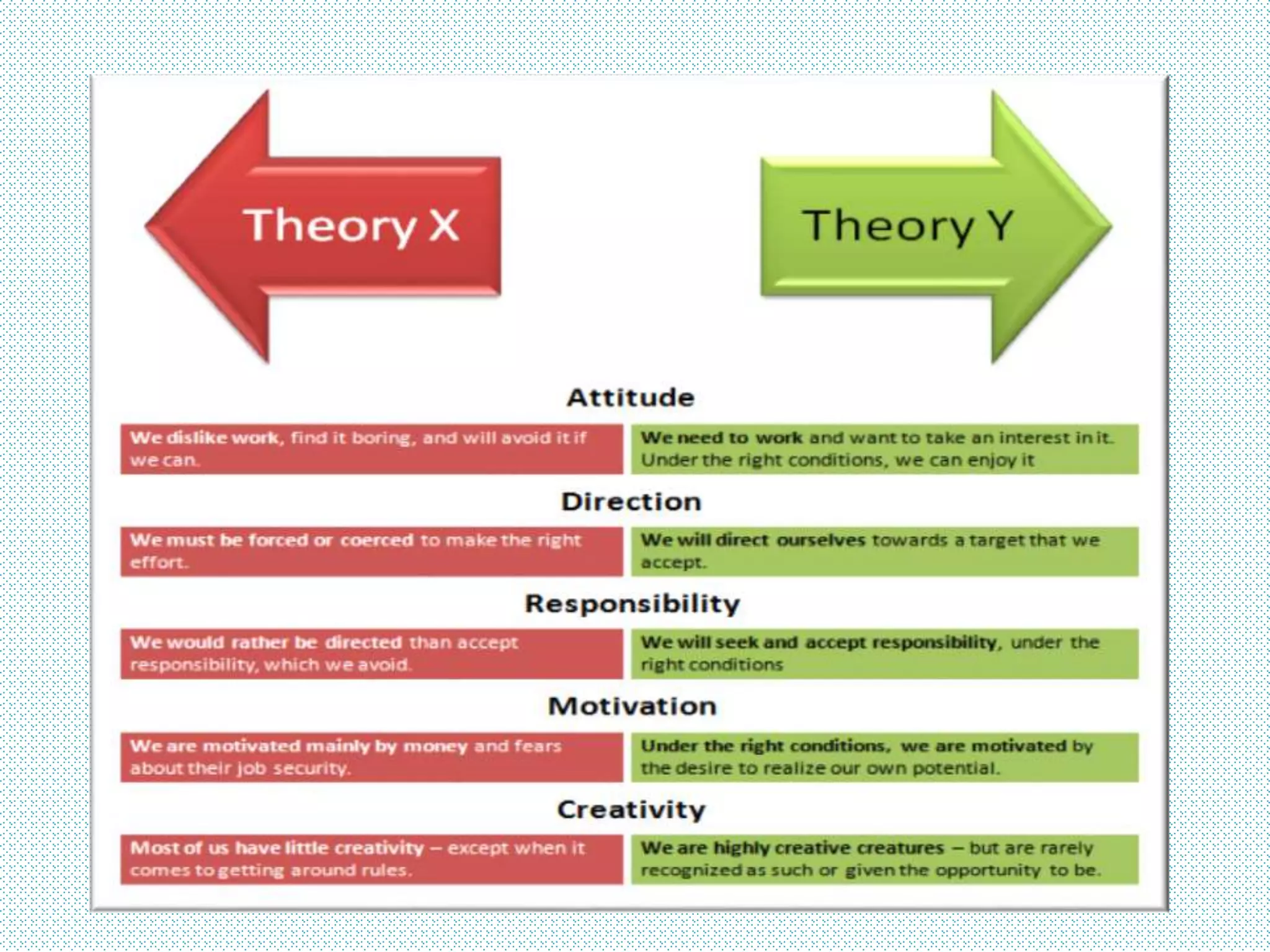
• Assumes people dislike
work
• Assumes people are self-
motivated
• Authoritarian
• Centralized control
• Participative, employees
can join in decision
making
• Managers retain the
power to implement
decisions
• Specialized and often
repetitive work
• Wider areas of skill or
knowledge
Differences
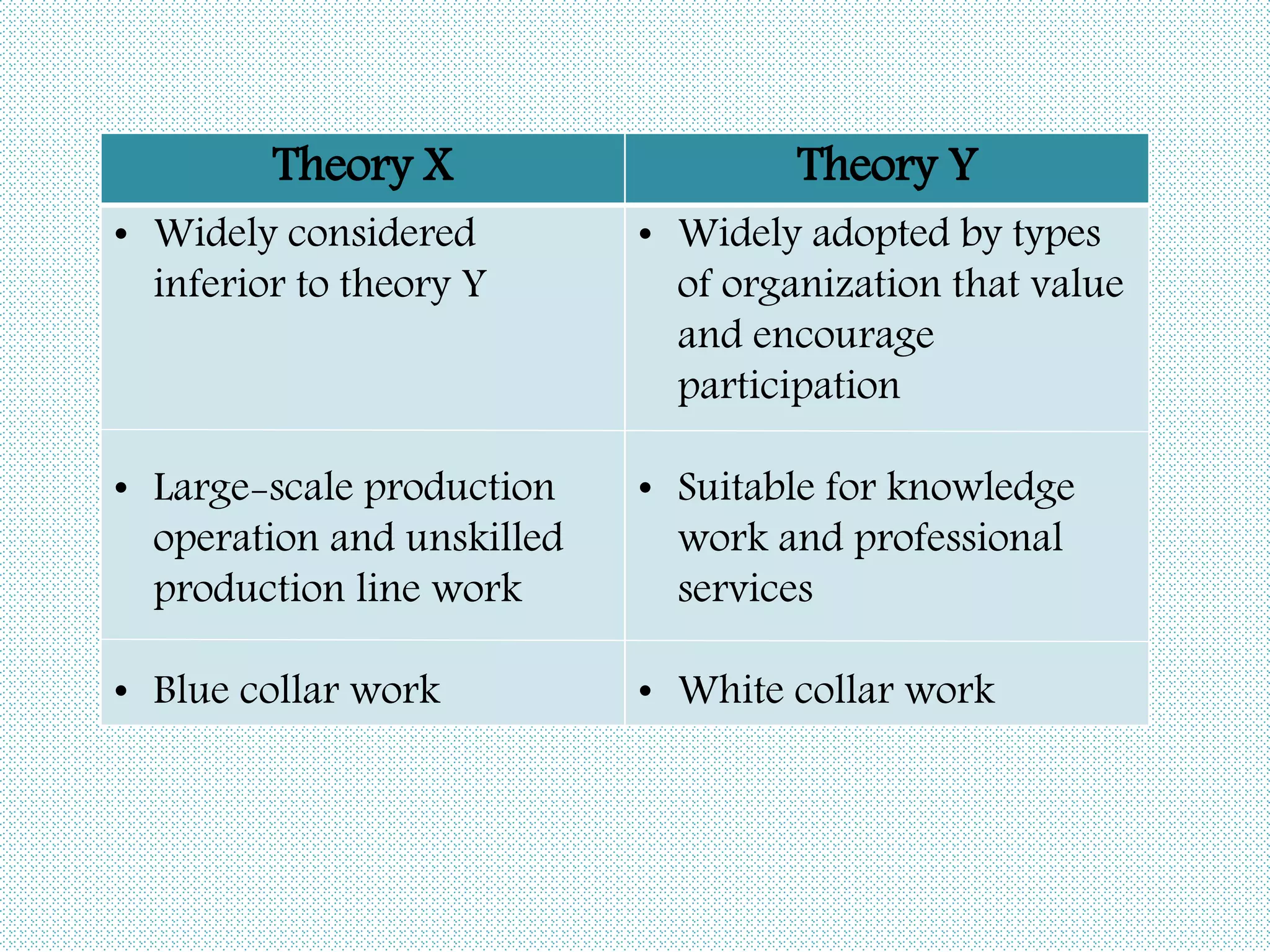
Theory X Theory Y
• Widely considered
inferior to theory Y
• Large-scale production
operation and unskilled
production line work
• Blue collar work
• Widely adopted by types
of organization that value
and encourage
participation
• Suitable for knowledge
work and professional
services
• White collar work
Theory x-and-theory-y

Theory x-and-theory-y

  • 1.
    Theory X –Theory Y Management Theory
  • 2.
    Origin • Social psychologistDouglas McGregor of MIT expounded two contrasting theories in the 1960s . • Theories are about human motivation and management . • McGregor personally promoted Theory Y more than Theory X .
  • 3.
    Theory X •Assumes employeesare naturally unmotivated and dislike working •Encourages an authoritarian style of management. •Usually the minority. •In mass organizations, such as large scale production environment, theory X is unavoidable.
  • 4.
    Theory Y •Assumes employeesare happy to work, self- motivated, etc. •A participative style of management that is de-centralized •More widely applicable •People at lower levels of the organization are involved in decision making and have more responsibility
  • 5.
  • 7.
    Theory X TheoryY • Assumes people dislike work • Assumes people are self- motivated • Authoritarian • Centralized control • Participative, employees can join in decision making • Managers retain the power to implement decisions • Specialized and often repetitive work • Wider areas of skill or knowledge Differences
  • 8.
    Theory X TheoryY • Widely considered inferior to theory Y • Large-scale production operation and unskilled production line work • Blue collar work • Widely adopted by types of organization that value and encourage participation • Suitable for knowledge work and professional services • White collar work