
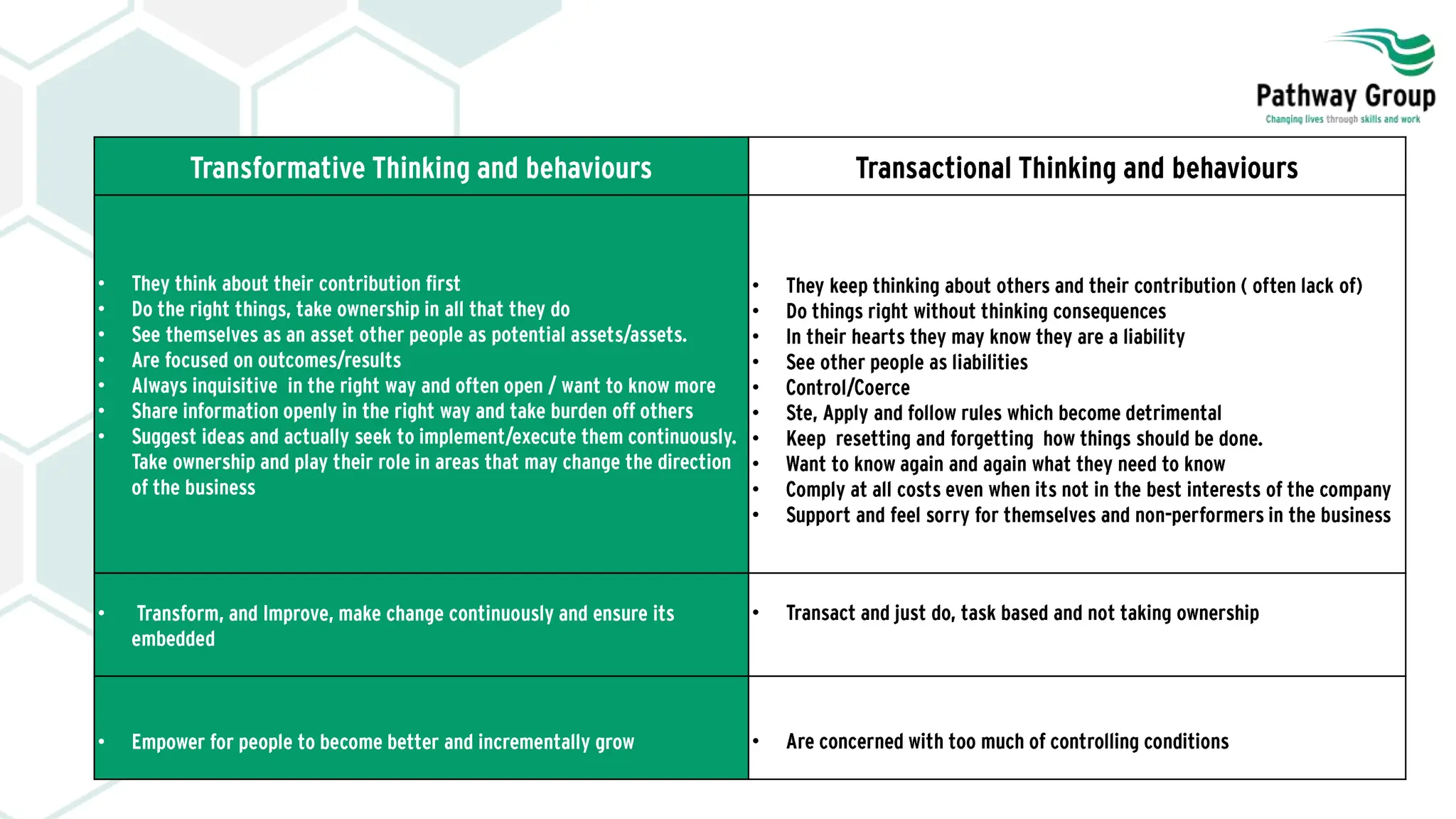


Transformational Leadership vs. Transactional Leadership: A Comprehensive Comparison In organisational leadership, two key styles are transformational and transactional leadership. Transformational leadership focuses on inspiring and motivating employees to go beyond their self-interests for the good of the organisation. It is characterised by vision, inspiration, intellectual stimulation, and personal attention. Transformational leaders encourage innovation, personal growth, and foster a strong organisational culture for long-term success. Transactional leadership, on the other hand, emphasises routine and structure. Leaders using this style set clear expectations and rewards for meeting specific goals. Key characteristics include a structured approach, performance management, and immediate feedback. Transactional leaders excel in environments with well-defined tasks and short-term goals, ensuring smooth and efficient operations. The key differences between these styles lie in their approach to managing and motivating employees. Transformational leadership drives change and innovation, inspiring teams towards a long-term vision. In contrast, transactional leadership maintains the status quo through a reward-based system, focusing on task completion and compliance with established procedures. Each leadership style has unique benefits. Transformational leadership increases employee engagement and motivation, fosters a culture of innovation, and aligns employees’ values with the company’s mission, leading to enhanced long-term performance. Transactional leadership provides clear structure, improves efficiency, and ensures adherence to processes, making it effective for achieving short-term objectives and managing routine tasks. Choosing between transformational and transactional leadership depends on the organisational context and specific goals. Transformational leadership is ideal for driving change and building a strong culture, while transactional leadership suits environments requiring strict compliance and efficiency. Effective leaders can strategically apply these styles to leverage their unique benefits. Real-world examples highlight the effectiveness of both styles. Steve Jobs at Apple exemplified transformational leadership, inspiring innovation and a cohesive culture. Bill Gates at Microsoft demonstrated transactional leadership, focusing on performance and short-term goals. These cases show that both styles can lead to success when applied appropriately. In conclusion, understanding the key differences and benefits of transformational and transactional leadership is crucial for organisational success. Both styles have their place in different contexts, and effective leaders should adeptly use each style based on their organisation's needs. By leveraging the strengths of both leadership styles, organisations can achieve a balanced and effective leadership approach.


