YEDITEPE UNIVERSITY, ISTANBUL
ME 482 Design of Mechanical Systems
Term Project Report
Group 2
Doruk ANGUN
Peren AKSU
Ramazan GÖKAY
Salih GÜVEN
Mechanical Engineering Department
Instructor: Yrd. Doc. Dr. Namık Cıblak
Spring 2015
II
Letter of Authorization
ME 482 Term Project Report
APPROVED BY:
Yrd. Doc. Dr. Namık Cıblak :…………………………………………
STUDENT NAME:
Doruk ANGUN: ...............................................................................................
Peren AKSU: ………………………………………………………………….
Ramazan GÖKAY: ............................................................................................
Salih GÜVEN: ............................................................................................
DEPARTMENT:
Mechanical Engineering
DATE OF APPROVAL: 15.05.2015
III
ABSTRACT
Nowadays water treatment systems get important. Individuals or companies start to
use water treatment systems to protect clean water sources. Everywhere people use demijohns
to supply drink water. However, usage of demijohn brings some disadvantages like health
problems causing from carrying or cleaning. In this project, the aim is to design an automated
central water filtering system connected to existing water dispensers that are in Yeditepe
Engineering floors. Through this project, drawbacks that considered above are eliminated.
IV
TABLE OF CONTENTS
1. INTRODUCTION ……………………………….……………………………..…….…1
2. LITERATURE SURVEY.............…………………………………………….………...3
3. PRELIMINARY DESIGN ALTERNATIVES……………………...……….……...…6
4. DESIGN SELECTION ………………..…………………...………………………..….13
5. CALCULATIONS…… ………..……………………………...……..…………………14
6. COST ANALYSIS ………..…………………...….……………..…………………......19
7. SIMULATION………………………………………………………………………...…23
8. CONCLUSION……….…………………………………………………………...……..25
9. REFERENCES………….……………………………………………………….……....26
10. APPENDIX …………………………………………………………………….………27
1
1. INTRODUCTION
The water plays an important role on nature. It helps to ensure the continuity of
aliveness. Humans, animals and plants use the water their own needs. The water is an
essential part of human life, since the water constitutes the %60-70 of the human body weight.
Beside of these essential needs, humans use the water for some other needs like cleaning and
fun. Whole water cannot be used directly for each activity. For example, the water must have
some proper values to drunk by humans. While some water has these proper values naturally,
some water does not and it requires extra treatment and purification methods. And then it
should be distributed to people properly. Therefore water purification and distribution are as
important as water itself.
In todays, city water can supply many needs for humans. However it cannot be drunk
by humans in many cities and people have to buy drinkable water. That drinkable water is
distributed within bottles. In some public institutions or homes, the drinkable water is
distributed within water dispensers which is a device that provides hot and cold water quickly.
Still, most of the dispenser gets the water from big water bottle which is called demijohn. This
is an insufficient water supply system because it is a discrete supply and it could not provide
water needs continuously. When the water of the demijohn runs out, the demijohn must be
changed to get water again. This demijohn changing process may include some difficulties.
For example, if there is not extra demijohn near the water dispenser the person has to wait for
the full demijohn. This causes waste of time. Even if there is an extra demijohn near the water
dispenser, it still includes some difficulties. Since a demijohn is 19 liter and it has unbalanced
shape, it can cause some health problems. The number of water dispenser and changing
frequency of the demijohns are also problem. If the number of water dispenser is not enough
and demijohns are changed rarely, people cannot access the water properly, they waste their
times by waiting or they can have some health problem during demijohn changing process.
Because of these problems and needs, an automated central water filtering system was
designed for Yeditepe University Engineering building. In this report, this automated central
water system is explained.
In our project, that automated central water filtering system must have compact size, it
includes long life span tools and devices, the system must be efficient, reliable and low cost.
The system operates non stopping. These features can be described as the objectives of the
project. On the other hand, the system must include a clean water tank, a pump, PPRC type
piping system, hot and cold taps and finally there must be one dispenser for each floor. These
features can be considered as the scope of the project.
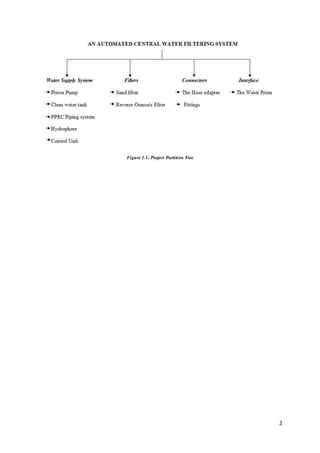
The automated central water filtering system includes four major subsystems which
are water supply subsystem, filtering subsystem, connector subsystem and interface
subsystem. Water supply subsystem includes five parts which are piston pump, clean water
tank, PPRC type piping system, hydrophore and control unit. Filtering subsystem occurs from
two parts which are sand filter and reverse osmosis filter. Connector subsystem includes two
parts which are hose adapter and fitting. And the interface subsystem occurs from the water
prism as shown Figure 1.
2
Figure 1.1: Project Partition Tree
3
2. LITERATURE SURVEY
Water treatment and purification methods are as significant as water itself. Therefore,
many institutions are constituted, many patents are invented or these issues become an
important topic for many scientific studies and researches.
2.1 Companies
This section includes some companies which work for water purification, filtration and
human health.
Sartorius is a company that one of the world’s leading laboratory equipment providers.
They produces innovative products that helps customers to overcome in laboratory
environment. In our topic, Sartorius develop products according to customer needs. They can
produce laboratory water suppliers by type of source, by application or by system.
Sweet Water company is producing water treatment systems and under sink water
filters. Ecologist James P. McMahon develop suitable systems for commercial or household
systems.
National Sanitation Foundation (NSF) is an organization that works on public health
and safety. It has a professional staff of microbiologists, engineers, toxicologists, chemists
and so on. Also NSF laboratories provide a wide range of testing and certification about
human health.
PUR is a company that produce high technology filtration systems for consumers.
They develop faucet filters, pitchers & dispensers and replacement filters. Also PUR has NSF
certificate which means that their products are certified by National Sanitation Foundation
that highly recommended in public health and safety.
Amway is a worldwide company that produces many goods in different area. They
develop water purifiers for last users that has low cost and easy to install.
2.2 Patents
In this section, some patents are mentioned with respect to our project.
a) Reverse Osmosis Purification System – [US 6,190,558 B1 – Feb.20, 2001 – Robbins]
In this patent as shown in the Figure 2, reverse osmosis technique was used that
widespread and efficient. In the system, a motor driven pump supplies a feed stream to a
reverse osmosis unit resulting in the creation of a product water stream and concentrate or
brine stream. Also, the system has recirculation mode which sends the product water stream
to mixing unit and that results with producing more pure water.
4
Figure 2.1: Reverse Osmosis Purification [1]
b) Drinking Water Purification Device - [US 2014/0008302 A1 – Jan.09, 2014 – King]
In this patent as shown in the Figure 3, a fast acting system was developed by the founder.
System contains silver ions that suitable for personal or household water containers. The
purification part contains a source of silver ions and a compound containing a hydantoin ring
that increased the presence of silver ions. Thereby, harmful microorganisms can be quickly
killed without any other addition.
Figure 2.2: Drinking Water Purification Device [2]
5
c) Water Purification – [US 2014/0367344 A1 – Dec.18 2014 – Faure]
In this system as shown in the Figure 4, oxygen introduced water by the help of electrolysis of
the water. Then, that water treated with some ionized transition metal. The system prevents
growth of bacteria, fungal and viral pathogens in water. Also, it provides non-toxic method of
ensuring public health.
Figure 2.3: Water Purification [3]
d) Wireless Water Purification Systems and Wireless Remote Dispensing Devices For
Water Purification Systems – [US 7,824,543 B2 – Nov.02, 2010 – Larkner]
In this patent as shown in the Figure 5, a water purification system was equipped with a
wireless controller system. In this system, the main purification unit was connected with
remote dispensers by fluidly. Also, they have wireless transceivers that make communication
between purification unit and dispensers.
Figure 2.4: Wireless Water Purification [4]
6
e) Water Purification Systems – [US 7,927,488 B1 – Apr.19, 2011 – Wilfong ]
In this system as shown Figure 6, the governing idea is utilizing oxidation. After oxidation,
the constituents can be removed by the help of a filter. Thus, impurities in the consuming
water can be removed easily. Also, this invention was balance the pH of the water by reduce
the hydronium ion concentration. Moreover, when pH increased the corrosivity of the water
reduced.
Figure 2.5: Water Purification System [5]
2.3 Scientific Studies
In this section, some scientific studies and academic research is mentioned. Up to now, a
scientific study has concerned about osmotic water purification system. Osmotic water purification
systems produces a clean sugar – electrolyte drink from almost any water source [6].
A study which was published at 2000 concerned about the cleanliness of the drinking
water. This study was conducted because in the beginning of the 2000’s, Canada’s drinking
water has become a very important subject because of the Escherichia coli infection in
Walkerton [7].
Another academic research was interested with household water purification system.
In household applications, people can use ceramic filters, chlorination with storage in an improved
vessel, solar disinfection and so on. However, each of these applications have limitation and the have
to be improve [8].
And another scientific study was about carbon nanotube membrane for water purification.
Water purification is a subject that works on nano size particles or infectives. Thereby,
nanotechnology is directly influence on water purification systems. As mentioned in the article, a
carbon nanotube membrane make the transport of water and antimicrobial properties faster [9].
7
3. PRELIMINARY DESIGN ALTERNATIVES
3.1 Interfaces
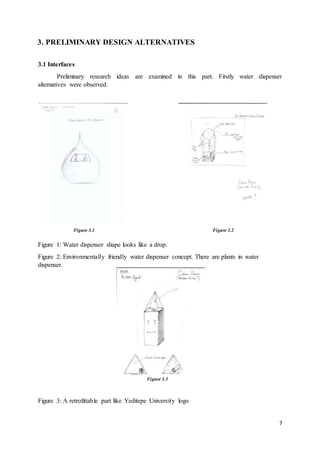
Preliminary research ideas are examined in this part. Firstly water dispenser
alternatives were observed.
Figure 1: Water dispenser shape looks like a drop.
Figure 2: Environmentally friendly water dispenser concept. There are plants in water
dispenser.
Figure 3: A retrofittable part like Yeditepe University logo
Figure 3.1 Figure 3.2
Figure 3.3
8
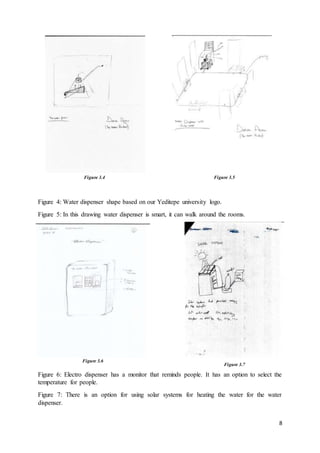
Figure 4: Water dispenser shape based on our Yeditepe university logo.
Figure 5: In this drawing water dispenser is smart, it can walk around the rooms.
Figure 6: Electro dispenser has a monitor that reminds people. It has an option to select the
temperature for people.
Figure 7: There is an option for using solar systems for heating the water for the water
dispenser.
Figure 3.4 Figure 3.5
Figure 3.6
Figure 3.7
9
3.2 Filters
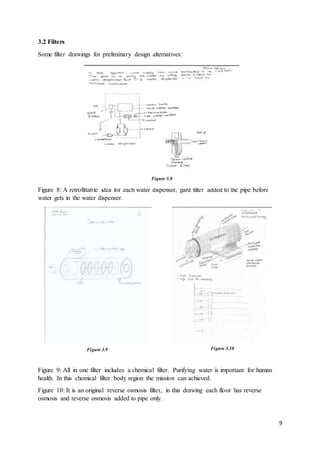
Some filter drawings for preliminary design alternatives:
Figure 8: A retrofittable idea for each water dispenser, gard filter added to the pipe before
water gets in the water dispenser.
Figure 9: All in one filter includes a chemical filter. Purifying water is important for human
health. In this chemical filter body region the mission can achieved.
Figure 10: It is an original reverse osmosis filter, in this drawing each floor has reverse
osmosis and reverse osmosis added to pipe only.
Figure 3.8
Figure 3.9 Figure 3.10
10
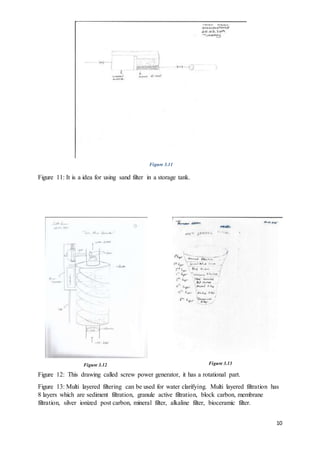
Figure 11: It is a idea for using sand filter in a storage tank.
Figure 12: This drawing called screw power generator, it has a rotational part.
Figure 13: Multi layered filtering can be used for water clarifying. Multi layered filtration has
8 layers which are sediment filtration, granule active filtration, block carbon, membrane
filtration, silver ionized post carbon, mineral filter, alkaline filter, bioceramic filter.
Figure 3.12 Figure 3.13
Figure 3.11
11
3.3 Connectors
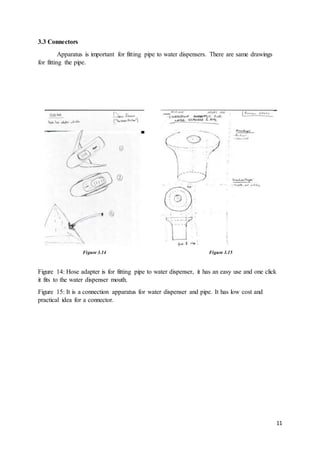
Apparatus is important for fitting pipe to water dispensers. There are same drawings
for fitting the pipe.
Figure 14: Hose adapter is for fitting pipe to water dispenser, it has an easy use and one click
it fits to the water dispenser mouth.
Figure 15: It is a connection apparatus for water dispenser and pipe. It has low cost and
practical idea for a connector.
Figure 3.14 Figure 3.15
12
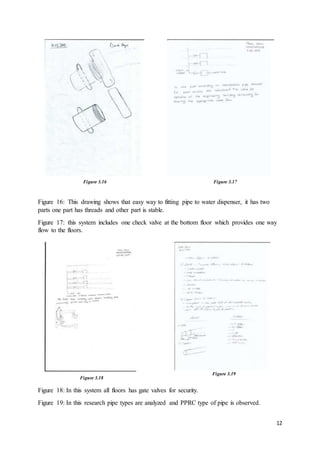
Figure 16: This drawing shows that easy way to fitting pipe to water dispenser, it has two
parts one part has threads and other part is stable.
Figure 17: this system includes one check valve at the bottom floor which provides one way
flow to the floors.
Figure 18: In this system all floors has gate valves for security.
Figure 19: In this research pipe types are analyzed and PPRC type of pipe is observed.
Figure 3.16 Figure 3.17
Figure 3.18
Figure 3.19
13
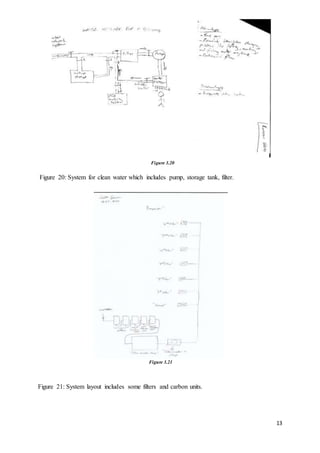
Figure 20: System for clean water which includes pump, storage tank, filter.
Figure 21: System layout includes some filters and carbon units.
Figure 3.21
Figure 3.20
14
4. DESIGN SELECTION
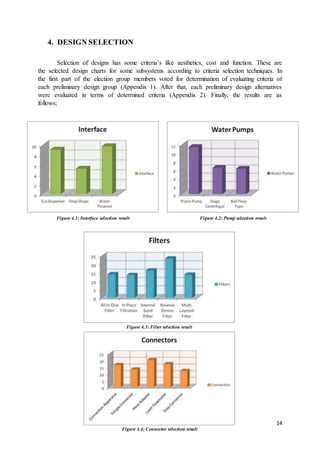
Selection of designs has some criteria’s like aesthetics, cost and function. These are
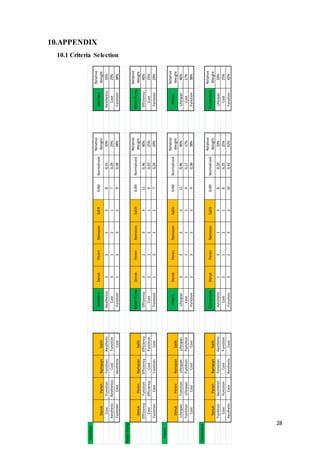
the selected design charts for some subsystems according to criteria selection techniques. In
the first part of the election group members voted for determination of evaluating criteria of
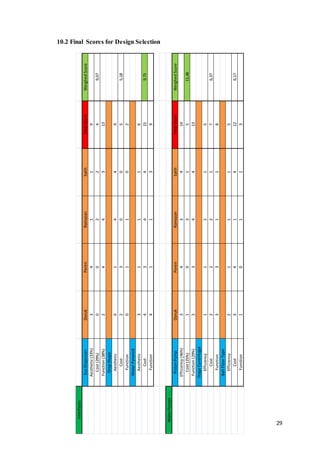
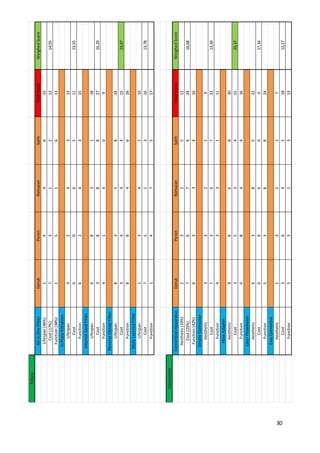
each preliminary design group (Appendix 1). After that, each preliminary design alternatives
were evaluated in terms of determined criteria (Appendix 2). Finally, the results are as
follows;
Figure 4.1: Interface selection result Figure 4.2: Pump selection result
Figure 4.3: Filter selection result
Figure 4.4: Connector selection result
15
5. CALCULATIONS
Calculation starts with measuring the head losses for each floors. Head loss calculation
has two parts: Major head loss & Minor head loss. Before major head loss flow rate of each
floors must be determined. Volume of the container is 150 ml. For one container, estimation
time is taken as 5 seconds for filling the container. Flow rate is determined from that
information and taken as 0.15 m3/h (included safety) and therefore Yeditepe Engineering
building has 9 floors and total flow rate is calculated as 1.35 m3/h. After flow rate is
calculated, our system pipe type is selected. In this system PPRC type pipes are used. PPRC
type starts with 20 mm pipes.
Velocity in the pipe is determined from:
𝑣 =
4∗𝑞
𝜋∗𝐷2
(1)
Velocity in the pipe shouldn’t exceed 1.5 m/s. If velocity is greater than 1.5 pipe
diameter should be selected bigger than the first used diameter. After velocity is calculated
Reynolds number should be checked. Flow regime must be observed.
𝑅𝑒 =
𝜌𝑣𝐷
𝜇
(2)
Friction factor should be found from Moody chart for turbulent flow (Re>2000) and
for laminar flow friction factor is;
𝑓 = 64/𝑅𝑒 (3)
Length of the floors is taken as 4 meters. Eventually major head loss equation is;
ℎ 𝑓 = 𝑓 ∗
𝑙
𝐷
∗
𝑣2
2𝑔
(4)
16
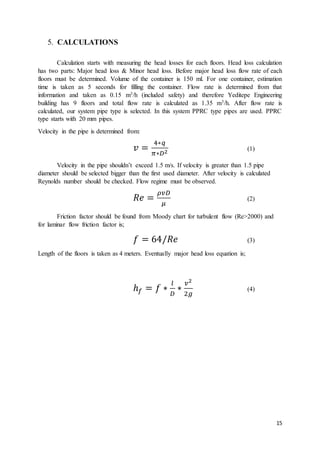
This table shows flow rates, velocities, Reynolds number, head losses for each floor.
Total head loss is calculated as 1.549 m.
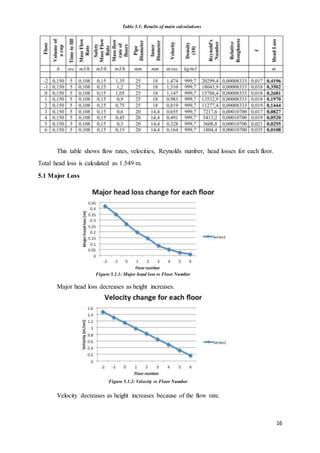
5.1 Major Loss
Major head loss decreases as height increases.
Velocity decreases as height increases because of the flow rate.
Figure 5.1.1: Major head loss vs Floor Number
Table 5.1: Results of main calculations
Figure 5.1.2: Velocity vs Floor Number
17
5.2 Minor Loss
Minor loss occurs in a pipe due to the components below,
1. Fittings. (Elbows, tees, bends and other types)
2. Valves. (Check valves, gate valves and other types)
3. Inlet and outlet geometry.
4. Expansions and contractions in the pipe.
These components affect the flow and additional losses occur because of flow separation and
mixing due to them. Generally, total minor loss is less than the total major loss in a system.
The minor losses are associated with
 Velocity (V)
 Loss Coefficient (KL)
 Gravity
Minor losses are calculated by:
ℎ 𝐿 = 𝐾𝐿 ∗
𝑉2
2𝑔
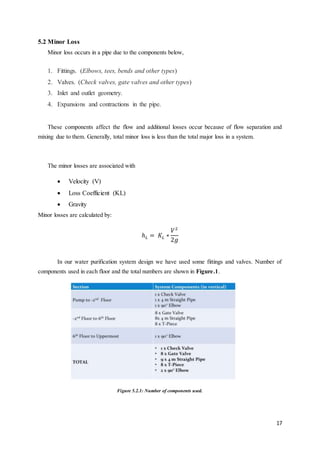
In our water purification system design we have used some fittings and valves. Number of
components used in each floor and the total numbers are shown in Figure.1.
Figure 5.2.1: Number of components used.
18
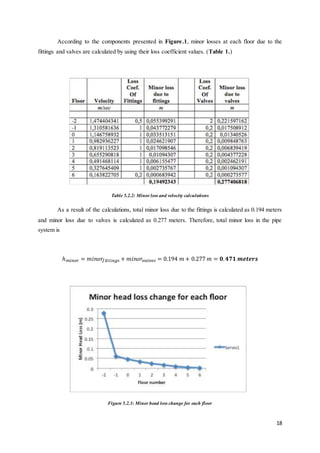
According to the components presented in Figure.1, minor losses at each floor due to the
fittings and valves are calculated by using their loss coefficient values. (Table 1.)
Table 5.2.2: Minor loss and velocity calculations
As a result of the calculations, total minor loss due to the fittings is calculated as 0.194 meters
and minor loss due to valves is calculated as 0.277 meters. Therefore, total minor loss in the pipe
system is
ℎ 𝑚𝑖𝑛𝑜𝑟 = 𝑚𝑖𝑛𝑜𝑟𝑓𝑖𝑡 𝑡𝑖𝑛𝑔𝑠 + 𝑚𝑖𝑛𝑜𝑟𝑣𝑎𝑙𝑣𝑒𝑠 = 0.194 𝑚 + 0.277 𝑚 = 𝟎. 𝟒𝟕𝟏 𝒎𝒆𝒕𝒆𝒓𝒔
Figure 5.2.3: Minor head loss change for each floor
19
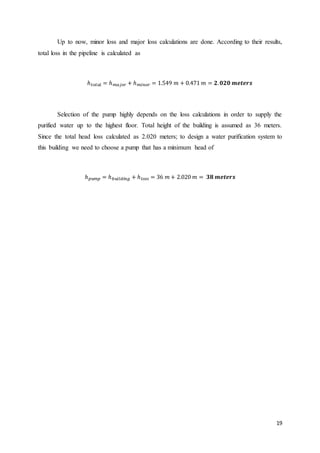
Up to now, minor loss and major loss calculations are done. According to their results,
total loss in the pipeline is calculated as
ℎ 𝑡𝑜𝑡𝑎𝑙 = ℎ 𝑚𝑎𝑗𝑜𝑟 + ℎ 𝑚𝑖𝑛𝑜𝑟 = 1.549 𝑚 + 0.471 𝑚 = 𝟐. 𝟎𝟐𝟎 𝒎𝒆𝒕𝒆𝒓𝒔
Selection of the pump highly depends on the loss calculations in order to supply the
purified water up to the highest floor. Total height of the building is assumed as 36 meters.
Since the total head loss calculated as 2.020 meters; to design a water purification system to
this building we need to choose a pump that has a minimum head of
ℎ 𝑝𝑢𝑚𝑝 = ℎ 𝑏𝑢𝑖𝑙𝑑𝑖 𝑛 𝑔 + ℎ 𝑙𝑜𝑠𝑠 = 36 𝑚 + 2.020 𝑚 = 𝟑𝟖 𝒎𝒆𝒕𝒆𝒓𝒔
20
6. COST ANALYSIS
Total cost of this design consists of
1. Pipes and fittings
2. Valves
3. Filters
4. Pump
5. Control Unit
6. Water Tank
7. Design and engineering costs.
6.1 Cost of pipes and fittings
a) T-Piece
Figure 6.1: T-Piece fitting
Brand / Model Number= FIRAT / 7742252520 [10]
Unit Cost= 0.50 TL
Total Cost= 8 x 0.50 TL= 4 TL
b) 90° elbow
Figure 6.2: 90 degree elbow fitting
Brand / Model Number= FIRAT / 771000025[10]
Unit Cost= 0.40 TL
Total Cost= 2 x 0.40 TL= 0.80 TL
21
c) Straight pipe
Figure 6.3: Straight pipe
Brand / Model Number= FIRAT / PPRC with fiberglass [10]
20 mm
Cost per meter= 2.99 TL
Total Cost=40 m x 2.99 TL= 119.6 TL
25 mm
Cost per meter= 4.34 TL
Total Cost=20 m x 4.34 TL= 86.8 TL
Total cost of straight pipe = 119.6 TL + 86.8 TL= 206.4 TL
6.2 Cost of valves:
a) Gate valves
Figure 6.2.1: Gate valve
Brand / Model Number= DUYAR / DIN 3216 [11]
Unit Cost= 10 TL
Total Cost= 8 x 10 TL= 80 TL
22
b) Check valves
Figure 6.2.2: Check valve
Brand / Model Number= DUYAR / Disc Type Check Valve [11]
Unit Cost= 42 TL
Total Cost= 1 x 42 TL= 42 TL
6.3 Cost of Filter
Figure 6.3.1: Reverse osmosis filter
Reverse Osmosis filter is used in this design according to the election between design
alternatives.
Brand / Model Number= WATTS / R12-1200-1 Wall Mounted RO System [12]
Total Cost= 7830TL
6.4 Cost of pump
Figure 6.4.1: Pump
23
Brand / Model Number= WILO / FMHI 405 1,1/2-M-1-E Multi Staged Horizontal Domestic
Hidrofor [13]
Total Cost=1.961 TL
6.5 Cost of control unit
Brand / Model Number= RGCONTROL UNIT / SG5221 Water Pump Controller
Total Cost= 175 TL
6.6 Cost of water tank
Figure 6.6.1: Water tank
Brand / Model Number= KARMOD/ Y 300 [14]
Total Cost= 500 TL
6.7 Designand engineering costs
Estimated cost of design and engineering cost is 10000 TL
According to these costs total cost to apply this design to Yeditepe University Engineering
floors is calculated as ;
𝑇𝑜𝑡𝑎𝑙 𝐶𝑜𝑠𝑡 = 10,000 + 7,830 + 1,961 + 500 + 206.4 + 171 + 80 + 42 + 4 + 0.80 = 𝟐𝟎, 𝟕𝟗𝟓 𝑻𝑳
24
7. SIMULATION
Simulation is an useful tool to observe deficiencies of the system before build the
system. Designing a pipe system is a sensitive job that need inspection in each step. Also, a
control system is a necessity for a closed system to operate easily. According to these
constraints a control simulation was designed in Simulink.
7.1 The general control diagram
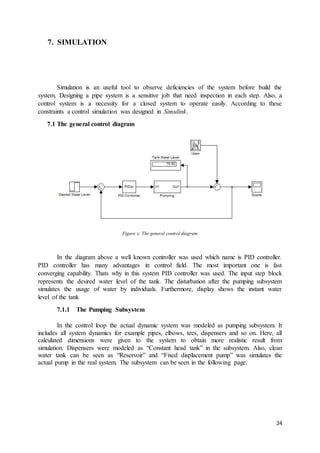
Figure x: The general control diagram
In the diagram above a well known controller was used which name is PID controller.
PID controller has many advantages in control field. The most important one is fast
converging capability. Thats why in this system PID controller was used. The input step block
represents the desired water level of the tank. The disturbation after the pumping subsystem
simulates the usage of water by individuals. Furthermore, display shows the instant water
level of the tank
7.1.1 The Pumping Subsystem
In the control loop the actual dynamic system was modeled as pumping subsystem. It
includes all system dynamics for example pipes, elbows, tees, dispensers and so on. Here, all
calculated dimensions were given to the system to obtain more realistic result from
simulation. Dispensers were modeled as “Constant head tank” in the subsystem. Also, clean
water tank can be seen as “Reservoir” and “Fixed displacement pump” was simulates the
actual pump in the real system. The subsystem can be seen in the following page.
25
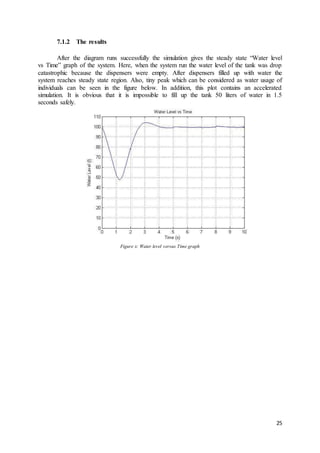
7.1.2 The results
After the diagram runs successfully the simulation gives the steady state “Water level
vs Time” graph of the system. Here, when the system run the water level of the tank was drop
catastrophic because the dispensers were empty. After dispensers filled up with water the
system reaches steady state region. Also, tiny peak which can be considered as water usage of
individuals can be seen in the figure below. In addition, this plot contains an accelerated
simulation. It is obvious that it is impossible to fill up the tank 50 liters of water in 1.5
seconds safely.
Figure x: Water level versus Time graph
26
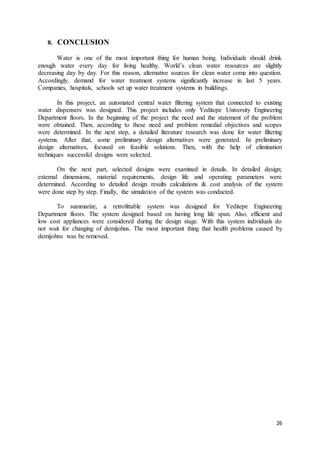
8. CONCLUSION
Water is one of the most important thing for human being. Individuals should drink
enough water every day for living healthy. World’s clean water resources are slightly
decreasing day by day. For this reason, alternative sources for clean water come into question.
Accordingly, demand for water treatment systems significantly increase in last 5 years.
Companies, hospitals, schools set up water treatment systems in buildings.
In this project, an automated central water filtering system that connected to existing
water dispensers was designed. This project includes only Yeditepe University Engineering
Department floors. In the beginning of the project the need and the statement of the problem
were obtained. Then, according to these need and problem remedial objectives and scopes
were determined. In the next step, a detailed literature research was done for water filtering
systems. After that, some preliminary design alternatives were generated. In preliminary
design alternatives, focused on feasible solutions. Then, with the help of elimination
techniques successful designs were selected.
On the next part, selected designs were examined in details. In detailed design;
external dimensions, material requirements, design life and operating parameters were
determined. According to detailed design results calculations & cost analysis of the system
were done step by step. Finally, the simulation of the system was conducted.
To summarize, a retrofittable system was designed for Yeditepe Engineering
Department floors. The system designed based on having long life span. Also, efficient and
low cost appliances were considered during the design stage. With this system individuals do
not wait for changing of demijohns. The most important thing that health problems caused by
demijohns was be removed.
27
9. REFERENCES
[1] Robbins, Adam. "Reverse osmosis purification system." U.S. Patent No.
6,190,558. 20 Feb. 2001.
[2] King, Joseph. "Drinking Water Purification Device." U.S. Patent No.
2014/0008302 A1. 09 Jan. 2014.
[3] Faure, Frederick Jacobus. "Water Purification." U.S. Patent No. 2014/0367344 A1.
18 Dec. 2014.
[4] Larkner, Thomas Joseph. "Wireless water purification systems and wireless remote
dispensing devices for water purification systems." U.S. Patent No. 7,824,543. 2 Nov.
2010.
[5] Wilfong, Rudy B. "Water purification systems." U.S. Patent No. 7,927,488. 19
Apr. 2011.
[6] ‘’Point of use water treatment with forward osmosis for emergency relief’’-Ethan
Butler, Andrew Silva, Kyle Horton, Zachary Rom, Malgorzata Chwatko, Arie
Havasov, Jeffrey R. McCutcheon.
[7] "Making Our Water Safe to Drink "- Weir, Erica. Canadian Medical Association
Journal (2000).
[8] "Household water purification: Low-cost interventions."Agrawal, V. K., and R.
Bhalwar. Medical Journal Armed Forces India 65.3 (2009): 260-263.
[9] ‘’High performance and antifouling vertically aligned carbon nanotube membrane
forwater purification’’ - YoungbinBaek , CholinKim , DongKyunSeo , TaewooKim ,
JeongSeokLee , YongHyupKim , KyungHyunAhn , SangSeekBae , SangCheolLee ,
Jaelim Lim , KyunghyukLee , JeyongYoon
[10] http://www.firat.com/userfiles/file/pdf/tr/Brosurler2014/PPRC-
KOMPOZIT_TR_2014.pdf
[11] http://www.duyarvana.com/
[12] http://www.belkraft.com/images/R12.jpg
[13] http://www.wiloturkiye.com/FMHI-405-112-M-1-E-Monofaze-Cok-Kademeli-
Yatay-Hidromatli-Hidrofor%2cPR-264.html
[14] http://www.karmod.com
28
10.APPENDIX
10.1 Criteria Selection
Interface
DorukPerenRamazanSalih
InterfaceDorukPerenRamazanSalihSUMNormalized
Relative
Weight
Interface
Relative
Weight
CostFunctionFunctionAestheticAesthetics221380,3333%Aesthetics33%
AestheticAestheticsCostFunctionCost312170,2929%Cost29%
FunctionCostAestheticCostFunction133290,3838%Function38%
WaterPump
DorukPerenRamazanSalih
WaterPumpDorukPerenRamazanSalihSUMNormalized
Relative
Weight
WaterPump
Relative
Weight
EfficiencyFunctionEfficiencyEfficiencyEfficiency3233110,4646%Efficiency46%
CostEfficiencyCostFunctionCost212160,2525%Cost25%
FunctionCostFunctionCostFunction131270,2929%Function29%
Filters
DorukPerenRamazanSalih
FiltersDorukPerenRamazanSalihSUMNormalized
Relative
Weight
Filters
Relative
Weight
LifespanFunctionLifespanLifespanLifespan3233110,4646%Lifespan46%
FunctionLifespanFunctionFunctionCost111140,1717%Cost17%
CostCostCostCostFunction232290,3838%Function38%
Connectors
DorukPerenRamazanSalih
ConnectorsDorukPerenRamazanSalihSUMNormalized
Relative
Weight
Connectors
Relative
Weight
FunctionAestheticFunctionAestheticAesthetic131380,3333%Lifespan33%
CostFunctionCostFunctionCost212160,2525%Cost25%
AestheticCostAestheticCostFunction3232100,4242%Function42%
29
10.2 Final Scores for Design Selection
Interfaces
EcoDispenserDorukPerenRamazanSalihTotalScoreWeighedScore
Aesthetic(33%)34119
Cost(29%)002249,07
Function(38%)244313
DropShape
Aesthetic01449
Cost230055,18
Function01102
WaterPyramid
Aesthetic31116
Cost4344159,75
Function41139
WaterPumps
PistonPumpDorukPerenRamazanSalihTotalScoreWeighedScore
Efficiency(46%)343414
Cost(25%)1031511,46
Function(29%)234413
StageCentrifugal
Efficiency11215
Cost222176,37
Function33118
BallFloorType
Efficiency21115
Cost3414126,17
Function10113
30
Filters
AllinOneFilterDorukPerenRamazanSalihTotalScoreWeighedScore
Lifespan(46%)144615
Cost(17%)73121314,05
Function(38%)151613
InPlaceFiltration
Lifespan424313
Cost00651113,55
Function624315
InternalSandFilter
Lifespan683118
Cost38882716,29
Function41409
ReverseOsmosFilter
Lifespan835824
Cost34441523,47
Function884626
MultiLayeredFilter
Lifespan134210
Cost75131613,78
Function147517
Connectors
ConnectionApparatusDorukPerenRamazanSalihTotalScoreWeighedScore
Aesthetic(33%)232512
Cost(25%)76742416,68
Function(42%)633416
SimpleConnector
Aesthetic33219
Cost73672313,34
Function433111
HoseAdapter
Aesthetic886830
Cost35341520,37
Function084416
LaserFlowmeter
Aesthetic638522
Cost0000017,34
Function538824
EasyConnector
Aesthetic13217
Cost36451812,27
Function532313
31
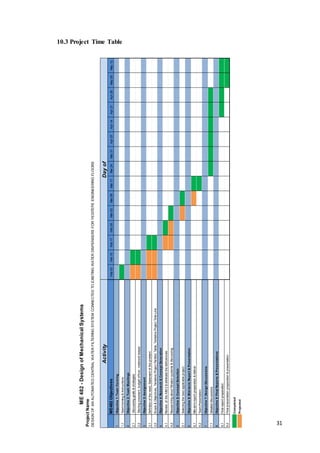
10.3 Project Time Table
ProjectName
DESIGNOFANAUTOMATEDCENTRALWATERFILTERINGSYSTEMCONNECTEDTOEXISTINGWATERDISPENSERSFORYEDITEPEENGINEERINGFLOORS
ME482ObjectivesFeb03Feb10Feb17Feb24Mar03Mar.09Mar.17Mar.24Mar.31Apr07Apr14Apr21Apr28May.05May.12
1Objective1:TeamForming
1,1Teamforming&instructions
2Objective2:TeamMeetings
2,1Discussinggoals&strategies
2,2Electingpresident,budgetofficer,notebookkeeper
3Objective3:Assignment
3,1Definitionoftheneed,Statementoftheproblem
3,2Scope&Objectives,TentativeProjectPartitionTable,TentativeProjectTime-Line
4Objective4:Research&ConceptGeneration
4,1ReviewoftheAIM3&eliminatethedeficiencies
4,2Researchingaboutfiltrationsystems&discussing
5Objective5:ConceptSelection
5,1Selectingthebestapplicableproject
6Objective6:Mid-termReport&Presentation
6,1Mid-termreportpreperation&deliver
6,2TeamPresentation
7Objective7:DesignDiscussions
7,1Detaileddiscussions
8Objective8:FinalReports&Presentations
8,1Finalreportpreparation
8,2Finalpresentationpreparation&presentation
Completed
Projected
Dayof
ME482-DesignofMechanicalSystems
Activity

Design of an Automated Central Water Filtering System Connected to Existing Water Dispensers for Yeditepe University Engineering Floors

  • 1.
    YEDITEPE UNIVERSITY, ISTANBUL ME482 Design of Mechanical Systems Term Project Report Group 2 Doruk ANGUN Peren AKSU Ramazan GÖKAY Salih GÜVEN Mechanical Engineering Department Instructor: Yrd. Doc. Dr. Namık Cıblak Spring 2015
  • 2.
    II Letter of Authorization ME482 Term Project Report APPROVED BY: Yrd. Doc. Dr. Namık Cıblak :………………………………………… STUDENT NAME: Doruk ANGUN: ............................................................................................... Peren AKSU: …………………………………………………………………. Ramazan GÖKAY: ............................................................................................ Salih GÜVEN: ............................................................................................ DEPARTMENT: Mechanical Engineering DATE OF APPROVAL: 15.05.2015
  • 3.
    III ABSTRACT Nowadays water treatmentsystems get important. Individuals or companies start to use water treatment systems to protect clean water sources. Everywhere people use demijohns to supply drink water. However, usage of demijohn brings some disadvantages like health problems causing from carrying or cleaning. In this project, the aim is to design an automated central water filtering system connected to existing water dispensers that are in Yeditepe Engineering floors. Through this project, drawbacks that considered above are eliminated.
  • 4.
    IV TABLE OF CONTENTS 1.INTRODUCTION ……………………………….……………………………..…….…1 2. LITERATURE SURVEY.............…………………………………………….………...3 3. PRELIMINARY DESIGN ALTERNATIVES……………………...……….……...…6 4. DESIGN SELECTION ………………..…………………...………………………..….13 5. CALCULATIONS…… ………..……………………………...……..…………………14 6. COST ANALYSIS ………..…………………...….……………..…………………......19 7. SIMULATION………………………………………………………………………...…23 8. CONCLUSION……….…………………………………………………………...……..25 9. REFERENCES………….……………………………………………………….……....26 10. APPENDIX …………………………………………………………………….………27
  • 5.
    1 1. INTRODUCTION The waterplays an important role on nature. It helps to ensure the continuity of aliveness. Humans, animals and plants use the water their own needs. The water is an essential part of human life, since the water constitutes the %60-70 of the human body weight. Beside of these essential needs, humans use the water for some other needs like cleaning and fun. Whole water cannot be used directly for each activity. For example, the water must have some proper values to drunk by humans. While some water has these proper values naturally, some water does not and it requires extra treatment and purification methods. And then it should be distributed to people properly. Therefore water purification and distribution are as important as water itself. In todays, city water can supply many needs for humans. However it cannot be drunk by humans in many cities and people have to buy drinkable water. That drinkable water is distributed within bottles. In some public institutions or homes, the drinkable water is distributed within water dispensers which is a device that provides hot and cold water quickly. Still, most of the dispenser gets the water from big water bottle which is called demijohn. This is an insufficient water supply system because it is a discrete supply and it could not provide water needs continuously. When the water of the demijohn runs out, the demijohn must be changed to get water again. This demijohn changing process may include some difficulties. For example, if there is not extra demijohn near the water dispenser the person has to wait for the full demijohn. This causes waste of time. Even if there is an extra demijohn near the water dispenser, it still includes some difficulties. Since a demijohn is 19 liter and it has unbalanced shape, it can cause some health problems. The number of water dispenser and changing frequency of the demijohns are also problem. If the number of water dispenser is not enough and demijohns are changed rarely, people cannot access the water properly, they waste their times by waiting or they can have some health problem during demijohn changing process. Because of these problems and needs, an automated central water filtering system was designed for Yeditepe University Engineering building. In this report, this automated central water system is explained. In our project, that automated central water filtering system must have compact size, it includes long life span tools and devices, the system must be efficient, reliable and low cost. The system operates non stopping. These features can be described as the objectives of the project. On the other hand, the system must include a clean water tank, a pump, PPRC type piping system, hot and cold taps and finally there must be one dispenser for each floor. These features can be considered as the scope of the project. The automated central water filtering system includes four major subsystems which are water supply subsystem, filtering subsystem, connector subsystem and interface subsystem. Water supply subsystem includes five parts which are piston pump, clean water tank, PPRC type piping system, hydrophore and control unit. Filtering subsystem occurs from two parts which are sand filter and reverse osmosis filter. Connector subsystem includes two parts which are hose adapter and fitting. And the interface subsystem occurs from the water prism as shown Figure 1.
  • 6.
    2 Figure 1.1: ProjectPartition Tree
  • 7.
    3 2. LITERATURE SURVEY Watertreatment and purification methods are as significant as water itself. Therefore, many institutions are constituted, many patents are invented or these issues become an important topic for many scientific studies and researches. 2.1 Companies This section includes some companies which work for water purification, filtration and human health. Sartorius is a company that one of the world’s leading laboratory equipment providers. They produces innovative products that helps customers to overcome in laboratory environment. In our topic, Sartorius develop products according to customer needs. They can produce laboratory water suppliers by type of source, by application or by system. Sweet Water company is producing water treatment systems and under sink water filters. Ecologist James P. McMahon develop suitable systems for commercial or household systems. National Sanitation Foundation (NSF) is an organization that works on public health and safety. It has a professional staff of microbiologists, engineers, toxicologists, chemists and so on. Also NSF laboratories provide a wide range of testing and certification about human health. PUR is a company that produce high technology filtration systems for consumers. They develop faucet filters, pitchers & dispensers and replacement filters. Also PUR has NSF certificate which means that their products are certified by National Sanitation Foundation that highly recommended in public health and safety. Amway is a worldwide company that produces many goods in different area. They develop water purifiers for last users that has low cost and easy to install. 2.2 Patents In this section, some patents are mentioned with respect to our project. a) Reverse Osmosis Purification System – [US 6,190,558 B1 – Feb.20, 2001 – Robbins] In this patent as shown in the Figure 2, reverse osmosis technique was used that widespread and efficient. In the system, a motor driven pump supplies a feed stream to a reverse osmosis unit resulting in the creation of a product water stream and concentrate or brine stream. Also, the system has recirculation mode which sends the product water stream to mixing unit and that results with producing more pure water.
  • 8.
    4 Figure 2.1: ReverseOsmosis Purification [1] b) Drinking Water Purification Device - [US 2014/0008302 A1 – Jan.09, 2014 – King] In this patent as shown in the Figure 3, a fast acting system was developed by the founder. System contains silver ions that suitable for personal or household water containers. The purification part contains a source of silver ions and a compound containing a hydantoin ring that increased the presence of silver ions. Thereby, harmful microorganisms can be quickly killed without any other addition. Figure 2.2: Drinking Water Purification Device [2]
  • 9.
    5 c) Water Purification– [US 2014/0367344 A1 – Dec.18 2014 – Faure] In this system as shown in the Figure 4, oxygen introduced water by the help of electrolysis of the water. Then, that water treated with some ionized transition metal. The system prevents growth of bacteria, fungal and viral pathogens in water. Also, it provides non-toxic method of ensuring public health. Figure 2.3: Water Purification [3] d) Wireless Water Purification Systems and Wireless Remote Dispensing Devices For Water Purification Systems – [US 7,824,543 B2 – Nov.02, 2010 – Larkner] In this patent as shown in the Figure 5, a water purification system was equipped with a wireless controller system. In this system, the main purification unit was connected with remote dispensers by fluidly. Also, they have wireless transceivers that make communication between purification unit and dispensers. Figure 2.4: Wireless Water Purification [4]
  • 10.
    6 e) Water PurificationSystems – [US 7,927,488 B1 – Apr.19, 2011 – Wilfong ] In this system as shown Figure 6, the governing idea is utilizing oxidation. After oxidation, the constituents can be removed by the help of a filter. Thus, impurities in the consuming water can be removed easily. Also, this invention was balance the pH of the water by reduce the hydronium ion concentration. Moreover, when pH increased the corrosivity of the water reduced. Figure 2.5: Water Purification System [5] 2.3 Scientific Studies In this section, some scientific studies and academic research is mentioned. Up to now, a scientific study has concerned about osmotic water purification system. Osmotic water purification systems produces a clean sugar – electrolyte drink from almost any water source [6]. A study which was published at 2000 concerned about the cleanliness of the drinking water. This study was conducted because in the beginning of the 2000’s, Canada’s drinking water has become a very important subject because of the Escherichia coli infection in Walkerton [7]. Another academic research was interested with household water purification system. In household applications, people can use ceramic filters, chlorination with storage in an improved vessel, solar disinfection and so on. However, each of these applications have limitation and the have to be improve [8]. And another scientific study was about carbon nanotube membrane for water purification. Water purification is a subject that works on nano size particles or infectives. Thereby, nanotechnology is directly influence on water purification systems. As mentioned in the article, a carbon nanotube membrane make the transport of water and antimicrobial properties faster [9].
  • 11.
    7 3. PRELIMINARY DESIGNALTERNATIVES 3.1 Interfaces Preliminary research ideas are examined in this part. Firstly water dispenser alternatives were observed. Figure 1: Water dispenser shape looks like a drop. Figure 2: Environmentally friendly water dispenser concept. There are plants in water dispenser. Figure 3: A retrofittable part like Yeditepe University logo Figure 3.1 Figure 3.2 Figure 3.3
  • 12.
    8 Figure 4: Waterdispenser shape based on our Yeditepe university logo. Figure 5: In this drawing water dispenser is smart, it can walk around the rooms. Figure 6: Electro dispenser has a monitor that reminds people. It has an option to select the temperature for people. Figure 7: There is an option for using solar systems for heating the water for the water dispenser. Figure 3.4 Figure 3.5 Figure 3.6 Figure 3.7
  • 13.
    9 3.2 Filters Some filterdrawings for preliminary design alternatives: Figure 8: A retrofittable idea for each water dispenser, gard filter added to the pipe before water gets in the water dispenser. Figure 9: All in one filter includes a chemical filter. Purifying water is important for human health. In this chemical filter body region the mission can achieved. Figure 10: It is an original reverse osmosis filter, in this drawing each floor has reverse osmosis and reverse osmosis added to pipe only. Figure 3.8 Figure 3.9 Figure 3.10
  • 14.
    10 Figure 11: Itis a idea for using sand filter in a storage tank. Figure 12: This drawing called screw power generator, it has a rotational part. Figure 13: Multi layered filtering can be used for water clarifying. Multi layered filtration has 8 layers which are sediment filtration, granule active filtration, block carbon, membrane filtration, silver ionized post carbon, mineral filter, alkaline filter, bioceramic filter. Figure 3.12 Figure 3.13 Figure 3.11
  • 15.
    11 3.3 Connectors Apparatus isimportant for fitting pipe to water dispensers. There are same drawings for fitting the pipe. Figure 14: Hose adapter is for fitting pipe to water dispenser, it has an easy use and one click it fits to the water dispenser mouth. Figure 15: It is a connection apparatus for water dispenser and pipe. It has low cost and practical idea for a connector. Figure 3.14 Figure 3.15
  • 16.
    12 Figure 16: Thisdrawing shows that easy way to fitting pipe to water dispenser, it has two parts one part has threads and other part is stable. Figure 17: this system includes one check valve at the bottom floor which provides one way flow to the floors. Figure 18: In this system all floors has gate valves for security. Figure 19: In this research pipe types are analyzed and PPRC type of pipe is observed. Figure 3.16 Figure 3.17 Figure 3.18 Figure 3.19
  • 17.
    13 Figure 20: Systemfor clean water which includes pump, storage tank, filter. Figure 21: System layout includes some filters and carbon units. Figure 3.21 Figure 3.20
  • 18.
    14 4. DESIGN SELECTION Selectionof designs has some criteria’s like aesthetics, cost and function. These are the selected design charts for some subsystems according to criteria selection techniques. In the first part of the election group members voted for determination of evaluating criteria of each preliminary design group (Appendix 1). After that, each preliminary design alternatives were evaluated in terms of determined criteria (Appendix 2). Finally, the results are as follows; Figure 4.1: Interface selection result Figure 4.2: Pump selection result Figure 4.3: Filter selection result Figure 4.4: Connector selection result
  • 19.
    15 5. CALCULATIONS Calculation startswith measuring the head losses for each floors. Head loss calculation has two parts: Major head loss & Minor head loss. Before major head loss flow rate of each floors must be determined. Volume of the container is 150 ml. For one container, estimation time is taken as 5 seconds for filling the container. Flow rate is determined from that information and taken as 0.15 m3/h (included safety) and therefore Yeditepe Engineering building has 9 floors and total flow rate is calculated as 1.35 m3/h. After flow rate is calculated, our system pipe type is selected. In this system PPRC type pipes are used. PPRC type starts with 20 mm pipes. Velocity in the pipe is determined from: 𝑣 = 4∗𝑞 𝜋∗𝐷2 (1) Velocity in the pipe shouldn’t exceed 1.5 m/s. If velocity is greater than 1.5 pipe diameter should be selected bigger than the first used diameter. After velocity is calculated Reynolds number should be checked. Flow regime must be observed. 𝑅𝑒 = 𝜌𝑣𝐷 𝜇 (2) Friction factor should be found from Moody chart for turbulent flow (Re>2000) and for laminar flow friction factor is; 𝑓 = 64/𝑅𝑒 (3) Length of the floors is taken as 4 meters. Eventually major head loss equation is; ℎ 𝑓 = 𝑓 ∗ 𝑙 𝐷 ∗ 𝑣2 2𝑔 (4)
  • 20.
    16 This table showsflow rates, velocities, Reynolds number, head losses for each floor. Total head loss is calculated as 1.549 m. 5.1 Major Loss Major head loss decreases as height increases. Velocity decreases as height increases because of the flow rate. Figure 5.1.1: Major head loss vs Floor Number Table 5.1: Results of main calculations Figure 5.1.2: Velocity vs Floor Number
  • 21.
    17 5.2 Minor Loss Minorloss occurs in a pipe due to the components below, 1. Fittings. (Elbows, tees, bends and other types) 2. Valves. (Check valves, gate valves and other types) 3. Inlet and outlet geometry. 4. Expansions and contractions in the pipe. These components affect the flow and additional losses occur because of flow separation and mixing due to them. Generally, total minor loss is less than the total major loss in a system. The minor losses are associated with  Velocity (V)  Loss Coefficient (KL)  Gravity Minor losses are calculated by: ℎ 𝐿 = 𝐾𝐿 ∗ 𝑉2 2𝑔 In our water purification system design we have used some fittings and valves. Number of components used in each floor and the total numbers are shown in Figure.1. Figure 5.2.1: Number of components used.
  • 22.
    18 According to thecomponents presented in Figure.1, minor losses at each floor due to the fittings and valves are calculated by using their loss coefficient values. (Table 1.) Table 5.2.2: Minor loss and velocity calculations As a result of the calculations, total minor loss due to the fittings is calculated as 0.194 meters and minor loss due to valves is calculated as 0.277 meters. Therefore, total minor loss in the pipe system is ℎ 𝑚𝑖𝑛𝑜𝑟 = 𝑚𝑖𝑛𝑜𝑟𝑓𝑖𝑡 𝑡𝑖𝑛𝑔𝑠 + 𝑚𝑖𝑛𝑜𝑟𝑣𝑎𝑙𝑣𝑒𝑠 = 0.194 𝑚 + 0.277 𝑚 = 𝟎. 𝟒𝟕𝟏 𝒎𝒆𝒕𝒆𝒓𝒔 Figure 5.2.3: Minor head loss change for each floor
  • 23.
    19 Up to now,minor loss and major loss calculations are done. According to their results, total loss in the pipeline is calculated as ℎ 𝑡𝑜𝑡𝑎𝑙 = ℎ 𝑚𝑎𝑗𝑜𝑟 + ℎ 𝑚𝑖𝑛𝑜𝑟 = 1.549 𝑚 + 0.471 𝑚 = 𝟐. 𝟎𝟐𝟎 𝒎𝒆𝒕𝒆𝒓𝒔 Selection of the pump highly depends on the loss calculations in order to supply the purified water up to the highest floor. Total height of the building is assumed as 36 meters. Since the total head loss calculated as 2.020 meters; to design a water purification system to this building we need to choose a pump that has a minimum head of ℎ 𝑝𝑢𝑚𝑝 = ℎ 𝑏𝑢𝑖𝑙𝑑𝑖 𝑛 𝑔 + ℎ 𝑙𝑜𝑠𝑠 = 36 𝑚 + 2.020 𝑚 = 𝟑𝟖 𝒎𝒆𝒕𝒆𝒓𝒔
  • 24.
    20 6. COST ANALYSIS Totalcost of this design consists of 1. Pipes and fittings 2. Valves 3. Filters 4. Pump 5. Control Unit 6. Water Tank 7. Design and engineering costs. 6.1 Cost of pipes and fittings a) T-Piece Figure 6.1: T-Piece fitting Brand / Model Number= FIRAT / 7742252520 [10] Unit Cost= 0.50 TL Total Cost= 8 x 0.50 TL= 4 TL b) 90° elbow Figure 6.2: 90 degree elbow fitting Brand / Model Number= FIRAT / 771000025[10] Unit Cost= 0.40 TL Total Cost= 2 x 0.40 TL= 0.80 TL
  • 25.
    21 c) Straight pipe Figure6.3: Straight pipe Brand / Model Number= FIRAT / PPRC with fiberglass [10] 20 mm Cost per meter= 2.99 TL Total Cost=40 m x 2.99 TL= 119.6 TL 25 mm Cost per meter= 4.34 TL Total Cost=20 m x 4.34 TL= 86.8 TL Total cost of straight pipe = 119.6 TL + 86.8 TL= 206.4 TL 6.2 Cost of valves: a) Gate valves Figure 6.2.1: Gate valve Brand / Model Number= DUYAR / DIN 3216 [11] Unit Cost= 10 TL Total Cost= 8 x 10 TL= 80 TL
  • 26.
    22 b) Check valves Figure6.2.2: Check valve Brand / Model Number= DUYAR / Disc Type Check Valve [11] Unit Cost= 42 TL Total Cost= 1 x 42 TL= 42 TL 6.3 Cost of Filter Figure 6.3.1: Reverse osmosis filter Reverse Osmosis filter is used in this design according to the election between design alternatives. Brand / Model Number= WATTS / R12-1200-1 Wall Mounted RO System [12] Total Cost= 7830TL 6.4 Cost of pump Figure 6.4.1: Pump
  • 27.
    23 Brand / ModelNumber= WILO / FMHI 405 1,1/2-M-1-E Multi Staged Horizontal Domestic Hidrofor [13] Total Cost=1.961 TL 6.5 Cost of control unit Brand / Model Number= RGCONTROL UNIT / SG5221 Water Pump Controller Total Cost= 175 TL 6.6 Cost of water tank Figure 6.6.1: Water tank Brand / Model Number= KARMOD/ Y 300 [14] Total Cost= 500 TL 6.7 Designand engineering costs Estimated cost of design and engineering cost is 10000 TL According to these costs total cost to apply this design to Yeditepe University Engineering floors is calculated as ; 𝑇𝑜𝑡𝑎𝑙 𝐶𝑜𝑠𝑡 = 10,000 + 7,830 + 1,961 + 500 + 206.4 + 171 + 80 + 42 + 4 + 0.80 = 𝟐𝟎, 𝟕𝟗𝟓 𝑻𝑳
  • 28.
    24 7. SIMULATION Simulation isan useful tool to observe deficiencies of the system before build the system. Designing a pipe system is a sensitive job that need inspection in each step. Also, a control system is a necessity for a closed system to operate easily. According to these constraints a control simulation was designed in Simulink. 7.1 The general control diagram Figure x: The general control diagram In the diagram above a well known controller was used which name is PID controller. PID controller has many advantages in control field. The most important one is fast converging capability. Thats why in this system PID controller was used. The input step block represents the desired water level of the tank. The disturbation after the pumping subsystem simulates the usage of water by individuals. Furthermore, display shows the instant water level of the tank 7.1.1 The Pumping Subsystem In the control loop the actual dynamic system was modeled as pumping subsystem. It includes all system dynamics for example pipes, elbows, tees, dispensers and so on. Here, all calculated dimensions were given to the system to obtain more realistic result from simulation. Dispensers were modeled as “Constant head tank” in the subsystem. Also, clean water tank can be seen as “Reservoir” and “Fixed displacement pump” was simulates the actual pump in the real system. The subsystem can be seen in the following page.
  • 29.
    25 7.1.2 The results Afterthe diagram runs successfully the simulation gives the steady state “Water level vs Time” graph of the system. Here, when the system run the water level of the tank was drop catastrophic because the dispensers were empty. After dispensers filled up with water the system reaches steady state region. Also, tiny peak which can be considered as water usage of individuals can be seen in the figure below. In addition, this plot contains an accelerated simulation. It is obvious that it is impossible to fill up the tank 50 liters of water in 1.5 seconds safely. Figure x: Water level versus Time graph
  • 30.
    26 8. CONCLUSION Water isone of the most important thing for human being. Individuals should drink enough water every day for living healthy. World’s clean water resources are slightly decreasing day by day. For this reason, alternative sources for clean water come into question. Accordingly, demand for water treatment systems significantly increase in last 5 years. Companies, hospitals, schools set up water treatment systems in buildings. In this project, an automated central water filtering system that connected to existing water dispensers was designed. This project includes only Yeditepe University Engineering Department floors. In the beginning of the project the need and the statement of the problem were obtained. Then, according to these need and problem remedial objectives and scopes were determined. In the next step, a detailed literature research was done for water filtering systems. After that, some preliminary design alternatives were generated. In preliminary design alternatives, focused on feasible solutions. Then, with the help of elimination techniques successful designs were selected. On the next part, selected designs were examined in details. In detailed design; external dimensions, material requirements, design life and operating parameters were determined. According to detailed design results calculations & cost analysis of the system were done step by step. Finally, the simulation of the system was conducted. To summarize, a retrofittable system was designed for Yeditepe Engineering Department floors. The system designed based on having long life span. Also, efficient and low cost appliances were considered during the design stage. With this system individuals do not wait for changing of demijohns. The most important thing that health problems caused by demijohns was be removed.
  • 31.
    27 9. REFERENCES [1] Robbins,Adam. "Reverse osmosis purification system." U.S. Patent No. 6,190,558. 20 Feb. 2001. [2] King, Joseph. "Drinking Water Purification Device." U.S. Patent No. 2014/0008302 A1. 09 Jan. 2014. [3] Faure, Frederick Jacobus. "Water Purification." U.S. Patent No. 2014/0367344 A1. 18 Dec. 2014. [4] Larkner, Thomas Joseph. "Wireless water purification systems and wireless remote dispensing devices for water purification systems." U.S. Patent No. 7,824,543. 2 Nov. 2010. [5] Wilfong, Rudy B. "Water purification systems." U.S. Patent No. 7,927,488. 19 Apr. 2011. [6] ‘’Point of use water treatment with forward osmosis for emergency relief’’-Ethan Butler, Andrew Silva, Kyle Horton, Zachary Rom, Malgorzata Chwatko, Arie Havasov, Jeffrey R. McCutcheon. [7] "Making Our Water Safe to Drink "- Weir, Erica. Canadian Medical Association Journal (2000). [8] "Household water purification: Low-cost interventions."Agrawal, V. K., and R. Bhalwar. Medical Journal Armed Forces India 65.3 (2009): 260-263. [9] ‘’High performance and antifouling vertically aligned carbon nanotube membrane forwater purification’’ - YoungbinBaek , CholinKim , DongKyunSeo , TaewooKim , JeongSeokLee , YongHyupKim , KyungHyunAhn , SangSeekBae , SangCheolLee , Jaelim Lim , KyunghyukLee , JeyongYoon [10] http://www.firat.com/userfiles/file/pdf/tr/Brosurler2014/PPRC- KOMPOZIT_TR_2014.pdf [11] http://www.duyarvana.com/ [12] http://www.belkraft.com/images/R12.jpg [13] http://www.wiloturkiye.com/FMHI-405-112-M-1-E-Monofaze-Cok-Kademeli- Yatay-Hidromatli-Hidrofor%2cPR-264.html [14] http://www.karmod.com
  • 32.
    28 10.APPENDIX 10.1 Criteria Selection Interface DorukPerenRamazanSalih InterfaceDorukPerenRamazanSalihSUMNormalized Relative Weight Interface Relative Weight CostFunctionFunctionAestheticAesthetics221380,3333%Aesthetics33% AestheticAestheticsCostFunctionCost312170,2929%Cost29% FunctionCostAestheticCostFunction133290,3838%Function38% WaterPump DorukPerenRamazanSalih WaterPumpDorukPerenRamazanSalihSUMNormalized Relative Weight WaterPump Relative Weight EfficiencyFunctionEfficiencyEfficiencyEfficiency3233110,4646%Efficiency46% CostEfficiencyCostFunctionCost212160,2525%Cost25% FunctionCostFunctionCostFunction131270,2929%Function29% Filters DorukPerenRamazanSalih FiltersDorukPerenRamazanSalihSUMNormalized Relative Weight Filters Relative Weight LifespanFunctionLifespanLifespanLifespan3233110,4646%Lifespan46% FunctionLifespanFunctionFunctionCost111140,1717%Cost17% CostCostCostCostFunction232290,3838%Function38% Connectors DorukPerenRamazanSalih ConnectorsDorukPerenRamazanSalihSUMNormalized Relative Weight Connectors Relative Weight FunctionAestheticFunctionAestheticAesthetic131380,3333%Lifespan33% CostFunctionCostFunctionCost212160,2525%Cost25% AestheticCostAestheticCostFunction3232100,4242%Function42%
  • 33.
    29 10.2 Final Scoresfor Design Selection Interfaces EcoDispenserDorukPerenRamazanSalihTotalScoreWeighedScore Aesthetic(33%)34119 Cost(29%)002249,07 Function(38%)244313 DropShape Aesthetic01449 Cost230055,18 Function01102 WaterPyramid Aesthetic31116 Cost4344159,75 Function41139 WaterPumps PistonPumpDorukPerenRamazanSalihTotalScoreWeighedScore Efficiency(46%)343414 Cost(25%)1031511,46 Function(29%)234413 StageCentrifugal Efficiency11215 Cost222176,37 Function33118 BallFloorType Efficiency21115 Cost3414126,17 Function10113
  • 34.
  • 35.
    31 10.3 Project TimeTable ProjectName DESIGNOFANAUTOMATEDCENTRALWATERFILTERINGSYSTEMCONNECTEDTOEXISTINGWATERDISPENSERSFORYEDITEPEENGINEERINGFLOORS ME482ObjectivesFeb03Feb10Feb17Feb24Mar03Mar.09Mar.17Mar.24Mar.31Apr07Apr14Apr21Apr28May.05May.12 1Objective1:TeamForming 1,1Teamforming&instructions 2Objective2:TeamMeetings 2,1Discussinggoals&strategies 2,2Electingpresident,budgetofficer,notebookkeeper 3Objective3:Assignment 3,1Definitionoftheneed,Statementoftheproblem 3,2Scope&Objectives,TentativeProjectPartitionTable,TentativeProjectTime-Line 4Objective4:Research&ConceptGeneration 4,1ReviewoftheAIM3&eliminatethedeficiencies 4,2Researchingaboutfiltrationsystems&discussing 5Objective5:ConceptSelection 5,1Selectingthebestapplicableproject 6Objective6:Mid-termReport&Presentation 6,1Mid-termreportpreperation&deliver 6,2TeamPresentation 7Objective7:DesignDiscussions 7,1Detaileddiscussions 8Objective8:FinalReports&Presentations 8,1Finalreportpreparation 8,2Finalpresentationpreparation&presentation Completed Projected Dayof ME482-DesignofMechanicalSystems Activity