Eeyores, Tiggers, and
Piglets
INTRODUCTION
In which the
Presenter Talks
Briefly About
Himself
@wcolgrove
@threespot
FOREWORD
In which
We Talk About
a Very Magical
Place
Talking about your
career can be difficult in
familiar surroundings.
CHAPTER I
In which
We Uncover the
Origin of this Talk
#TaoBother
CHAPTER II
In which
We Begin By Asking
the Room “Who,”
“Why,” and
“Wherefore?”
CHAPTER III
In which the
Characters Are Introduced and
the Problem with Christopher
Robin is Discussed
CHAPTER IV
In which
We Introduce the Idea of
the Uncarved Block
It is a state of pure potential which is
the primordial condition of the mind
before the arising of experience.
Points to perception without prejudice,
i.e. beyond dualistic distinctions such
as right/wrong, good/bad, black/white,
beautiful/ugly.
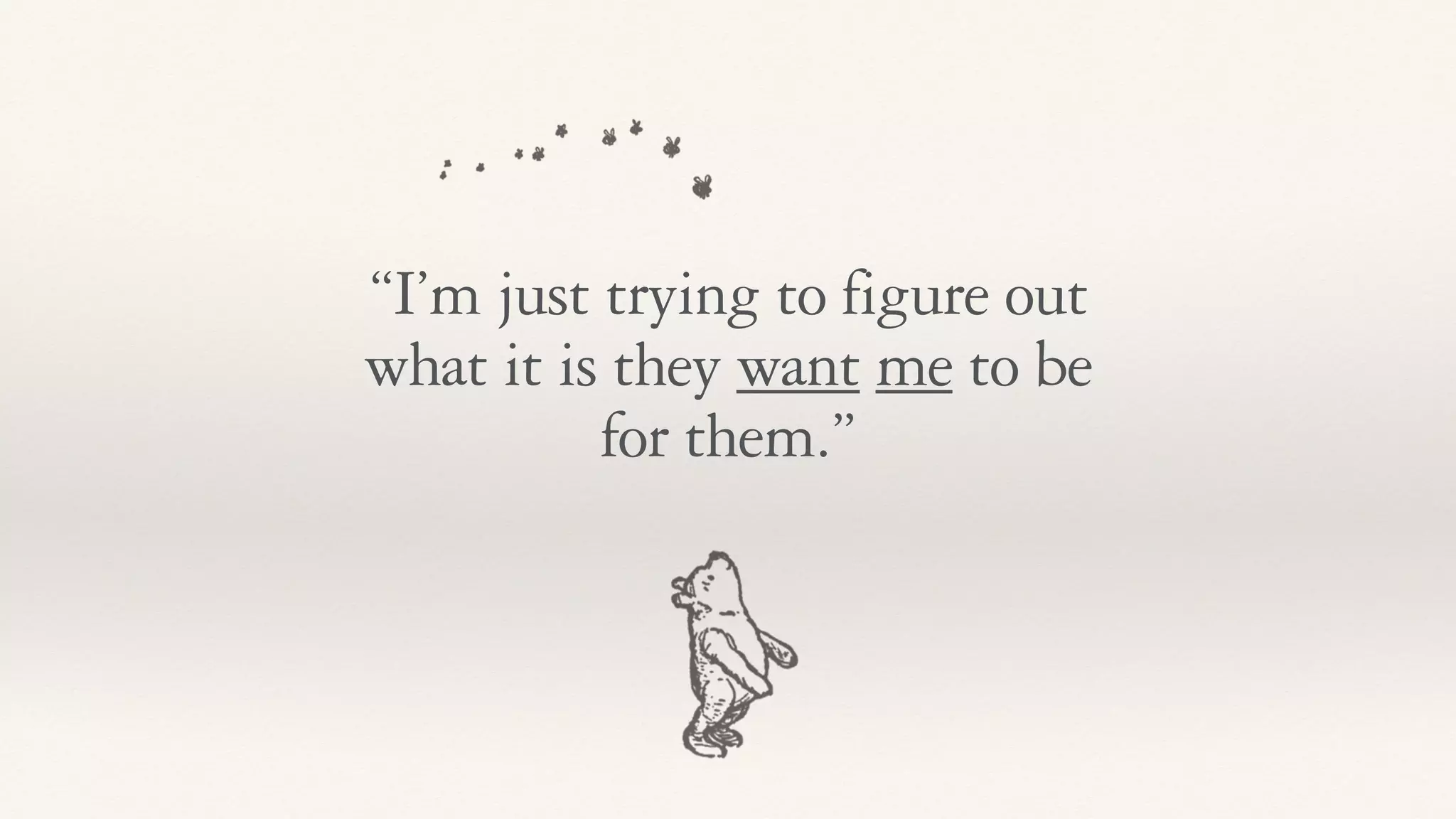
“I’m just trying to figure out
what it is they want me to be
for them.”
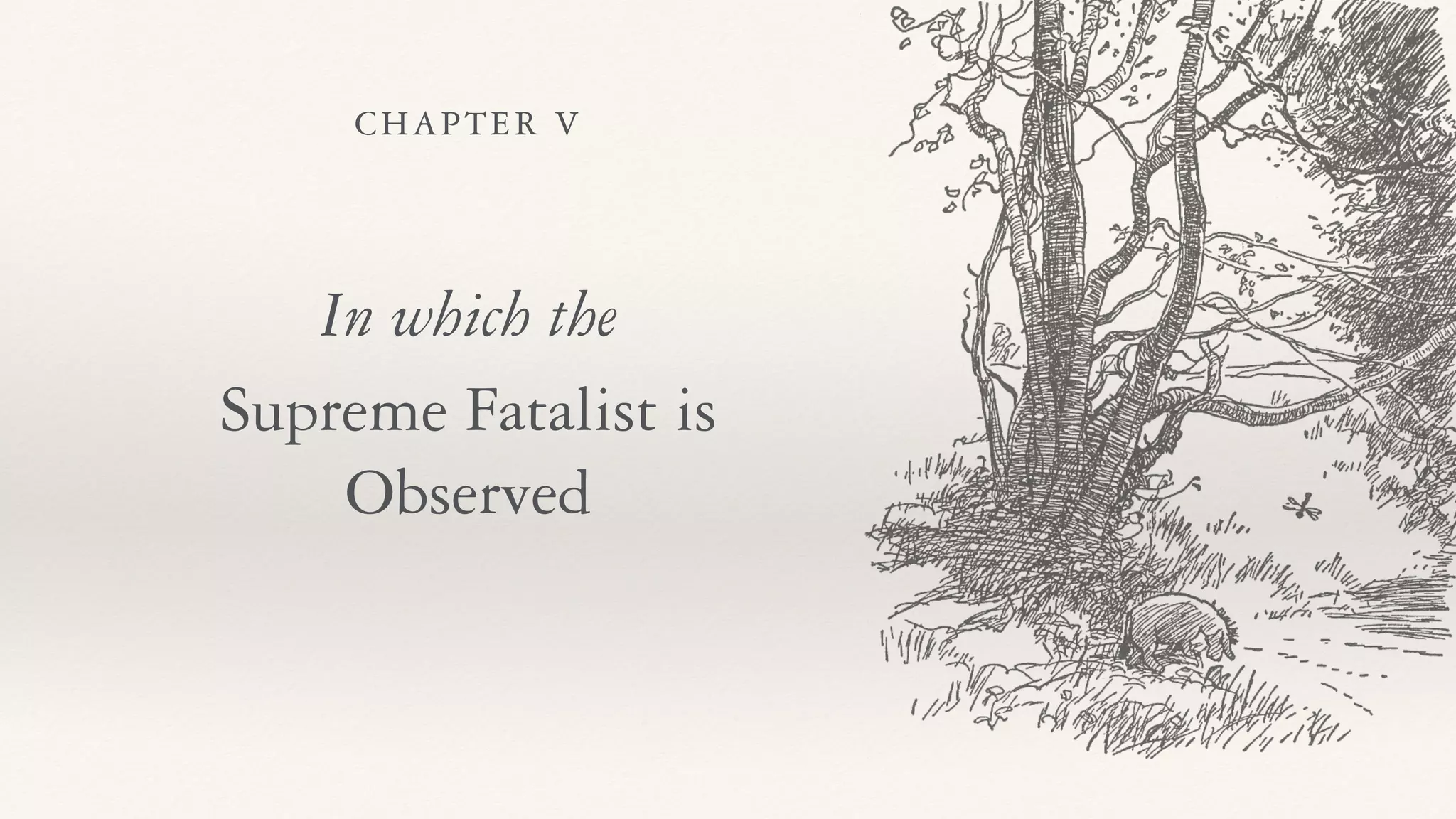
CHAPTER V
In which the
Supreme Fatalist is
Observed
Eeyores are pessimistic,
gloomy, depressed, and
have a poor opinion of
others, describing them
as having “No brain at
all, some of them.”
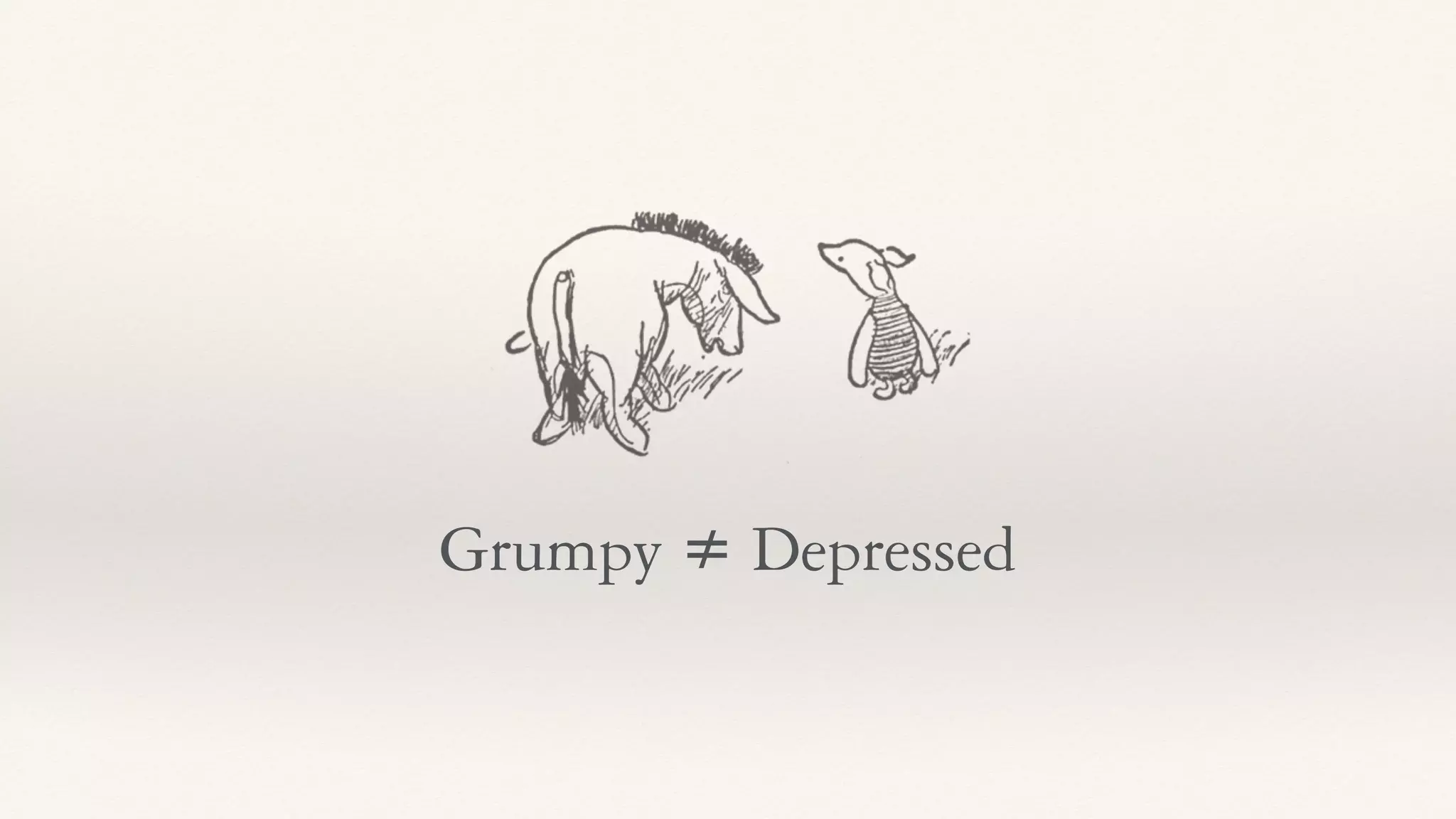
Grumpy ≠ Depressed
Fire Your Eeyores
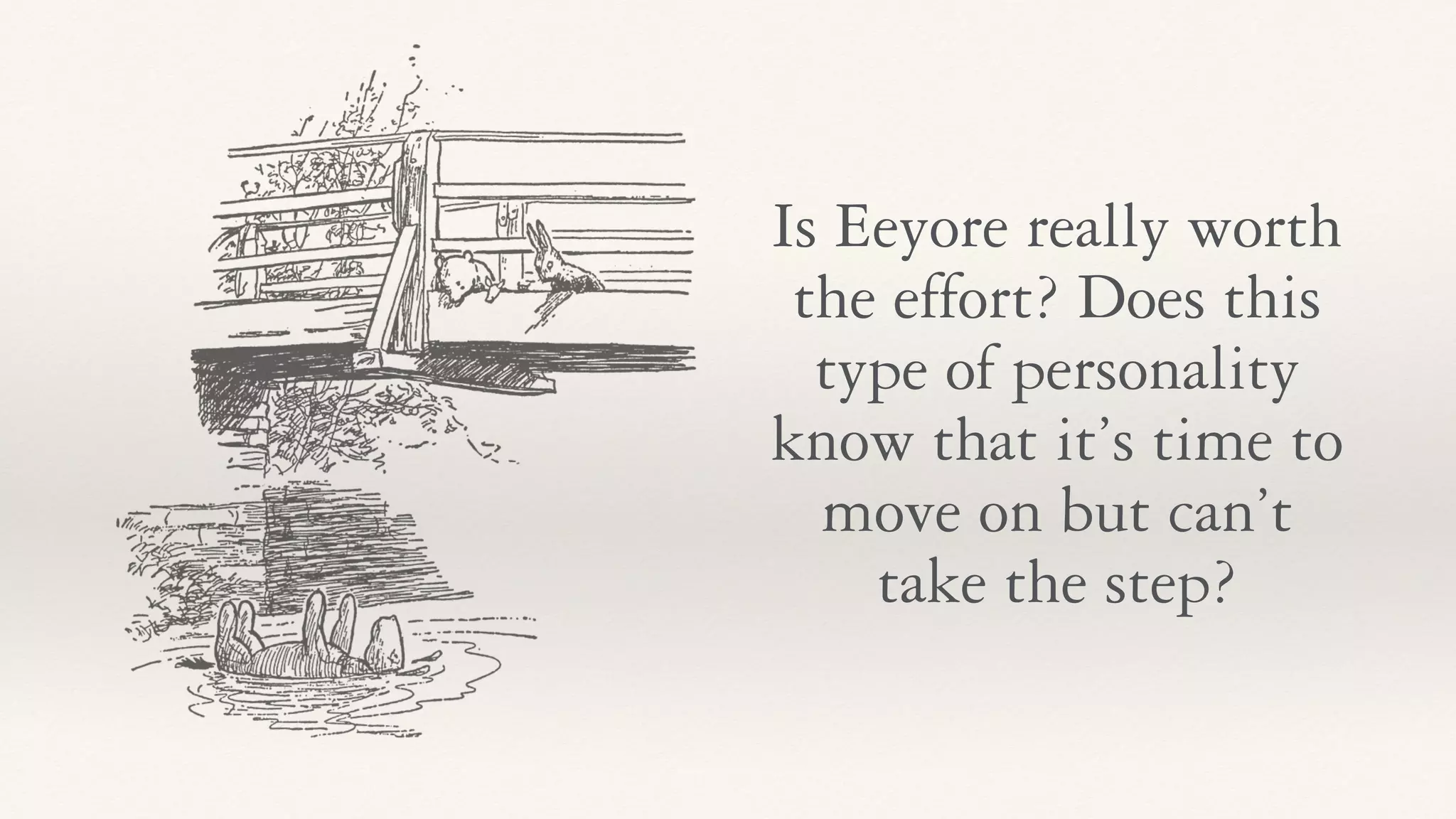
Is Eeyore really worth
the effort? Does this
type of personality
know that it’s time to
move on but can’t
take the step?
How do you engage and
motivate someone who always
sees the glass as half-empty?
CHAPTER VI
In which
We Address the
Joyous Overconfident
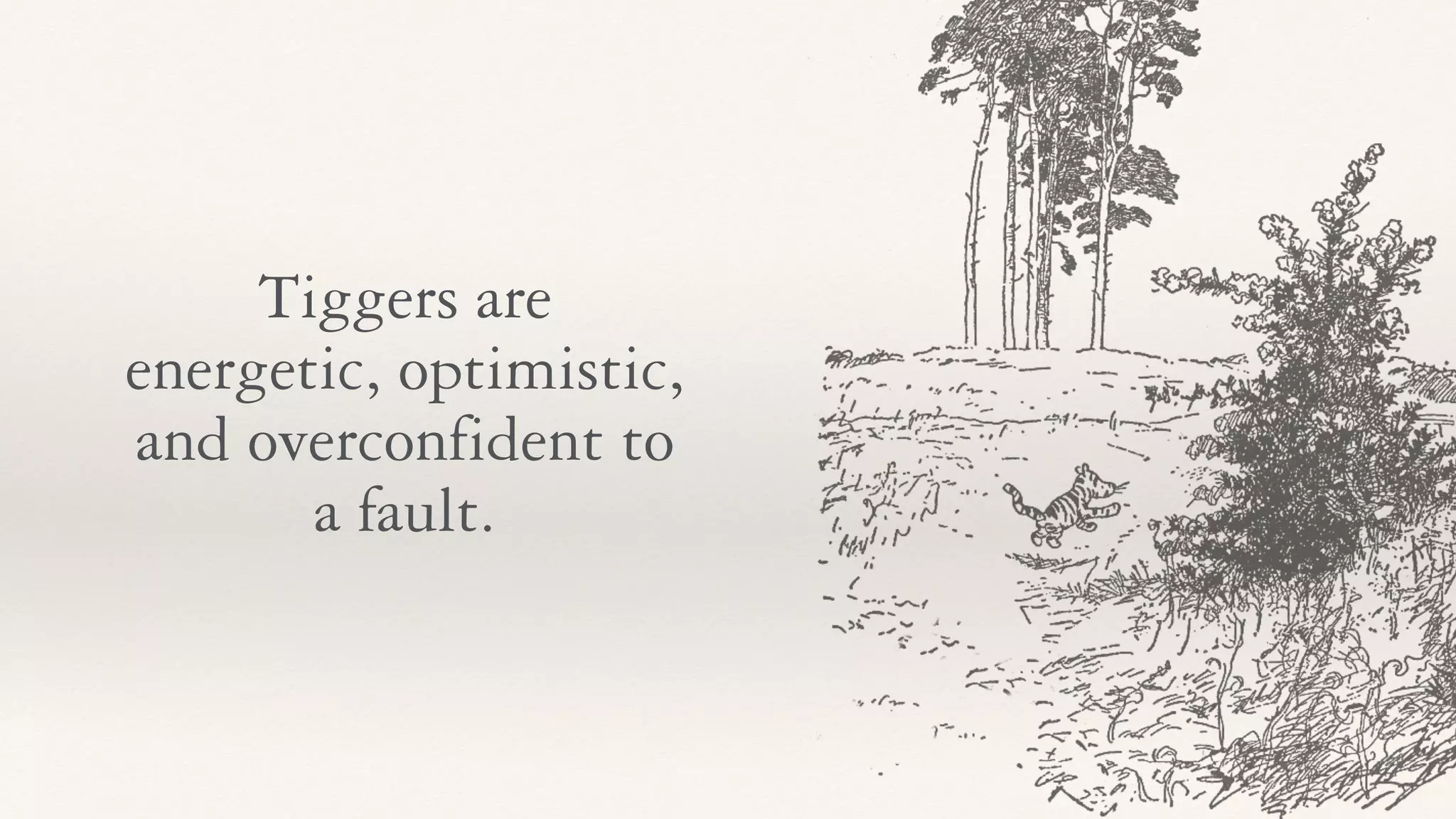
Tiggers are
energetic, optimistic,
and overconfident to
a fault.
“For of all the things which he had
said Tiggers could do, the only one he
felt really certain about suddenly was
climbing trees.”
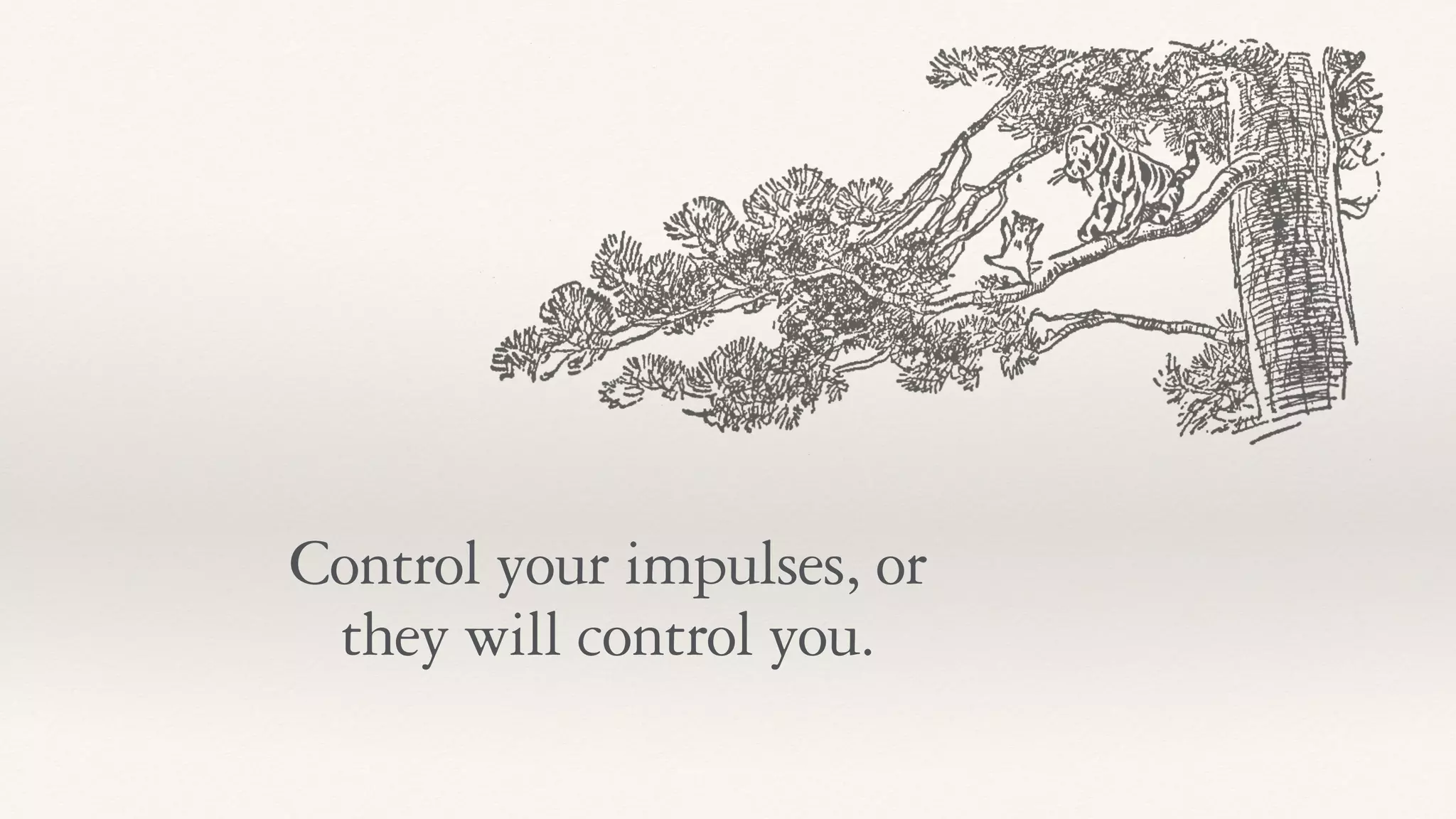
Control your impulses, or
they will control you.
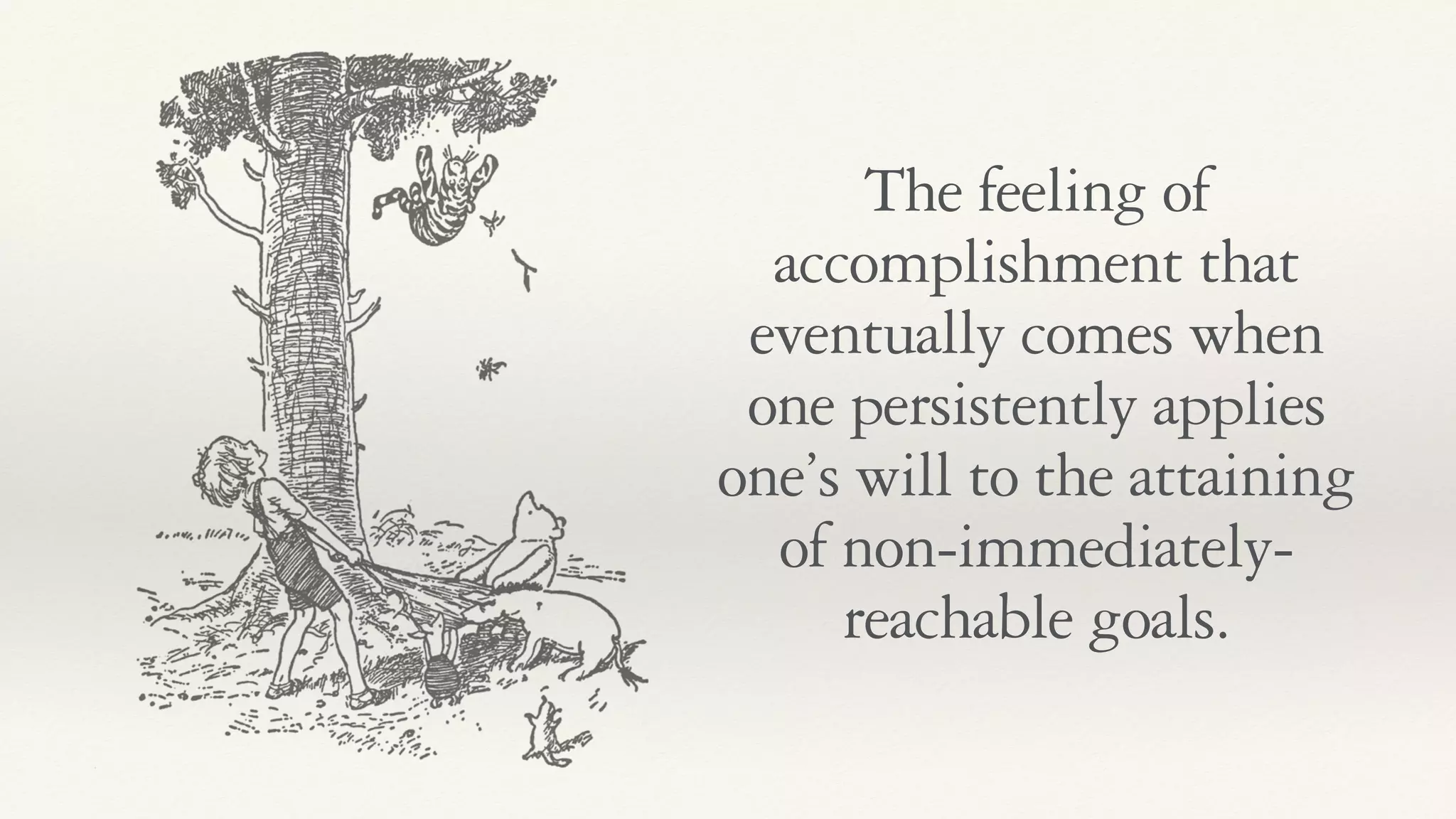
The feeling of
accomplishment that
eventually comes when
one persistently applies
one’s will to the attaining
of non-immediately-
reachable goals.
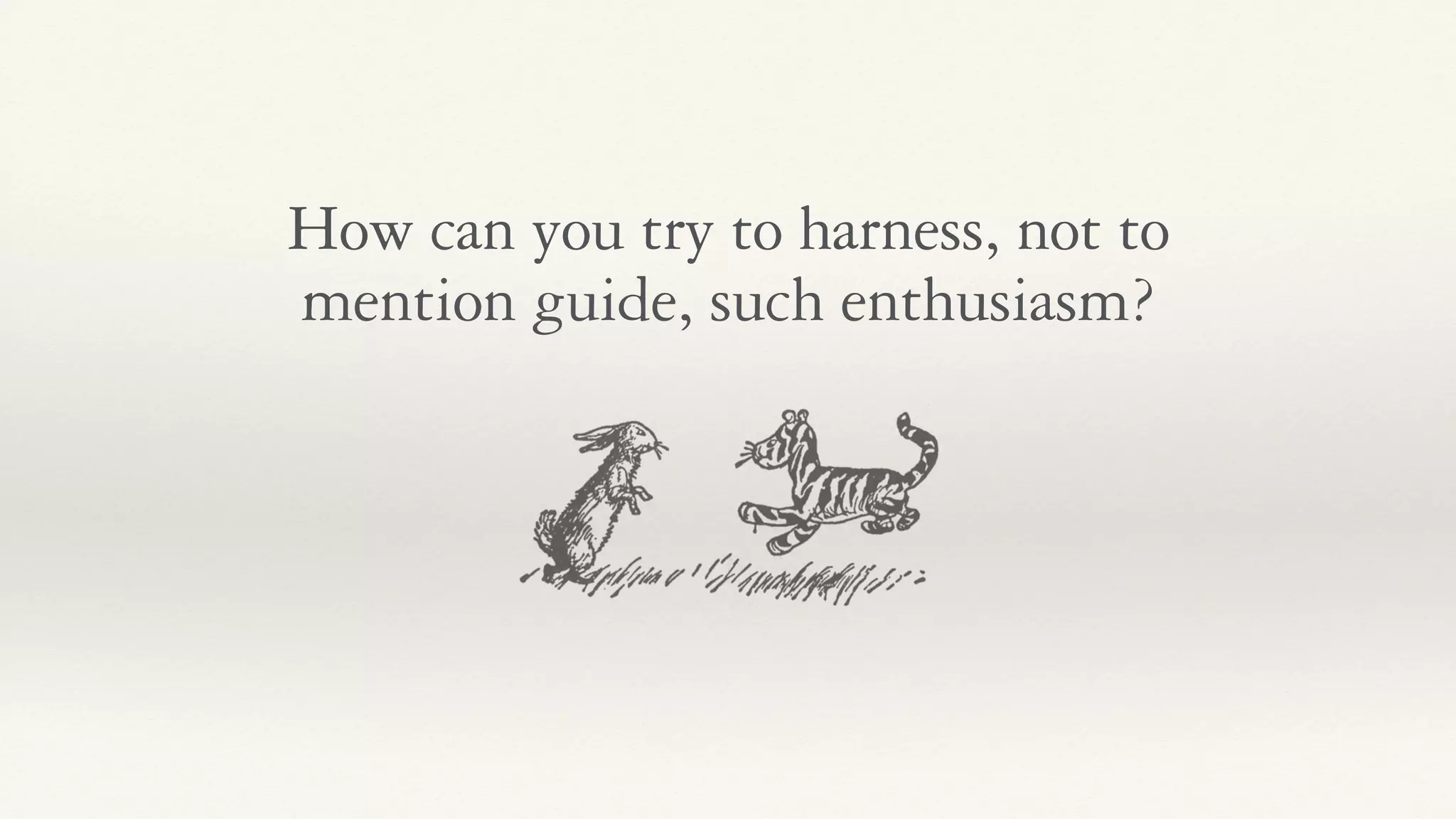
How can you try to harness, not to
mention guide, such enthusiasm?
Today, in your career, would you hire
yourself when you first started?
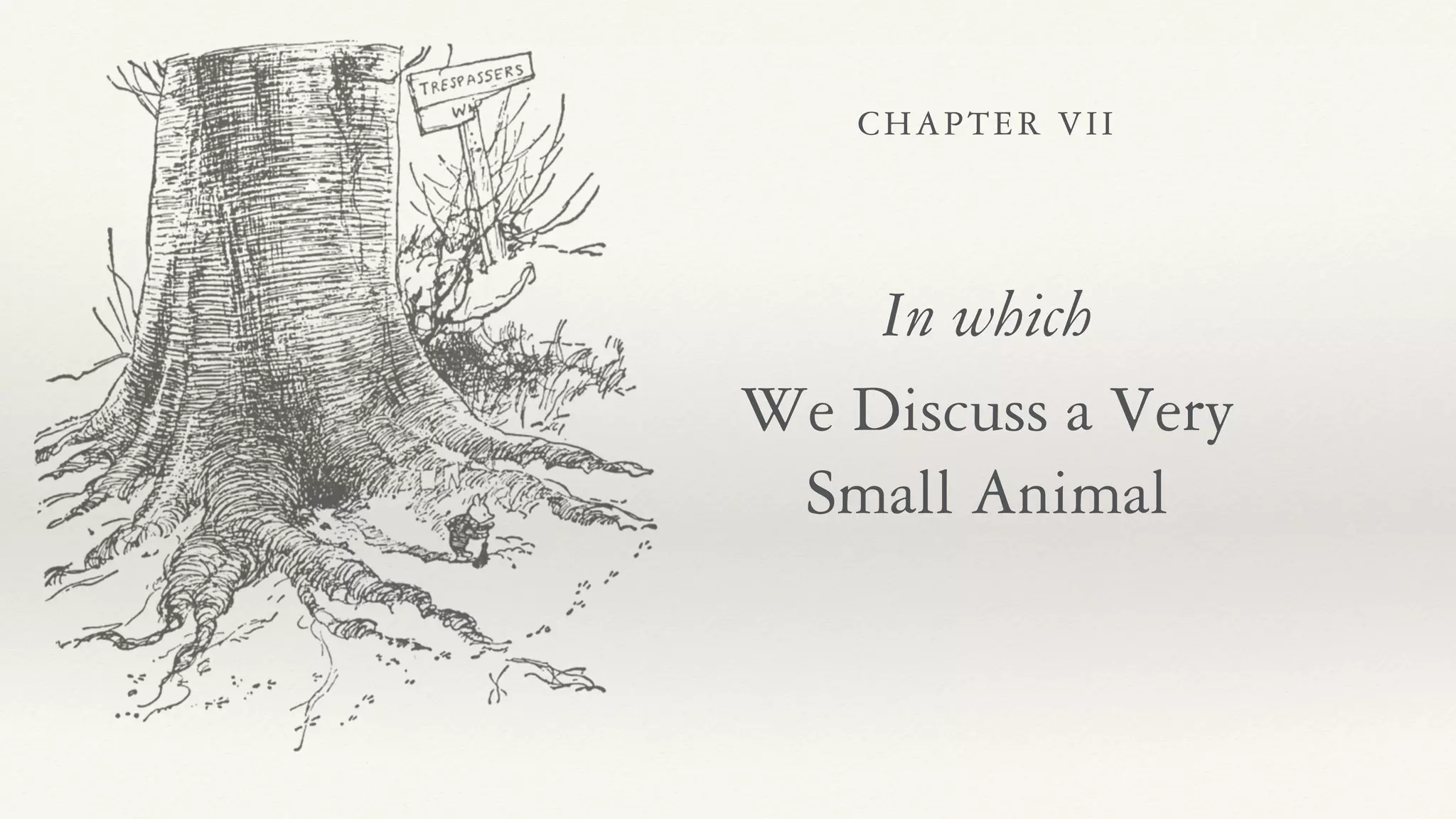
CHAPTER VII
In which
We Discuss a Very
Small Animal
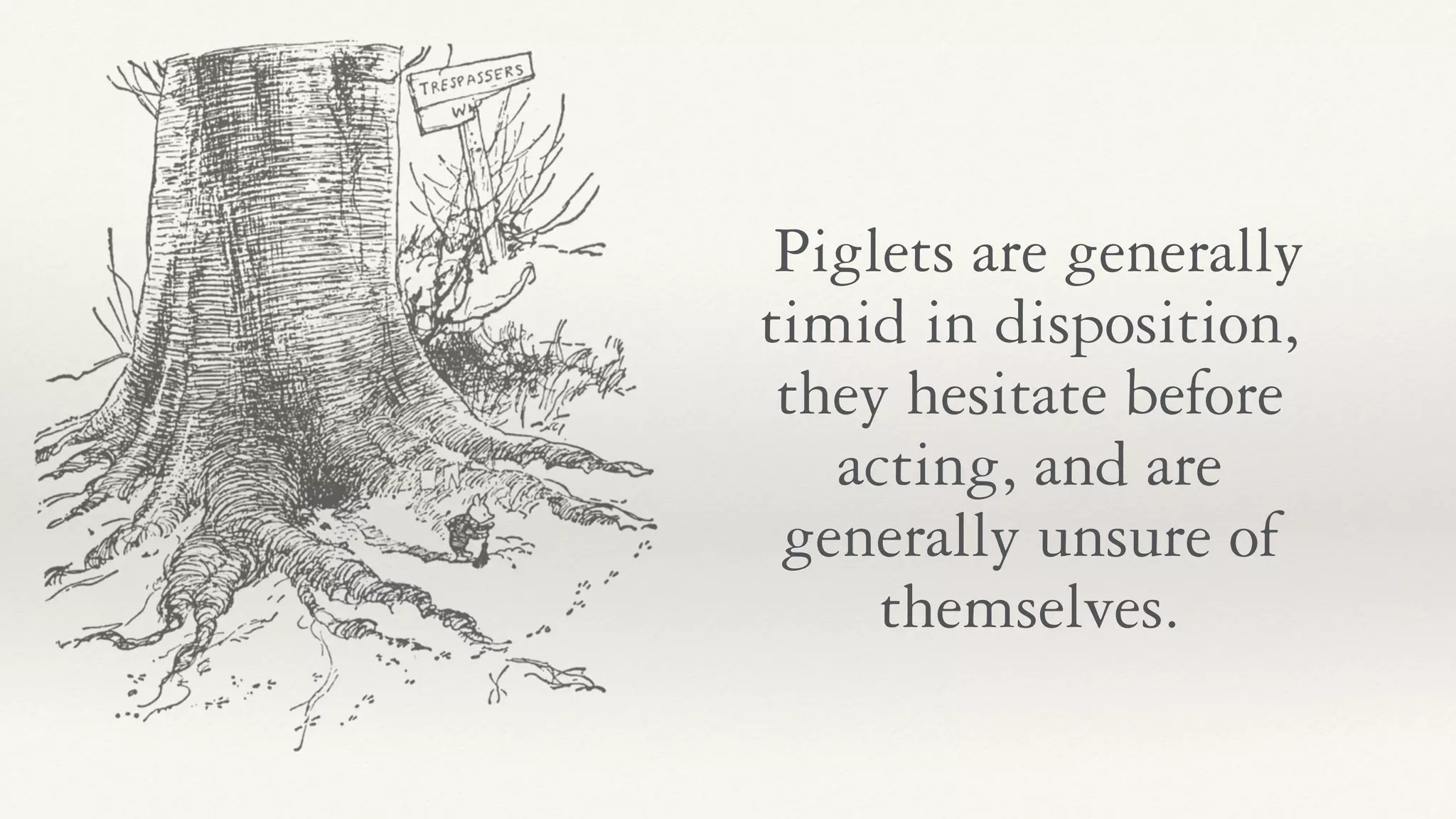
Piglets are generally
timid in disposition,
they hesitate before
acting, and are
generally unsure of
themselves.
Sooner or later we are bound to
discover some things about
ourselves that we don’t like.
1. Get rid of them.
2. Change them in
to other things.
3. Use them in
beneficial ways.
The easiest way to get rid of a
minus is to change it into a plus.
Once you face and understand your
limitations you can work with them.
How do you encourage
without overprotecting?
“You can’t want it for them more
than they want it for themselves.”
CHAPTER VIII
In which
We Talk About Nothing
and Not Doing
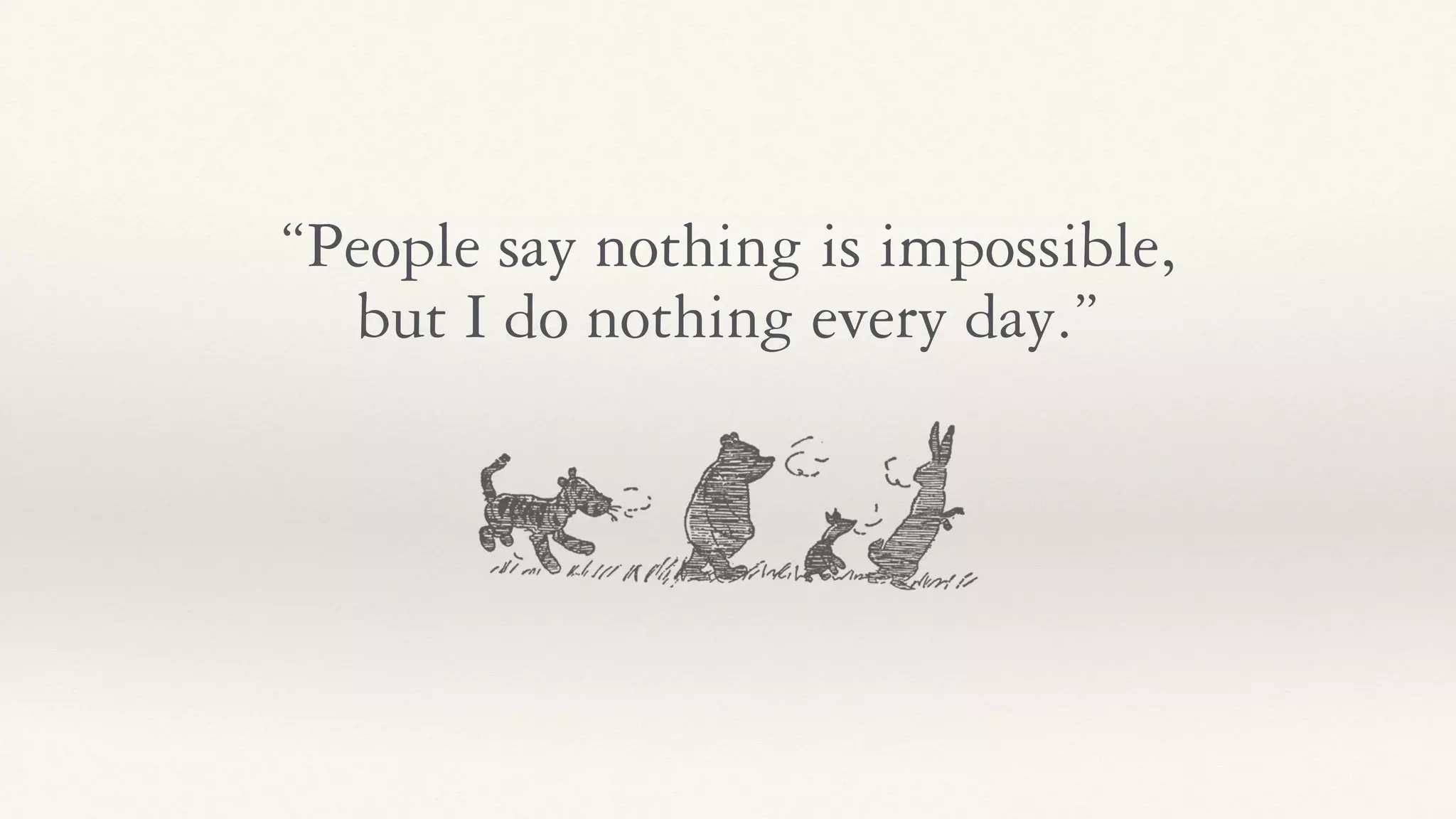
“People say nothing is impossible,
but I do nothing every day.”
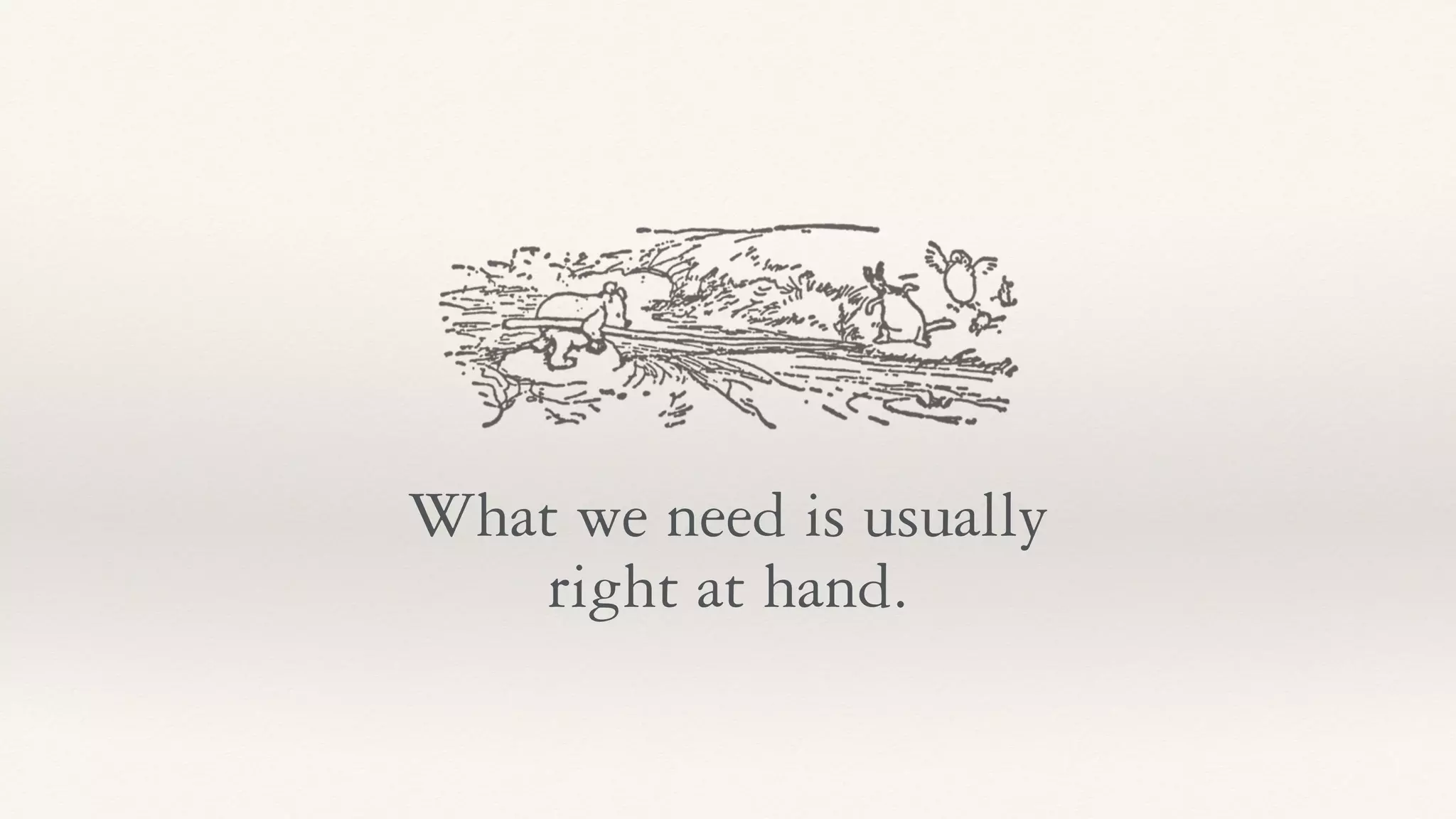
“Handsome bell-rope,
isn’t it?” said Owl.
Pooh nodded.
“It reminds me of
something,” he said,
“but I can’t think what.
Where did you get it?”
What we need is usually
right at hand.
So in regard to the idea of
Nothingness, is it possible
to do “nothing” and still
be an effective leader?
I have an example.
CHAPTER IX
In which
We Discover That Leadership
Demands Courage
The highest virtue is to act
without a sense of self
The highest kindness is to give
without a condition
The highest justice is to see
without a preference
From caring comes courage.
If you don’t love it,
don’t do it.
EPILOGUE
In which
We Part Company and
the Presenter Thanks
You All
APPENDIX
In which a
Know-It-All is
Observed in Action
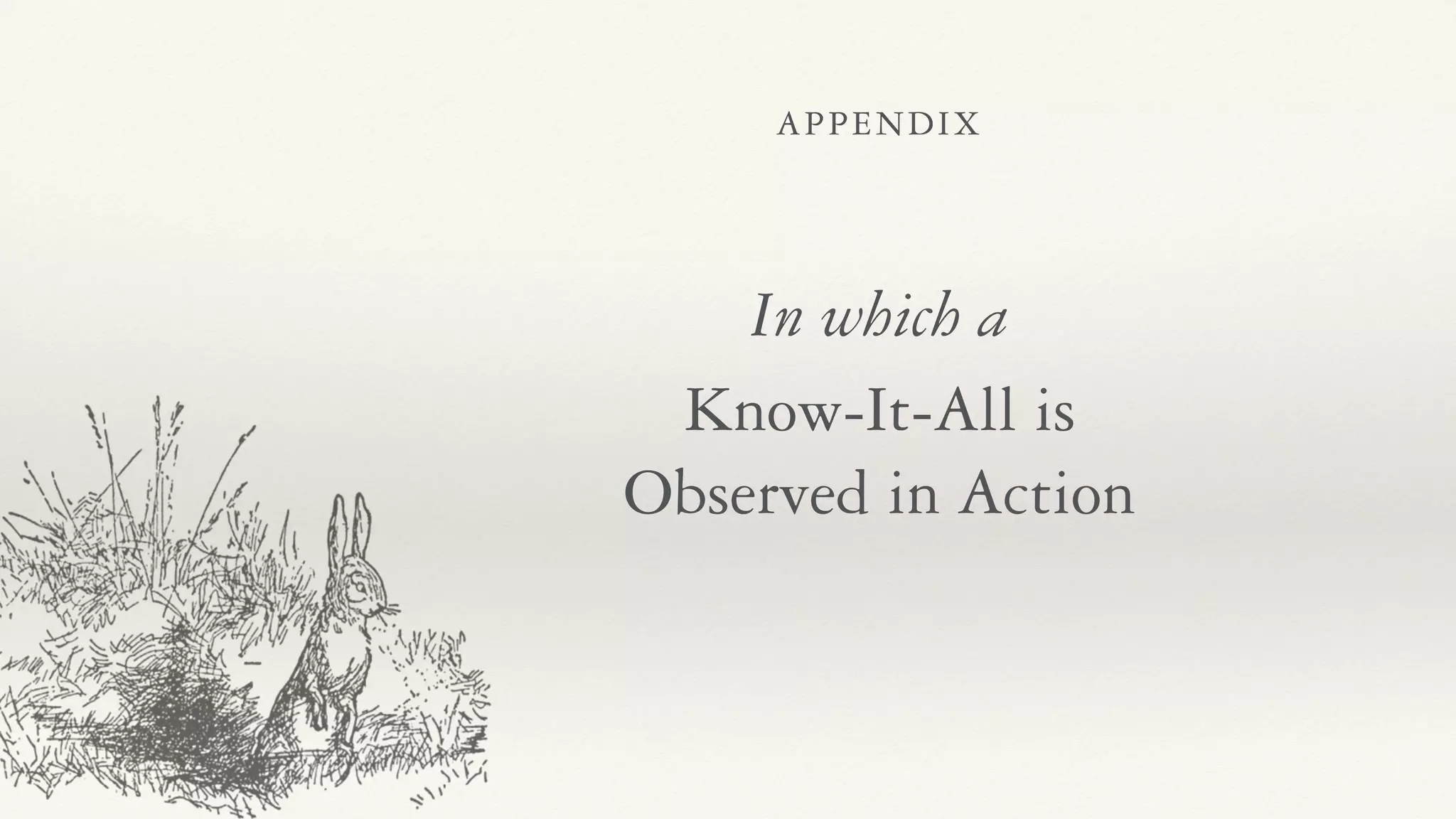
Rabbits are highly
opinionated, like to be in
charge, are often quite
bossy, and frequently cause
trouble for others.
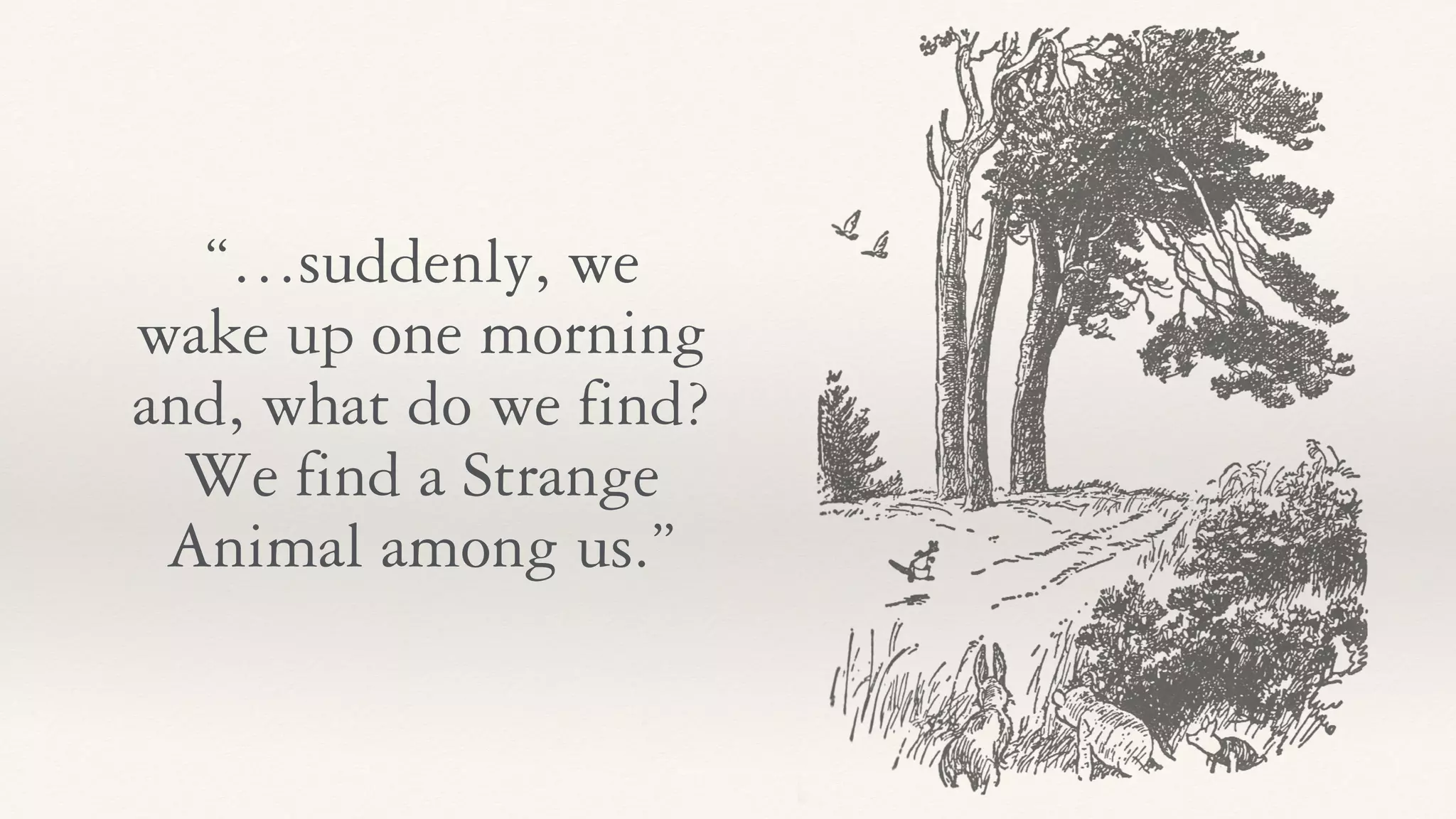
“…suddenly, we
wake up one morning
and, what do we find?
We find a Strange
Animal among us.”
“Rabbit’s clever,” said Pooh thoughtfully.
“Yes,” said Piglet, “Rabbit’s clever.”
“And he has Brain.”
“Yes,” said Piglet, “Rabbit has Brain.”
There was a long silence.
“I suppose,” said Pooh, “that that’s why he
never understands anything.”

The Tao of Managing Eeyores, Tiggers, and Piglets