The Shape of the 2020
Census
Jim Castagneri
U.S. Census Bureau
Denver
Big Changes Coming
 The 2020 census represents the first major
redesign since 1970
 1970 was a breakthrough in utilizing address
lists and the U.S. Post Office for the first time
 We’ve relied upon paper census forms since
then…
 In 1990, TIGER was a revolution in geography
but not the census process
Cost and Performance
 Mass mailing paper questionnaires is no
longer affordable or efficient
 A Census conducted using 1970’s technology
would cost upwards of $17 billion dollars
 Using Self-response as the primary
enumeration process, we project to save as
much as $5 billion dollars
Some Challenges
 Some will be unable to use new technology
forcing the use of some paper questionnaires
 Delivered by mail for some
 By Census staff for others
 Barriers to Internet use have been resolved
with back-end geospatial technology…
 Where exactly do you live?
 Have you answered the census already?
 Do you need help responding?
2020 Solutions
In-office Canvassing (address listing)
 Review of existing addresses
 Administrative records matching
 US Postal Delivery Sequence Files (DSF)
 GIS data from local governments (through the
Geographic Support System initiative)
2020 Solutions
Self Response (Internet, Telephone, Paper)
 Internet based questionnaire
 Mailed ID cards
 Pre-coded to specific addresses
 Media promotional campaign
 Non-ID response options
 geocoded to specific addresses
2020 Solutions
Administrative Records
 Used to remove vacant housing units from
workloads for non-response field work
 Used as proxy for enumeration for repeated non-
responders
 Trusted State and Federal sources of addresses
used for additional enumeration efforts
2020 Solutions
Mobile technology
 Integrated mapping and Interviewing tool
 Census developed software platform
 Device as a Service
 Similar to public cellphone plans
 Hardware and data plan inclusive
Reengineering the Future
Supporting 2020 is the Census Enterprise Data
Collection and Processing effort (CEDCaP)
 An agency-wide retro-fit of the data collection,
processing, and ‘tabulation machine’* of the
Census Bureau
 Will support future surveys and censuses with a
uniform design through shared services and
resources
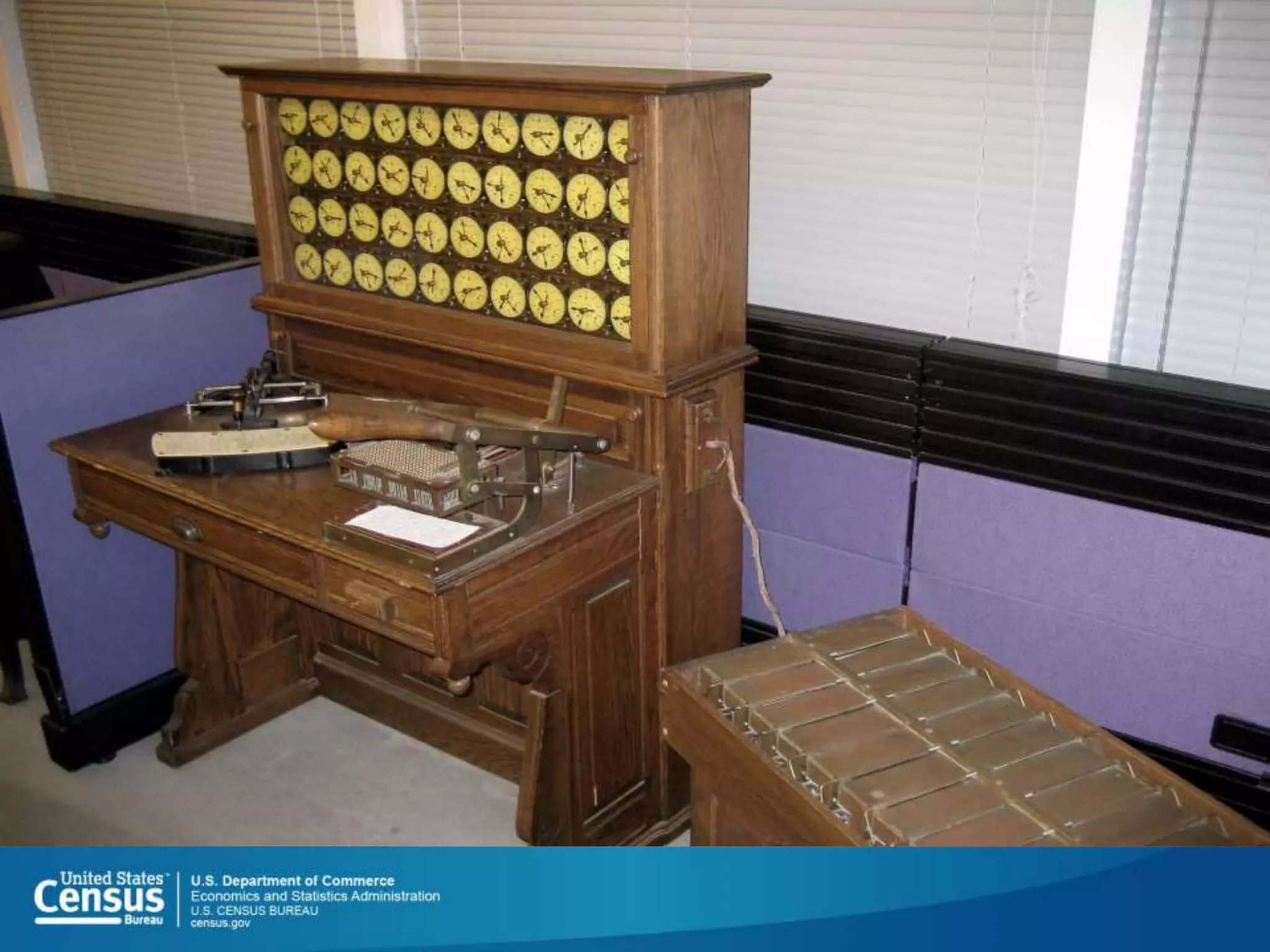
* A physical device originally invented by Herman Hollerith
Thank You!
Jim Castagneri
US Census Bureau
6950 W Jefferson Ave
Lakewood, CO 80235
James.d.castagneri@census.gov

The Shape of the 2020 Census (Jim Castagneri)

  • 1.
    The Shape ofthe 2020 Census Jim Castagneri U.S. Census Bureau Denver
  • 2.
    Big Changes Coming The 2020 census represents the first major redesign since 1970  1970 was a breakthrough in utilizing address lists and the U.S. Post Office for the first time  We’ve relied upon paper census forms since then…  In 1990, TIGER was a revolution in geography but not the census process
  • 3.
    Cost and Performance Mass mailing paper questionnaires is no longer affordable or efficient  A Census conducted using 1970’s technology would cost upwards of $17 billion dollars  Using Self-response as the primary enumeration process, we project to save as much as $5 billion dollars
  • 4.
    Some Challenges  Somewill be unable to use new technology forcing the use of some paper questionnaires  Delivered by mail for some  By Census staff for others  Barriers to Internet use have been resolved with back-end geospatial technology…  Where exactly do you live?  Have you answered the census already?  Do you need help responding?
  • 5.
    2020 Solutions In-office Canvassing(address listing)  Review of existing addresses  Administrative records matching  US Postal Delivery Sequence Files (DSF)  GIS data from local governments (through the Geographic Support System initiative)
  • 6.
    2020 Solutions Self Response(Internet, Telephone, Paper)  Internet based questionnaire  Mailed ID cards  Pre-coded to specific addresses  Media promotional campaign  Non-ID response options  geocoded to specific addresses
  • 7.
    2020 Solutions Administrative Records Used to remove vacant housing units from workloads for non-response field work  Used as proxy for enumeration for repeated non- responders  Trusted State and Federal sources of addresses used for additional enumeration efforts
  • 8.
    2020 Solutions Mobile technology Integrated mapping and Interviewing tool  Census developed software platform  Device as a Service  Similar to public cellphone plans  Hardware and data plan inclusive
  • 9.
    Reengineering the Future Supporting2020 is the Census Enterprise Data Collection and Processing effort (CEDCaP)  An agency-wide retro-fit of the data collection, processing, and ‘tabulation machine’* of the Census Bureau  Will support future surveys and censuses with a uniform design through shared services and resources * A physical device originally invented by Herman Hollerith
  • 11.
    Thank You! Jim Castagneri USCensus Bureau 6950 W Jefferson Ave Lakewood, CO 80235 James.d.castagneri@census.gov