The Seventh Value Phil La Duke O/E Learning Presents…
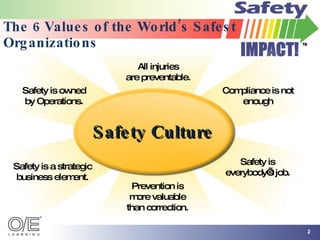
The 6 Values of the World’s Safest  Organizations Safety is owned by Operations. Compliance is not enough All injuries are preventable. Safety is a strategic business element. Prevention is more valuable than correction. Safety is everybody’s job. Safety Culture
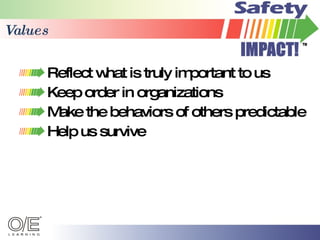
Values Reflect what is truly important to us Keep order in organizations Make the behaviors of others predictable Help us survive
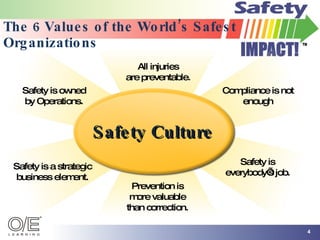
The 6 Values of the World’s Safest  Organizations Safety is owned by Operations. Compliance is not enough All injuries are preventable. Safety is a strategic business element. Prevention is more valuable than correction. Safety is everybody’s job. Safety Culture
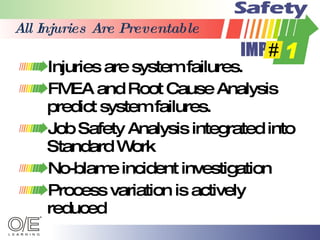
All Injuries Are Preventable Injuries are system failures. FMEA and Root Cause Analysis predict system failures. Job Safety Analysis integrated into Standard Work  No-blame incident investigation Process variation is actively reduced
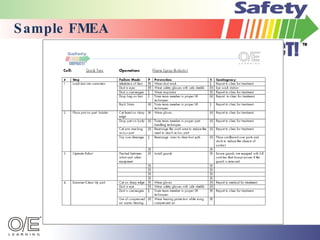
Sample FMEA
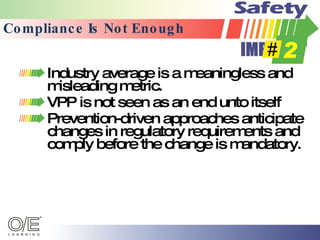
Compliance Is Not Enough Industry average is a meaningless and misleading metric. VPP is not seen as an end unto itself Prevention-driven approaches anticipate changes in regulatory requirements and comply before the change is mandatory.
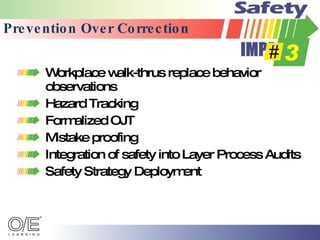
Prevention Over Correction Workplace walk-thrus replace behavior observations Hazard Tracking Formalized OJT Mistake proofing Integration of safety into Layer Process Audits Safety Strategy Deployment
Safety Is Everyone’s Job Defined in each worker’s  job description. Identified as a criteria for successful job performance during annual reviews/compensation. Safety is hardwired into Operations.
Safety Is Owned by Operations Legal Liabilities Leadership-driven First-line Accountability for Safety Forced Accountability Safety Personnel as Coaches and Consultants
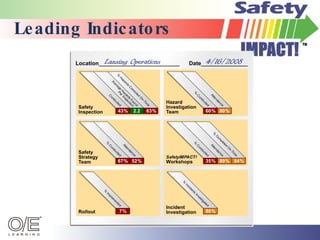
Leading Indicators
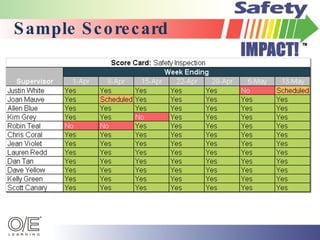
Sample Scorecard
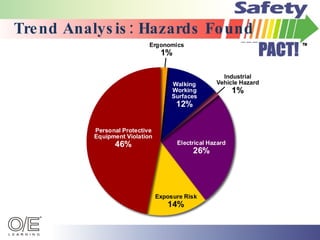
Trend Analysis: Hazards Found
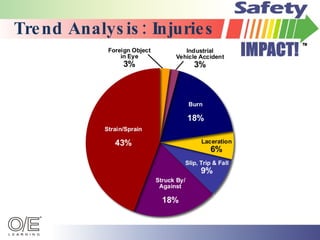
Trend Analysis: Injuries
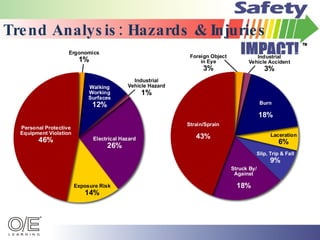
Trend Analysis: Hazards & Injuries
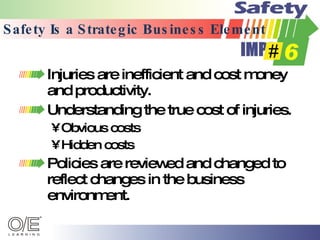
Safety Is a Strategic Business Element Injuries are inefficient and cost money and productivity. Understanding the true cost of injuries. Obvious costs Hidden costs Policies are reviewed and changed to reflect changes in the business environment.
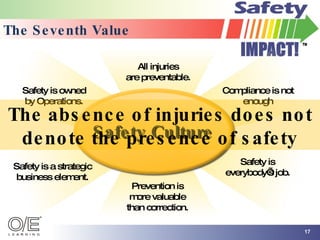
The Seventh Value Safety is owned by Operations. Compliance is not enough All injuries are preventable. Safety is a strategic business element. Prevention is more valuable than correction. Safety is everybody’s job. The absence of injuries does not denote the presence of safety Safety Culture
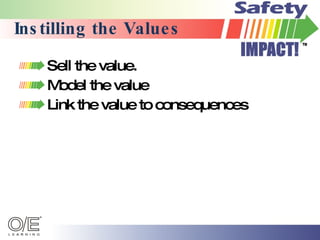
Instilling the Values Sell the value. Model the value Link the value to consequences
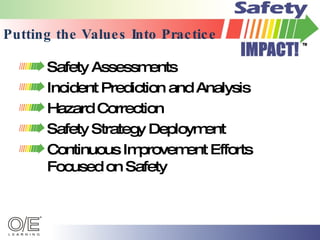
Putting the Values Into Practice Safety Assessments Incident Prediction and Analysis Hazard Correction Safety Strategy Deployment Continuous Improvement Efforts Focused on Safety
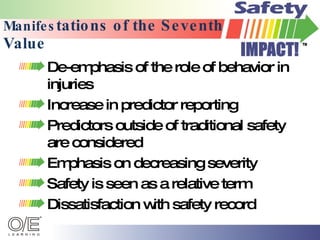
Manifes tations of the Seventh Value De-emphasis of the role of behavior in injuries Increase in predictor reporting Predictors outside of traditional safety are considered Emphasis on decreasing severity Safety is seen as a relative term Dissatisfaction with safety record
Thank You!
Questions?
Would like a copy of this presentation? For copies of this presentation contact…. Phil La Duke Director, Performance Improvement  O/E [email_address] 2125 Butterfield, Suite 200N Troy, MI 48084 248-860-1086 www.safety-impact.com www. philladuke . wordpress .com

The seventh value asse show

  • 1.
    The Seventh ValuePhil La Duke O/E Learning Presents…
  • 2.
    The 6 Valuesof the World’s Safest Organizations Safety is owned by Operations. Compliance is not enough All injuries are preventable. Safety is a strategic business element. Prevention is more valuable than correction. Safety is everybody’s job. Safety Culture
  • 3.
    Values Reflect whatis truly important to us Keep order in organizations Make the behaviors of others predictable Help us survive
  • 4.
    The 6 Valuesof the World’s Safest Organizations Safety is owned by Operations. Compliance is not enough All injuries are preventable. Safety is a strategic business element. Prevention is more valuable than correction. Safety is everybody’s job. Safety Culture
  • 5.
    All Injuries ArePreventable Injuries are system failures. FMEA and Root Cause Analysis predict system failures. Job Safety Analysis integrated into Standard Work No-blame incident investigation Process variation is actively reduced
  • 6.
  • 7.
    Compliance Is NotEnough Industry average is a meaningless and misleading metric. VPP is not seen as an end unto itself Prevention-driven approaches anticipate changes in regulatory requirements and comply before the change is mandatory.
  • 8.
    Prevention Over CorrectionWorkplace walk-thrus replace behavior observations Hazard Tracking Formalized OJT Mistake proofing Integration of safety into Layer Process Audits Safety Strategy Deployment
  • 9.
    Safety Is Everyone’sJob Defined in each worker’s job description. Identified as a criteria for successful job performance during annual reviews/compensation. Safety is hardwired into Operations.
  • 10.
    Safety Is Ownedby Operations Legal Liabilities Leadership-driven First-line Accountability for Safety Forced Accountability Safety Personnel as Coaches and Consultants
  • 11.
  • 12.
  • 13.
  • 14.
  • 15.
  • 16.
    Safety Is aStrategic Business Element Injuries are inefficient and cost money and productivity. Understanding the true cost of injuries. Obvious costs Hidden costs Policies are reviewed and changed to reflect changes in the business environment.
  • 17.
    The Seventh ValueSafety is owned by Operations. Compliance is not enough All injuries are preventable. Safety is a strategic business element. Prevention is more valuable than correction. Safety is everybody’s job. The absence of injuries does not denote the presence of safety Safety Culture
  • 18.
    Instilling the ValuesSell the value. Model the value Link the value to consequences
  • 19.
    Putting the ValuesInto Practice Safety Assessments Incident Prediction and Analysis Hazard Correction Safety Strategy Deployment Continuous Improvement Efforts Focused on Safety
  • 20.
    Manifes tations ofthe Seventh Value De-emphasis of the role of behavior in injuries Increase in predictor reporting Predictors outside of traditional safety are considered Emphasis on decreasing severity Safety is seen as a relative term Dissatisfaction with safety record
  • 21.
  • 22.
  • 23.
    Would like acopy of this presentation? For copies of this presentation contact…. Phil La Duke Director, Performance Improvement O/E [email_address] 2125 Butterfield, Suite 200N Troy, MI 48084 248-860-1086 www.safety-impact.com www. philladuke . wordpress .com