Published in July 2014
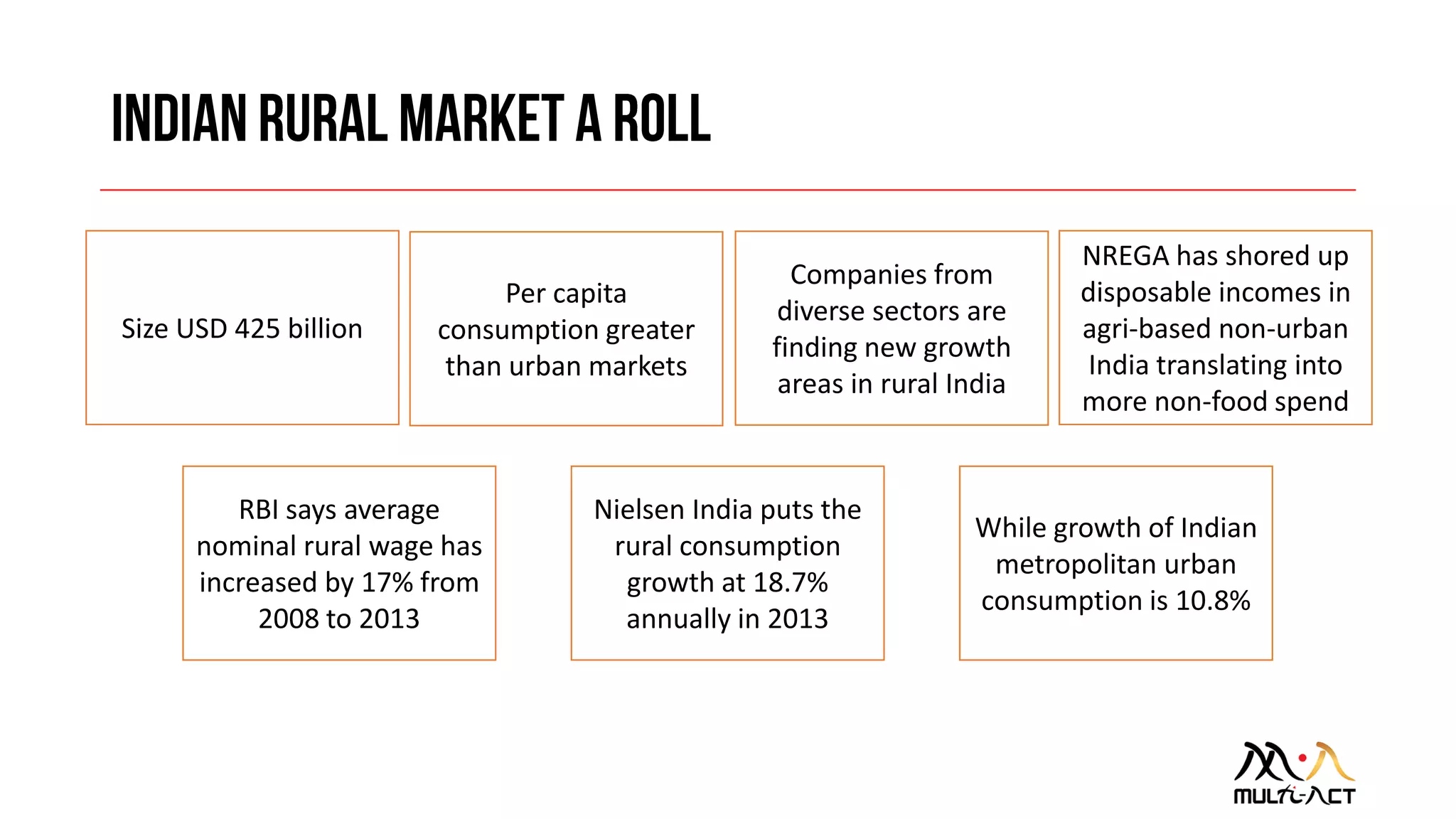
Size USD 425 billion
Companies from
diverse sectors are
finding new growth
areas in rural India
Per capita
consumption greater
than urban markets
Nielsen India puts the
rural consumption
growth at 18.7%
annually in 2013
RBI says average
nominal rural wage has
increased by 17% from
2008 to 2013
NREGA has shored up
disposable incomes in
agri-based non-urban
India translating into
more non-food spend
While growth of Indian
metropolitan urban
consumption is 10.8%
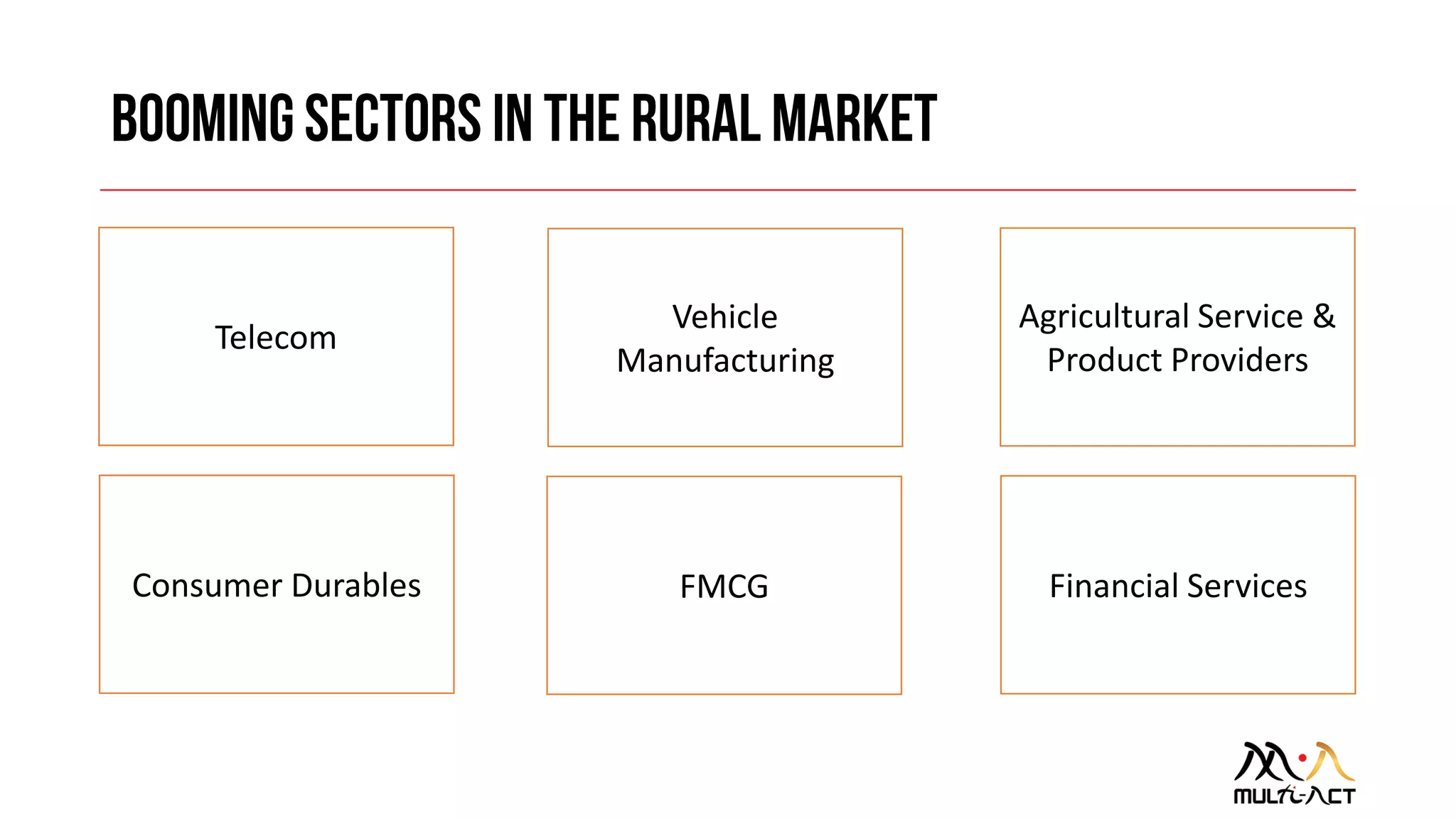
Telecom
Agricultural Service &
Product Providers
Vehicle
Manufacturing
Financial ServicesFMCGConsumer Durables
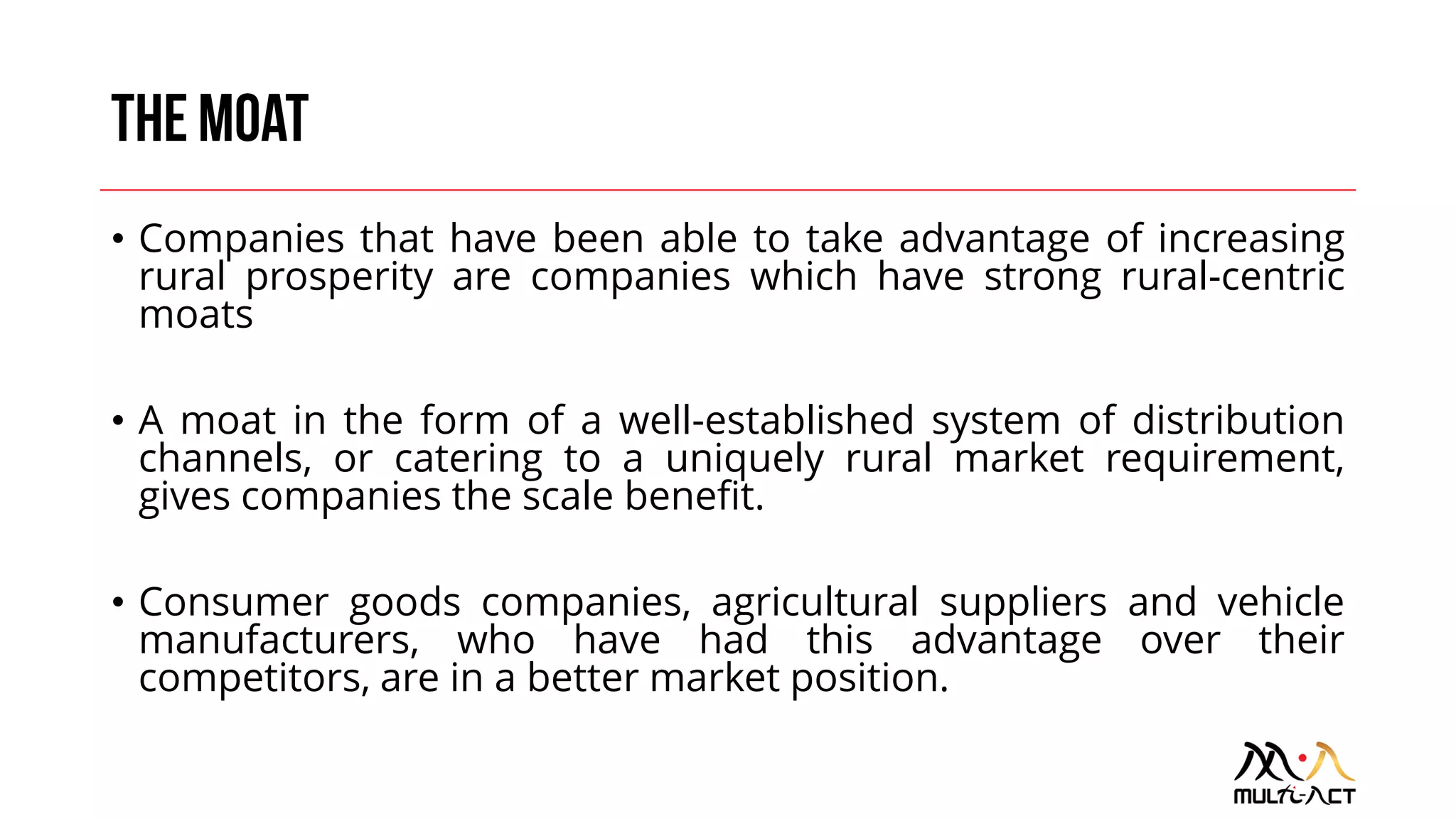
• Companies that have been able to take advantage of increasing
rural prosperity are companies which have strong rural-centric
moats
• A moat in the form of a well-established system of distribution
channels, or catering to a uniquely rural market requirement,
gives companies the scale benefit.
• Consumer goods companies, agricultural suppliers and vehicle
manufacturers, who have had this advantage over their
competitors, are in a better market position.
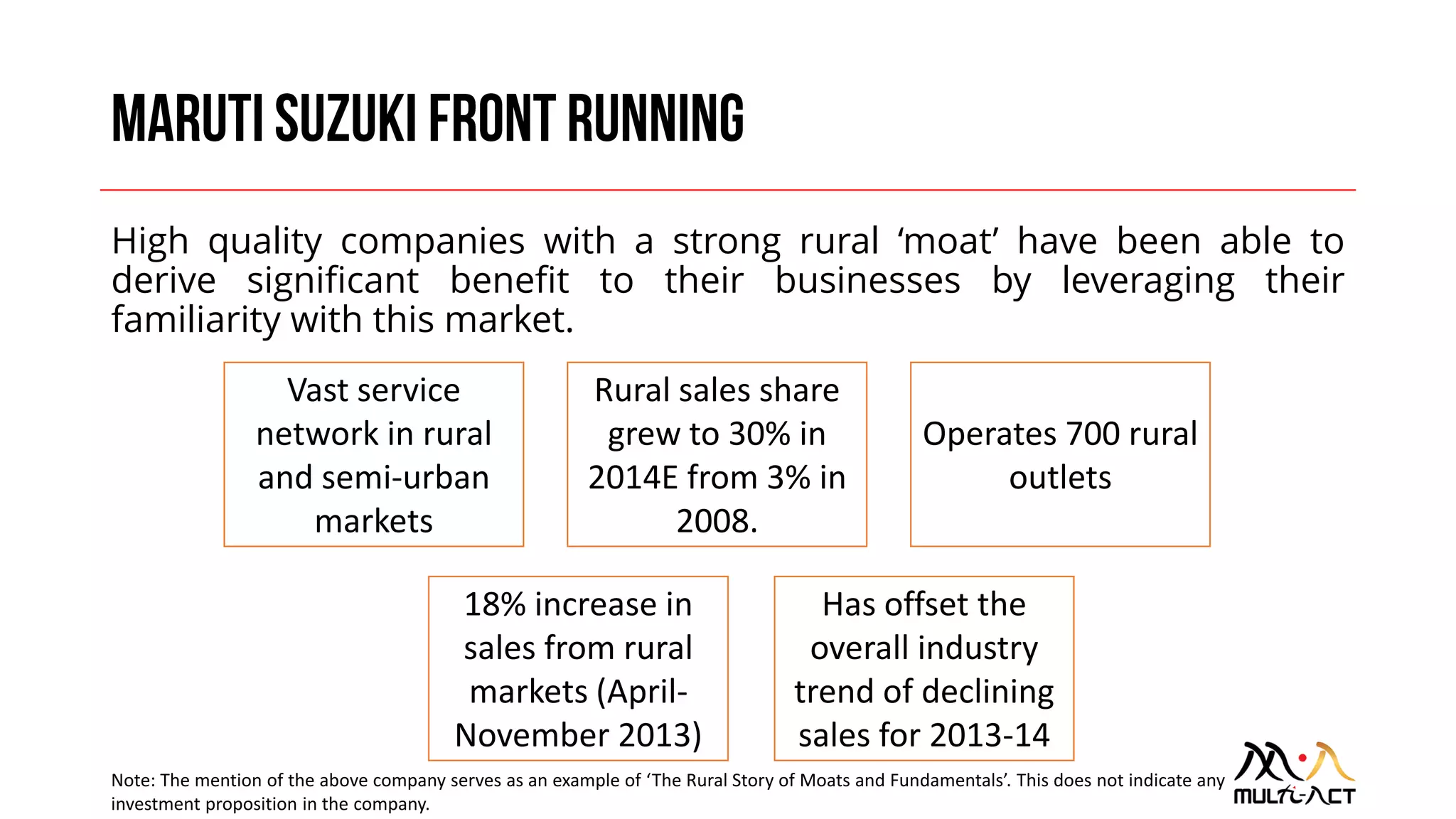
High quality companies with a strong rural ‘moat’ have been able to
derive significant benefit to their businesses by leveraging their
familiarity with this market.
Vast service
network in rural
and semi-urban
markets
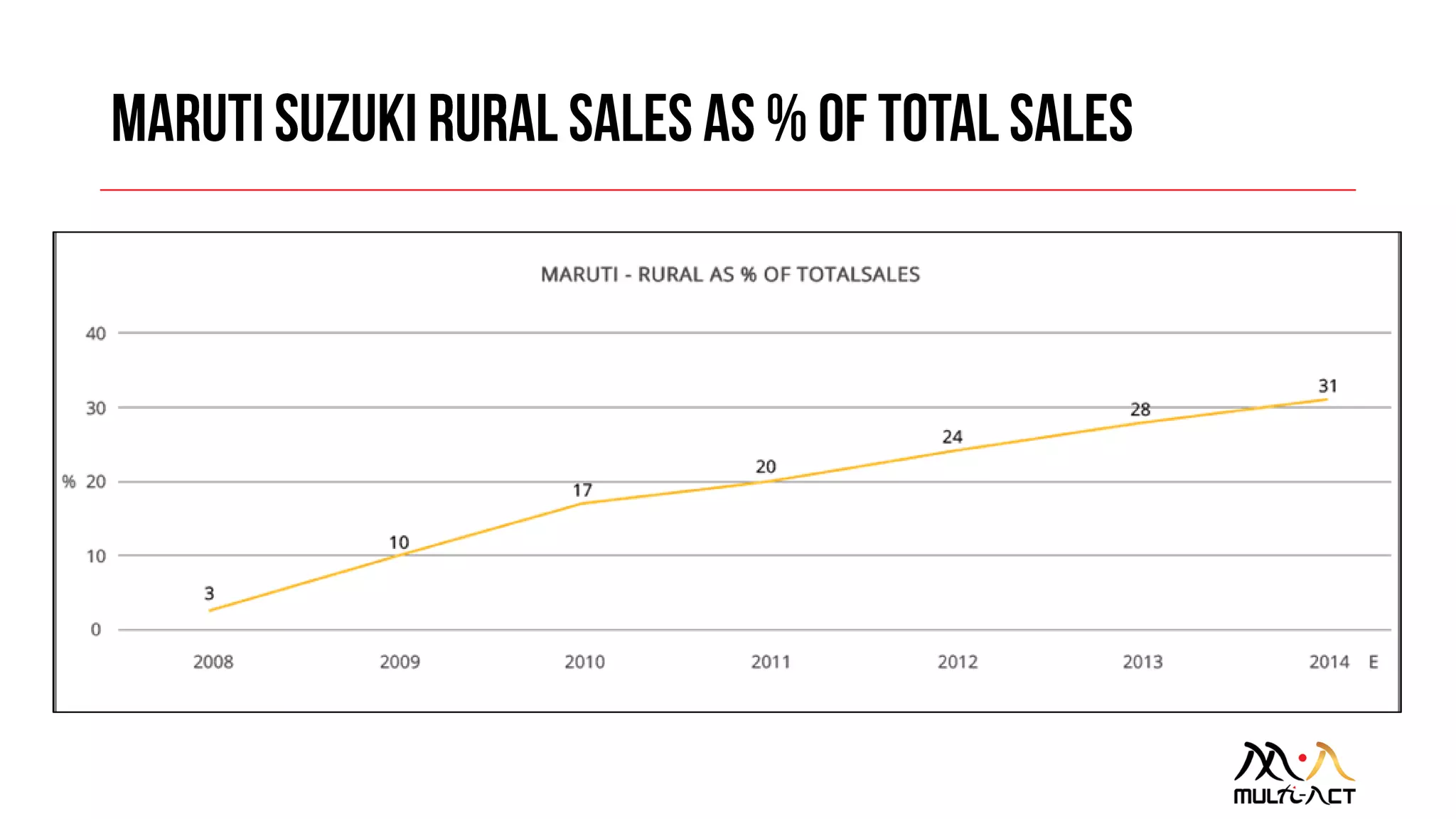
Rural sales share
grew to 30% in
2014E from 3% in
2008.
18% increase in
sales from rural
markets (April-
November 2013)
Operates 700 rural
outlets
Has offset the
overall industry
trend of declining
sales for 2013-14
Note: The mention of the above company serves as an example of ‘The Rural Story of Moats and Fundamentals’. This does not indicate any
investment proposition in the company.
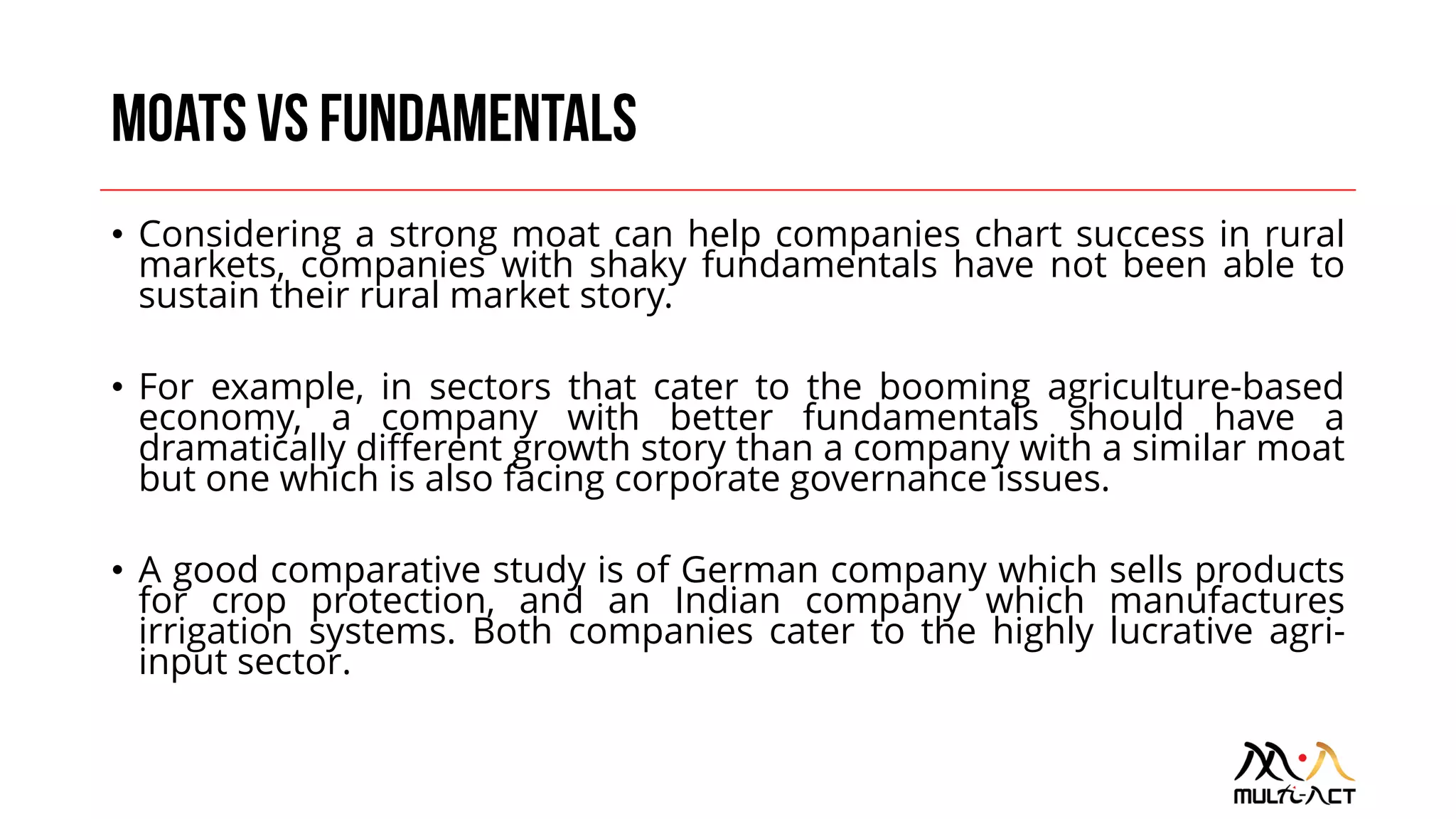
• Considering a strong moat can help companies chart success in rural
markets, companies with shaky fundamentals have not been able to
sustain their rural market story.
• For example, in sectors that cater to the booming agriculture-based
economy, a company with better fundamentals should have a
dramatically different growth story than a company with a similar moat
but one which is also facing corporate governance issues.
• A good comparative study is of German company which sells products
for crop protection, and an Indian company which manufactures
irrigation systems. Both companies cater to the highly lucrative agri-
input sector.
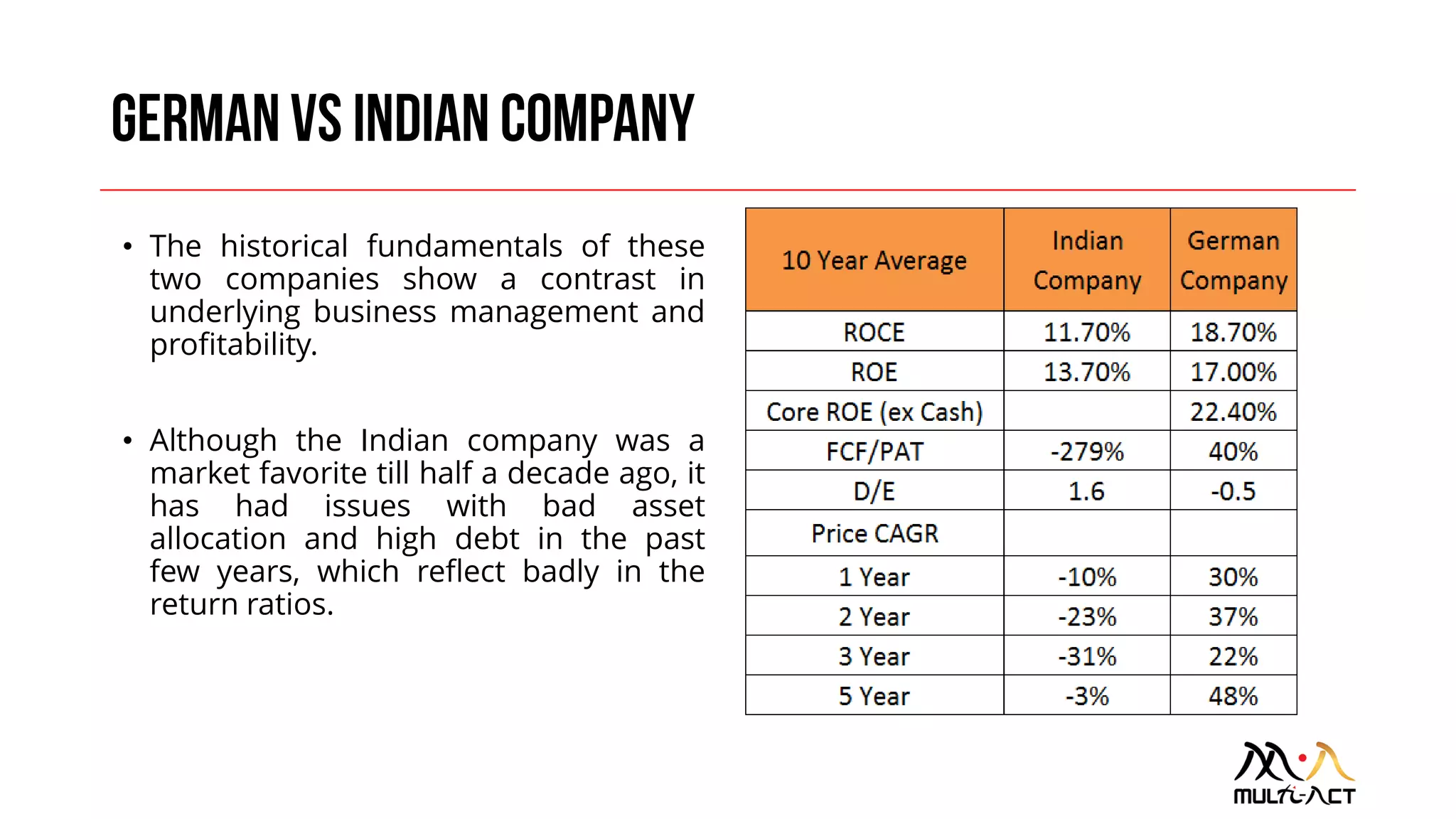
• The historical fundamentals of these
two companies show a contrast in
underlying business management and
profitability.
• Although the Indian company was a
market favorite till half a decade ago, it
has had issues with bad asset
allocation and high debt in the past
few years, which reflect badly in the
return ratios.
The Indian company is leveraged, while the
German company has net cash on balance sheet
(i.e. no balance sheet risk).
German firm has enjoyed a much higher return
on equity (ROE) and return on capital employed
(ROCE) as compared to the Indian company.
Indian company has significant negative free cash
flow (FCF) generation, the German one has a
positive FCF.
The German company has been able to leverage
the rural moat due to its strong fundamentals.
One can also see the difference in the way the
price of these companies have compounded over
a period of time.
The Indian company, a front runner in the micro-
irrigation field, still has to recover from
diversifications gone bad.
• While the rural theme is significant as an opportunity for
improving performance, a company’s fundamentals are
what eventually play an important role in making it a high
quality stock.
• From the perspective of an investor the inherent quality of
the company or the business is more important than the
larger theme (i.e. access to the rural markets or having a
rural moat). Investing in a high-quality business reduces
the odds of losing money even if the “theme” does not play
out.
Statutory Details of the Portfolio Manager:
Multi-Act Equity Consultancy Private Limited - SEBI Registered Portfolio Manager having Registration No. INP000002965
Disclaimer
The views expressed in this article are for educational and reading purpose only. Multi-Act Equity Consultancy Private
Limited (MAECL) does not solicit any course of action based on these views and the reader is advised to exercise
independent judgment and act upon the same based on its/his/her sole discretion, their own investigations and risk-reward
preferences. The article is prepared on the basis of publicly available information, internally developed data and from
sources believed to be reliable. Due care has been taken to ensure that the facts are accurate and the views are fair. MAECL,
its associates or any of their respective directors, employees, affiliates or representatives do not assume any responsibility
for, or warrant the accuracy, completeness, adequacy and reliability of such views and consequently are not liable for any
direct, indirect, special, incidental, consequential, punitive or exemplary damages, including lost profits arising in any way for
decisions taken based on the said article.
It is stated that, as permitted by SEBI Regulations and the internal Dealing Policy, the associates, employees, affiliates of
MAECL may have interests in securities referred (if any).
The contents herein – information or views – do not amount to distribution, guidelines, an offer or solicitation of any offer to
buy or sell any securities or financial instruments, directly or indirectly, in the United States of America (US), in Canada, in
jurisdictions where such distribution or offer is not authorized and in FATF non-compliant jurisdiction and are particularly not
for US persons (being persons resident in the US, corporations, partnerships or other entities created or organized in or under
the laws of the US or any person falling within the definition of the term “US person” under Regulation S promulgated under
the US Securities Act of 1933, as amended) and persons of Canada.
Risk factors
General risk factors
a. Securities investments are subject to market risks and there is no assurance or guarantee that the objective
of the investments will be achieved.
b. Past performance of MAECL does not indicate its future performance.
c. As with any investment in securities, the value of investments can go up or down depending on the factors
and forces affecting the capital market. MAECL is not responsible / liable for any losses resulting from such
factors.
d. Securities investments are subject to external risks such as war, natural calamities, and policy changes of
local / international markets which affect stock markets.
e. MAECL has renewed its SEBI PMS registration effective October 14, 2014 and has commenced its portfolio
management activities with effect from January 2011. However MAECL has more than 10 years of experience
in managing its own funds invested in the domestic market.

The Rural Story - Of Moats and Fundamentals

  • 1.
  • 2.
    Size USD 425billion Companies from diverse sectors are finding new growth areas in rural India Per capita consumption greater than urban markets Nielsen India puts the rural consumption growth at 18.7% annually in 2013 RBI says average nominal rural wage has increased by 17% from 2008 to 2013 NREGA has shored up disposable incomes in agri-based non-urban India translating into more non-food spend While growth of Indian metropolitan urban consumption is 10.8%
  • 3.
    Telecom Agricultural Service & ProductProviders Vehicle Manufacturing Financial ServicesFMCGConsumer Durables
  • 4.
    • Companies thathave been able to take advantage of increasing rural prosperity are companies which have strong rural-centric moats • A moat in the form of a well-established system of distribution channels, or catering to a uniquely rural market requirement, gives companies the scale benefit. • Consumer goods companies, agricultural suppliers and vehicle manufacturers, who have had this advantage over their competitors, are in a better market position.
  • 5.
    High quality companieswith a strong rural ‘moat’ have been able to derive significant benefit to their businesses by leveraging their familiarity with this market. Vast service network in rural and semi-urban markets Rural sales share grew to 30% in 2014E from 3% in 2008. 18% increase in sales from rural markets (April- November 2013) Operates 700 rural outlets Has offset the overall industry trend of declining sales for 2013-14 Note: The mention of the above company serves as an example of ‘The Rural Story of Moats and Fundamentals’. This does not indicate any investment proposition in the company.
  • 7.
    • Considering astrong moat can help companies chart success in rural markets, companies with shaky fundamentals have not been able to sustain their rural market story. • For example, in sectors that cater to the booming agriculture-based economy, a company with better fundamentals should have a dramatically different growth story than a company with a similar moat but one which is also facing corporate governance issues. • A good comparative study is of German company which sells products for crop protection, and an Indian company which manufactures irrigation systems. Both companies cater to the highly lucrative agri- input sector.
  • 8.
    • The historicalfundamentals of these two companies show a contrast in underlying business management and profitability. • Although the Indian company was a market favorite till half a decade ago, it has had issues with bad asset allocation and high debt in the past few years, which reflect badly in the return ratios.
  • 9.
    The Indian companyis leveraged, while the German company has net cash on balance sheet (i.e. no balance sheet risk). German firm has enjoyed a much higher return on equity (ROE) and return on capital employed (ROCE) as compared to the Indian company. Indian company has significant negative free cash flow (FCF) generation, the German one has a positive FCF. The German company has been able to leverage the rural moat due to its strong fundamentals. One can also see the difference in the way the price of these companies have compounded over a period of time. The Indian company, a front runner in the micro- irrigation field, still has to recover from diversifications gone bad.
  • 10.
    • While therural theme is significant as an opportunity for improving performance, a company’s fundamentals are what eventually play an important role in making it a high quality stock. • From the perspective of an investor the inherent quality of the company or the business is more important than the larger theme (i.e. access to the rural markets or having a rural moat). Investing in a high-quality business reduces the odds of losing money even if the “theme” does not play out.
  • 11.
    Statutory Details ofthe Portfolio Manager: Multi-Act Equity Consultancy Private Limited - SEBI Registered Portfolio Manager having Registration No. INP000002965 Disclaimer The views expressed in this article are for educational and reading purpose only. Multi-Act Equity Consultancy Private Limited (MAECL) does not solicit any course of action based on these views and the reader is advised to exercise independent judgment and act upon the same based on its/his/her sole discretion, their own investigations and risk-reward preferences. The article is prepared on the basis of publicly available information, internally developed data and from sources believed to be reliable. Due care has been taken to ensure that the facts are accurate and the views are fair. MAECL, its associates or any of their respective directors, employees, affiliates or representatives do not assume any responsibility for, or warrant the accuracy, completeness, adequacy and reliability of such views and consequently are not liable for any direct, indirect, special, incidental, consequential, punitive or exemplary damages, including lost profits arising in any way for decisions taken based on the said article. It is stated that, as permitted by SEBI Regulations and the internal Dealing Policy, the associates, employees, affiliates of MAECL may have interests in securities referred (if any). The contents herein – information or views – do not amount to distribution, guidelines, an offer or solicitation of any offer to buy or sell any securities or financial instruments, directly or indirectly, in the United States of America (US), in Canada, in jurisdictions where such distribution or offer is not authorized and in FATF non-compliant jurisdiction and are particularly not for US persons (being persons resident in the US, corporations, partnerships or other entities created or organized in or under the laws of the US or any person falling within the definition of the term “US person” under Regulation S promulgated under the US Securities Act of 1933, as amended) and persons of Canada.
  • 12.
    Risk factors General riskfactors a. Securities investments are subject to market risks and there is no assurance or guarantee that the objective of the investments will be achieved. b. Past performance of MAECL does not indicate its future performance. c. As with any investment in securities, the value of investments can go up or down depending on the factors and forces affecting the capital market. MAECL is not responsible / liable for any losses resulting from such factors. d. Securities investments are subject to external risks such as war, natural calamities, and policy changes of local / international markets which affect stock markets. e. MAECL has renewed its SEBI PMS registration effective October 14, 2014 and has commenced its portfolio management activities with effect from January 2011. However MAECL has more than 10 years of experience in managing its own funds invested in the domestic market.