Powering Business Value


The Rules of Requirements
                25 September, 2012
Scott Sehlhorst
Product management & strategy consultant
   8 Years electromechanical design engineering (1990-1997)
       IBM, Texas Instruments, Eaton

   8 Years software development & requirements (1997-2005)
       > 20 clients in Telecom, Computer HW, Heavy Eq., Consumer Durables

   7+ Years product management consulting (2005-????)
       >20 clients in B2B, B2C, B2B2C, ecommerce, global, mobile

                                                                                          Agile since 2001
                                                                              Started Tyner Blain in 2005
                                                                                       Helping companies
                                                                            Build the right products, right


                                                                                                         2
Why Do We Care…
…About Writing Good Requirements?
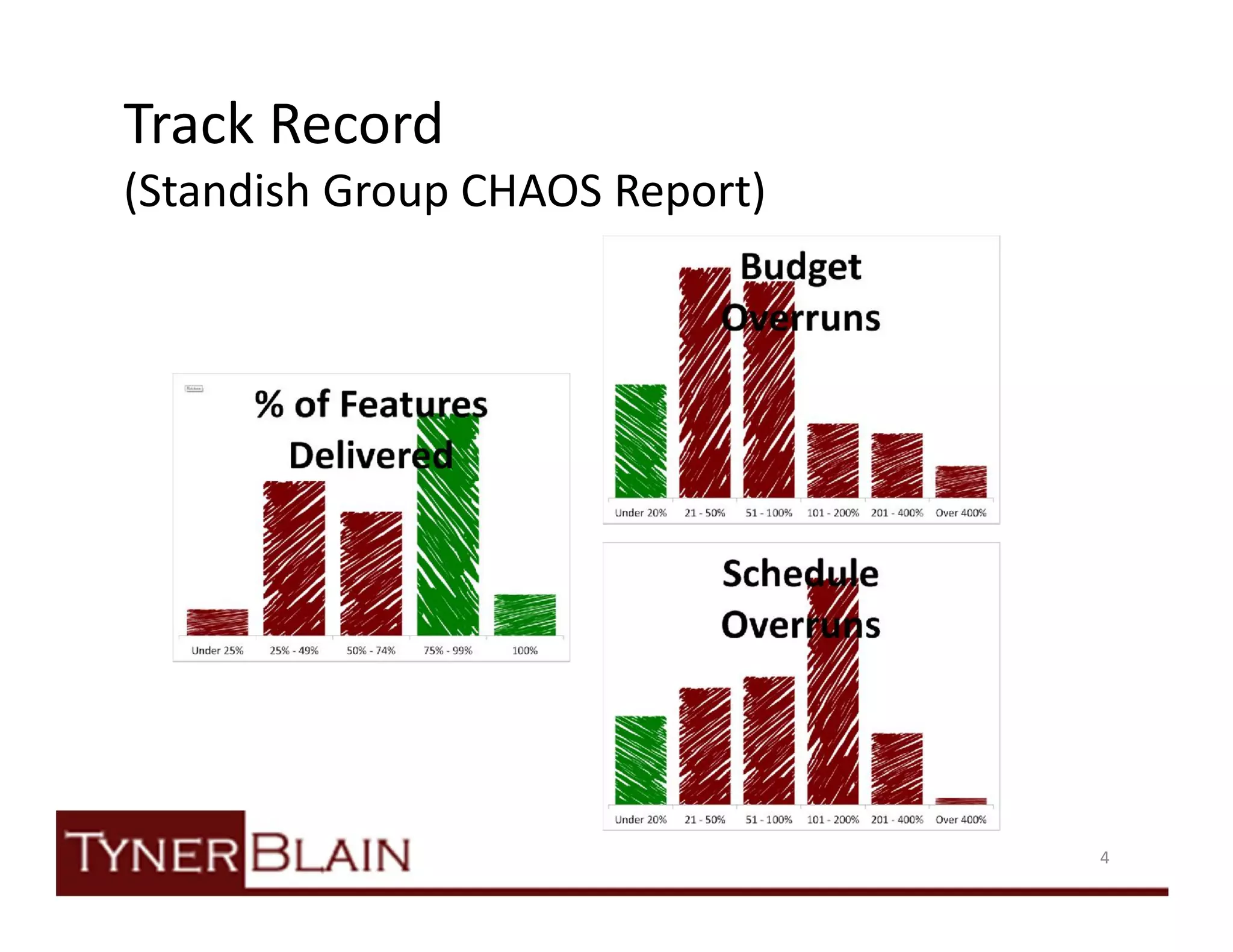
Track Record
(Standish Group CHAOS Report)


                                4
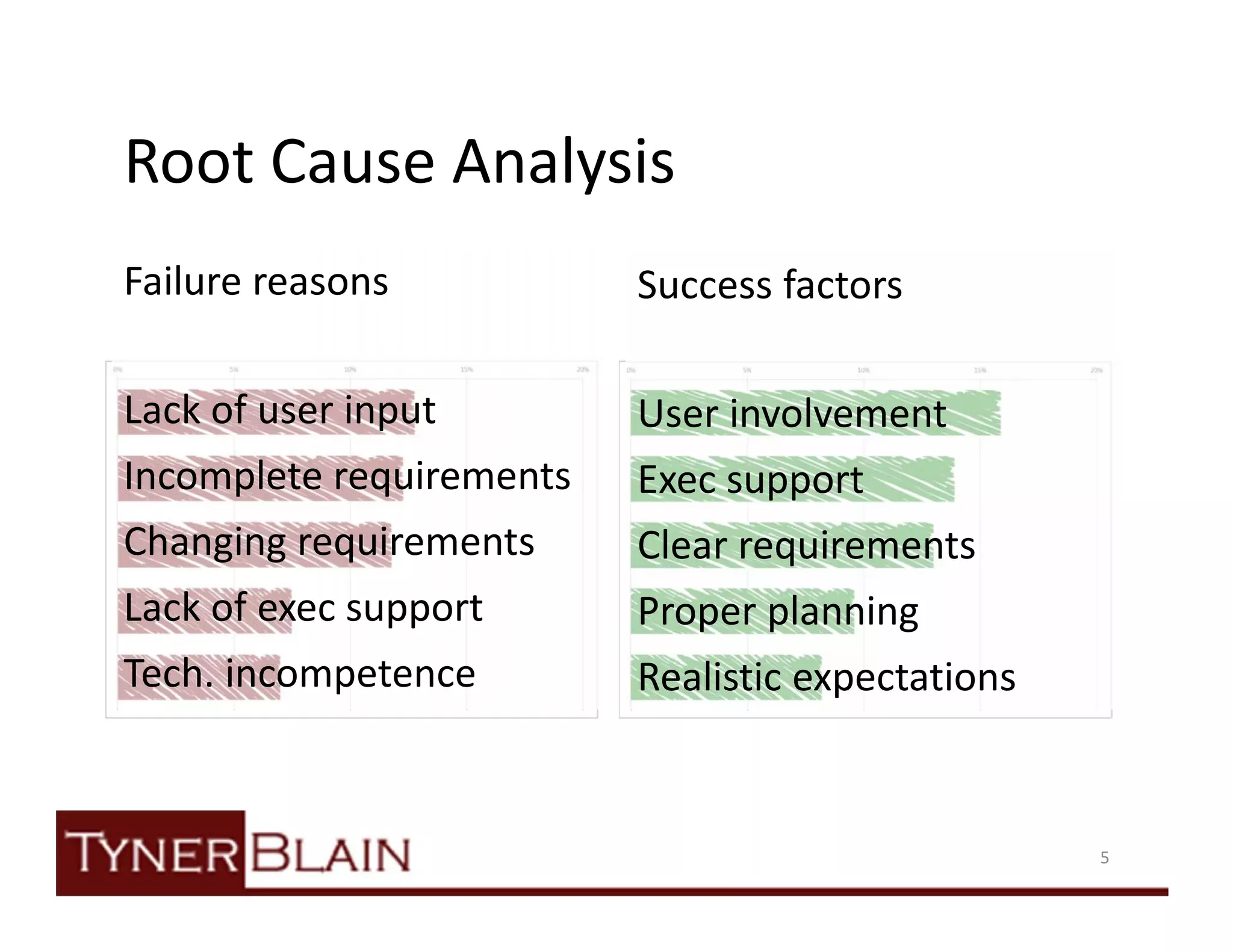
Root Cause Analysis
Failure reasons           Success factors

Lack of user input        User involvement
Incomplete requirements   Exec support
Changing requirements     Clear requirements
Lack of exec support      Proper planning
Tech. incompetence        Realistic expectations


                                                   5
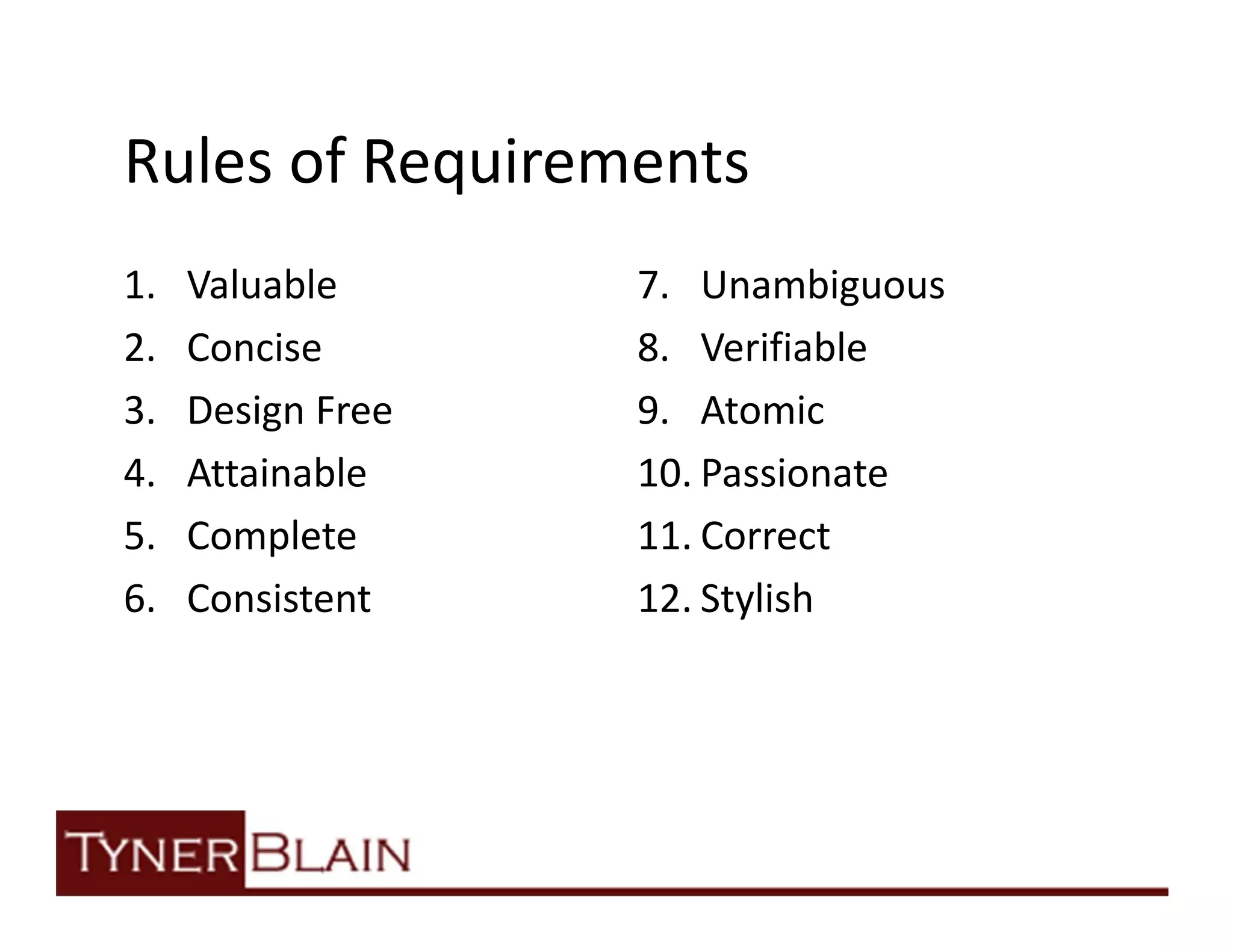
Rules of Requirements
1.   Valuable      7. Unambiguous
2.   Concise       8. Verifiable
3.   Design Free   9. Atomic
4.   Attainable    10. Passionate
5.   Complete      11. Correct
6.   Consistent    12. Stylish
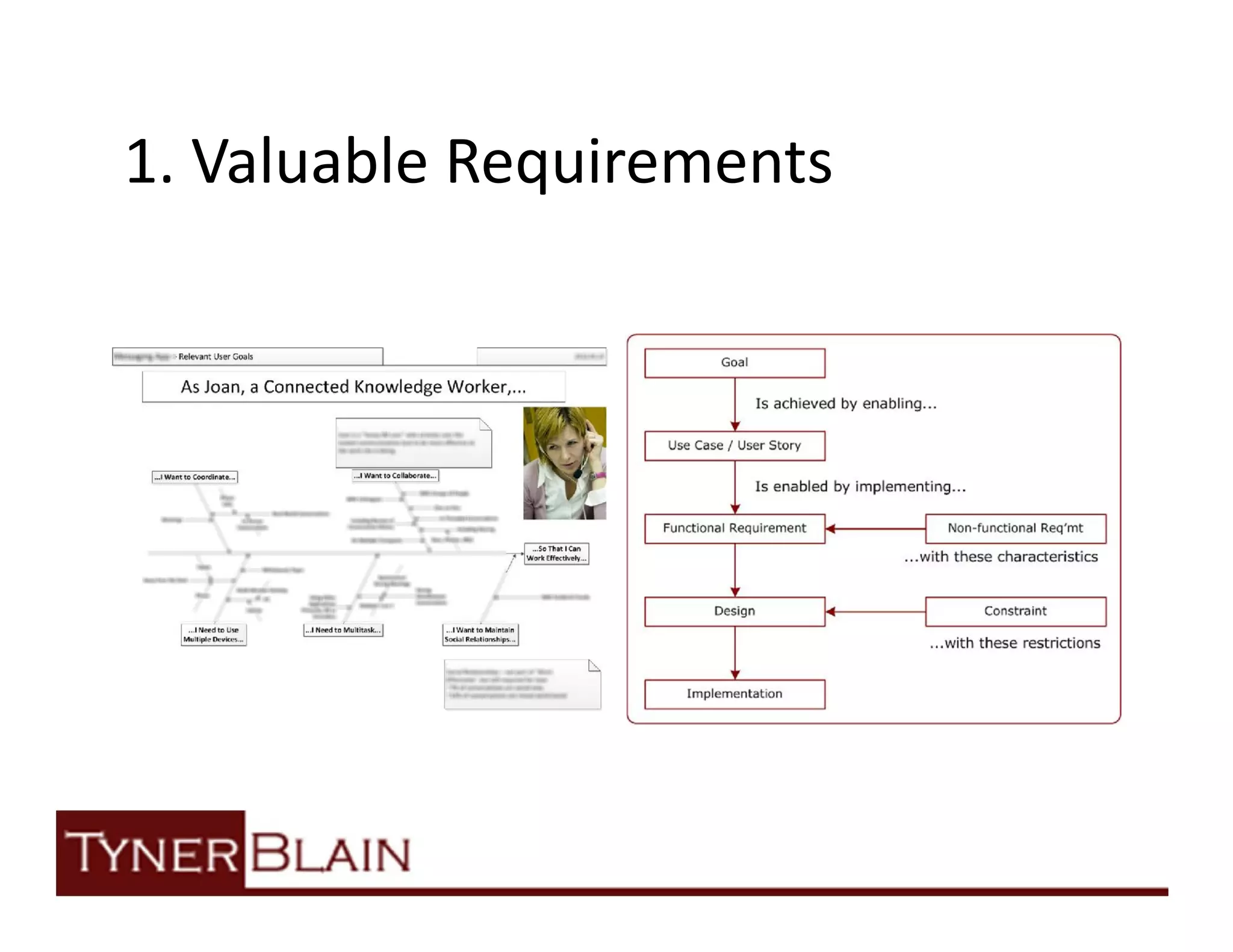
1. Valuable Requirements
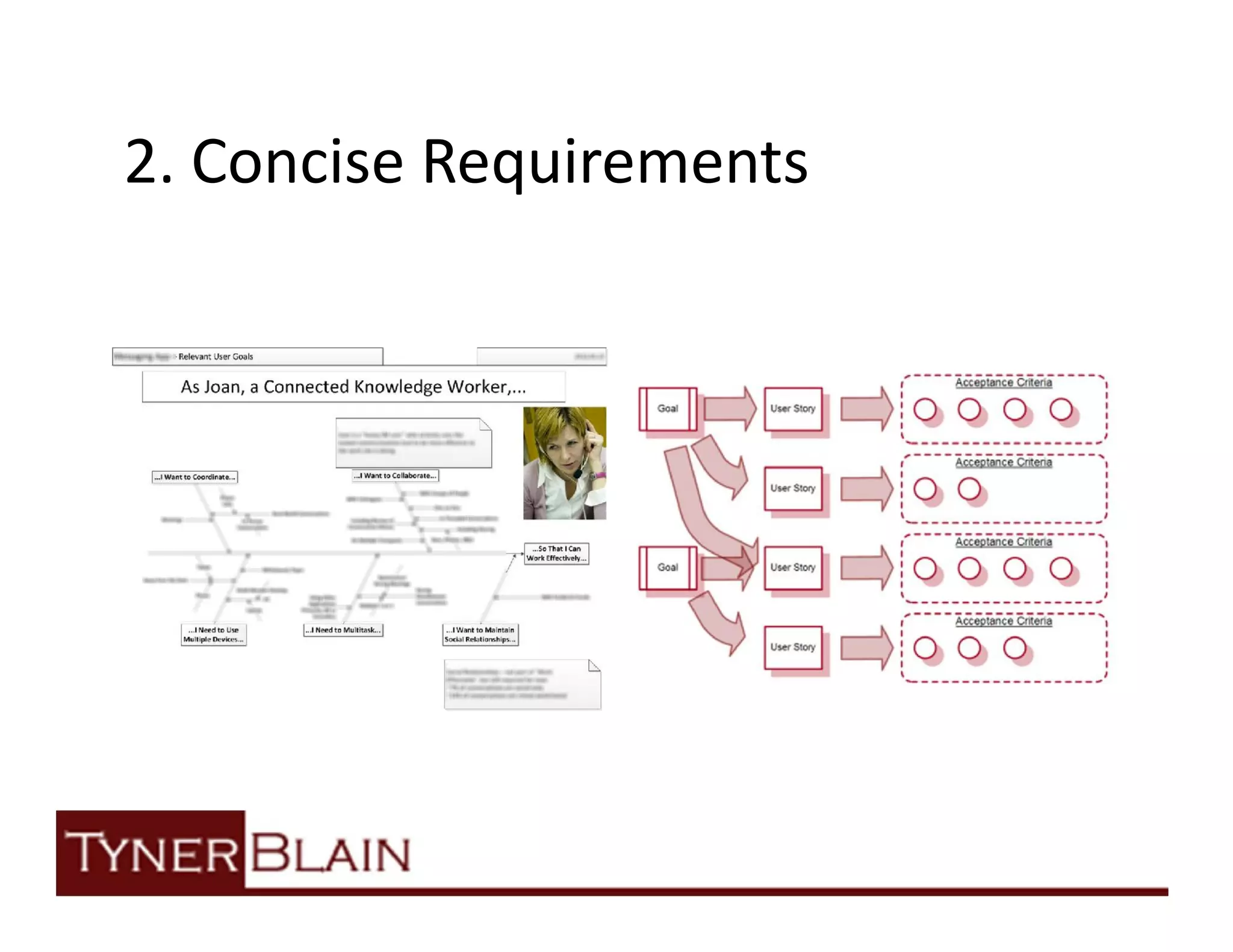
2. Concise Requirements
3. Design-Free Requirements
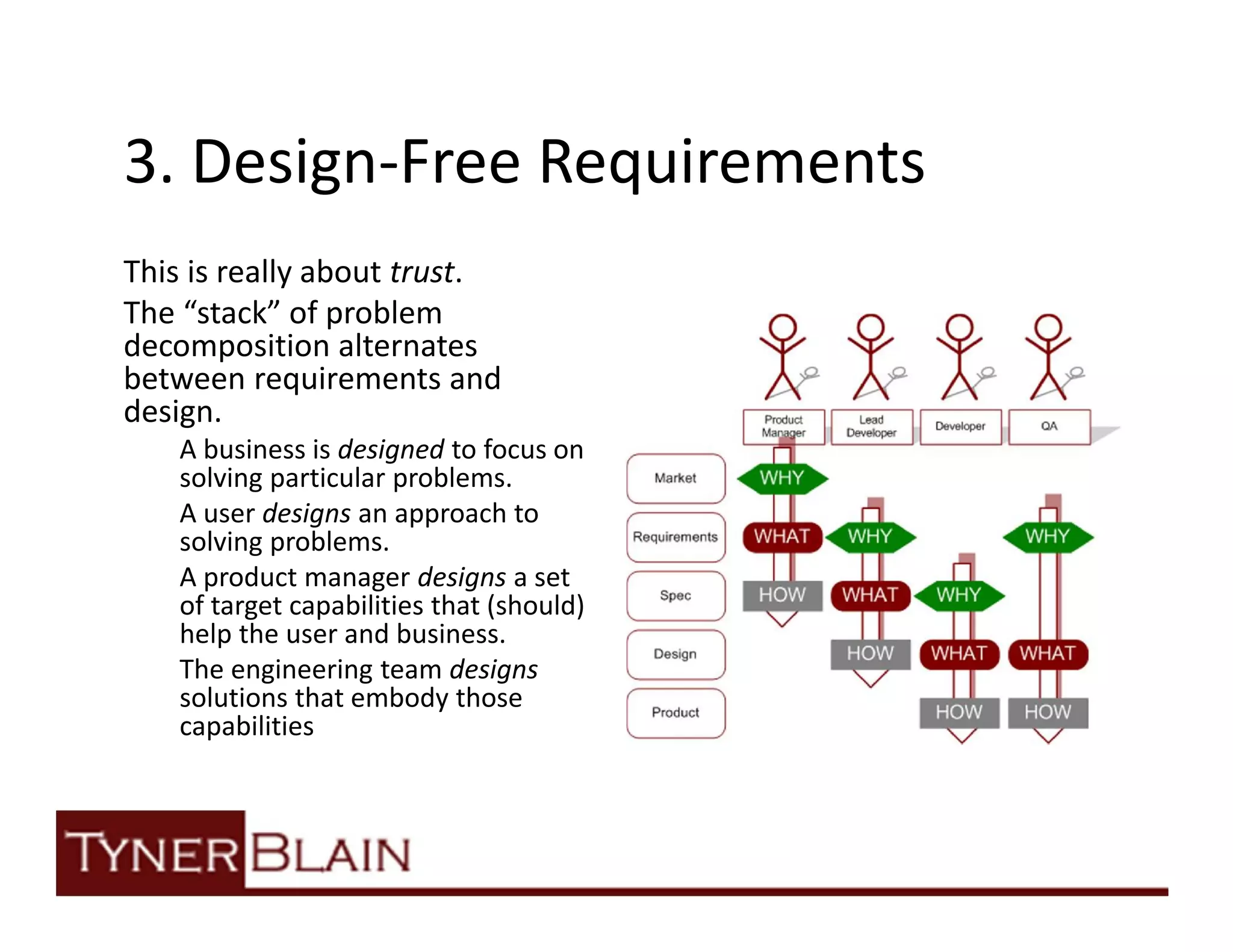
This is really about trust.
The “stack” of problem
decomposition alternates
between requirements and
design.
    A business is designed to focus on
    solving particular problems.
    A user designs an approach to
    solving problems.
    A product manager designs a set
    of target capabilities that (should)
    help the user and business.
    The engineering team designs
    solutions that embody those
    capabilities
4. Attainable Requirements
Can You Build It?
  Existing Team
  Available Technology
  Internal Political Environment
Can You Launch It?
  Organizational Dependencies
  Legal Restrictions (National, Local, IP)
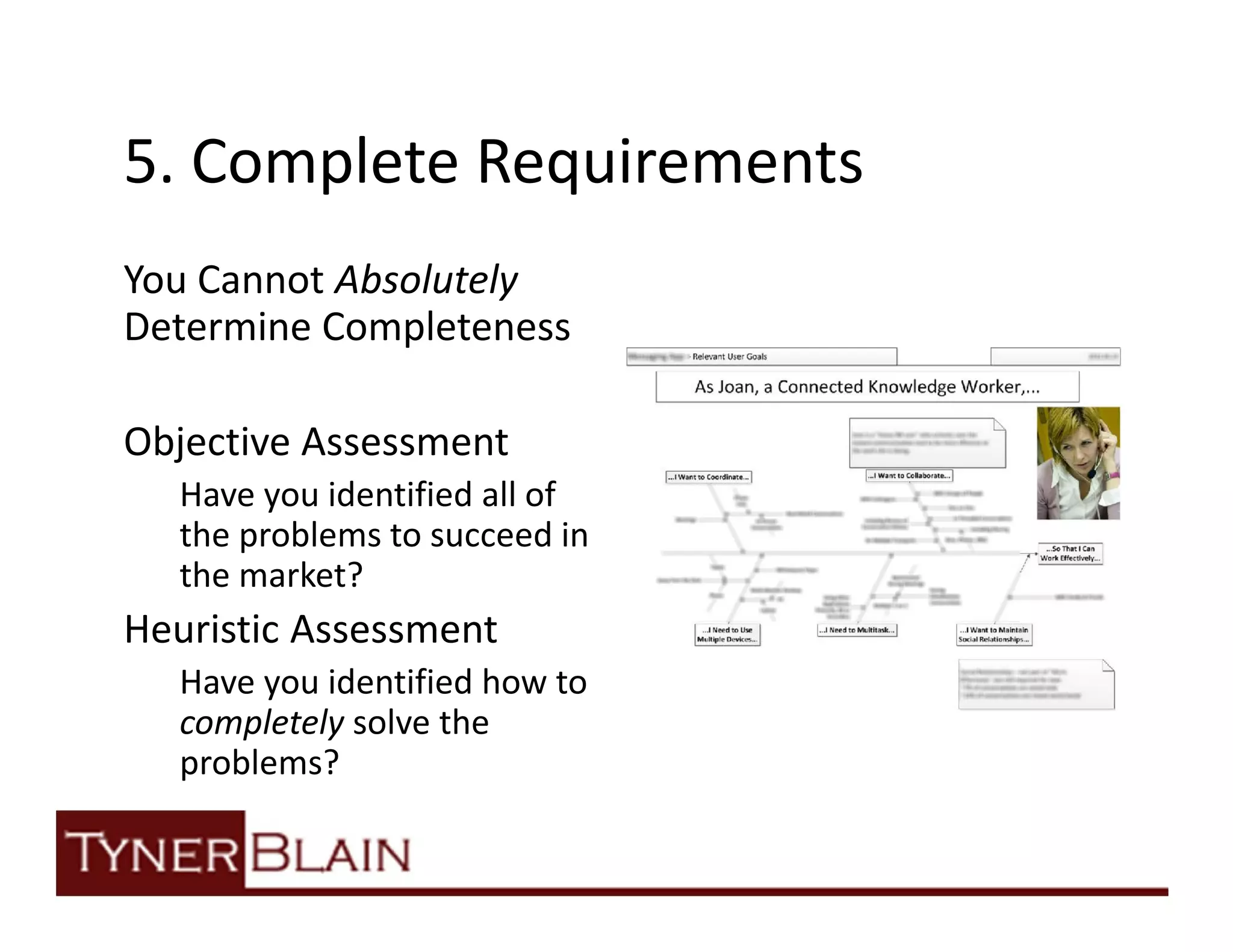
5. Complete Requirements
You Cannot Absolutely
Determine Completeness

Objective Assessment
  Have you identified all of
  the problems to succeed in
  the market?
Heuristic Assessment
  Have you identified how to
  completely solve the
  problems?
6. Consistent Requirements
Strategic Consistency
  Does this requirement work in concert with others
  to achieve our strategic goals?
Logical Consistency
  A requires B
  Must have A
  Must not have B
Grammatical Consistency
  Writing with the same tone, structure, phrasing…
7. Unambiguous Requirements
Language Introduces Ambiguity
When Writing
  Identify the user, the context, the goal
  Be precise in language (avoid jargon, symbols)
When Reading
  Shared language (e.g. “must” vs. “shall”)
  Read The Ambiguity Handbook and you’ll be forever
  paranoid about misinterpretation of everything you
  ever write again. Ever.
8. Verifiable Requirements
Does it Have a Measurable Aspect?
  If not, how do you know if you delivered?
Do You Know the Measure of Success?
  If not, how do you know what you need to deliver?
Do You Have the Ability to Measure It?
  Aha! Time to write another requirement.
9. Atomic Requirements
Every Requirement Stands on its Own

The Defining Characteristic:
  A Requirement Cannot Be Half-Done. It is Either
  Done, or Not Done.
10. Passionate Requirements
Be Excited. Be Committed.
Care About
  Your Customers & Their Problems
  Your Company & Its Strategy
  Your Team & Their Enrichment
  Your Work & Its Quality
Have Passion
…It Will Show in Your Requirements
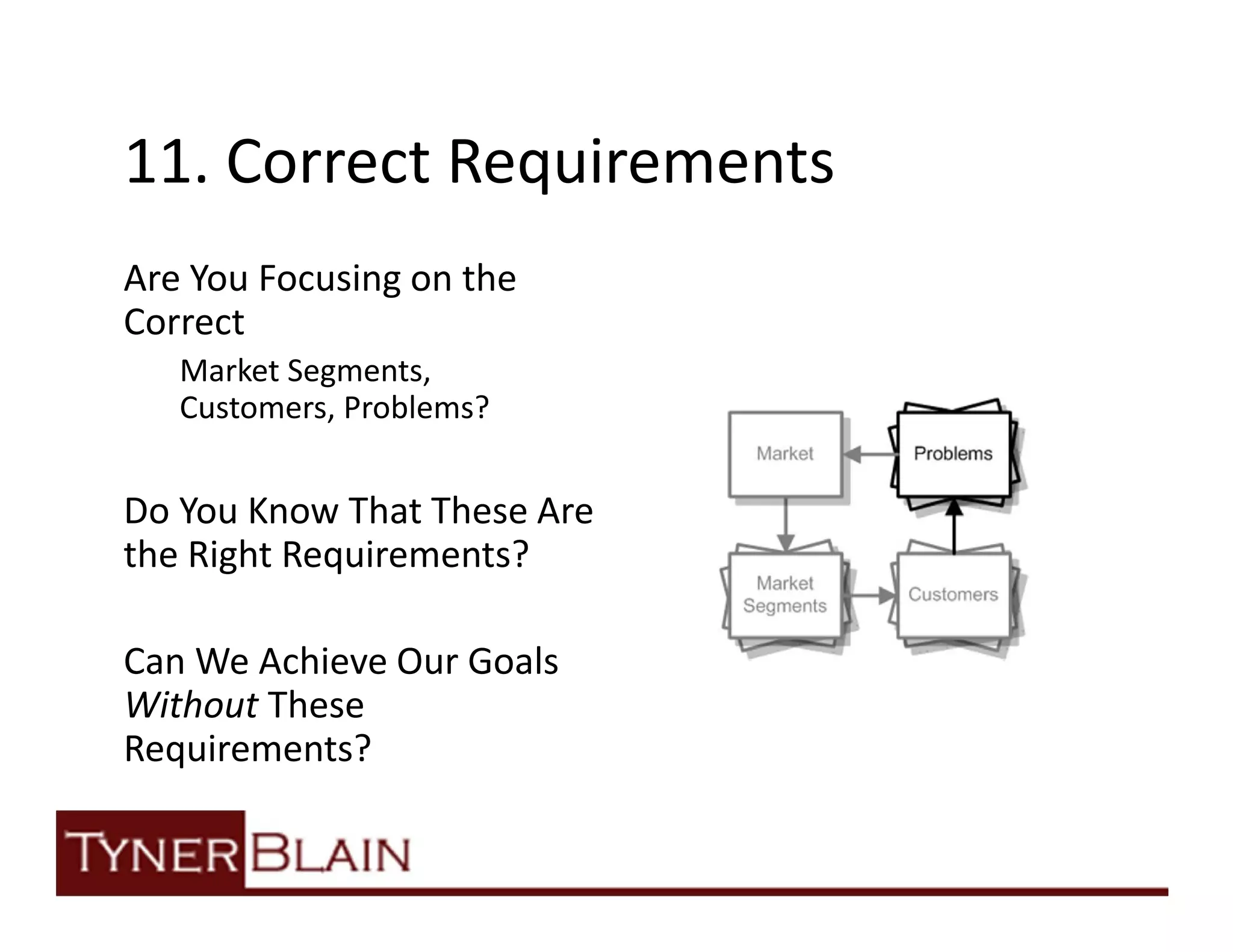
11. Correct Requirements
Are You Focusing on the
Correct
   Market Segments,
   Customers, Problems?


Do You Know That These Are
the Right Requirements?

Can We Achieve Our Goals
Without These
Requirements?
12. Stylish Requirements
Write Consistently         Use Good Style
   And With Good Style->     The System Must…
Prioritize Explicitly        Intentional Perspective
   Ordered Backlog, not      Non-Negative
   MoSCoW                    Reference, Don’t Repeat
Write for Your Audience      Gender Indifference
                             Syntactic Parallelism
Thank You!
Scott Sehlhorst
  http://twitter.com/sehlhorst Twitter

  https://plus.google.com/110352820346292209511 Google +

  http://go.tynerblain.com/sehlhorst About Me

  http://www.slideshare.net/ssehlhorst Slideshare

  http://tynerblain.com/blog Blog

  scott@tynerblain.com Email

  scott.sehlhorst Skype

                                                                      Agile since 2001
Enfocus Solutions:                                         Started Tyner Blain in 2005
  http://enfocussolutions.com                                      Helping Companies
                                                           Build The Right Thing, Right


                                                                                    20

The Rules of Requirements - Tyner Blain

  • 1.
    Powering Business Value TheRules of Requirements 25 September, 2012
  • 2.
    Scott Sehlhorst Product management& strategy consultant 8 Years electromechanical design engineering (1990-1997) IBM, Texas Instruments, Eaton 8 Years software development & requirements (1997-2005) > 20 clients in Telecom, Computer HW, Heavy Eq., Consumer Durables 7+ Years product management consulting (2005-????) >20 clients in B2B, B2C, B2B2C, ecommerce, global, mobile Agile since 2001 Started Tyner Blain in 2005 Helping companies Build the right products, right 2
  • 3.
    Why Do WeCare… …About Writing Good Requirements?
  • 4.
  • 5.
    Root Cause Analysis Failurereasons Success factors Lack of user input User involvement Incomplete requirements Exec support Changing requirements Clear requirements Lack of exec support Proper planning Tech. incompetence Realistic expectations 5
  • 6.
    Rules of Requirements 1. Valuable 7. Unambiguous 2. Concise 8. Verifiable 3. Design Free 9. Atomic 4. Attainable 10. Passionate 5. Complete 11. Correct 6. Consistent 12. Stylish
  • 7.
  • 8.
  • 9.
    3. Design-Free Requirements Thisis really about trust. The “stack” of problem decomposition alternates between requirements and design. A business is designed to focus on solving particular problems. A user designs an approach to solving problems. A product manager designs a set of target capabilities that (should) help the user and business. The engineering team designs solutions that embody those capabilities
  • 10.
    4. Attainable Requirements CanYou Build It? Existing Team Available Technology Internal Political Environment Can You Launch It? Organizational Dependencies Legal Restrictions (National, Local, IP)
  • 11.
    5. Complete Requirements YouCannot Absolutely Determine Completeness Objective Assessment Have you identified all of the problems to succeed in the market? Heuristic Assessment Have you identified how to completely solve the problems?
  • 12.
    6. Consistent Requirements StrategicConsistency Does this requirement work in concert with others to achieve our strategic goals? Logical Consistency A requires B Must have A Must not have B Grammatical Consistency Writing with the same tone, structure, phrasing…
  • 13.
    7. Unambiguous Requirements LanguageIntroduces Ambiguity When Writing Identify the user, the context, the goal Be precise in language (avoid jargon, symbols) When Reading Shared language (e.g. “must” vs. “shall”) Read The Ambiguity Handbook and you’ll be forever paranoid about misinterpretation of everything you ever write again. Ever.
  • 14.
    8. Verifiable Requirements Doesit Have a Measurable Aspect? If not, how do you know if you delivered? Do You Know the Measure of Success? If not, how do you know what you need to deliver? Do You Have the Ability to Measure It? Aha! Time to write another requirement.
  • 15.
    9. Atomic Requirements EveryRequirement Stands on its Own The Defining Characteristic: A Requirement Cannot Be Half-Done. It is Either Done, or Not Done.
  • 16.
    10. Passionate Requirements BeExcited. Be Committed. Care About Your Customers & Their Problems Your Company & Its Strategy Your Team & Their Enrichment Your Work & Its Quality Have Passion …It Will Show in Your Requirements
  • 17.
    11. Correct Requirements AreYou Focusing on the Correct Market Segments, Customers, Problems? Do You Know That These Are the Right Requirements? Can We Achieve Our Goals Without These Requirements?
  • 18.
    12. Stylish Requirements WriteConsistently Use Good Style And With Good Style-> The System Must… Prioritize Explicitly Intentional Perspective Ordered Backlog, not Non-Negative MoSCoW Reference, Don’t Repeat Write for Your Audience Gender Indifference Syntactic Parallelism
  • 20.
    Thank You! Scott Sehlhorst http://twitter.com/sehlhorst Twitter https://plus.google.com/110352820346292209511 Google + http://go.tynerblain.com/sehlhorst About Me http://www.slideshare.net/ssehlhorst Slideshare http://tynerblain.com/blog Blog scott@tynerblain.com Email scott.sehlhorst Skype Agile since 2001 Enfocus Solutions: Started Tyner Blain in 2005 http://enfocussolutions.com Helping Companies Build The Right Thing, Right 20