• In traditional approaches reading, and the reader
was considered to be passive. Later on, there was a
shift from a passive view to an active one.
• The reader had to extract meaning from the text.
• Reading has probably been the most emphasized
skill in foreign language teaching.
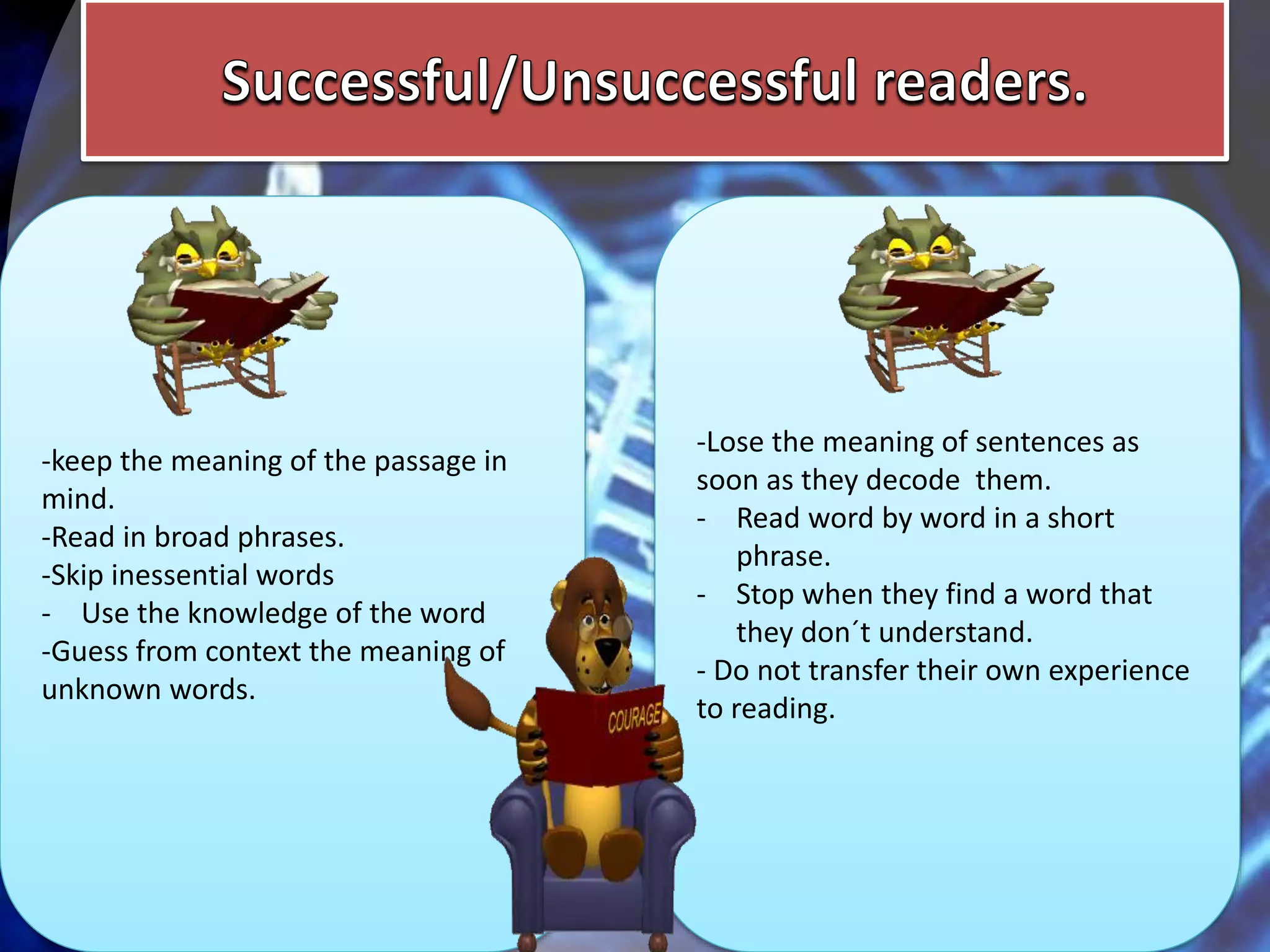
-keep the meaning of the passage in
mind.
-Read in broad phrases.
-Skip inessential words
- Use the knowledge of the word
-Guess from context the meaning of
unknown words.
-Lose the meaning of sentences as
soon as they decode them.
- Read word by word in a short
phrase.
- Stop when they find a word that
they don´t understand.
- Do not transfer their own experience
to reading.
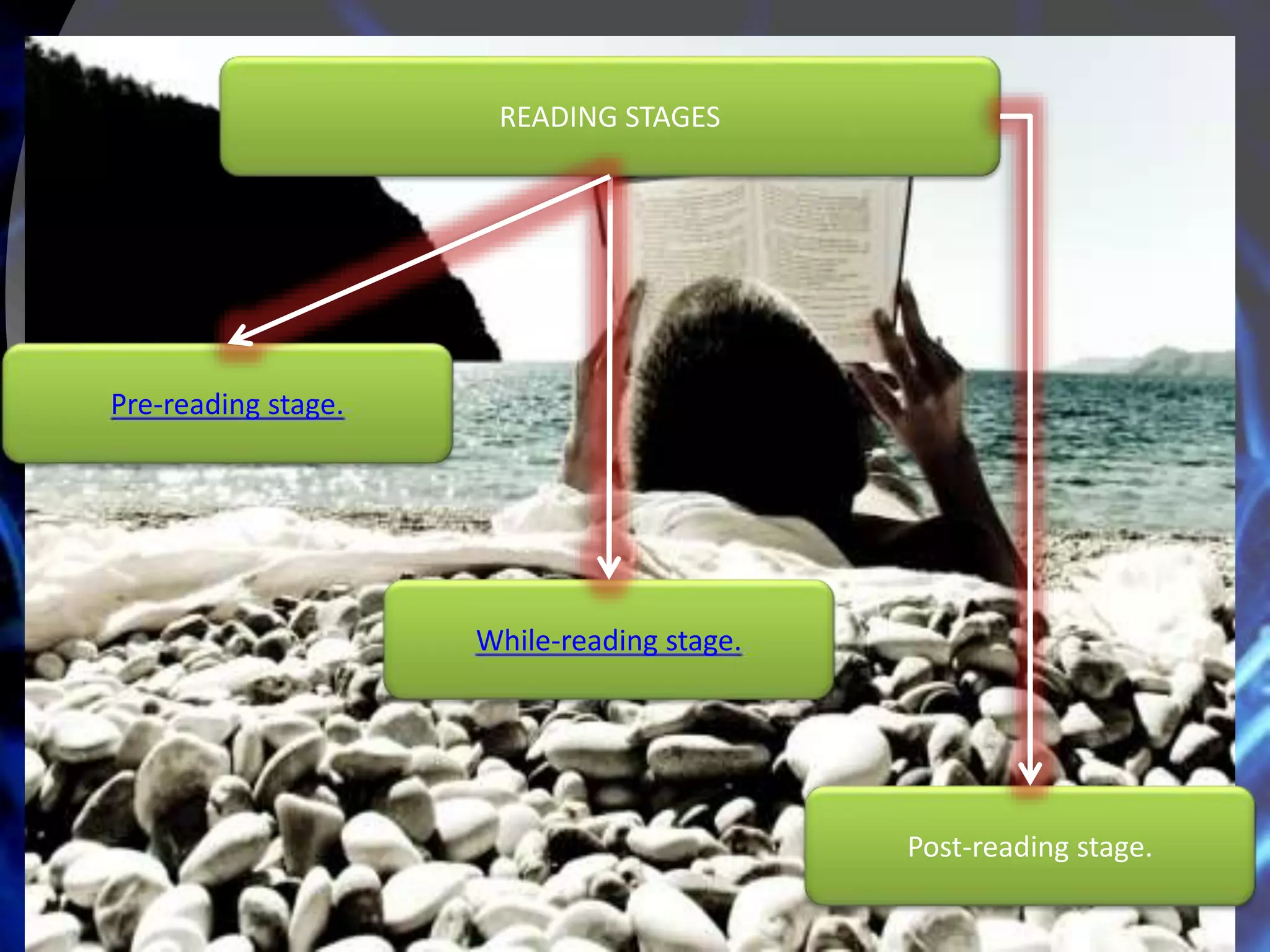
While-reading stage.
Pre-reading stage.
Post-reading stage.
READING STAGES
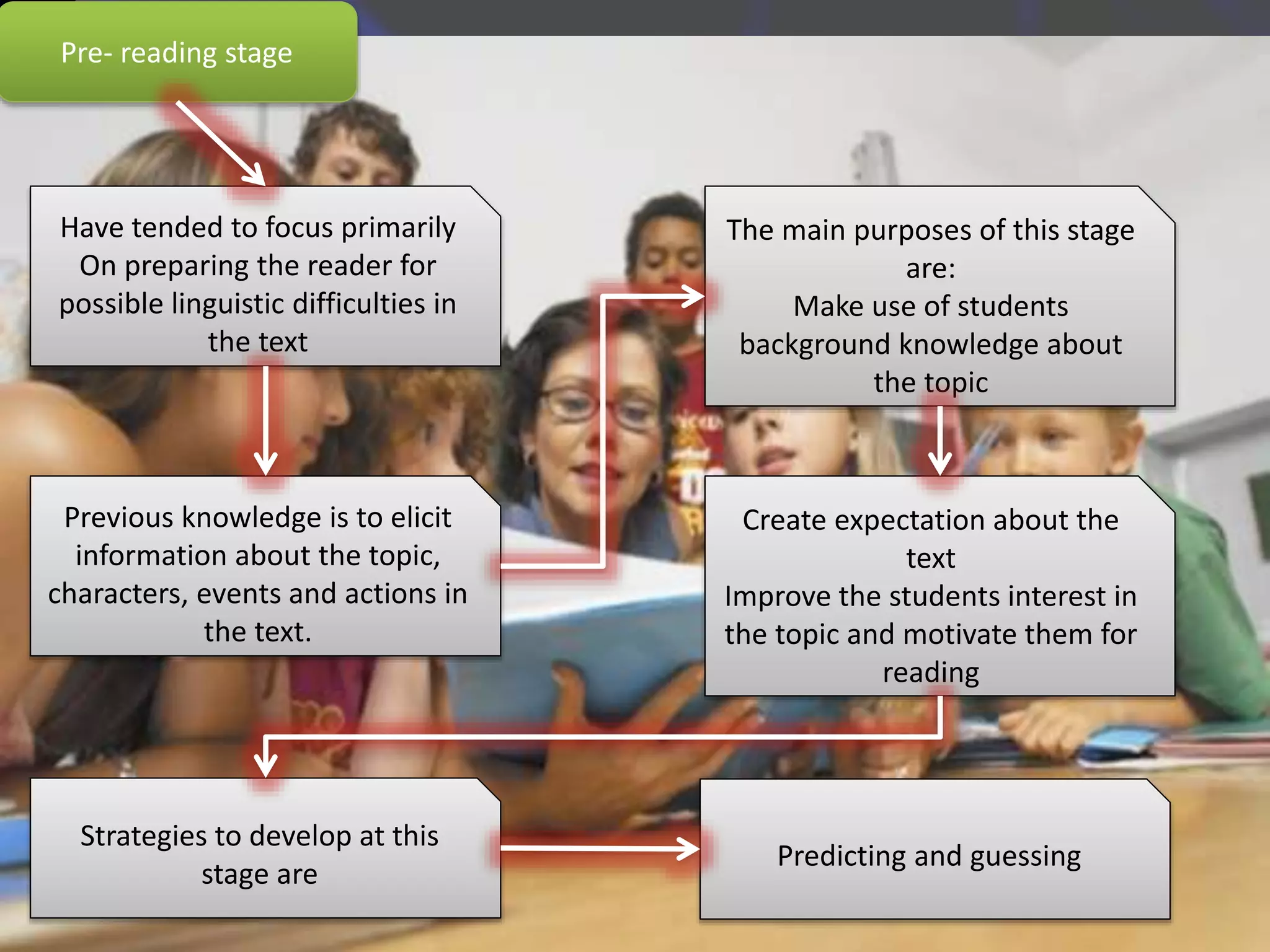
Pre- reading stage
Have tended to focus primarily
On preparing the reader for
possible linguistic difficulties in
the text
Previous knowledge is to elicit
information about the topic,
characters, events and actions in
the text.
The main purposes of this stage
are:
Make use of students
background knowledge about
the topic
Create expectation about the
text
Improve the students interest in
the topic and motivate them for
reading
Strategies to develop at this
stage are
Predicting and guessing
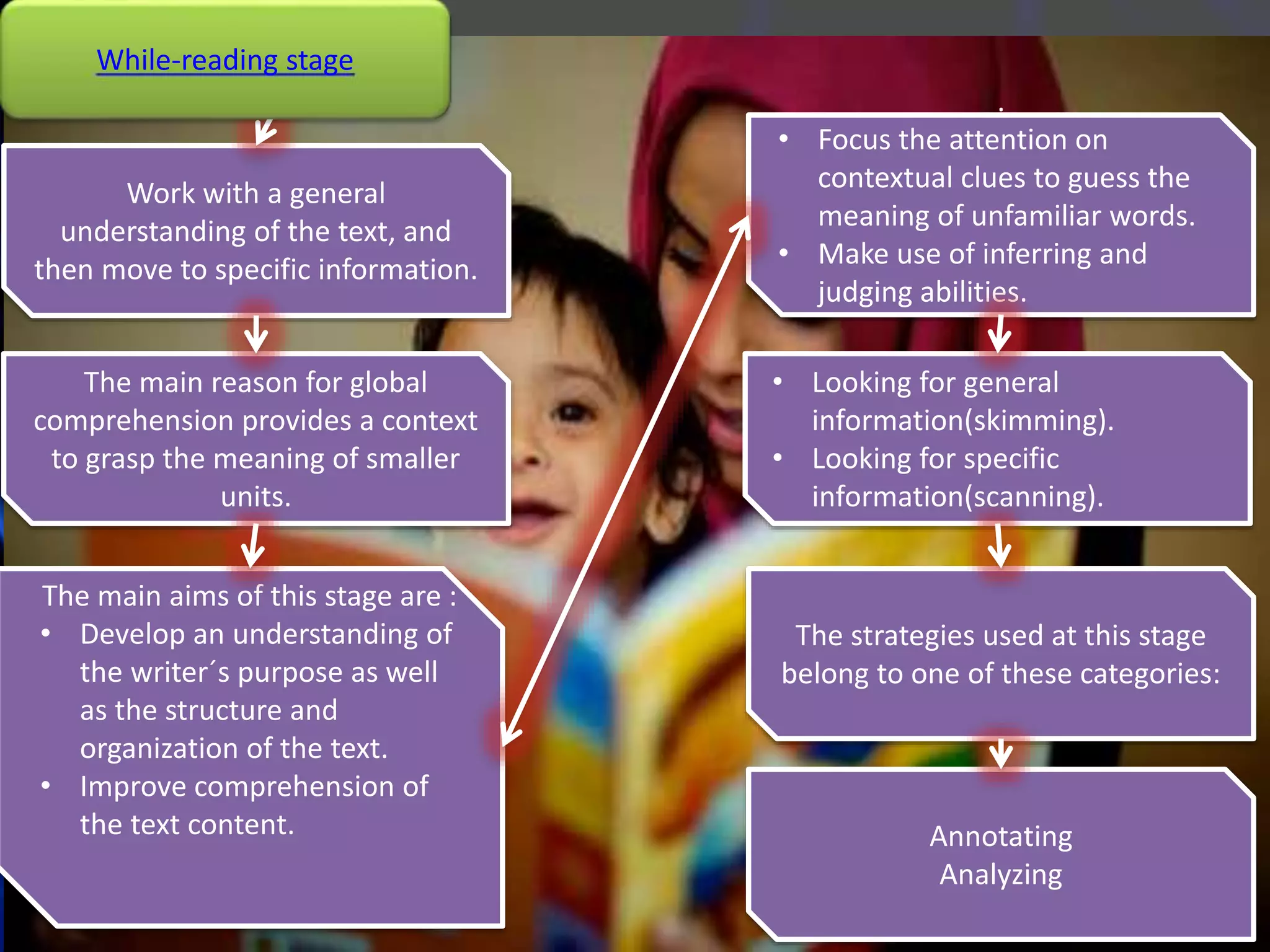
Work with a general
understanding of the text, and
then move to specific information.
The main reason for global
comprehension provides a context
to grasp the meaning of smaller
units.
The main aims of this stage are :
• Develop an understanding of
the writer´s purpose as well
as the structure and
organization of the text.
• Improve comprehension of
the text content.
• Looking for general
information(skimming).
• Looking for specific
information(scanning).
The strategies used at this stage
belong to one of these categories:
.
• Focus the attention on
contextual clues to guess the
meaning of unfamiliar words.
• Make use of inferring and
judging abilities.
Annotating
Analyzing
While-reading stage
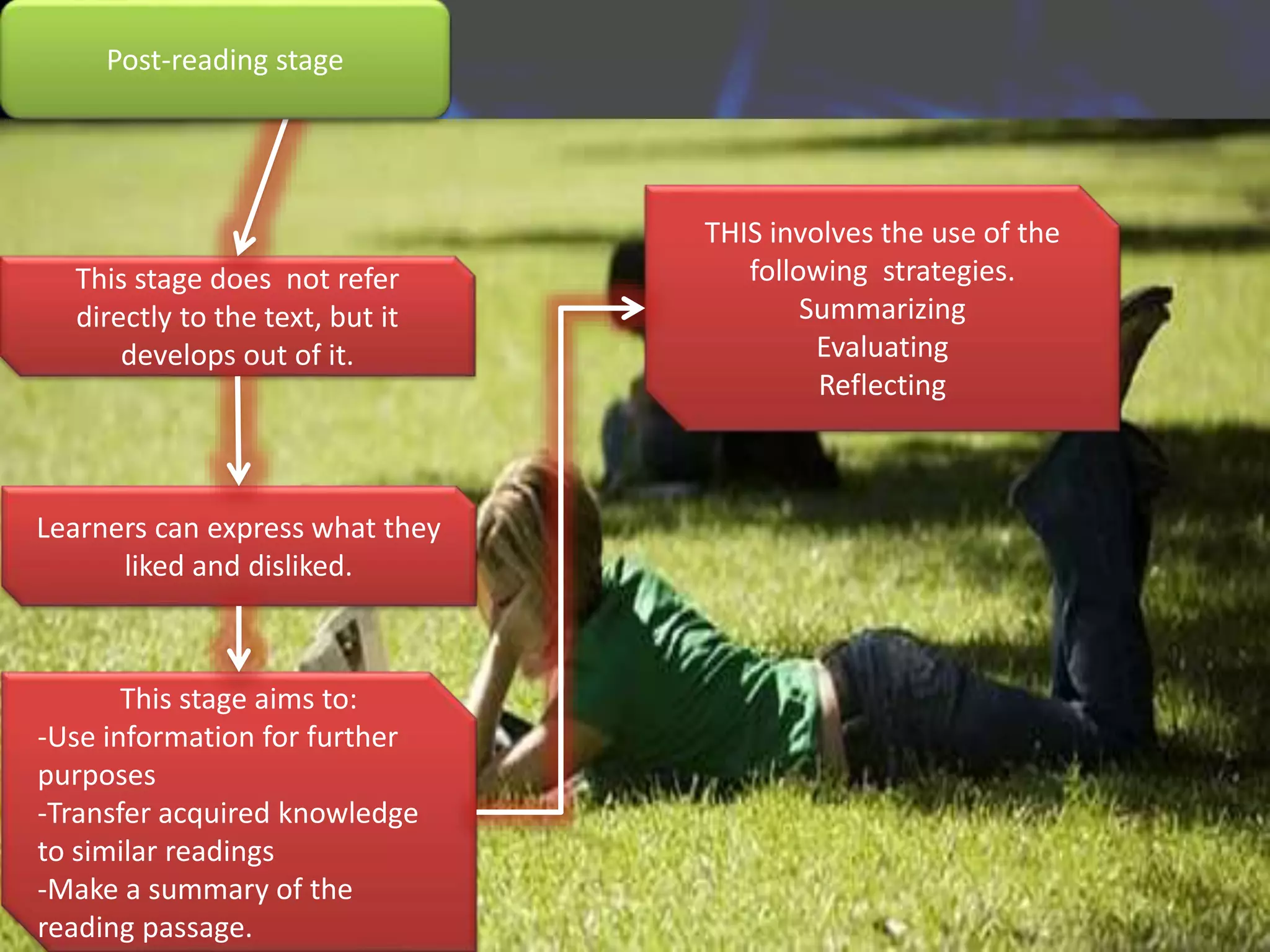
This stage does not refer
directly to the text, but it
develops out of it.
Learners can express what they
liked and disliked.
This stage aims to:
-Use information for further
purposes
-Transfer acquired knowledge
to similar readings
-Make a summary of the
reading passage.
THIS involves the use of the
following strategies.
Summarizing
Evaluating
Reflecting
Post-reading stage
prueba

prueba

  • 3.
    • In traditionalapproaches reading, and the reader was considered to be passive. Later on, there was a shift from a passive view to an active one. • The reader had to extract meaning from the text. • Reading has probably been the most emphasized skill in foreign language teaching.
  • 5.
    -keep the meaningof the passage in mind. -Read in broad phrases. -Skip inessential words - Use the knowledge of the word -Guess from context the meaning of unknown words. -Lose the meaning of sentences as soon as they decode them. - Read word by word in a short phrase. - Stop when they find a word that they don´t understand. - Do not transfer their own experience to reading.
  • 6.
  • 7.
    Pre- reading stage Havetended to focus primarily On preparing the reader for possible linguistic difficulties in the text Previous knowledge is to elicit information about the topic, characters, events and actions in the text. The main purposes of this stage are: Make use of students background knowledge about the topic Create expectation about the text Improve the students interest in the topic and motivate them for reading Strategies to develop at this stage are Predicting and guessing
  • 8.
    Work with ageneral understanding of the text, and then move to specific information. The main reason for global comprehension provides a context to grasp the meaning of smaller units. The main aims of this stage are : • Develop an understanding of the writer´s purpose as well as the structure and organization of the text. • Improve comprehension of the text content. • Looking for general information(skimming). • Looking for specific information(scanning). The strategies used at this stage belong to one of these categories: . • Focus the attention on contextual clues to guess the meaning of unfamiliar words. • Make use of inferring and judging abilities. Annotating Analyzing While-reading stage
  • 9.
    This stage doesnot refer directly to the text, but it develops out of it. Learners can express what they liked and disliked. This stage aims to: -Use information for further purposes -Transfer acquired knowledge to similar readings -Make a summary of the reading passage. THIS involves the use of the following strategies. Summarizing Evaluating Reflecting Post-reading stage