Sample Management inQMS
Sample management is a part of process
control in the Quality Management
System (QMS).
Accurate testing depends on high-quality
samples.
Proactive management ensures reliable
laboratory results.
3.
Sample vs Specimen
ISOdefines a sample as:“One or more
parts taken from a system to provide
information.”
"Specimen" is commonly used in labs,
especially for human samples.
In ISO documents: "Sample" = "Primary
sample".
4.
Importance of GoodSample
Management
Critical for accurate, reliable diagnosis.
Impacts:Treatment decisions, Hospital
stay duration, Costs and efficiency
Prevents re-tests and incorrect
diagnoses.
5.
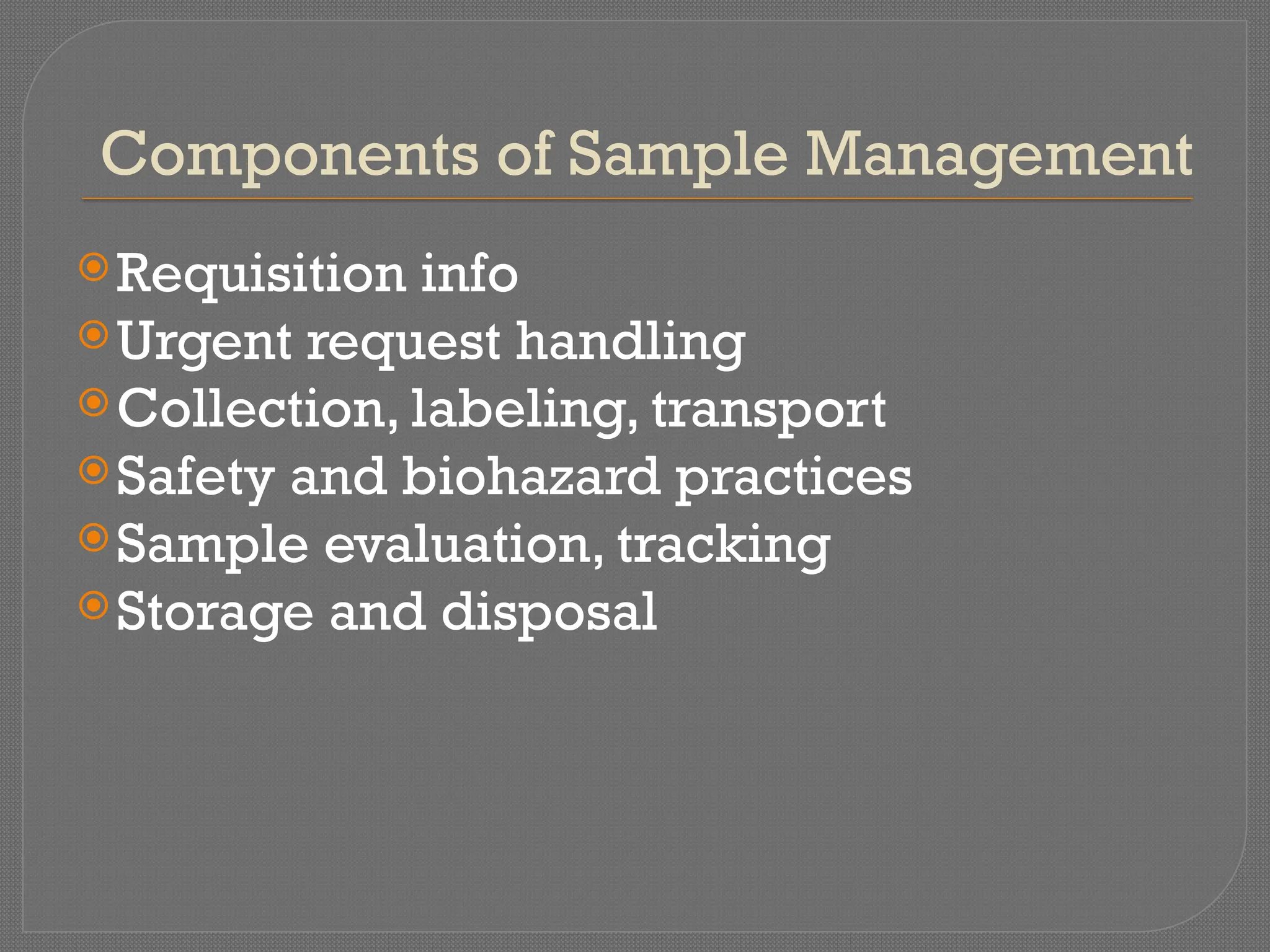
Components of SampleManagement
Requisition info
Urgent request handling
Collection, labeling, transport
Safety and biohazard practices
Sample evaluation, tracking
Storage and disposal
6.
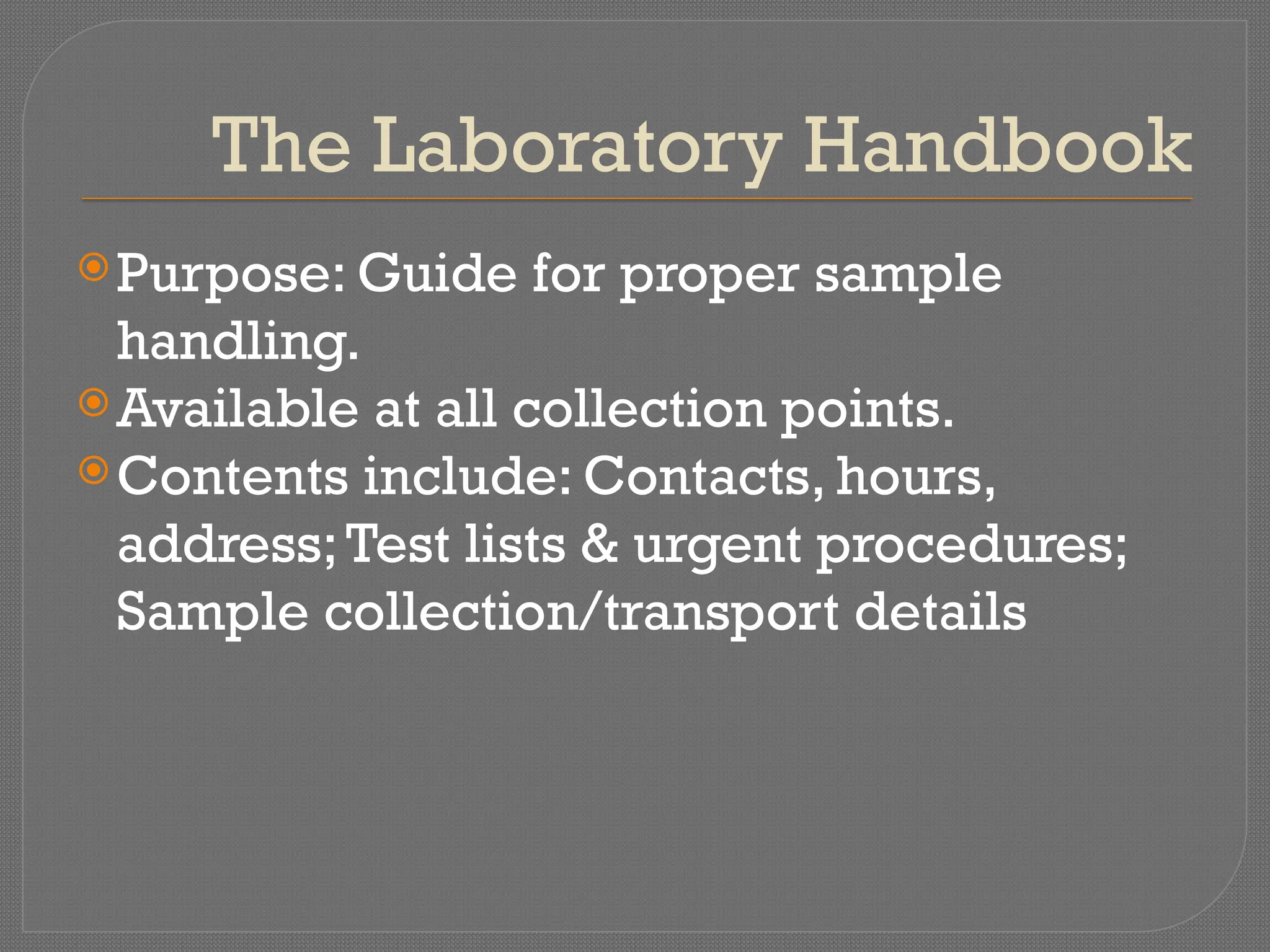
The Laboratory Handbook
Purpose:Guide for proper sample
handling.
Available at all collection points.
Contents include: Contacts, hours,
address;Test lists & urgent procedures;
Sample collection/transport details
Registering and TrackingSamples
Maintain sample log/register: ID number,
patient info, Collection/receipt time,Tests
requested
Manual or digital tracking
Aliquots must be traceable
13.
Sample Storage andRetention
Policies should define:What to store and
for how long, Storage conditions and
organization
Long-term samples need tracking
systems
Avoid unnecessary freeze/thaw cycles
14.
Sample Referral andDisposal
Referral: Use correct forms and
containers, Monitor turnaround and
results
Disposal: Follow safety and local
regulations, Disinfect before disposal
15.
Sample Transport
Maintain sampleintegrity: Control
temperature, use proper containers
Adhere to transport regulations: ICAO,
IATA, national rules
Use triple packaging: Primary (sealed,
labeled), Secondary (watertight,
absorbent), Outer (protective box)
16.
Managing Sample Transport
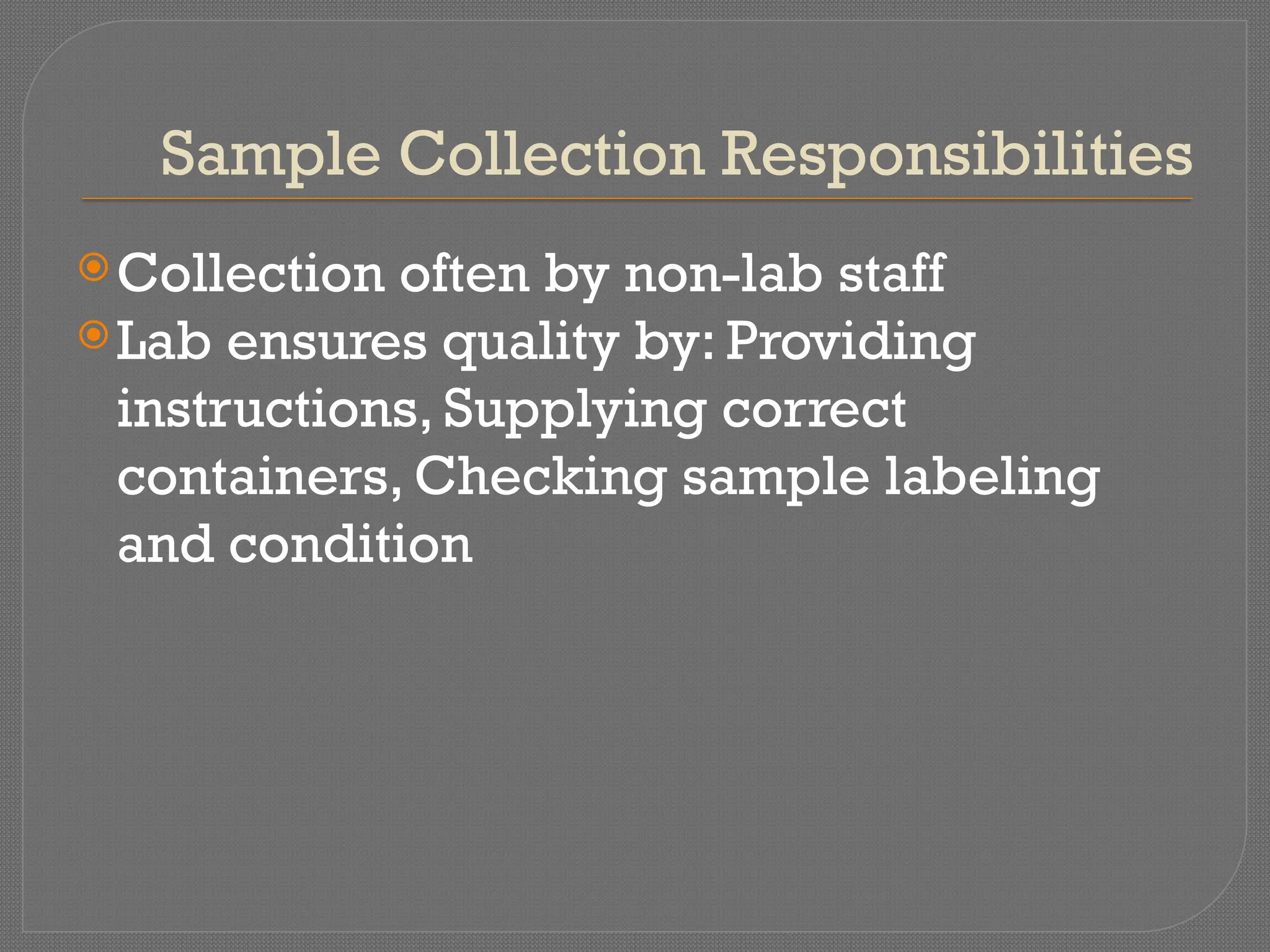
Trainall personnel handling samples
Local transport: Use ice boxes, monitor
time
Air/road transport: Comply with
dangerous goods regulations
Categories: A: High risk (UN 2814/2900),
B: Lower risk (UN 3373)