The Power of Data
Science
Transforming Industries and Driving Innovation
FROM DICS IT COURSES
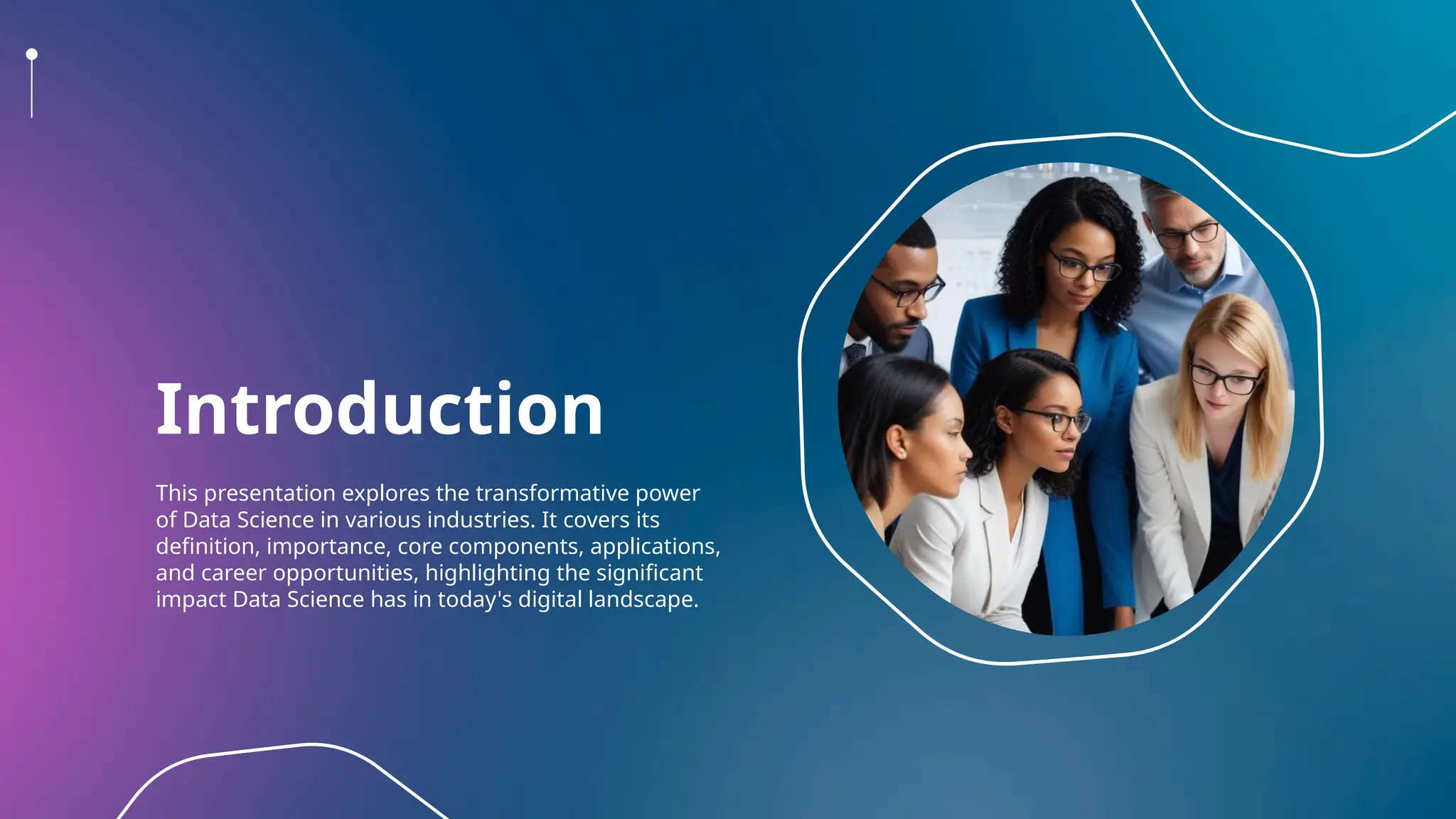
Introduction
This presentation explores the transformative power
of Data Science in various industries. It covers its
definition, importance, core components, applications,
and career opportunities, highlighting the significant
impact Data Science has in today's digital landscape.
Definition
01
What is
Data Science?
Data Science is the field that combines statistical analysis,
programming, and domain expertise to extract insights
from structured and unstructured data. It involves data
collection, processing, analysis, and visualization,
ultimately turning data into actionable knowledge.
Key Principles
Key principles of Data Science include data exploration, hypothesis testing, statistical
inference, and validation of results. These principles guide Data Scientists in making informed
decisions based on data and help in developing models that predict future trends.
Interdisciplinary Nature
Data Science integrates concepts from various fields such as mathematics, computer
science, domain knowledge, and statistics. This interdisciplinary nature allows Data
Scientists to tackle diverse challenges and apply their skills across different industries.
02
Importance
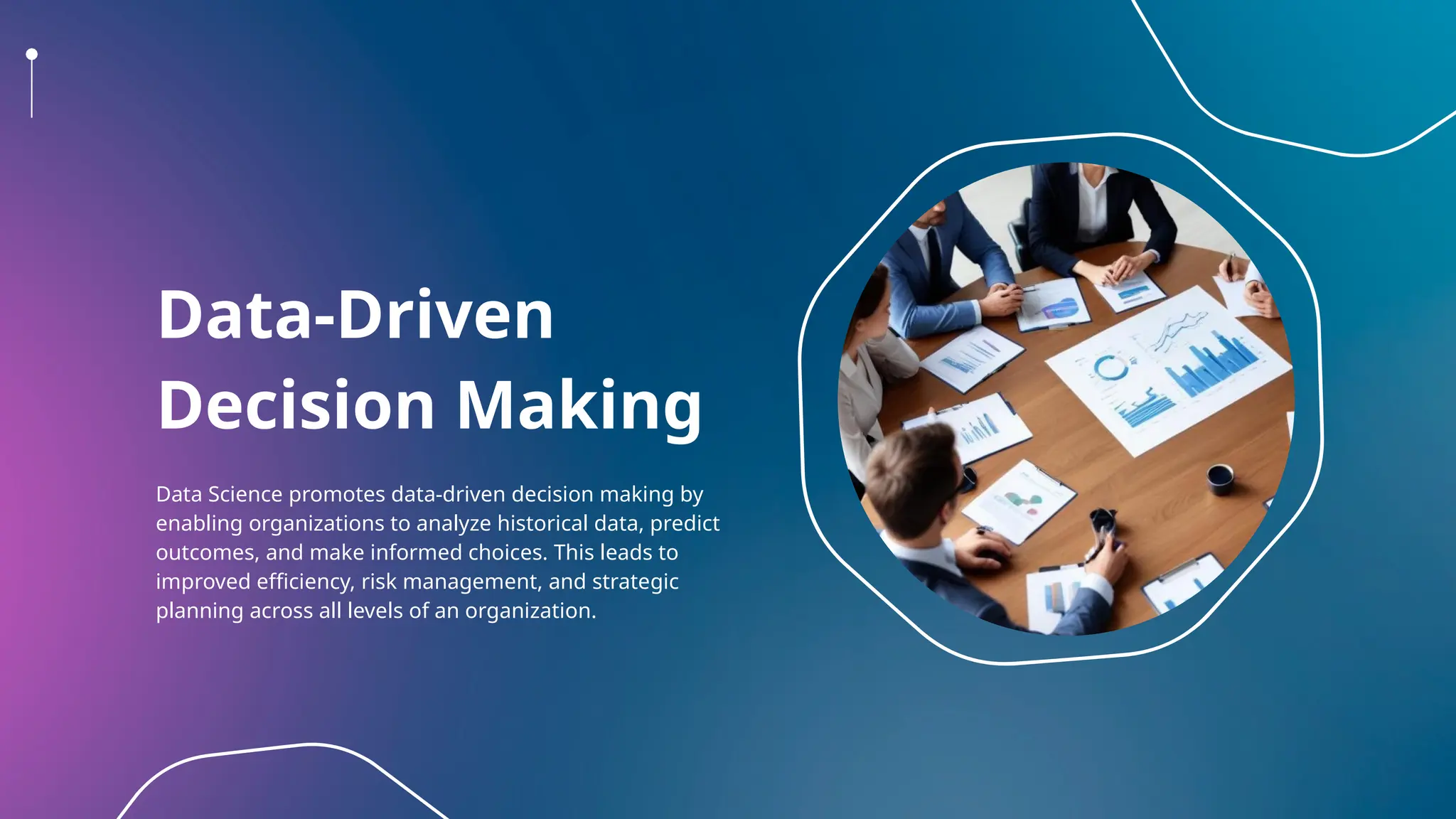
Data-Driven
Decision Making
Data Science promotes data-driven decision making by
enabling organizations to analyze historical data, predict
outcomes, and make informed choices. This leads to
improved efficiency, risk management, and strategic
planning across all levels of an organization.
Impact on Innovation
Data Science fosters innovation by uncovering hidden patterns, automating processes,
and providing insights that drive the development of new products and services. It plays
a crucial role in industries such as healthcare, finance, and marketing.
Role in Competitive
Advantage
Organizations that leverage Data Science effectively gain a competitive advantage by optimizing
operations, enhancing customer experiences, and adapting quickly to market changes. Data
Science helps identify trends and consumer preferences that shape business strategies.
Key Components 03
Statistics
Statistics is foundational to Data Science, providing methods for analyzing data distributions,
measuring variability, and making inferences. It equips Data Scientists with the tools
necessary to derive meaningful insights and assess the significance of their findings.
Machine Learning
Machine Learning is a subset of Data Science that focuses on building algorithms that allow
computers to learn from data and make predictions. Techniques such as supervised learning,
unsupervised learning, and neural networks are vital for creating intelligent systems.
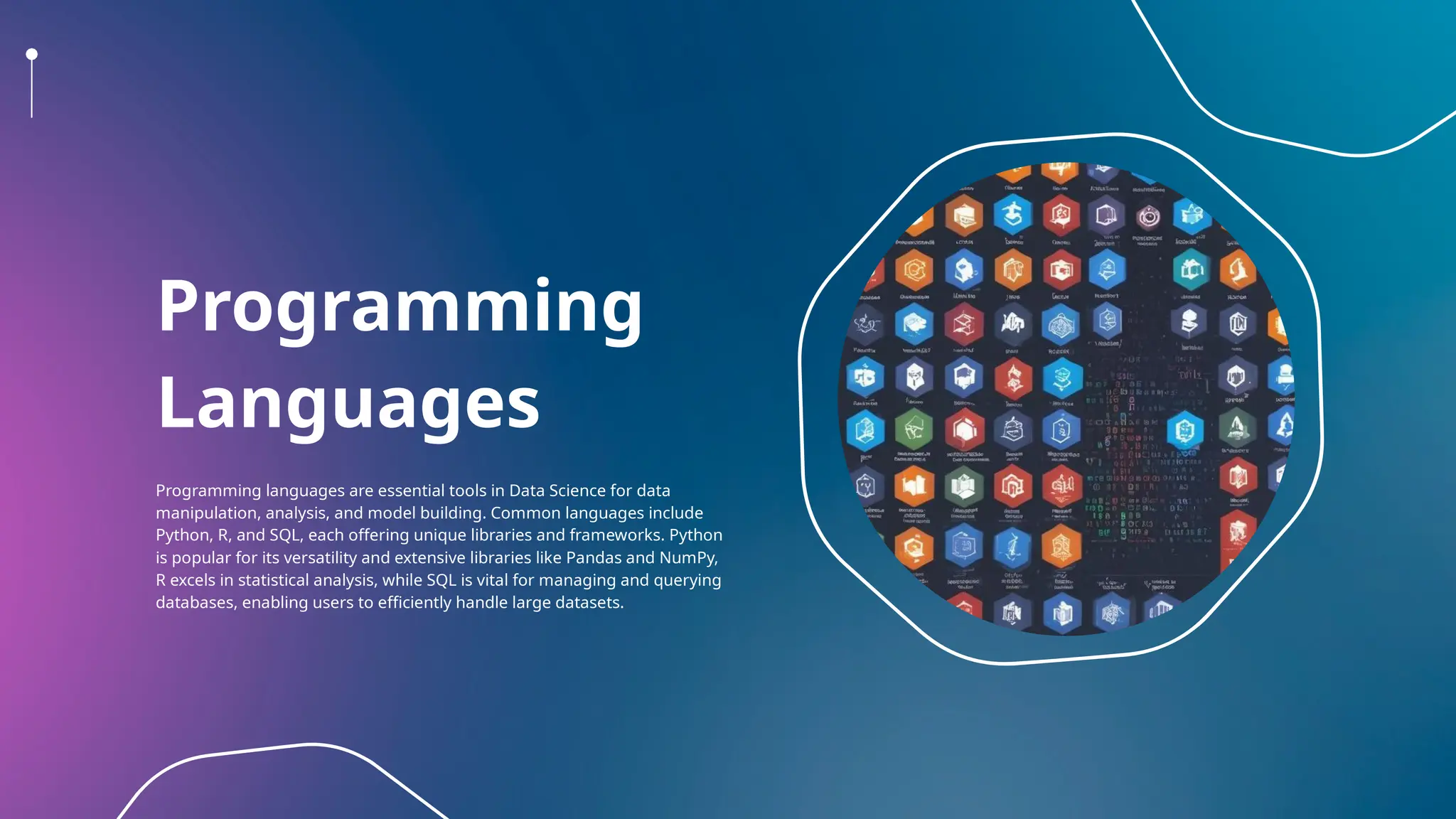
Programming
Languages
Programming languages are essential tools in Data Science for data
manipulation, analysis, and model building. Common languages include
Python, R, and SQL, each offering unique libraries and frameworks. Python
is popular for its versatility and extensive libraries like Pandas and NumPy,
R excels in statistical analysis, while SQL is vital for managing and querying
databases, enabling users to efficiently handle large datasets.
Applications
04
Healthcare
Innovations
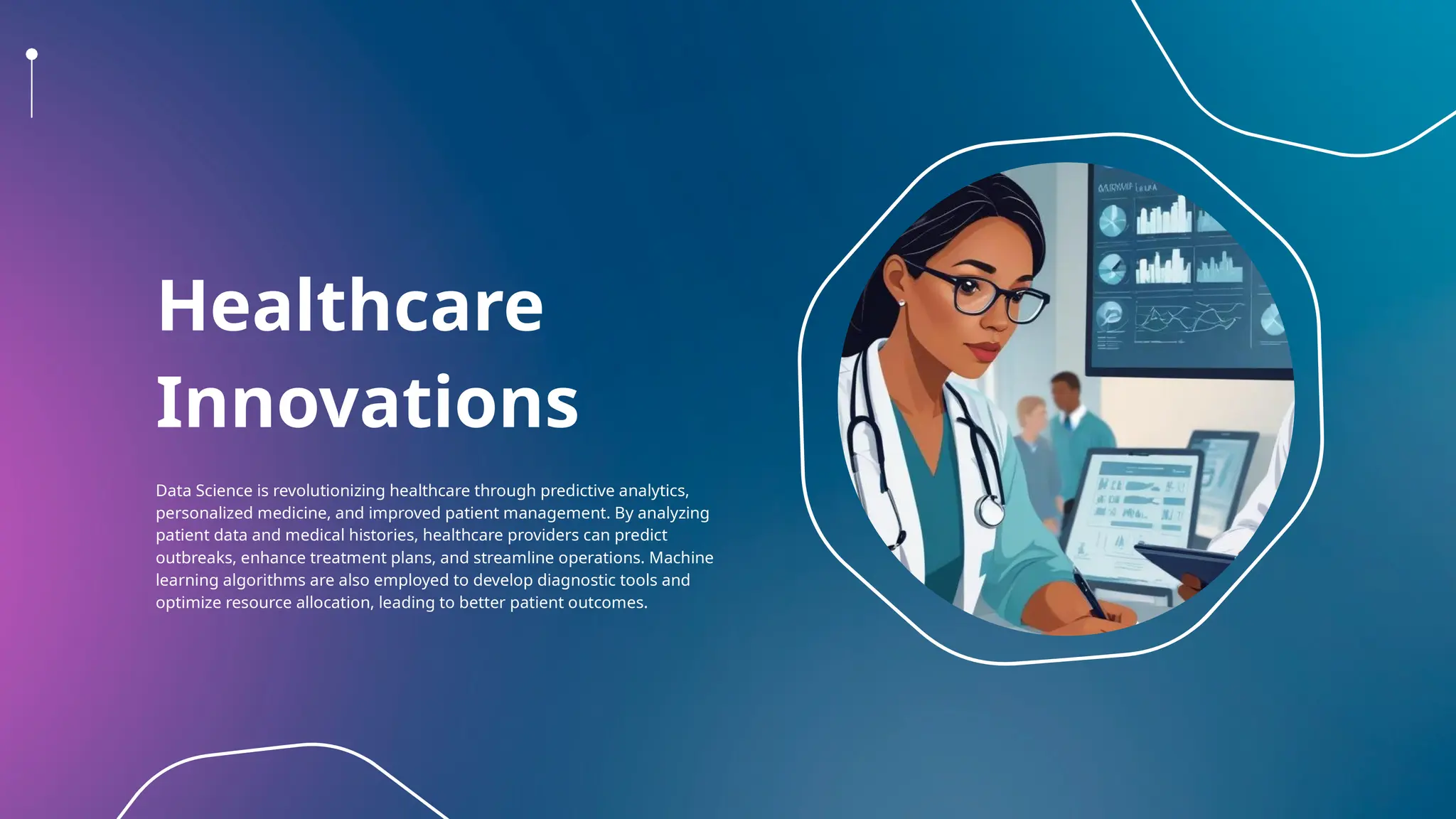
Data Science is revolutionizing healthcare through predictive analytics,
personalized medicine, and improved patient management. By analyzing
patient data and medical histories, healthcare providers can predict
outbreaks, enhance treatment plans, and streamline operations. Machine
learning algorithms are also employed to develop diagnostic tools and
optimize resource allocation, leading to better patient outcomes.
Finance Analytics
In finance, Data Science plays a critical role in risk assessment, fraud detection, and customer segmentation. By
using predictive models, financial institutions can forecast market trends, enhance trading strategies, and assess
credit risks. Data analysis helps in identifying fraudulent transactions in real-time, reducing potential losses, and
optimizing marketing strategies to target specific customer segments effectively.
Marketing Strategies
Data Science transforms marketing strategies by enabling targeted advertising, customer behavior analysis, and
campaign performance measurement. Through data analytics, businesses can segment their audience, personalize
content, and optimize marketing channels. Techniques such as A/B testing and predictive analytics help in measuring
campaign effectiveness and improving customer engagement.
05
Tools
Python Overview
Python is a versatile and widely-used programming language in Data Science, known for its simplicity and
readability. It has extensive libraries such as Pandas for data manipulation, Matplotlib and Seaborn for data
visualization, and Scikit-learn for machine learning. Python's compatibility with other languages and its active
community make it an ideal choice for data projects across disciplines.
R Programming
R is a language specifically designed for statistical analysis and data visualization, making it a favorite among
statisticians and data scientists. It offers a rich ecosystem of packages such as ggplot2 for visualizations and
dplyr for data manipulation. R is particularly advantageous for conducting complex analyses, producing high-
quality plots, and executing advanced statistical modeling.
AI-Driven
Models
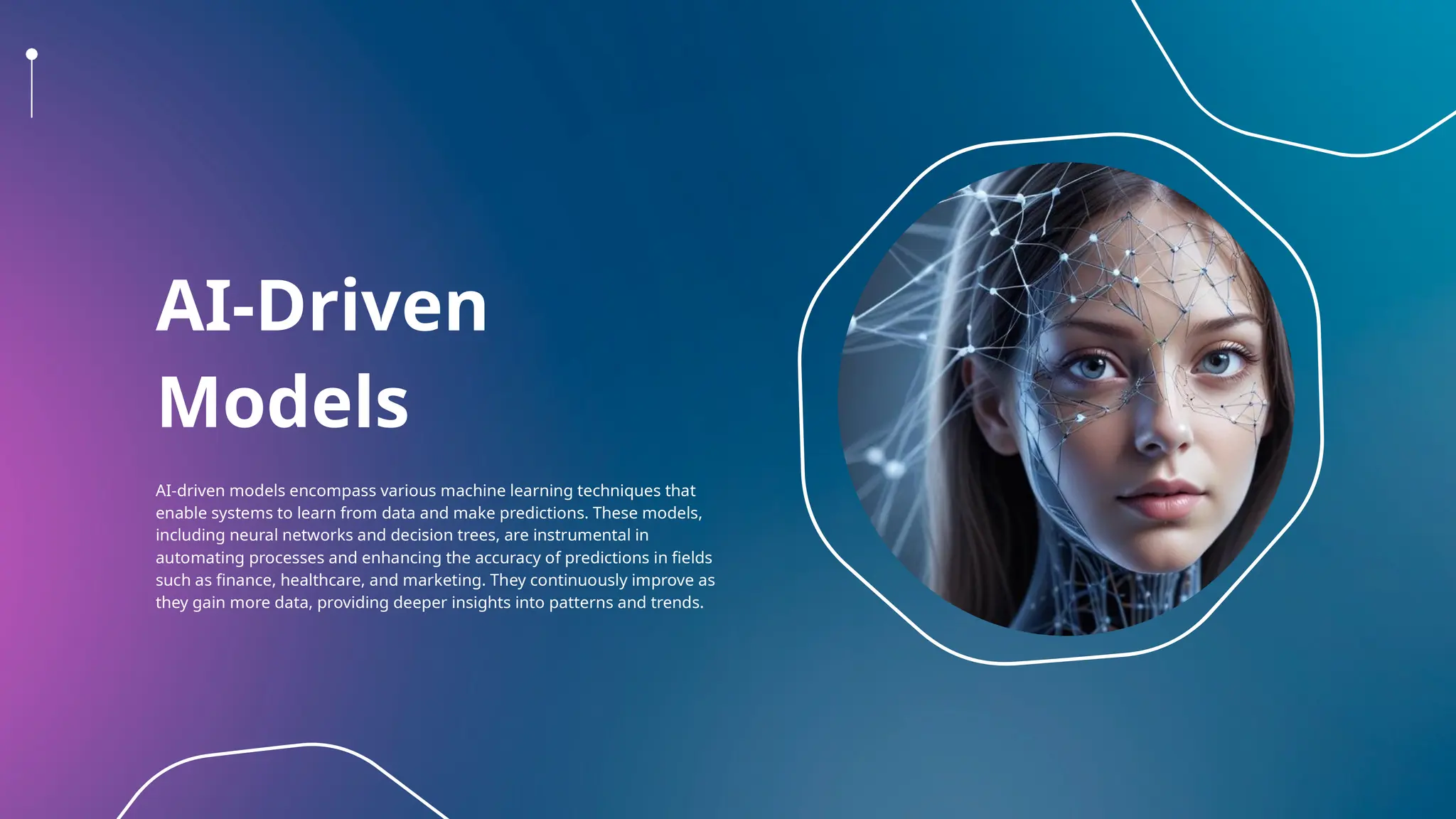
AI-driven models encompass various machine learning techniques that
enable systems to learn from data and make predictions. These models,
including neural networks and decision trees, are instrumental in
automating processes and enhancing the accuracy of predictions in fields
such as finance, healthcare, and marketing. They continuously improve as
they gain more data, providing deeper insights into patterns and trends.
Careers 06
Job Roles in Data Science
The field of Data Science offers diverse job roles, including Data Scientist, Data Analyst, Machine Learning
Engineer, and Data Engineer. Each role has distinct responsibilities ranging from analyzing data sets, developing
algorithms, to implementing data architecture. The demand for skilled professionals is high, as organizations
continuously seek to leverage data for competitive advantage.
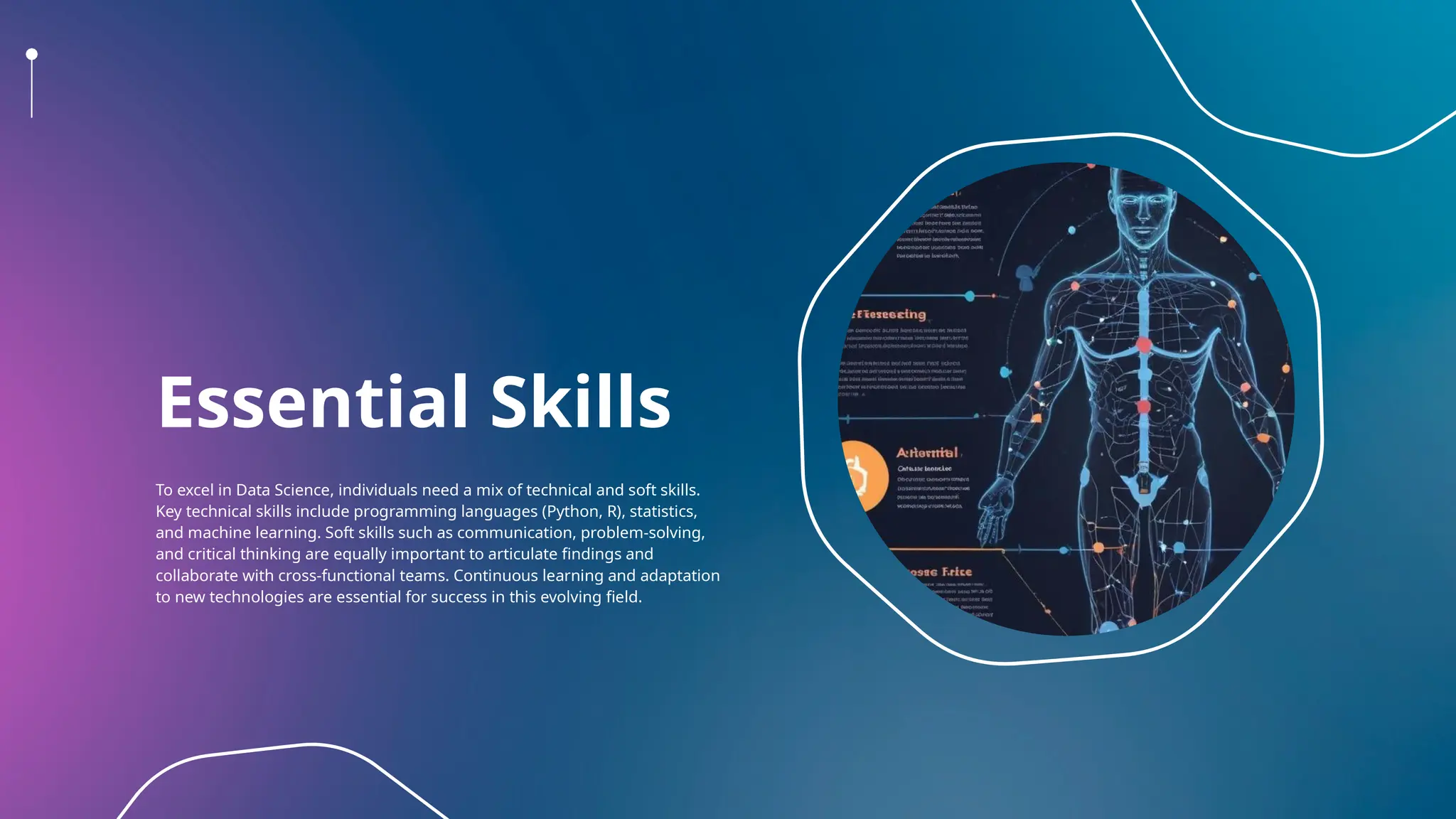
Essential Skills
To excel in Data Science, individuals need a mix of technical and soft skills.
Key technical skills include programming languages (Python, R), statistics,
and machine learning. Soft skills such as communication, problem-solving,
and critical thinking are equally important to articulate findings and
collaborate with cross-functional teams. Continuous learning and adaptation
to new technologies are essential for success in this evolving field.
Future Trends in
Employment
The demand for Data Science professionals is expected to grow significantly, driven by the increasing importance of data
analysis in decision-making across industries. Emerging trends include the rise of automated analytics, greater emphasis
on ethical data use, and the integration of AI and machine learning in business processes. As organizations invest more in
data capabilities, job opportunities will continue to expand, requiring ongoing education and skill enhancement.
Conclusions
Data Science is a pivotal force in transforming industries and fostering innovation. Its integration of statistics,
programming, and machine learning empowers organizations to make data-driven decisions, optimize operations,
and achieve competitive advantages. As technology evolves, the demand for skilled Data Science professionals will
continue to rise, making it a promising career path for those with the requisite skills and knowledge.
CREDITS: This presentation template was created by Slidesgo,
and includes icons by Flaticon, and infographics & images by
Freepik
Thank you!
Do you have any questions?
VISIT WEB SITE :- https://www.dicsitcourses.com/

The Power of Data Science by DICS INNOVATIVE.pptx

  • 1.
    The Power ofData Science Transforming Industries and Driving Innovation FROM DICS IT COURSES
  • 2.
    Introduction This presentation exploresthe transformative power of Data Science in various industries. It covers its definition, importance, core components, applications, and career opportunities, highlighting the significant impact Data Science has in today's digital landscape.
  • 3.
  • 4.
    What is Data Science? DataScience is the field that combines statistical analysis, programming, and domain expertise to extract insights from structured and unstructured data. It involves data collection, processing, analysis, and visualization, ultimately turning data into actionable knowledge.
  • 5.
    Key Principles Key principlesof Data Science include data exploration, hypothesis testing, statistical inference, and validation of results. These principles guide Data Scientists in making informed decisions based on data and help in developing models that predict future trends.
  • 6.
    Interdisciplinary Nature Data Scienceintegrates concepts from various fields such as mathematics, computer science, domain knowledge, and statistics. This interdisciplinary nature allows Data Scientists to tackle diverse challenges and apply their skills across different industries.
  • 7.
  • 8.
    Data-Driven Decision Making Data Sciencepromotes data-driven decision making by enabling organizations to analyze historical data, predict outcomes, and make informed choices. This leads to improved efficiency, risk management, and strategic planning across all levels of an organization.
  • 9.
    Impact on Innovation DataScience fosters innovation by uncovering hidden patterns, automating processes, and providing insights that drive the development of new products and services. It plays a crucial role in industries such as healthcare, finance, and marketing.
  • 10.
    Role in Competitive Advantage Organizationsthat leverage Data Science effectively gain a competitive advantage by optimizing operations, enhancing customer experiences, and adapting quickly to market changes. Data Science helps identify trends and consumer preferences that shape business strategies.
  • 11.
  • 12.
    Statistics Statistics is foundationalto Data Science, providing methods for analyzing data distributions, measuring variability, and making inferences. It equips Data Scientists with the tools necessary to derive meaningful insights and assess the significance of their findings.
  • 13.
    Machine Learning Machine Learningis a subset of Data Science that focuses on building algorithms that allow computers to learn from data and make predictions. Techniques such as supervised learning, unsupervised learning, and neural networks are vital for creating intelligent systems.
  • 14.
    Programming Languages Programming languages areessential tools in Data Science for data manipulation, analysis, and model building. Common languages include Python, R, and SQL, each offering unique libraries and frameworks. Python is popular for its versatility and extensive libraries like Pandas and NumPy, R excels in statistical analysis, while SQL is vital for managing and querying databases, enabling users to efficiently handle large datasets.
  • 15.
  • 16.
    Healthcare Innovations Data Science isrevolutionizing healthcare through predictive analytics, personalized medicine, and improved patient management. By analyzing patient data and medical histories, healthcare providers can predict outbreaks, enhance treatment plans, and streamline operations. Machine learning algorithms are also employed to develop diagnostic tools and optimize resource allocation, leading to better patient outcomes.
  • 17.
    Finance Analytics In finance,Data Science plays a critical role in risk assessment, fraud detection, and customer segmentation. By using predictive models, financial institutions can forecast market trends, enhance trading strategies, and assess credit risks. Data analysis helps in identifying fraudulent transactions in real-time, reducing potential losses, and optimizing marketing strategies to target specific customer segments effectively.
  • 18.
    Marketing Strategies Data Sciencetransforms marketing strategies by enabling targeted advertising, customer behavior analysis, and campaign performance measurement. Through data analytics, businesses can segment their audience, personalize content, and optimize marketing channels. Techniques such as A/B testing and predictive analytics help in measuring campaign effectiveness and improving customer engagement.
  • 19.
  • 20.
    Python Overview Python isa versatile and widely-used programming language in Data Science, known for its simplicity and readability. It has extensive libraries such as Pandas for data manipulation, Matplotlib and Seaborn for data visualization, and Scikit-learn for machine learning. Python's compatibility with other languages and its active community make it an ideal choice for data projects across disciplines.
  • 21.
    R Programming R isa language specifically designed for statistical analysis and data visualization, making it a favorite among statisticians and data scientists. It offers a rich ecosystem of packages such as ggplot2 for visualizations and dplyr for data manipulation. R is particularly advantageous for conducting complex analyses, producing high- quality plots, and executing advanced statistical modeling.
  • 22.
    AI-Driven Models AI-driven models encompassvarious machine learning techniques that enable systems to learn from data and make predictions. These models, including neural networks and decision trees, are instrumental in automating processes and enhancing the accuracy of predictions in fields such as finance, healthcare, and marketing. They continuously improve as they gain more data, providing deeper insights into patterns and trends.
  • 23.
  • 24.
    Job Roles inData Science The field of Data Science offers diverse job roles, including Data Scientist, Data Analyst, Machine Learning Engineer, and Data Engineer. Each role has distinct responsibilities ranging from analyzing data sets, developing algorithms, to implementing data architecture. The demand for skilled professionals is high, as organizations continuously seek to leverage data for competitive advantage.
  • 25.
    Essential Skills To excelin Data Science, individuals need a mix of technical and soft skills. Key technical skills include programming languages (Python, R), statistics, and machine learning. Soft skills such as communication, problem-solving, and critical thinking are equally important to articulate findings and collaborate with cross-functional teams. Continuous learning and adaptation to new technologies are essential for success in this evolving field.
  • 26.
    Future Trends in Employment Thedemand for Data Science professionals is expected to grow significantly, driven by the increasing importance of data analysis in decision-making across industries. Emerging trends include the rise of automated analytics, greater emphasis on ethical data use, and the integration of AI and machine learning in business processes. As organizations invest more in data capabilities, job opportunities will continue to expand, requiring ongoing education and skill enhancement.
  • 27.
    Conclusions Data Science isa pivotal force in transforming industries and fostering innovation. Its integration of statistics, programming, and machine learning empowers organizations to make data-driven decisions, optimize operations, and achieve competitive advantages. As technology evolves, the demand for skilled Data Science professionals will continue to rise, making it a promising career path for those with the requisite skills and knowledge.
  • 28.
    CREDITS: This presentationtemplate was created by Slidesgo, and includes icons by Flaticon, and infographics & images by Freepik Thank you! Do you have any questions? VISIT WEB SITE :- https://www.dicsitcourses.com/