Mastering
Digital
Marketing
DICS IT COURSES
Introduction
This presentation explores the vital components of digital marketing,
showcasing its importance and opportunities for growth in the online
space.
Digital Marketing Overview
01
FROM DICS IT COURSES
Definition of
Digital Marketing
Digital marketing encompasses all marketing efforts that use the internet or
electronic devices. This includes channels such as search engines, social media,
email, and websites to connect with potential customers.
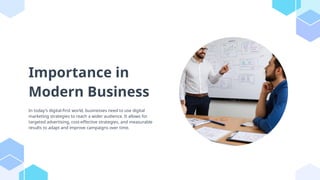
Importance in
Modern Business
In today's digital-first world, businesses need to use digital
marketing strategies to reach a wider audience. It allows for
targeted advertising, cost-effective strategies, and measurable
results to adapt and improve campaigns over time.
The rise of digital marketing has created numerous career paths including SEO
specialists, social media managers, and digital marketing analysts. Each role
plays a crucial part in driving online presence and engagement for businesses.
Career
Opportunitie
s
Digital Marketing Types
02
Search Engine
Optimization
SEO involves optimizing a website to rank higher in search engine
results. This includes strategies like keyword research, content creation,
and backlinking to improve the website's visibility and authority.
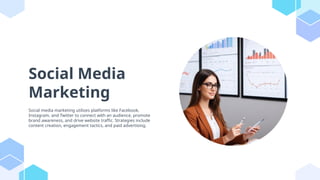
Social Media
Marketing
Social media marketing utilizes platforms like Facebook,
Instagram, and Twitter to connect with an audience, promote
brand awareness, and drive website traffic. Strategies include
content creation, engagement tactics, and paid advertising.
Email Marketing
Email marketing is a direct marketing channel that involves sending tailored
emails to potential customers. It focuses on building relationships, informing
audiences, and driving conversions through personalized campaigns.
SEO Insights
03
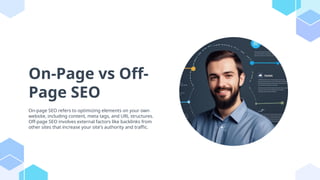
On-Page vs Off-
Page SEO
On-page SEO refers to optimizing elements on your own
website, including content, meta tags, and URL structures.
Off-page SEO involves external factors like backlinks from
other sites that increase your site's authority and traffic.
Google Ranking
Factors
Google ranks websites based on various factors such as keyword
relevance, website speed, mobile-friendliness, and security (HTTPS).
Understanding these factors helps optimize your site for better visibility.
SEO Tools and
Techniques
SEO tools such as Google Analytics, SEMrush, and Ahrefs help track website
performance, keyword rankings, and competitor analysis. Effective techniques
include regular content updates, keyword research, and link building.
PPC Basics
04
PPC Platform
Overview
PPC advertising includes platforms like Google Ads and
Facebook Ads, where advertisers bid for ad placements.
Advertisers only pay when users click on their ads,
making this a cost-effective strategy for driving traffic.
Benefits for
Businesses
PPC offers immediate visibility and traffic, unlike organic search strategies.
It helps target specific demographics, track performance easily, and
provides measurable ROI, allowing businesses to adjust strategies quickly.
Performance Metrics
Key performance indicators like Click-Through Rate (CTR), Cost Per Click
(CPC), and Conversion Rate measure the effectiveness of PPC campaigns.
Analyzing these metrics helps refine ad strategies for better results.
Content Strategy
05
Types of
Content
Effective content marketing includes various formats
such as blogs, videos, infographics, and podcasts.
Each type serves different purposes and engages
audiences uniquely, depending on their preferences.
Content Creation
Techniques
Techniques to create compelling content include storytelling, using
visuals, conducting research for accuracy, and optimizing for SEO.
Engaging headlines and clear calls to action are also crucial.
SEO Integration
Integrating SEO practices into content marketing ensures that your content
ranks well in search engines. This includes optimizing content with relevant
keywords, using headings, and ensuring mobile-friendliness.
Conclusions
Digital marketing strategies such as SEO, PPC, and content
marketing are essential for thriving in the online landscape.
Understanding and implementing these techniques can
significantly enhance a business's digital presence and success.
CREDITS: This presentation template was created by Slidesgo, and
includes icons by Flaticon, and infographics & images by Freepik
Thank you!
Do you have any questions?

Mastering Digital Marketing WITH DICS IT COURSES

  • 1.
  • 2.
    Introduction This presentation exploresthe vital components of digital marketing, showcasing its importance and opportunities for growth in the online space.
  • 3.
  • 4.
    Definition of Digital Marketing Digitalmarketing encompasses all marketing efforts that use the internet or electronic devices. This includes channels such as search engines, social media, email, and websites to connect with potential customers.
  • 5.
    Importance in Modern Business Intoday's digital-first world, businesses need to use digital marketing strategies to reach a wider audience. It allows for targeted advertising, cost-effective strategies, and measurable results to adapt and improve campaigns over time.
  • 6.
    The rise ofdigital marketing has created numerous career paths including SEO specialists, social media managers, and digital marketing analysts. Each role plays a crucial part in driving online presence and engagement for businesses. Career Opportunitie s
  • 7.
  • 8.
    Search Engine Optimization SEO involvesoptimizing a website to rank higher in search engine results. This includes strategies like keyword research, content creation, and backlinking to improve the website's visibility and authority.
  • 9.
    Social Media Marketing Social mediamarketing utilizes platforms like Facebook, Instagram, and Twitter to connect with an audience, promote brand awareness, and drive website traffic. Strategies include content creation, engagement tactics, and paid advertising.
  • 10.
    Email Marketing Email marketingis a direct marketing channel that involves sending tailored emails to potential customers. It focuses on building relationships, informing audiences, and driving conversions through personalized campaigns.
  • 11.
  • 12.
    On-Page vs Off- PageSEO On-page SEO refers to optimizing elements on your own website, including content, meta tags, and URL structures. Off-page SEO involves external factors like backlinks from other sites that increase your site's authority and traffic.
  • 13.
    Google Ranking Factors Google rankswebsites based on various factors such as keyword relevance, website speed, mobile-friendliness, and security (HTTPS). Understanding these factors helps optimize your site for better visibility.
  • 14.
    SEO Tools and Techniques SEOtools such as Google Analytics, SEMrush, and Ahrefs help track website performance, keyword rankings, and competitor analysis. Effective techniques include regular content updates, keyword research, and link building.
  • 15.
  • 16.
    PPC Platform Overview PPC advertisingincludes platforms like Google Ads and Facebook Ads, where advertisers bid for ad placements. Advertisers only pay when users click on their ads, making this a cost-effective strategy for driving traffic.
  • 17.
    Benefits for Businesses PPC offersimmediate visibility and traffic, unlike organic search strategies. It helps target specific demographics, track performance easily, and provides measurable ROI, allowing businesses to adjust strategies quickly.
  • 18.
    Performance Metrics Key performanceindicators like Click-Through Rate (CTR), Cost Per Click (CPC), and Conversion Rate measure the effectiveness of PPC campaigns. Analyzing these metrics helps refine ad strategies for better results.
  • 19.
  • 20.
    Types of Content Effective contentmarketing includes various formats such as blogs, videos, infographics, and podcasts. Each type serves different purposes and engages audiences uniquely, depending on their preferences.
  • 21.
    Content Creation Techniques Techniques tocreate compelling content include storytelling, using visuals, conducting research for accuracy, and optimizing for SEO. Engaging headlines and clear calls to action are also crucial.
  • 22.
    SEO Integration Integrating SEOpractices into content marketing ensures that your content ranks well in search engines. This includes optimizing content with relevant keywords, using headings, and ensuring mobile-friendliness.
  • 23.
    Conclusions Digital marketing strategiessuch as SEO, PPC, and content marketing are essential for thriving in the online landscape. Understanding and implementing these techniques can significantly enhance a business's digital presence and success.
  • 24.
    CREDITS: This presentationtemplate was created by Slidesgo, and includes icons by Flaticon, and infographics & images by Freepik Thank you! Do you have any questions?