


The
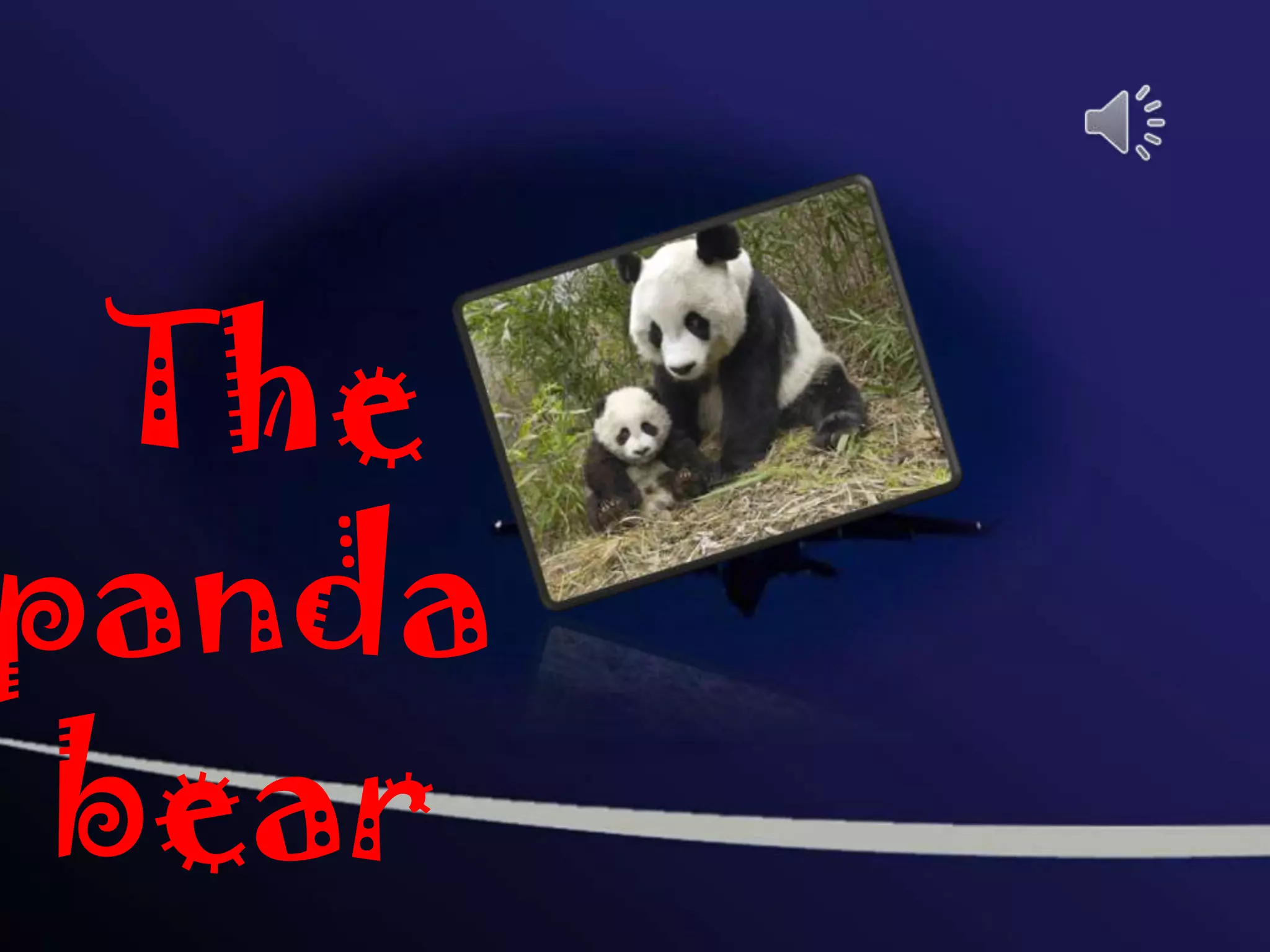
panda
bear
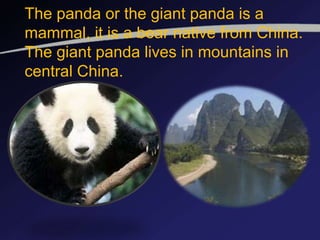
The panda or the giant panda is a
mammal, it is a bear native from China.
The giant panda lives in mountains in
central China.
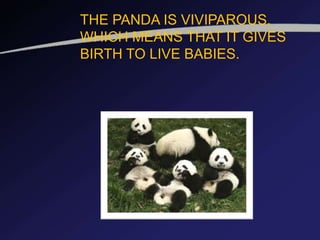
THE PANDA IS VIVIPAROUS,
WHICH MEANS THAT IT GIVES
BIRTH TO LIVE BABIES.
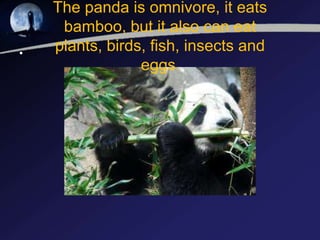
The panda is omnivore, it eats
bamboo, but it also can eat
plants, birds, fish, insects and
eggs.
•
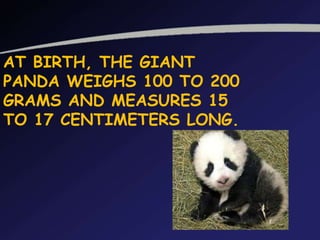
AT BIRTH, THE GIANT
PANDA WEIGHS 100 TO 200
GRAMS AND MEASURES 15
TO 17 CENTIMETERS LONG.
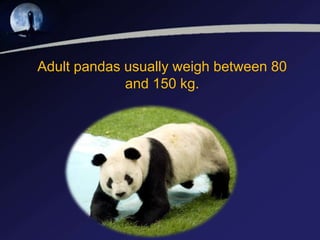
Adult pandas usually weigh between 80
and 150 kg.
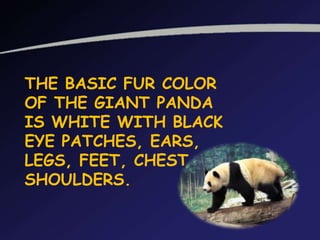
THE BASIC FUR COLOR
OF THE GIANT PANDA
IS WHITE WITH BLACK
EYE PATCHES, EARS,
LEGS, FEET, CHEST AND
SHOULDERS.
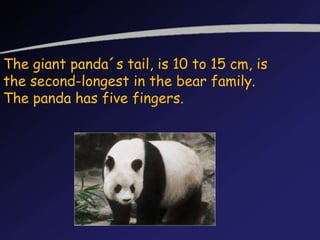
The giant panda´s tail, is 10 to 15 cm, is
the second-longest in the bear family.
The panda has five fingers.
It breathes through its lungs.
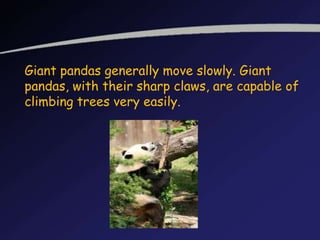
Giant pandas generally move slowly. Giant
pandas, with their sharp claws, are capable of
climbing trees very easily.
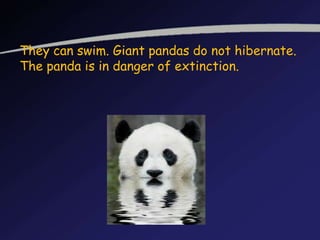
They can swim. Giant pandas do not hibernate.
The panda is in danger of extinction.
The end
By Unai

The panda bear

  • 1.
  • 2.
    The panda orthe giant panda is a mammal, it is a bear native from China. The giant panda lives in mountains in central China.
  • 3.
    THE PANDA ISVIVIPAROUS, WHICH MEANS THAT IT GIVES BIRTH TO LIVE BABIES.
  • 4.
    The panda isomnivore, it eats bamboo, but it also can eat plants, birds, fish, insects and eggs. •
  • 5.
    AT BIRTH, THEGIANT PANDA WEIGHS 100 TO 200 GRAMS AND MEASURES 15 TO 17 CENTIMETERS LONG.
  • 6.
    Adult pandas usuallyweigh between 80 and 150 kg.
  • 7.
    THE BASIC FURCOLOR OF THE GIANT PANDA IS WHITE WITH BLACK EYE PATCHES, EARS, LEGS, FEET, CHEST AND SHOULDERS.
  • 8.
    The giant panda´stail, is 10 to 15 cm, is the second-longest in the bear family. The panda has five fingers.
  • 9.
  • 10.
    Giant pandas generallymove slowly. Giant pandas, with their sharp claws, are capable of climbing trees very easily.
  • 11.
    They can swim.Giant pandas do not hibernate. The panda is in danger of extinction.
  • 12.