The Odyssey
The Odyssey
The Odyssey
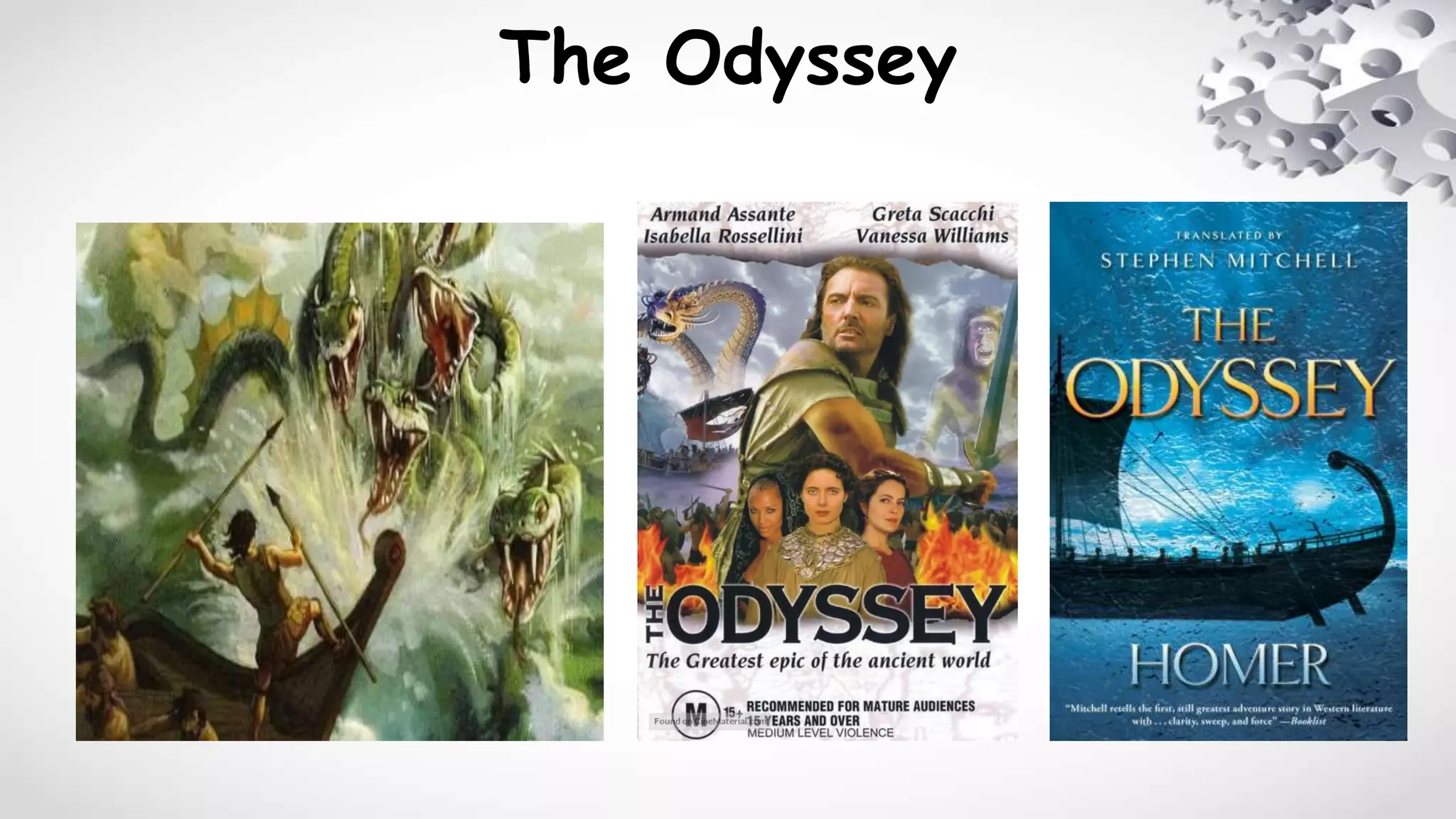
 Is one of two major ancient Greek epic poems attributed to
Homer. It is, in part, a sequel to the Iliad, the other work
ascribed to Homer.
 The poem mainly focuses on the Greek hero Odysseus , king
of Ithaca, and his journey home after the fall of Troy. It
takes Odysseus ten years to reach Ithaca after the ten-
year Trojan War.
The Odyssey
Suitors:
With Odysseus away,
the men are chasing
Penelope
The Odyssey
Lotus Eaters:
Odysseus' men get
drugged up by eating lotus
flowers.
The Odyssey
Cyclops:
Odysseus blinds
Polyphemus the Cyclops,
son of Poseidon.
The Odyssey
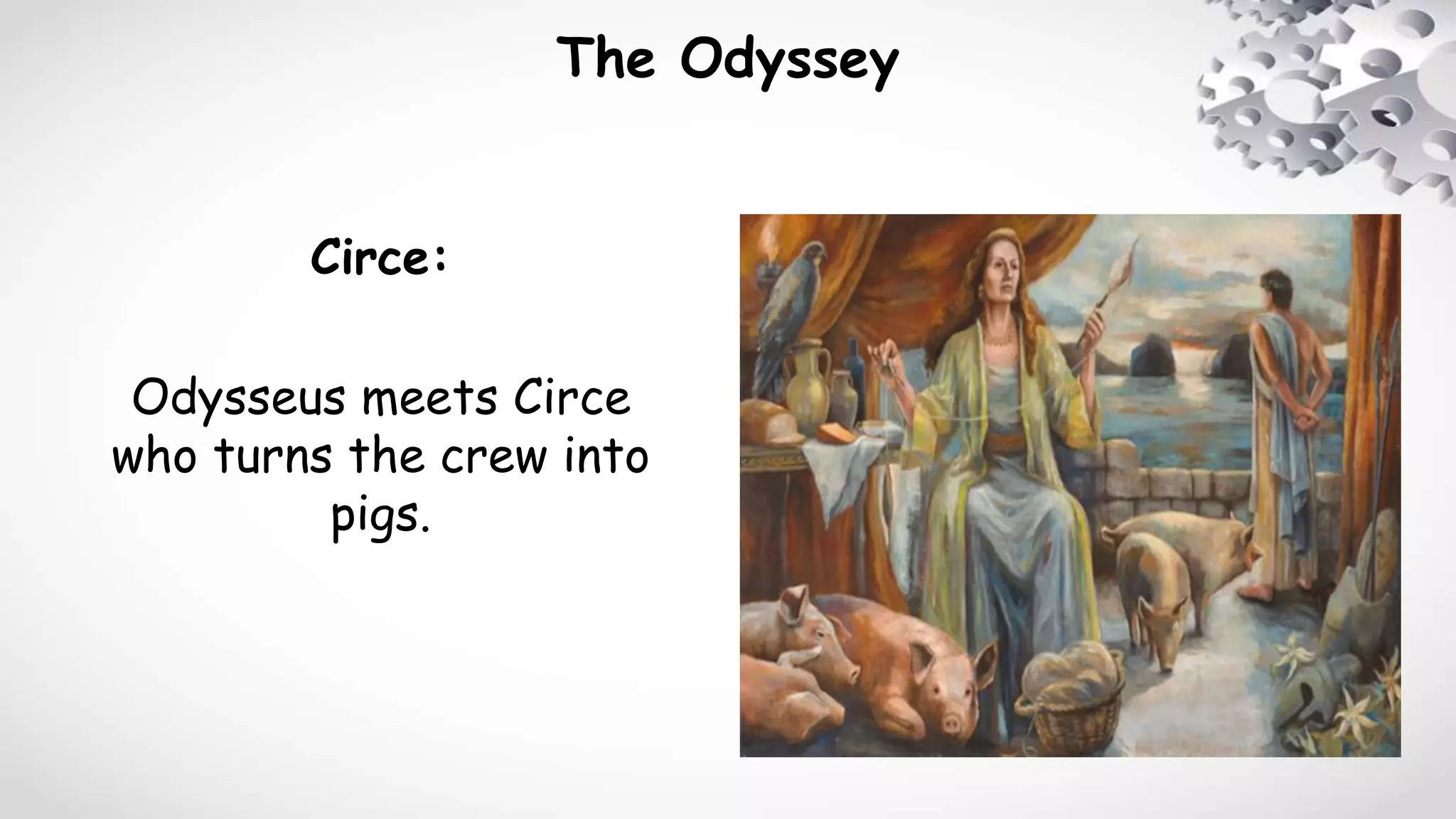
Circe:
Odysseus meets Circe
who turns the crew into
pigs.
The Odyssey
Underworld:
Odysseus goes to the
Underworld for directions
home and meets his dead
friends.
The Odyssey
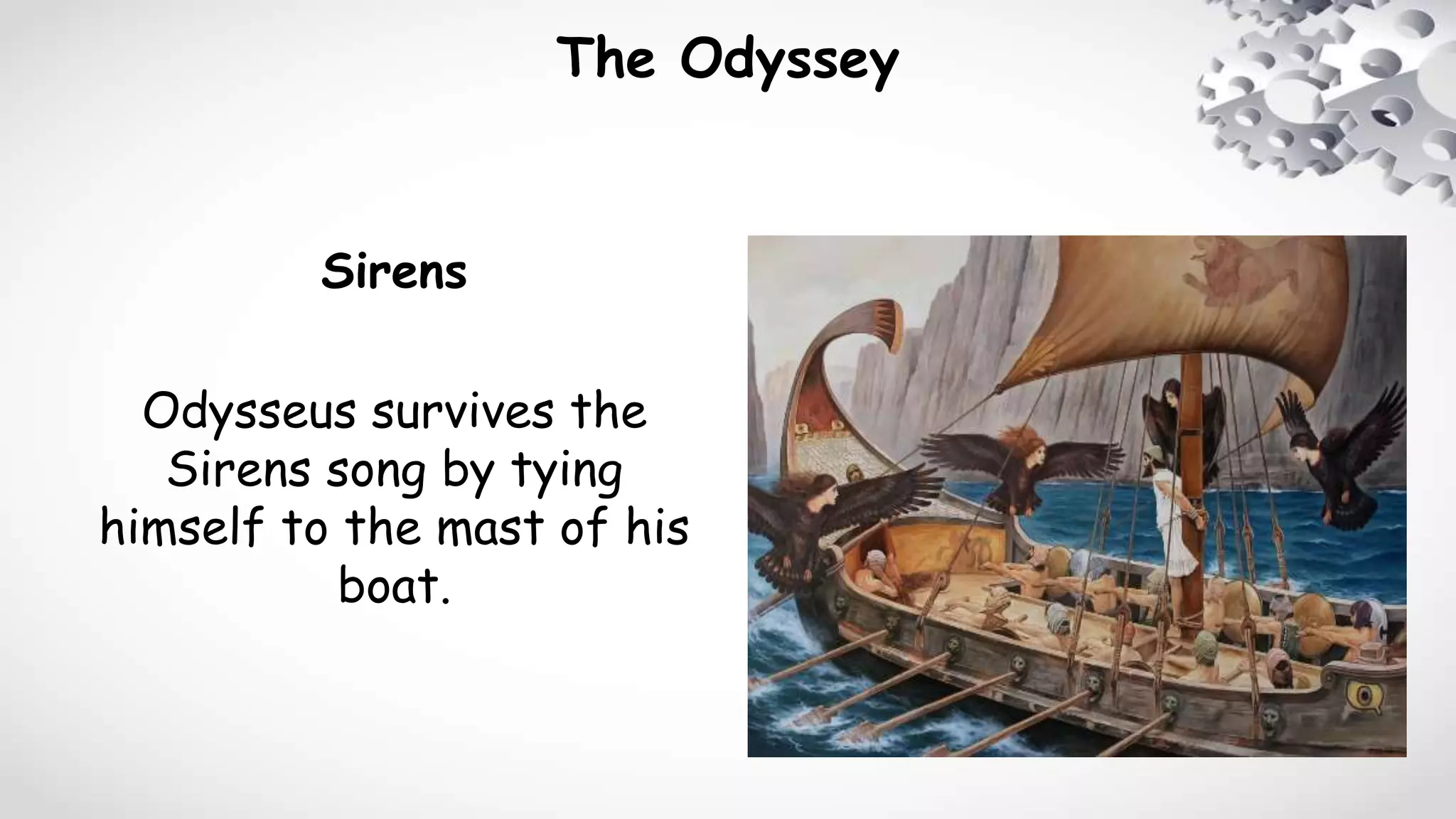
Sirens
Odysseus survives the
Sirens song by tying
himself to the mast of his
boat.
The Odyssey
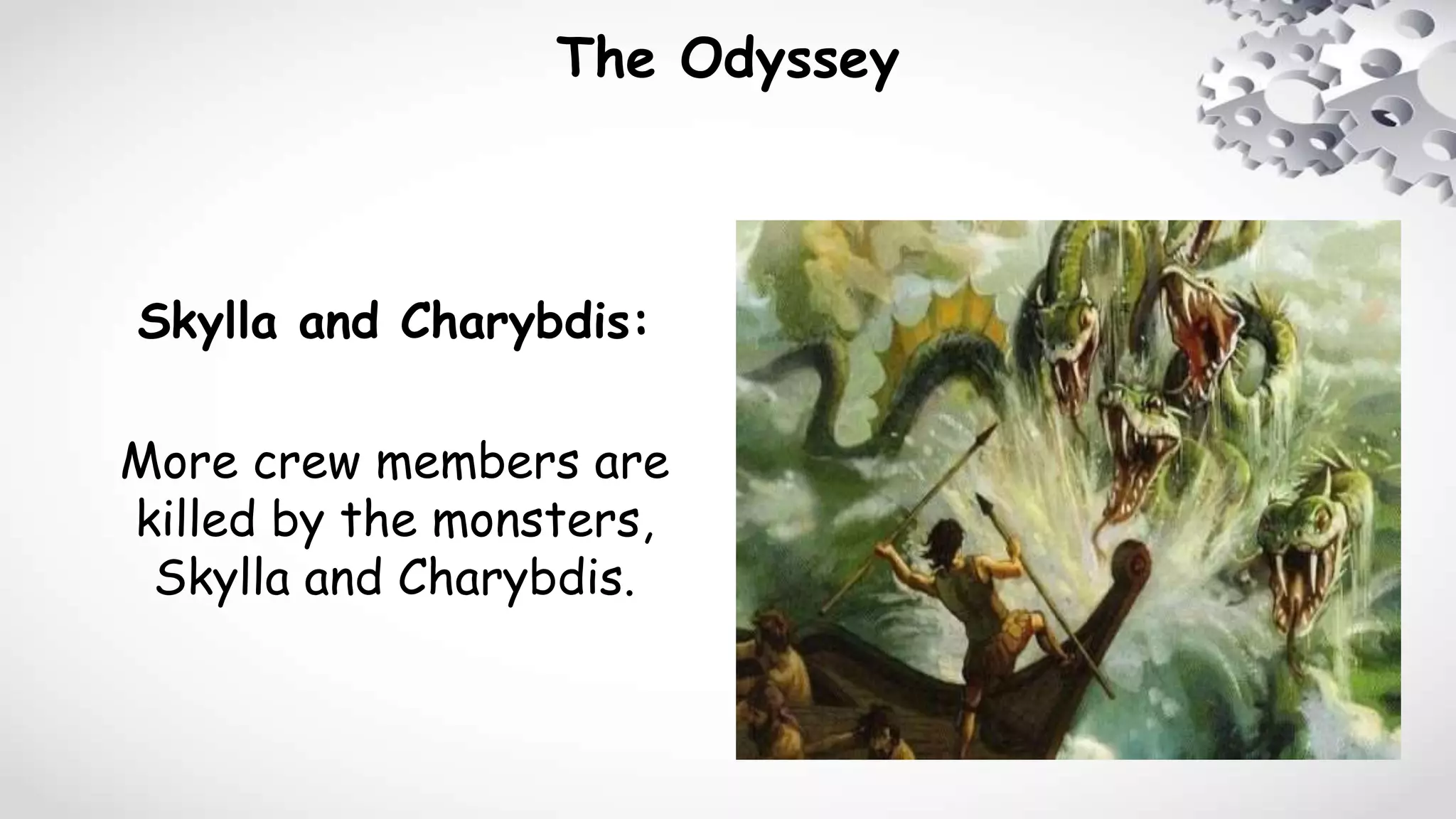
Skylla and Charybdis:
More crew members are
killed by the monsters,
Skylla and Charybdis.
The Odyssey
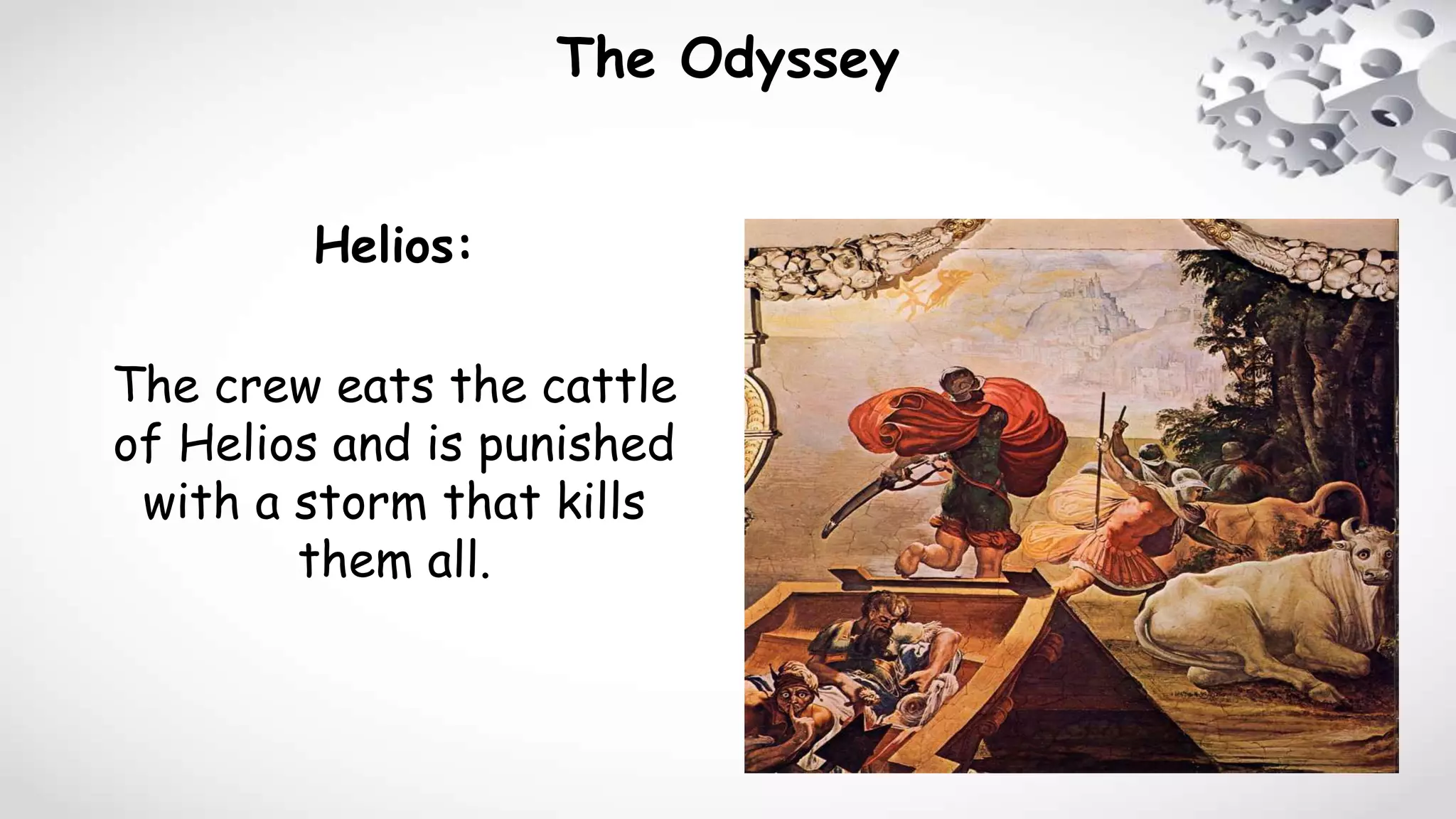
Helios:
The crew eats the cattle
of Helios and is punished
with a storm that kills
them all.
The Odyssey
Kalypso's Prison:
Odysseus suirvives the
storm and end up as
Kalypso's sex slave for 7
years. He escapes and is
shipwrecked with the
Phaiakians.
The Odyssey
Disguise:
Back home, Odysseus
disguises himself as a
begar to see who's still on
his side. He wins Penelope
back and kills a bunch of
suitors.
Homer
 Is the name ascribed by the ancient Greeks to the author
of the Iliad and the Odyssey, two epic poems which are
the central works of ancient Greek literature.
 Many accounts of Homer's life circulated in classical
antiquity, the most widespread being that he was a blind
bard from Ionia, a region of central coastal Anatolia in
present-day Turkey.
Homer
 The satirist Lucian, in his True History, describes him as
a Babylonian called Tigranes, who assumed the name
Homer when taken "hostage" (homeros) by the Greeks.
 The Greek poet Homer was born sometime between the
12th and 8th centuries BC, possibly somewhere on the
coast of Asia Minor.
The Mystery of Homer
 Homer is a mystery. The Greek epic poet credited with
the enduring epic tales of The Iliad and The Odyssey is
an enigma insofar as actual facts of his life go.
 Some scholars believe him to be one man; others think
these iconic stories were created by a group
The Mystery of Homer
 Homer’s style, whoever he was, falls more in the
category of minstrel poet or balladeer, as opposed to
a cultivated poet who is the product of a fervent
literary moment, such as a Virgil or a Shakespeare.
 All this speculation about who he was has inevitably
led to what is known as the Homeric Question—
whether he actually existed at all. This is often
considered to be the greatest literary mystery.
The Iliad and The Odyssey
 Homer's two epic poems have become archetypal road
maps in world mythology.
 Even if The Iliad itself seems unfamiliar, the story of the
siege of Troy, the Trojan War and Paris’ kidnapping of
Helen, the world’s most beautiful woman, are all familiar
characters or scenarios.
Character of Odyssey
Odysseus:
 The protagonist of the Odyssey.
 The husband of Queen Penelope and the father of Prince
Telemachus.
 Strong and Corageous warrior.
 Favorite of the goddess Athena, who often sends him
divine aid.
 Enemy of Poseidon.
Character of Odyssey
Telemachus:
 Odysseus's son. An infant when Odysseus left for Troy.
 He is a ntural obstacle to the suitors desperately couring
his mother.
Penelope:
 Wife of Odysseus.
 Clever and steadfastly true to her husband.
Character of Odyssey
Athena:
 Daughter of Zeus and goddess of wisdom.
 Often appears in disguise as Mentor, an old friend of
Odysseus.
Poseidon:
 The god of the sea.
 Odysseus mortal antagonists.
 He despises Odysseus for blinding his son.
Character of Odyssey
Zeus:
 King of gods and men.
 Sometimes helps Odysseus or permits Athena to do the
same.
Calypso:
 Beautiful nymph who fall in love with Odysseus.
 Prison Odysseus.
Prepared by:
Raymund B. Masuay
Bienbenido S. Trabajada Jr.
BSED - 2B

The odyssey (summary)

  • 1.
  • 2.
  • 3.
    The Odyssey  Isone of two major ancient Greek epic poems attributed to Homer. It is, in part, a sequel to the Iliad, the other work ascribed to Homer.  The poem mainly focuses on the Greek hero Odysseus , king of Ithaca, and his journey home after the fall of Troy. It takes Odysseus ten years to reach Ithaca after the ten- year Trojan War.
  • 4.
    The Odyssey Suitors: With Odysseusaway, the men are chasing Penelope
  • 5.
    The Odyssey Lotus Eaters: Odysseus'men get drugged up by eating lotus flowers.
  • 6.
  • 7.
    The Odyssey Circe: Odysseus meetsCirce who turns the crew into pigs.
  • 8.
    The Odyssey Underworld: Odysseus goesto the Underworld for directions home and meets his dead friends.
  • 9.
    The Odyssey Sirens Odysseus survivesthe Sirens song by tying himself to the mast of his boat.
  • 10.
    The Odyssey Skylla andCharybdis: More crew members are killed by the monsters, Skylla and Charybdis.
  • 11.
    The Odyssey Helios: The creweats the cattle of Helios and is punished with a storm that kills them all.
  • 12.
    The Odyssey Kalypso's Prison: Odysseussuirvives the storm and end up as Kalypso's sex slave for 7 years. He escapes and is shipwrecked with the Phaiakians.
  • 13.
    The Odyssey Disguise: Back home,Odysseus disguises himself as a begar to see who's still on his side. He wins Penelope back and kills a bunch of suitors.
  • 14.
    Homer  Is thename ascribed by the ancient Greeks to the author of the Iliad and the Odyssey, two epic poems which are the central works of ancient Greek literature.  Many accounts of Homer's life circulated in classical antiquity, the most widespread being that he was a blind bard from Ionia, a region of central coastal Anatolia in present-day Turkey.
  • 15.
    Homer  The satiristLucian, in his True History, describes him as a Babylonian called Tigranes, who assumed the name Homer when taken "hostage" (homeros) by the Greeks.  The Greek poet Homer was born sometime between the 12th and 8th centuries BC, possibly somewhere on the coast of Asia Minor.
  • 16.
    The Mystery ofHomer  Homer is a mystery. The Greek epic poet credited with the enduring epic tales of The Iliad and The Odyssey is an enigma insofar as actual facts of his life go.  Some scholars believe him to be one man; others think these iconic stories were created by a group
  • 17.
    The Mystery ofHomer  Homer’s style, whoever he was, falls more in the category of minstrel poet or balladeer, as opposed to a cultivated poet who is the product of a fervent literary moment, such as a Virgil or a Shakespeare.  All this speculation about who he was has inevitably led to what is known as the Homeric Question— whether he actually existed at all. This is often considered to be the greatest literary mystery.
  • 18.
    The Iliad andThe Odyssey  Homer's two epic poems have become archetypal road maps in world mythology.  Even if The Iliad itself seems unfamiliar, the story of the siege of Troy, the Trojan War and Paris’ kidnapping of Helen, the world’s most beautiful woman, are all familiar characters or scenarios.
  • 20.
    Character of Odyssey Odysseus: The protagonist of the Odyssey.  The husband of Queen Penelope and the father of Prince Telemachus.  Strong and Corageous warrior.  Favorite of the goddess Athena, who often sends him divine aid.  Enemy of Poseidon.
  • 21.
    Character of Odyssey Telemachus: Odysseus's son. An infant when Odysseus left for Troy.  He is a ntural obstacle to the suitors desperately couring his mother. Penelope:  Wife of Odysseus.  Clever and steadfastly true to her husband.
  • 22.
    Character of Odyssey Athena: Daughter of Zeus and goddess of wisdom.  Often appears in disguise as Mentor, an old friend of Odysseus. Poseidon:  The god of the sea.  Odysseus mortal antagonists.  He despises Odysseus for blinding his son.
  • 23.
    Character of Odyssey Zeus: King of gods and men.  Sometimes helps Odysseus or permits Athena to do the same. Calypso:  Beautiful nymph who fall in love with Odysseus.  Prison Odysseus.
  • 24.
    Prepared by: Raymund B.Masuay Bienbenido S. Trabajada Jr. BSED - 2B