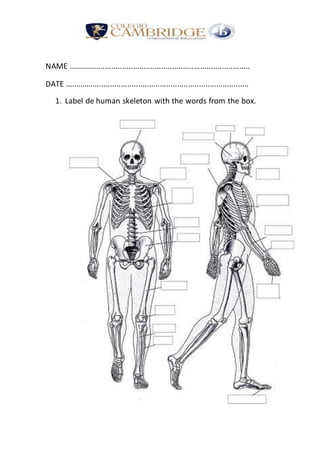
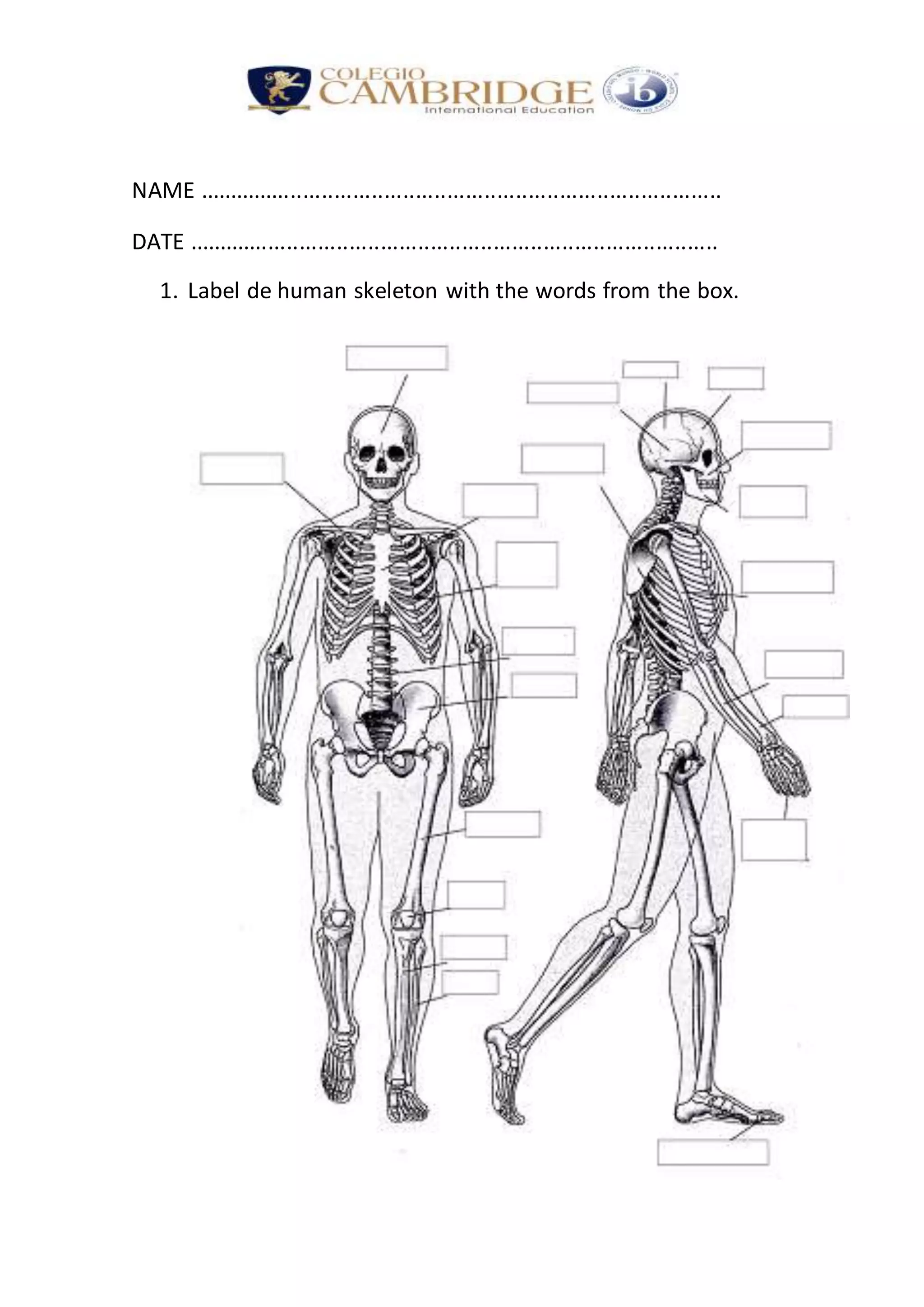
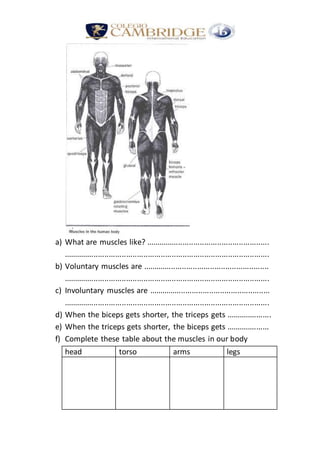
This document contains exercises about labeling the human skeleton, identifying bones and joints, describing muscles and their functions, and completing statements about the musculoskeletal system. Students are asked to label bones on a skeleton diagram, name long and short bones, identify movable joints, describe what muscles are like and whether they are voluntary or involuntary, and complete a table about muscle locations in the body. Key anatomy terms included are skull, vertebrae, pelvis, femur, tibia, fibula, humerus, ulna, radius, finger bones, foot bones, joints, biceps, triceps.