By Shrepsa Ajvazi
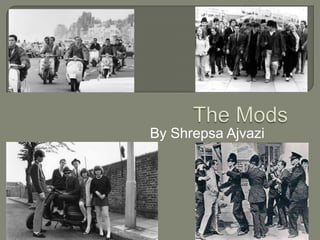
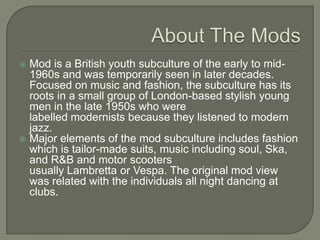
Mod is a British youth subculture of the early to mid1960s and was temporarily seen in later decades.
Focused on music and fashion, the subculture has its
roots in a small group of London-based stylish young
men in the late 1950s who were
labelled modernists because they listened to modern
jazz.
 Major elements of the mod subculture includes fashion
which is tailor-made suits, music including soul, Ska,
and R&B and motor scooters
usually Lambretta or Vespa. The original mod view
was related with the individuals all night dancing at
clubs.



The mod subculture developed when British teenagers
began to reject the "dull, timid, old-fashioned" British
culture around them, with its repressed mentality the
Mods rejected 1950s pop music and sappy love songs.
They created their own culture on being "cool, neat,
sharp, hip, and smart" by taking on "all things sexy and
streamlined" particularly when they were new, exciting,
controversial or modern. Shari Benstock and Suzanne
Ferriss argue that the mods mocked the class system
that had gotten their fathers nowhere and created a
rebellion based on consuming pleasures.


The influence of British newspapers on creating the
public view of mods as having a leisure-filled clubgoing lifestyle can be seen in a 1964 article in
the Sunday Times. The paper interviewed a 17-yearold mod who went out clubbing seven nights a week
and spent Saturday afternoons shopping for clothes
and records. However, few British teens and young
adults would have had the time and money to spend
this much time going to nightclubs. Paul Jobling and
David Crowley argue that most young mods worked 9
to 5 at semi-skilled jobs, which meant that they had
much less leisure time and only a modest income to
spend during their time off.
 http://www.youtube.com/watch?v=hdWNcL

JsqWM

The mods

  • 1.
  • 2.
    Mod is aBritish youth subculture of the early to mid1960s and was temporarily seen in later decades. Focused on music and fashion, the subculture has its roots in a small group of London-based stylish young men in the late 1950s who were labelled modernists because they listened to modern jazz.  Major elements of the mod subculture includes fashion which is tailor-made suits, music including soul, Ska, and R&B and motor scooters usually Lambretta or Vespa. The original mod view was related with the individuals all night dancing at clubs. 
  • 3.
     The mod subculturedeveloped when British teenagers began to reject the "dull, timid, old-fashioned" British culture around them, with its repressed mentality the Mods rejected 1950s pop music and sappy love songs. They created their own culture on being "cool, neat, sharp, hip, and smart" by taking on "all things sexy and streamlined" particularly when they were new, exciting, controversial or modern. Shari Benstock and Suzanne Ferriss argue that the mods mocked the class system that had gotten their fathers nowhere and created a rebellion based on consuming pleasures.
  • 4.
     The influence ofBritish newspapers on creating the public view of mods as having a leisure-filled clubgoing lifestyle can be seen in a 1964 article in the Sunday Times. The paper interviewed a 17-yearold mod who went out clubbing seven nights a week and spent Saturday afternoons shopping for clothes and records. However, few British teens and young adults would have had the time and money to spend this much time going to nightclubs. Paul Jobling and David Crowley argue that most young mods worked 9 to 5 at semi-skilled jobs, which meant that they had much less leisure time and only a modest income to spend during their time off.
  • 5.