New Rules for the New Internet BubbleSteve BlankStanford - School of Engineeringwww.steveblank.comTwitter: @sgblank
I Write a Blog  www.steveblank.com
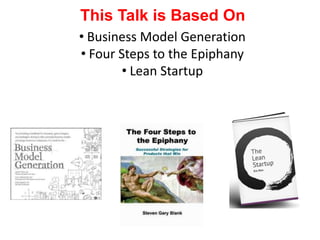
This Talk is Based OnBusiness Model GenerationFour Steps to the EpiphanyLean Startup
First -What’s A Startup?Five Types of Startups
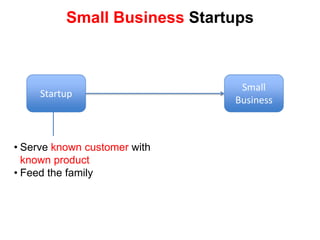
Small BusinessStartupSmall Business StartupsServe known customer with known product
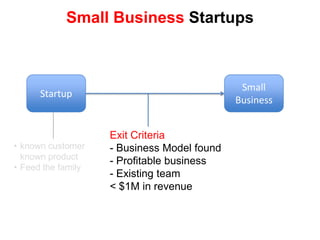
Feed the familySmall BusinessStartupExit Criteria Business Model found- Profitable business Existing team< $1M in revenueSmall Business Startupsknown customer known product
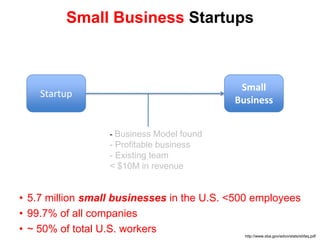
Feed the familySmall BusinessStartup- Business Model found- Profitable business Existing team< $10M in revenueSmall Business Startups5.7 million small businesses in the U.S. <500 employees
99.7% of all companies
~ 50% of total U.S. workershttp://www.sba.gov/advo/stats/sbfaq.pdf
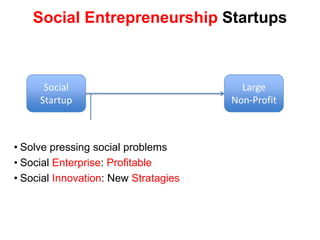
Large Non-ProfitSocial StartupSocial Entrepreneurship StartupsSolve pressing social problems
Social Enterprise: Profitable
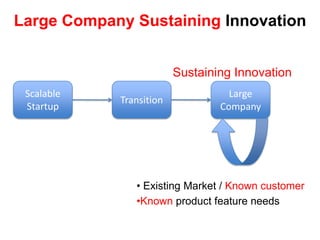
Social Innovation: New StratagiesLarge Company Sustaining InnovationSustaining InnovationTransitionScalableStartupLarge Company Existing Market / Known customer
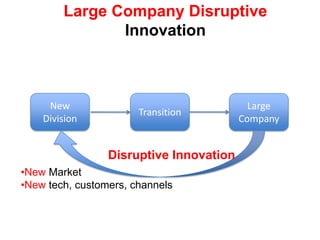
Known product feature needsLarge Company Disruptive InnovationNew DivisionTransitionLarge CompanyDisruptive InnovationNew Market
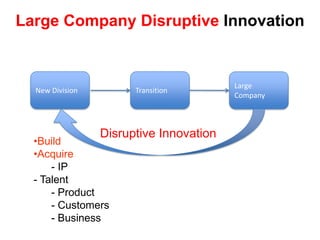
New tech, customers, channelsLarge Company Disruptive InnovationNew DivisionTransitionLarge CompanyDisruptive InnovationBuild
Acquire      - IP- Talent      - Product      - Customers      - Business
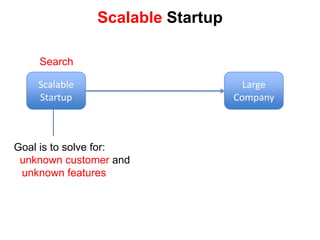
ScalableStartupLarge CompanyScalable StartupSearchGoal is to solve for:  unknown customer and unknown features
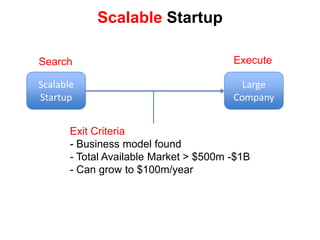
ExecuteSearchScalableStartupLarge CompanyExit Criteria Business model found
 Total Available Market > $500m -$1B
 Can grow to $100m/yearScalable Startup
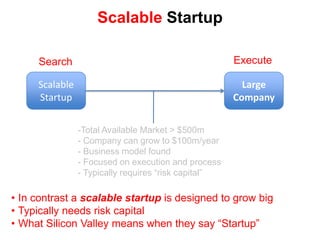
ScalableStartupLarge CompanyTotal Available Market > $500m
 Company can grow to $100m/year
 Business model found
 Focused on execution and process
 Typically requires “risk capital”Scalable StartupExecuteSearch In contrast a scalable startup is designed to grow big
 Typically needs risk capital
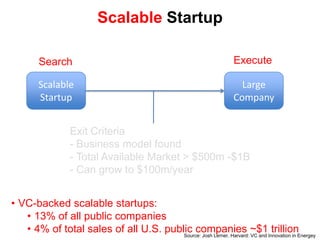
 What Silicon Valley means when they say “Startup”ScalableStartupLarge CompanyExit Criteria Business model found
 Total Available Market > $500m -$1B
 Can grow to $100m/yearScalable StartupExecuteSearch VC-backed scalable startups:
 13% of all public companies
 4% of total sales of all U.S. public companies ~$1 trillionSource: Josh Lerner, Harvard: VC and Innovation in Energey
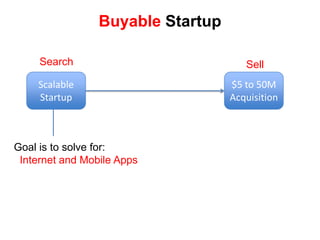
Buyable StartupSearchSellScalableStartup$5 to 50M AcquisitionGoal is to solve for:  Internet and Mobile Apps
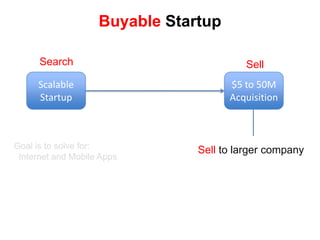
Buyable StartupSearchSellScalableStartup$5 to 50M AcquisitionGoal is to solve for:  Internet and Mobile AppsSell to larger company
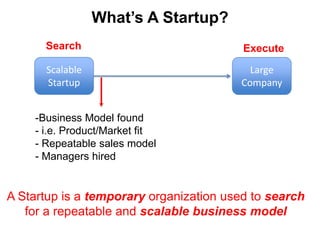
ScalableStartupLarge CompanyBusiness Model found
 i.e. Product/Market fit- Repeatable sales model- Managers hiredWhat’s A Startup?Search ExecuteA Startup is a temporary organization used to search for a repeatable and scalable business model
Next,What’s A Founder?
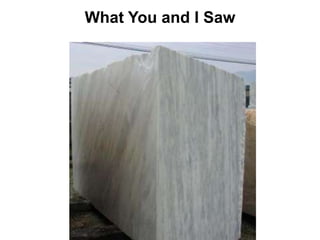
What You and I Saw
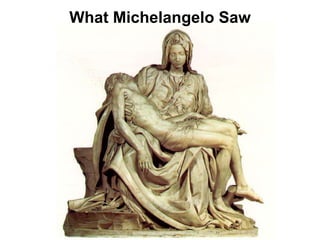
What Michelangelo Saw
What You and I Saw
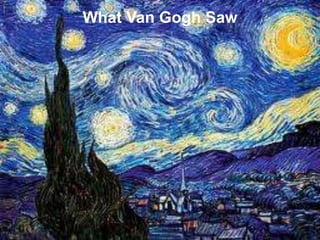
What Van Gogh Saw
Founders See Things Others Don’t
Founders See Things Others Don’tFounders are Artists.Actually They are Composers.They Create Something From Nothing
Founders See Things Others Don’tThey Build a Company By Convincing Others To See What They Do
Founders See Things Others Don’tThe Early Employees Who Join Them Are the Performers
A Few Short Stories
How Did We Get Here?
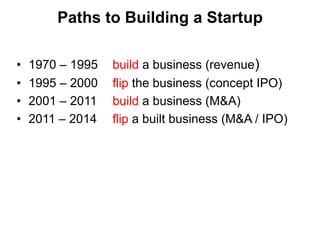
Paths to Building a Startup1970 – 1995 	build a business (revenue)1995 – 2000	flip the business (concept IPO)2001 – 2011	build a business (M&A)2011 – 2014	flip a built business (M&A / IPO)
1970 – 1995Building a BusinessStartups Are Small Versions of A Large Company
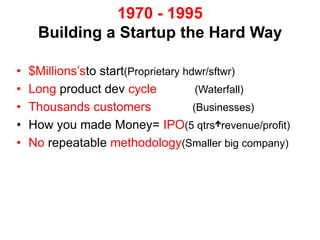
1970 - 1995 Building a Startup the Hard Way$Millions’sto start(Proprietary hdwr/sftwr)Long product dev cycle           (Waterfall)Thousands customers            (Businesses)How you made Money= IPO(5 qtrsrevenue/profit)No repeatable methodology(Smaller big company)
1970 – 1995  Playbook
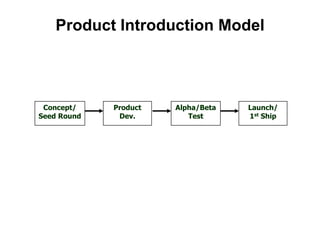
Product Introduction ModelConcept/Seed RoundProduct Dev.Alpha/Beta TestLaunch/1st Ship
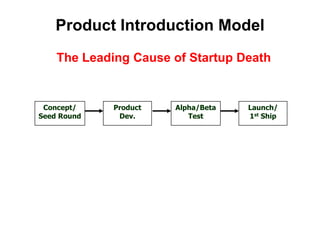
Product Introduction ModelThe Leading Cause of Startup DeathConcept/Seed RoundProduct Dev.Alpha/Beta TestLaunch/1st Ship
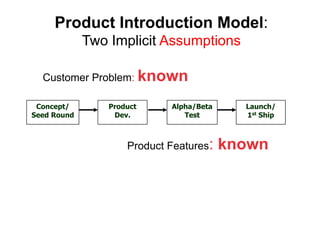
Product Introduction Model:Two Implicit AssumptionsCustomer Problem: knownConcept/Seed RoundProduct Dev.Alpha/Beta TestLaunch/1st Ship	Product Features: known
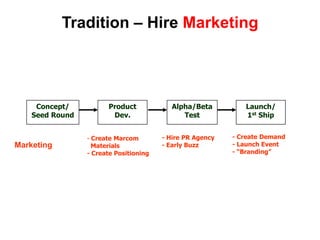
Tradition – Hire MarketingConcept/Seed RoundProduct Dev.Alpha/Beta TestLaunch/1st Ship- Create Demand- Launch Event- “Branding”- Hire PR Agency- Early Buzz Create Marcom   Materials- Create PositioningMarketing
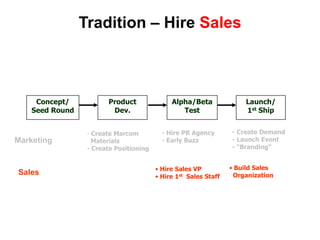
Tradition – Hire SalesConcept/Seed RoundProduct Dev.Alpha/Beta TestLaunch/1st Ship- Create Demand- Launch Event- “Branding”- Hire PR Agency- Early Buzz Create Marcom   Materials- Create PositioningMarketing Build Sales   Organization
 Hire Sales VP
 Hire 1st  Sales StaffSales
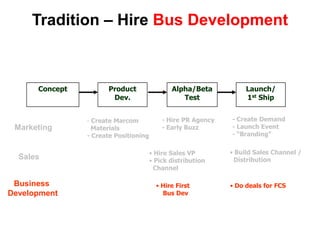
Tradition – Hire Bus DevelopmentConceptProduct Dev.Alpha/Beta TestLaunch/1st Ship- Create Demand- Launch Event- “Branding”- Hire PR Agency- Early Buzz Create Marcom   Materials- Create PositioningMarketing Build Sales Channel /   Distribution
 Hire Sales VP
 Pick distribution   ChannelSalesBusiness Development Hire First   Bus Dev
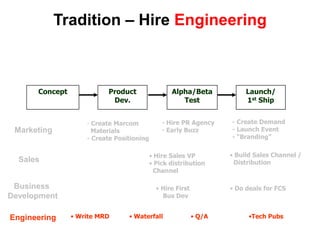
 Do deals for FCSTradition – Hire EngineeringConceptProduct Dev.Alpha/Beta TestLaunch/1st Ship- Create Demand- Launch Event- “Branding”- Hire PR Agency- Early Buzz Create Marcom   Materials- Create PositioningMarketing Build Sales Channel /   Distribution
 Hire Sales VP
 Pick distribution   ChannelSalesBusiness Development Hire First   Bus Dev
 Do deals for FCSEngineering Write MRD
 Waterfall
 Q/A
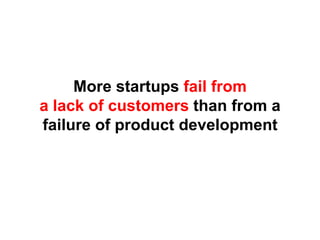
Tech PubsMore startups fail from a lack of customers than from a failure of product development
1995 – 2000Flipping A BusinessThe Dot.comBubble
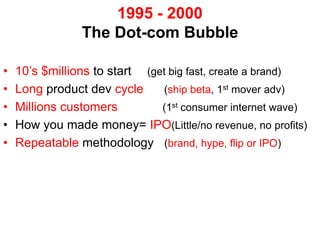
1995 - 2000The Dot-com Bubble10’s $millions to start	(get big fast, create a brand)Long product dev cycle      (ship beta, 1st mover adv)Millions customers             (1st consumer internet wave)How you made money= IPO(Little/no revenue, no profits)Repeatable methodology   (brand, hype, flip or IPO)
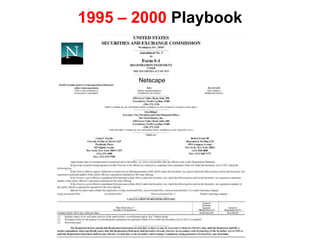
1995 – 2000 PlaybookNetscape
2001 – 2010Why Startups Are Not Small Versions of A Large Company
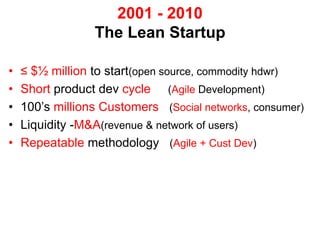
2001 - 2010The Lean Startup≤ $½ million to start(open source, commodity hdwr)Short product dev cycle     (Agile Development)100’s millions Customers   (Social networks, consumer)Liquidity -M&A(revenue & network of users)Repeatable methodology   (Agile + Cust Dev)
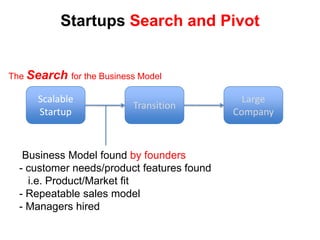
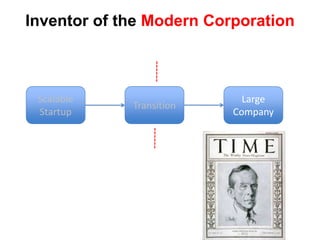
Startups Search and PivotThe Search for the Business ModelScalableStartupTransitionLarge Company Business Model found by founders customer needs/product features found   i.e. Product/Market fit Repeatable sales model- Managers hired
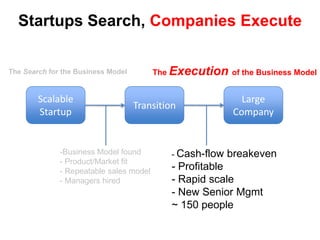
Startups Search, Companies ExecuteThe Execution of the Business ModelThe Search for the Business ModelScalableStartupTransitionLarge Company- Cash-flow breakeven- Profitable- Rapid scale- New Senior Mgmt~ 150 peopleBusiness Model found
 Product/Market fit- Repeatable sales model- Managers hired
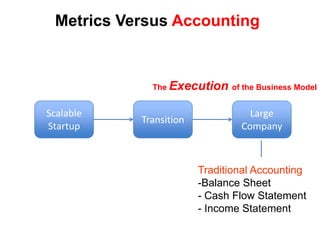
Metrics Versus AccountingThe Execution of the Business ModelScalableStartupTransitionLargeCompanyTraditional AccountingBalance Sheet
 Cash Flow Statement
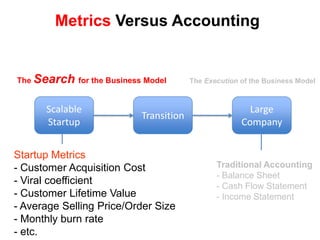
 Income StatementMetrics Versus AccountingThe Search for the Business ModelThe Execution of the Business ModelScalableStartupTransitionLargeCompanyStartup Metrics Customer Acquisition Cost
 Viral coefficient
 Customer Lifetime Value
 Average Selling Price/Order Size
 Monthly burn rate
 etc.  Traditional Accounting Balance Sheet
 Cash Flow Statement
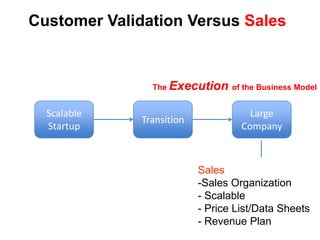
 Income StatementCustomer Validation Versus SalesThe Execution of the Business ModelScalableStartupTransitionLargeCompanySalesSales Organization
 Scalable
 Price List/Data Sheets
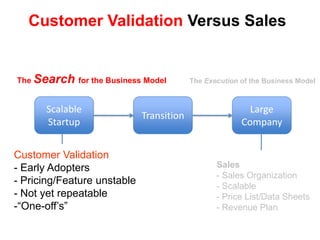
 Revenue PlanCustomer Validation Versus SalesThe Search for the Business ModelThe Execution of the Business ModelScalableStartupTransitionLargeCompanyCustomer Validation Early Adopters
 Pricing/Feature unstable
 Not yet repeatable
“One-off’s”Sales Sales Organization
 Scalable
 Price List/Data Sheets
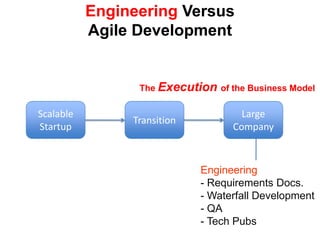
 Revenue PlanEngineering Versus Agile DevelopmentThe Execution of the Business ModelScalableStartupTransitionLarge CompanyEngineering Requirements Docs.
 Waterfall Development
 QA
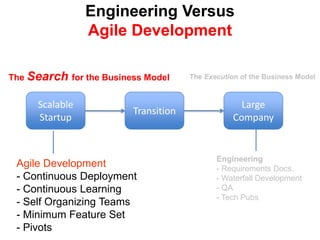
 Tech PubsEngineering Versus Agile DevelopmentThe Search for the Business ModelThe Execution of the Business ModelScalableStartupTransitionLarge CompanyEngineering Requirements Docs.
 Waterfall Development
 QA
 Tech PubsAgile Development Continuous Deployment
 Continuous Learning
 Self Organizing Teams
 Minimum Feature Set
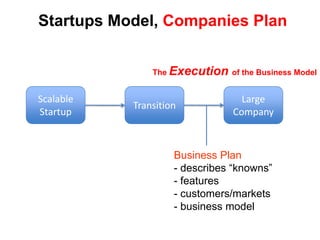
 PivotsStartups Model, Companies PlanThe Execution of the Business ModelScalableStartupTransitionLarge CompanyBusiness Plan describes “knowns”
 features
 customers/markets
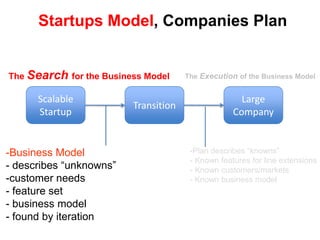
 business modelStartups Model, Companies PlanThe Search for the Business ModelThe Execution of the Business ModelScalableStartupTransitionLarge CompanyBusiness Model
 describes “unknowns”
customer needs
 feature set
 business model
 found by iteration
Plan describes “knowns”
 Known features for line extensions
 Known customers/markets
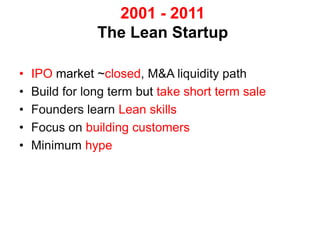
 Known business model2001 - 2011The Lean StartupIPO market ~closed, M&A liquidity pathBuild for long term but take short term saleFounders learn Lean skillsFocus on building customersMinimum hype
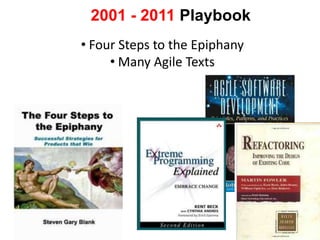
2001 - 2011 PlaybookFour Steps to the EpiphanyMany Agile Texts
But We Were Still Using This
No Business Plan survives first contact with customers
So Search for a Business Model
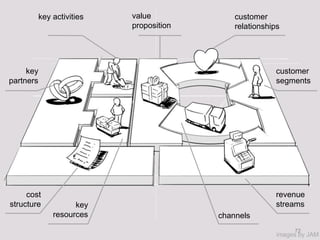
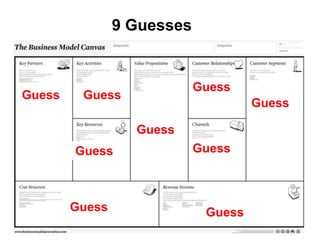
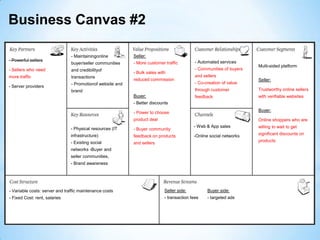
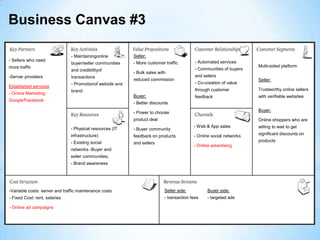
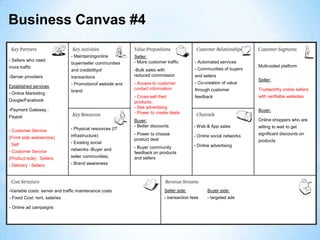
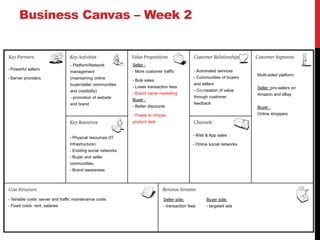
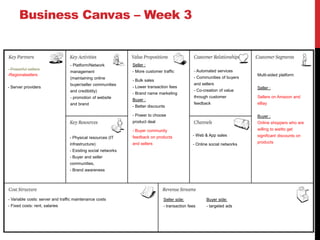
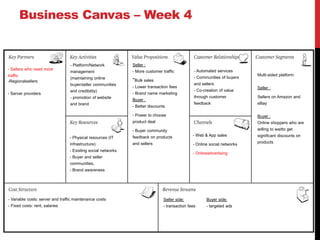
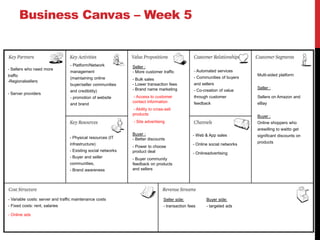
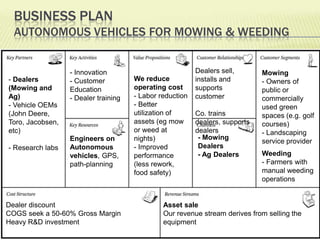
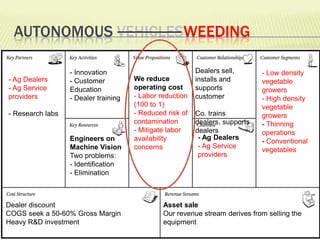
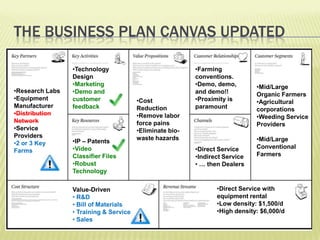
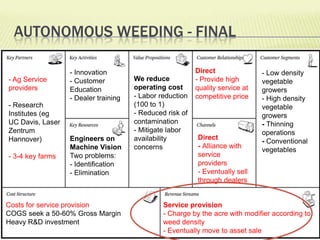
The Business Model:Any company can be described in 9 building blocks
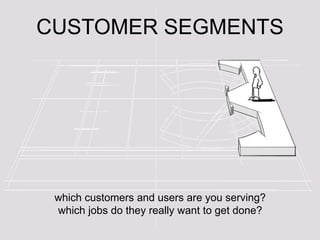
CUSTOMER SEGMENTSwhich customers and users are you serving? which jobs do they really want to get done?
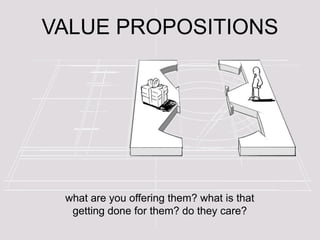
VALUE PROPOSITIONSwhat are you offering them? what is that getting done for them? do they care?
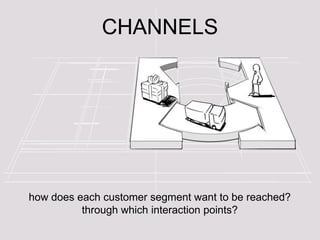
CHANNELShow does each customer segment want to be reached? through which interaction points?
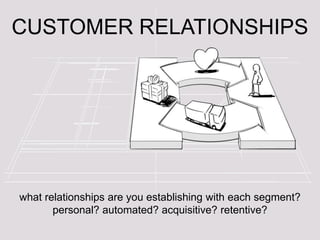
CUSTOMER RELATIONSHIPSwhat relationships are you establishing with each segment? personal? automated? acquisitive? retentive?
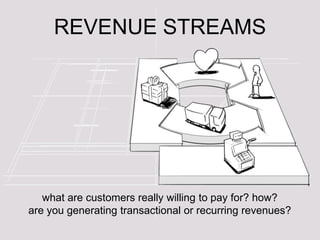
REVENUE STREAMSwhat are customers really willing to pay for? how? are you generating transactional or recurring revenues?
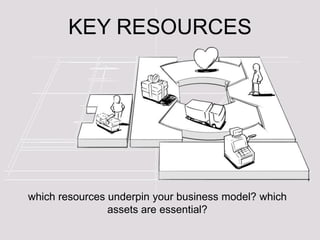
KEY RESOURCESwhich resources underpin your business model? which assets are essential?
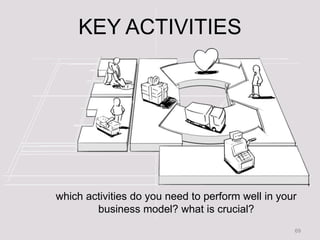
KEY ACTIVITIESwhich activities do you need to perform well in your business model? what is crucial?69
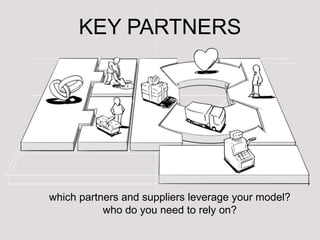
KEY PARTNERSwhich partners and suppliers leverage your model? who do you need to rely on?
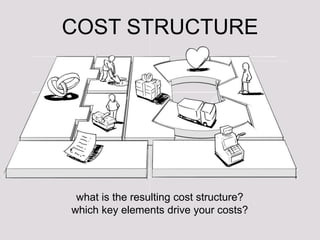
COST STRUCTUREwhat is the resulting cost structure? which key elements drive your costs?
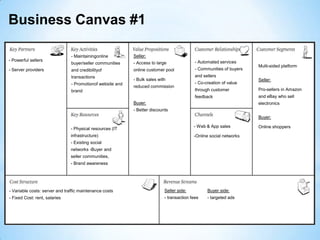
value propositioncustomer relationshipskey activitiescustomer segmentskey partnerscost structurerevenue streamskey resourceschannels72images by JAM
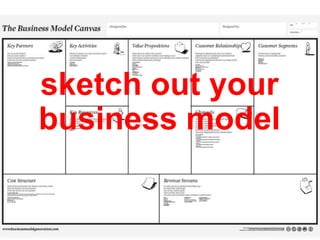
sketch out your business model
But,Realize They’re Hypotheses
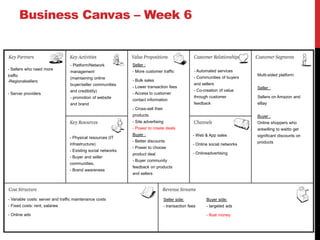
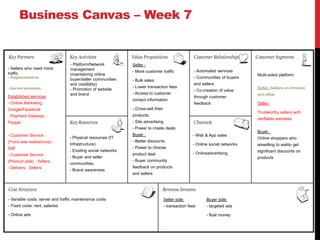
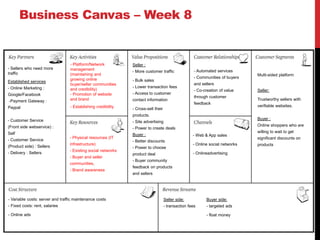
9 GuessesGuessGuessGuessGuessGuessGuessGuessGuessGuess
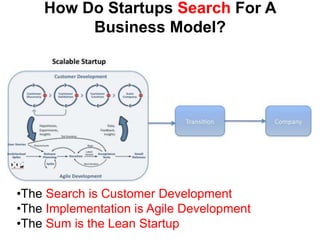
How Do Startups Search For A Business Model?The Search is Customer Development
The Implementation is Agile Development
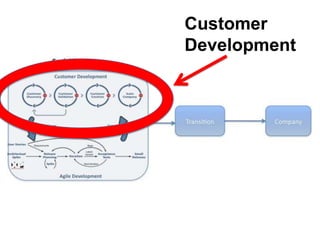
The Sum is the Lean StartupCustomer Development
Customer DevelopmentThe founders^Get Out of the Building
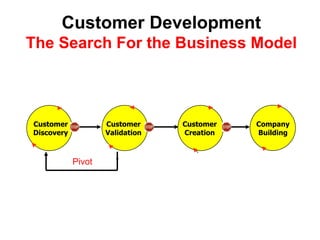
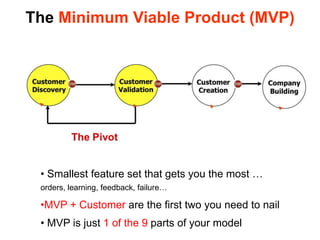
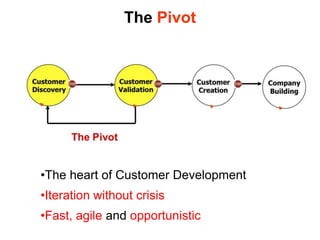
Customer DevelopmentThe Search For the Business ModelCompanyBuildingCustomerDiscoveryCustomerValidationCustomer CreationPivot
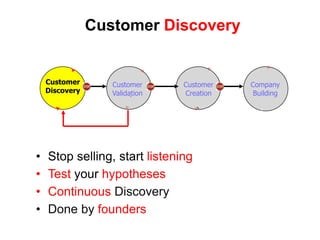
Customer DiscoveryCustomerDiscoveryCustomerValidationCompanyBuildingCustomerCreationStop selling, start listeningTest your hypothesesContinuous DiscoveryDone by founders
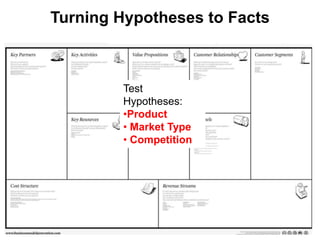
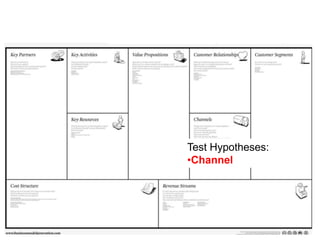
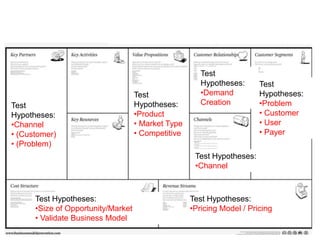
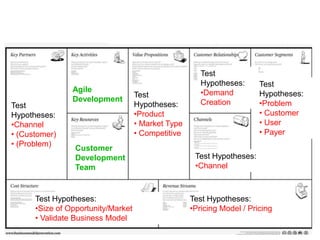
Test Hypotheses:Product
 Market Type
 CompetitionTurning Hypotheses to Facts
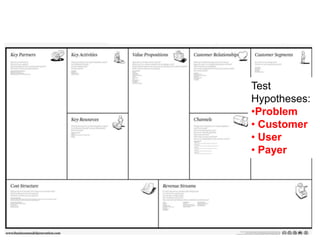
Test Hypotheses:Problem
 Customer
 User
 PayerTest Hypotheses:ChannelTest Hypotheses:Demand CreationTest Hypotheses:Problem
 Customer
 User
 PayerTest Hypotheses:Product
 Market Type
 CompetitiveTest Hypotheses:Channel
 (Customer)

Startup weekend 050611