Overview of meeting structure &
Decentralisation and its impact on
budgetary decisions in health
Chris James, Health Division
7th Meeting of OECD Joint Network on Fiscal Sustainability of Health Systems
14-15 February, 2019
OVERVIEW OF MEETING
STRUCTURE
Purpose of this meeting
CONTENT
Aligning health budgets with policy priorities and
increasing accountability for performance
OPEN DIALOGUE
Peer-to-peer learning. Reflect both health and
budget/finance perspectives. All viewpoints welcome
Finding policies to make health spending more sustainable
whilst continuing to provide high quality, accessible care
Thursday Friday
1. Institutional context, with focus
on decentralisation
4. Improving productivity
(continued)
2. Performance budgeting
frameworks & measurement systems
5. Performance & transparency
in the capital budget
3. Programme budgeting 6. Future work programme
4. Improving productivity
Meeting structure and format
• Overview of topic, summary of OECD policy analyses
• Specific country experiences
• Round table discussion of all participants
• Group work (session 4)
DECENTRALISATION AND
ITS IMPACT ON BUDGETARY
DECISIONS IN HEALTH
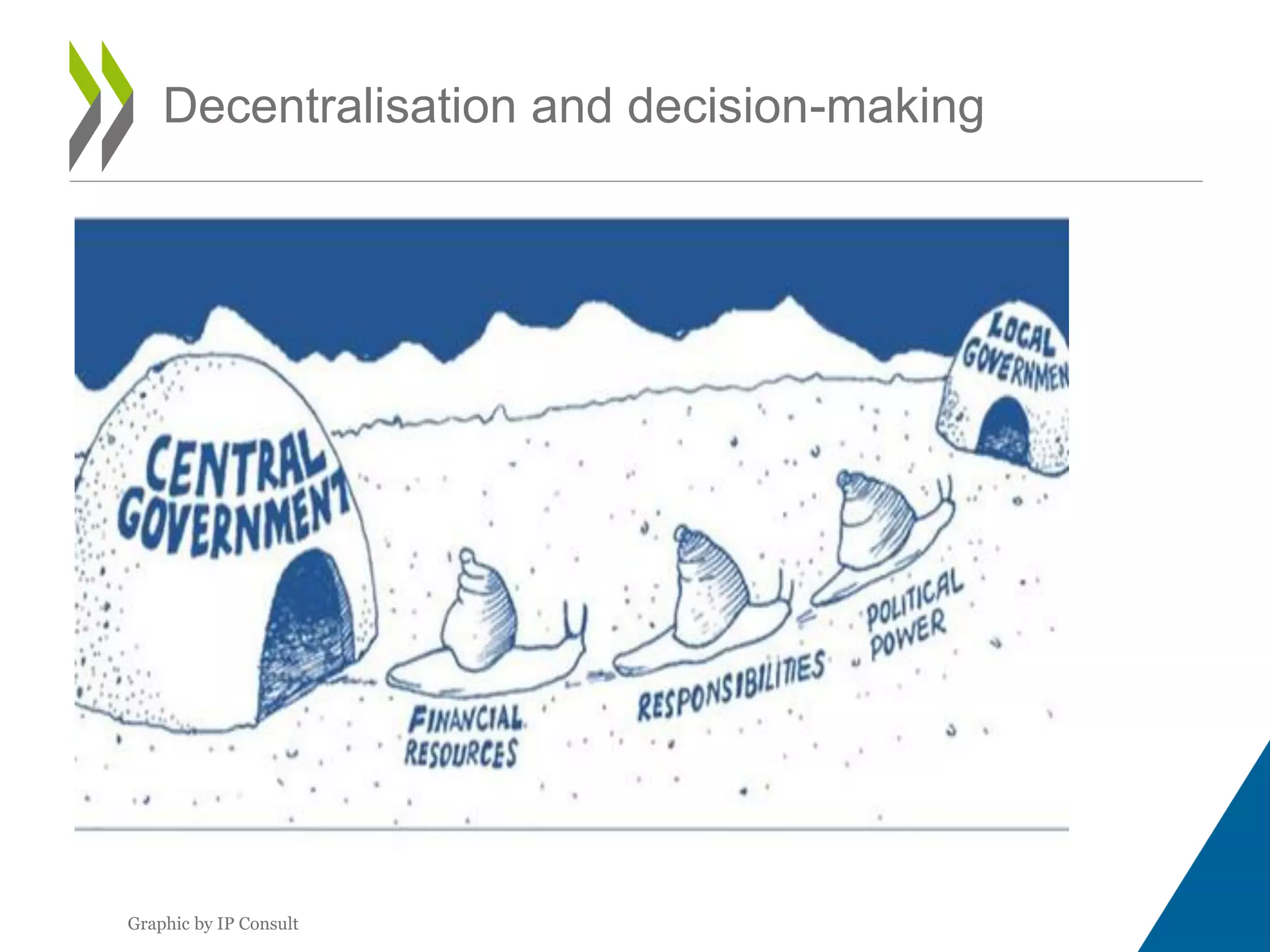
Decentralisation and decision-making
Graphic by IP Consult
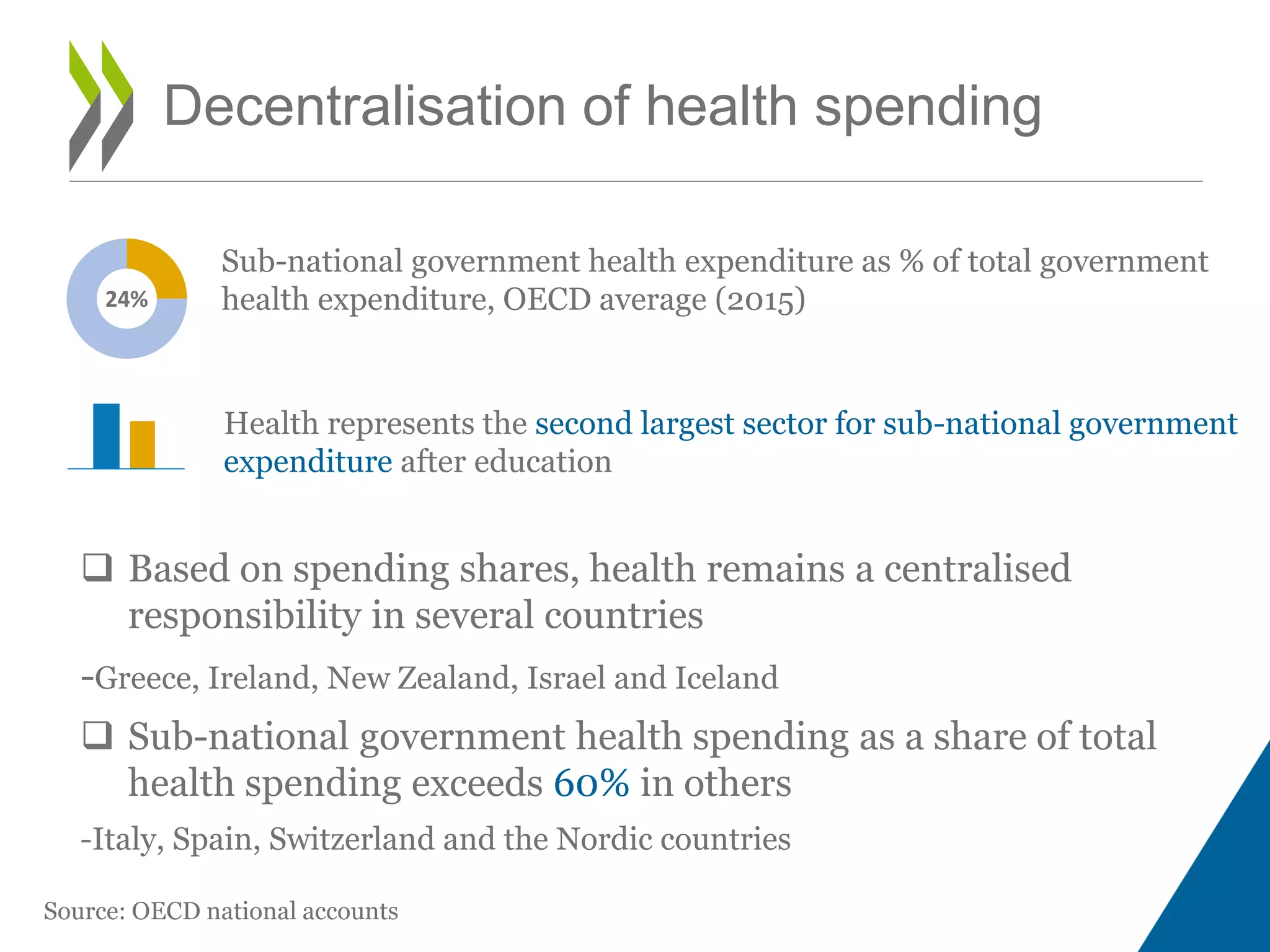
 Based on spending shares, health remains a centralised
responsibility in several countries
-Greece, Ireland, New Zealand, Israel and Iceland
 Sub-national government health spending as a share of total
health spending exceeds 60% in others
-Italy, Spain, Switzerland and the Nordic countries
Decentralisation of health spending
24%
Sub-national government health expenditure as % of total government
health expenditure, OECD average (2015)
Health represents the second largest sector for sub-national government
expenditure after education
Source: OECD national accounts
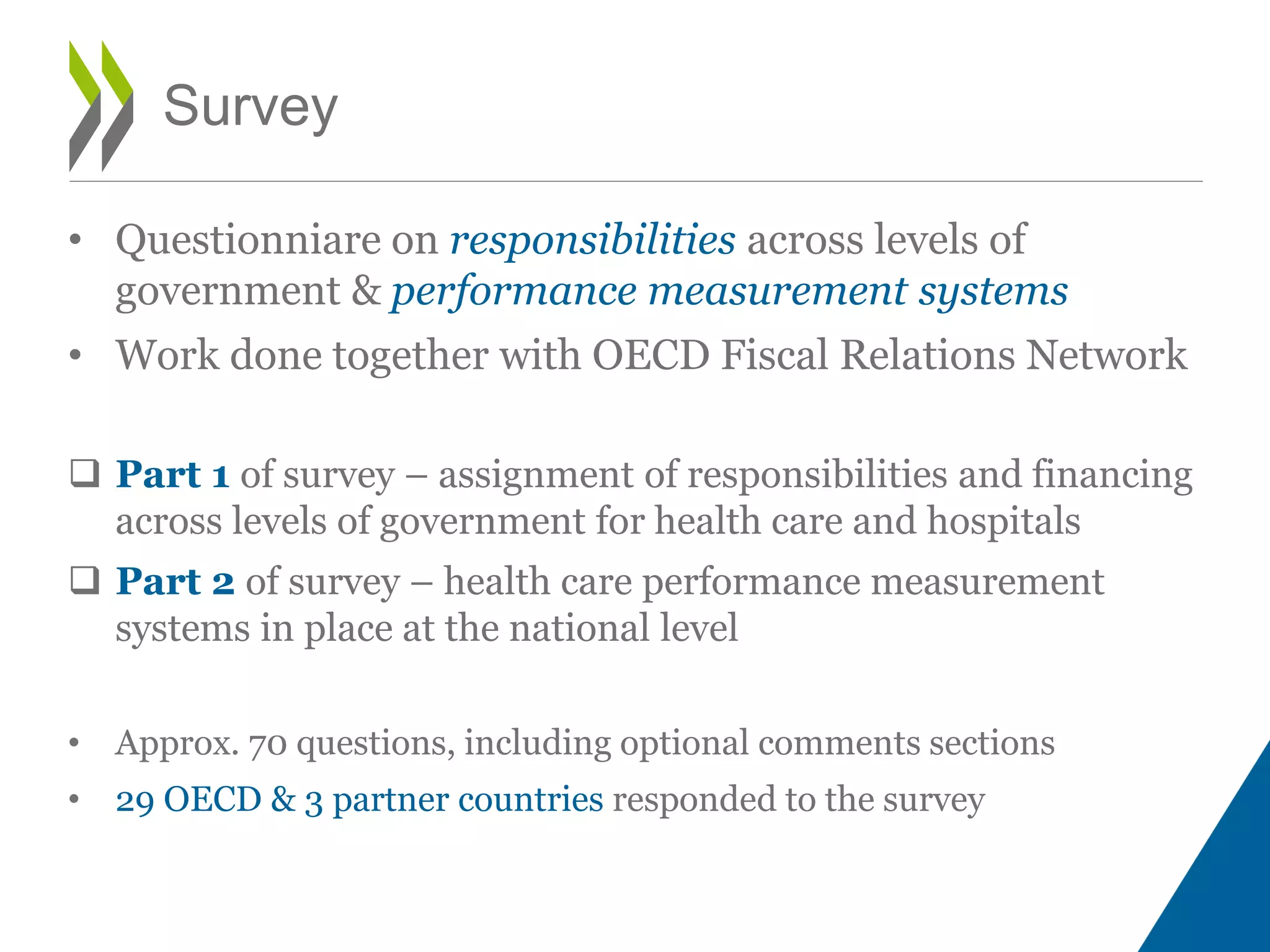
• Questionniare on responsibilities across levels of
government & performance measurement systems
• Work done together with OECD Fiscal Relations Network
 Part 1 of survey – assignment of responsibilities and financing
across levels of government for health care and hospitals
 Part 2 of survey – health care performance measurement
systems in place at the national level
• Approx. 70 questions, including optional comments sections
• 29 OECD & 3 partner countries responded to the survey
Survey
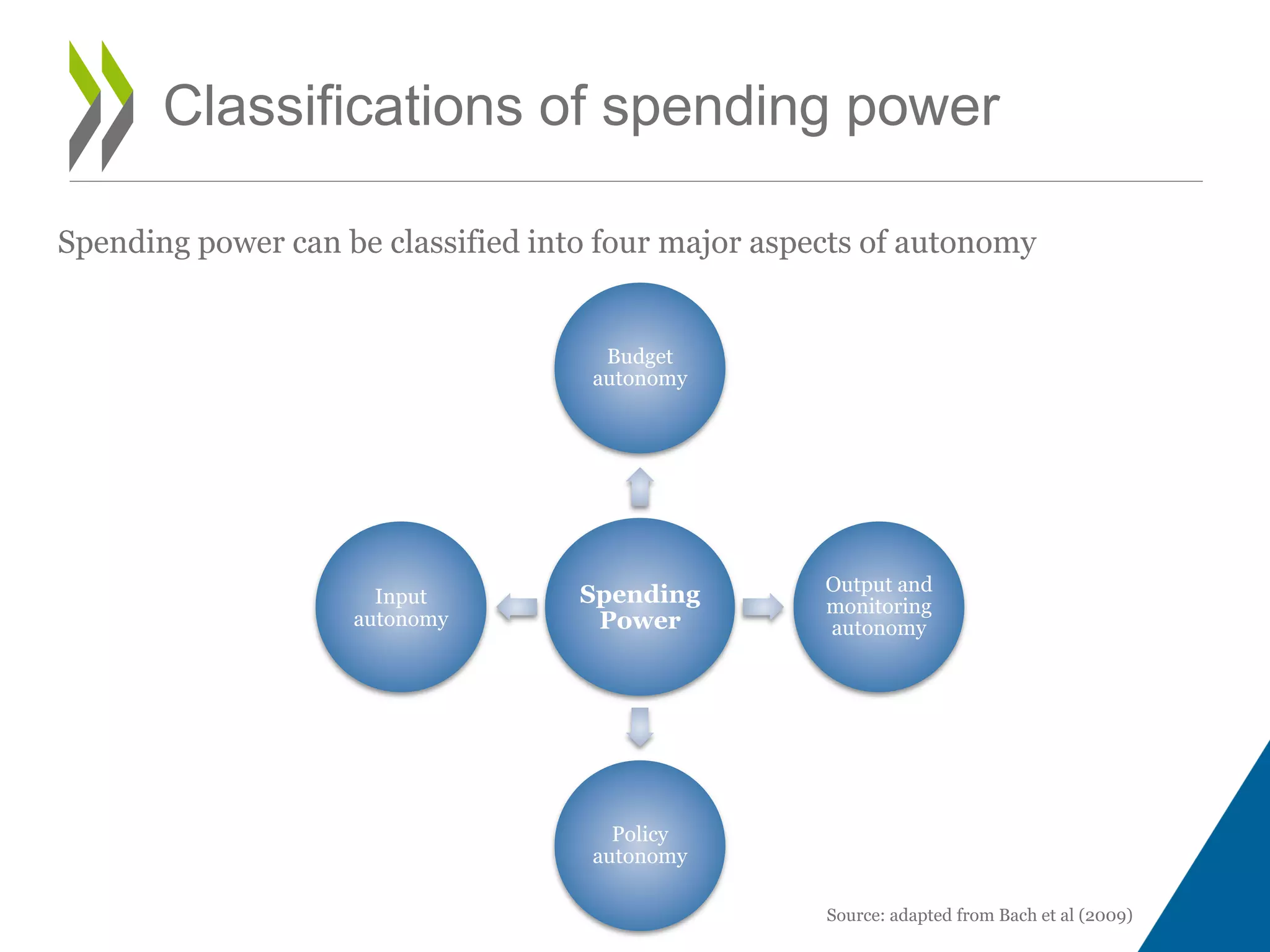
Classifications of spending power
Spending
Power
Budget
autonomy
Output and
monitoring
autonomy
Policy
autonomy
Input
autonomy
Spending power can be classified into four major aspects of autonomy
Source: adapted from Bach et al (2009)
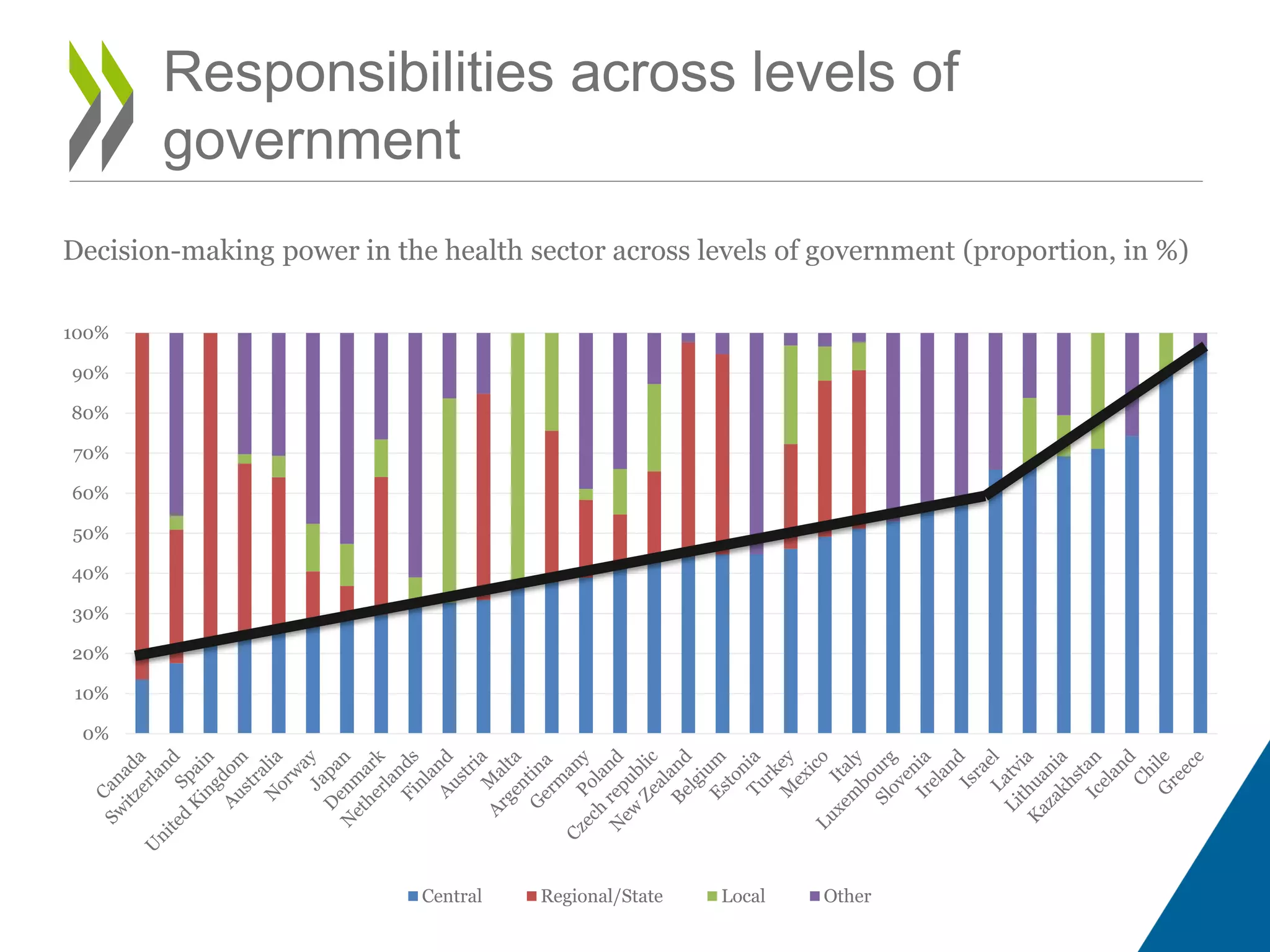
Responsibilities across levels of
government
0%
10%
20%
30%
40%
50%
60%
70%
80%
90%
100%
Central Regional/State Local Other
Decision-making power in the health sector across levels of government (proportion, in %)
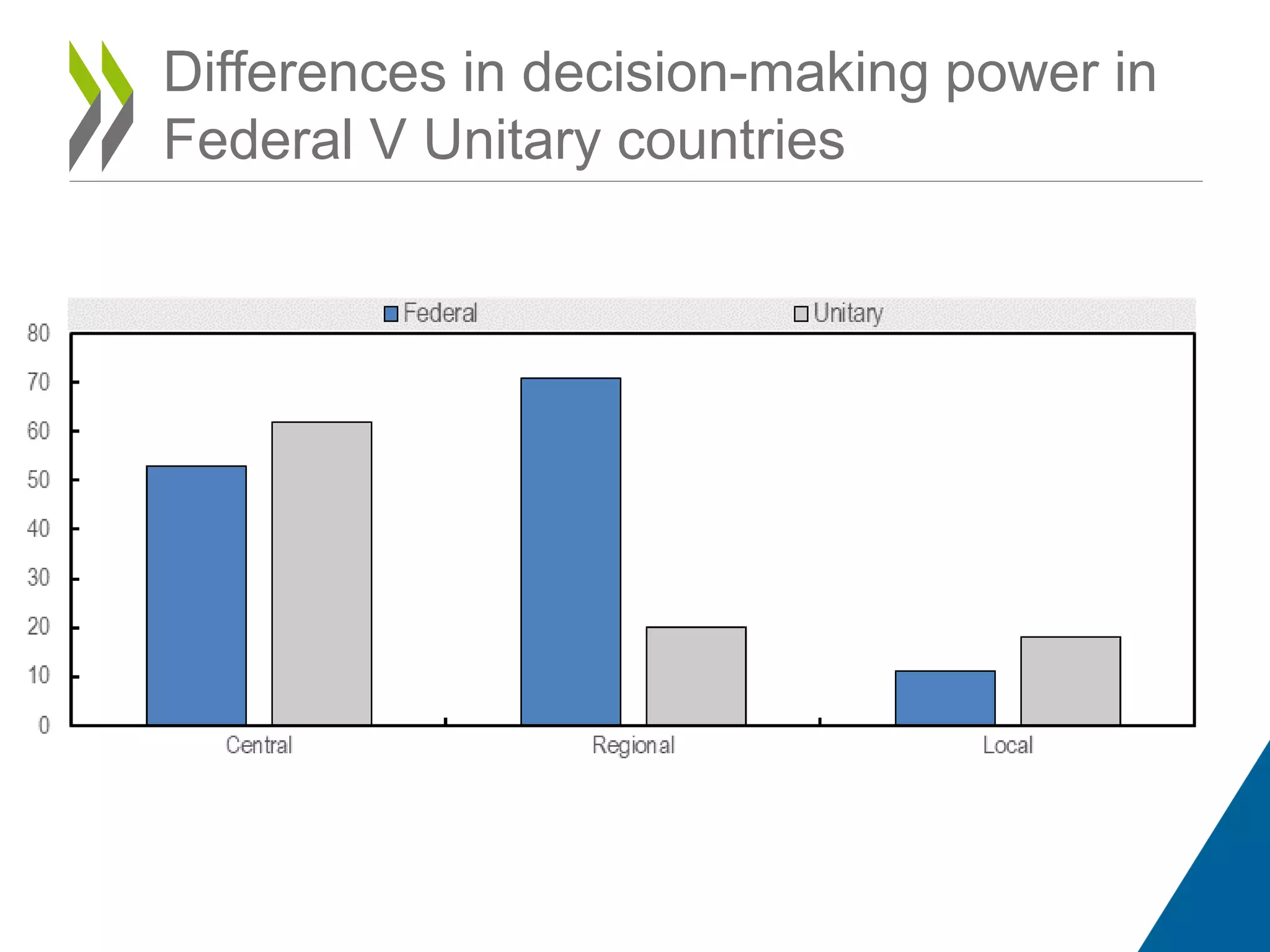
Differences in decision-making power in
Federal V Unitary countries
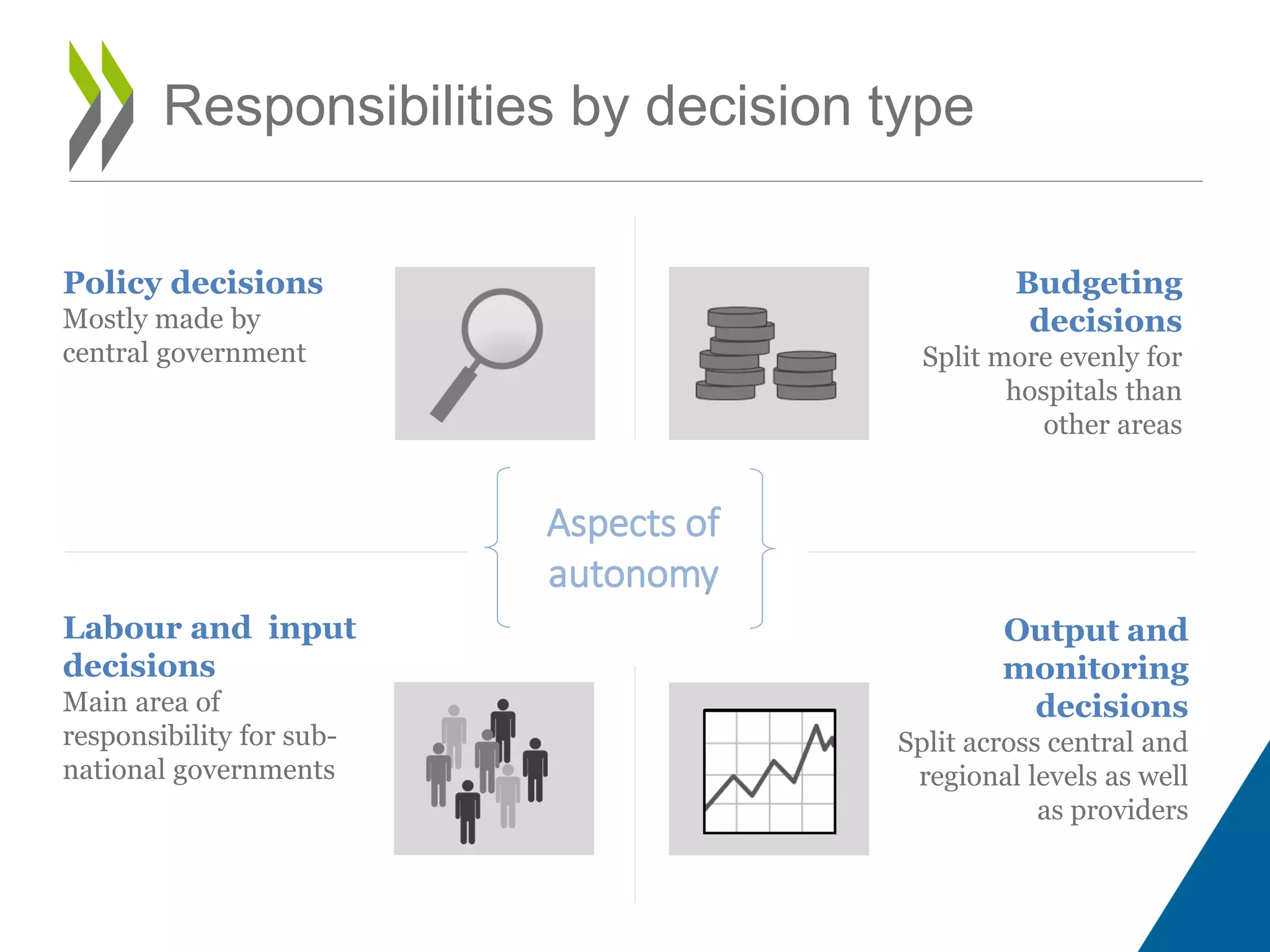
Responsibilities by decision type
Policy decisions
Mostly made by
central government
Budgeting
decisions
Split more evenly for
hospitals than
other areas
Aspects of
autonomy
Labour and input
decisions
Main area of
responsibility for sub-
national governments
Output and
monitoring
decisions
Split across central and
regional levels as well
as providers
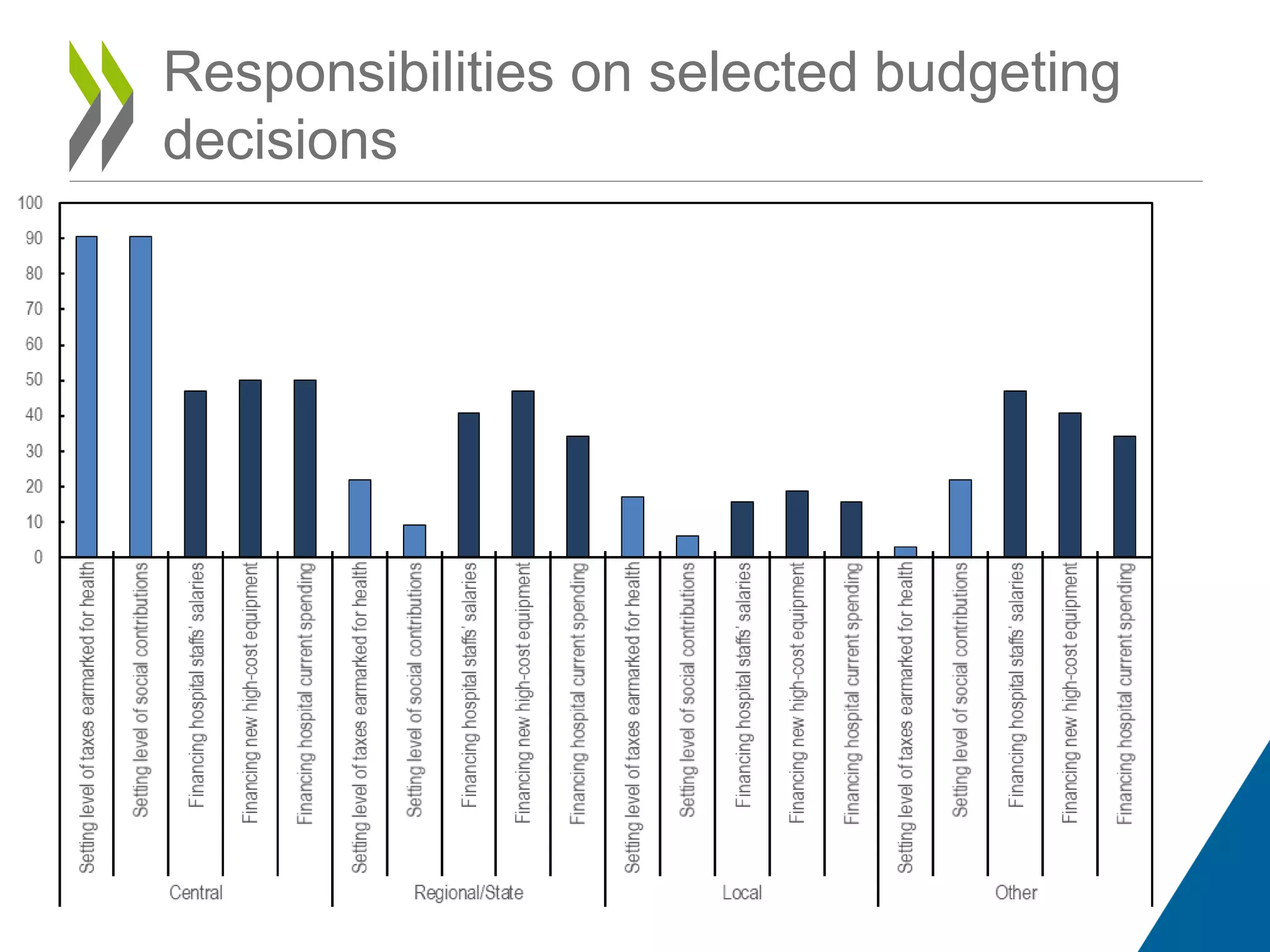
Responsibilities on selected budgeting
decisions
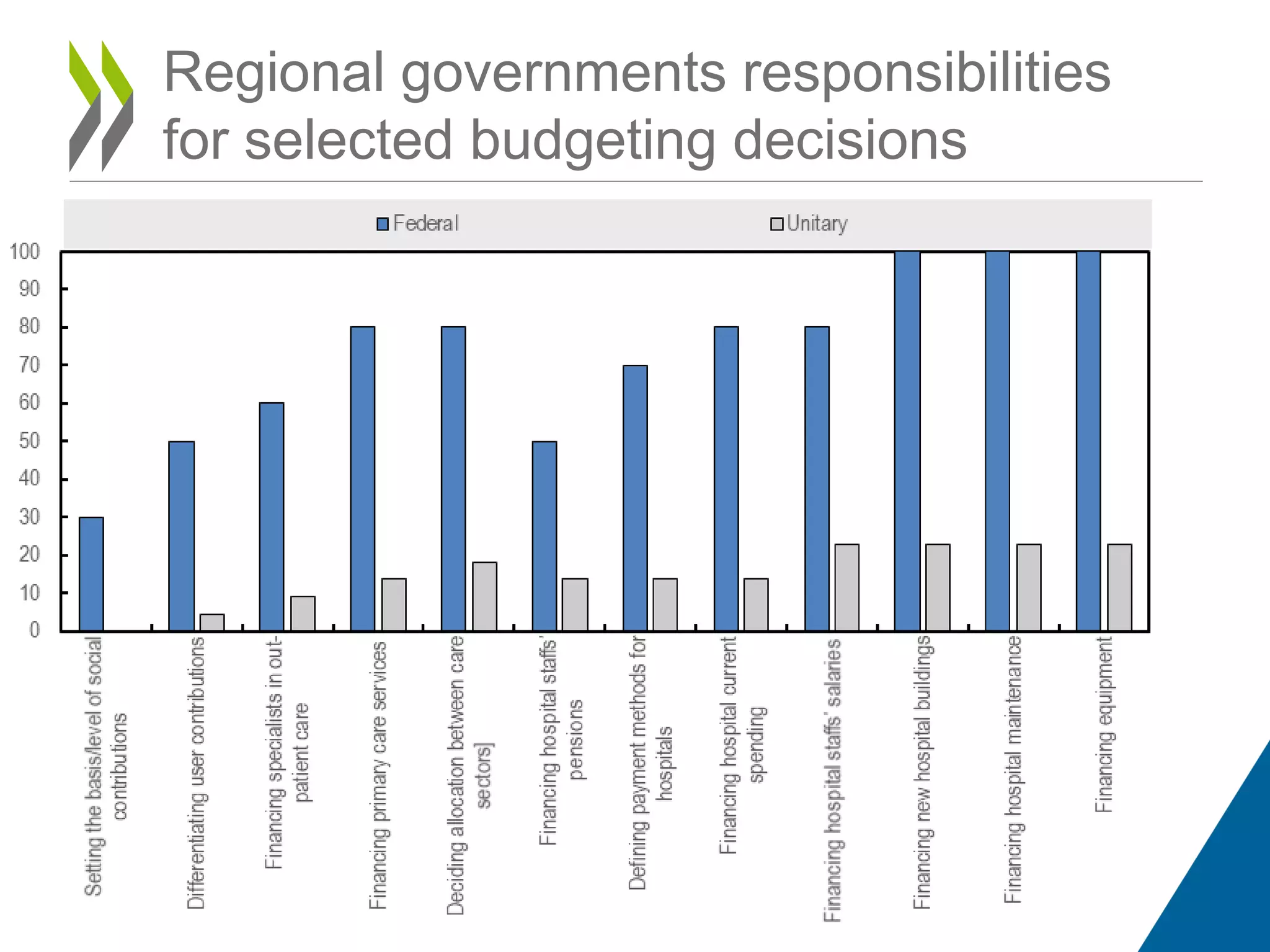
Regional governments responsibilities
for selected budgeting decisions
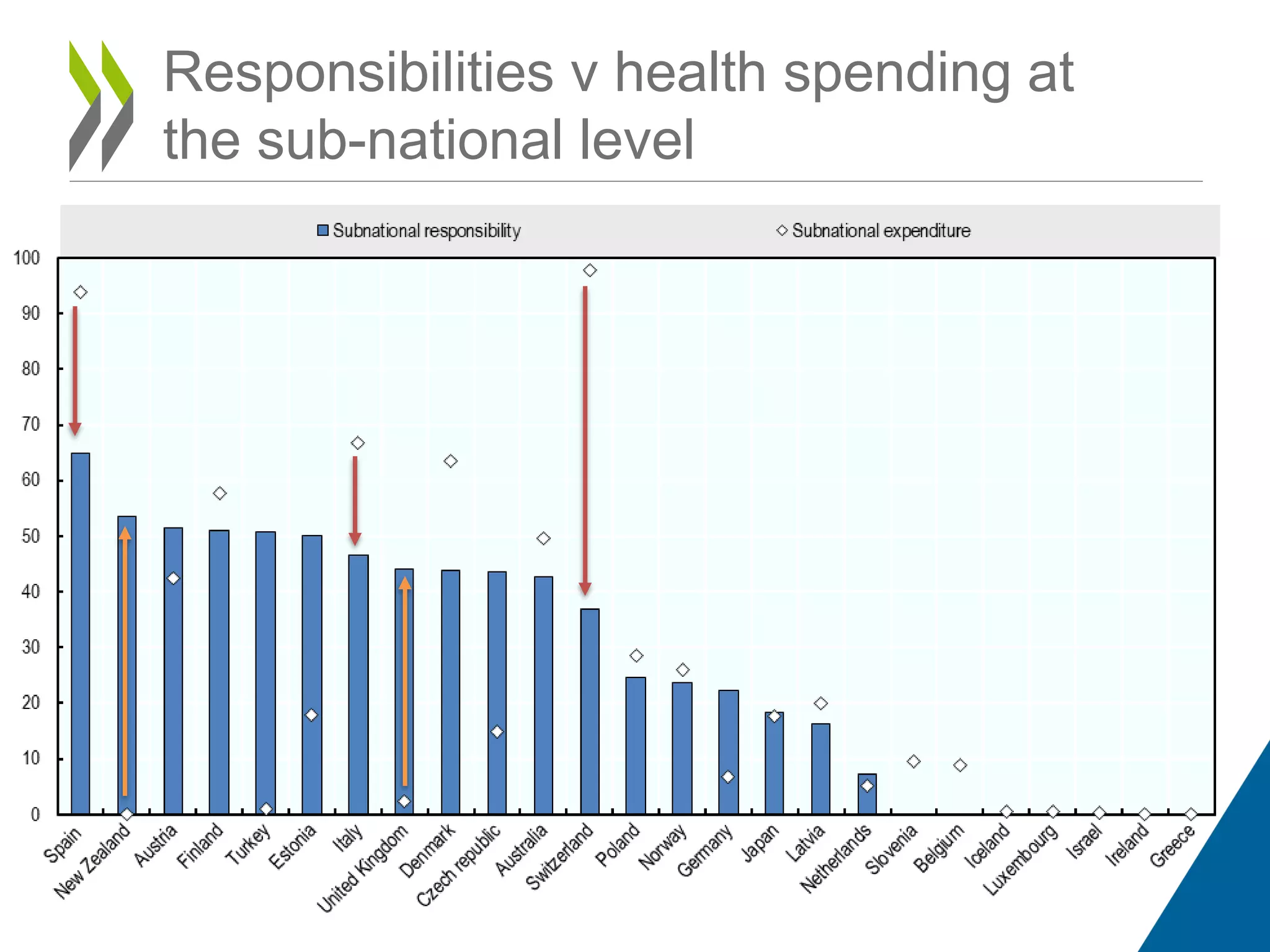
Responsibilities v health spending at
the sub-national level
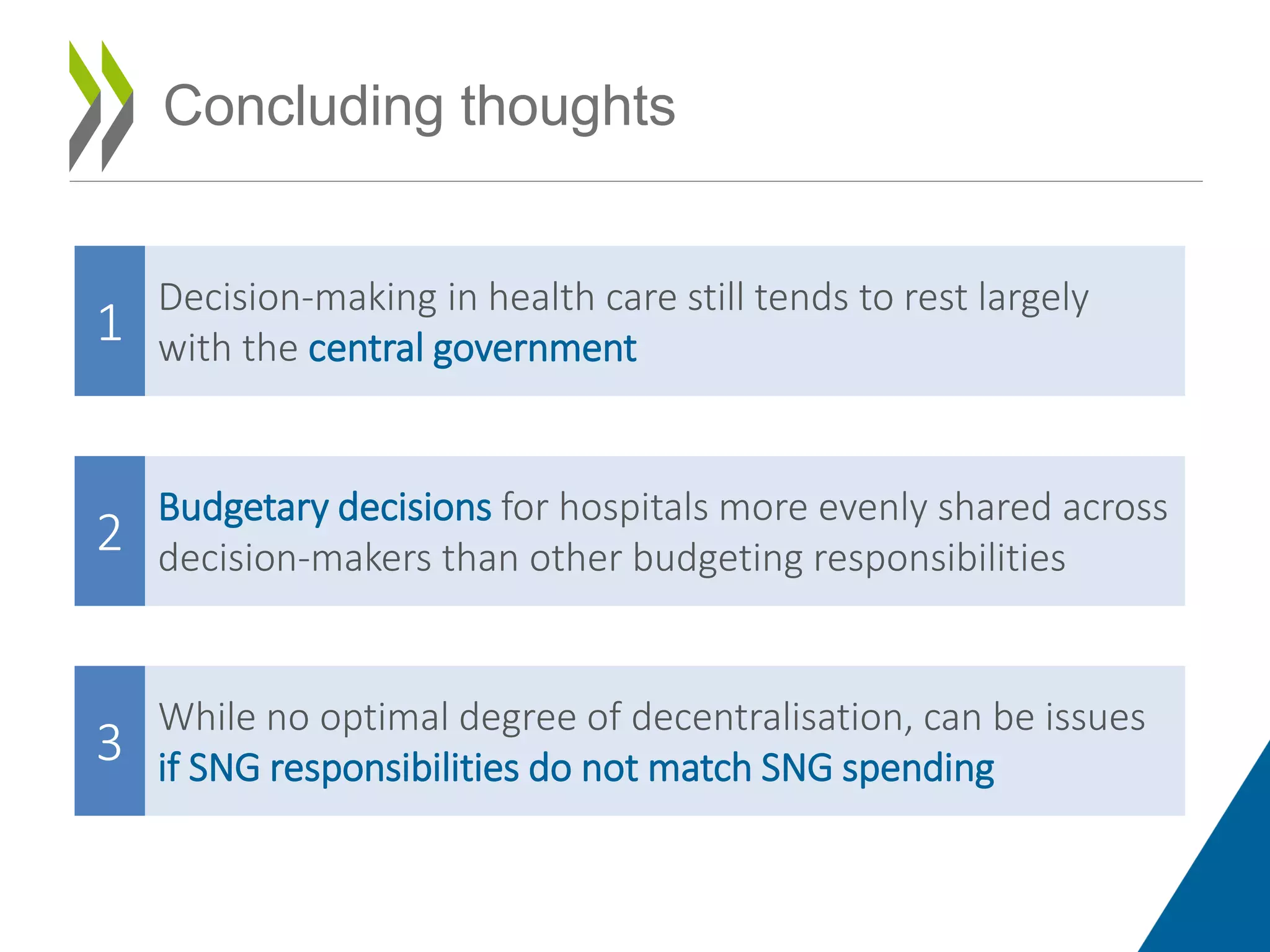
Concluding thoughts
Budgetary decisions for hospitals more evenly shared across
decision-makers than other budgeting responsibilities
While no optimal degree of decentralisation, can be issues
if SNG responsibilities do not match SNG spending
2
3
Decision-making in health care still tends to rest largely
with the central government1
Thank you
Email me chris.james@oecd.org
@OECD_socialFollow us on Twitter
www.oecd.org/healthVisit our website

The institutional context in health - Chris James, OECD Secretariat

  • 1.
    Overview of meetingstructure & Decentralisation and its impact on budgetary decisions in health Chris James, Health Division 7th Meeting of OECD Joint Network on Fiscal Sustainability of Health Systems 14-15 February, 2019
  • 2.
  • 3.
    Purpose of thismeeting CONTENT Aligning health budgets with policy priorities and increasing accountability for performance OPEN DIALOGUE Peer-to-peer learning. Reflect both health and budget/finance perspectives. All viewpoints welcome Finding policies to make health spending more sustainable whilst continuing to provide high quality, accessible care
  • 4.
    Thursday Friday 1. Institutionalcontext, with focus on decentralisation 4. Improving productivity (continued) 2. Performance budgeting frameworks & measurement systems 5. Performance & transparency in the capital budget 3. Programme budgeting 6. Future work programme 4. Improving productivity Meeting structure and format • Overview of topic, summary of OECD policy analyses • Specific country experiences • Round table discussion of all participants • Group work (session 4)
  • 5.
    DECENTRALISATION AND ITS IMPACTON BUDGETARY DECISIONS IN HEALTH
  • 6.
  • 7.
     Based onspending shares, health remains a centralised responsibility in several countries -Greece, Ireland, New Zealand, Israel and Iceland  Sub-national government health spending as a share of total health spending exceeds 60% in others -Italy, Spain, Switzerland and the Nordic countries Decentralisation of health spending 24% Sub-national government health expenditure as % of total government health expenditure, OECD average (2015) Health represents the second largest sector for sub-national government expenditure after education Source: OECD national accounts
  • 8.
    • Questionniare onresponsibilities across levels of government & performance measurement systems • Work done together with OECD Fiscal Relations Network  Part 1 of survey – assignment of responsibilities and financing across levels of government for health care and hospitals  Part 2 of survey – health care performance measurement systems in place at the national level • Approx. 70 questions, including optional comments sections • 29 OECD & 3 partner countries responded to the survey Survey
  • 9.
    Classifications of spendingpower Spending Power Budget autonomy Output and monitoring autonomy Policy autonomy Input autonomy Spending power can be classified into four major aspects of autonomy Source: adapted from Bach et al (2009)
  • 10.
    Responsibilities across levelsof government 0% 10% 20% 30% 40% 50% 60% 70% 80% 90% 100% Central Regional/State Local Other Decision-making power in the health sector across levels of government (proportion, in %)
  • 11.
    Differences in decision-makingpower in Federal V Unitary countries
  • 12.
    Responsibilities by decisiontype Policy decisions Mostly made by central government Budgeting decisions Split more evenly for hospitals than other areas Aspects of autonomy Labour and input decisions Main area of responsibility for sub- national governments Output and monitoring decisions Split across central and regional levels as well as providers
  • 13.
    Responsibilities on selectedbudgeting decisions
  • 14.
    Regional governments responsibilities forselected budgeting decisions
  • 15.
    Responsibilities v healthspending at the sub-national level
  • 16.
    Concluding thoughts Budgetary decisionsfor hospitals more evenly shared across decision-makers than other budgeting responsibilities While no optimal degree of decentralisation, can be issues if SNG responsibilities do not match SNG spending 2 3 Decision-making in health care still tends to rest largely with the central government1
  • 17.
    Thank you Email mechris.james@oecd.org @OECD_socialFollow us on Twitter www.oecd.org/healthVisit our website