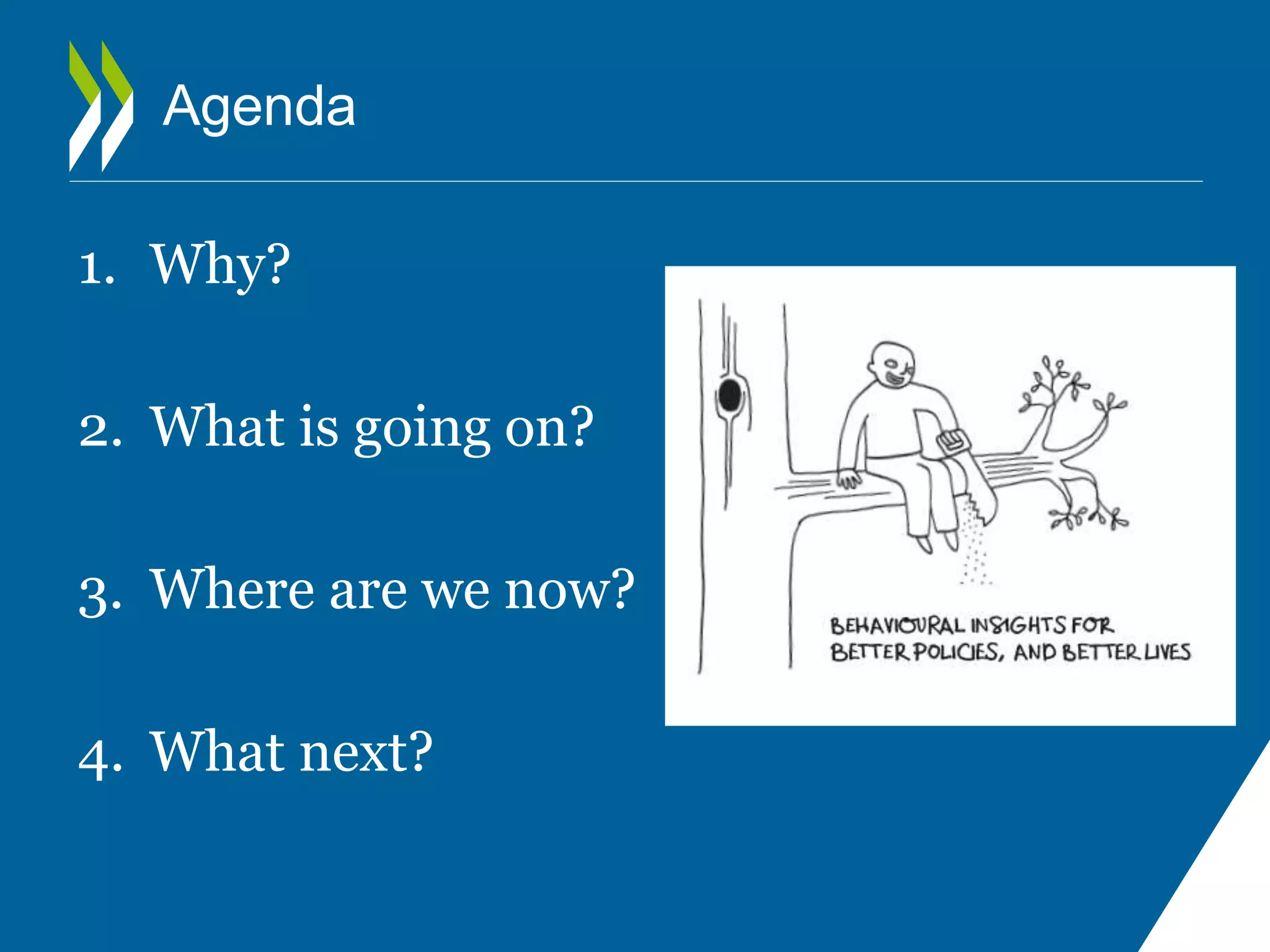
BEHAVIOURAL INSIGHTS -
UPDATE
Working Party of Senior Budget Officials, 7 November 2017
Faisal.naru@oecd.org & Filippo.Cavassini@oecd.org
Agenda
1. Why?
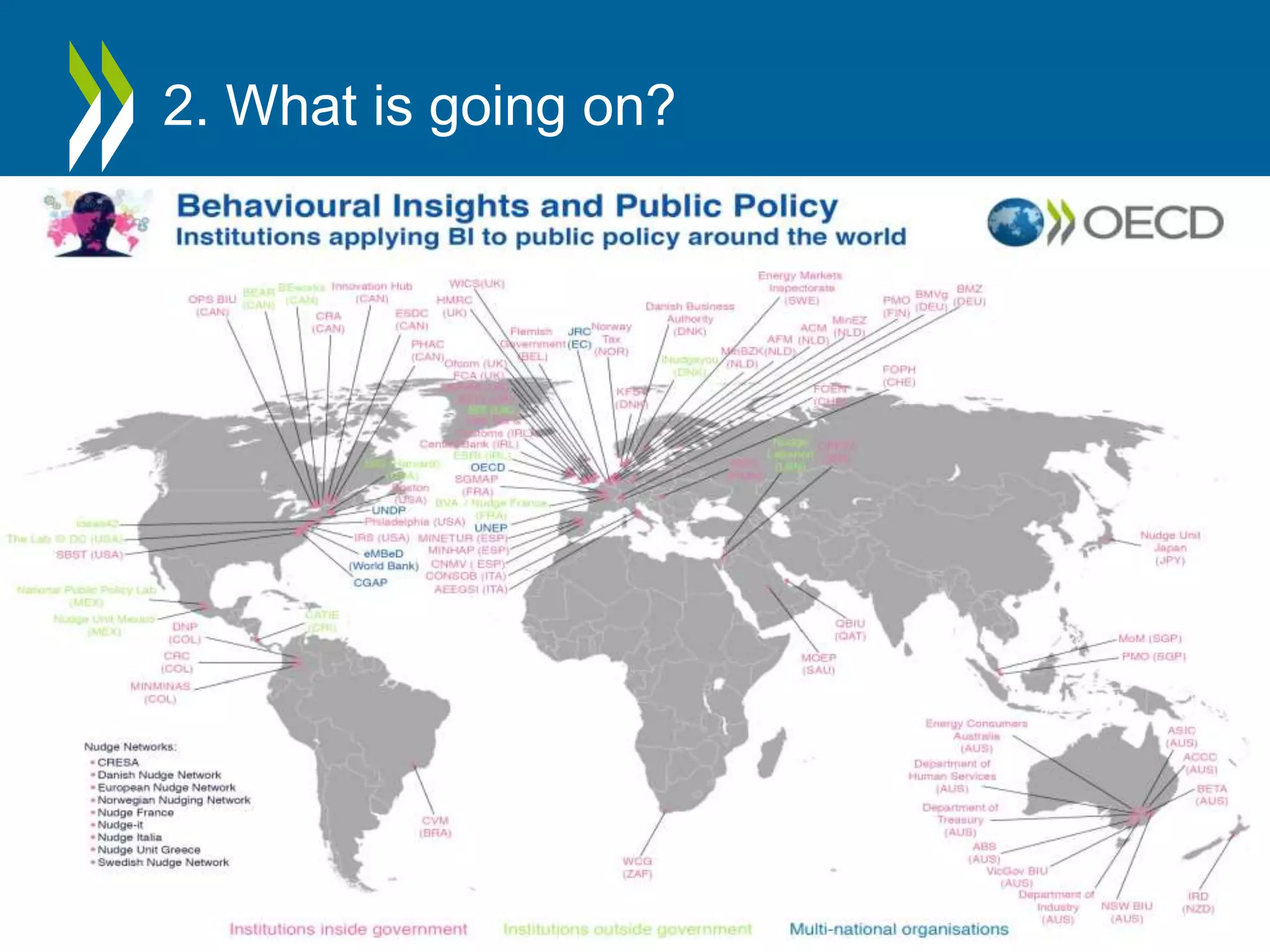
2. What is going on?
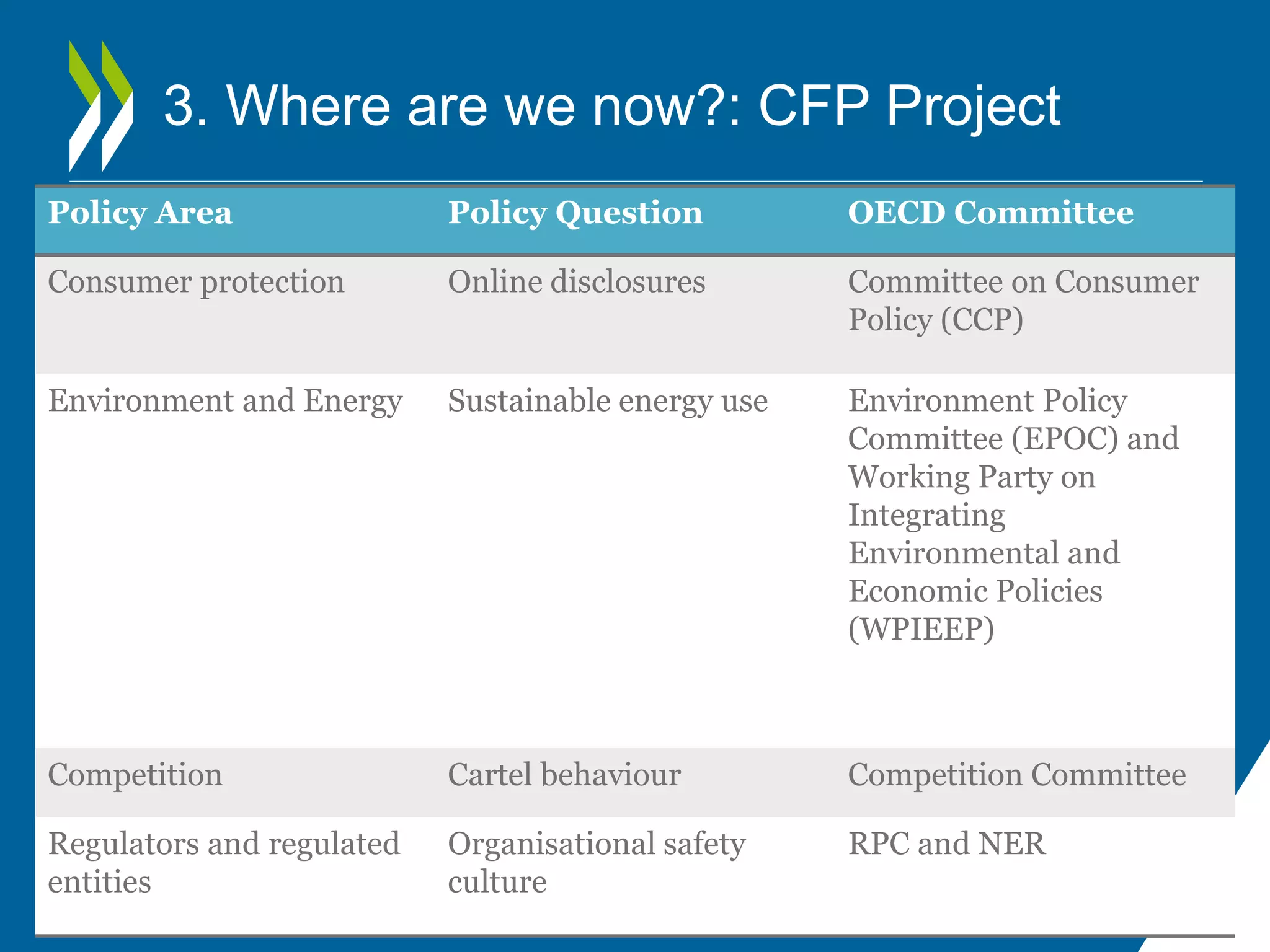
3. Where are we now?
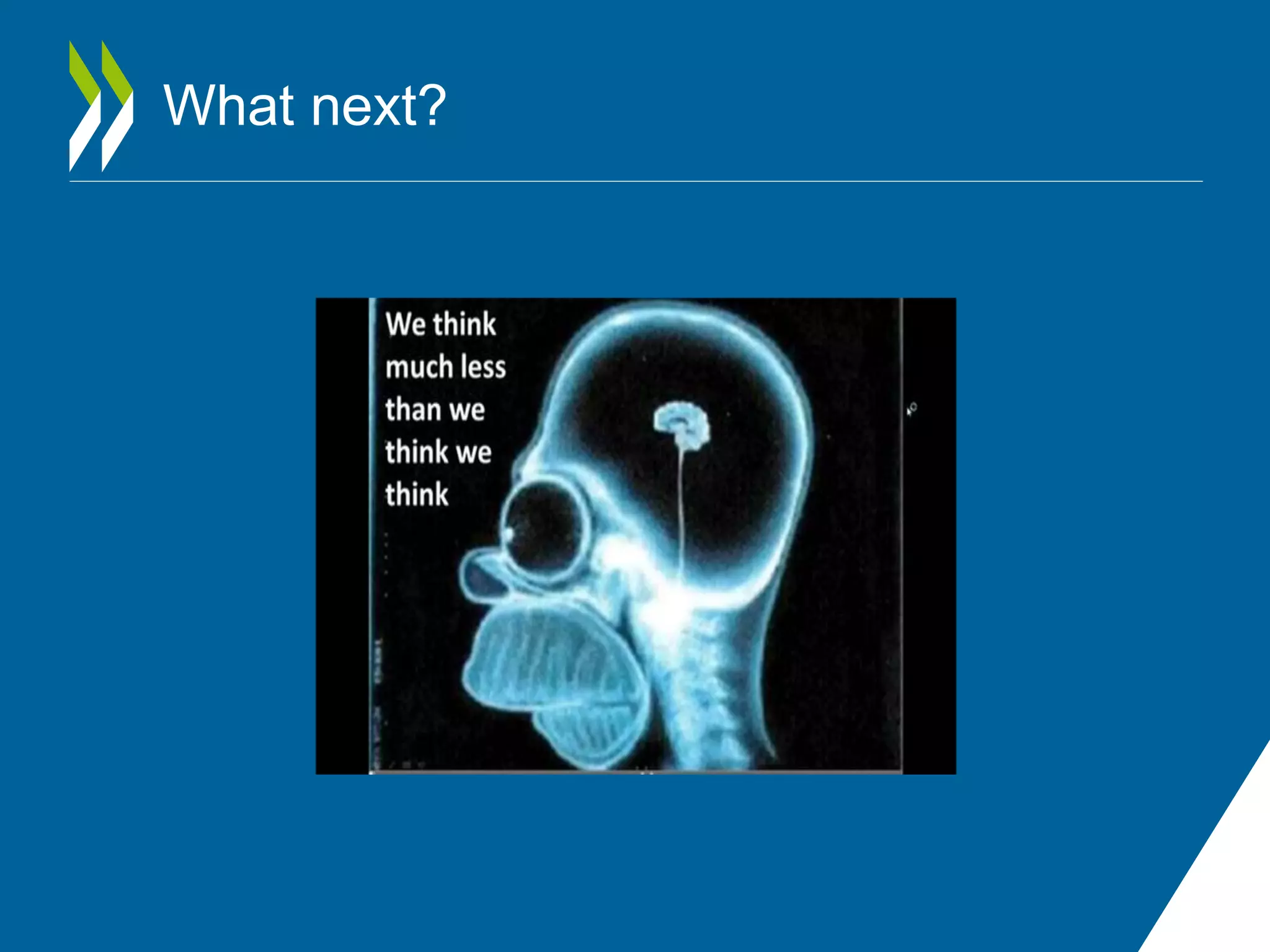
4. What next?
1. Why?
“The global financial and economic crisis has
uncovered major failings in governance and
regulation, which have undermined trust in
public and private institutions alike. Amid
ongoing economic uncertainty, establishing a
well-functioning national regulatory
framework for transparent and efficient
markets is central to re-injecting confidence
and restoring growth.”
Angel Gurría
Secretary-General of the OECD
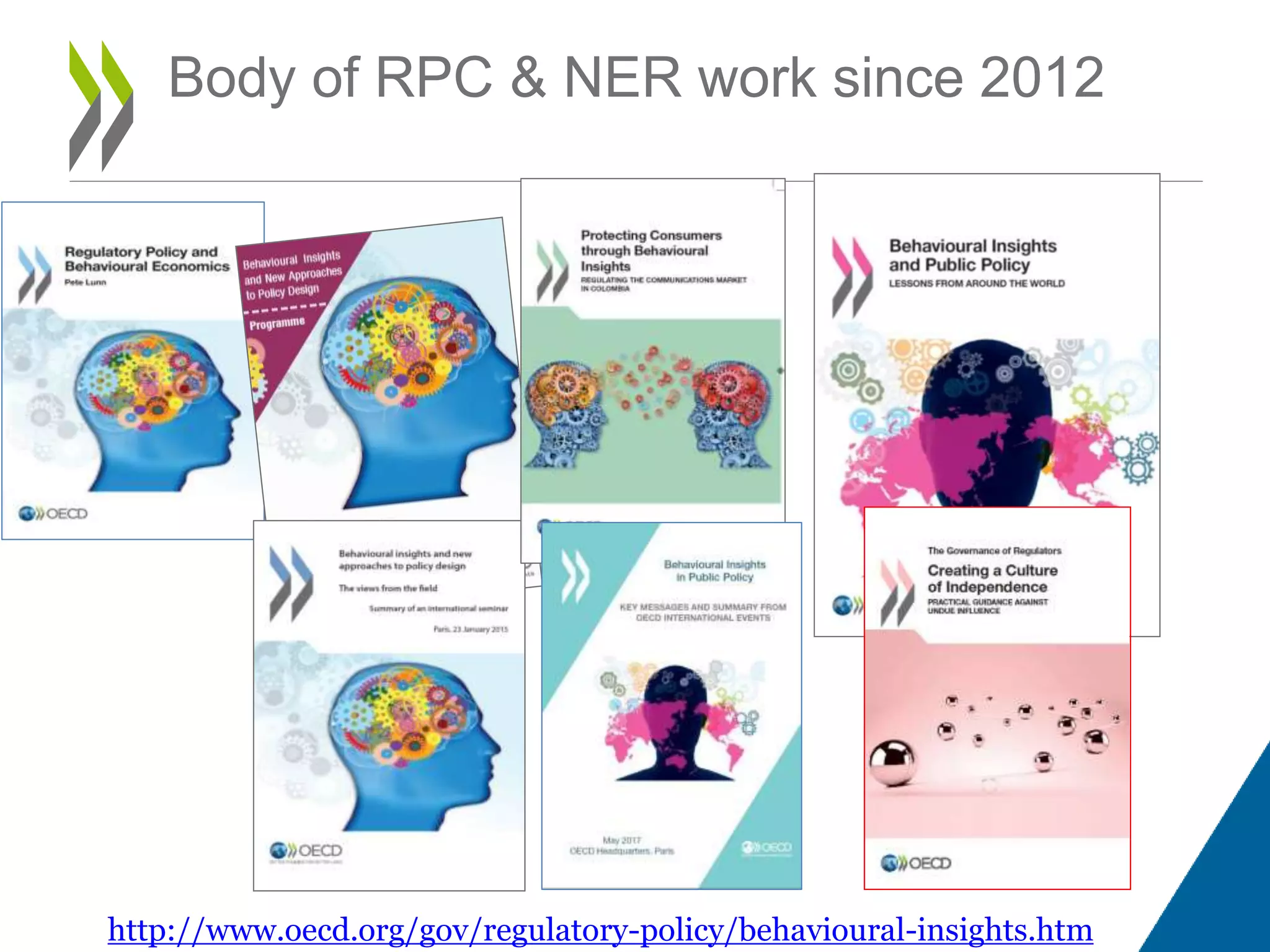
Body of RPC & NER work since 2012
http://www.oecd.org/gov/regulatory-policy/behavioural-insights.htm
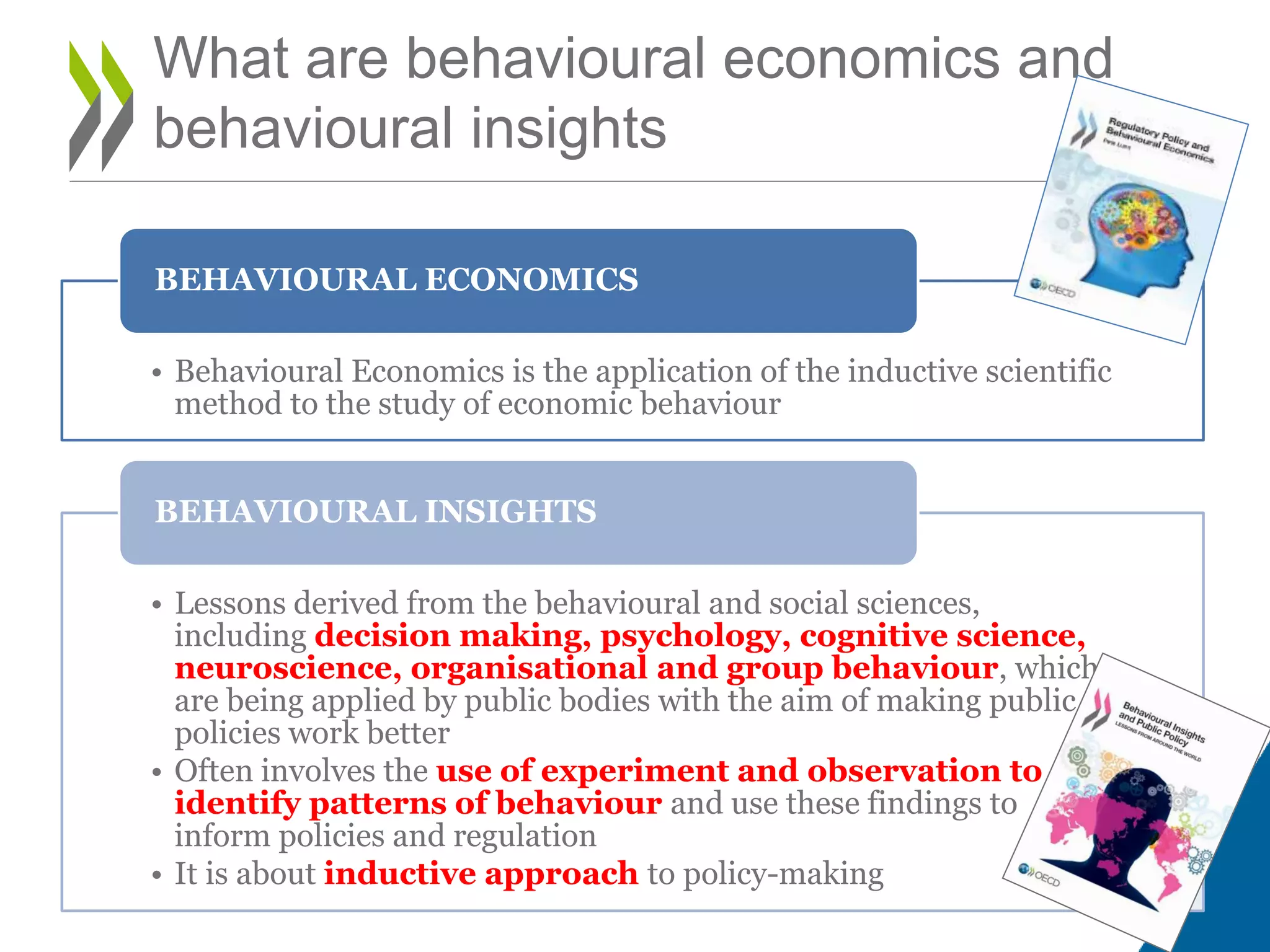
What are behavioural economics and
behavioural insights
• Behavioural Economics is the application of the inductive scientific
method to the study of economic behaviour
BEHAVIOURAL ECONOMICS
• Lessons derived from the behavioural and social sciences,
including decision making, psychology, cognitive science,
neuroscience, organisational and group behaviour, which
are being applied by public bodies with the aim of making public
policies work better
• Often involves the use of experiment and observation to
identify patterns of behaviour and use these findings to
inform policies and regulation
• It is about inductive approach to policy-making
BEHAVIOURAL INSIGHTS
2. What is going on?
3. Where are we now?: CFP Project
Policy Area Policy Question OECD Committee
Consumer protection Online disclosures Committee on Consumer
Policy (CCP)
Environment and Energy Sustainable energy use Environment Policy
Committee (EPOC) and
Working Party on
Integrating
Environmental and
Economic Policies
(WPIEEP)
Competition Cartel behaviour Competition Committee
Regulators and regulated
entities
Organisational safety
culture
RPC and NER
What next?
Changing institutional behaviour
2010 Deepwater Horizon oil spill
Gathering evidence
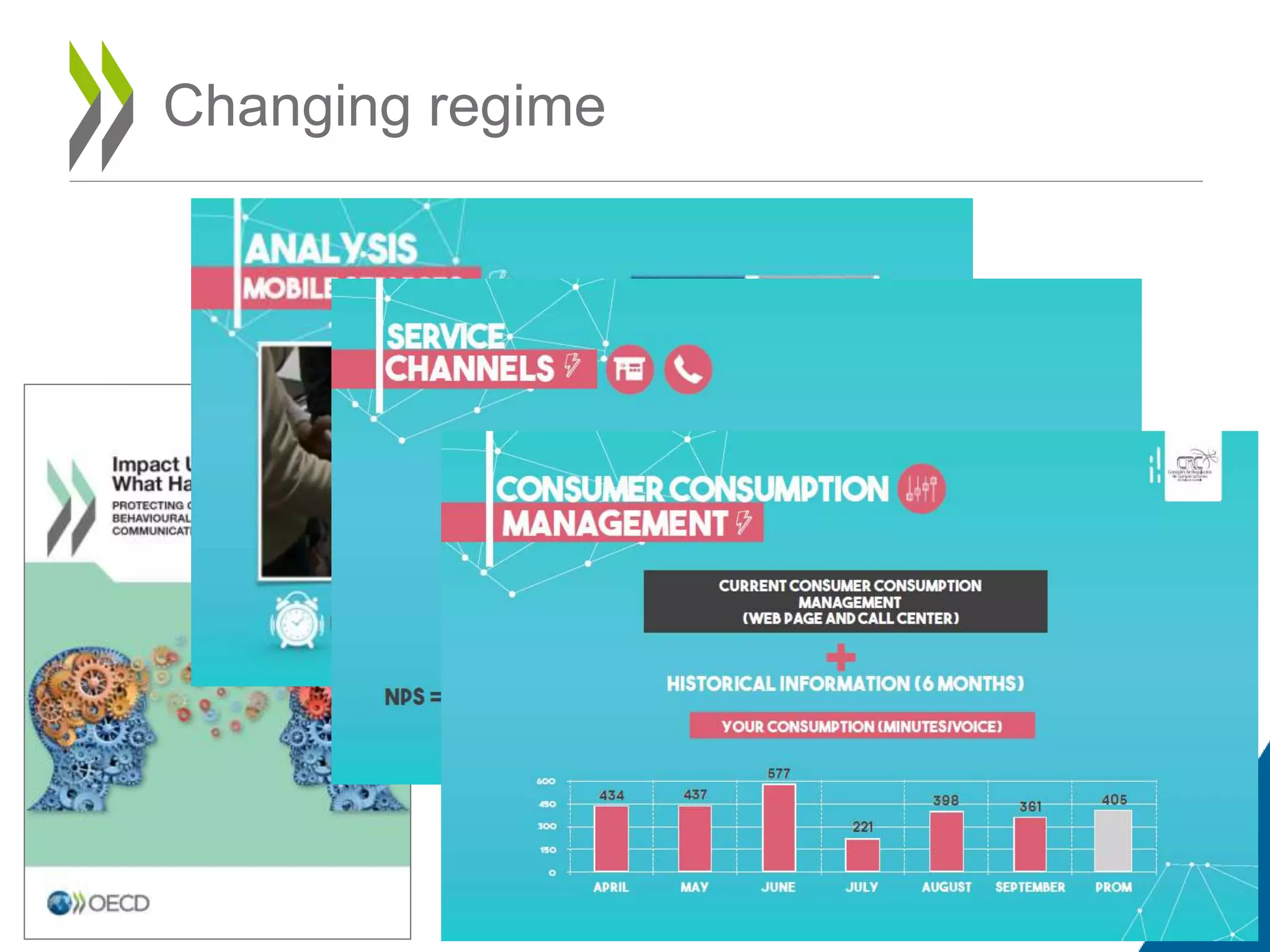
Changing regime
• Numeric literacy biases
– Stated preference for quantitative data  qualitative information more
memorable and engaging
– Small increases that gain a new whole number more impactful than larger
increases which do not
• Power of comparison
– data is more persuasive when presented in comparison with peers who are
of similar characteristics
– setting unrealistic performance targets lowers the evaluation of good
performance
• Motivated Reasoning
– data might not change entrenched views
– more data doesn't necessarily increases consensus
• Negativity bias
– motivated by losses more than gains  greater attention for low
performance
– preventing a failure make the news!!
Potential Bias in Budgeting and
Performance
Rewards may reinforce in the short
term, but may have hidden costs,
becoming negative reinforcers once
withdrawn (Benabou & Tirole, Review of Economic Studies, 2003)
The promise of helping others makes us
more likely to follow rules (Grant, Give and take, 2013)
Motivation
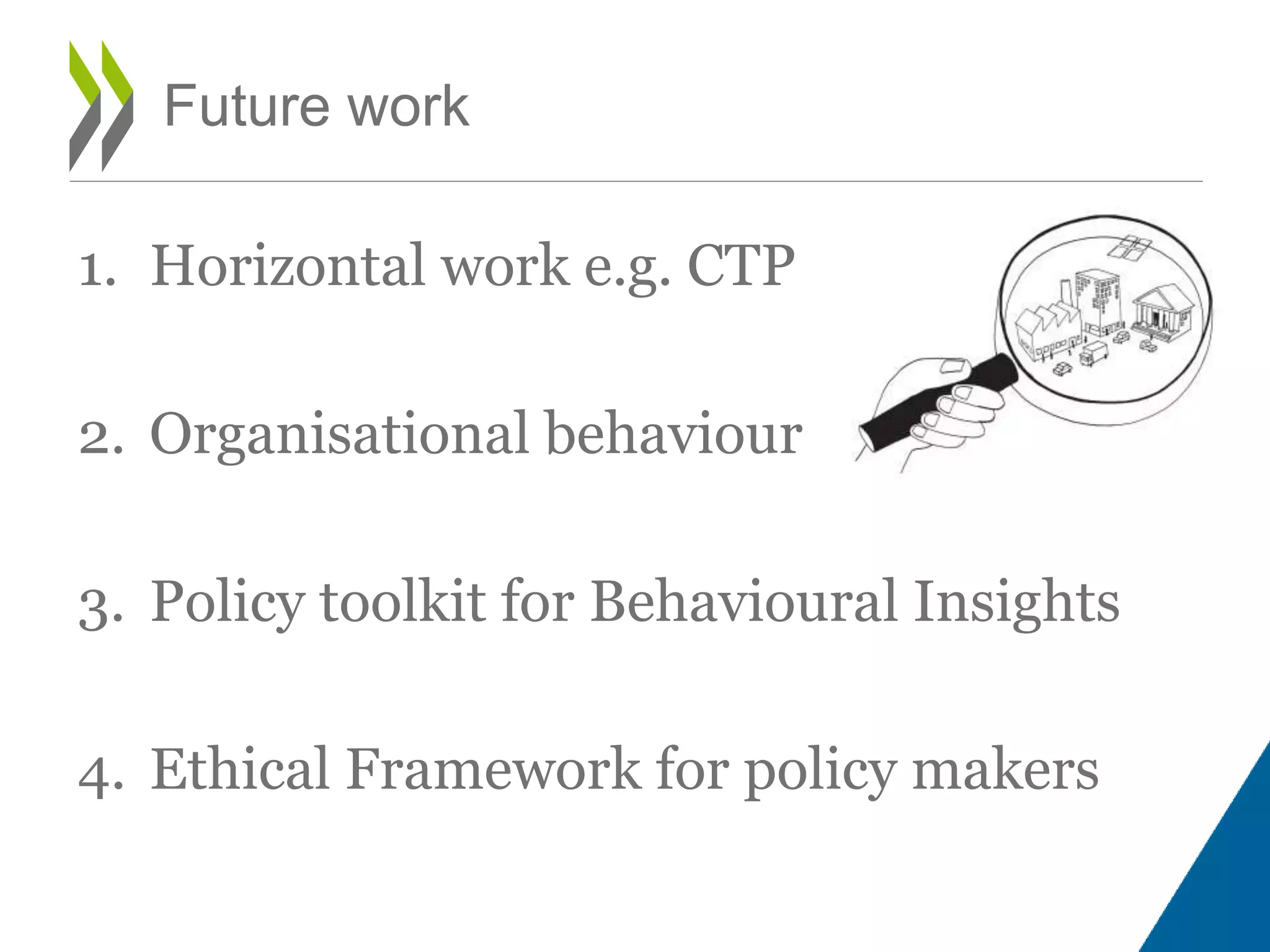
1. Horizontal work e.g. CTP
2. Organisational behaviour
3. Policy toolkit for Behavioural Insights
4. Ethical Framework for policy makers
Future work
Behavioural insights, Update - Faisal Naru, OECD

Behavioural insights, Update - Faisal Naru, OECD

  • 1.
    BEHAVIOURAL INSIGHTS - UPDATE WorkingParty of Senior Budget Officials, 7 November 2017 Faisal.naru@oecd.org & Filippo.Cavassini@oecd.org
  • 2.
    Agenda 1. Why? 2. Whatis going on? 3. Where are we now? 4. What next?
  • 3.
    1. Why? “The globalfinancial and economic crisis has uncovered major failings in governance and regulation, which have undermined trust in public and private institutions alike. Amid ongoing economic uncertainty, establishing a well-functioning national regulatory framework for transparent and efficient markets is central to re-injecting confidence and restoring growth.” Angel Gurría Secretary-General of the OECD
  • 4.
    Body of RPC& NER work since 2012 http://www.oecd.org/gov/regulatory-policy/behavioural-insights.htm
  • 5.
    What are behaviouraleconomics and behavioural insights • Behavioural Economics is the application of the inductive scientific method to the study of economic behaviour BEHAVIOURAL ECONOMICS • Lessons derived from the behavioural and social sciences, including decision making, psychology, cognitive science, neuroscience, organisational and group behaviour, which are being applied by public bodies with the aim of making public policies work better • Often involves the use of experiment and observation to identify patterns of behaviour and use these findings to inform policies and regulation • It is about inductive approach to policy-making BEHAVIOURAL INSIGHTS
  • 6.
    2. What isgoing on?
  • 7.
    3. Where arewe now?: CFP Project Policy Area Policy Question OECD Committee Consumer protection Online disclosures Committee on Consumer Policy (CCP) Environment and Energy Sustainable energy use Environment Policy Committee (EPOC) and Working Party on Integrating Environmental and Economic Policies (WPIEEP) Competition Cartel behaviour Competition Committee Regulators and regulated entities Organisational safety culture RPC and NER
  • 8.
  • 9.
    Changing institutional behaviour 2010Deepwater Horizon oil spill
  • 10.
  • 11.
  • 12.
    • Numeric literacybiases – Stated preference for quantitative data  qualitative information more memorable and engaging – Small increases that gain a new whole number more impactful than larger increases which do not • Power of comparison – data is more persuasive when presented in comparison with peers who are of similar characteristics – setting unrealistic performance targets lowers the evaluation of good performance • Motivated Reasoning – data might not change entrenched views – more data doesn't necessarily increases consensus • Negativity bias – motivated by losses more than gains  greater attention for low performance – preventing a failure make the news!! Potential Bias in Budgeting and Performance
  • 13.
    Rewards may reinforcein the short term, but may have hidden costs, becoming negative reinforcers once withdrawn (Benabou & Tirole, Review of Economic Studies, 2003) The promise of helping others makes us more likely to follow rules (Grant, Give and take, 2013) Motivation
  • 14.
    1. Horizontal worke.g. CTP 2. Organisational behaviour 3. Policy toolkit for Behavioural Insights 4. Ethical Framework for policy makers Future work

Editor's Notes

  • #4 New Approaches to Economic Challenges (NEAC)