The Importance of outcomes and
 evaluation in service delivery

           Yfoundations
           10th July 2012
       Prof Ilan Katz (SPRC)
Will cover

   Why outcomes are important
   Evaluating for outcomes
   Monitoring and evaluation
   Types of evaluation
   Some key methods
   Conclusions
Why are outcomes important

 Most services focus on outputs:
   Numbers of clients seen
   Numbers of service events
   Unit costs
 However this does not measure impacts ie
  whether the service makes a difference
   can create perverse incentives.
 Outcome measurement can improve service
  delivery.
How does evaluation improve
services
 Important to know what impact the service is
  actually making on clients and why.
 Better understanding of who benefits most
  from the service and which aspect of the
  service is most beneficial.
 Results are fed back into the service so that
  lessons can be learned about elements of
  effective practice.
Outcomes and accountability

 Accountability increasingly focused on
  outcomes rather than outputs.
 Funding decisions now rely on cost
  effectiveness as well as assessment of need.
 Outcomes and evaluation can also increase
  accountability to service users, as participants
  and recipients.
Evaluation and monitoring

 Monitoring – regular collection of data which
  is used for quality assurance, adherence to
  standards and compliance.
 Evaluation – one off or episodic activity
  focusing on effectiveness of implementation,
  processes, outcomes and/or cost
  effectiveness.
 Both are important and can build on each
  other.
Theory of change or program logic

 Links inputs processes, outputs and
  outcomes.
 Explains why activities should lead to
  particular outcomes.
 Needs to be backed up by theory and
  empirical evidence and be specific.
 Explains the link between inputs, processes
  and outcomes.
Process evaluation

 Is service doing the things it is supposed to
  do in the most efficient way possible?
 Has the program been implemented as
  planned?
 Is it targeting the right people?
 What are the barriers to accessing the
  service?
 How well is it working with other services?
 What are clients’ and other stakeholders’
  views of the service?
Ultimate Outcome:
                                  Young people find stable accommodation and are able to participate actively in society to their maximum potentioal


                                                                                                            Intermediate Outcome:
                                                                                Young people at risk of homelessness are provided with safe accommodation and given the
                                                                                                  opportunity to address issues leading to homelessness


                                                                                                                        Impacts
                                                                                                                        For children and adolescents:
                                                                                                                         Improvement in housing situation
                                                                Outputs                                                  Safety
Situation                                                       What services will provide:                              Improvements in educational/vocational
                                                                counselling                                             participation
 Limited access to                                              initial assessments                                      Improvements in social functioning
Community specialist         Inputs                             Temporary accommodation                                  Improvements in financial stability
services                                                        brief interventions
                             $X put into youth                                                                           Reduction in wait time for service
                                                                Benefits advice
 High demand for service     homelessness                                                                                Better interaction with family
                                                                Peer support
                              Staffing resources                                                                         Improvement in health and mental health
                                                                 providing education and support to
 Young people unable to
                             Policies –                         referrers                                               For homeless Service System:
access mainstream
housing services             Commonwealth and                                                                            Lower numbers of homeless youth
                             NSW                                Who the services will interact with:
                                                                 Young people with acute housing
                                                                                                                         Better inter-agency collaboration
 Young people leaving                                           issues                                                   Longer term engagement with vulnerable
                             Other services
families and becoming                                            families and carers                                    clients
vulnerable to exploitation                                       other members of the broader youth
                             Client Group: Young
and abuse                                                       services                                                For Referrers:
                             people at risk of
                             homelessness                        primary referrers and other service                     Clear referral pathway
                                                                partners                                                 Improvement in collaborative care


                                                                                                                                                           9
Methodologies

 Administrative data (employment, health,
  housing)
 Worker assessments, case files
   Use of standard validated surveys
 Self completed surveys
   pre and post questionnaires
   Satisfaction, wellbeing, circumstances
 Qualitative methodologies/action research
Outcomes

 Immediate
   Satisfaction, appropriate referral
 Intermediate
   Improved wellbeing, skills, housing
 Long term
   Home ownership/stability, employment, social
    networks
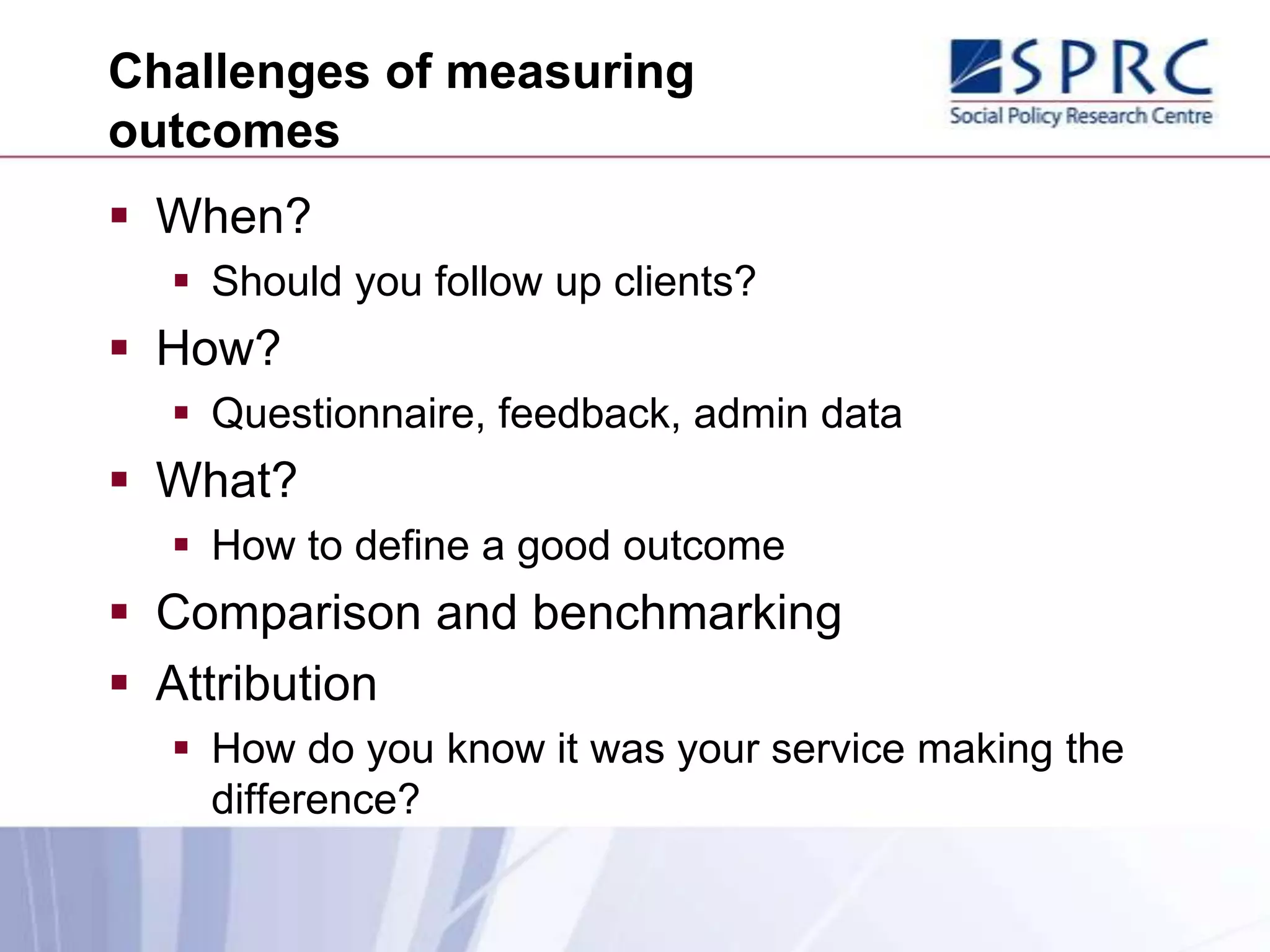
Challenges of measuring
outcomes
 When?
   Should you follow up clients?
 How?
   Questionnaire, feedback, admin data
 What?
   How to define a good outcome
 Comparison and benchmarking
 Attribution
   How do you know it was your service making the
    difference?
Who should do the evaluation?

 In house
   Advantages
     • Cheaper and more tailored to agency needs.
   Disadvantages
     • Lack of credibility and independence.
     • Need organisational expertise
 External
   Advantages
     • Independent, authoritative – provides feedback
   Disadvantages
     • Expensive and potentially burdensome, potential
       embarrasment
Ilan Katz
Social Policy Research Centre
        Matthew Gray
        CAEPR, ANU

    Ilan.katz@unsw.edu.au

    www.sprc.unsw.edu.au
    www.anu.edu.au/caepr

                                G2 Western Campus
                                University of New South Wales
                                Kensington 2052
                                NSW, Australia
                                +61 2 9385 7810

The Importance of Measuring Outcomes

  • 1.
    The Importance ofoutcomes and evaluation in service delivery Yfoundations 10th July 2012 Prof Ilan Katz (SPRC)
  • 2.
    Will cover  Why outcomes are important  Evaluating for outcomes  Monitoring and evaluation  Types of evaluation  Some key methods  Conclusions
  • 3.
    Why are outcomesimportant  Most services focus on outputs:  Numbers of clients seen  Numbers of service events  Unit costs  However this does not measure impacts ie whether the service makes a difference  can create perverse incentives.  Outcome measurement can improve service delivery.
  • 4.
    How does evaluationimprove services  Important to know what impact the service is actually making on clients and why.  Better understanding of who benefits most from the service and which aspect of the service is most beneficial.  Results are fed back into the service so that lessons can be learned about elements of effective practice.
  • 5.
    Outcomes and accountability Accountability increasingly focused on outcomes rather than outputs.  Funding decisions now rely on cost effectiveness as well as assessment of need.  Outcomes and evaluation can also increase accountability to service users, as participants and recipients.
  • 6.
    Evaluation and monitoring Monitoring – regular collection of data which is used for quality assurance, adherence to standards and compliance.  Evaluation – one off or episodic activity focusing on effectiveness of implementation, processes, outcomes and/or cost effectiveness.  Both are important and can build on each other.
  • 7.
    Theory of changeor program logic  Links inputs processes, outputs and outcomes.  Explains why activities should lead to particular outcomes.  Needs to be backed up by theory and empirical evidence and be specific.  Explains the link between inputs, processes and outcomes.
  • 8.
    Process evaluation  Isservice doing the things it is supposed to do in the most efficient way possible?  Has the program been implemented as planned?  Is it targeting the right people?  What are the barriers to accessing the service?  How well is it working with other services?  What are clients’ and other stakeholders’ views of the service?
  • 9.
    Ultimate Outcome: Young people find stable accommodation and are able to participate actively in society to their maximum potentioal Intermediate Outcome: Young people at risk of homelessness are provided with safe accommodation and given the opportunity to address issues leading to homelessness Impacts For children and adolescents: Improvement in housing situation Outputs Safety Situation What services will provide: Improvements in educational/vocational counselling participation Limited access to initial assessments Improvements in social functioning Community specialist Inputs Temporary accommodation Improvements in financial stability services brief interventions $X put into youth Reduction in wait time for service Benefits advice High demand for service homelessness Better interaction with family Peer support Staffing resources Improvement in health and mental health providing education and support to Young people unable to Policies – referrers For homeless Service System: access mainstream housing services Commonwealth and Lower numbers of homeless youth NSW Who the services will interact with: Young people with acute housing Better inter-agency collaboration Young people leaving issues Longer term engagement with vulnerable Other services families and becoming families and carers clients vulnerable to exploitation other members of the broader youth Client Group: Young and abuse services For Referrers: people at risk of homelessness primary referrers and other service Clear referral pathway partners Improvement in collaborative care 9
  • 10.
    Methodologies  Administrative data(employment, health, housing)  Worker assessments, case files  Use of standard validated surveys  Self completed surveys  pre and post questionnaires  Satisfaction, wellbeing, circumstances  Qualitative methodologies/action research
  • 11.
    Outcomes  Immediate  Satisfaction, appropriate referral  Intermediate  Improved wellbeing, skills, housing  Long term  Home ownership/stability, employment, social networks
  • 12.
    Challenges of measuring outcomes When?  Should you follow up clients?  How?  Questionnaire, feedback, admin data  What?  How to define a good outcome  Comparison and benchmarking  Attribution  How do you know it was your service making the difference?
  • 13.
    Who should dothe evaluation?  In house  Advantages • Cheaper and more tailored to agency needs.  Disadvantages • Lack of credibility and independence. • Need organisational expertise  External  Advantages • Independent, authoritative – provides feedback  Disadvantages • Expensive and potentially burdensome, potential embarrasment
  • 14.
    Ilan Katz Social PolicyResearch Centre Matthew Gray CAEPR, ANU Ilan.katz@unsw.edu.au www.sprc.unsw.edu.au www.anu.edu.au/caepr G2 Western Campus University of New South Wales Kensington 2052 NSW, Australia +61 2 9385 7810