




The importance of English in
engineering
by: Henry Delgado
Level Two - English
The English language is a key tool for professional success, allowing us to share with other
cultures around the world, something is considered the language of communications.
ENGLISH IS ESTABLISHED AS A
FUNDAMENTAL TOOL IN THE
OVERALL EDUCATION OF
FUTURE ENGINEERS.
The modern world demands the appropriation
of different skills to function successfully in the
professional field.
Those skills are an indispensable means of
gaining knowledge about new technologies and
science and in entering the field of business.
Their learning is no longer a
luxury, but a necessity.
Therefore it is said that one who is not
fluent in that language would be a
disadvantage to other professionals.
The activities performed by engineers in their daily work are
numerous like situations that are presented.
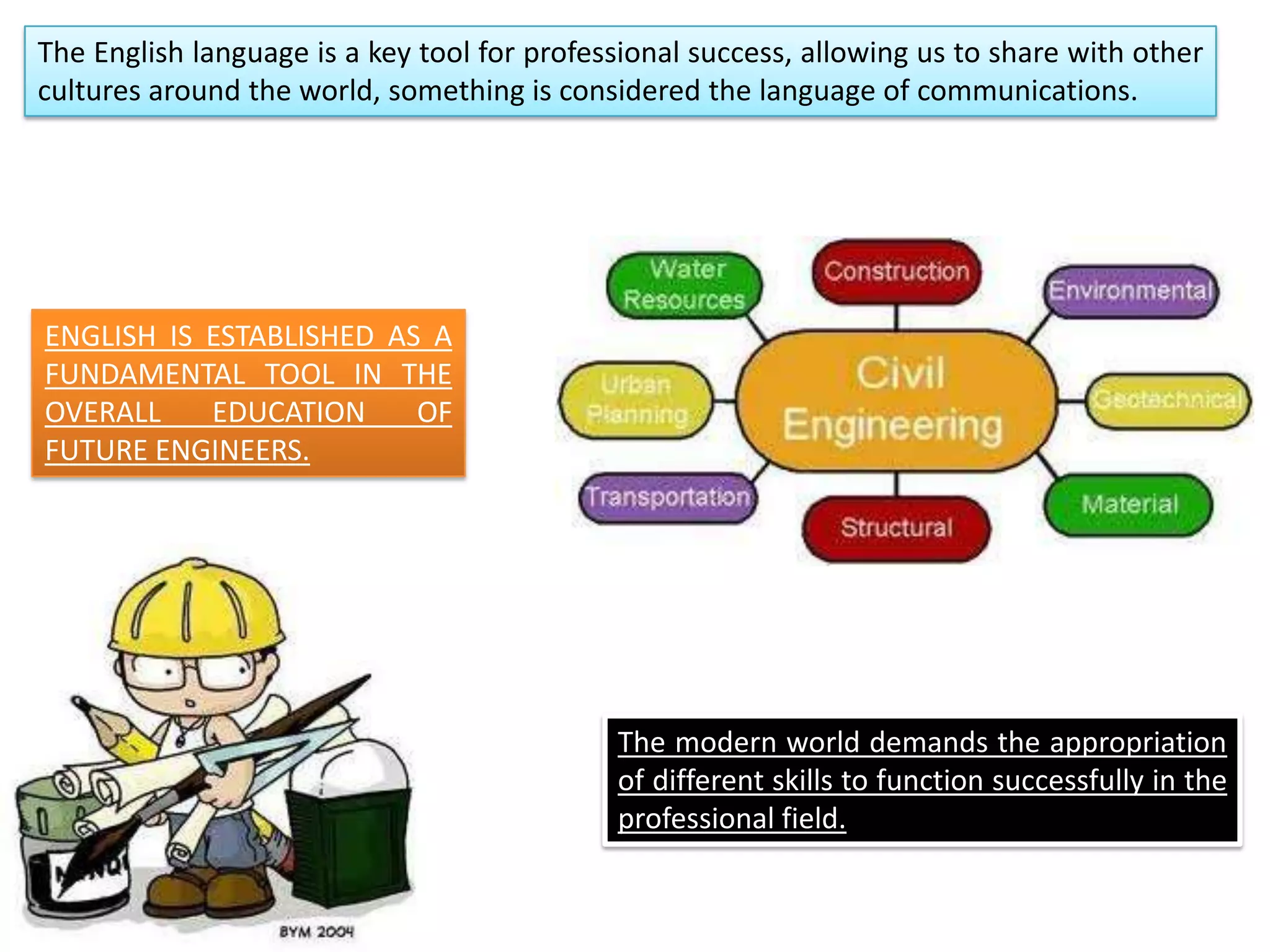
Civil engineering is a
profession with more
interest in Latin America
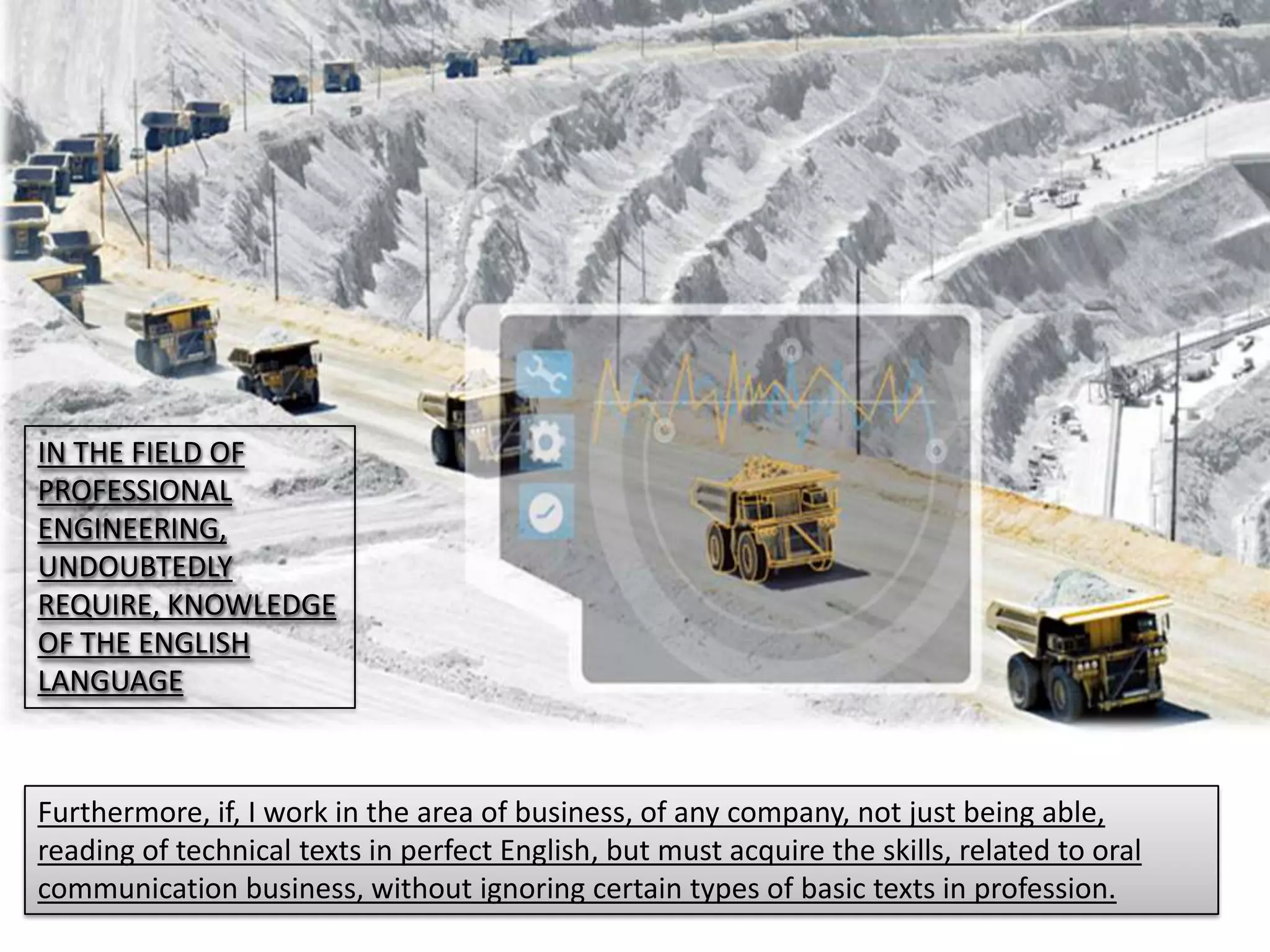
IN THE FIELD OF
PROFESSIONAL
ENGINEERING,
UNDOUBTEDLY
REQUIRE, KNOWLEDGE
OF THE ENGLISH
LANGUAGE
Furthermore, if, I work in the area of business, of any company, not just being able,
reading of technical texts in perfect English, but must acquire the skills, related to oral
communication business, without ignoring certain types of basic texts in profession.
MEASUREMENTS IN ENGLISH AS:
FEET,
INCHES,
YARDS,
MINUTES,
HOURS, AND MORE, ARE AN
EXAMPLE OF THE UNIVERSAL
LANGUAGE
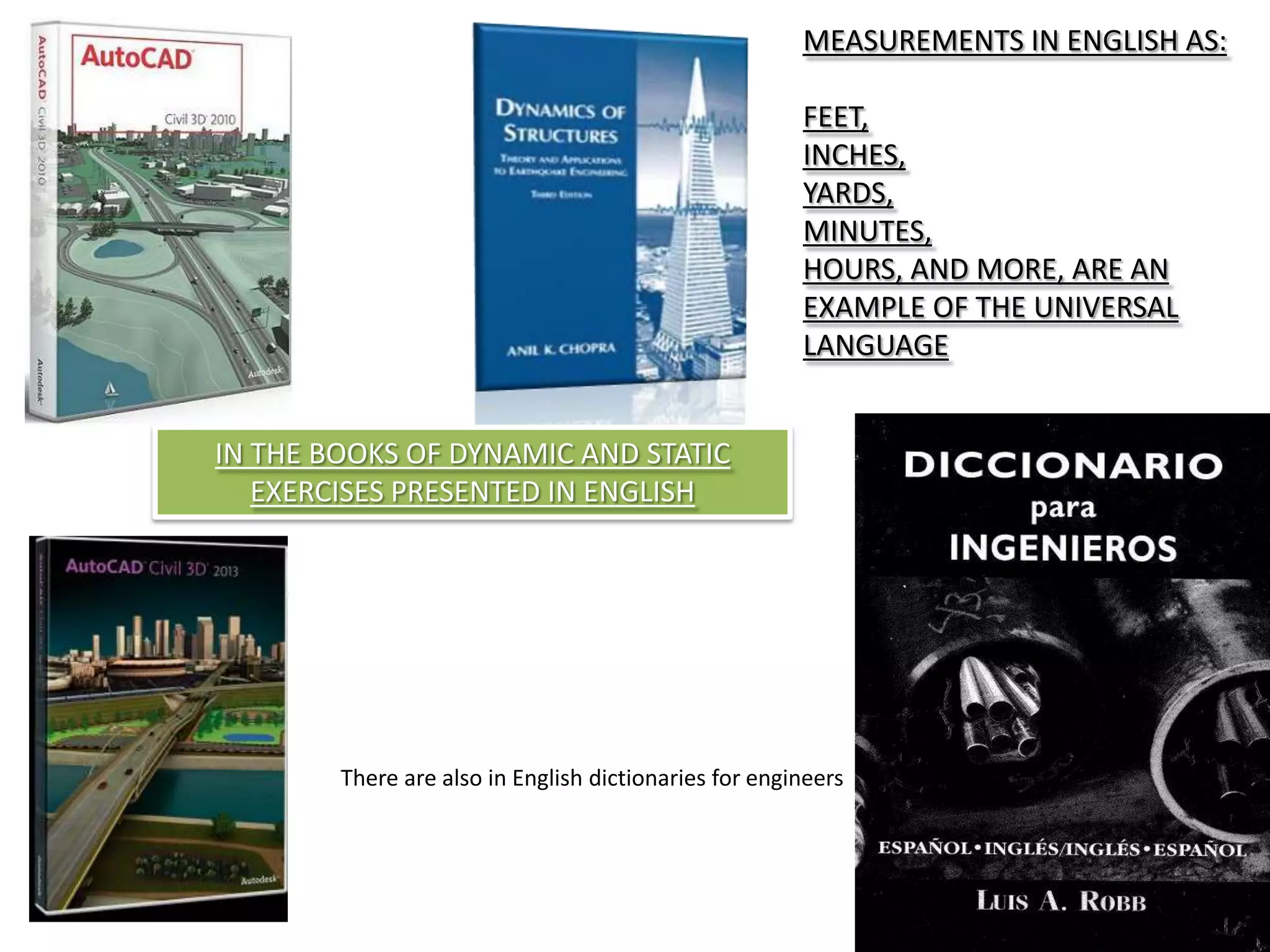
IN THE BOOKS OF DYNAMIC AND STATIC
EXERCISES PRESENTED IN ENGLISH
There are also in English dictionaries for engineers
INTERNATIONAL COMPANIES NEED PEOPLE WITH
MORE COMPETITIVE
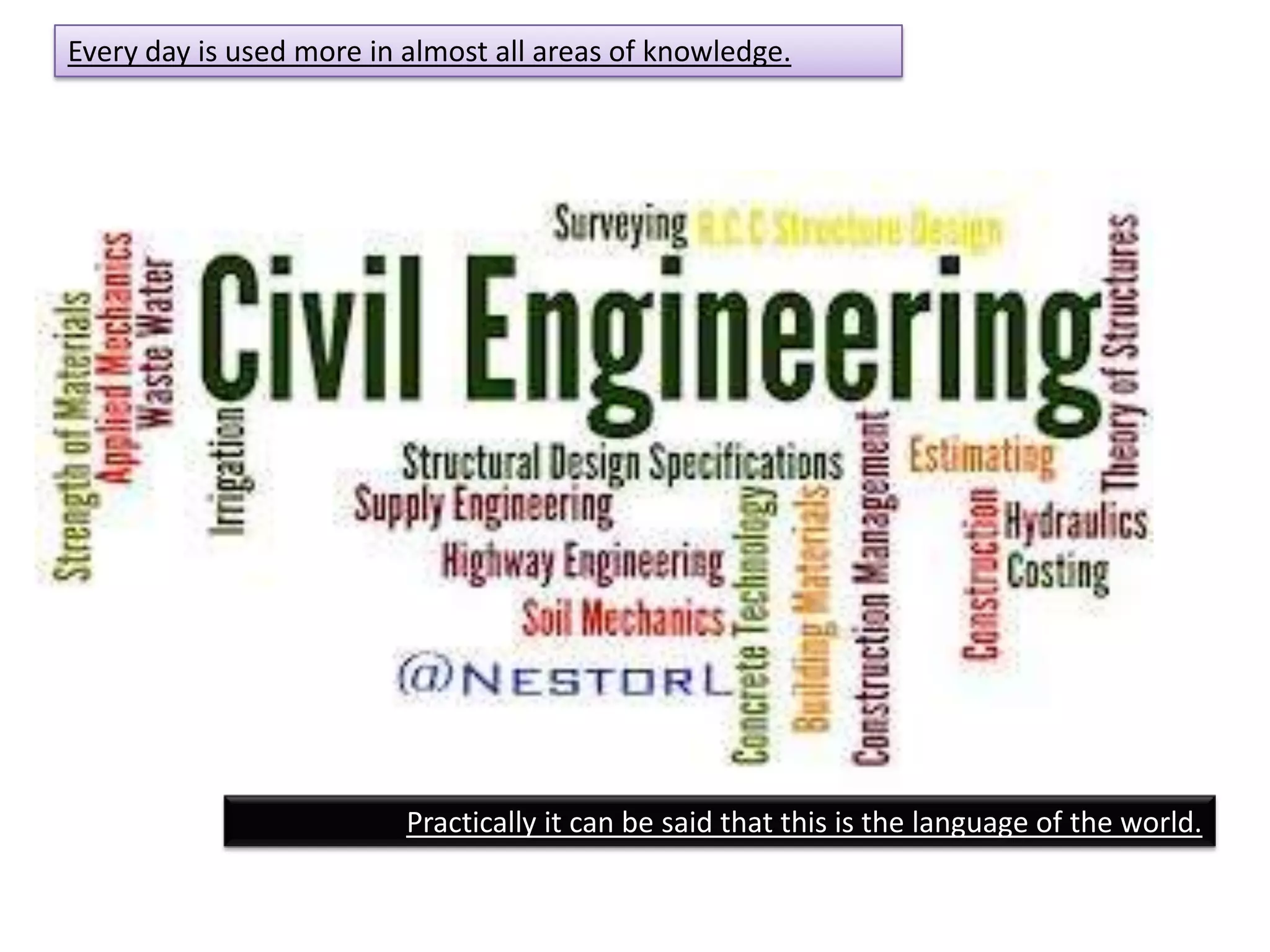
CIVIL ENGINEERING IS THE ENGINEERING OF
CIVILIZATION
and the common language between civilizations
and auxiliary, is English.
Today more than
ever it is essential
to learn the English
language.
Practically it can be said that this is the language of the world.
Every day is used more in almost all areas of knowledge.
THANK YOU VERY MUCH FOR PAYING ATTENTION 

The importance of english in engineering

  • 1.
    The importance ofEnglish in engineering by: Henry Delgado Level Two - English
  • 2.
    The English languageis a key tool for professional success, allowing us to share with other cultures around the world, something is considered the language of communications. ENGLISH IS ESTABLISHED AS A FUNDAMENTAL TOOL IN THE OVERALL EDUCATION OF FUTURE ENGINEERS. The modern world demands the appropriation of different skills to function successfully in the professional field.
  • 3.
    Those skills arean indispensable means of gaining knowledge about new technologies and science and in entering the field of business. Their learning is no longer a luxury, but a necessity. Therefore it is said that one who is not fluent in that language would be a disadvantage to other professionals.
  • 4.
    The activities performedby engineers in their daily work are numerous like situations that are presented. Civil engineering is a profession with more interest in Latin America
  • 5.
    IN THE FIELDOF PROFESSIONAL ENGINEERING, UNDOUBTEDLY REQUIRE, KNOWLEDGE OF THE ENGLISH LANGUAGE Furthermore, if, I work in the area of business, of any company, not just being able, reading of technical texts in perfect English, but must acquire the skills, related to oral communication business, without ignoring certain types of basic texts in profession.
  • 6.
    MEASUREMENTS IN ENGLISHAS: FEET, INCHES, YARDS, MINUTES, HOURS, AND MORE, ARE AN EXAMPLE OF THE UNIVERSAL LANGUAGE IN THE BOOKS OF DYNAMIC AND STATIC EXERCISES PRESENTED IN ENGLISH There are also in English dictionaries for engineers
  • 7.
    INTERNATIONAL COMPANIES NEEDPEOPLE WITH MORE COMPETITIVE
  • 8.
    CIVIL ENGINEERING ISTHE ENGINEERING OF CIVILIZATION and the common language between civilizations and auxiliary, is English. Today more than ever it is essential to learn the English language.
  • 9.
    Practically it canbe said that this is the language of the world. Every day is used more in almost all areas of knowledge.
  • 10.
    THANK YOU VERYMUCH FOR PAYING ATTENTION 