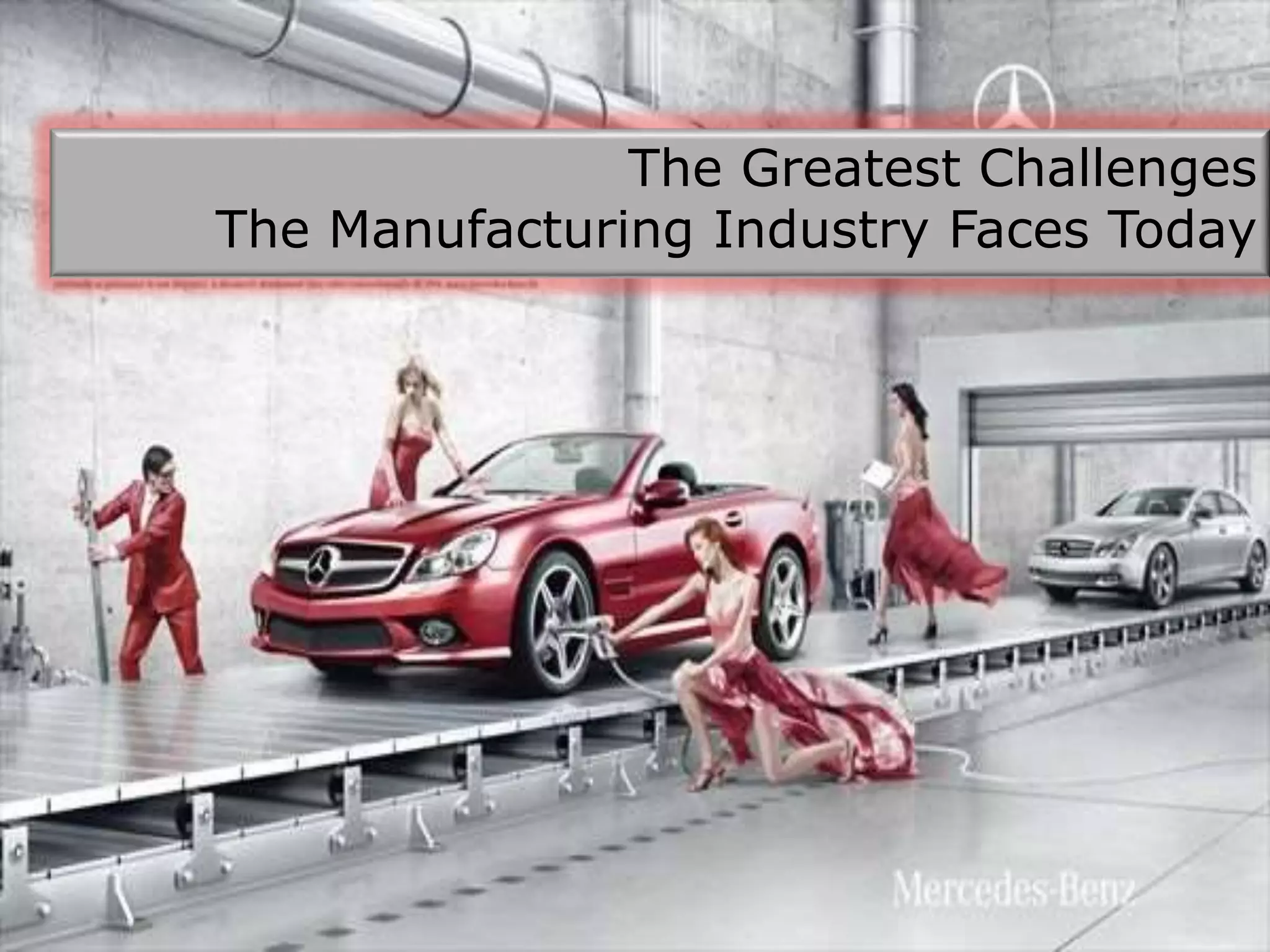



The Greatest Challenges
The Manufacturing Industry Faces Today
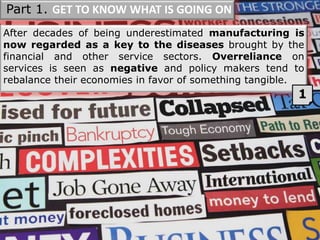
After decades of being underestimated manufacturing is
now regarded as a key to the diseases brought by the
financial and other service sectors. Overreliance on
services is seen as negative and policy makers tend to
rebalance their economies in favor of something tangible.
1
Part 1. GET TO KNOW WHAT IS GOING ON
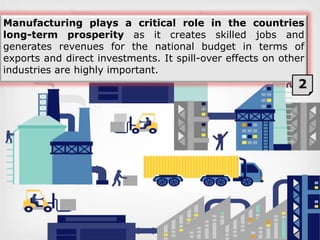
Manufacturing plays a critical role in the countries
long-term prosperity as it creates skilled jobs and
generates revenues for the national budget in terms of
exports and direct investments. It spill-over effects on other
industries are highly important.
2
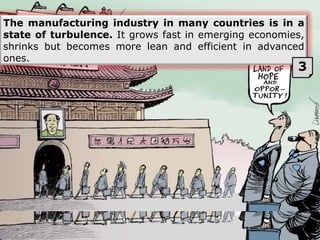
The manufacturing industry in many countries is in a
state of turbulence. It grows fast in emerging economies,
shrinks but becomes more lean and efficient in advanced
ones.
3
The most significant challenges manufacturing faces are
severe global competition, cost pressures, lack of skilled and
mechanically adept labor and negative image of the field,
underestimation of technological and innovational aspect.
Part 2. WHAT TO CHALLENGE
Part 2.1 Win The Global Competition
Part 2.2 Handle Cost Pressures
Part 2.3 Improve The Image
Part 2.4 Leverage Technology And Innovation
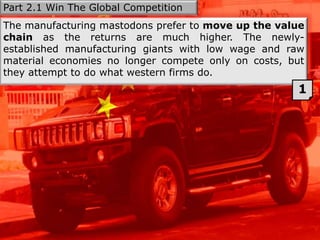
The manufacturing mastodons prefer to move up the value
chain as the returns are much higher. The newly-
established manufacturing giants with low wage and raw
material economies no longer compete only on costs, but
they attempt to do what western firms do.
1
Part 2.1 Win The Global Competition
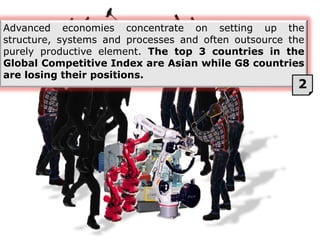
Advanced economies concentrate on setting up the
structure, systems and processes and often outsource the
purely productive element. The top 3 countries in the
Global Competitive Index are Asian while G8 countries
are losing their positions.
2
Manufacturers can move production anywhere in the world
in search of competitive advantages but this makes the
market more unstable and causes relationships to change
every 1 to 2 years. The competition is fierce.
3
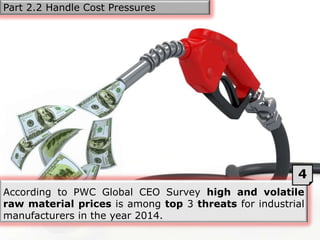
According to PWC Global CEO Survey high and volatile
raw material prices is among top 3 threats for industrial
manufacturers in the year 2014.
4
Part 2.2 Handle Cost Pressures
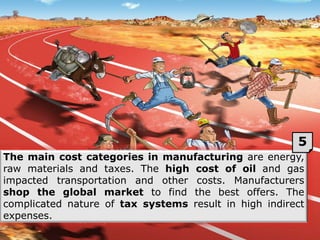
The main cost categories in manufacturing are energy,
raw materials and taxes. The high cost of oil and gas
impacted transportation and other costs. Manufacturers
shop the global market to find the best offers. The
complicated nature of tax systems result in high indirect
expenses.
5
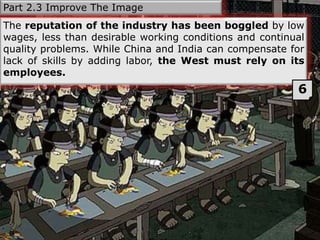
The reputation of the industry has been boggled by low
wages, less than desirable working conditions and continual
quality problems. While China and India can compensate for
lack of skills by adding labor, the West must rely on its
employees.
Part 2.3 Improve The Image
6
Manufacturing is not considered by bright young and well-
educated professionals as “sexy” places to be in. Wall
Street and Consulting have become more fancy places
to check in.
7
Deloitte found out that access to talented workers
capable of supporting innovation not other typical factors
such as labor or energy was the key factor driving global
competitiveness at manufacturing companies. Work ethic,
attendance and reliability are the basic requirements
which are absent in many applicants.
8
“The only way we’ll compete internationally in the future is
by owing ideas” Sir James Dyson.
Part 2.4 Leverage Technology And Innovation
9
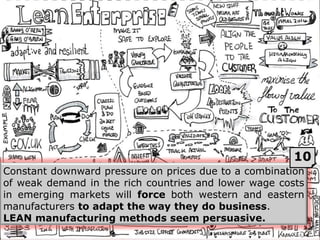
Constant downward pressure on prices due to a combination
of weak demand in the rich countries and lower wage costs
in emerging markets will force both western and eastern
manufacturers to adapt the way they do business.
LEAN manufacturing methods seem persuasive.
10
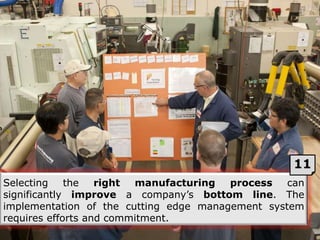
Selecting the right manufacturing process can
significantly improve a company’s bottom line. The
implementation of the cutting edge management system
requires efforts and commitment.
11
Part 3. WE CONCLUDE
To prosper manufacturers must concentrate on improving
their production systems by following those techniques
which credibility has been proven. Identify and minimize
waste, focus on value adding activities, bet on
technology and close-knit supply chain integration!
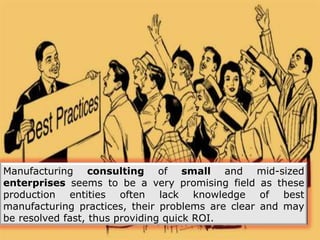
Manufacturing consulting of small and mid-sized
enterprises seems to be a very promising field as these
production entities often lack knowledge of best
manufacturing practices, their problems are clear and may
be resolved fast, thus providing quick ROI.
FOLLOW ME in Manufacturing Consulting

Manufacturing 3.0 / The Greatest Challenges

  • 1.
    The Greatest Challenges TheManufacturing Industry Faces Today
  • 2.
    After decades ofbeing underestimated manufacturing is now regarded as a key to the diseases brought by the financial and other service sectors. Overreliance on services is seen as negative and policy makers tend to rebalance their economies in favor of something tangible. 1 Part 1. GET TO KNOW WHAT IS GOING ON
  • 3.
    Manufacturing plays acritical role in the countries long-term prosperity as it creates skilled jobs and generates revenues for the national budget in terms of exports and direct investments. It spill-over effects on other industries are highly important. 2
  • 4.
    The manufacturing industryin many countries is in a state of turbulence. It grows fast in emerging economies, shrinks but becomes more lean and efficient in advanced ones. 3
  • 5.
    The most significantchallenges manufacturing faces are severe global competition, cost pressures, lack of skilled and mechanically adept labor and negative image of the field, underestimation of technological and innovational aspect. Part 2. WHAT TO CHALLENGE Part 2.1 Win The Global Competition Part 2.2 Handle Cost Pressures Part 2.3 Improve The Image Part 2.4 Leverage Technology And Innovation
  • 6.
    The manufacturing mastodonsprefer to move up the value chain as the returns are much higher. The newly- established manufacturing giants with low wage and raw material economies no longer compete only on costs, but they attempt to do what western firms do. 1 Part 2.1 Win The Global Competition
  • 7.
    Advanced economies concentrateon setting up the structure, systems and processes and often outsource the purely productive element. The top 3 countries in the Global Competitive Index are Asian while G8 countries are losing their positions. 2
  • 8.
    Manufacturers can moveproduction anywhere in the world in search of competitive advantages but this makes the market more unstable and causes relationships to change every 1 to 2 years. The competition is fierce. 3
  • 9.
    According to PWCGlobal CEO Survey high and volatile raw material prices is among top 3 threats for industrial manufacturers in the year 2014. 4 Part 2.2 Handle Cost Pressures
  • 10.
    The main costcategories in manufacturing are energy, raw materials and taxes. The high cost of oil and gas impacted transportation and other costs. Manufacturers shop the global market to find the best offers. The complicated nature of tax systems result in high indirect expenses. 5
  • 11.
    The reputation ofthe industry has been boggled by low wages, less than desirable working conditions and continual quality problems. While China and India can compensate for lack of skills by adding labor, the West must rely on its employees. Part 2.3 Improve The Image 6
  • 12.
    Manufacturing is notconsidered by bright young and well- educated professionals as “sexy” places to be in. Wall Street and Consulting have become more fancy places to check in. 7
  • 13.
    Deloitte found outthat access to talented workers capable of supporting innovation not other typical factors such as labor or energy was the key factor driving global competitiveness at manufacturing companies. Work ethic, attendance and reliability are the basic requirements which are absent in many applicants. 8
  • 14.
    “The only waywe’ll compete internationally in the future is by owing ideas” Sir James Dyson. Part 2.4 Leverage Technology And Innovation 9
  • 15.
    Constant downward pressureon prices due to a combination of weak demand in the rich countries and lower wage costs in emerging markets will force both western and eastern manufacturers to adapt the way they do business. LEAN manufacturing methods seem persuasive. 10
  • 16.
    Selecting the rightmanufacturing process can significantly improve a company’s bottom line. The implementation of the cutting edge management system requires efforts and commitment. 11
  • 17.
    Part 3. WECONCLUDE To prosper manufacturers must concentrate on improving their production systems by following those techniques which credibility has been proven. Identify and minimize waste, focus on value adding activities, bet on technology and close-knit supply chain integration!
  • 18.
    Manufacturing consulting ofsmall and mid-sized enterprises seems to be a very promising field as these production entities often lack knowledge of best manufacturing practices, their problems are clear and may be resolved fast, thus providing quick ROI.
  • 19.
    FOLLOW ME inManufacturing Consulting