Evolution of Atomic
Theory
The modern atomic theory has evolved over centuries and is the result of
contributions from many scientists. Some of the key figures in the
development of atomic theory include John Dalton, J.J. Thomson, Ernest
Rutherford, Niels Bohr, Erwin Schrödinger, Werner Heisenberg, and
James Chadwick. Let's explore the contributions of these scientists and
the evolution of atomic theory.
by michael deniega
John Dalton's Contributions
Modern Atomic Theory
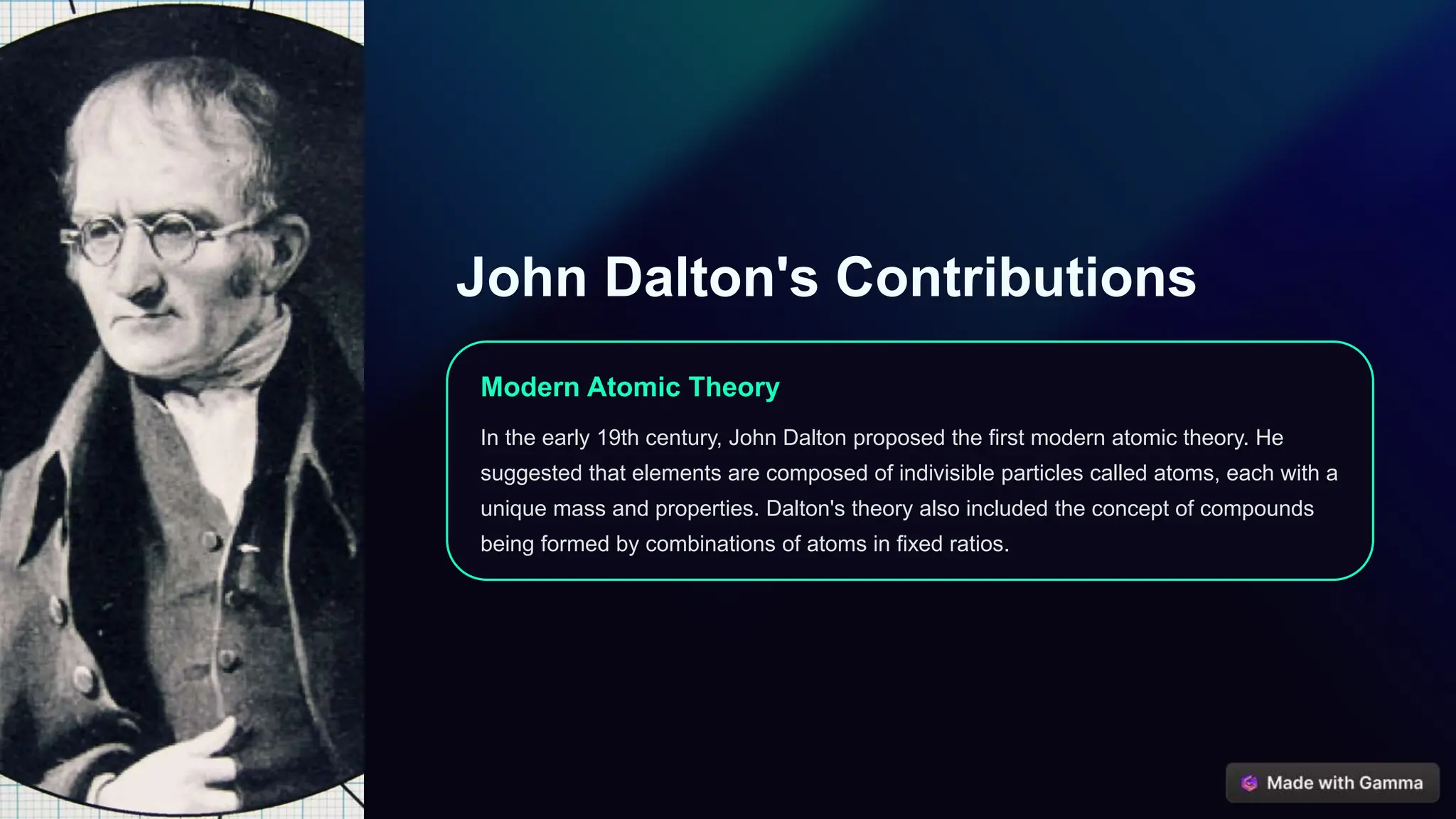
In the early 19th century, John Dalton proposed the first modern atomic theory. He
suggested that elements are composed of indivisible particles called atoms, each with a
unique mass and properties. Dalton's theory also included the concept of compounds
being formed by combinations of atoms in fixed ratios.
J.J. Thomson's Discoveries
1 Discovery of Electron
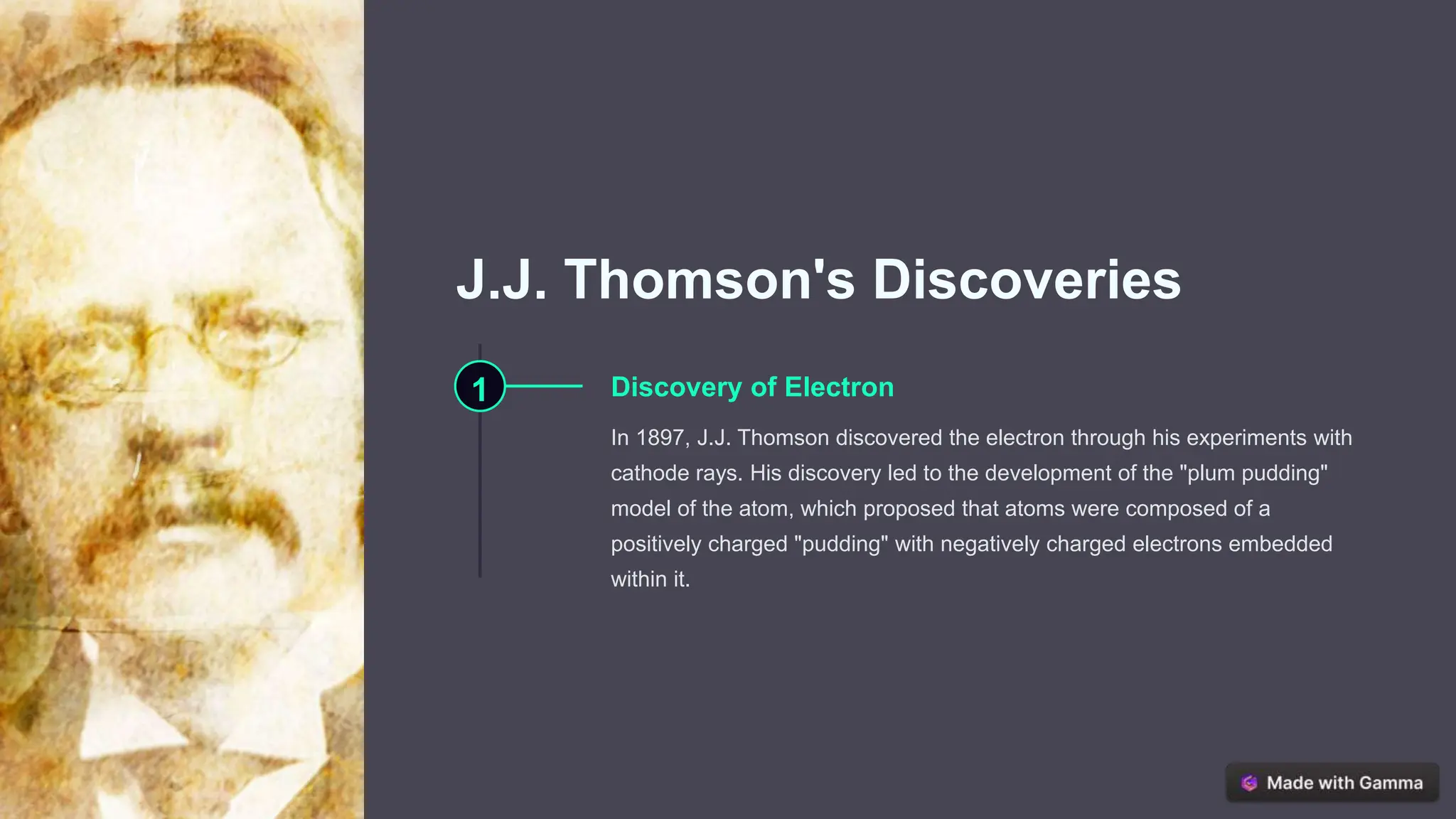
In 1897, J.J. Thomson discovered the electron through his experiments with
cathode rays. His discovery led to the development of the "plum pudding"
model of the atom, which proposed that atoms were composed of a
positively charged "pudding" with negatively charged electrons embedded
within it.
Ernest Rutherford's Gold Foil
Experiment
Atomic Nucleus Discovery
In 1909, Ernest Rutherford conducted the famous gold foil experiment, which led to the
discovery of the atomic nucleus. His findings overturned the plum pudding model and
introduced the concept of a dense, positively charged nucleus surrounded by orbiting
electrons.
Niels Bohr's Planetary Model
1 Energy Levels of Electrons
In 1913, Niels Bohr proposed the planetary model of the atom, suggesting that
electrons orbit the nucleus in specific energy levels or shells. He also introduced the
concept that electrons can jump between these levels by absorbing or emitting
energy.
Quantum Mechanics by
Schrödinger and Heisenberg
Development of Quantum Mechanics
In the 1920s, Erwin Schrödinger and Werner Heisenberg developed quantum
mechanics, providing a mathematical framework for understanding the
behavior of electrons within atoms. Their work contributed to the development
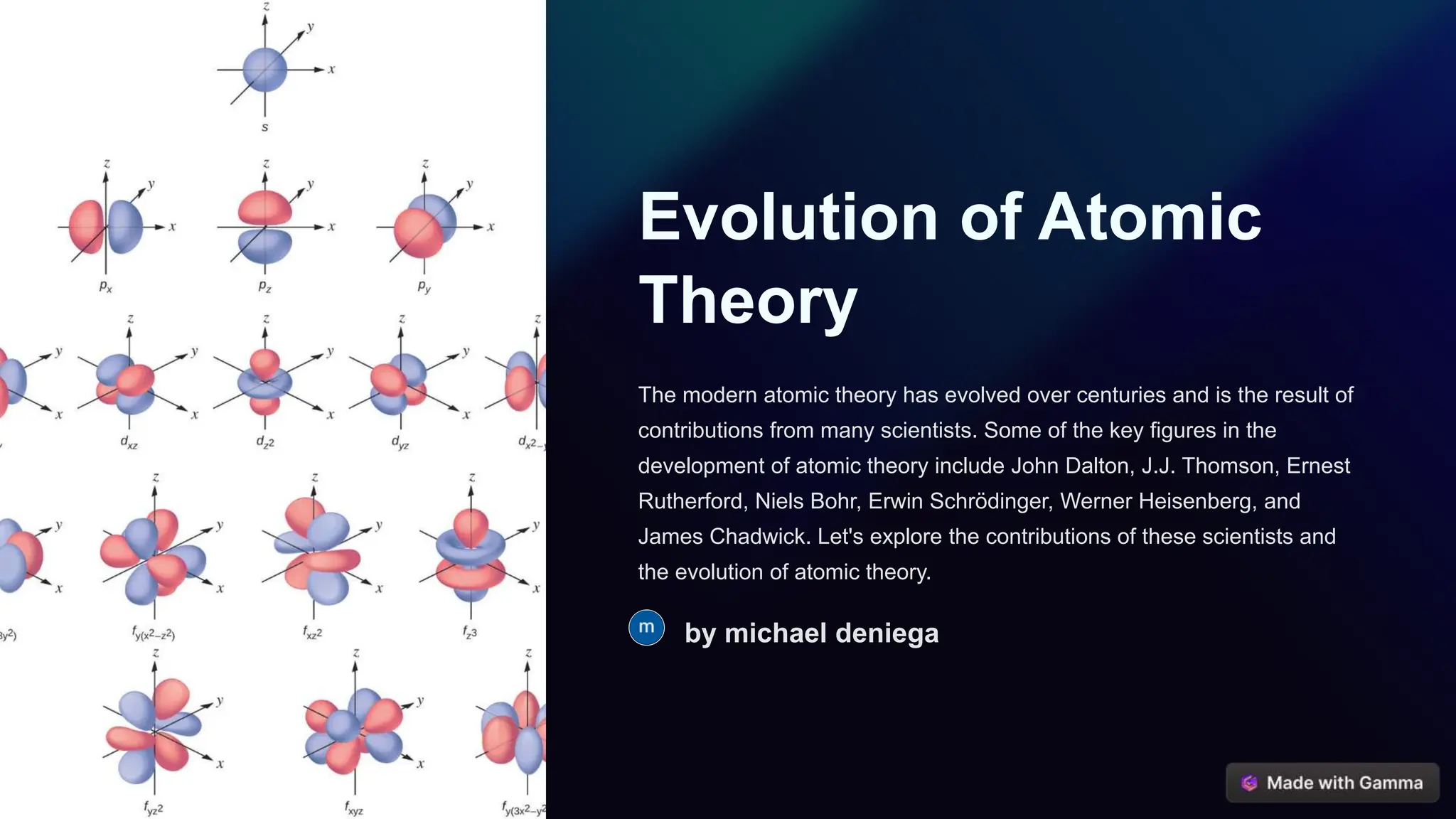
of the modern atomic theory, including the concept of electron probability
clouds.
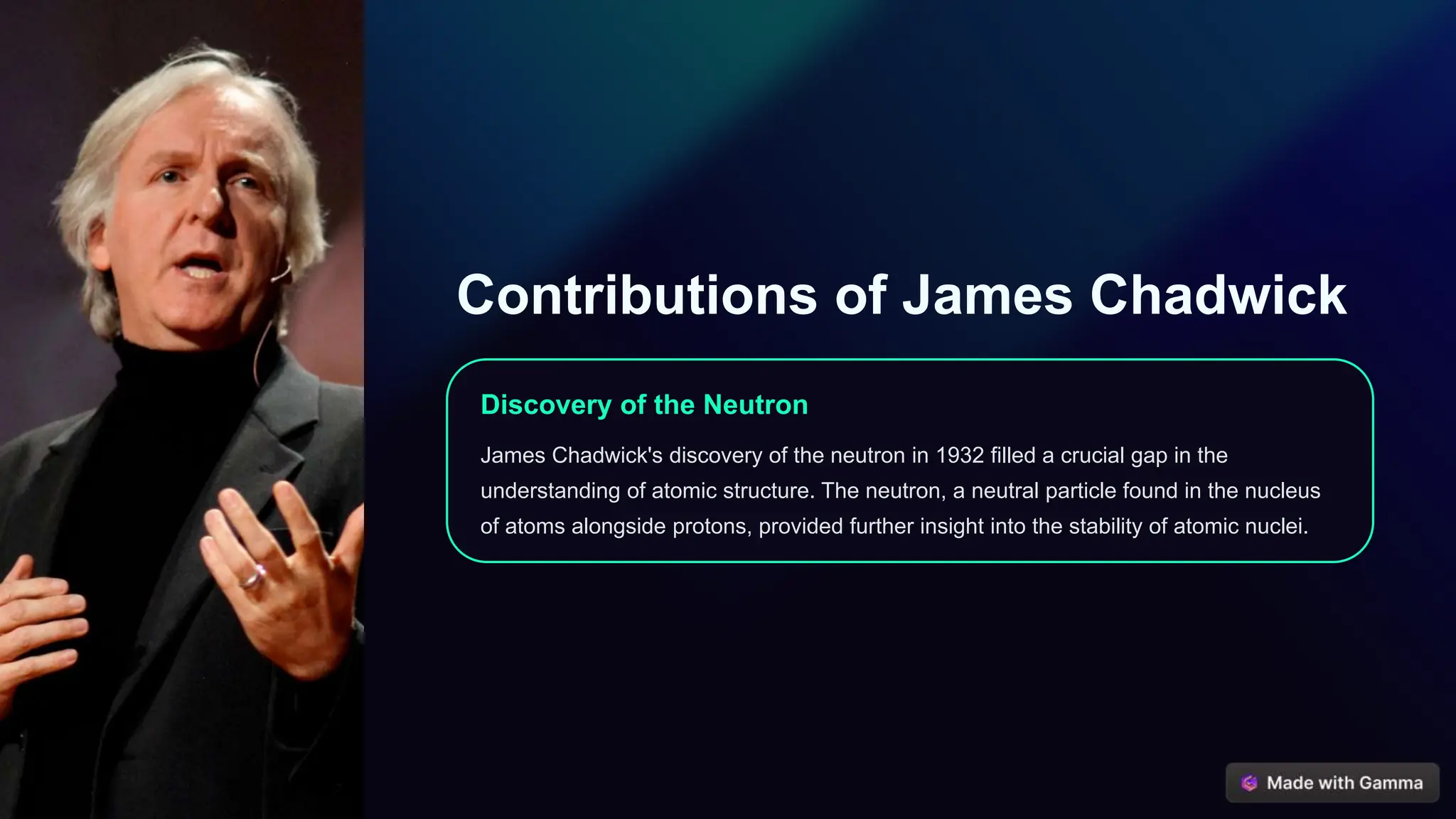
Contributions of James Chadwick
Discovery of the Neutron
James Chadwick's discovery of the neutron in 1932 filled a crucial gap in the
understanding of atomic structure. The neutron, a neutral particle found in the nucleus
of atoms alongside protons, provided further insight into the stability of atomic nuclei.
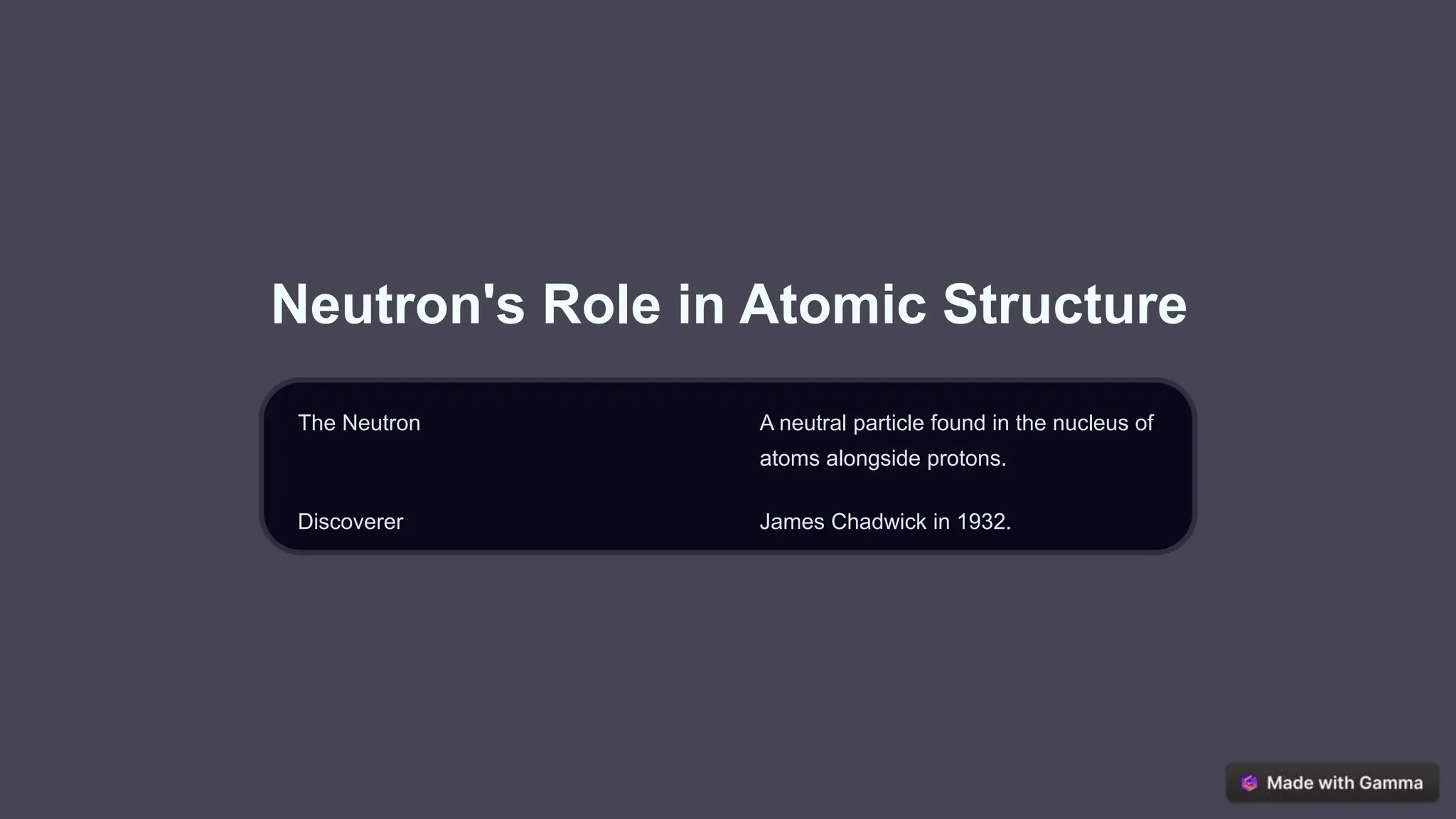
Neutron's Role in Atomic Structure
The Neutron A neutral particle found in the nucleus of
atoms alongside protons.
Discoverer James Chadwick in 1932.
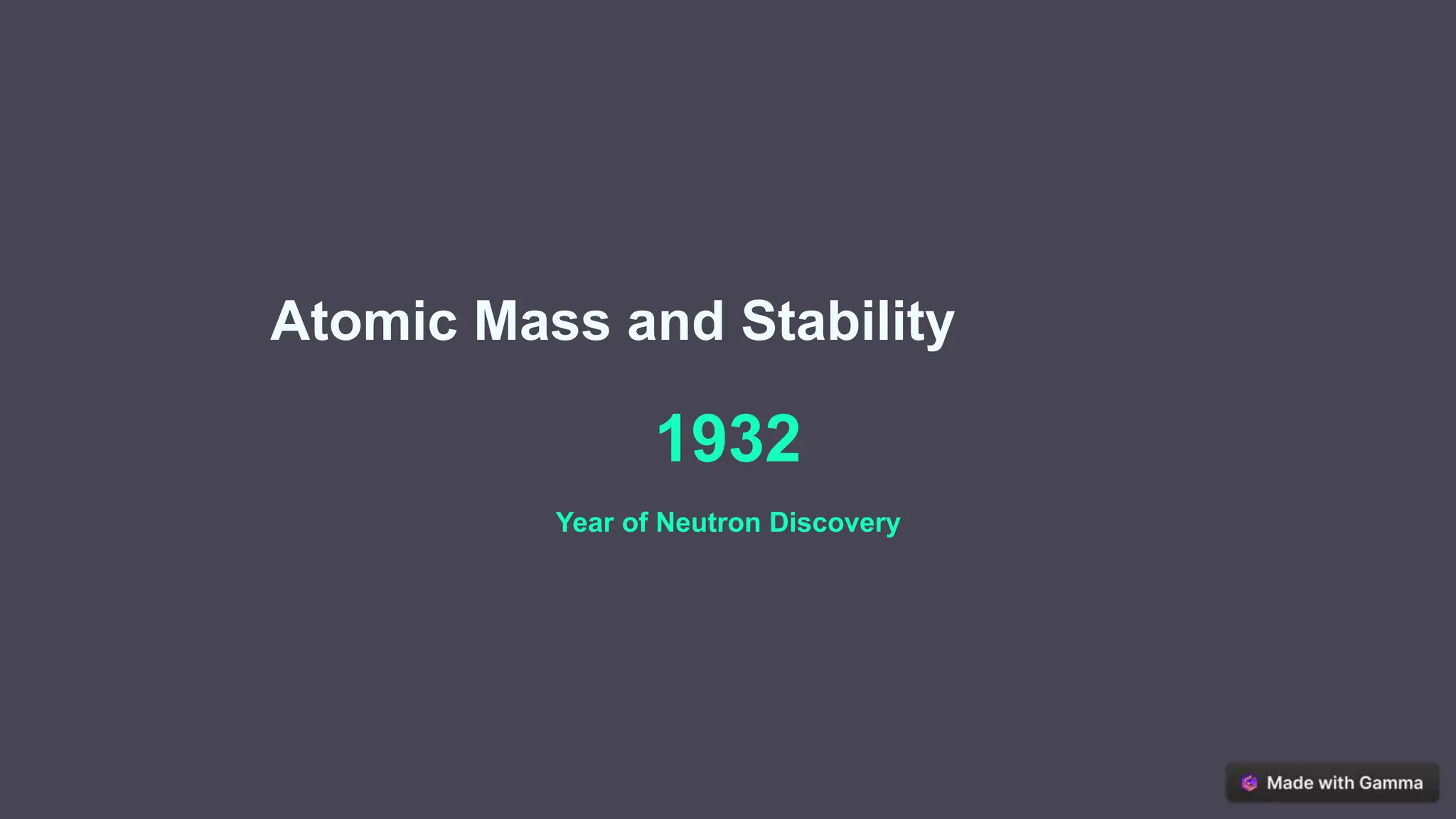
Atomic Mass and Stability
1932
Year of Neutron Discovery
Conclusion: Advancements in
Nuclear Physics
1 Significance of Discoveries
The discoveries and theories of these scientists have significantly contributed to the
development of the modern atomic theory and the advancement of nuclear physics.

The Evolution of Atomic Theory and The Models of the Atom

  • 1.
    Evolution of Atomic Theory Themodern atomic theory has evolved over centuries and is the result of contributions from many scientists. Some of the key figures in the development of atomic theory include John Dalton, J.J. Thomson, Ernest Rutherford, Niels Bohr, Erwin Schrödinger, Werner Heisenberg, and James Chadwick. Let's explore the contributions of these scientists and the evolution of atomic theory. by michael deniega
  • 2.
    John Dalton's Contributions ModernAtomic Theory In the early 19th century, John Dalton proposed the first modern atomic theory. He suggested that elements are composed of indivisible particles called atoms, each with a unique mass and properties. Dalton's theory also included the concept of compounds being formed by combinations of atoms in fixed ratios.
  • 3.
    J.J. Thomson's Discoveries 1Discovery of Electron In 1897, J.J. Thomson discovered the electron through his experiments with cathode rays. His discovery led to the development of the "plum pudding" model of the atom, which proposed that atoms were composed of a positively charged "pudding" with negatively charged electrons embedded within it.
  • 4.
    Ernest Rutherford's GoldFoil Experiment Atomic Nucleus Discovery In 1909, Ernest Rutherford conducted the famous gold foil experiment, which led to the discovery of the atomic nucleus. His findings overturned the plum pudding model and introduced the concept of a dense, positively charged nucleus surrounded by orbiting electrons.
  • 5.
    Niels Bohr's PlanetaryModel 1 Energy Levels of Electrons In 1913, Niels Bohr proposed the planetary model of the atom, suggesting that electrons orbit the nucleus in specific energy levels or shells. He also introduced the concept that electrons can jump between these levels by absorbing or emitting energy.
  • 6.
    Quantum Mechanics by Schrödingerand Heisenberg Development of Quantum Mechanics In the 1920s, Erwin Schrödinger and Werner Heisenberg developed quantum mechanics, providing a mathematical framework for understanding the behavior of electrons within atoms. Their work contributed to the development of the modern atomic theory, including the concept of electron probability clouds.
  • 7.
    Contributions of JamesChadwick Discovery of the Neutron James Chadwick's discovery of the neutron in 1932 filled a crucial gap in the understanding of atomic structure. The neutron, a neutral particle found in the nucleus of atoms alongside protons, provided further insight into the stability of atomic nuclei.
  • 8.
    Neutron's Role inAtomic Structure The Neutron A neutral particle found in the nucleus of atoms alongside protons. Discoverer James Chadwick in 1932.
  • 9.
    Atomic Mass andStability 1932 Year of Neutron Discovery
  • 10.
    Conclusion: Advancements in NuclearPhysics 1 Significance of Discoveries The discoveries and theories of these scientists have significantly contributed to the development of the modern atomic theory and the advancement of nuclear physics.