The Essential
Elements of High-
Performing Teams
www.joellandau.com
Every organization dreams of having high-performing
teams — groups of individuals who work seamlessly
together, driving innovation, productivity, and results.
But high-performing teams don’t just happen by
chance; they are cultivated through deliberate
leadership, a strong foundation of trust, and a shared
sense of purpose. What sets these teams apart is not
just talent but the critical elements that enable them
to function at their best.
Let’s explore the essential ingredients that turn a group
of individuals into a truly high-performing team.
www.reallygreatsite.com
A Clear, Shared
Vision The best teams are driven by a common goal that every
member is committed to achieving. Without a shared
vision, even the most talented teams can struggle to find
direction. When every team member knows exactly where
they’re headed and why their work matters, it fosters
alignment and purpose.
Leaders play a crucial role here. They must clearly
articulate the vision, ensuring every member understands
how their individual contributions tie into the bigger
picture. This shared understanding not only motivates but
also unifies the team. When everyone is rowing in the same
direction, momentum builds naturally.
Communication is the lifeblood of high-performing teams.
Without it, misunderstandings fester, collaboration suffers, and
trust erodes. Effective teams foster an environment where
open dialogue is encouraged, and everyone’s voice is valued.
This goes beyond just speaking up during meetings. High-
performing teams communicate regularly, with transparency
and respect, ensuring that information flows freely across all
levels. Members should feel comfortable giving feedback—
both positive and constructive—without fear of judgment. It’s
through these honest exchanges that teams can identify
issues early, course-correct, and continue improving.
Open and Honest
Communication
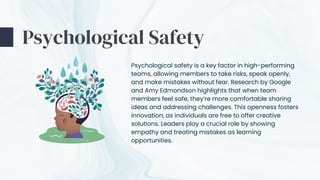
Psychological Safety
Psychological safety is a key factor in high-performing
teams, allowing members to take risks, speak openly,
and make mistakes without fear. Research by Google
and Amy Edmondson highlights that when team
members feel safe, they’re more comfortable sharing
ideas and addressing challenges. This openness fosters
innovation, as individuals are free to offer creative
solutions. Leaders play a crucial role by showing
empathy and treating mistakes as learning
opportunities.
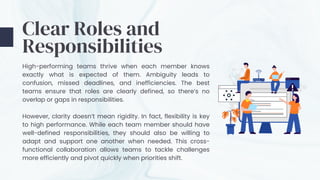
Clear Roles and
Responsibilities
High-performing teams thrive when each member knows
exactly what is expected of them. Ambiguity leads to
confusion, missed deadlines, and inefficiencies. The best
teams ensure that roles are clearly defined, so there’s no
overlap or gaps in responsibilities.
However, clarity doesn’t mean rigidity. In fact, flexibility is key
to high performance. While each team member should have
well-defined responsibilities, they should also be willing to
adapt and support one another when needed. This cross-
functional collaboration allows teams to tackle challenges
more efficiently and pivot quickly when priorities shift.
Mutual Trust &
Accountability
Trust is the foundation of high-performing teams,
enabling collaboration, knowledge-sharing, and
confidence in meeting goals. However, accountability
is equally important, ensuring team members take
ownership of their roles. Accountability isn't about
blame but about a shared commitment to achieving
team objectives. Together, trust and accountability
drive motivation and top performance.
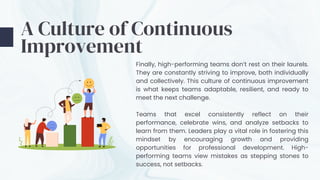
A Culture of Continuous
Improvement
Finally, high-performing teams don’t rest on their laurels.
They are constantly striving to improve, both individually
and collectively. This culture of continuous improvement
is what keeps teams adaptable, resilient, and ready to
meet the next challenge.
Teams that excel consistently reflect on their
performance, celebrate wins, and analyze setbacks to
learn from them. Leaders play a vital role in fostering this
mindset by encouraging growth and providing
opportunities for professional development. High-
performing teams view mistakes as stepping stones to
success, not setbacks.
Thank
You!

The Essential Elements of High-Performing Teams.pdf

  • 1.
    The Essential Elements ofHigh- Performing Teams www.joellandau.com
  • 2.
    Every organization dreamsof having high-performing teams — groups of individuals who work seamlessly together, driving innovation, productivity, and results. But high-performing teams don’t just happen by chance; they are cultivated through deliberate leadership, a strong foundation of trust, and a shared sense of purpose. What sets these teams apart is not just talent but the critical elements that enable them to function at their best. Let’s explore the essential ingredients that turn a group of individuals into a truly high-performing team.
  • 3.
    www.reallygreatsite.com A Clear, Shared VisionThe best teams are driven by a common goal that every member is committed to achieving. Without a shared vision, even the most talented teams can struggle to find direction. When every team member knows exactly where they’re headed and why their work matters, it fosters alignment and purpose. Leaders play a crucial role here. They must clearly articulate the vision, ensuring every member understands how their individual contributions tie into the bigger picture. This shared understanding not only motivates but also unifies the team. When everyone is rowing in the same direction, momentum builds naturally.
  • 4.
    Communication is thelifeblood of high-performing teams. Without it, misunderstandings fester, collaboration suffers, and trust erodes. Effective teams foster an environment where open dialogue is encouraged, and everyone’s voice is valued. This goes beyond just speaking up during meetings. High- performing teams communicate regularly, with transparency and respect, ensuring that information flows freely across all levels. Members should feel comfortable giving feedback— both positive and constructive—without fear of judgment. It’s through these honest exchanges that teams can identify issues early, course-correct, and continue improving. Open and Honest Communication
  • 5.
    Psychological Safety Psychological safetyis a key factor in high-performing teams, allowing members to take risks, speak openly, and make mistakes without fear. Research by Google and Amy Edmondson highlights that when team members feel safe, they’re more comfortable sharing ideas and addressing challenges. This openness fosters innovation, as individuals are free to offer creative solutions. Leaders play a crucial role by showing empathy and treating mistakes as learning opportunities.
  • 6.
    Clear Roles and Responsibilities High-performingteams thrive when each member knows exactly what is expected of them. Ambiguity leads to confusion, missed deadlines, and inefficiencies. The best teams ensure that roles are clearly defined, so there’s no overlap or gaps in responsibilities. However, clarity doesn’t mean rigidity. In fact, flexibility is key to high performance. While each team member should have well-defined responsibilities, they should also be willing to adapt and support one another when needed. This cross- functional collaboration allows teams to tackle challenges more efficiently and pivot quickly when priorities shift.
  • 7.
    Mutual Trust & Accountability Trustis the foundation of high-performing teams, enabling collaboration, knowledge-sharing, and confidence in meeting goals. However, accountability is equally important, ensuring team members take ownership of their roles. Accountability isn't about blame but about a shared commitment to achieving team objectives. Together, trust and accountability drive motivation and top performance.
  • 8.
    A Culture ofContinuous Improvement Finally, high-performing teams don’t rest on their laurels. They are constantly striving to improve, both individually and collectively. This culture of continuous improvement is what keeps teams adaptable, resilient, and ready to meet the next challenge. Teams that excel consistently reflect on their performance, celebrate wins, and analyze setbacks to learn from them. Leaders play a vital role in fostering this mindset by encouraging growth and providing opportunities for professional development. High- performing teams view mistakes as stepping stones to success, not setbacks.
  • 9.