Quality Measures in
Diabetics
QIP Project
Shaun Cole, M.D., M.P.H
Patrick Smithedajkul, M.D.
Problem Statement
โ€ข Successful diabetes management can be
assessed using markers of target processes,
such as Hb A1c, LDL and blood pressure.
โ€ข Diabetic patients are not meeting quality goals
in the Baldwin PCIM clinic.
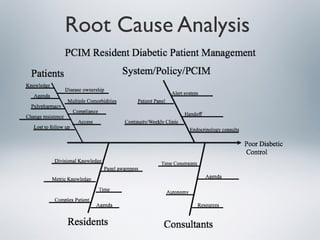
Root Cause Analysis
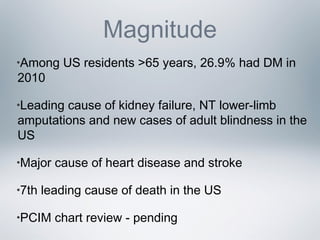
Magnitude
โ€ขAmong US residents >65 years, 26.9% had DM in
2010
โ€ขLeading cause of kidney failure, NT lower-limb
amputations and new cases of adult blindness in the
US
โ€ขMajor cause of heart disease and stroke
โ€ข7th leading cause of death in the US
โ€ขPCIM chart review - pending
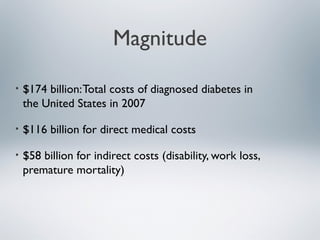
Magnitude
โ€ข $174 billion:Total costs of diagnosed diabetes in
the United States in 2007
โ€ข $116 billion for direct medical costs
โ€ข $58 billion for indirect costsย (disability, work loss,
premature mortality)
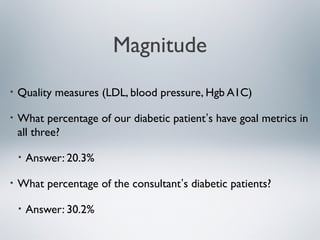
Magnitude
โ€ข Quality measures (LDL, blood pressure, Hgb A1C)
โ€ข What percentage of our diabetic patientโ€™s have goal metrics in
all three?
โ€ข Answer: 20.3%
โ€ข What percentage of the consultantโ€™s diabetic patients?
โ€ข Answer: 30.2%
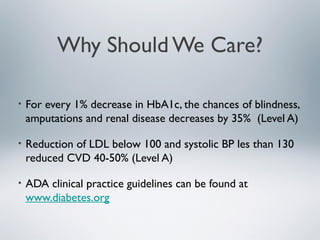
Why Should We Care?
โ€ข For every 1% decrease in HbA1c, the chances of blindness,
amputations and renal disease decreases by 35% (Level A)
โ€ข Reduction of LDL below 100 and systolic BP les than 130
reduced CVD 40-50% (Level A)
โ€ข ADA clinical practice guidelines can be found at
www.diabetes.org
Stakeholders
โ€ข Consultants
โ€ข Residents
โ€ข Diabetic Care Managers
โ€ข Nursing staff
โ€ข Patients
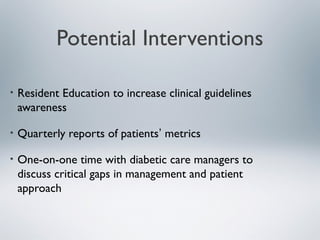
Potential Interventions
โ€ข Resident Education to increase clinical guidelines
awareness
โ€ข Quarterly reports of patientsโ€™ metrics
โ€ข One-on-one time with diabetic care managers to
discuss critical gaps in management and patient
approach
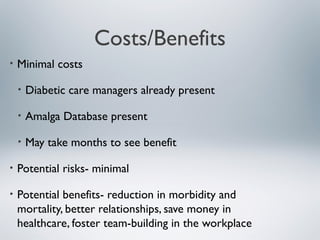
Costs/Benefits
โ€ข Minimal costs
โ€ข Diabetic care managers already present
โ€ข Amalga Database present
โ€ข May take months to see benefit
โ€ข Potential risks- minimal
โ€ข Potential benefits- reduction in morbidity and
mortality, better relationships, save money in
healthcare, foster team-building in the workplace
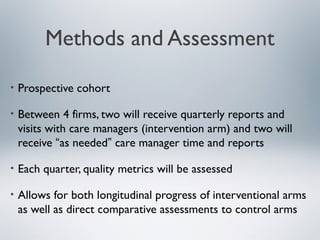
Methods and Assessment
โ€ข Prospective cohort
โ€ข Between 4 firms, two will receive quarterly reports and
visits with care managers (intervention arm) and two will
receive โ€œas neededโ€ care manager time and reports
โ€ข Each quarter, quality metrics will be assessed
โ€ข Allows for both longitudinal progress of interventional arms
as well as direct comparative assessments to control arms
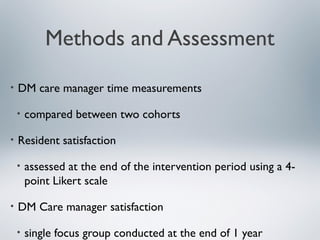
Methods and Assessment
โ€ข DM care manager time measurements
โ€ข compared between two cohorts
โ€ข Resident satisfaction
โ€ข assessed at the end of the intervention period using a 4-
point Likert scale
โ€ข DM Care manager satisfaction
โ€ข single focus group conducted at the end of 1 year
References
โ€ข Centers for Disease Control and Prevention. National Diabetes Fact Sheet: national estimates
and general information on diabetes and prediabetes in the United States, 2011. Atlanta, GA:
U.S. Department of Health and Human Services, Centers for Disease Control and Prevention,
2011.
โ€ข Agency for Healthcare Research and Quality
www.ahrq.gov/browse/diabetes.htm
โ€ข American Association of Diabetes Educators
www.diabeteseducator.org
โ€ข American Diabetes Association
www.diabetes.org

Shaun Cole QI project

  • 1.
    Quality Measures in Diabetics QIPProject Shaun Cole, M.D., M.P.H Patrick Smithedajkul, M.D.
  • 2.
    Problem Statement โ€ข Successfuldiabetes management can be assessed using markers of target processes, such as Hb A1c, LDL and blood pressure. โ€ข Diabetic patients are not meeting quality goals in the Baldwin PCIM clinic.
  • 3.
  • 4.
    Magnitude โ€ขAmong US residents>65 years, 26.9% had DM in 2010 โ€ขLeading cause of kidney failure, NT lower-limb amputations and new cases of adult blindness in the US โ€ขMajor cause of heart disease and stroke โ€ข7th leading cause of death in the US โ€ขPCIM chart review - pending
  • 5.
    Magnitude โ€ข $174 billion:Totalcosts of diagnosed diabetes in the United States in 2007 โ€ข $116 billion for direct medical costs โ€ข $58 billion for indirect costsย (disability, work loss, premature mortality)
  • 6.
    Magnitude โ€ข Quality measures(LDL, blood pressure, Hgb A1C) โ€ข What percentage of our diabetic patientโ€™s have goal metrics in all three? โ€ข Answer: 20.3% โ€ข What percentage of the consultantโ€™s diabetic patients? โ€ข Answer: 30.2%
  • 7.
    Why Should WeCare? โ€ข For every 1% decrease in HbA1c, the chances of blindness, amputations and renal disease decreases by 35% (Level A) โ€ข Reduction of LDL below 100 and systolic BP les than 130 reduced CVD 40-50% (Level A) โ€ข ADA clinical practice guidelines can be found at www.diabetes.org
  • 8.
    Stakeholders โ€ข Consultants โ€ข Residents โ€ขDiabetic Care Managers โ€ข Nursing staff โ€ข Patients
  • 9.
    Potential Interventions โ€ข ResidentEducation to increase clinical guidelines awareness โ€ข Quarterly reports of patientsโ€™ metrics โ€ข One-on-one time with diabetic care managers to discuss critical gaps in management and patient approach
  • 10.
    Costs/Benefits โ€ข Minimal costs โ€ขDiabetic care managers already present โ€ข Amalga Database present โ€ข May take months to see benefit โ€ข Potential risks- minimal โ€ข Potential benefits- reduction in morbidity and mortality, better relationships, save money in healthcare, foster team-building in the workplace
  • 11.
    Methods and Assessment โ€ขProspective cohort โ€ข Between 4 firms, two will receive quarterly reports and visits with care managers (intervention arm) and two will receive โ€œas neededโ€ care manager time and reports โ€ข Each quarter, quality metrics will be assessed โ€ข Allows for both longitudinal progress of interventional arms as well as direct comparative assessments to control arms
  • 12.
    Methods and Assessment โ€ขDM care manager time measurements โ€ข compared between two cohorts โ€ข Resident satisfaction โ€ข assessed at the end of the intervention period using a 4- point Likert scale โ€ข DM Care manager satisfaction โ€ข single focus group conducted at the end of 1 year
  • 13.
    References โ€ข Centers forDisease Control and Prevention. National Diabetes Fact Sheet: national estimates and general information on diabetes and prediabetes in the United States, 2011. Atlanta, GA: U.S. Department of Health and Human Services, Centers for Disease Control and Prevention, 2011. โ€ข Agency for Healthcare Research and Quality www.ahrq.gov/browse/diabetes.htm โ€ข American Association of Diabetes Educators www.diabeteseducator.org โ€ข American Diabetes Association www.diabetes.org